- Product Description Description
- Table of Contents TOC
- List of Table & Figure LOT
- Get Free Sample PDF Sample PDF
Market Size, 2025
$3.48 BnMarket Estimate, 2026
$3.87 BnMarket Forecast, 2034
$9.14 BnCAGR, 2026–2034
11.34%U.S. Sex Reassignment Surgery Market Report Summary
The U.S. sex reassignment surgery market was valued at USD 3.48 billion in 2025, is estimated to reach USD 3.87 billion in 2026, and is projected to reach USD 9.14 billion by 2034, growing at a CAGR of 11.34% during the forecast period. Market growth is driven by increasing awareness of gender affirming healthcare, expanding access to specialized surgical services, growing insurance coverage for gender affirming procedures, and rising acceptance of transgender healthcare needs. Advancements in surgical techniques and multidisciplinary care models are further supporting market expansion across the United States.
Key Market Trends
- Growing awareness and acceptance of gender affirming healthcare is driving market growth.
- Increasing availability of specialized surgical centers and experienced healthcare providers is boosting market expansion.
- Rising insurance coverage and healthcare policy support are improving access to treatment.
- Expansion of multidisciplinary transgender healthcare programs is enhancing patient outcomes.
- Innovation in surgical techniques and post operative care protocols is influencing market development.
Segmental Insights
- Based on surgery type, the male to female (MtF) surgery segment accounted for 58.5% of the U.S. sex reassignment surgery market share in 2025. This dominance is attributed to increasing demand for gender affirming surgical procedures and broader access to specialized care.
- Based on surgical procedure, the genital surgery segment held 44.2% of the U.S. sex reassignment surgery market share in 2025, supported by its central role in comprehensive gender affirmation treatment plans.
- Based on end user, the hospitals segment accounted for the largest share of the U.S. sex reassignment surgery market in 2025, driven by advanced surgical infrastructure, multidisciplinary healthcare teams, and comprehensive post operative care services.
Regional Insights
- The United States accounted for 85.8% of the North American sex reassignment surgery market share in 2025 and maintained its leadership position in the region. Strong healthcare infrastructure, specialized treatment centers, and increasing access to gender affirming care continue to support market growth.
Competitive Landscape
The U.S. sex reassignment surgery market is characterized by specialized hospitals, academic medical centers, and dedicated surgical institutes that focus on comprehensive gender affirming care. Providers are investing in advanced surgical techniques, patient centered care models, and multidisciplinary treatment programs to strengthen their position in the market. Key organizations and healthcare providers active in the U.S. sex reassignment surgery market include Icahn School of Medicine at Mount Sinai, Cedars-Sinai, Moein Surgical Arts, Cleveland Clinic, Transgender Surgery Institute, Plastic Surgery Group of Rochester, Regents of the University of Michigan, CNY Cosmetic & Reconstructive Surgery, Boston Medical Center, The Johns Hopkins University, Kaiser Permanente, University of California, San Francisco Center of Excellence for Transgender Health, New York Presbyterian Hospital, and Mayo Clinic.
 Download Free Sample Report
U.S. Sex Reassignment Surgery Market Size
The U.S. sex reassignment surgery market size was valued at USD 3.48 billion in 2025, and is projected to reach USD 9.14 billion by 2034 from USD 3.87 billion in 2026, growing at a CAGR of 11.34%.
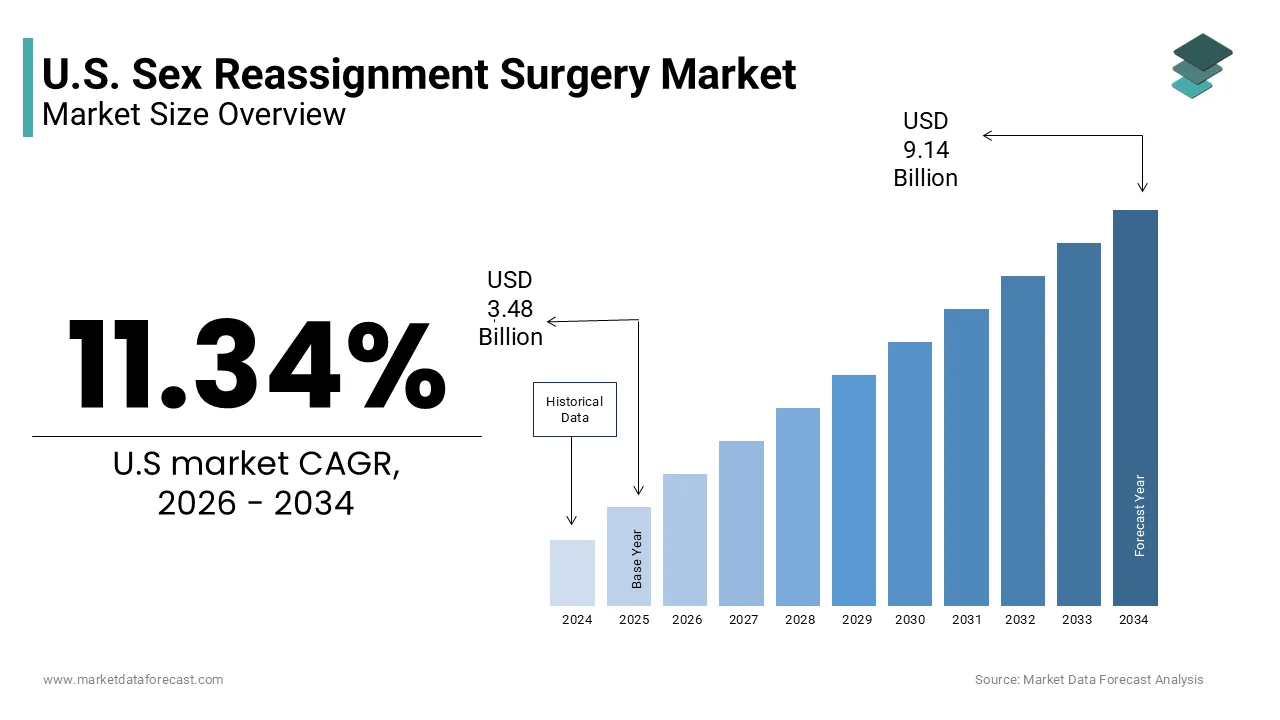
Sex Reassignment Surgery (SRS), now more commonly referred to by medical professionals as gender-affirmation suragery, refers to a group of surgical procedures that alter a person's physical characteristics to match their gender identity. This medical domain includes various interventions such as chest reconstruction, genital reconstruction, facial feminization, and body contouring, performed by board certified plastic surgeons and urologists. The market is deeply intertwined with broader transgender healthcare services, including hormone therapy and mental health support. The growing visibility and acceptance of the transgender community have catalyzed demand for these life altering procedures. According to the Williams Institute at UCLA School of Law, approximately 1.6 million adults and youth in the United States identify as transgender, representing 0.6 percent of the population. This demographic forms the primary patient base for sex reassignment surgeries. Furthermore, data from the Centers for Disease Control and Prevention indicates that young adults are increasingly identifying as transgender, with 1.4 percent of respondents aged 18 to 24 identifying as such in recent surveys. These statistics underscore a shifting societal landscape where gender affirmation is recognized as a critical component of holistic health. The medical necessity of these procedures is supported by major health organizations, which classify them as essential care rather than elective cosmetics. As legal protections expand and insurance coverage improves, the accessibility of these surgeries continues to evolve, reflecting a significant transformation in both medical practice and social understanding of gender diversity within the nation.
MARKET DRIVERS
Increasing Social Acceptance and Legal Recognition of Transgender Rights
The escalating social acceptance and legal recognition of transgender rights is a major driver for the United States sex reassignment surgery market. As societal stigma diminishes, more individuals feel empowered to seek medical interventions that align their physical appearance with their gender identity. This cultural shift reduces the psychological barriers associated with seeking treatment, leading to higher consultation and surgery rates. Legislative advancements also play a crucial role, with several states enacting laws that prohibit discrimination based on gender identity in healthcare settings. These legal frameworks ensure that patients can access necessary procedures without fear of denial or financial ruin. Furthermore, the inclusion of gender identity protections in federal employment and healthcare regulations reinforces the legitimacy of these medical needs. The visibility of transgender individuals in media and public life further normalizes the transition process, encouraging others to pursue similar paths. This confluence of social validation and legal security creates an environment where demand for sex reassignment surgery can flourish, driven by individuals who previously may have been unable or unwilling to seek care due to societal pressures.
Expansion Of Insurance Coverage For Gender Affirming Care
The broadening scope of insurance coverage for gender affirming care is a pivotal factor accelerating the growth of the United States sex reassignment surgery market. Historically, many insurance plans excluded these procedures, labeling them as cosmetic or experimental. However, this paradigm has shifted significantly as major insurers and government programs recognize the medical necessity of these interventions. According to the Human Rights Campaign, a substantial majority of Fortune 500 companies now offer health insurance plans that cover gender affirming surgeries for their employees. This corporate leadership has set a precedent for broader industry adoption, making these procedures financially accessible to a larger segment of the population. Additionally, the Centers for Medicare and Medicaid Services have removed national exclusions for gender reassignment surgery, allowing local coverage determinations to approve these procedures on a case by case basis. As per data from the National Center for Transgender Equality, individuals with insurance coverage are significantly more likely to undergo gender affirming surgeries compared to those who are uninsured. The reduction in out of pocket costs removes a primary barrier to entry, enabling patients to prioritize their health and well being. Furthermore, state mandated insurance coverage laws in jurisdictions such as California, New York, and Massachusetts require private insurers to cover these services, further expanding access. This financial support system not only increases patient volume but also encourages healthcare providers to specialize in these complex procedures, enhancing the overall quality and availability of care within the market.
MARKET RESTRAINTS
Stringent Regulatory Requirements and Preauthorization Hurdles
Stringent regulatory requirements and complex preauthorization processes are significant restraints on the United States sex reassignment surgery market. This creates substantial barriers for patients seeking care. Many insurance providers impose rigorous criteria that patients must meet before approving surgical interventions, including prolonged periods of hormone therapy and mental health evaluations. These administrative hurdles can extend wait times by months or even years, causing psychological distress and delaying necessary medical treatment. Data from the National Center for Transgender Equality shows that insurance barriers are widespread, with roughly a quarter of respondents reporting general insurance issues related to being transgender, and nearly half facing explicit denials for gender-affirming surgeries or hormones. The inconsistency in coverage policies across different states and insurers further complicates the landscape, requiring patients and providers to navigate a fragmented system. Appeals processes are often lengthy and resource intensive, placing a burden on both patients and healthcare facilities. Moreover, some insurers require specific diagnostic codes or documentation that may not align with current clinical practices, leading to further delays. These regulatory complexities not only hinder access to care but also increase operational costs for providers who must dedicate significant staff time to managing insurance claims. These administrative barriers currently restrict market growth. Until they are streamlined, they will continue to limit timely access to essential surgical services for transgender individuals.
Shortage Of Qualified Surgeons And Specialized Training Programs
A critical shortage of qualified surgeons trained in these procedures significantly hampers the expansion of the United States sex rearrangement surgery market. This limits patient access and creates long waitlists. Gender affirming surgeries are highly complex and require specialized skills in reconstructive urology, plastic surgery, and gynecology, yet few fellowship programs specifically focus on these techniques. Workforce data within the medical community confirms that only a small percentage of board-certified plastic surgeons possess the specialized fellowship training required to regularly perform complex gender-affirming surgeries, resulting in a highly concentrated pool of providers. This scarcity results in geographic disparities, with patients in rural areas or less populous states often traveling long distances to access care. Demographic and policy analyses, including research reviewed by the Williams Institute, highlight that a significant portion of transgender individuals struggle to find local, knowledgeable medical professionals experienced in gender-affirming care, forcing them to rely on a limited number of regional specialists. The lack of standardized training curricula in medical schools further exacerbates this issue, as few residents receive adequate exposure to these surgeries during their education. Consequently, the supply of skilled surgeons cannot keep pace with the growing demand, leading to extended wait times that can exceed twelve months in some cases. This bottleneck not only delays treatment but also increases the risk of patients seeking unsafe alternatives or traveling abroad for care. Addressing this workforce gap requires significant investment in specialized training programs and incentives for surgeons to enter this field, which remains a slow and challenging process.
MARKET OPPORTUNITIES
Integration of Telehealth for Pre and Postoperative Care
The integration of telehealth into pre and postoperative care pathways sets the stage to enhance accessibility and efficiency in the United States sex reassignment surgery market. Virtual consultations allow patients to connect with specialized surgeons regardless of geographic location, reducing the need for extensive travel during the initial evaluation phases. According to the American Telemedicine Association, the adoption of telehealth services has surged, with patients reporting high satisfaction levels for remote mental health and follow up appointments. For transgender individuals, who may face stigma or safety concerns in local healthcare settings, telehealth offers a discreet and convenient alternative for accessing expert opinions. As per studies published in the Journal of Medical Internet Research, remote monitoring tools can effectively track postoperative recovery, enabling early detection of complications and reducing hospital readmissions. This digital approach also facilitates continuous mental health support, which is crucial for patients undergoing gender transition. Healthcare providers can leverage platforms to offer educational resources, support groups, and personalized care plans, enhancing patient engagement and outcomes. Furthermore, telehealth can streamline the preauthorization process by allowing seamless sharing of medical records and documentation with insurance providers. By embracing these digital solutions, surgical centers can expand their reach, optimize resource allocation, and provide a more comprehensive and patient centered experience. This technological evolution not only improves care quality but also opens new revenue streams for providers who can offer virtual services alongside traditional surgical interventions.
Development of Advanced Surgical Techniques and Minimally Invasive Procedures
The development of advanced surgical techniques and minimally invasive procedures offers a transformative opportunity for the United States sex reassignment surgery market. This advancement promises improved outcomes and faster recovery times. Innovations such as robotic assisted surgery and laser technologies enable surgeons to perform complex reconstructions with greater precision and reduced tissue trauma. According to the International Journal of Transgender Health, patients undergoing minimally invasive procedures often experience shorter hospital stays and lower risks of complications, which enhances overall satisfaction and quality of life. These technological advancements also allow for more natural aesthetic results, addressing a key concern for many patients seeking gender affirmation. As per research from major academic medical centers, the use of nerve sparing techniques in genital reconstruction has significantly improved sensory outcomes, contributing to better functional and psychological benefits. Pharmaceutical companies and medical device manufacturers are increasingly investing in the development of specialized instruments and implants tailored for gender affirming surgeries, further driving innovation. The adoption of these cutting edge methods differentiates providers in a competitive market, attracting patients who seek the highest standard of care. Furthermore, improved surgical outcomes can lead to higher insurance approval rates, as payers recognize the long term cost benefits of reduced complications and revisions. The market can continue to evolve by prioritizing research and development. This ongoing progress ensures the delivery of safer and more effective solutions that meet the diverse needs of the transgender community.
MARKET CHALLENGES
High Out of Pocket Costs Despite Insurance Coverage
High out of pocket costs remain a formidable challenge for patients seeking SRS in the country, which impedes the growth of the United States sex rearrangement surgery market. This is despite improvements in insurance coverage. Many insurance plans impose high deductibles, copayments, and coinsurance rates that can amount to thousands of dollars, placing a significant financial burden on individuals. According to data from the National Center for Transgender Equality, large numbers of transgender individuals report avoiding or delaying necessary healthcare due to high costs, often driven by insurance exclusions for gender-affirming care and high out-of-pocket expenses. Additional expenses such as travel, lodging, and time off work further exacerbate the financial strain, particularly for patients who must travel to specialized centers. As per data from the Williams Institute, transgender individuals are disproportionately likely to live in poverty compared to the general population, making these costs prohibitive for many. Furthermore, some procedures may be deemed out of network or not fully covered, leaving patients responsible for the entire bill. The lack of transparency in pricing also makes it difficult for patients to plan and budget for their care. Financial toxicity can lead to delayed or forgone treatment, negatively impacting mental health and overall well being. While some hospitals offer financial assistance programs, these are often limited and difficult to access. Addressing this challenge requires broader policy changes to cap out of pocket expenses and ensure comprehensive coverage, but until then, financial barriers will continue to limit access to these life saving procedures for vulnerable populations.
Societal Stigma and Discrimination In Healthcare Settings
Societal stigma and discrimination within healthcare settings is also a persistent obstacle to the United States sex reassignment surgery market. This affects both patient access and quality of care. Despite legal protections, many transgender individuals continue to face bias, misgendering, and refusal of service from healthcare providers. According to the landmark U.S. Transgender Survey, roughly one in three transgender respondents who saw a healthcare provider reported a negative experience related to their gender identity, with smaller percentages reporting explicit verbal harassment or physical violence. This hostile environment discourages individuals from seeking necessary medical attention, leading to delayed diagnoses and treatment. According to the National Survey on LGBTQ Youth Mental Health by The Trevor Project, fear of discrimination and historical mistreatment is a leading barrier causing many transgender and nonbinary youth to avoid seeking healthcare services. Even when patients do access care, implicit bias among medical staff can result in substandard treatment and poor communication. This lack of cultural competence undermines trust and compromises patient safety. Furthermore, stigma extends beyond clinical interactions, affecting housing and employment stability, which indirectly impacts health outcomes. Healthcare institutions often lack adequate training programs to address these issues, perpetuating a cycle of exclusion. Overcoming this challenge requires systemic changes in medical education and institutional policies to foster inclusive and respectful environments. Stigma remains a significant barrier to equitable access and optimal health outcomes. This is especially true for transgender individuals seeking surgical intervention until the issue is adequately addressed.
REPORT COVERAGE
| REPORT METRIC | DETAILS |
| Market Size Available | 2025 to 2034 |
| Base Year | 2025 |
| Forecast Period | 2026 to 2034 |
| CAGR | 11.34% |
| Segments Covered | By Surgery Type, Surgical Procedure, End User, and Region. |
| Various Analyses Covered | Global, Regional and Country-Level Analysis, Segment-Level Analysis, Drivers, Restraints, Opportunities, Challenges; PESTLE Analysis; Porter’s Five Forces Analysis, Competitive Landscape, Analyst Overview of Investment Opportunities |
| Countries Covered | California, Washington, Oregon, New York, United States |
| Market Leaders Profiled | Icahn School of Medicine at Mount Sinai, Cedars Sinai, Moein Surgical Arts, Cleveland Clinic, Transgender Surgery Institute, Plastic Surgery Group of Rochester, Regents of the University of Michigan, CNY Cosmetic & Reconstructive Surgery, Boston Medical Center, The Johns Hopkins University, Kaiser Permanente, University of California San Francisco Center of Excellence for Transgender Health, New York Presbyterian Hospital, and Mayo Clinic Transgender and Intersex Specialty Care Clinic. |
SEGMENTAL ANALYSIS
By Surgery Type Insights
The male to female (MtF) surgery segment was the largest in the United States sex reassignment surgery market and occupied a 58.5% share in 2025. This prominence of the segment was supported by the higher volume of individuals assigned male at birth seeking gender affirming care and the complexity of procedures involved. Also, this segment includes vaginoplasty, facial feminization surgery, and breast augmentation, which are often performed in stages, contributing to higher overall procedure counts and revenue. The visibility of transgender women in media and public discourse has also played a role in normalizing these procedures and encouraging help seeking behavior. Furthermore, the medical necessity of vaginoplasty is well established, with many insurance plans covering it as a standard component of transition related care. The availability of specialized surgeons who focus on female genital reconstruction has improved outcomes and patient satisfaction, further driving demand. The comprehensive nature of male to female transition, which often involves multiple surgical sites, ensures sustained engagement with healthcare providers. This multifaceted approach to care, combined with strong advocacy and community support, solidifies the dominance of the male to female segment in the market landscape.
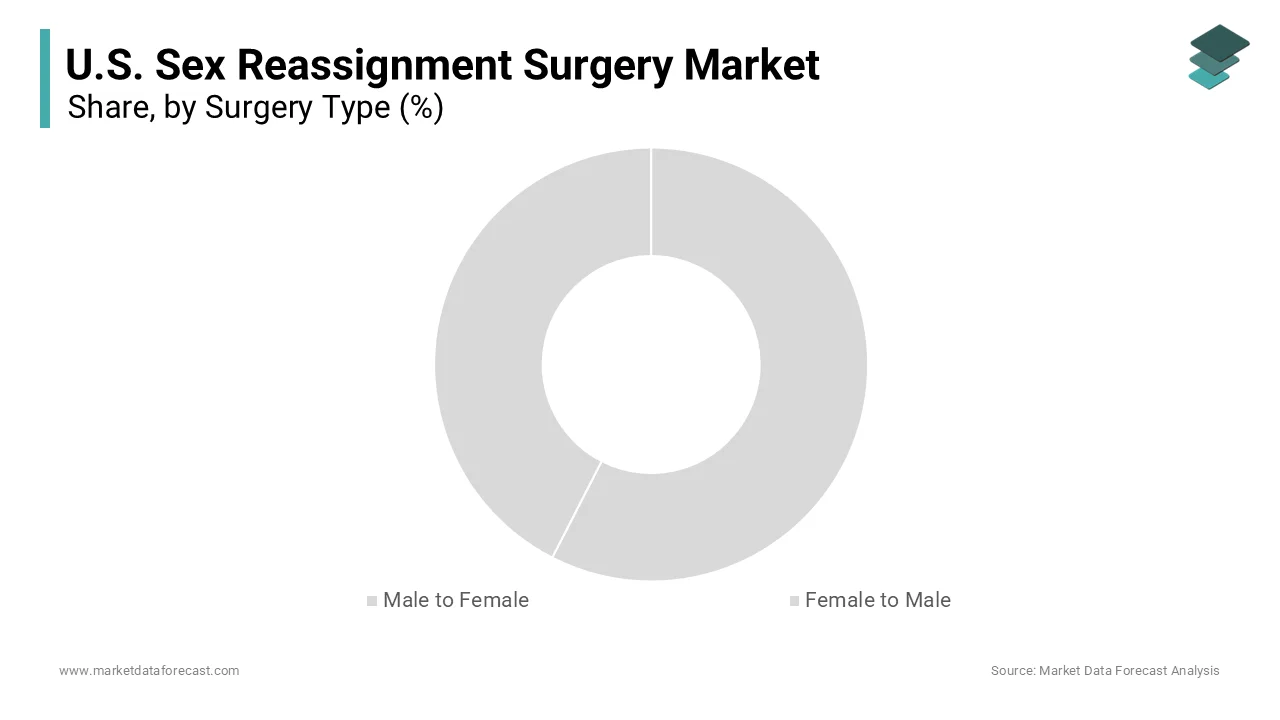
But the female to male surgery segment is anticipated to witness the fastest CAGR of 10.5% over the forecast period. This rapid expansion of the segment is fueled by increasing awareness and acceptance of transgender men and non binary individuals seeking masculinizing procedures. Top surgery, or chest reconstruction, is the most common procedure in this category and serves as a gateway for many patients to pursue further surgical options. In line with clinical trends observed by healthcare providers globally, there has been an exponential increase in transgender men seeking medical interventions over the past decade, a shift attributed to expanding insurance coverage and greater social awareness. The development of advanced surgical techniques for phalloplasty and metoidioplasty has also contributed to growth, offering patients more functional and aesthetic options than previously available. Insurance coverage for top surgery has become nearly universal among major providers, removing financial barriers for a large portion of the patient population. Additionally, the growing recognition of non binary identities has expanded the candidate pool, as individuals who do not identify strictly as male may still seek masculinizing surgeries to alleviate dysphoria. These factors collectively drive the accelerated growth of the female to male segment, making it a dynamic and evolving component of the market.
By Surgical Procedure Insights
The genital surgery segment held the majority share of 44.2% of the United States sex reassignment surgery market in 2025. This supremacy of the segment was credited to its classification as a medically necessary intervention for alleviating severe gender dysphoria. Procedures such as vaginoplasty, phalloplasty, and metoidioplasty are considered cornerstone treatments for many transgender individuals, providing significant psychological and functional benefits. While many individuals and providers clinically view genital reconstruction as a major milestone in physical transition, WPATH guidelines emphasize that transition is non-linear and highly individualized, and surgical interventions are tailored to the specific needs of the patient rather than a fixed end-point. The complexity and cost of these surgeries contribute to their dominant share of market revenue. The strong clinical evidence supporting the efficacy of genital surgery in improving quality of life and mental health outcomes has led to broad insurance coverage mandates in many states. Furthermore, the lack of alternative non surgical options for genital dysphoria ensures a consistent demand for these procedures. Patients often undergo extensive preoperative preparation, including hormone therapy and mental health evaluations, which creates a structured pathway to surgery. The critical nature of these procedures in achieving bodily congruence reinforces their central role in the market, maintaining their position as the largest revenue generating segment despite the high barrier to entry for both patients and providers.
On the other hand, the augmentation mammoplasty and facial feminization procedures segment is likely to experience the fastest CAGR of 9.8% from 2026 and 2034 due to the increasing demand for procedures that address secondary sex characteristics and facial features, which are primary sources of gender dysphoria for many transgender women. According to surgical data and standard clinical guidelines, breast augmentation is one of the most common feminizing procedures for transgender women, and it is ideally performed after a patient has undergone at least one to two years of hormone therapy to allow for initial natural development. The desire for a more feminine facial appearance has also led to a surge in facial feminization surgery, which includes procedures such as rhinoplasty, brow lift, and jaw contouring. The relatively lower cost and shorter recovery time compared to genital surgery make these procedures more accessible to a broader range of patients. Furthermore, the rise of medical tourism and specialized clinics offering package deals for facial and breast procedures has increased availability and convenience. Social media and online communities have also played a role in raising awareness of these options, encouraging more individuals to consider surgical intervention. These factors collectively contribute to the rapid expansion of augmentation and facial procedures, positioning them as key drivers of future market growth.
By End User Insights
The hospitals segment led the United States sex reassignment surgery market and captured a substantial share in 2025. This leading position of the segment was attributed to its capacity to handle complex, multi stage surgical procedures and provide comprehensive postoperative care. Major academic medical centers and large hospital systems possess the multidisciplinary teams required for gender affirming surgeries, including surgeons, anesthesiologists, mental health professionals, and nursing staff. Acute-care hospitals maintain advanced infrastructure, such as intensive care units and 24/7 emergency teams, making them essential settings for managing the potential complications associated with major, highly complex reconstructive procedures. This level of care is particularly important for genital reconstruction procedures, which often require extended hospital stays and intensive monitoring. Academic medical centers, such as the University of California, San Francisco (UCSF), serve as the primary hubs for clinical training and peer-reviewed research in gender-affirming care, drawing patients who require evidence-based, multidisciplinary expertise. The accreditation and reputation of major hospitals also play a crucial role in insurance approvals, as payers often prefer facilities with established track records of safety and efficacy. Furthermore, hospitals are better positioned to navigate the complex regulatory and billing requirements associated with these procedures, ensuring smoother access for patients. The integration of surgical services with endocrinology and psychiatry within hospital settings provides a holistic approach to care that is difficult to replicate in smaller facilities. These advantages solidify the dominance of hospitals in the market, making them the preferred choice for patients undergoing complex gender confirmation surgeries.
However, the ambulatory surgery centers segment is on the rise and is expected to be the fastest growing segment in the market by witnessing a CAGR of 8.9% during the forecast period. This quick surge is fuelled by the shift toward outpatient procedures and cost effective care models. Many gender affirming surgeries, such as top surgery and certain facial procedures, can be safely performed in an ambulatory setting, allowing patients to return home on the same day. According to the Ambulatory Surgery Center Association, these facilities offer lower operational costs compared to hospitals, which translates to reduced fees for patients and insurers. The convenience and comfort of ambulatory centers also appeal to patients who wish to avoid the institutional environment of a hospital. Advances in long-acting local anaesthesia and minimally invasive surgical techniques have significantly expanded the types of moderate gender-affirming procedures, such as chest reconstructions, that can be performed safely in outpatient settings. This has led to an increase in the number of ambulatory centers specializing in cosmetic and reconstructive surgeries, including gender affirmation. Furthermore, the flexibility of scheduling and personalized attention provided by smaller facilities enhance patient satisfaction and recovery experiences. Insurance providers are increasingly recognizing the cost benefits of ambulatory care, leading to broader coverage for procedures performed in these settings. The combination of affordability, convenience, and high quality care positions ambulatory surgery centers as a rapidly expanding segment in the market, catering to the growing demand for efficient and accessible surgical options.
COUNTRY LEVEL ANALYSIS
The United States was the top performer in the North American sex reassignment surgery market and accounted for a 85.8% share in 2025. This position of the country’s market was driven by its advanced healthcare infrastructure and progressive legal framework. The market position shows a high concentration of specialized surgeons and academic medical centers that lead global innovations in gender affirming care. A key driving factor is the increasing legal protection for transgender rights, with numerous states mandating insurance coverage for gender confirmation surgeries. According to the Movement Advancement Project, as of early 2025, only 24 states and D.C. (less than half of the U.S.) explicitly prohibit health insurance exclusions for transgender healthcare. Conversely, roughly half of the country lacks such protections, and at least 26 states have enacted bans or restrictions on best-practice medical care for transgender youth. A further critical driver is the growing societal acceptance of transgender identities, which has reduced stigma and encouraged more individuals to seek treatment. The presence of robust advocacy organizations such as the Human Rights Campaign and the National Center for Transgender Equality further amplifies awareness and promotes policy changes that benefit the community. Additionally, the integration of gender affirming care into mainstream medical education has increased the number of qualified providers, addressing previous workforce shortages. These factors, combined with high healthcare expenditure and technological advancements, ensure that the United States remains the global leader in the sex reassignment surgery market, setting standards for care and accessibility worldwide.
COMPETITIVE LANDSCAPE
The competitive landscape of the United States sex reassignment surgery market is characterized by a mix of academic medical centers, specialized private clinics, and hospital systems that vie for prominence in providing gender affirming care. Competition is driven by the quality of surgical outcomes, patient experience, and accessibility of services. Leading institutions differentiate themselves through specialized expertise, multidisciplinary care models, and innovative surgical techniques. The shortage of qualified surgeons creates a bottleneck, allowing established centers with trained specialists to maintain a competitive advantage. Reputation and patient testimonials play a crucial role in attracting individuals who often travel long distances for care. Insurance network participation is another key competitive factor, as patients prioritize facilities that accept their coverage to minimize out of pocket costs. Academic centers leverage research and teaching missions to stay at the forefront of medical advancements, while private clinics may offer more personalized attention and shorter wait times. The market remains fragmented with no single dominant player, encouraging continuous improvement in service delivery. Collaboration among providers is also evident, as many participate in professional networks to share best practices and standardize care protocols, ultimately benefiting the broader patient community.
KEY MARKET PLAYERS
Some of the companies that are playing a dominating role in the U.S. sex reassignment surgery market are
- Icahn School of Medicine at Mount Sinai
- Cedars-Sinai
- Moein Surgical Arts
- Cleveland Clinic
- Transgender Surgery Institute
- Plastic Surgery Group of Rochester
- Regents of the University of Michigan
- CNY Cosmetic & Reconstructive Surgery
- Boston Medical Center
- The Johns Hopkins University
- Kaiser Permanente
- University of California, San Francisco Center of Excellence for Transgender Health
- New York Presbyterian Hospital
- Mayo Clinic (Transgender and Intersex Specialty Care Clinic)
Top Players in the Market
- Mount Sinai Health System is a pioneering institution in gender affirming care, renowned for its comprehensive Center for Transgender Medicine and Surgery. The organization provides a wide array of surgical procedures including facial feminization, chest reconstruction, and genital confirmation surgeries. Recent initiatives focus on expanding multidisciplinary teams to offer holistic support that integrates mental health and endocrinology with surgical interventions. Mount Sinai actively engages in clinical research to advance surgical techniques and improve patient outcomes. The system has established robust training programs for surgeons and healthcare providers to address the workforce shortage in this specialized field. By prioritizing patient centered care and innovation, Mount Sinai strengthens its reputation as a leader in transgender health. Their commitment to accessibility and equity ensures that diverse populations receive high quality treatment. These efforts collectively enhance the institution's influence and contribute significantly to the advancement of sex reassignment surgery standards in the United States.
- The University of California San Francisco operates a leading transgender health program that offers extensive surgical and medical services for gender affirmation. UCSF is recognized for its expertise in complex reconstructive procedures such as phalloplasty and vaginoplasty performed by highly specialized surgeons. The institution recently expanded its capacity to reduce wait times and improve access for patients across the country. UCSF actively participates in national guidelines development through collaboration with professional associations like the World Professional Association for Transgender Health. The university emphasizes evidence based practices and continuous quality improvement to ensure optimal safety and satisfaction. By integrating research with clinical care, UCSF drives innovation in surgical methods and postoperative management. Their educational initiatives train future generations of providers in culturally competent care. This comprehensive approach solidifies UCSF's position as a critical contributor to the sex reassignment surgery market, enhancing both availability and excellence in gender affirming treatments.
- Boston Medical Center provides specialized gender confirmation services through its Center for Transgender Medicine and Surgery, offering a full spectrum of surgical options. The facility is known for its patient focused model that addresses individual needs through personalized care plans. Recent actions include the expansion of outpatient services and the integration of telehealth for pre and postoperative consultations. Boston Medical Center collaborates with community organizations to support underserved populations and reduce barriers to care. The center invests in advanced surgical technologies to enhance precision and recovery outcomes. By fostering an inclusive environment, the institution attracts patients from diverse backgrounds seeking safe and respectful treatment. Their advocacy work promotes policy changes that improve insurance coverage and legal protections for transgender individuals. These strategic efforts strengthen Boston Medical Center's role in the market, ensuring that high quality surgical care remains accessible and effective for all patients seeking gender affirmation.
Top Strategies Used by Key Market Participants
Key players in the United States sex reassignment surgery market employ specialization strategies to establish centers of excellence that attract patients seeking expert care. Hospitals and clinics focus on building multidisciplinary teams that include surgeons, mental health professionals, and endocrinologists to provide holistic treatment. Investment in advanced surgical technologies and minimally invasive techniques enhances outcomes and reduces recovery times. Providers actively engage in advocacy and policy work to expand insurance coverage and reduce financial barriers for patients. Training and education programs are developed to address the shortage of qualified surgeons and increase workforce capacity. Marketing efforts emphasize cultural competence and patient safety to build trust within the transgender community. Strategic partnerships with community organizations help reach underserved populations and improve access to care. These approaches enable institutions to differentiate themselves while addressing the complex needs of patients undergoing gender affirming procedures.
MARKET SEGMENTATION
This research report on the U.S. sex reassignment surgery market is segmented and sub-segmented into the following categories.
By Surgery Type
- Male to Female
- Female to Male
By Surgical Procedure
- Augmentation Mammoplasty
- Genital Surgery
- Facial Feminisation Surgery
- Facial Masculinisation Surgery
- Voice & Airway Surgery
- Body Contouring & Adjunct Procedures
- Others
By End User
- Hospitals
- Specialty Clinics
- Ambulatory Surgery Centres
- Others
By Country
- California
- Washington
- Oregon
- New York
- Rest of the United States