- Product Description Description
- Table of Contents TOC
- List of Table & Figure LOT
- Get Free Sample PDF Sample PDF
Market Size, 2025
$13.74 BnMarket Estimate, 2026
$14.82 BnMarket Forecast, 2034
$27.13 BnCAGR, 2026–2034
7.85%U.S. Sexual Wellness Market Report Summary
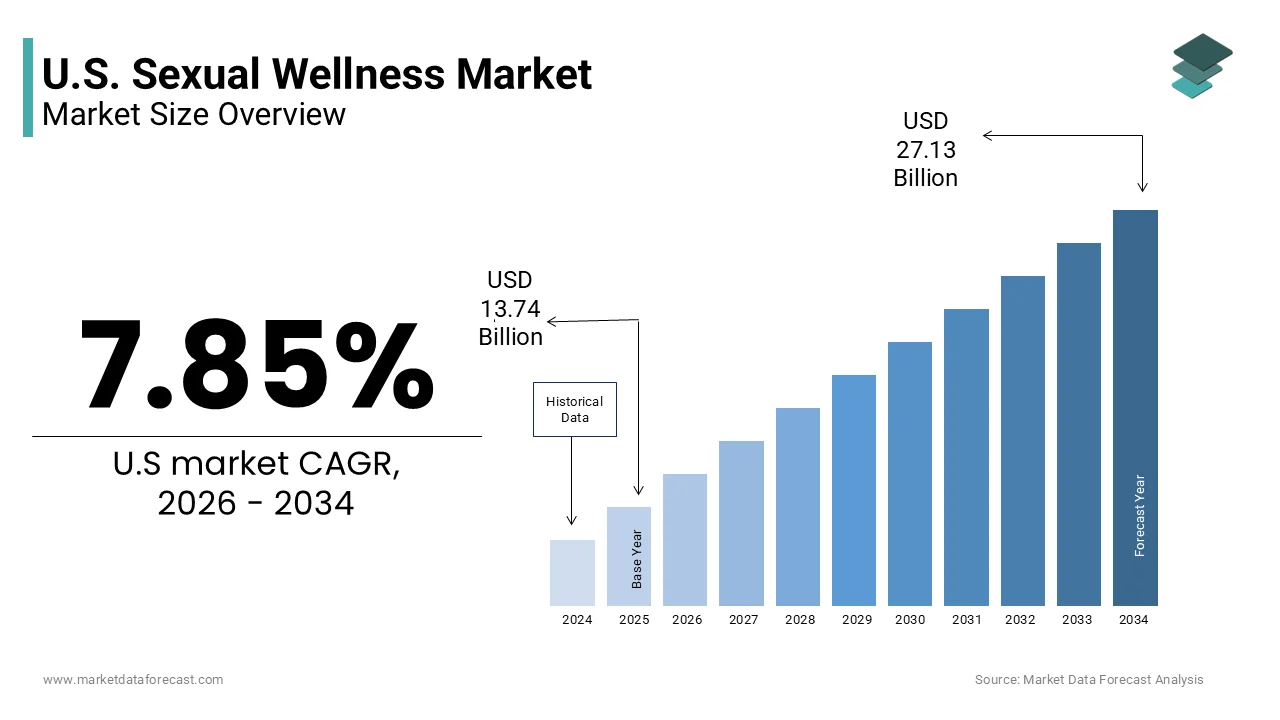
The U.S. sexual wellness market was valued at USD 13.74 billion in 2025, is estimated to reach USD 14.82 billion in 2026, and is projected to reach USD 27.13 billion by 2034, growing at a CAGR of 7.85% during the forecast period. Market growth is driven by increasing awareness regarding sexual health, rising acceptance of wellness products, and growing consumer focus on self care and intimate health. Sexual wellness products are gaining widespread adoption across diverse consumer groups due to evolving social attitudes, improved accessibility, and expanding product innovation. The increasing popularity of premium wellness products, digital retail platforms, and health focused intimate care solutions is further supporting strong market expansion across the United States.
Key Market Trends
- Rising awareness regarding sexual health and personal wellness is driving market growth.
- Increasing consumer openness toward intimate wellness products is boosting market expansion.
- Growing demand for premium, natural, and body safe wellness products is supporting product innovation.
- Expansion of e commerce platforms and specialty retail channels is enhancing product accessibility.
- Innovation in sustainable materials, personalized wellness products, and smart intimate devices is influencing market development.
Segmental Insights
- Based on distribution channel, the offline segment accounted for the dominant share of the U.S. sexual wellness market in 2025. This dominance is attributed to established retail infrastructure, immediate product availability, and strong consumer preference for in store purchases.
- Based on product, the condoms segment held the largest share of the U.S. sexual wellness market in 2025, supported by rising awareness regarding safe sex practices and contraception.
- Based on end user, the women segment accounted for the dominant share of the U.S. sexual wellness market in 2025, driven by increasing engagement in self care routines and growing openness toward discussing intimate wellness and sexual health.
Regional Insights
- The United States accounted for 40.2% of the North American sexual wellness market share in 2025 and is expected to maintain its leadership position during the forecast period. Strong consumer awareness, advanced retail infrastructure, and increasing adoption of wellness focused lifestyle products continue to strengthen market growth across the country.
Competitive Landscape
The U.S. sexual wellness market is highly competitive, with key players focusing on premium product development, sustainable materials, and expansion of intimate wellness portfolios to strengthen their market position. Companies are investing in body safe formulations, digital marketing strategies, and personalized wellness technologies. Prominent players in the U.S. sexual wellness market include PHC Inc., Ansell Ltd., Church and Dwight Co. Inc., Dame Products Inc., GLYDE, Good Clean Love Inc., HYTTO PTE. Ltd., JIMMYJANE, KESSEL medintim GmbH, LELOi AB, Lovehoney Group Ltd., Lovelife Toys, Pure Romance, Reckitt Benckiser Group PLC, Sagami Rubber Industries Co. Ltd., Veru Inc., and WOW Tech International GmbH.
U.S. Sexual Wellness Market Size
The U.S. sexual wellness market size was valued at USD 13.74 billion in 2025, is estimated to reach USD 14.82 billion in 2026, and is projected to reach USD 27.13 billion by 2034, growing at a CAGR of 7.85% from 2026 to 2034.
As societal stigmas diminish, consumers increasingly view sexual wellness as an integral component of self-care. According to the Kinsey Institute, approximately 60% of adults in the U.S. consider sexual satisfaction a crucial part of their overall quality of life. This shift in perception drives the normalization of open discussions regarding sexual health. According to the Guttmacher Institute, nearly 86% of sexually active women in the U.S. have used at least one contraceptive method in their lifetime, indicating a high baseline engagement with sexual health products. Furthermore, data from the Centers for Disease Control and Prevention reveals that over 50% of adults aged 18 to 44 report having discussed sexual health topics with their healthcare providers in the past year. These interactions foster a conducive environment for the adoption of wellness solutions. The integration of technology has further expanded the market boundaries, allowing for discreet access to information and products. As per the Pew Research Center, about 76% of Americans use the internet to search for health related information, including sexual health topics, which underscores the digital nature of modern consumer behavior in this domain.
MARKET DRIVERS
Destigmatization Through Mainstream Media and Cultural Shifts Drives Product Acceptance
The progressive destigmatization of sexual wellness products is a major factor propelling the expansion of the U.S. sexual wellness market. Historically, taboo subjects are now frequently discussed in mainstream media, popular culture, and social platforms, leading to greater consumer comfort. This cultural shift is evident in the rising visibility of sexual health brands in traditional retail environments and advertising campaigns. According to a survey by the American Psychological Association, nearly 45% of millennials and Generation Z consumers express openness to discussing sexual health issues publicly, compared to only 20% of Baby Boomers. This generational divide highlights a significant change in attitude that fuels demand. The proliferation of inclusive marketing strategies by major brands has further normalized these conversations. As per Nielsen data, sales of sexual wellness products in mass market retail channels increased by 15% year over year, reflecting broader consumer acceptance. Additionally, the influence of social media influencers who advocate for sexual positivity has played a pivotal role. According to a survey by Morning Consult, 43% of consumers aged 18 to 34 have purchased a sexual wellness product after seeing it recommended on social media platforms. This direct correlation between digital advocacy and purchase behavior demonstrates the power of normalized discourse. The erosion of shame associated with these products allows companies to innovate and market more openly, thereby expanding the total addressable market. As societal norms continue to evolve, the barrier to entry for new consumers lowers significantly, fostering sustained growth.
Increasing Focus on Holistic Health and Self Care Routines Boosts Demand
The integration of sexual wellness into broader holistic health and self-care routines is another key driver for the U.S. market growth. Consumers increasingly recognize the link between sexual health and overall physical and mental well being. This perspective aligns with the growing trend of preventive health care, where individuals proactively manage their health rather than reacting to issues. According to the Global Wellness Institute, the wellness economy in the U.S. is valued at over 1.5 trillion dollars, with sexual wellness emerging as a notable sub segment. This integration is supported by healthcare professionals who are more likely to discuss sexual health as part of routine checkups. Data from the Journal of Sexual Medicine shows that 60% of women and 40% of men experience some form of sexual dysfunction during their lives, prompting them to seek solutions. The rise of telehealth services has facilitated easier access to professional advice and prescriptions for sexual health issues. As per the American Telemedicine Association, the number of telehealth visits for sexual health concerns increased by 50% in the last two years. This accessibility encourages consumers to explore various products and therapies. Furthermore, the emphasis on mental health has highlighted the importance of intimate relationships in reducing stress and anxiety. According to a report by the National Alliance on Mental Illness, healthy intimate relationships contribute significantly to emotional stability. Consequently, consumers are investing in products that enhance intimacy, viewing them as essential components of their self care regimen rather than optional luxuries.
MARKET RESTRAINTS
Persistent Social Stigma in Conservative Demographics Limits Market Penetration
Despite progress, persistent social stigma in conservative demographics remains a significant restraint for the U.S. sexual wellness market. In many regions, particularly in rural areas and among older populations, negative perceptions surrounding sexual products persist. This stigma creates a barrier to open discussion and purchase, limiting market reach. According to a Gallup poll, approximately 22% of Americans identify as conservative, and are less likely to engage with overt sexual wellness marketing. This demographic often views such products as morally objectionable or unnecessary, leading to lower adoption rates. The lack of comprehensive sex education in certain states exacerbates this issue. As per the Guttmacher Institute, only 30 states and the District of Columbia mandate sex education in schools, and even fewer require it to be medically accurate. This educational gap results in misinformation and discomfort regarding sexual health topics. Retailers in conservative areas may also hesitate to stock these products due to fear of community backlash. According to a study by the National Retail Federation, 15% of retailers in the Midwest and South limit their sexual wellness inventory due to local cultural sensitivities. This geographical disparity restricts the uniform growth of the market. Furthermore, online privacy concerns deter some consumers from purchasing these products digitally. Data from the Pew Research Center shows that 40% of adults are concerned about the privacy of their online purchases, particularly for sensitive items. These factors combined create a fragmented market where growth is uneven and constrained by deep seated cultural reservations.
Regulatory Complexities and Labeling Restrictions Hinder Product Innovation
Regulatory complexities and stringent labeling restrictions are further hindering the growth of the U.S. sexual wellness market. The regulatory landscape for sexual wellness products is fragmented, with different agencies overseeing various aspects, such as the Food and Drug Administration for devices and the Federal Trade Commission for advertising claims. This fragmentation creates uncertainty for manufacturers and marketers. According to the Food and Drug Administration, many sexual wellness products are classified as medical devices requiring rigorous approval processes that can delay market entry. For instance, obtaining clearance for a new therapeutic device can take several years and cost millions of dollars. This high barrier to entry discourages smaller innovators from entering the market. Additionally, advertising restrictions limit how companies can communicate the benefits of their products. The Federal Trade Commission mandates that all health claims must be substantiated by scientific evidence, which can be challenging for natural or herbal supplements. As per a report by the Council for Responsible Nutrition, 25% of supplement companies face challenges in making compliant claims for sexual health products. Misleading claims can result in hefty fines and reputational damage. Furthermore, state level regulations vary significantly, creating a compliance burden for national brands. According to a study by the National Conference of State Legislatures, over 10 states have specific laws restricting the sale or advertising of certain adult products. These regulatory hurdles increase operational costs and limit the speed of innovation, thereby restraining market dynamism and consumer choice.
MARKET OPPORTUNITIES
Expansion of Telehealth Platforms Offers Unprecedented Access to Personalized Care
The expansion of telehealth platforms is a significant opportunity for the U.S. sexual wellness market by offering unprecedented access to personalized care. Telehealth removes geographical and psychological barriers, allowing consumers to consult with healthcare providers discreetly from their homes. This convenience is particularly appealing for individuals dealing with sensitive issues, such as erectile dysfunction or low libido. According to the American Medical Association, over 80% of physicians now offer some form of telehealth service, facilitating easier patient provider interactions. Digital health startups specializing in sexual wellness have seen substantial growth by leveraging this model. As per Rock Health, digital health funding for sexual health companies reached 500 million dollars in the past year, indicating strong investor confidence. These platforms often provide integrated solutions, including consultations, prescriptions, and product delivery, creating a seamless user experience. The ability to prescribe FDA approved medications directly through these platforms enhances their value proposition. Data from the Centers for Disease Control and Prevention shows that telehealth usage for sexual health issues has remained 3 times higher than pre pandemic levels, suggesting a permanent shift in consumer behavior. Furthermore, artificial intelligence driven chatbots and diagnostic tools are being integrated to provide initial assessments and recommendations. According to a report by McKinsey and Company, AI enabled health tools can reduce consultation time by 40%, improving efficiency. This technological integration allows for scalable, personalized care, reaching underserved populations. As broadband access expands in rural areas, the potential customer base for telehealth sexual wellness services continues to grow, offering substantial revenue opportunities for market players.
Integration of Smart Technology and IoT Devices Enhances User Experience
The integration of smart technology and Internet of Things devices into sexual wellness products offers a promising opportunity for the U.S. sexual wellness market. Connected devices allow users to track physiological data, customize experiences, and share insights with partners or healthcare providers. This technological advancement appeals to tech savvy consumers who value data driven insights into their health. According to the Consumer Technology Association, the market for connected health devices is expected to grow by 20% annually, with sexual wellness being a key category. Smart vibrators and pelvic floor trainers equipped with sensors can provide real time feedback on muscle strength and arousal levels. As per a study by the Journal of Medical Internet Devices, users of connected sexual health devices reported a 35% improvement in treatment adherence, compared to traditional methods. This enhanced engagement leads to better outcomes and higher customer retention. Furthermore, the data collected from these devices can be used to develop personalized recommendations and improve product design. Companies are partnering with health apps to create ecosystems that support overall sexual well being. Data from App Annie shows that health and fitness apps with sexual wellness features have seen a 50% increase in downloads over the last two years. The ability to synchronize devices with mobile applications allows for remote control and interactive experiences, which appeals to long distance couples. As 5G networks expand, the latency issues associated with remote connectivity are minimized, enabling more sophisticated interactive features. This convergence of technology and intimacy opens new avenues for product differentiation and premium pricing strategies.
MARKET CHALLENGES
Data Privacy and Security Concerns Pose Significant Trust Barriers
Data privacy and security concerns is a major challenge for the U.S. sexual wellness market, particularly as digital and connected products become more prevalent. Consumers are increasingly wary of how their sensitive personal data is collected, stored, and shared. A breach in this domain can have severe personal and professional consequences for users, leading to heightened skepticism. According to the Pew Research Center, 79% of Americans are concerned about how companies use the data they collect. This concern is amplified for sexual wellness products, where the data is highly intimate. High profile data breaches in the health tech sector have eroded consumer trust. As per the Identity Theft Resource Center, the number of data breaches in the healthcare sector increased by 25% in the last year, affecting millions of records. Companies must invest heavily in cybersecurity measures to protect user data, which increases operational costs. Furthermore, unclear privacy policies and third party data sharing practices raise ethical questions. A study by the Electronic Frontier Foundation found that 60% of health apps share user data with advertisers without explicit consent. This lack of transparency can lead to regulatory scrutiny and legal liabilities. The General Data Protection Regulation in Europe has set a global standard for data protection, influencing US consumer expectations. Companies failing to comply with strict privacy standards risk losing customer loyalty. Building trust requires robust encryption, transparent policies, and user control over data, which remains a complex and ongoing challenge for market participants.
Supply Chain Disruptions and Raw Material Volatility Impact Production Stability
Supply chain disruptions and raw material volatility are further challenging the expansion of the U.S. sexual wellness market. The U.S. market relies on various materials, including silicone, plastics, and electronic components, which are subject to global supply chain fluctuations. Recent geopolitical tensions and logistical bottlenecks have led to increased lead times and costs. According to the Institute for Supply Management, the manufacturing sector has faced continuous supply chain delays, with 65% of respondents reporting longer delivery times for raw materials. This instability forces companies to hold higher inventory levels, tying up capital and increasing storage costs. Additionally, the cost of key materials, such as medical grade silicone, has risen by 15% over the past two years, as per data from Chemical Market Analytics. These increased costs are often passed on to consumers, potentially dampening demand. Furthermore, reliance on overseas manufacturing, particularly in Asia, exposes companies to trade policy changes and tariffs. As per a report by the U.S. International Trade Commission, tariffs on imported electronics and plastics have added 10% to the production costs for many consumer goods. Small and medium sized enterprises are disproportionately affected, as they lack the bargaining power to secure favorable terms. Diversifying supply chains is a strategic imperative, but requires significant investment and time. The unpredictability of global logistics complicates long term planning and product launches. Ensuring consistent product availability while managing costs remains a critical operational challenge for industry leaders navigating this volatile environment.
REPORT COVERAGE
| REPORT METRIC | DETAILS |
| Market Size Available | 2025 to 2034 |
| Base Year | 2025 |
| Forecast Period | 2026 to 2034 |
| CAGR | 7.85% |
| Segments Covered | By Distribution Channel, Product, End User, and Region. |
| Various Analyses Covered | Global, Regional and Country-Level Analysis, Segment-Level Analysis, Drivers, Restraints, Opportunities, Challenges; PESTLE Analysis; Porter’s Five Forces Analysis, Competitive Landscape, Analyst Overview of Investment Opportunities |
| Countries Covered | California, Washington, Oregon, New York, United States |
| Market Leaders Profiled | PHC Inc., Ansell Ltd., Church and Dwight Co. Inc., Dame Products Inc., GLYDE, Good Clean Love Inc., HYTTO PTE. Ltd., JIMMYJANE, KESSEL medintim GmbH, LELOi AB, Lovehoney Group Ltd., Lovelife Toys, Pure Romance, Reckitt Benckiser Group PLC, Sagami Rubber Industries Co. Ltd., Veru Inc., and WOW Tech International GmbH |
SEGMENTAL ANALYSIS
By Distribution Channel Insights
The offline segment dominated the market and is anticipated to maintain its leading market position in the U.S. market during the forecast period due to established retail infrastructure and immediate product availability. This segment includes pharmacies, supermarkets, specialty stores, and adult boutiques, which provide consumers with the ability to physically inspect products before purchase. Physical retail layouts continue to adapt, offering more comfortable and normalized consumer environments. The pervasive presence of physical retail outlets ensures that sexual wellness products are readily accessible to a broad demographic across the U.S. Major pharmacy chains and big box retailers have expanded their inventory to include a wider range of wellness items, thereby normalizing the shopping experience. According to the National Association of Chain Drug Stores, over 90% of Americans live within five miles of a pharmacy that stocks personal care and wellness products. This proximity facilitates impulse purchases and immediate fulfillment of needs, which online channels cannot match. Furthermore, the tactile nature of certain products, such as lubricants and lingerie, encourages in person evaluation. Data from the Point of Purchase Advertising International indicates that 76% of purchasing decisions are made in store, highlighting the importance of physical visibility. Retailers have also improved store layouts to create more discreet and welcoming sections for these products. According to a survey by the Food Marketing Institute, 45% of consumers prefer buying personal care items in physical stores due to the ability to verify product quality and expiration dates. The trust associated with established brick and mortar brands further reinforces this preference. Consumers often feel more secure purchasing from known entities, rather than unfamiliar online vendors. This combination of convenience, immediacy and trust solidifies the offline segment as the leading distribution channel in the current market landscape.
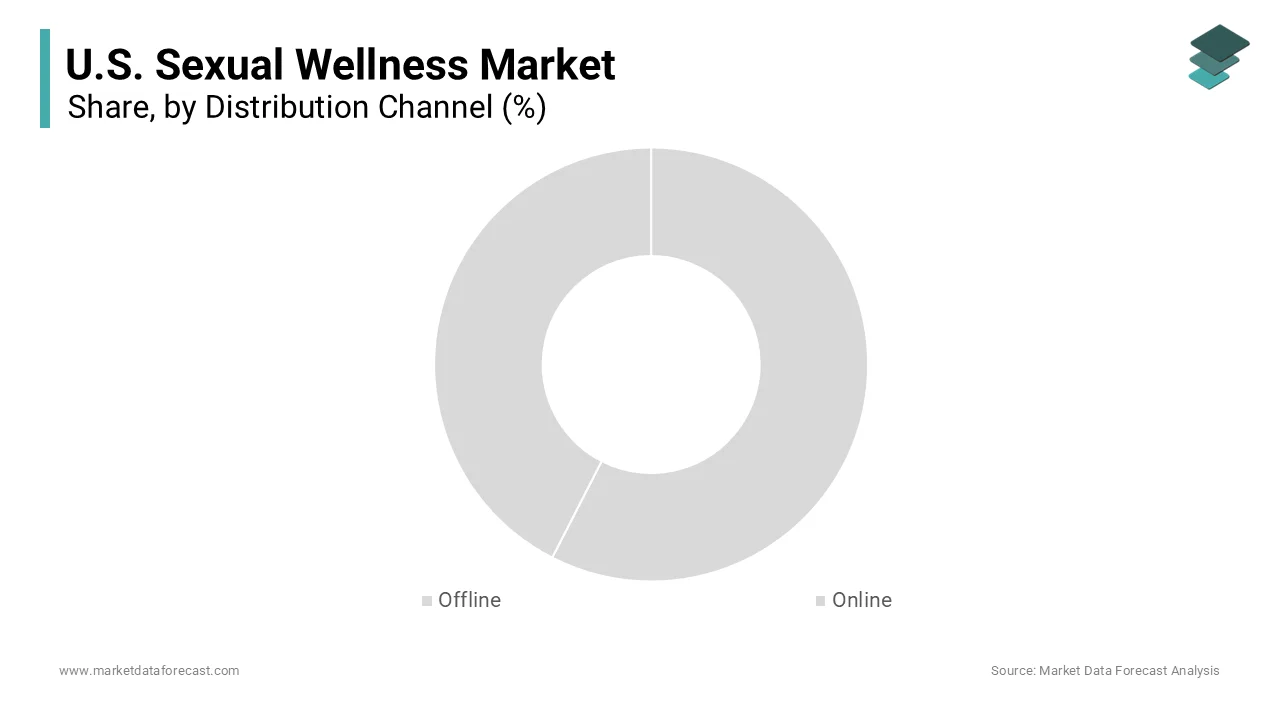
On the other end, the online segment is projected to experience rapid and continuous expansion over the coming years and is likely to register a CAGR of 13.3% during the forecast period owing to the rising demand for privacy, discreet packaging, and a wider product variety that physical stores cannot accommodate. Consumers heavily favor digital avenues to access highly personalized or niche inventory confidentially. The paramount concern for privacy among consumers drives the accelerated growth of the online sexual wellness market. Many individuals prefer to avoid the potential embarrassment of purchasing sensitive items in public settings. E commerce platforms address this need by offering plain packaging and confidential billing statements. According to a study by the Pew Research Center, 64% of Americans value the anonymity provided by online shopping for personal health products. This discretion lowers the psychological barrier to entry for first time buyers. Additionally, online retailers offer a vastly broader selection of products, including niche and specialized items that are not stocked in local stores. Data from the Digital Commerce 360 report shows that online sales of adult novelty items increased by 25% year over year due to expanded catalogues. The integration of secure payment gateways and encrypted data protection further enhances consumer confidence. As per the Cybersecurity and Infrastructure Security Agency, online retail platforms have improved security protocols, reducing fraud risks by 30% in the last two years. The convenience of home delivery eliminates travel time and allows for flexible shopping hours. Mobile commerce has also played a significant role, with smartphones enabling discreet browsing and purchasing. According to a report by Statista, approximately 60% of online retail traffic comes from mobile devices, which aligns with consumer preferences for discreet purchasing. These factors collectively contribute to the robust growth trajectory of the online distribution channel.
By Product Insights
The condoms segment held the highest share of the U.S. sexual wellness market in 2025 and is expected to remain the foundational product revenue source for the U.S. market through the end of the decade due to their essential role in contraception and sexually transmitted infection prevention. This category remains a staple in household health kits and is widely distributed through various channels. Sustained government health directives will ensure this product category maintains long term volume stability. Government and public health initiatives focused on preventing sexually transmitted infections and unintended pregnancies sustain the high demand for condoms. These products are viewed as a primary line of defense in sexual health management. According to the Centers for Disease Control and Prevention, there were approximately 2.5 million reported cases of chlamydia, gonorrhea, and syphilis in the U.S. in the most recent reporting year. This high incidence rate underscores the critical need for barrier methods. Public health campaigns frequently distribute free or subsidized condoms to increase accessibility. Data from the Guttmacher Institute shows that condoms are used by 25% of couples as their primary method of contraception. This widespread usage ensures a consistent and recurring revenue stream for manufacturers. Furthermore, the affordability of condoms compared to other contraceptive methods makes them accessible to a broader socioeconomic demographic. As per the Kaiser Family Foundation, 80% of women aged 15 to 44 who use contraception have used condoms at some point. The availability of diverse types, including latex free and textured variants, caters to different consumer preferences. Retailers often place condoms in high traffic areas, ensuring visibility and ease of purchase. The enduring necessity of condoms for safe sex practices cements their position as the leading product segment in the market.
However, the sex toys segment is set to experience the fastest CAGR in the U.S. market during the forecast period owing to the increasing social acceptance, technological innovation, and the focus on sexual pleasure as a component of well-being. Consumer spending habits demonstrate an increasing willingness to purchase premium, high tech novelties. The rapid growth of the sex toys segment is driven by significant technological advancements and the ongoing destigmatization of sexual pleasure devices. Modern products incorporate smart features, such as app connectivity, virtual reality integration, and customizable settings, which enhance user experience. According to the Consumer Technology Association, the adoption of connected intimate devices has grown by 40% among millennials and Generation Z consumers. These innovations attract a tech savvy demographic that values personalization and interactivity. Furthermore, the normalization of sexual wellness in mainstream media has reduced shame associated with these products. According to a survey by Morning Consult, 52% of adults under 40 own at least one sexual wellness device, indicating widespread acceptance. Marketing strategies have shifted towards empowerment and self-care, appealing to a broader audience, including women and couples. The rise of direct to consumer brands has also facilitated easier access to high quality products with educational content. As per Nielsen, sales of premium sex toys in retail channels increased by 18%, reflecting a willingness to invest in quality. The focus on sexual health as part of holistic well-being encourages regular usage and repeat purchases. These factors combined create a dynamic environment for rapid segment growth and product diversification.
By End User Insights
The women segment dominated the market in 2025 and will continue to capture the highest overall consumption share in the U.S. market over the coming years due to the higher engagement in self-care routines and greater openness to discussing sexual health issues. Women are increasingly prioritizing their sexual well-being as part of overall health. Market innovation remains highly focused on female anatomy and product aesthetic preferences. Women are more likely to seek solutions for sexual health issues, such as low libido or discomfort. According to the Journal of Sexual Medicine, 43% of women in the U.S. report experiencing some form of sexual dysfunction, prompting them to explore wellness products. This proactive approach drives demand for lubricants, vibrators, and pelvic floor trainers. The rise of female focused brands that emphasize design aesthetics and body positivity has further resonated with this demographic. According to a report by Mintel, 60% of women aged 18 to 34 have purchased a sexual wellness product in the past year. Social media influencers and online communities play a crucial role in educating women about their sexual health and recommending products. According to the American Psychological Association, women are more likely than men to discuss health concerns with peers and professionals, facilitating information spread. The availability of products tailored specifically for female anatomy and preferences enhances satisfaction and loyalty. Furthermore, the emphasis on mental health and stress relief has highlighted the benefits of sexual wellness activities. These factors collectively establish women as the primary consumers in the sexual wellness market.
On the other side, the LGBT community segment is projected to achieve the highest CAGR of 16.2% during the forecast period in the U.S. market owing to the increasing visibility, targeted marketing, and the specific needs of diverse sexual orientations and gender identities. Dedicated lifestyle platforms continue to improve market penetration within this consumer group. The rapid expansion of the LGBT community segment is further driven by inclusive marketing strategies and the development of products tailored to diverse sexual needs. Brands are increasingly recognizing the purchasing power of these demographic and creating campaigns that reflect their experiences. According to the Williams Institute, the LGBT population in the U.S. is estimated at 13.9 million adults, representing a significant market opportunity. Companies are launching products designed for same sex couples and gender diverse individuals, such as strap on harnesses and specialized lubricants. According to a report by GLAAD, 70% of LGBT consumers prefer brands that actively support and represent their community. This alignment fosters strong brand loyalty and advocacy. Furthermore, the lack of adequate representation in traditional healthcare has led this community to seek alternative wellness solutions independently. According to the National LGBTQ Task Force, 40% of LGBT individuals report facing discrimination in healthcare settings, driving them towards self-managed wellness options. Online platforms provide safe spaces for education and product discovery within the community. The growing acceptance of diverse identities in society reduces stigma and encourages open consumption. These dynamics create a fertile ground for sustained growth in this segment, as companies continue to innovate and engage with LGBT consumers authentically.
COUNTRY LEVEL ANALYSIS
The U.S. accounted for 40.2% of the North American market share in 2025 and is poised to strengthen its status as the world's most dominant and advanced sexual wellness economy for the next several years. This leading position is supported by a robust economy, a large corporate sector, and high technological adoption rates. The leading position of the U.S. in the global sexual wellness market is supported by high disposable income levels and an advanced healthcare infrastructure that facilitates access to wellness products. Consumers in the US have the financial capacity to invest in premium sexual wellness items and services. According to the Bureau of Economic Analysis, personal consumption expenditures in the U.S. reached a seasonally adjusted annual rate of over 19 trillion dollars in recent quarters, indicating strong purchasing power. This economic stability allows for discretionary spending on health and wellness categories. Furthermore, the extensive network of healthcare providers and pharmacies ensures widespread product availability. Data from the American Hospital Association shows that there are over 6000 hospitals and 90000 clinics in the country, providing multiple touchpoints for consumer engagement. The integration of sexual health into routine medical care encourages early adoption of wellness solutions. According to the Centers for Disease Control and Prevention, over 80% of adults have a usual source of healthcare where they can receive recommendations. The presence of major industry players and startups fosters competition and innovation, driving market growth. Regulatory frameworks, although complex, provide a structured environment for product safety and efficacy. These economic and structural advantages solidify the U.S. as the pivotal hub for the sexual wellness market.
COMPETITIVE LANDSCAPE
The competition in the U.S. sexual wellness market is intense and characterized by a mix of established multinational corporations and agile niche startups. Established brands leverage their extensive distribution networks and strong brand recognition to maintain dominance while newer entrants disrupt the market with innovative technologies and targeted marketing. The rise of direct to consumer models has lowered barriers to entry allowing specialized brands to capture specific demographics such as the LGBT community or eco conscious consumers. Product differentiation is key as companies compete on features like smart connectivity organic ingredients and ergonomic design. Price competition remains moderate in the premium segment where quality and brand value drive purchasing decisions. However the mass market sees aggressive pricing strategies to gain volume. Marketing strategies increasingly focus on education and empowerment rather than just pleasure helping to destigmatize the category. Regulatory compliance poses a challenge for all players requiring significant investment in safety testing and labeling. Mergers and acquisitions are common as larger firms seek to expand their portfolios and acquire innovative technologies. This dynamic environment forces continuous adaptation and innovation to retain market relevance and satisfy evolving consumer expectations for privacy quality and inclusivity in sexual health solutions.
KEY MARKET PLAYERS
Some of the companies that are playing a dominating role in the U.S. sexual wellness market are
- PHC Inc.
- Ansell Ltd.
- Church and Dwight Co. Inc.
- Dame Products Inc.
- GLYDE
- Good Clean Love Inc.
- HYTTO PTE. Ltd.
- JIMMYJANE
- KESSEL medintim GmbH
- LELOi AB
- Lovehoney Group Ltd.
- Lovelife Toys
- Pure Romance
- Reckitt Benckiser Group PLC
- Sagami Rubber Industries Co. Ltd.
- Veru Inc.
- WOW Tech International GmbH
Top Players in the Market
- Church and Dwight Co Inc significantly contributes to the U.S. sexual wellness market through its Trojan brand which is a household name for condoms and personal lubricants. The company leverages its extensive distribution network to ensure product availability in pharmacies and retail stores across the nation. Recent actions include launching eco friendly packaging initiatives to appeal to environmentally conscious consumers. They have also expanded their product line to include premium lubricants with natural ingredients. The company invests heavily in digital marketing campaigns that focus on sexual health education and destigmatization. By partnering with healthcare providers and influencers they reinforce brand trust and reliability. Their commitment to quality and safety standards maintains their strong reputation among consumers. These strategic moves help the company maintain its leadership position by adapting to changing consumer preferences and sustainability trends while ensuring consistent product innovation and accessibility in the competitive landscape.
- Reckitt Benckiser Group plc plays a vital role in the U.S. sexual wellness market with its Durex brand which is renowned for innovative contraceptive solutions and intimate wellness products. The company focuses on technological advancements such as developing thinner and more sensitive condoms to enhance user experience. Recent efforts include expanding their portfolio of pleasure enhancing lubricants and massagers. They actively engage in global awareness campaigns promoting safe sex practices and sexual well being. The company utilizes data analytics to understand consumer behavior and tailor product offerings accordingly. They have strengthened their online presence through e commerce partnerships and direct to consumer platforms. By emphasizing inclusivity and diversity in their marketing they connect with a broader demographic. Their continuous investment in research and development ensures they remain at the forefront of product innovation. These strategies enable the company to sustain its competitive edge and meet the evolving needs of modern consumers seeking high quality and reliable sexual wellness solutions.
- LELO HB AB is a prominent player in the U.S. sexual wellness market known for its luxury smart intimate products and award winning designs. The company distinguishes itself by integrating advanced technology such as app connectivity and ergonomic engineering into its devices. Recent actions include launching new collections that emphasize aesthetic appeal and functionality catering to modern lifestyles. They have expanded their retail presence through partnerships with high end department stores and specialty boutiques. The company prioritizes customer privacy and discretion in all transactions and packaging. They engage in educational initiatives to promote sexual health and wellness awareness among consumers. By focusing on premium branding they attract discerning customers willing to invest in quality. Their commitment to sustainability is evident in the use of body safe materials and eco friendly packaging. These efforts strengthen their market position by building a loyal customer base that values innovation design and ethical business practices in the growing luxury segment of the sexual wellness industry.
Top Strategies Used by Key Market Participants
Key players in the U.S. sexual wellness market primarily employ product innovation and digital expansion strategies to strengthen their positions. Companies invest heavily in research and development to create technologically advanced items such as app connected devices and organic lubricants. This approach appeals to tech savvy and health conscious consumers seeking enhanced experiences. Brands also focus on destigmatization through inclusive marketing campaigns that normalize sexual wellness discussions. By partnering with influencers and healthcare professionals they build trust and broaden their reach. E commerce optimization is another critical strategy as firms enhance online platforms for discreet shopping and personalized recommendations. Strategic collaborations with retail chains ensure wider physical availability while maintaining brand visibility. Sustainability initiatives including eco friendly packaging attract environmentally aware buyers. These combined efforts allow companies to differentiate themselves in a crowded market. They adapt to shifting consumer preferences by offering diverse product ranges and engaging content. Continuous improvement in supply chain efficiency ensures timely delivery and cost management. Such multifaceted strategies drive growth and foster long term customer loyalty in this dynamic sector.
MARKET SEGMENTATION
This research report on the U.S. sexual wellness market is segmented and sub-segmented into the following categories.
By Distribution Channel
- Offline
- Online
By Product
- Sex toys
- Condoms
- Erotic lingerie
- Personal lubricants
- Others
By End User
- Men
- Women
- LGBT community
By Country
- California
- Washington
- Oregon
- New York
- Rest of the United States