U.S. Shrimp Market Size, Share, Trends & Growth Forecast Report By Species, Source, Form, Distribution Channel, and By Country (California, Washington, Oregon, New York & Rest of the United States) – Industry Analysis and Forecast, 2026 to 2034
Market Size, 2025
$16.85 BnMarket Estimate, 2026
$17.83 BnMarket Forecast, 2034
$28.01 BnCAGR, 2026–2034
5.81%U.S. Shrimp Market Report Summary
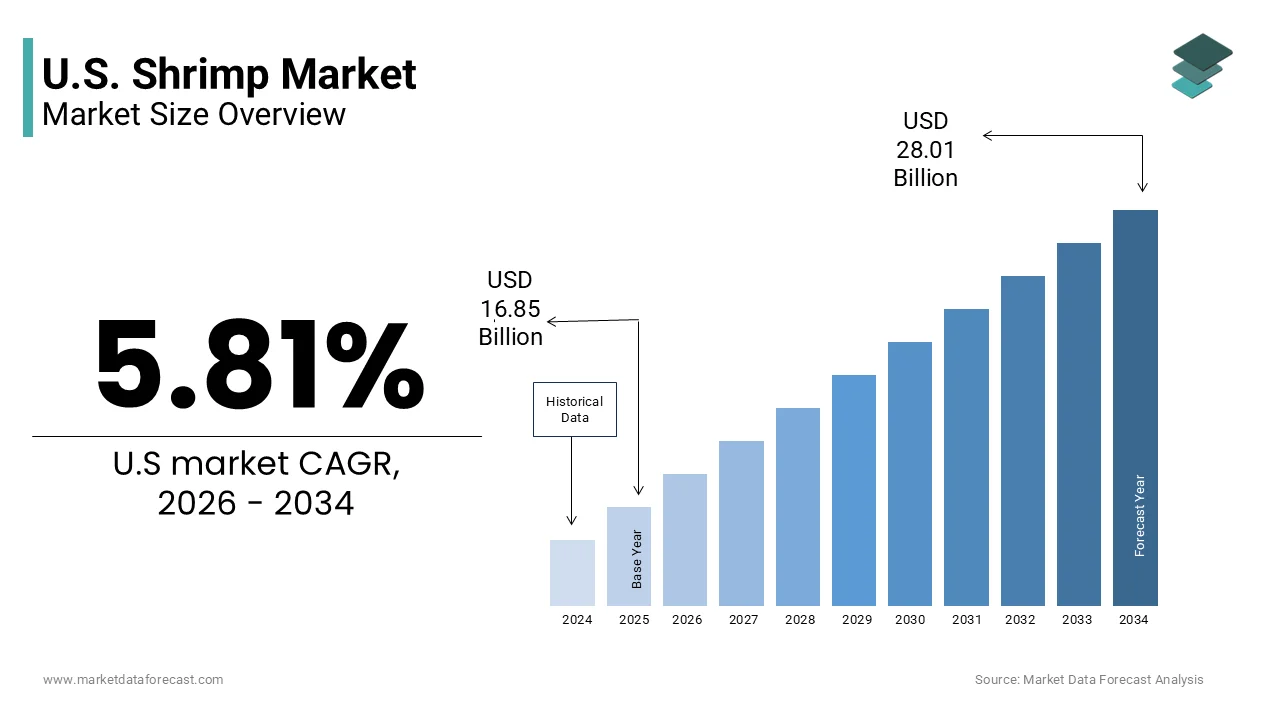
The U.S. shrimp market was valued at USD 16.85 billion in 2025, is estimated to reach USD 17.83 billion in 2026, and is projected to reach USD 28.01 billion by 2034, growing at a CAGR of 5.81% during the forecast period. Market growth is driven by rising seafood consumption, increasing consumer preference for high protein diets, and expanding availability of processed and ready to cook shrimp products. Shrimp remains one of the most widely consumed seafood products in the United States due to its affordability, versatility, and nutritional value. The growing demand for frozen and convenience seafood products is further supporting strong market expansion across the country.
Key Market Trends
- Rising consumer preference for high protein and seafood based diets is driving market growth.
- Increasing demand for convenient frozen and ready to cook shrimp products is boosting consumption.
- Growing expansion of retail seafood distribution and foodservice channels is supporting market expansion.
- Rising imports and advancements in aquaculture production are enhancing product availability.
- Innovation in value added seafood products and sustainable shrimp farming practices is influencing market development.
Segmental Insights
- Based on species, the whiteleg shrimp segment accounted for the dominant share of the U.S. shrimp market in 2025. This dominance is attributed to its widespread availability, cost effectiveness, and strong demand across retail and foodservice sectors.
- Based on form, the frozen shrimp segment held the leading share of the U.S. shrimp market in 2025, driven by extended shelf life, convenience, and growing demand for easy to prepare seafood products.
Regional Insights
- The U.S. shrimp market is expected to maintain strong growth during the forecast period, supported by high seafood consumption rates, expanding retail distribution networks, and increasing demand for affordable protein sources. The growing popularity of seafood based diets and convenience food products is further strengthening market development.
Competitive Landscape
The U.S. shrimp market is highly competitive, with key players focusing on sustainable sourcing, cold chain expansion, and value added seafood product development to strengthen their market position. Companies are investing in frozen seafood processing, aquaculture partnerships, and retail distribution expansion. Prominent players in the U.S. shrimp market include Ocean Direct, Nordic Seafood, Aqua Star, Mazzetta Company, Clearwater Seafoods, Surapon Foods, High Liner Foods, Waterbase, Avanti Feeds, and Thai Union Group PCL ADR.
U.S. Shrimp Market Size
The U.S. shrimp market size was valued at USD 16.85 billion in 2025, is estimated to reach USD 17.83 billion in 2026, and is projected to reach USD 28.01 billion by 2034, growing at a CAGR of 5.81% from 2026 to 2034.
The U.S. shrimp market encompasses various species including whiteleg shrimp, black tiger shrimp, and brown shrimp, available in diverse forms such as raw, frozen, peeled, deveined, and breaded preparations. As per the National Oceanic and Atmospheric Administration, shrimp consistently ranks as the most consumed seafood item in the U.S., and in 2023, the per capita consumption of seafood was 19.1 pounds. The definition extends beyond fresh catches to include a heavy reliance on imports which satisfy the majority of domestic demand due to limited local aquaculture capacity. According to the National Fisheries Institute, each American consumed 5.9 pounds of shrimp on average in 2021, reflecting its entrenched status in culinary traditions ranging from casual dining to fine cuisine. The regulatory landscape is governed by the Food and Drug Administration which enforces strict safety standards regarding antibiotic residues and labeling accuracy. Consumer preferences are increasingly shifting toward sustainably sourced products prompting retailers to prioritize certifications such as the Marine Stewardship Council. The market operates within a complex global supply chain where geopolitical factors and environmental conditions in exporting nations directly influence domestic availability and pricing structures. This sector is characterized by high volume turnover and intense competition among international suppliers seeking to capture the lucrative American consumer base.
MARKET DRIVERS
High Consumer Preference for Versatile and Healthy Protein
The strong consumer preference for shrimp as a versatile lean protein source that aligns with modern health and dietary trends is one of the key factors driving the U.S. shrimp market growth. Shrimp is low in calories and saturated fat while being rich in essential nutrients such as omega 3 fatty acids, selenium, and vitamin B12. As per the Dietary Guidelines for Americans, seafood is recommended as part of a healthy eating pattern to support cardiovascular health and cognitive function. The versatility of shrimp allows it to be incorporated into a wide variety of cuisines including Asian, Mediterranean, and American dishes, making it appealing to a diverse demographic. According to nutrition surveys, a growing number of consumers are actively seeking alternatives to red meat due to health concerns and environmental considerations. Shrimp serves as an ideal substitute, offering a quick cooking time and mild flavor that adapts well to various seasonings and preparation methods. The rise of fitness and wellness cultures has further amplified demand for high protein, low fat food options. Retailers and food service providers respond to this trend by expanding their shrimp offerings, including ready to cook and value added products. The perception of shrimp as a premium yet accessible protein encourages frequent purchases across income levels. This widespread acceptance and nutritional profile ensure that shrimp remains a staple in household meal planning, driving consistent demand in both retail and hospitality sectors.
Expansion of Food Service and Quick Service Restaurant Offerings
The expansion of food service and quick service restaurant QSR offerings significantly drives the demand for shrimp in the U.S. market. Restaurants and fast food chains increasingly feature shrimp based items on their menus to attract customers seeking diverse and premium dining experiences. As per the National Restaurant Association, seafood items including shrimp tacos, burgers, and sandwiches have become popular menu additions, and the restaurant industry sales reached 997 billion dollars in 2023. The convenience of pre prepared and frozen shrimp products allows food service operators to maintain consistency and reduce preparation time. According to industry data, the number of seafood focused establishments and menu innovations has grown substantially in recent years. Major QSR chains have introduced limited time offers featuring shrimp, which generate significant consumer interest and trial. The ability of shrimp to command higher price points compared to other proteins makes it an attractive option for restaurants aiming to increase average check sizes. Collaborations between suppliers and restaurant chains ensure a steady supply of standardized products that meet quality and safety requirements. The trend toward casual dining and takeout has further boosted the popularity of shrimp bowls and salads, which are easy to consume on the go. This robust presence in the food service sector creates a stable and high volume demand channel that complements retail sales. The continuous innovation in menu items ensures that shrimp remains a dynamic and sought after ingredient in the culinary landscape.
MARKET RESTRAINTS
Vulnerability to Supply Chain Disruptions and Import Dependence
The heavy dependence on imports and vulnerability to global supply chain disruptions is a significant impediment to the U.S. shrimp market growth. The majority of shrimp consumed in the U.S. is imported from countries such as India, Ecuador, and Vietnam, and as per the National Oceanic and Atmospheric Administration, 80% of the seafood Americans ate in 2023 came from foreign imports. Any disruption in production or logistics in these key exporting nations can lead to immediate shortages and price volatility in the domestic market. Factors such as political instability, trade tariffs, and transportation bottlenecks can severely impact the flow of goods. According to logistics reports, recent global events have highlighted the fragility of long distance supply chains, causing delays and increased freight costs. The lack of significant domestic aquaculture production means that the U.S. has limited ability to buffer against these external fluctuations. This dependence creates uncertainty for retailers and consumers who face inconsistent availability and pricing. The reliance on foreign sources also raises concerns about food security and the ability to monitor safety standards effectively. Any recall or safety issue in an exporting country can have widespread repercussions on consumer confidence and market stability. The complexity of managing a global supply chain requires significant resources and risk management strategies. Until domestic production capabilities are enhanced, the market will remain exposed to these structural vulnerabilities, limiting its resilience and growth potential.
Strict Regulatory Standards and Safety Concerns
Strict regulatory standards and ongoing safety concerns are further hindering the U.S. market expansion. The Food and Drug Administration imposes rigorous testing and inspection protocols for imported seafood to ensure compliance with safety guidelines. As per the Southern Shrimp Alliance, for the calendar year 2025, the FDA reported refusing a total of 99 entry lines of shrimp for reasons related to veterinary drug residues. These stringent measures increase the cost and time required for importers to clear customs, affecting supply efficiency. According to industry analyses, frequent recalls and safety alerts related to shrimp products can erode consumer trust and dampen demand. The perception of risk associated with farmed shrimp, particularly regarding the use of chemicals and antibiotics in producing countries, influences purchasing decisions. Consumers are becoming more informed and cautious, leading them to seek certified and traceable products, which may come at a premium. The complexity of navigating different regulatory frameworks across multiple exporting countries adds to the operational burden for suppliers. Compliance with labeling requirements and sustainability certifications further increases costs for producers and distributors. The fear of negative publicity and legal liabilities prompts retailers to be selective in their sourcing, which can limit market access for smaller suppliers. These regulatory and safety challenges create barriers to entry and expansion, requiring continuous investment in quality assurance and transparency to maintain market access and consumer confidence.
MARKET OPPORTUNITIES
Growth of Domestic Aquaculture and Sustainable Farming
The growth of domestic aquaculture and sustainable farming is a notable opportunity for the U.S. shrimp market. Advances in recirculating aquaculture systems RAS and inland farming technologies enable the production of high quality shrimp with minimal environmental impact. As per the U.S. Department of Agriculture, there is increasing interest and investment in local shrimp farming to reduce reliance on imports and enhance food security. Domestic production offers the advantage of fresher products and shorter supply chains, which appeal to consumers prioritizing locality and sustainability. According to agricultural reports, several pilot projects and commercial farms have demonstrated the viability of raising shrimp in controlled indoor environments. These systems allow for year round production, independent of weather conditions, and reduce the risk of disease outbreaks. The ability to label products as locally grown and sustainable commands a premium price and attracts environmentally conscious buyers. Retailers and restaurants are increasingly seeking domestic sources to support local economies and reduce carbon footprints. The development of proprietary breeds and feed formulations further enhances the efficiency and profitability of domestic farming. Government grants and incentives for sustainable agriculture provide additional support for entrepreneurs entering this sector. By establishing a robust domestic industry, the U.S. can diversify its supply sources and reduce vulnerability to global market fluctuations. This shift toward local production aligns with broader consumer trends favoring transparency and ethical sourcing, creating a lucrative niche for innovative farmers.
Innovation in Value Added and Convenience Products
Innovation in value added and convenience products offers a lucrative opportunity for growth in the U.S. shrimp market. Consumers are increasingly seeking ready to cook and ready to eat shrimp options that save time and effort in meal preparation. As per retail trends, products such as marinated shrimp skewers, breaded shrimp rings, and seasoned tails are gaining popularity among busy households. Manufacturers can differentiate their offerings by introducing unique flavors and culinary inspirations from various cuisines. According to market observations, the demand for convenient protein sources has surged, driven by changing lifestyles and work patterns. The development of packaging technologies that preserve freshness and extend shelf life further enhances the appeal of these products. Retailers are dedicating more shelf space to value added seafood sections, reflecting consumer preference for ease and variety. The introduction of organic and clean label shrimp products caters to health conscious buyers who avoid artificial additives. Collaborations with chefs and culinary experts can help create innovative recipes and product concepts that resonate with consumers. The expansion of e commerce platforms provides a direct channel for reaching customers with specialized and premium offerings. By focusing on convenience and innovation, companies can capture higher margins and build brand loyalty. This strategy addresses the modern consumer's need for quick, nutritious, and enjoyable meal solutions, driving sustained growth in the shrimp category.
MARKET CHALLENGES
Environmental Sustainability and Ecological Impact
Environmental sustainability and the ecological impact of shrimp farming pose significant challenges to the U.S. shrimp market. Conventional shrimp aquaculture in some exporting countries has been associated with mangrove destruction, water pollution, and biodiversity loss. As per the U.S. Environmental Protection Agency, it is estimated that almost half of current mangrove areas in the U.S. will be submerged by 3.0 meters of sea level rise by 2150 or earlier. These practices raise serious concerns about the long term viability of shrimp production. Consumers and retailers are increasingly demanding proof of sustainable sourcing, leading to pressure on suppliers to adopt responsible practices. According to certification bodies, the cost and complexity of obtaining sustainability labels, such as the Aquaculture Stewardship Council, can be prohibitive for small scale farmers. The lack of uniform global standards creates confusion and inconsistency in verifying environmental claims. Negative media coverage of unsustainable farming practices can damage brand reputations and reduce consumer confidence. The industry faces the challenge of balancing production demands with environmental stewardship to ensure resource preservation. Climate change further exacerbates these issues by affecting water quality and increasing the frequency of extreme weather events. The need to transition to eco-friendly farming methods requires significant investment and technical expertise. Failure to address these environmental challenges may result in stricter regulations and reduced market access. The industry must collaborate with stakeholders to develop and implement sustainable solutions that protect ecosystems while meeting consumer demand. This transition is critical for maintaining the social license to operate and ensuring the future resilience of the shrimp market.
Price Volatility and Economic Sensitivity
Price volatility and economic sensitivity offer major challenges to the expansion of the U.S. shrimp market. Shrimp prices are influenced by a multitude of factors, including feed costs, labor rates, exchange rates, and global supply dynamics. As per the U.S. Department of Agriculture, average annual food at home prices were 2.3% higher in 2025 than in 2024. Changes in currency values in exporting countries can make imports more expensive or cheaper, affecting competitiveness. According to market analyses, sudden shifts in supply due to disease outbreaks or weather events can cause sharp price spikes or drops. This volatility makes it difficult for retailers and consumers to predict costs and plan budgets. Economic downturns and inflationary pressures can reduce disposable income, leading consumers to cut back on premium seafood purchases. Shrimp is often viewed as a discretionary item, making it vulnerable to changes in consumer spending behavior. The inability to pass on cost increases to price sensitive customers squeezes profit margins for suppliers and retailers. The challenge of maintaining stable pricing while ensuring quality and sustainability requires effective risk management strategies. Long term contracts and hedging mechanisms can help mitigate some risks but cannot eliminate them entirely. The industry must navigate these economic uncertainties by improving efficiency and diversifying supply sources. Addressing price volatility is essential for maintaining market stability and ensuring continued consumer access to shrimp products.
REPORT COVERAGE
| REPORT METRIC | DETAILS |
| Market Size Available | 2025 to 2034 |
| Base Year | 2025 |
| Forecast Period | 2026 to 2034 |
| CAGR | 5.81% |
| Segments Covered | By Species, Source, Form, Distribution Channel, and Region. |
| Various Analyses Covered | Global, Regional and Country-Level Analysis, Segment-Level Analysis, Drivers, Restraints, Opportunities, Challenges; PESTLE Analysis; Porter’s Five Forces Analysis, Competitive Landscape, Analyst Overview of Investment Opportunities |
| Countries Covered | California, Washington, Oregon, New York, United States |
| Market Leaders Profiled | Ocean Direct, Nordic Seafood, Aqua Star, Mazzetta Company, Clearwater Seafoods, Surapon Foods, High Liner Foods, Waterbase, Avanti Feeds, and Thai Union Group PCL ADR |
SEGMENTAL ANALYSIS
By Species Insights
The whiteleg shrimp segment accounted for the dominating share of the U.S. shrimp market in 2025. The dominance of whiteleg segment in the U.S. market is driven by its superior biological characteristics which allow for high density farming and consistent global supply. As per the Food and Agriculture Organization of the United Nations, global shrimp exports reached 2.93 million tonnes in quantity during January to September 2025. This efficiency ensures a steady flow of product to the U.S. market, minimizing the risk of shortages that plague other species. The ability of producers in countries like Ecuador and India to scale production quickly allows them to meet the massive demand of American consumers at competitive prices. According to trade data, global shrimp imports during the first three quarters of 2025 totaled 20.65 billion dollars. The uniform size and shape of whiteleg shrimp make it ideal for industrial processing and value added products, such as breaded rings and popcorn shrimp. This standardization simplifies logistics for retailers and food service operators who require predictable inventory levels. The reliability of supply chains dedicated to this species ensures that it remains the default choice for mass market consumption. The economic advantage of lower production costs translates to affordable retail prices, making whiteleg shrimp accessible to a broad demographic. This combination of biological efficiency and economic viability solidifies its position as the market leader.
However, the black tiger shrimp segment is estimated to showcase a promising CAGR of 5.5% during the forecast period in the U.S. market owing to the rising consumer demand for premium large sized seafood options that offer a luxurious dining experience. Black tiger shrimp are significantly larger than whiteleg shrimp with distinct striped shells that make them visually striking on plates. As per restaurant industry trends, there is a growing preference for impressive presentation in both fine dining and casual establishments, where size and appearance influence perceived value. Consumers are willing to pay a premium for tiger shrimp due to their substantial meat yield and firm texture which holds up well to grilling and broiling. According to import statistics, the volume of black tiger shrimp entering the U.S. has increased as suppliers from Vietnam and Bangladesh expand their export capabilities. The association of tiger shrimp with special occasions and gourmet meals drives its adoption among affluent households. The distinct flavor profile that is slightly sweeter and more robust than whiteleg shrimp and appeals to discerning palates seeking variety. Marketing efforts by exporters emphasize the wild caught heritage and natural qualities of tiger shrimp, enhancing its premium image. The availability of head on shell on formats further attracts culinary enthusiasts who value authenticity and freshness. This shift toward premiumization in seafood consumption supports the accelerated growth of the tiger shrimp segment.
By Form Insights
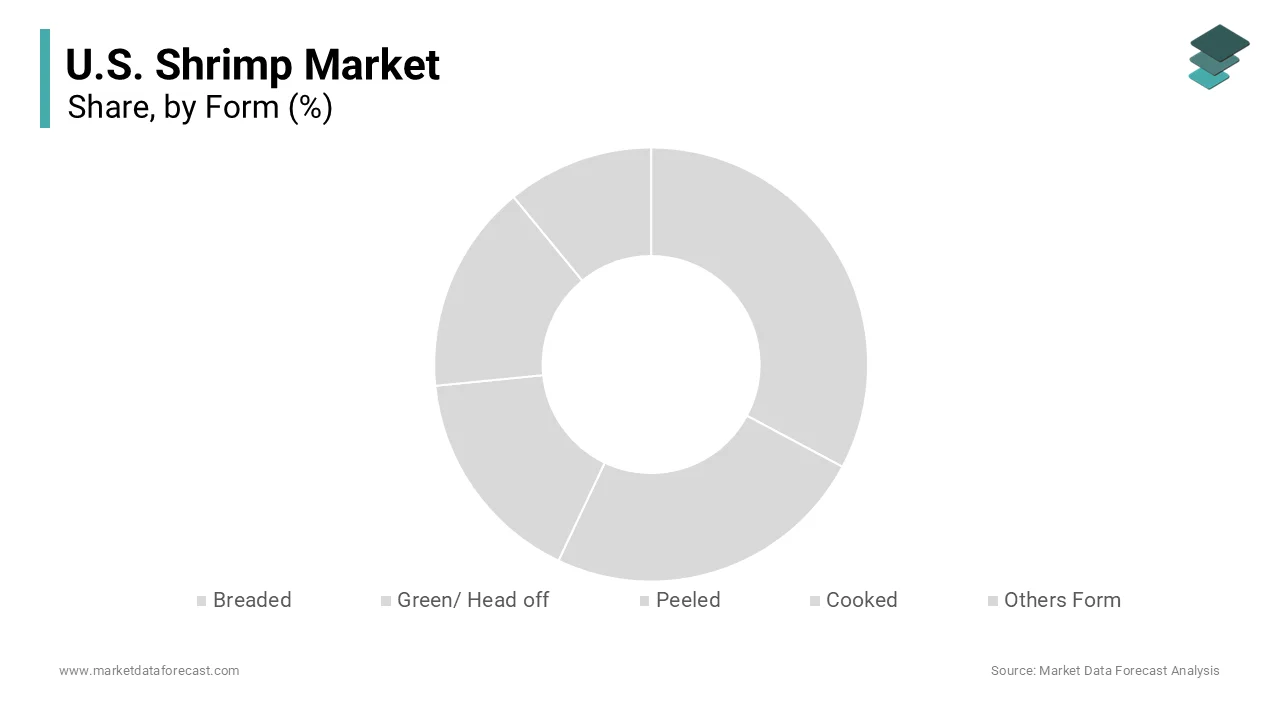
The frozen shrimp segment led the market by capturing the highest share of the U.S. shrimp market in 2025. The growth of the frozen shrimp segment in the U.S. market is attributed to its extended shelf life, which significantly reduces food waste and enhances logistical efficiency. As per the Food and Agriculture Organization of the United Nations, frozen shrimp constituted 2.35 million tonnes, which was 81.53% of global imports in the first three quarters of 2025. This preservation method is crucial, given that the majority of shrimp consumed in the U.S. is imported from distant regions. The ability to store frozen shrimp for extended periods allows retailers and consumers to manage inventory effectively without the pressure of immediate consumption. According to sustainability studies, frozen seafood generates less waste compared to fresh counterparts, which are prone to rapid degradation. This economic and environmental benefit appeals to both businesses and households seeking to maximize value. The consistency of frozen products ensures that consumers receive uniform quality, regardless of the season or location. The development of advanced freezing technologies, such as flash freezing, maintains the texture and nutritional integrity of the shrimp, making it comparable to fresh options. This reliability builds consumer confidence and encourages regular purchases. The convenience of having a stable supply of shrimp in the freezer supports meal planning and emergency preparedness. These advantages ensure that frozen shrimp remains the preferred form for the majority of American consumers.
However, the fresh and chilled shrimp segment is predicted to record a CAGR of 5.4% during the forecast period in the U.S. market owing to the the consumer perception that fresh products offer superior quality and taste compared to frozen alternatives. As per culinary experts, fresh shrimp retains a delicate sweetness and firm texture that is often lost during the freezing and thawing process. Health conscious consumers associate fresh seafood with higher nutritional value and minimal processing. According to market research, shoppers are increasingly willing to pay a premium for fresh items that promise an authentic dining experience. The visibility of fresh shrimp in display cases allows buyers to inspect the product for clarity and odor, reinforcing trust in its quality. The trend toward clean eating and whole foods supports the preference for fresh ingredients that have not undergone preservation treatments. Retailers are responding by enhancing their seafood counters with better lighting and trained staff who can provide preparation advice. The availability of fresh shrimp in high end grocery stores and specialty markets caters to affluent consumers who prioritize excellence. This desire for the best possible ingredient drives the growth of the fresh segment despite its higher cost and shorter shelf life.
COUNTRY LEVEL ANALYSIS
The U.S. is likely to experience sustained leadership in North American seafood consumption for the next few years due to its robust distribution networks and persistent high demand for affordable protein. As the largest importer and consumer of shrimp globally, the country exhibits a mature and dynamic market characterized by high demand and diverse supply sources. The market status is defined by a heavy reliance on imports to meet domestic consumption needs due to limited local aquaculture production. The regulatory framework ensures high safety standards while promoting sustainable practices. The U.S. market is fundamentally driven by high per capita consumption and the deep integration of shrimp into American culinary culture. As per the National Fisheries Institute, shrimp held the top spot of the most consumed seafood species in 2021. This high level of consumption is supported by the versatility of shrimp in various cuisines and its acceptance as a healthy protein source. The cultural significance of shrimp in regions such as the Gulf Coast and New England reinforces its popularity. According to dietary surveys, shrimp is a staple in household meal planning and restaurant menus across the nation. The diverse population of the U.S. contributes to a wide range of shrimp preparations, reflecting global culinary influences. The availability of shrimp in all forms, from fresh to frozen, ensures that it meets the needs of different consumers. The strong demand for shrimp supports a robust retail and food service infrastructure. This cultural and dietary entrenchment ensures that the U.S. remains the primary driver of shrimp consumption in the region.
COMPETITIVE LANDSCAPE
The competitive landscape of the U.S. shrimp market is characterized by a mix of large international processors and domestic distributors who compete on price quality and sustainability. Incumbent players leverage established supply chains and brand recognition to maintain dominance while newer entrants differentiate through niche offerings such as organic or wild caught shrimp. Competition is driven by the need to ensure consistent supply amidst global volatility and fluctuating import costs. Product differentiation through value added formats and convenient packaging serves as a key strategy to capture consumer interest. Price sensitivity remains high in the mass market segment prompting companies to optimize operational efficiency. Sustainability credentials have become a critical competitive factor as consumers increasingly prefer responsibly sourced seafood. Regulatory compliance and safety standards also influence market dynamics requiring rigorous quality control measures. The rise of private label brands from major retailers intensifies pressure on branded manufacturers to justify premium pricing. Overall the market favors entities that can balance cost effectiveness with transparent and ethical sourcing practices while maintaining strong relationships with retail and food service partners.
KEY MARKET PLAYERS
Some of the companies that are playing a dominating role in the U.S. shrimp market are
- Ocean Direct
- Nordic Seafood
- Aqua Star
- Mazzetta Company
- Clearwater Seafoods
- Surapon Foods
- High Liner Foods
- Waterbase
- Avanti Feeds
- Thai Union Group PCL ADR
Top Players in the US Market
- High Liner Foods Incorporated is a leading processor and marketer of value added seafood products in the U.S. with a strong focus on shrimp. The company leverages its extensive distribution network to supply retail and food service customers with high quality frozen shrimp items. Recent strategic initiatives include expanding its portfolio of convenient ready to cook shrimp products to meet consumer demand for ease of preparation. High Liner has invested in sustainable sourcing practices ensuring that its shrimp supplies are certified by recognized environmental standards. The corporation actively collaborates with suppliers to enhance traceability and quality control throughout the supply chain. By focusing on innovation in packaging and product formulation High Liner strengthens its brand reputation. These efforts aim to capture health conscious consumers who prioritize transparency and convenience. The company continues to optimize its operational efficiency to maintain competitive pricing while delivering superior product quality to the American market.
- Trident Seafoods Corporation plays a significant role in the U.S. shrimp market through its robust processing capabilities and vertical integration. The company sources shrimp from both domestic waters and international partners ensuring a diverse and reliable supply. Recent actions involve upgrading its processing facilities to improve efficiency and product consistency. Trident has launched new branded shrimp lines that emphasize sustainability and responsible fishing practices appealing to environmentally aware buyers. The organization focuses on strengthening relationships with retail chains and food service providers to expand market reach. By investing in technology for better inventory management and logistics Trident ensures timely delivery of fresh and frozen products. The company also engages in marketing campaigns that highlight the quality and origin of its shrimp. These strategies help Trident maintain a strong presence in the competitive seafood landscape. Its commitment to quality and sustainability reinforces consumer trust and drives long term growth in the shrimp sector.
- Thai Union Group Public Company Limited is a global seafood leader with a substantial presence in the U.S. shrimp market through brands like Chicken of the Sea and private label offerings. The company utilizes its vast international supply chain to provide a wide variety of shrimp products to American consumers. Recent strategic moves include enhancing its sustainability framework and obtaining certifications for its shrimp sourcing operations. Thai Union has introduced innovative shrimp products that cater to changing dietary preferences such as low sodium and organic options. The firm invests in research and development to create value added shrimp items that offer convenience and flavor. By partnering with major retailers Thai Union ensures broad distribution and visibility of its products. The company also focuses on digital engagement to connect with consumers and build brand loyalty. These initiatives strengthen its market position by addressing the evolving needs of health conscious and convenience seeking customers in the U.S..
Top Strategies Used by Key Market Participants
Key players in the U.S. shrimp market primarily employ sustainability certification and product innovation strategies to sustain growth. Companies are increasingly sourcing shrimp from certified farms to address environmental concerns and build consumer trust. This approach differentiates brands in a crowded market and appeals to eco conscious buyers. Another major strategy involves expanding value added product lines such as marinated or breaded shrimp to meet demand for convenience. Manufacturers invest in advanced freezing technologies to preserve quality and extend shelf life. Strategic partnerships with retailers ensure prominent shelf placement and promotional support. Digital marketing campaigns highlight transparency and traceability to engage modern consumers. By balancing ethical sourcing with culinary innovation key participants strengthen their market positions and adapt to evolving dietary trends effectively.
MARKET SEGMENTATION
This research report on the U.S. shrimp market is segmented and sub-segmented into the following categories.
By Species
- L. vannamei
- Acetes japonicus
- Pandalus borealis
- Pleoticus muelleri
- Trachipenaeus curvirostris
- P. monodon
- Others Species
- P. chinensis
By Source
- Aquaculture
- Wild
By Form
- Breaded
- Green/ Head off
- Peeled
- Cooked
- Others Form
By Distribution Channel
- B2C
- Convenience Stores
- Specialty Stores
- Others B2C
- Hypermarkets & Supermarkets
- Online
- B2B
By Country
- California
- Washington
- Oregon
- New York
- Rest of the United States
Frequently Asked Questions
1.What is driving the growth of the U.S. shrimp market?
The growth of the U.S. shrimp market is driven by increasing seafood consumption, rising demand for protein rich diets, and expanding food service industries.
2.Which shrimp species are commonly consumed in the U.S. market?
Commonly consumed shrimp species in the U.S. market include L. vannamei, P. monodon, Pandalus borealis, and Acetes japonicus.
3.What are the major sources of shrimp in the U.S. market?
The major sources of shrimp in the U.S. market are aquaculture and wild caught shrimp.
4.Why is aquaculture important in the shrimp industry?
Aquaculture is important because it ensures stable shrimp production, supports large scale supply, and helps meet rising consumer demand.
5.Which distribution channels dominate the U.S. shrimp market?
Hypermarkets and supermarkets, online platforms, convenience stores, specialty stores, and B2B channels are major distribution channels in the market.
6.What forms of shrimp are popular among consumers?
Popular shrimp forms include peeled shrimp, cooked shrimp, breaded shrimp, and green head on or head off shrimp.
7.How is consumer preference influencing the U.S. shrimp market?
Consumers are increasingly preferring convenient, ready to cook, and high protein seafood products, which is boosting shrimp demand.
8.What challenges affect the U.S. shrimp market?
The market faces challenges such as fluctuating raw material prices, disease outbreaks in aquaculture, and strict import regulations.
9.Which region has high shrimp consumption in the United States?
Coastal states and urban regions in the United States show high shrimp consumption due to strong seafood demand and restaurant presence.
10.How does online retail impact the U.S. shrimp market?
Online retail increases product accessibility, supports home delivery services, and expands consumer reach for frozen and packaged shrimp products.
Related Reports
Access the study in MULTIPLE FORMATS
Purchase options starting from
$ 1200
Didn’t find what you’re looking for?
TALK TO OUR ANALYST TEAM
Need something within your budget?
NO WORRIES! WE GOT YOU COVERED!
Call us on: +1 888 702 9696 (U.S Toll Free)
Write to us: sales@marketdataforecast.com