- Product Description Description
- Table of Contents TOC
- List of Table & Figure LOT
- Get Free Sample PDF Sample PDF
Market Size, 2025
$87.60 BnMarket Estimate, 2026
$94.10 BnMarket Forecast, 2034
$166.83 BnCAGR, 2026–2034
7.42%U.S. Skincare Market Report Summary
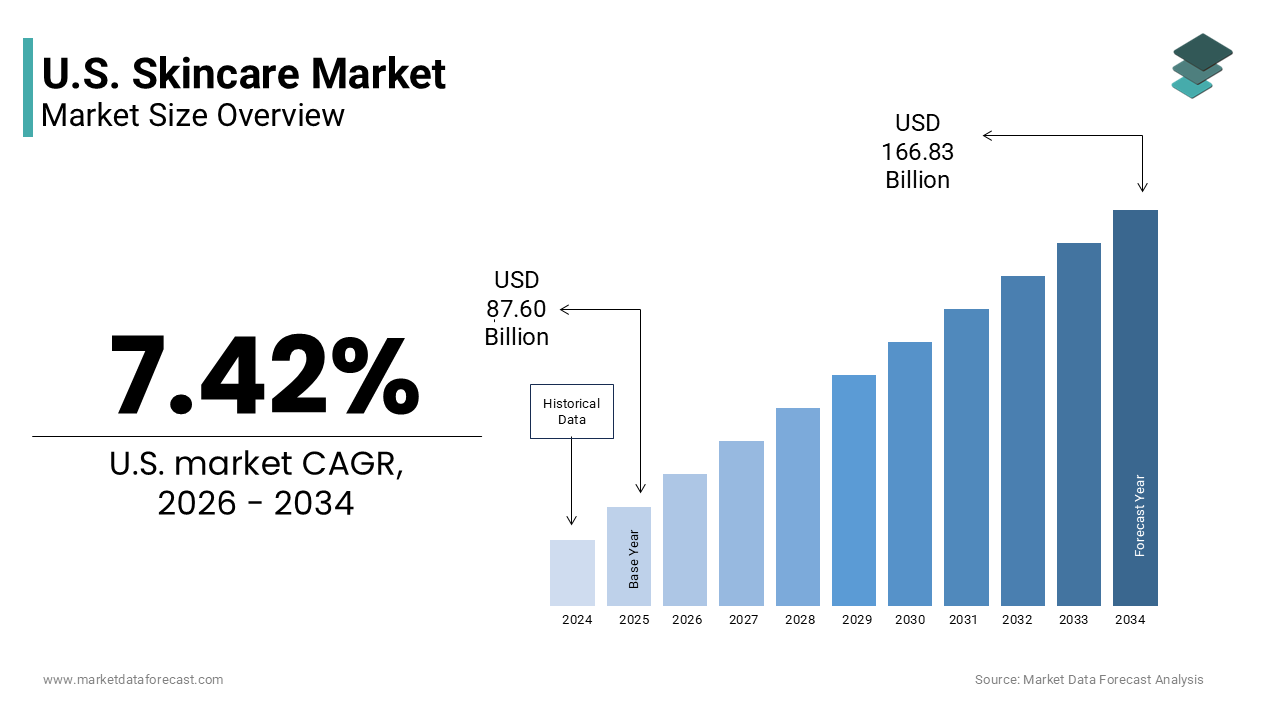
The U.S. skincare market was valued at USD 87.60 billion in 2025, is estimated to reach USD 94.10 billion in 2026, and is projected to reach USD 166.83 billion by 2034, growing at a CAGR of 7.42% during the forecast period from 2026 to 2034. The growth of the U.S. skincare market is driven by rising prevalence of skin conditions, increasing awareness regarding skin health and wellness, and growing consumer preference for personalized and science-backed skincare solutions. Expanding demand for anti-aging, hydration, and sensitive skin products, along with increasing influence of social media and digital beauty education, is further accelerating market growth. Moreover, advancements in AI-driven skincare diagnostics, increasing adoption of clean beauty formulations, and growing demand for natural and sustainable ingredients are supporting the expansion of the U.S. skincare market.
Key Market Trends
- Rising demand for personalized and AI-powered skincare solutions tailored to individual skin concerns and conditions.
- Growing popularity of clean beauty and natural ingredient-based skincare products with transparent labeling practices.
- Increasing integration of active ingredients such as retinol, niacinamide, hyaluronic acid, and peptides in daily skincare routines.
- Strong focus on sustainability initiatives including eco-friendly packaging and ethically sourced ingredients among manufacturers.
- Expansion of men’s skincare and gender-neutral beauty products driven by changing consumer attitudes toward grooming and self-care.
Segmental Insights
- Based on product type, the moisturizers segment dominated the U.S. skincare market and held the largest share in 2025. The segment’s dominance is attributed to the essential role of moisturizers in maintaining skin hydration, supporting skin barrier health, and addressing a wide range of skin concerns across all age groups.
- The serums segment is projected to witness the fastest CAGR during the forecast period owing to increasing consumer demand for high-potency targeted treatments, growing popularity of active ingredients, and rising awareness regarding advanced skincare routines.
- Based on skin type, the combination skin segment accounted for the leading share of the U.S. skincare market in 2025. The dominance of this segment is driven by the high prevalence of combination skin conditions and the growing need for balanced skincare formulations that address both oily and dry skin concerns simultaneously.
- Based on gender, the female segment held the major share of the U.S. skincare market in 2025 owing to higher consumer spending on skincare products, strong adoption of multi-step skincare routines, and extensive product availability targeted toward women.
- Based on ingredients, the synthetic ingredients segment dominated the U.S. skincare market in 2025 due to their formulation stability, cost-effectiveness, and ability to deliver consistent and targeted skincare benefits.
Regional Insights
The United States dominated the North American skincare market and accounted for a major share in 2025, supported by high consumer awareness regarding skincare and wellness, strong spending on beauty and personal care products, and increasing adoption of advanced skincare technologies. California remains a major contributor to the U.S. skincare market due to its large beauty-conscious population, strong presence of skincare brands, and rising demand for premium and natural skincare products. New York, Washington, and Oregon are also witnessing notable growth driven by increasing consumer focus on self-care, expanding clean beauty trends, and growing digital skincare retail penetration.
Competitive Landscape
The U.S. skincare market is highly competitive and characterized by the presence of multinational beauty corporations, dermatology-focused skincare companies, and emerging indie beauty brands competing through innovation, ingredient transparency, and personalized skincare solutions. Leading companies are focusing on expanding clean beauty portfolios, investing in AI-powered skincare technologies, strengthening e-commerce and direct-to-consumer channels, and enhancing sustainability initiatives. Strategic acquisitions, influencer marketing campaigns, and increasing investment in research and development are further strengthening market positioning across diverse consumer demographics. Prominent players in the U.S. skincare market include L'Oréal S.A., The Estée Lauder Companies Inc., Procter & Gamble, Unilever PLC, Johnson & Johnson, Shiseido Company Limited, Beiersdorf AG, Coty Inc., Amorepacific Corporation, and The Clorox Company.
U.S. Skincare Market Size
The U.S. skincare market size was valued at USD 87.60 billion in 2025 and is anticipated to reach USD 94.10 billion in 2026 from USD 166.83 billion by 2034, growing at a CAGR of 7.42% during the forecast period from 2026 to 2034.
Skincare is the daily practice, habits, and product usage aimed at maintaining, enhancing, and protecting the health and appearance of the skin on your face and body. This domain includes cleansers moisturizers serums toners masks and treatments targeting specific concerns such as aging acne hyperpigmentation and sensitivity. The definition of skincare has transcended basic hygiene to become a integral component of holistic wellness and self expression driven by informed consumers who prioritize ingredient transparency and efficacy. Industry campaigns are promoting sun care as a daily essential. However, a recent American Academy of Dermatology study reveals a gap in preventive care, showing only 56% of Americans regularly use sunscreen despite high concerns regarding skin aging. According to data from the American Academy of Dermatology, one in five Americans will develop skin cancer in their lifetime, underscoring the critical importance of dermatologist-recommended products in the consumer market. Consumer behavior indicates a massive shift towards personalized routines, with research demonstrating that 71% of consumers expect companies to deliver personalized interactions, driving brands to tailor formulations to specific skin types and concerns. The demographic landscape is diversifying as men and younger generations increasingly participate in skincare rituals. A study indicates that global beauty and personal care sales have grown steadily, with consumers increasingly treating skincare and wellness rituals as daily essentials rather than discretionary expenses. Regulatory oversight by the Food and Drug Administration ensures product safety while encouraging innovation in active ingredients. The market is characterized by a blend of scientific advancement and natural formulations catering to diverse ethical and aesthetic preferences. Digital platforms heavily influence purchasing decisions. Therefore, the integration of technology and education has become paramount for brand success.
MARKET DRIVERS
Rising Prevalence of Skin Conditions and Environmental Stressors
The increasing prevalence of skin conditions and exposure to environmental stressors is driving the growth of the United States skincare market. This increase creates a sustained demand for therapeutic and protective solutions. Urbanization and climate change have intensified exposure to pollutants UV radiation and extreme weather which compromise skin barrier function and accelerate aging. Emerging dermatological research reveals that environmental pollution acts as a significant skin stressor, with studies showing that ambient air pollutants trigger oxidative stress and inflammation, leading to a rising consumer demand for barrier-repairing and anti-pollution skincare. Data from the American Academy of Dermatology indicates that acne affects up to 50 million Americans annually, making it the most common skin condition in the U.S. and a primary driver of consistent sales for targeted cleansers and topical treatments. Additionally the rise in sensitive skin diagnoses has prompted consumers to seek gentle fragrance free formulations. According to the National Eczema Association, eczema affects roughly 10% of the U.S. population, creating a massive, non-discretionary market for specialized moisturizers and skin barrier repair creams. Consumers are increasingly educated about the link between environmental factors and skin health leading to proactive purchasing behaviors. The demand for antioxidants and anti pollution serums has surged as individuals seek to mitigate damage from free radicals. Dermatologists recommend daily use of broad spectrum sunscreen which has become a staple in morning routines. This health driven motivation ensures that skincare is viewed as a medical necessity rather than a luxury. The ongoing impact of climate variability further amplifies the need for adaptive and resilient skincare products.
Influence of Social Media and Digital Education
The profound influence of social media and digital education is also propelling the expansion of the United States skincare market. This democratizes access to information and shapes consumer preferences. Platforms such as Instagram TikTok and YouTube have transformed skincare into a visible and shareable lifestyle choice fostering communities of enthusiasts who exchange tips and reviews. Data from the Pew Research Center highlights that the vast majority of Americans use social media regularly, with platforms like YouTube used by over 80% of adults, providing an omnipresent digital ecosystem for beauty brand engagement and discovery. This digital exposure accelerates trend adoption and drives viral popularity for specific ingredients such as hyaluronic acid niacinamide and retinol. Research from Influencer Marketing Hub reveals that 49% of consumers rely on influencer recommendations to guide their purchasing decisions, a reliance on peer validation that is amplified even further within the highly visual beauty and skincare markets. Educational content from dermatologists and estheticians online has raised awareness about ingredient efficacy and routine structure empowering consumers to make informed decisions. The rise of skinfluencers has created demand for transparent labeling and clinical proof prompting brands to invest in research and development. User generated content and before and after photos provide social proof that enhances brand credibility. The accessibility of expert advice online reduces barriers to entry for new consumers encouraging experimentation with advanced treatments. This digital ecosystem fosters a culture of continuous learning and improvement ensuring sustained engagement and repeat purchases. The immediacy of feedback loops allows brands to adapt quickly to emerging trends.
MARKET RESTRAINTS
Regulatory Uncertainty and Ingredient Safety Concerns
Regulatory uncertainty and growing concerns about ingredient safety are restricting the growth of the United States skincare market. This creates hesitation among consumers and compliance challenges for manufacturers. The lack of comprehensive federal regulation for cosmetics in the US has led to inconsistencies in labeling and safety standards causing confusion and mistrust. This regulatory gap has prompted state level initiatives such as the California Toxic Free Cosmetics Act which bans certain chemicals and creates a fragmented legal landscape. Data from advocacy groups like the Environmental Working Group (EWG) highlights that numerous common personal care products contain ingredients flagged for potential toxicities or hormonal disruptions, driving a massive wave of conscious consumers toward clean, transparent, and independently verified formulations. The fear of endocrine disruptors parabens and sulfates has led many buyers to avoid conventional brands in favor of niche clean beauty alternatives. Manufacturers face increased costs associated with reformulating products to meet varying state requirements and consumer expectations. The complexity of verifying supply chain purity adds to operational burdens particularly for small businesses. Legal liabilities associated with adverse reactions can result in costly lawsuits and reputational damage. Consumers are becoming more skeptical of marketing claims such as natural or organic which are not strictly defined by federal law. This restraint necessitates greater transparency and third party certifications to rebuild trust. The evolving regulatory environment requires constant monitoring and adaptation.
High Cost of Premium and Clinical Products
The high cost of premium and clinical skincare products is further hampering the expansion of the United States market. This limits accessibility for price sensitive consumers and restricts market growth. Advanced formulations containing patented ingredients peptides and growth factors often command premium prices that are prohibitive for lower income households. According to the Bureau of Labor Statistics, the Consumer Price Index for personal care products has faced upward pressure in recent years, mirroring broader macroeconomic inflationary impacts across consumer packaged goods. The perception of skincare as a luxury item rather than a necessity leads to trade downs where buyers switch to drugstore brands or reduce purchase frequency. Small and independent brands struggle to compete with established giants that can leverage economies of scale to offer lower prices. The high cost of clinical treatments such as chemical peels and laser therapies further limits access to professional grade results. Insurance coverage for cosmetic procedures is rare placing the financial burden entirely on consumers. Economic uncertainty exacerbates price sensitivity causing shoppers to seek discounts and promotions which compress profit margins. The barrier to entry for high efficacy products restricts the democratization of advanced skincare benefits. This restraint forces manufacturers to balance innovation with affordability to maintain market share. The challenge requires strategic pricing and value communication to justify premium costs.
MARKET OPPORTUNITIES
Expansion of Personalized and AI Driven Solutions
The expansion of personalized and AI driven skincare solutions provides a significant opportunity for the United States market. This offers tailored experiences that address individual skin needs with precision. Technology enables brands to analyze skin conditions through smartphone apps and recommend customized product regimens enhancing efficacy and customer satisfaction. Consumers are increasingly seeking bespoke solutions that account for factors such as age genetics lifestyle and environment. Data from McKinsey indicates that 71% of consumers expect personalized interactions from brands, and 76% experience frustration when companies fail to deliver tailored experiences. AI algorithms can process large datasets to identify patterns and predict skin responses allowing for dynamic formulation adjustments. Virtual try on tools and skin diagnostics improve the online shopping experience reducing return rates and increasing conversion. Brands can leverage data insights to develop niche products for specific concerns such as hormonal acne or menopause related changes. The integration of wearable devices that monitor skin hydration and UV exposure offers real time feedback for proactive care. This technological evolution transforms skincare from a trial and error process to a data driven science. The potential for subscription based personalized services adds recurring revenue streams. This opportunity allows companies to differentiate themselves and build loyal customer bases.
Growth in Men’s Skincare and Gender Neutral Products
The growing demand for men’s skincare and gender neutral products creates a promising prospect for the United States market. This taps into an underserved demographic and shifts cultural norms. Traditional gender stereotypes are dissolving as men increasingly prioritize grooming and skin health driven by social acceptance and workplace expectations. The rise of gender neutral branding appeals to younger generations who value inclusivity and simplicity in their routines. Manufacturers can capitalize on this trend by developing multifunctional products that streamline steps and appeal to minimalist preferences. Packaging designs that avoid overtly feminine or masculine cues broaden market appeal. Retailers are expanding shelf space for men’s grooming sections recognizing the untapped potential. Marketing campaigns featuring diverse male influencers help normalize skincare practices among men. The focus on beard care and post shave treatments creates niche opportunities within the segment. Education about sun protection and anti aging for men drives demand for specialized formulations. This opportunity allows brands to expand their customer base and drive volume growth. The cultural shift towards self care for all genders ensures long term sustainability.
MARKET CHALLENGES
Counterfeit Products and Brand Integrity Issues
The proliferation of counterfeit skincare products is a major challenge to the United States market. This undermines brand integrity and poses serious health risks to consumers. Fake items often contain harmful substances such as mercury lead and bacteria which can cause severe skin reactions and long term damage. Research reveals that counterfeit cosmetics and personal care products present a multi-billion dollar threat to the U.S. retail market, infiltrating online marketplaces and impacting both luxury and mass-market brand equity. Data from U.S. Customs and Border Protection (CBP) highlights the scale of the issue, with agents seizing thousands of counterfeit and illicit personal care shipments annually to protect consumers from hazardous, unregulated ingredients. Consumers purchasing from unauthorized online marketplaces are particularly vulnerable to fraud as verification mechanisms are often lacking. The presence of counterfeits erodes trust in legitimate brands and dilutes brand equity. Companies invest heavily in anti counterfeit technologies such as holograms and blockchain tracking but these measures are not foolproof. Legal enforcement is complicated by the global nature of supply chains and the anonymity of online sellers. Negative experiences with fake products can lead to misplaced blame on authentic brands resulting in reputational damage. The health consequences of using contaminated products can lead to litigation and regulatory scrutiny. This challenge requires collaborative efforts between brands retailers and law enforcement. Educating consumers about authorized retail channels is essential to mitigate risks.
Supply Chain Volatility and Raw Material Sourcing
Supply chain volatility and difficulties in sourcing raw materials are a serious hindrance to the United States skincare market. This disrupts production schedules and increases costs. Many key ingredients such as botanical extracts and synthetic compounds are sourced from specific geographic regions vulnerable to climate change political instability and logistical bottlenecks. Reports published by the Institute for Supply Management (ISM) reveal continued volatility across manufacturing supply chains, forcing organizations to shift to 'just-in-case' inventory models and qualify backup suppliers to mitigate ongoing disruptions. The reliance on single source suppliers increases vulnerability to shortages particularly for rare or specialized ingredients. Climate induced crop failures affect the availability of natural oils and extracts driving up prices. Manufacturers face pressure to maintain consistent product quality despite variations in raw material composition. The transition to sustainable sourcing practices requires rigorous auditing and certification which adds complexity and cost. Geopolitical tensions can lead to trade restrictions and tariffs further complicating procurement. Small and medium sized enterprises lack the bargaining power to secure favorable terms or alternative sources. This challenge necessitates diversification of supply chains and investment in local sourcing initiatives. The unpredictability of global logistics requires robust risk management strategies. Failure to address these issues can lead to stockouts and lost sales.
REPORT COVERAGE
| REPORT METRIC | DETAILS |
| Market Size Available | 2025 to 2034 |
| Base Year | 2025 |
| Forecast Period | 2026 to 2034 |
| CAGR | 7.42% |
| Segments Covered | By Product Type, Skin Type, Gender, Ingredients and Region. |
| Various Analyses Covered | Regional & Country Level Analysis, Segment-Level Analysis, DROC, PESTLE Analysis, Porter’s Five Forces Analysis, Competitive Landscape, Analyst Overview of Investment Opportunities |
| Regions Covered | California, Washington, Oregon, New York, and the rest of the United States. |
| Market Leaders Profiled | L'Oréal S.A., The Estée Lauder Companies Inc., Procter & Gamble, Unilever PLC, Johnson & Johnson, Shiseido Company, Limited, Beiersdorf AG, Coty Inc., Amorepacific Corporation, and The Clorox Company |
SEGMENTAL ANALYSIS
By Product Type Insights
The moisturizers segment dominated the United States skincare market and accounted for a 41.5% share in 2025. Its fundamental role in maintaining skin barrier integrity and preventing transepidermal water loss is the key factor driving the dominance of this segment. This category is considered a non negotiable staple in daily routines for consumers of all ages and skin types ensuring consistent and high volume sales. Clinical consensus from organizations like the American Academy of Dermatology emphasizes that daily moisturizing is vital to maintaining skin barrier function, a recommendation that directly reinforces long-term consumer compliance and daily routine habits. The dominance is further supported by the versatility of moisturizers which are formulated for diverse needs including anti aging acne control and sensitivity. Also, the aging population drives demand for rich creams with hydrating ingredients such as hyaluronic acid and ceramides to combat dryness associated with menopause and environmental stress. Younger consumers also prioritize lightweight gel based formulas to maintain hydration without clogging pores. The widespread availability of moisturizers across all retail channels from drugstores to luxury boutiques ensures easy access. Seasonal variations influence purchasing behavior with heavier creams selling in winter and lighter lotions in summer driving year round revenue. Brand loyalty is high in this segment as consumers stick to products that deliver visible results. The integration of SPF into daily moisturizers further boosts sales by combining convenience with protection. This combination of necessity versatility and broad appeal secures the leading status of the moisturizer segment.
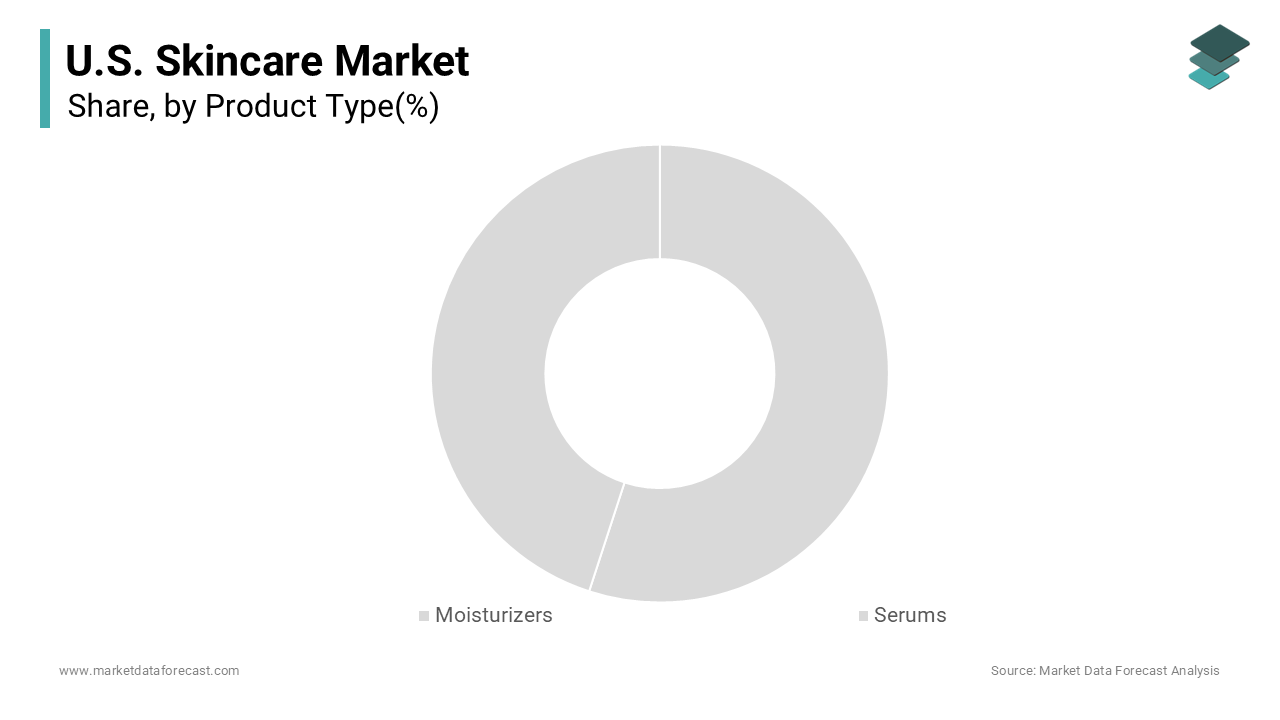
The serums segment is predicted to witness the highest CAGR of 11.2% during the forecast period. This rapid expansion of the segment is fueled by consumer demand for high potency targeted treatments that address specific concerns such as hyperpigmentation fine lines and dullness. Sources indicate that consumers are increasingly 'skintellectual,' researching active ingredients to find targeted solutions, which has driven beauty brands to innovate high-efficacy, multi-benefit formulations. The driving force behind this growth is the influence of social media and dermatologist recommendations which highlight the benefits of ingredients like vitamin C retinol and niacinamide. Consumers view serums as investment pieces in their routines willing to pay premium prices for visible results. The rise of multi serum routines where users layer different products for comprehensive care has increased unit sales per customer. Brands are innovating with stable encapsulated technologies that enhance ingredient penetration and stability. The trend towards personalized skincare has led to customizable serum options allowing users to tailor concentrations to their needs. Retailers report higher engagement with educational content around serums driving conversion rates. The ability of serums to deliver transformative results quickly appeals to impatient consumers seeking immediate improvements. This combination of efficacy education and innovation ensures that serums continue to grow at the fastest rate.
By Skin Type Insights
The combination skin segment led the United States skincare market and captured a 4.1% share in 2025. This leading position of the segment was attributed to its high prevalence among the population and the complexity of care required. Individuals with combination skin experience both oily and dry areas typically an oily T zone and dry cheeks necessitating balanced and versatile products. Dermatological consensus highlights that combination skin is one of the most widely reported skin profiles, prompting a vast consumer base to seek versatile formulations that simultaneously balance oily and dry facial zones. The dominance of this segment is driven by the need for specialized formulations that regulate sebum production while providing adequate hydration. Consumers with combination skin often purchase multiple products to address different zones increasing overall spending. The challenge of managing conflicting skin needs drives experimentation with new brands and routines fostering market dynamism. Educational campaigns emphasize the importance of using gentle cleansers and lightweight moisturizers to avoid exacerbating either condition. The prevalence of hormonal fluctuations and environmental stressors further contributes to the instability of combination skin requiring adaptive solutions. Retailers offer bundled kits specifically designed for combination skin simplifying the selection process for confused shoppers. The high maintenance nature of this skin type ensures consistent repurchase and brand switching as users seek the perfect balance. This combination of prevalence complexity and spending power secures the leading position of the combination skin segment.
The sensitive skin segment is estimated to register the fastest CAGR of 9.8% during the forecast period due to increasing incidence of skin sensitivity due to environmental pollutants stress and overuse of harsh active ingredients. According to the National Eczema Association, over 31 million Americans live with eczema, anchor-driving an essential, non-discretionary market demand for gentle, soothing, and clinically validated barrier-repair products. The driving force behind this growth is the consumer shift towards minimalistic routines and clean beauty formulations free from fragrances and irritants. Dermatologists are recommending barrier repair creams and calming ingredients such as centella asiatica and oat extract to manage reactivity. The rise of tele dermatology has made diagnosis and treatment more accessible encouraging individuals to seek professional grade solutions. Brands are investing in clinical testing to prove safety and efficacy building trust among cautious consumers. The trend towards transparency in labeling allows shoppers to easily identify potential triggers avoiding adverse reactions. Social media communities share experiences and recommendations amplifying the visibility of sensitive skin friendly brands. The emotional distress associated with skin flare ups motivates users to invest in reliable and effective products. This combination of health consciousness medical endorsement and product innovation ensures that sensitive skin care continues to grow rapidly.
By Gender Insights
The female segment held the majority share of the United States skincare market in 2025 because of traditional grooming norms, extensive product availability, and higher spending propensity. Women have historically been the primary target audience for skincare marketing resulting in a vast array of products tailored to their specific needs and preferences. According to Bureau of Labor Statistics consumer expenditure data, women consistently allocate a higher portion of their annual budget to personal care products and services compared to men, though total spending gaps vary significantly based on household income and age demographics. The dominance is further reinforced by the cultural expectation for women to maintain youthful and flawless skin which drives demand for anti aging and corrective treatments. The diversity of female skin concerns including hormonal acne pregnancy related changes and menopause creates niche markets for specialized formulations. Retailers dedicate significant shelf space to women’s skincare offering extensive choices from mass market to luxury tiers. Influencer marketing and beauty magazines predominantly feature female models shaping trends and driving adoption. The social aspect of skincare sharing tips and products among friends fosters community and loyalty. Women are more likely to follow multi step routines involving cleansers toners serums and masks increasing basket size. The emotional connection to self care and pampering further motivates regular purchases. This combination of cultural norms product variety and spending habits secures the leading status of the female segment.
The male segment is anticipated to witness the fastest CAGR of 10.5% over the forecast period owing to shifting societal attitudes towards masculinity and increasing acceptance of grooming practices among men. The driving force behind this growth is the rising awareness of skin health and the desire for professional appearance in workplace and social settings. Moreover, the influence of male celebrities and influencers on social media has normalized skincare routines reducing stigma and encouraging experimentation. Brands are launching simplified product lines with multifunctional benefits appealing to men who prefer efficiency and ease of use. Packaging designs are becoming more masculine and discreet enhancing appeal. Retailers are expanding men’s grooming sections recognizing the untapped potential. Education about sun protection and post shave care drives demand for specialized formulations. The entry of younger generations who are more open to self care ensures long term sustainability. The focus on beard care and scalp health creates additional opportunities within the segment. This combination of cultural shift marketing and product innovation ensures that male skincare continues to grow at the fastest rate.
By Ingredients Insights
In 2025, the synthetic ingredients segment was the largest by occupying a significant share of the United States skincare market. This prominence of the segment was supported by its stability efficacy and cost effectiveness in mass production. These lab created compounds such as parabens sulfates and synthetic fragrances have been used for decades providing consistent results and long shelf lives. The dominance is supported by the ability of synthetic molecules to penetrate the skin barrier effectively and deliver targeted benefits such as exfoliation and hydration. Manufacturers prefer synthetic ingredients for their scalability and lower cost compared to natural alternatives which can be subject to crop failures and price volatility. The predictability of synthetic formulations allows for rigorous quality control and standardization across batches. Consumers appreciate the reliability of established brands that use proven synthetic actives such as retinoids and peptides. The availability of synthetic ingredients ensures that skincare products remain accessible to a broad demographic. Regulatory approval processes for new synthetic compounds are well established facilitating innovation. The integration of biotechnology has led to the development of bio identical synthetics that mimic natural structures. This combination of efficacy affordability and reliability secures the leading status of the synthetic ingredients segment.
The natural ingredients segment is likely to experience the fastest CAGR of 12.5% between 2026 and 2034. This quick surge of the segment is fueled by increasing consumer preference for clean and sustainable beauty products derived from plant based sources. The driving force behind this growth is the perception that natural ingredients are safer and gentler on the skin and the environment. In addition, the rise of transparency in labeling allows shoppers to verify the origin and purity of ingredients building trust. Brands are investing in sustainable sourcing practices and eco friendly packaging to align with ethical values. The trend towards holistic wellness encourages the use of aromatherapy and herbal remedies in skincare routines. Certifications such as USDA Organic and EcoCert provide credibility and differentiate products in a crowded market. Social media influencers promote natural beauty hacks amplifying awareness and adoption. The avoidance of synthetic chemicals appeals to health conscious parents and individuals with sensitivities. Innovation in extraction technologies has improved the potency and stability of natural actives. This combination of health consciousness sustainability and innovation ensures that natural ingredients continue to grow at the fastest rate.
COUNTRY ANALYSIS
The United States was the top performer in the North American skincare market by holding a share of a 80.3% in 2025. This position of the US market was supported by the country’s large population high disposable income and strong cultural emphasis on personal appearance and wellness. The market status in the United States is characterized by a mature yet innovative landscape where premium and technologically advanced products are gaining traction. According to U.S. Census Bureau estimates, the national population had already surpassed 335 million by 2023 and is projected to reach approximately 342 million by July 2026, providing a steadily expanding consumer base for the personal care market. The driving factors behind this leadership include the high prevalence of skin conditions such as acne and eczema which motivate consumers to seek effective solutions. Data from the American Cancer Society and CDC indicates that skin cancer rates continue to rise, with melanoma cases projected to increase in 2026; however, this growing risk contrasts with a concerning decline in preventive behaviors, as recent surveys reveal rising consumer skepticism toward sunscreen use. The presence of major global skincare companies headquartered in the US fosters continuous product innovation and marketing excellence. Consumer education campaigns by dermatological associations promote the importance of daily skincare routines driving consistent demand. The aging population retains active lifestyles requiring anti aging and restorative products. Additionally the influence of social media and beauty influencers emphasizes the value of clear and radiant skin boosting sales. The robust retail infrastructure including widespread drugstores and e commerce platforms ensures easy product accessibility. These factors collectively ensure that the United States remains the central pillar of the skincare market in the region.
COMPETITIVE LANDSCAPE
The competition in the United States skincare market is intense and characterized by the presence of established multinational corporations agile indie brands and private label offerings. Major players like Estée Lauder L Oréal and Procter and Gamble dominate the landscape through strong brand recognition and extensive distribution networks. These companies leverage their scale to offer competitive pricing and consistent quality which are critical for retaining customers. Indie brands pose a significant threat by offering unique formulations and transparent ingredient lists that appeal to discerning shoppers. The rise of direct to consumer models has increased pressure on traditional retailers to innovate and improve customer experience. Competition is also driven by the need for scientific validation with companies vying to prove efficacy through clinical studies. Marketing expenditures remain high as brands compete for visibility in both physical and digital spaces. The market sees frequent product launches and promotional activities which impact profit margins but drive volume. Small and niche players compete by offering specialized products and personalized services that appeal to specific segments. This dynamic environment requires continuous innovation and strategic agility to maintain market relevance and profitability.
KEY MARKET PLAYERS
Some of the promising companies that are playing a dominating role in the U.S. Skincare Market include
- L'Oréal S.A.
- The Estée Lauder Companies Inc.
- Procter & Gamble
- Unilever PLC
- Johnson & Johnson
- Shiseido Company, Limited
- Beiersdorf AG
- Coty Inc.
- Amorepacific Corporation
- The Clorox Company
Top Players in the US Skincare Market
The Estée Lauder Companies Inc
The Estée Lauder Companies Inc maintains a prestigious position in the United States skincare market through its diverse portfolio of luxury and premium brands including Clinique La Mer and Dr Jart plus. The company leverages extensive research and development capabilities to introduce innovative formulations that address specific skin concerns such as aging and hydration. Recently Estée Lauder has strengthened its market position by investing heavily in digital transformation and personalized customer experiences through artificial intelligence tools. The corporation actively acquires emerging indie brands to capture niche markets and diversify its offerings. Its commitment to sustainability is evident in initiatives to reduce packaging waste and source ingredients responsibly. By focusing on high end retail partnerships and direct to consumer channels the company enhances brand loyalty. These strategic efforts reinforce its leadership in the competitive luxury skincare landscape.
L Oréal USA
L Oréal USA contributes significantly to the United States skincare market with its broad range of brands spanning mass market to luxury segments including Lancôme Kiehl s and CeraVe. The company emphasizes scientific innovation and dermatological expertise to develop effective and accessible skincare solutions for diverse consumer needs. Recent actions include the expansion of its dermocosmetics division which caters to sensitive and problem skin types through pharmacy channels. L Oréal invests in sustainable sourcing and green chemistry to align with environmental goals and consumer values. The firm utilizes advanced data analytics to understand trending ingredients and customize marketing strategies effectively. By strengthening its e commerce presence and omnichannel capabilities L Oréal ensures widespread product availability. Its focus on inclusivity and diversity in marketing campaigns resonates with modern consumers. These initiatives solidify its reputation as a trusted and innovative leader in the industry.
Procter and Gamble Company
Procter and Gamble Company plays a vital role in the United States skincare market primarily through its Olay brand which is renowned for anti aging and hydration technologies. The company focuses on delivering science backed products that offer visible results at affordable price points appealing to a broad demographic. Recently Procter and Gamble has enhanced its market position by launching new product lines featuring niacinamide and peptides to compete with premium competitors. The corporation invests in consumer education campaigns that demystify skincare ingredients and promote daily routines. Its robust distribution network ensures that products are available in major retail stores and online platforms across the country. Procter and Gamble leverages digital marketing and influencer partnerships to engage younger audiences and drive brand relevance. The commitment to innovation and accessibility allows the company to maintain strong customer loyalty. These strategies ensure sustained growth and competitiveness in the dynamic skincare sector.
Top Strategies Used by Key Market Participants
Key players in the United States skincare market employ diverse strategies to maintain competitiveness and drive growth in a evolving landscape. Product innovation is a primary focus with companies introducing advanced formulations containing active ingredients such as retinol and hyaluronic acid. Sustainability initiatives are increasingly important as firms adopt eco friendly packaging and ethical sourcing practices to appeal to conscious consumers. Digital engagement plays a critical role with brands leveraging social media and influencers to educate users and build community. Personalization through artificial intelligence allows for tailored product recommendations enhancing customer satisfaction. Strategic acquisitions of indie brands help large corporations capture niche markets and stay relevant. Expansion into dermocosmetics and clinical skincare segments addresses growing demand for medically endorsed products. These approaches collectively enable market participants to adapt to changing consumer preferences and maintain strong market positions.
MARKET SEGMENTATION
This research report on the U.S. Skincare Market has been segmented based on the following categories.
By Product Type
- Moisturizers
- Serums
By Skin Type
- Combination Skin
- Sensitive Skin
By Gender
- Female
- Male
By Ingredients
- Synthetic Ingredients
- Natural Ingredients
By Country
- California
- Washington
- Oregon
- New York
- Rest of the United States