- Product Description Description
- Table of Contents TOC
- List of Table & Figure LOT
- Get Free Sample PDF Sample PDF
Market Size, 2025
$10.47 BnMarket Estimate, 2026
$11.09 BnMarket Forecast, 2034
$17.53 BnCAGR, 2026–2034
5.89%U.S. Small Appliance Market Report Summary
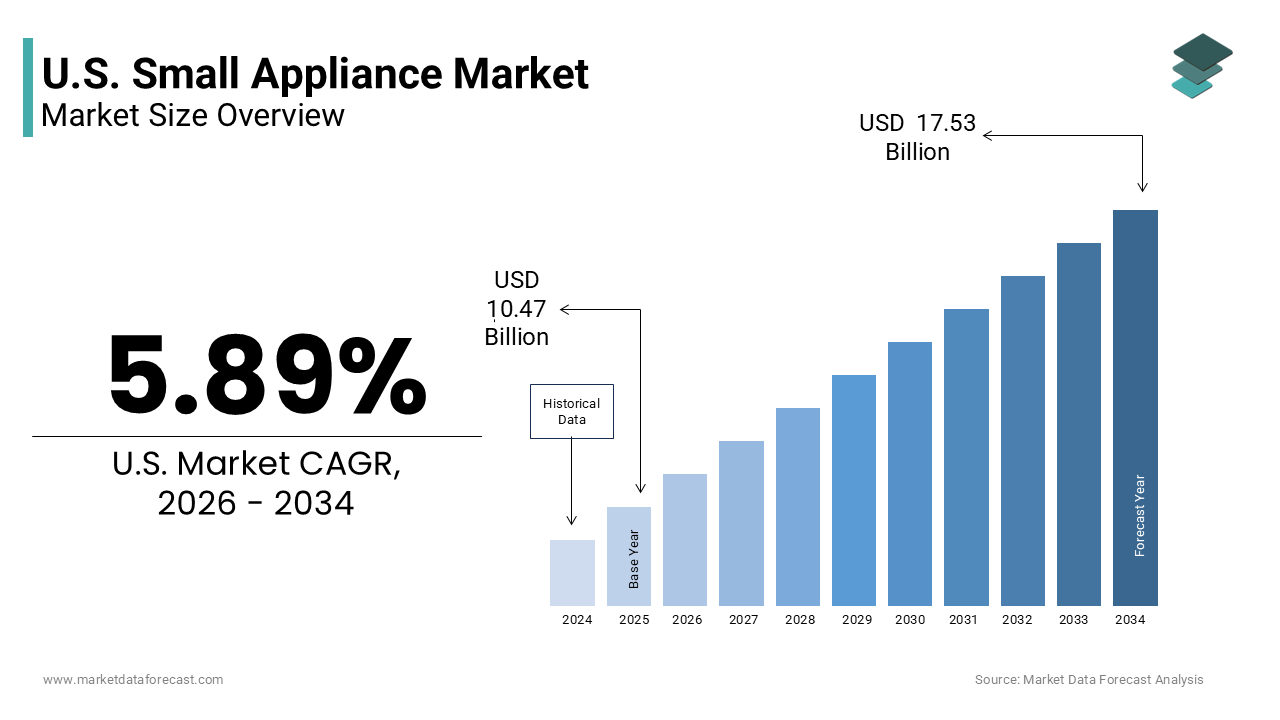
The U.S. small appliance market was valued at USD 10.47 billion in 2025 and is anticipated to reach USD 11.09 billion in 2026 from USD 17.53 billion by 2034, growing at a CAGR of 5.89% during the forecast period from 2026 to 2034. The growth of the U.S. small appliance market is driven by rising health consciousness among consumers, increasing home cooking activities, and growing adoption of smart and connected household devices. Expanding demand for energy-efficient appliances, increasing preference for multifunctional kitchen equipment, and growing penetration of smart home ecosystems are further accelerating market growth. Moreover, advancements in sustainable appliance design, expansion of direct-to-consumer sales channels, and increasing demand for convenience-oriented household solutions are supporting the expansion of the U.S. small appliance market.
Key Market Trends
- Rising adoption of smart appliances integrated with mobile applications and voice-controlled home automation platforms.
- Increasing demand for air fryers, blenders, and food processors driven by health-conscious consumer lifestyles.
- Growing focus on energy-efficient appliances that reduce household electricity consumption and environmental impact.
- Strong emphasis on sustainable product designs utilizing recycled materials and eco-friendly manufacturing processes.
- Expansion of direct-to-consumer and online retail channels offering personalized shopping experiences and product customization.
Segmental Insights
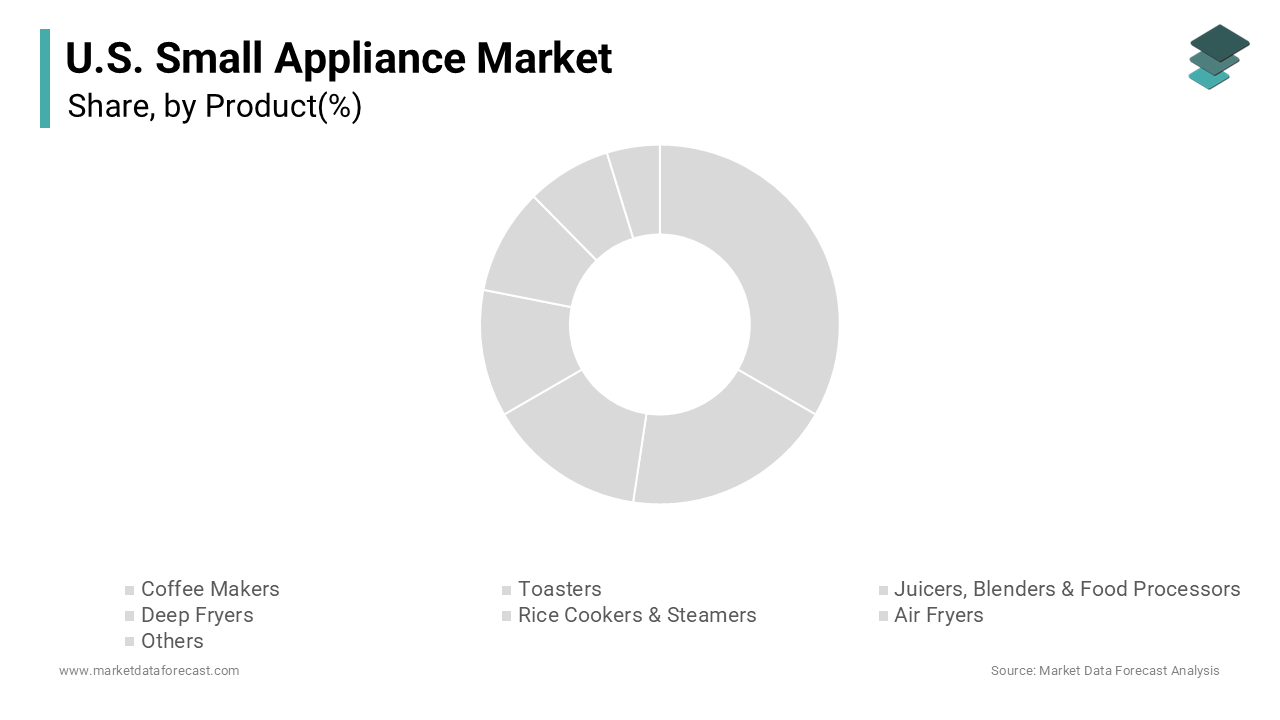
- Based on product type, the coffee makers segment dominated the U.S. small appliance market and held the largest share in 2025. The segment’s dominance is attributed to the widespread coffee consumption culture, high daily usage frequency, increasing preference for home brewing solutions, and growing adoption of premium coffee-making technologies.
- The blenders and food processors segment is projected to witness the fastest CAGR during the forecast period owing to rising health and wellness trends, increasing demand for smoothie preparation, growing interest in meal prepping, and expanding adoption of plant-based diets.
- Based on distribution channel, the online segment accounted for the leading share of the U.S. small appliance market in 2025. The dominance of this segment is driven by the convenience of e-commerce platforms, wide product availability, easy price comparisons, consumer reviews, and efficient home delivery services.
- The exclusive brand outlets segment is anticipated to register notable growth during the forecast period due to increasing consumer demand for personalized shopping experiences, product demonstrations, expert consultations, and access to premium appliance collections.
Regional Insights
The United States maintained a strong position in the global small appliance market in 2025, supported by high household spending, strong smart home adoption rates, and growing demand for innovative kitchen and household solutions. California remains a major contributor to the U.S. small appliance market due to its large consumer base, strong technology adoption, and growing preference for energy-efficient and connected home appliances. New York, Washington, and Oregon are also witnessing notable growth driven by increasing health-conscious lifestyles, rising online retail penetration, and expanding demand for premium household appliances.
Competitive Landscape
The U.S. small appliance market is highly competitive and characterized by the presence of multinational appliance manufacturers, premium kitchen equipment brands, and emerging smart appliance providers competing through innovation, connectivity, and product differentiation. Leading companies are focusing on developing multifunctional appliances, strengthening smart technology integration, investing in sustainable manufacturing practices, and expanding direct-to-consumer sales channels. Strategic partnerships with retailers, digital commerce platforms, and technology providers are further strengthening market positioning across household and kitchen appliance categories. Prominent players in the U.S. small appliance market include Whirlpool Corporation, Hamilton Beach Brands Holding Company, SharkNinja Inc., De'Longhi Group, Breville Group Limited, Spectrum Brands Holdings, Conair LLC, Newell Brands, Midea Group, Electrolux AB, SEB Group, Cuisinart, iRobot Corporation, Dyson Ltd., and Bissell Inc.
 Download Free Sample Report
U.S. Small Appliance Market Size
The U.S. small appliance market size was valued at USD 10.47 billion in 2025 and is anticipated to reach USD 11.09 billion in 2026 from USD 17.53 billion by 2034, growing at a CAGR of 5.89% during the forecast period from 2026 to 2034.
According to the United States Census Bureau, there are approximately 140 million housing units in the nation, with a significant proportion undergoing renovation or modernization, which drives consistent demand for updated kitchen and home equipment. Furthermore, data from the Bureau of Labor Statistics indicates that Americans spend an average of 1.5 hours daily on housework and food preparation, creating a substantial need for labor saving devices. The rise of remote work has also intensified the usage of home environments and this leads to increased frequency of appliance operation for meal preparation and space maintenance. According to the Department of Energy, residential buildings account for 20% of total energy consumption, which is indicating the growing consumer interest in energy efficient models. These socioeconomic and behavioural factors underscore the transition of small appliances from optional luxuries to indispensable tools for daily living. The market is increasingly influenced by consumer preferences for sustainability, compact designs, and multifunctionality, aligning with broader trends in urbanization and environmental consciousness. This dynamic landscape requires manufacturers to balance innovation with affordability while addressing the evolving needs of a tech savvy and health conscious population.
MARKET DRIVERS
Rising Health Consciousness and Home Cooking Trends
Consumers are progressively shifting away from processed foods and dining out in favor of preparing nutritious meals at home, where they can control ingredients and portion sizes, which is a key factor driving the U.S. small appliance market growth. According to the Centers for Disease Control and Prevention, only 10% of adults meet the federal guidelines for fruit and vegetable intake, which is prompting many to adopt home cooking strategies to improve dietary habits. This behavioral shift drives demand for appliances, such as high speed blenders, juicers, steamers, and air fryers, that facilitate healthier cooking methods with less oil and preserved nutrients. According to the International Food Information Council, data reveals that 52% of consumers follow a specific diet or eating pattern, such as keto, vegan, or paleo, which often requires specialized equipment for preparation. The popularity of air frying has surged, as it allows for crispy textures with up to 75% less fat compared to traditional deep frying. As per industry surveys, sales of air fryers have grown exponentially, with millions of units sold annually as households seek to replicate restaurant quality meals with healthier profiles. The pandemic accelerated this trend by limiting restaurant access and encouraging culinary experimentation. Furthermore, the availability of online recipes and cooking tutorials on social media platforms inspires consumers to invest in versatile appliances. This sustained focus on nutritional well-being ensures that the market remains robust, as individuals prioritize long term health through improved home dining experiences.
Integration of Smart Technology and Connectivity
Modern consumers increasingly prefer devices that offer remote control automation and data tracking to enhance convenience and efficiency, which is further boosting the U.S. market expansion. According to Statista, the number of smart home households in the United States is projected to reach 90 million by 2025, reflecting a broad ecosystem ready for integrated appliances. Smart coffee makers, refrigerators, and ovens can be controlled via smartphone applications, allowing users to preheat, start brewing, or monitor cooking progress from anywhere. According to the Consumer Technology Association, data indicates that smart kitchen appliances are among the fastest growing categories in home electronics, with a year over year growth rate of 15%. The ability to integrate these devices with voice assistants, such as Amazon Alexa, Google Assistant, and Apple HomeKit, adds a layer of accessibility and ease of use. This integration appeals to tech savvy demographics and busy professionals who seek to optimize their daily routines. Furthermore, smart appliances often feature diagnostic capabilities that alert users to maintenance needs or recipe suggestions based on available ingredients. For instance, 60% of millennials express interest in purchasing connected appliances to streamline household management. The seamless connection with other smart devices creates a holistic home experience that enhances user engagement. This technological evolution transforms small appliances from static tools into dynamic components of a connected lifestyle, driving sustained demand for advanced solutions.
MARKET RESTRAINTS
Supply Chain Disruptions and Raw Material Volatility
The substantial risks from global supply chain instability that affects the availability and cost of key raw materials, such as plastics, metals, and electronic components is a significant impediment to the U.S. small appliance market growth. Most manufacturing occurs in Asia, relying on complex networks for sourcing semiconductors, steel, and copper. Disruptions caused by geopolitical tensions, trade disputes, or natural disasters can lead to sudden shortages and delays. According to the Institute for Supply Management, manufacturing supplier delivery indices and cost parameters have fluctuated wildly, reflecting ongoing logistics gridlocks. Such fluctuations force manufacturers to absorb higher costs or pass them on to consumers, potentially reducing demand. The reliance on specific geographic regions for production also poses a risk, as labor costs and regulations change. For instance, rising wages in China have prompted some brands to shift production to Vietnam and India, but this transition involves logistical challenges and quality control issues. According to the World Bank, data indicates that global shipping container rates and fuel surcharges remain elevated compared to historical averages, impacting profit margins. These uncertainties make inventory management difficult, leading to either stockouts that frustrate customers or excess inventory that ties up capital. Small brands are particularly vulnerable, as they lack the bargaining power to secure priority shipping or bulk pricing. This restraint undermines market stability and complicates strategic planning for both established players and new entrants. The need for diversification and nearshoring strategies adds complexity and cost to operations, challenging the efficiency of traditional global supply chains.
Environmental Concerns and Electronic Waste Disposal
The environmental impact of small appliance production and disposal is further hampering the U.S. market expansion. Traditional manufacturing processes rely heavily on non biodegradable plastics and rare earth metals, which contribute to landfill waste and pollution. According to the Environmental Protection Agency, electronics constitute a fast growing component of municipal solid waste, with millions of tons generated annually and only a small fraction being properly recycled. The short lifespan of many small appliances due to planned obsolescence or low durability exacerbates the waste problem. Consumers are increasingly aware of these issues and are demanding more sustainable alternatives. As per a Nielsen study, 73% of global consumers say they would change their consumption habits to reduce their environmental impact. This shift in preference forces manufacturers to invest in eco friendly materials and circular economy models, which can be costly and technically challenging. The transition to sustainable practices often involves higher production costs, which may be passed on to consumers, potentially reducing demand. Additionally, regulatory pressures are increasing, with states like California implementing stricter e waste management laws. The complexity of recycling mixed material appliances further complicates disposal efforts. These factors collectively constrain market growth by imposing additional operational burdens and requiring significant investment in research and development to meet evolving environmental standards. Failure to address these concerns can damage brand reputation and limit market access.
MARKET OPPORTUNITIES
Expansion of Direct-To-Consumer and Digital Retail Channels
Brands are increasingly bypassing traditional wholesale partners to sell directly to customers through their own websites and mobile applications, which is a promising opportunity for the U.S. market. According to McKinsey, DTC sales in the home goods sector have grown by 20% annually over the past five years, driven by the desire for higher margins and deeper customer relationships. This model allows companies to collect valuable first party data on consumer preferences, buying behavior, and usage patterns, enabling personalized marketing and product recommendations. The integration of augmented reality, AR, and virtual demonstration tools enhances the online shopping experience by allowing users to visualize how appliances fit in their kitchens. According to Shopify, data indicates that retailers using interactive content see a 25% increase in conversion rates. Furthermore, DTC channels enable brands to control the entire customer journey, from discovery to delivery, ensuring consistent brand messaging and service quality. Subscription services for replacement parts or filters foster repeat purchases and enhance customer retention. The flexibility of digital platforms also allows for rapid testing of new designs and limited edition releases, creating urgency and exclusivity. As internet penetration and smartphone usage continue to rise, the potential for online sales expands, particularly among younger demographics who prefer digital interactions. By leveraging these technologies, brands can create immersive and convenient shopping experiences that drive growth and competitiveness in the digital age.
Innovation in Sustainable and Energy Efficient Designs
The development of sustainable materials and energy efficient designs offers a prominent opportunity for the small appliance market in the U.S. Consumers are increasingly seeking products that align with their environmental values, creating demand for eco-friendly innovations. According to the Department of Energy, residential appliances account for a significant portion of household electricity use, prompting an urgent need for efficiency improvements. Brands are responding by introducing appliances with lower wattage motors, improved insulation, and smart sensors that optimize energy consumption. According to the Environmental Protection Agency, data suggests that Energy Star certified appliances can save consumers up to 30% on utility bills, making them an attractive investment. Additionally, the use of recycled plastics, bio based materials, and modular designs that facilitate repair and recycling is gaining traction. As per industry reports, companies that adopt transparent sustainability practices see higher customer engagement and trust. The opportunity to lead in green technology not only mitigates environmental impact but also differentiates brands in a crowded market. Regulatory incentives, such as tax credits for energy efficient upgrades, further drive adoption. By investing in sustainable innovation, companies can future proof their operations and appeal to the growing segment of environmentally conscious buyers. This strategic focus aligns with global sustainability goals and opens new revenue streams through premium eco friendly product lines.
MARKET CHALLENGES
Intense Competition and Market Saturation
The intense competition and saturation is a major challenge to the growth of the U.S. small appliance market. Major players, such as Whirlpool, SharkNinja, and Breville, dominate the landscape with extensive marketing budgets and established distribution networks. According to Statista, the top five brands account for over 50% of total small appliance sales, leaving limited space for smaller competitors. This concentration creates high barriers to entry for new brands, which struggle to gain visibility and shelf space. Price wars and frequent promotions erode profit margins, forcing companies to continuously innovate to justify premium pricing. The rapid pace of trend cycles means that products can become obsolete quickly, requiring constant investment in research and development, with low switching costs for consumers. Brand loyalty is increasingly fluid, as shoppers experiment with new labels influenced by social media and influencer endorsements. The saturation of the market also leads to diminishing returns on advertising spend, as consumers become desensitized to traditional marketing messages. Emerging brands must find niche segments or unique value propositions to survive, such as specialized functions or strong sustainability credentials. However, scaling these niches into mainstream success is challenging. The relentless pressure to innovate and capture market share strains resources and increases the risk of failure for all participants in this highly competitive environment.
Counterfeit Products and Intellectual Property Theft
The proliferation of counterfeit small appliances is further challenging the expansion of the U.S. small appliance market. Illicit manufacturers replicate popular designs, selling them through unauthorized online marketplaces and third party sellers at discounted prices. According to the Organization for Economic Cooperation and Development, counterfeit goods account for 2.5% of global trade, with electronics being a high risk category due to high margins and brand value. These fake products often use substandard materials and lack proper safety certifications, posing fire and electrical hazards to users. The Consumer Product Safety Commission has reported numerous incidents of counterfeit appliances causing injuries due to faulty wiring or overheating. Authentic brands suffer reputational damage when consumers mistakenly attribute poor quality or safety failures to their genuine products. Combating this issue requires significant investment in legal enforcement and authentication technologies, such as holographic seals and blockchain tracking. However, these measures add to operational costs and may not fully prevent fraud. The anonymity of digital platforms makes it difficult to trace and shut down counterfeit operations effectively. As per the International Trademark Association, online enforcement remains a complex and resource intensive task. Small and emerging brands are particularly vulnerable, as they lack the resources to monitor and protect their intellectual property globally. This challenge distorts market data and undermines the value proposition of premium brands, threatening long term profitability and consumer confidence in the authenticity of purchased goods.
REPORT COVERAGE
| REPORT METRIC | DETAILS |
| Market Size Available | 2025 to 2034 |
| Base Year | 2025 |
| Forecast Period | 2026 to 2034 |
| CAGR | 5.89% |
| Segments Covered | By Product Type, Distribution Channel and Region. |
| Various Analyses Covered | Global, Regional and Country-Level Analysis, Segment-Level Analysis, Drivers, Restraints, Opportunities, Challenges; PESTLE Analysis; Porter’s Five Forces Analysis, Competitive Landscape, Analyst Overview of Investment Opportunities |
| Countries Covered | California, Washington, Oregon, New York, United States |
| Market Leaders Profiled | Whirlpool Corporation, Hamilton Beach Brands Holding Company, SharkNinja Inc., De'Longhi Group, Breville Group Limited, Spectrum Brands Holdings, Conair LLC, Newell Brands, Midea Group, Electrolux AB, SEB Group, Cuisinart, iRobot Corporation, Dyson Ltd., and Bissell Inc. |
SEGMENTAL ANALYSIS
By Product Type Insights
The coffee makers segment dominated the market by capturing the highest share of the U.S. market in 2025. The ubiquitous daily consumption of coffee among American adults that creates a consistent and non-discretionary demand for brewing equipment is primarily driving the expansion of the coffee makers segment in the U.S. market. According to the National Coffee Association, approximately 66% of Americans drink coffee every day, which is making it the most popular beverage in the nation. This high penetration rate ensures that nearly every household requires at least one coffee making device. According to the Specialty Coffee Association, data indicates that the average coffee drinker consumes three cups per day, leading to frequent usage and eventual replacement of appliances. The cultural significance of coffee as a social lubricant and productivity enhancer further reinforces its status as a household staple. Unlike other small appliances that may be used intermittently, coffee makers are essential for morning routines, driving steady sales volume. The rise of remote work has also increased home brewing, as commuters no longer rely on office coffee or drive throughs. As per industry surveys, over 80% of coffee drinkers prefer brewing at home due to cost savings and customization options. This behavioral pattern ensures that coffee makers remain the highest volume product category in the small appliance market. The emotional connection consumers have with their morning brew fosters brand loyalty and encourages upgrades to higher end models.
On the other end, the blenders and food processors segment is estimated to showcase a CAGR of 8.4% during the forecast period in the U.S. market owing to the rising demand for healthy eating habits, meal prepping, and the versatility of these devices in modern kitchens. Individuals are increasingly incorporating fruits, vegetables, and protein supplements into their diets, requiring powerful blending capabilities. According to the Centers for Disease Control and Prevention, only 10% of adults meet the recommended intake for fruits and vegetables, prompting many to use blenders to consume these nutrients in liquid form. The convenience of preparing nutrient dense smoothies for breakfast or post workout recovery drives frequent appliance usage. According to the International Food Information Council, data reveals that 40% of consumers are actively trying to consume more plant based foods, which often require processing. High performance blenders capable of crushing ice and pulverizing fibrous ingredients have become essential tools for health conscious households. The influence of social media influencers and fitness enthusiasts sharing recipes further accelerates adoption. As per industry trends, sales of personal sized blenders have increased by 15% annually, as users seek portability and ease of cleaning. The ability to create homemade nut butters, soups, and sauces also expands the utility of these appliances beyond simple blending. This alignment with wellness trends ensures sustained growth and innovation in the blender and food processor category.
By Distribution Channel Insights
The online segment occupied 44.1% of the U.S. market share in 2025. This dominance is driven by the convenience of e commerce, extensive product selection, and the ability to compare prices and reviews instantly. Shoppers can browse thousands of items from multiple brands and compare specifications without leaving home. According to the US Census Bureau, e commerce sales in the home goods category have grown by 15% annually, reflecting a broader shift in consumer behavior. Online platforms offer access to niche and specialized appliances that may not be stocked by local stores, particularly for specific dietary needs or aesthetic preferences. According to Amazon and other major retailers, data shows that small appliances are among the top searched home categories online due to this variety. The ability to read detailed customer reviews and watch video demonstrations aids decision making and builds confidence in purchases. As per digital marketing reports, 55% of younger consumers prefer online shopping for home appliances due to the ease of research and comparison. Home delivery eliminates the need for travel and allows for flexible scheduling, which appeals to busy families. The integration of easy return policies and virtual fitting tools further mitigates the risks associated with online buying. This convenience and accessibility drive frequent transactions and expand the reach of manufacturers to remote areas. The seamless shopping experience ensures that online remains the preferred channel for a majority of consumers.
The exclusive brand outlets segment is estimated to register a CAGR of 7.4% during the forecast period in the U.S. market owing to the desire for immersive brand experiences, expert advice, and access to premium product lines. Consumers purchasing high end appliances often seek hands on demonstration and personalized advice to ensure the product meets their specific needs. According to retail industry data, foot traffic in flagship stores for premium appliance brands has increased by 10%, as shoppers value tactile interactions. Staff in exclusive outlets are trained extensively on product features, allowing them to offer tailored recommendations and troubleshooting tips. According to consumer satisfaction surveys, data indicates that 70% of buyers feel more confident in their purchase after receiving in person demonstrations. These stores often feature live cooking stations or testing areas where customers can see appliances in action. As per brand reports, exclusive outlets serve as marketing hubs that enhance brand equity and loyalty. The ability to touch and feel the build quality of premium materials reassures customers investing in high ticket items. This experiential retail approach transforms shopping into an engaging activity rather than a mere transaction. The personalized service builds long term relationships and encourages word of mouth referrals. This focus on experience and expertise drives the rapid expansion of exclusive brand outlets.
COUNTRY ANALYSIS
The United States is projected to maintain its position as the largest driver of small appliance demand globally for the next few years due to immense household disposable incomes and localized trends of culinary experimentation. Americans view small appliances as essential tools for enhancing daily life rather than optional luxuries. According to the Bureau of Economic Analysis, personal consumption expenditures on household equipment have risen by 5% annually, indicating robust demand. The prevalence of home cooking and entertaining drives consistent purchases of blenders, coffee makers, and air fryers. According to the National Kitchen and Bath Association, data shows that kitchen renovations often include upgrades to small appliance collections, reflecting their importance in home design. The United States is also a hub for innovation in appliance technology, with many leading brands headquartered domestically. This proximity to research and development centers ensures that the latest features, such as smart connectivity and energy efficiency, are available to local consumers first. As per industry reports, the US leads in the adoption of smart home appliances, reflecting a tech savvy consumer base. The strong retail network, including online platforms and specialty stores, facilitates easy access to products. The cultural emphasis on health and wellness further supports market growth. With rising interest in nutritious eating and home based fitness, the United States remains the premier market for small appliances, setting global trends for product development and consumption.
COMPETITIVE LANDSCAPE
The competition in the United States small appliance market is intense and characterized by a mix of established multinational corporations and agile niche brands. Large companies leverage their extensive resources to dominate through broad distribution networks and heavy marketing spending. They continuously innovate to maintain relevance and protect their market positions against newer entrants. Independent brands often differentiate themselves by focusing on specific segments such as premium coffee makers or specialized blenders. These smaller entities utilize digital channels to build direct relationships with consumers and foster community loyalty. The barrier to entry has lowered due to the rise of e commerce platforms allowing new players to launch with minimal overhead. This dynamic environment forces all participants to prioritize speed and agility in product development. Price competition is prevalent in the mass market segment while premium brands compete on brand heritage and technological superiority. Retailers play a crucial role by curating assortments that balance popular staples with emerging trends. Private label offerings from major retailers further intensify pressure on branded manufacturers. Consumer loyalty is increasingly fluid as shoppers experiment with new products influenced by social media trends. Companies must therefore maintain constant engagement through educational content and transparent communication. The ability to adapt quickly to regulatory changes and shifting consumer values determines long term survival. Strategic partnerships and collaborations are common as firms seek to expand their reach and capabilities. Overall the market remains highly fragmented with no single entity holding absolute dominance across all categories.
KEY MARKET PLAYERS
Some of the promising companies that are playing a dominating role in the U.S. Small Appliance Market include
- Whirlpool Corporation
- Hamilton Beach Brands Holding Company
- SharkNinja Inc.
- De'Longhi Group
- Breville Group Limited
- Spectrum Brands Holdings
- Conair LLC
- Newell Brands
- Midea Group
- Electrolux AB
- SEB Group
- Cuisinart
- iRobot Corporation
- Dyson Ltd.
Top Key Players in the United States Small Appliance Market
SharkNinja Operating Inc
SharkNinja Operating Inc maintains a dominant position in the United States small appliance sector through its dual brand strategy focusing on cleaning and kitchen innovation. The company is renowned for disruptive products such as the Ninja Foodi and Shark vacuum cleaners that solve common household pain points. Recent strategic initiatives include the expansion of its outdoor living product lines and the integration of smart technology into existing devices. SharkNinja leverages aggressive direct to consumer marketing and influencer partnerships to drive brand awareness. The corporation focuses on rapid product development cycles to stay ahead of trends. By prioritizing user centric design and multifunctionality SharkNinja captures significant consumer interest. Its ability to identify white space in the market and deliver high value solutions ensures sustained growth. The company continues to invest in research and development to enhance performance and durability. These efforts solidify its reputation as a leader in innovative home solutions.
Whirlpool Corporation
Whirlpool Corporation serves as a major force in the United States small appliance market through its diverse portfolio including KitchenAid and Cuisinart brands. The company leverages its extensive manufacturing capabilities and global supply chain to ensure product availability and quality. Recent actions to strengthen its position include the launch of connected appliances that integrate with smart home ecosystems. Whirlpool focuses on sustainability by introducing energy efficient models and using recycled materials in production. The corporation enhances its digital presence by optimizing e commerce platforms for better customer engagement. Strategic collaborations with chefs and culinary experts help promote premium kitchen tools. Whirlpool prioritizes durability and performance which builds long term trust among consumers. The company also invests in customer service improvements to enhance post purchase satisfaction. By balancing heritage brands with modern innovation Whirlpool maintains relevance across diverse demographic segments. Its commitment to quality and technological advancement drives continued market leadership.
Breville Group Limited
Breville Group Limited holds a significant share in the United States small appliance market by specializing in premium kitchen equipment known for superior engineering and design. The company targets discerning consumers who value precision and aesthetics in their cooking tools. Recent strategies to strengthen its market position include the introduction of smart ovens and coffee machines with app connectivity. Breville expands its retail footprint through partnerships with high end department stores and specialty retailers. The corporation focuses on educational marketing by providing recipes and tutorials to inspire usage. Breville emphasizes rigorous testing and quality control to ensure product reliability. Its innovative features such as precise temperature control and automated settings appeal to serious home cooks. The brand cultivates a loyal community through social media engagement and customer support. By positioning itself as a luxury provider Breville commands premium pricing and high margins. Its dedication to excellence and innovation ensures strong brand equity and competitive advantage.
Top Strategies Used by Key Market Participants
Key players in the United States small appliance market employ several strategic initiatives to maintain competitiveness and drive growth. Product innovation remains a primary strategy with companies investing heavily in research and development to create multifunctional and smart devices. Brands frequently introduce items featuring connectivity and energy efficiency to meet evolving consumer preferences. Digital transformation is another critical approach as firms enhance their online presence through e commerce platforms and social media engagement. Companies utilize data analytics to offer personalized recommendations and improve customer experiences. Strategic collaborations with influencers and chefs help build credibility and reach targeted audiences effectively. Sustainability initiatives are increasingly prominent with firms adopting eco friendly materials and ethical sourcing practices to appeal to environmentally conscious buyers. Direct to consumer models allow brands to control distribution and increase margins. These multifaceted strategies enable market participants to adapt to changing trends and sustain long term success in the dynamic industry landscape.
MARKET SEGMENTATION
This research report on the U.S. Small Appliance Market has been segmented based on the following categories.
By Product
- Coffee Makers
- Toasters
- Juicers, Blenders & Food Processors
- Deep Fryers
- Rice Cookers & Steamers
- Air Fryers
- Others
By Distribution Channel
- Hypermarkets & Supermarkets
- Electronic Stores
- Exclusive Brand Outlets
- Online
- Others
By Country
- California
- Washington
- Oregon
- New York
- Rest of the United States