U.S. Soft Drinks Market Size, Share, Trends & Growth Forecast Report By Type, Flavor, Packaging Type, Distribution Channel, and By Country (California, Washington, Oregon, New York & Rest of the United States) – Industry Analysis and Forecast, 2026 to 2034
Market Size, 2025
$382.50 MnMarket Estimate, 2026
$401.89 MnMarket Forecast, 2034
$596.95 MnCAGR, 2026–2034
5.07%U.S. Soft Drinks Market Report Summary
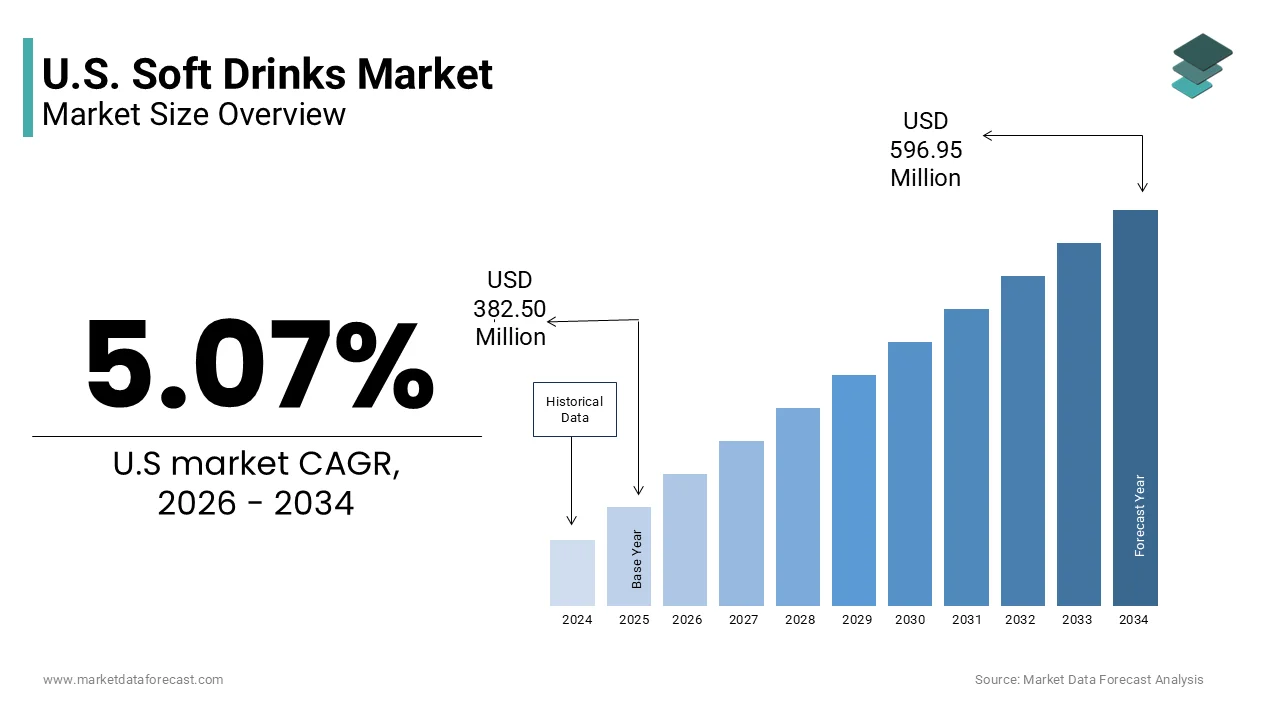
The U.S. soft drinks market was valued at USD 382.50 million in 2025, is estimated to reach USD 401.89 million in 2026, and is projected to reach USD 596.95 million by 2034, growing at a CAGR of 5.07% during the forecast period. Market growth is driven by increasing demand for convenient beverages, continuous flavor innovation, and rising consumer preference for functional and low sugar drink options. Soft drinks remain widely consumed across the United States due to strong brand presence, extensive retail availability, and evolving product offerings. The growing shift toward healthier beverage alternatives, energy drinks, and functional hydration products is further supporting market expansion.
Key Market Trends
- Rising demand for flavored and functional beverages is driving market growth.
- Increasing consumer preference for low sugar and health focused soft drinks is boosting product innovation.
- Growing popularity of energy drinks and ready to drink beverages is supporting market expansion.
- Expansion of convenience retail channels and e commerce beverage sales is enhancing product accessibility.
- Innovation in natural ingredients, zero calorie formulations, and sustainable packaging is influencing market development.
Segmental Insights
- Based on type, the carbonated soft drinks segment accounted for the dominant share of the U.S. soft drinks market in 2025. This dominance is attributed to strong consumer preference, extensive product availability, and established brand loyalty.
- Based on flavor, the cola flavor segment held the leading share of the U.S. soft drinks market in 2025, driven by high consumer familiarity and continued demand for traditional soft drink flavors.
Regional Insights
- The U.S. soft drinks market is expected to maintain strong growth during the forecast period, supported by ongoing beverage innovation, premium product launches, and increasing demand for functional and healthier drink alternatives. The country continues to serve as a major hub for beverage research, marketing, and product development across North America.
Competitive Landscape
The U.S. soft drinks market is highly competitive, with key players focusing on flavor diversification, low sugar beverage development, and expansion of functional drink portfolios to strengthen their market position. Companies are investing in healthier formulations, sustainable packaging solutions, and digital marketing strategies. Prominent players in the U.S. soft drinks market include Coca-Cola, PepsiCo, Nestle, Dr Pepper Snapple Group, Monster Beverage Corporation, Red Bull GmbH, Britvic, and Keurig Dr Pepper.
U.S. Soft Drinks Market Size
The U.S. soft drinks market size was valued at USD 382.50 million in 2025, is estimated to reach USD 401.89 million in 2026, and is projected to reach USD 596.95 million by 2034, growing at a CAGR of 5.07% from 2026 to 2034.
The U.S. is likely to experience a continued shift toward diverse beverage portfolios over the next few years as consumer health awareness and regulatory scrutiny intensify. According to the Centers for Disease Control and Prevention, approximately 63% of youth and 50% of adults consume at least one sugar sweetened beverage daily, which is indicating deep cultural integration. The landscape is undergoing a significant transformation driven by health consciousness and regulatory pressures. According to the U.S. Department of Agriculture, per capita consumption of caloric sweeteners has declined slightly as consumers shift toward low calorie alternatives. The market operates under strict labeling regulations enforced by the Food and Drug Administration, requiring transparency regarding added sugars and artificial ingredients. Recent trends highlight a pivot toward natural sweeteners such as stevia and monk fruit, reflecting evolving consumer preferences. The industry is also influenced by environmental concerns, with increasing demand for sustainable packaging solutions. This sector remains highly competitive, with major conglomerates and emerging brands vying for shelf space through innovation in flavor profiles and functional benefits. The interplay between tradition and modernization defines the current state of the U.S. soft drinks market.
MARKET DRIVERS
Persistent Cultural Habit and Social Consumption Patterns
The enduring cultural habit of consuming soft drinks during social gatherings and meals is propelling the growth of the U.S. soft drinks market. Soft drinks are deeply embedded in American social rituals, from family dinners to sporting events and movie outings. As per the National Restaurant Association, soft drinks remain the most popular beverage choice in full service and quick service restaurants, accounting for a significant portion of beverage sales. This habitual consumption is reinforced by aggressive marketing campaigns that associate soft drinks with happiness, refreshment, and community. The availability of soft drinks in virtually every retail and food service outlet ensures constant accessibility, making them an impulse purchase for many consumers. According to behavioral studies, the pairing of soft drinks with savory foods enhances the dining experience, creating a conditioned response that drives repeat purchases. The convenience of single serve cans and bottles aligns with the on the go lifestyle of modern Americans, facilitating consumption outside the home. Furthermore, the affordability of soft drinks compared to other beverage options makes them an attractive choice for budget conscious households. The psychological comfort derived from familiar flavors and brands fosters loyalty across generations. This deep rooted cultural acceptance ensures that despite health concerns, soft drinks maintain a robust baseline demand. The social normalization of these beverages continues to sustain their presence in daily life, driving consistent volume sales across diverse demographic segments.
Innovation in Low Calorie and Zero Sugar Formulations
The rapid innovation in low calorie and zero sugar formulations is further boosting the soft drinks market expansion in the U.S. Advances in sweetener technology have enabled manufacturers to create products that closely mimic the taste of full sugar variants while significantly reducing caloric content. As per the International Food Information Council, approximately 75% of consumers are trying to limit or avoid sugars in their diet, and many report they avoid sugar sweetened beverages. This shift has prompted major brands to expand their portfolios of diet and zero sugar options, utilizing natural sweeteners like stevia and erythritol. The introduction of these alternatives has revitalized interest in carbonated soft drinks among demographics that had previously reduced consumption due to health concerns. According to industry data, sales of zero sugar variants have outpaced traditional full sugar counterparts in recent years, indicating a successful transition in consumer preference. The perception of these products as healthier choices allows consumers to enjoy their favorite flavors without compromising dietary goals. Marketing efforts emphasize the clean label aspects and natural ingredients, further enhancing appeal. The continuous refinement of taste profiles ensures that these alternatives satisfy sensory expectations, encouraging trial and adoption. This strategic pivot toward healthier formulations has expanded the total addressable market, attracting new customers and retaining existing ones who prioritize wellness.
MARKET RESTRAINTS
Rising Health Consciousness and Obesity Concerns
The growing health consciousness and the widespread awareness of obesity related risks are significantly hampering the U.S. soft drinks market growth. Public health initiatives and medical research have firmly linked excessive consumption of sugar sweetened beverages to weight gain, type 2 diabetes, and cardiovascular diseases. As per the Centers for Disease Control and Prevention, the prevalence of obesity in the U.S. was 41.9% in recent years, prompting healthcare providers to advise patients to reduce intake of empty calories. This medical guidance has led to a behavioral shift among consumers who are actively seeking healthier hydration options such as water, unsweetened teas, and sparkling water. The negative perception of high fructose corn syrup and artificial additives further dampens demand for traditional soft drinks. According to national health surveys, a substantial percentage of parents are limiting their children access to sugary drinks, impacting household purchasing decisions. The stigma associated with soda consumption in certain social circles encourages individuals to opt for beverages perceived as more nutritious. Schools and workplaces are increasingly removing soft drinks from vending machines and cafeterias, reducing availability in key consumption environments. This societal push toward wellness creates a structural headwind for the industry, forcing brands to reformulate or diversify. The persistent narrative around the detrimental health effects of sugar continues to erode consumer confidence, limiting growth potential for conventional soft drink products.
Regulatory Pressure and Sugar Taxes
Regulatory pressure and the implementation of sugar taxes in various jurisdictions are further impeding the U.S. soft drinks market expansion. Local governments and health advocates are increasingly proposing legislation to discourage the consumption of sugary beverages through fiscal measures. As per the Rudd Center for Food Policy and Health, several cities including Philadelphia and Seattle have enacted excise taxes on sugar sweetened beverages, leading to higher retail prices. These taxes are designed to reduce consumption by making unhealthy options less affordable, particularly for price sensitive consumers. Studies indicate that even modest price increases can lead to significant declines in sales volumes, impacting revenue for manufacturers and retailers. The regulatory landscape is fragmented, with varying laws across different states creating complexity for national distribution strategies. Compliance with labeling requirements and potential restrictions on marketing to children add operational burdens for companies. According to economic analyses, the threat of broader federal regulation creates uncertainty, influencing long term investment decisions. The public discourse surrounding these policies often frames soft drinks as a public health crisis, damaging brand reputation. Manufacturers face the challenge of navigating this evolving legal environment while maintaining profitability. The cumulative effect of these regulatory interventions is a constrained market environment where growth is hindered by policy driven disincentives.
MARKET OPPORTUNITIES
Expansion into Functional and Wellness Beverages
The expansion into functional and wellness beverages is a lucrative opportunity for the U.S. soft drinks market, which is allowing brands to align with health oriented consumer trends. Consumers are increasingly seeking beverages that offer additional benefits such as improved digestion, enhanced immunity, or mental clarity. As per the Global Wellness Institute, the wellness economy is growing rapidly, with functional foods and beverages reaching over 900 billion dollars globally. Soft drink manufacturers can leverage their expertise in flavoring and carbonation to create products infused with probiotics, vitamins, adaptogens, and nootropics. This transformation positions soft drinks not just as refreshments but as tools for holistic health. According to market research, there is strong demand for beverages that support specific health goals, such as stress relief or energy boosting without caffeine crashes. The introduction of prebiotic sodas and herbal infusions appeals to consumers looking for natural and beneficial ingredients. Brands can differentiate themselves by highlighting the scientific backing and purity of their functional ingredients. Packaging innovations that emphasize sustainability and cleanliness further enhance appeal. The ability to command premium prices for these specialized products offers higher margins and reduces reliance on volume driven sales. By tapping into the wellness trend, soft drink companies can revitalize their portfolios and attract a new generation of health conscious buyers who value functionality alongside taste.
Growth in Premium and Craft Soda Segments
The growth in premium and craft soda segments offers a significant opportunity for the U.S. soft drinks market expansion. Consumers are moving away from mass produced generic brands toward artisanal options that feature unique flavors and high quality ingredients. As per industry observations, the craft soda market is experiencing robust growth, driven by foodies and enthusiasts who appreciate complex flavor profiles and natural sourcing. These premium products often use cane sugar, real fruit juices, and botanical extracts, appealing to those seeking authenticity and sophistication. The rise of independent breweries and distilleries has paved the way for similar movements in the non-alcoholic beverage sector. According to retail data, specialty grocery stores and upscale restaurants are increasingly stocking craft sodas, providing visible platforms for these niche brands. The storytelling aspect of craft brands, emphasizing local sourcing and small batch production, resonates with consumers who value transparency and community support. The aesthetic appeal of premium packaging also contributes to brand loyalty and gift giving potential. Manufacturers can explore collaborations with chefs and mixologists to create exclusive flavors that elevate the drinking experience. This shift toward premiumization allows companies to escape the commoditization of traditional soft drinks and capture a discerning audience willing to pay for quality and uniqueness.
MARKET CHALLENGES
Intense Competition from Alternative Hydration Options
Intense competition from alternative hydration options is a major challenge to the U.S. soft drinks market growth, as consumers diversify their beverage choices. The proliferation of bottled water, sparkling water, kombucha, and plant based milks has fragmented the beverage landscape, offering healthier and often lower calorie alternatives. As per the Beverage Marketing Corporation, bottled water has surpassed carbonated soft drinks as the most consumed packaged beverage in the U.S., with consumption reaching approximately 46.5 gallons per person annually. Sparkling water, in particular, provides the carbonation experience without the sugar or artificial ingredients, directly competing with traditional sodas. The rise of functional waters and electrolyte drinks further erodes the market share of conventional soft drinks by offering hydration with added benefits. According to retail scanner data, shelf space allocated to soft drinks is increasingly contested by these emerging categories, forcing manufacturers to fight for visibility. The perception of water as the ultimate healthy beverage makes it difficult for soft drinks to justify their place in daily diets. Brands must invest heavily in innovation and marketing to retain relevance amidst this crowded field. The inability to adapt to changing preferences risks further erosion of market share. Additionally, the convenience and affordability of bottled water make it an easy substitute for soft drinks in many occasions. Overcoming this competitive pressure requires strategic positioning and continuous product development to meet evolving consumer expectations.
Supply Chain Volatility and Ingredient Costs
Supply chain volatility and fluctuating ingredient costs present significant challenges to the U.S. soft drinks market expansion. The production of soft drinks relies on key inputs such as sugar, aluminum for cans, and plastic for bottles, all of which are subject to global market fluctuations. As per the U.S. Department of Agriculture, global sugar prices have recently reached multi-year highs due to production shortfalls in major exporting countries, impacting production costs. The ongoing disruptions in global logistics have led to increased transportation expenses and delays in raw material delivery. According to industry reports, the cost of aluminum and resin has risen sharply, squeezing profit margins for manufacturers who struggle to pass these costs on to price sensitive consumers. The reliance on single use packaging also exposes companies to regulatory risks and consumer backlash regarding environmental sustainability. Sourcing sustainable materials often comes at a premium, adding to financial pressure. The complexity of managing a global supply chain amidst geopolitical tensions and economic uncertainty requires robust risk management strategies. Failure to mitigate these costs can result in reduced competitiveness and lower profitability. Manufacturers must navigate these challenges by optimizing operations and exploring alternative sourcing strategies to maintain stability in a volatile market environment.
REPORT COVERAGE
| REPORT METRIC | DETAILS |
| Market Size Available | 2025 to 2034 |
| Base Year | 2025 |
| Forecast Period | 2026 to 2034 |
| CAGR | 5.07% |
| Segments Covered | By Type, Flavor, Packaging Type, Distribution Channel, and Region. |
| Various Analyses Covered | Global, Regional and Country-Level Analysis, Segment-Level Analysis, Drivers, Restraints, Opportunities, Challenges; PESTLE Analysis; Porter’s Five Forces Analysis, Competitive Landscape, Analyst Overview of Investment Opportunities |
| Countries Covered | California, Washington, Oregon, New York, United States |
| Market Leaders Profiled | Coca-Cola (US), PepsiCo (US), Nestle (CH), Dr Pepper Snapple Group (US), Monster Beverage Corporation (US), Red Bull GmbH (AT), Britvic (GB), Keurig Dr Pepper (US) |
SEGMENTAL ANALYSIS
By Type Insights
The carbonated soft drinks segment dominated the market by capturing the highest share of the U.S. soft drinks market in 2025. The dominance of carbonated soft drinks segment in the U.S. market can be credited to the domination of carbonated soft drinks is the deeply entrenched cultural habit of consumption and strong brand loyalty established over generations. These beverages are integral to social gatherings, meals, and entertainment events in the U.S. As per the National Restaurant Association, carbonated soft drinks remain the most ordered beverage in both quick service and full service restaurants, reflecting their status as a default pairing with food. The psychological association between carbonation and refreshment creates a conditioned preference that is difficult for competitors to displace. For instance, households consistently purchase carbonated soft drinks as part of their regular grocery routine, indicating high retention rates. Major brands have invested billions in marketing to reinforce emotional connections with consumers, resulting in multi-generational loyalty. The ubiquity of these products in vending machines, convenience stores, and supermarkets ensures constant accessibility, facilitating impulse purchases. The sensory experience of carbonation combined with sweetness provides immediate gratification, which appeals to a broad demographic. Despite health concerns, the habitual nature of consumption ensures a stable baseline demand. The ability of these brands to maintain relevance through nostalgic marketing and consistent quality sustains their market leadership. This cultural integration makes carbonated soft drinks resilient to short term trends, securing their position as the dominant type in the U.S. soft drinks market.
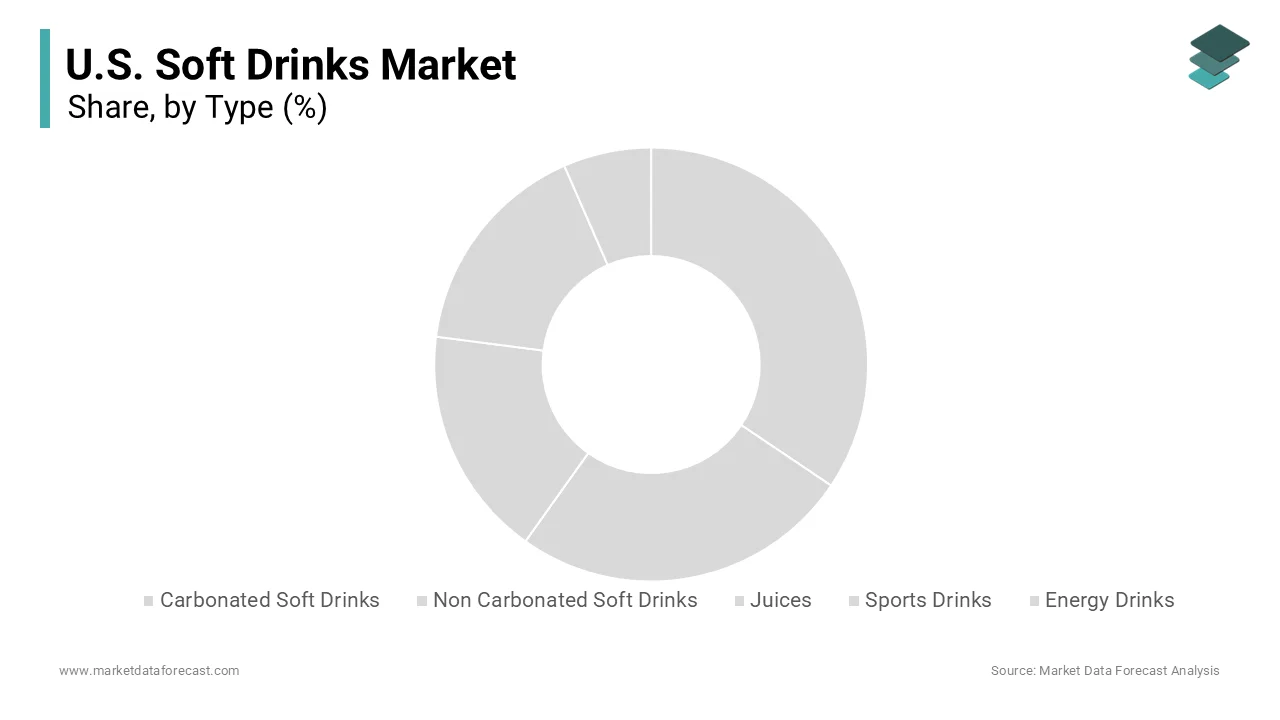
However, the energy drinks segment is a promising segment and is expected to grow at a CAGR of 7.4% during the forecast period in the U.S. market owing to the rising demand for functional performance and alertness among diverse consumer groups. Modern lifestyles characterized by long working hours, academic pressures, and active social schedules drive individuals to seek quick and effective energy boosts. As per the National Sleep Foundation, about 35% of U.S. adults report sleeping less than the recommended 7 hours per night, creating a need for stimulants to maintain productivity. Energy drinks offer a convenient solution by delivering caffeine, taurine, and B vitamins in a ready to drink format. According to consumer surveys, students, professionals, and athletes are the primary users of energy drinks, citing improved focus and endurance as key benefits. The perception of energy drinks as performance enhancers rather than mere refreshments distinguishes them from traditional soft drinks. Marketing campaigns emphasize mental clarity and physical stamina, resonating with goal oriented consumers. The introduction of sugar free and natural ingredient variants has expanded the appeal to health conscious users who previously avoided high sugar options. The versatility of energy drinks in various consumption occasions, from morning commutes to late night study sessions, drives frequent repurchase. This functional utility ensures that energy drinks continue to gain market share, outpacing traditional categories.
By Flavor Insights
The cola flavor segment held the major share of the U.S. soft drinks market in 2025. The dominance of this segment in the U.S. market is driven by the iconic brand heritage and universal appeal associated with major cola manufacturers. Brands like Coca Cola and Pepsi have become cultural symbols, representing Americana and global connectivity. As per brand equity studies, the top cola brands are valued at over 100 billion dollars collectively, fostering deep emotional connections with consumers. The distinct taste profile of cola, characterized by a blend of vanilla, cinnamon, and citrus notes, has become the benchmark for soft drinks. According to consumer preference data, cola remains the most preferred flavor for family gatherings and social events, ensuring consistent high volume sales. The nostalgia associated with cola consumption reinforces loyalty across generations, making it a staple in household refrigerators. Marketing efforts that leverage historical narratives and emotional storytelling further strengthen this bond. The versatility of cola as a mixer with alcoholic and non alcoholic beverages expands its usage occasions beyond standalone consumption. The widespread availability of cola in every retail and food service outlet ensures that it is always an option for consumers. This combination of brand power, taste familiarity, and cultural significance solidifies cola as the leading flavor in the market.
The herbal and botanical flavors segment is estimated to showcase a CAGR of 8.2% during the forecast period in the U.S. market owing to the rising interest in natural wellness and holistic health among consumers. Individuals are seeking beverages that offer therapeutic benefits such as relaxation, digestion support, and immune boosting properties. As per the Global Wellness Institute, the demand for functional foods and beverages with herbal ingredients is surging, driven by health conscious buyers. Flavors such as ginger, turmeric, hibiscus, and mint are perceived as natural remedies that contribute to overall well being. According to consumer surveys, there is a growing preference for drinks that align with clean eating principles and avoid artificial additives. The association of herbal flavors with traditional medicine and ancient healing practices enhances their appeal. Marketing campaigns that highlight the health benefits of specific botanicals educate consumers and drive adoption. The integration of these flavors into sparkling waters and prebiotic sodas further expands their reach. The perception of herbal drinks as sophisticated and mature alternatives to sugary sodas attracts affluent and educated demographics. This alignment with wellness trends ensures that herbal and botanical flavors continue to gain popularity and market share.
COUNTRY LEVEL ANALYSIS
The United States is likely to remain the primary engine of beverage innovation in North America over the next few years as it balances legacy brand loyalty with a massive shift toward functional health. As the largest and most mature market globally, the country exhibits high per capita consumption, a diverse product landscape, intense competition, rapid innovation, and a shifting consumer preference toward healthier options. The U.S. market is fundamentally driven by high per capita consumption and the deep cultural integration of soft drinks into daily life. As per the Centers for Disease Control and Prevention, about 49% of adults consume at least one sugar-sweetened beverage on any given day, reflecting entrenched habits. The association of soft drinks with meals, sports, and entertainment ensures consistent demand across all demographics. According to dietary surveys, the average American consumes more soft drinks than any other packaged beverage, highlighting its centrality in the national diet. The widespread availability and affordability of these products further reinforce consumption patterns. The influence of major brands on popular culture maintains the relevance of soft drinks despite health concerns. This cultural prominence ensures that the U.S. remains the primary driver of volume and revenue in the region. The continuous adaptation of products to meet evolving preferences sustains this leadership position.
COMPETITIVE LANDSCAPE
The competitive landscape of the U.S. soft drinks market is characterized by the dominance of a few multinational corporations that leverage strong brand equity and extensive distribution networks. Incumbent players face increasing pressure from emerging craft brands and private label offerings that provide unique flavors and lower prices. Competition is driven by innovation in product formulations such as natural sweeteners and functional ingredients that appeal to health conscious consumers. Price competition remains intense in the mass market segment while premium brands differentiate through quality and sustainability credentials. Marketing efforts focus on digital engagement and experiential branding to connect with younger demographics. The rise of alternative beverages such as sparkling water and kombucha fragments the market requiring traditional soda makers to diversify their portfolios. Supply chain efficiency and cost management are critical factors influencing profitability. Regulatory pressures regarding sugar content and packaging waste also shape competitive dynamics. Overall the market favors companies that can balance scale with agility while adapting to shifting consumer values and health trends.
KEY MARKET PLAYERS
Some of the companies that are playing a dominating role in the U.S. soft drinks market are
- Coca-Cola (US)
- PepsiCo (US)
- Nestle (CH)
- Dr Pepper Snapple Group (US)
- Monster Beverage Corporation (US)
- Red Bull GmbH (AT)
- Britvic (GB)
- Keurig Dr Pepper (US)
Top Players in the Market
- The Coca Cola Company maintains a dominant presence in the U.S. soft drinks market through its extensive portfolio of iconic brands. The corporation leverages its unparalleled distribution network to ensure product availability across all retail and food service channels. Recent strategic initiatives include expanding its zero sugar offerings to address health conscious consumer demands. The company has also invested heavily in sustainable packaging solutions such as aluminum bottles and recycled materials to enhance its environmental profile. By utilizing advanced data analytics for personalized marketing Coca Cola strengthens customer engagement and brand loyalty. These efforts aim to modernize its image while preserving the heritage of its core products. The continuous innovation in flavor profiles and functional beverages ensures that the company remains relevant in a rapidly evolving market landscape.
- PepsiCo Inc contributes significantly to the market with its diverse beverage portfolio including Pepsi Mountain Dew and Gatorade. The company focuses on delivering a wide range of options from traditional sodas to performance drinks that cater to active lifestyles. Recent actions involve reformulating products to reduce sugar content and introducing natural ingredients to align with wellness trends. PepsiCo has strengthened its supply chain resilience by investing in local sourcing and manufacturing capabilities. The organization actively engages in digital marketing campaigns targeting younger demographics through social media platforms and influencer partnerships. By emphasizing sustainability and community initiatives PepsiCo builds strong brand equity. These strategies enable the company to maintain competitive advantage and drive growth in both conventional and emerging beverage categories.
- Keurig Dr Pepper Inc holds a strong position in the U.S. market with beloved brands such as Dr Pepper Snapple and Canada Dry. The company specializes in offering unique flavors that differentiate it from competitors focusing on niche segments and loyal customer bases. Recent strategic moves include expanding its ready to drink coffee and tea lines to diversify beyond carbonated soft drinks. Keurig Dr Pepper has enhanced its direct to consumer capabilities through e commerce platforms allowing for personalized customer experiences. The firm prioritizes operational efficiency by optimizing logistics and reducing waste in production processes. By leveraging its strong brand heritage and innovative product development Keurig Dr Pepper continues to capture market interest. These initiatives strengthen its presence and appeal to consumers seeking variety and quality in their beverage choices.
Top Strategies Used by Key Market Participants
Key players in the U.S. soft drinks market primarily employ product diversification and health oriented innovation strategies to sustain growth. Companies are increasingly launching zero sugar and low calorie variants to address rising health consciousness among consumers. This shift allows brands to retain customers who are reducing sugar intake without abandoning their favorite flavors. Another major strategy involves expanding into functional beverages such as energy drinks and hydration solutions to capture new usage occasions. Manufacturers invest in sustainable packaging initiatives including recyclable materials and reduced plastic usage to meet environmental standards. Digital engagement through social media and personalized marketing enhances brand loyalty and reaches younger demographics. Strategic partnerships with food service providers ensure prominent placement and visibility. By balancing tradition with innovation key participants strengthen their market positions and adapt to evolving consumer preferences effectively.
MARKET SEGMENTATION
This research report on the U.S. soft drinks market is segmented and sub-segmented into the following categories.
By Type
- Carbonated Soft Drinks
- Non Carbonated Soft Drinks
- Juices
- Sports Drinks
- Energy Drinks
By Flavor
- Cola
- Fruit
- Citrus
- Herbal
- Mixed Flavors
By Packaging Type
- Cans
- Bottles
- Pouches
- Tetra Packs
- Bulk Packaging
By Distribution Channel
- Supermarkets
- Convenience Stores
- Online Retail
- Restaurants
- Vending Machines
By Country
- California
- Washington
- Oregon
- New York
- Rest of the United States
Frequently Asked Questions
1.What is driving the growth of the U.S. soft drinks market?
The growth of the U.S. soft drinks market is driven by rising consumer demand for convenient beverages, product innovation, and increasing availability across retail channels.
2.What are the major types of soft drinks available in the U.S. market?
Major types of soft drinks include carbonated soft drinks, non carbonated soft drinks, juices, sports drinks, and energy drinks.
3.Why are energy drinks gaining popularity in the United States?
Energy drinks are gaining popularity due to increasing demand for instant energy boosting beverages among young consumers and working professionals.
4.What flavors are commonly preferred by consumers in the U.S. soft drinks market?
Consumers commonly prefer cola, fruit, citrus, herbal, and mixed flavor soft drinks.
5.How does packaging influence the U.S. soft drinks market?
Packaging plays an important role by improving product convenience, portability, shelf appeal, and product preservation.
6.Which packaging types are widely used in the soft drinks industry?
Widely used packaging types include cans, bottles, pouches, tetra packs, and bulk packaging.
7.What role do supermarkets play in the U.S. soft drinks market?
Supermarkets contribute significantly by offering a wide variety of soft drink brands and promotional pricing to consumers.
8.How is online retail affecting the U.S. soft drinks market?
Online retail is expanding market reach by enabling easy product access, home delivery services, and digital promotions.
9.What challenges affect the U.S. soft drinks market?
The market faces challenges such as increasing health concerns, sugar reduction regulations, and intense competition among beverage brands.
10.What is the future outlook for the U.S. soft drinks market?
The future outlook for the U.S. soft drinks market remains positive due to ongoing product innovation, premium beverage demand, and expanding distribution networks.
Related Reports
Access the study in MULTIPLE FORMATS
Purchase options starting from
$ 1200
Didn’t find what you’re looking for?
TALK TO OUR ANALYST TEAM
Need something within your budget?
NO WORRIES! WE GOT YOU COVERED!
Call us on: +1 888 702 9696 (U.S Toll Free)
Write to us: sales@marketdataforecast.com