U.S. Swimming Pool Market Size, Share, Trends & Growth Forecast Report Segmented By End User (Hospitality & Recreation Pools, Commercial Sports & Fitness Facilities, Public & Municipal Pools, Competition & High-Performance Training Pools), Revenue Source, Pool Size and Country – Industry Analysis From 2026 to 2034
Market Size, 2025
$2.01 BnMarket Estimate, 2026
$2.14 BnMarket Forecast, 2034
$3.58 BnCAGR, 2026–2034
6.66%U.S. Swimming Pool Market Report Summary
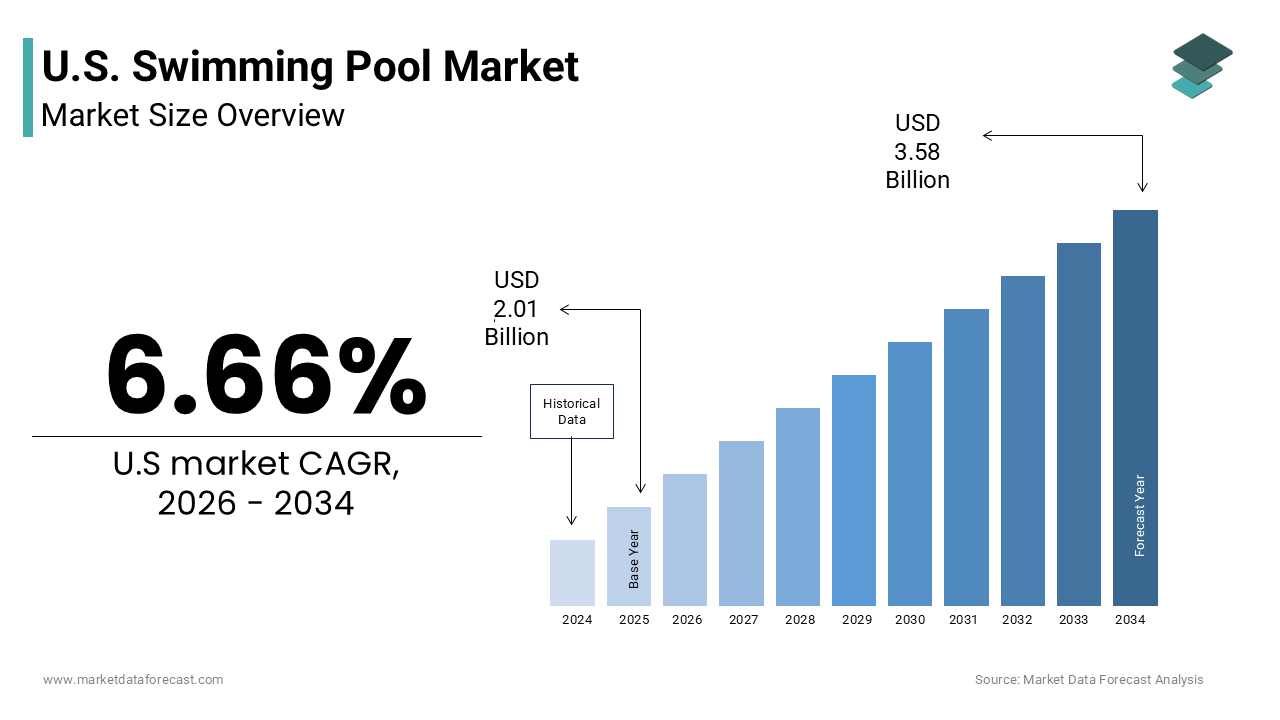
The U.S. swimming pool market was valued at USD 2.01 billion in 2025, is estimated to reach USD 2.14 billion in 2026, and is projected to reach USD 3.58 billion by 2034, growing at a CAGR of 6.66% during the forecast period from 2026 to 2034. The growth of the U.S. swimming pool market is driven by rising disposable income, increasing residential real estate development, and growing consumer preference for outdoor recreational amenities. Expanding adoption of smart pool automation systems, increasing demand for wellness-oriented home infrastructure, and rising investments in luxury hospitality projects are further accelerating market growth. Moreover, advancements in energy-efficient pool technologies, expansion of commercial aquatic facilities, and increasing focus on sustainable water management solutions are supporting the expansion of the U.S. swimming pool market.
Key Market Trends
- Rising adoption of smart pool automation systems is enabling remote monitoring and efficient water chemistry management.
- Growing demand for energy-efficient pumps, filtration systems, and sustainable pool technologies driven by environmental regulations.
- Increasing popularity of luxury resort-style residential pools with advanced lighting, heating, and entertainment features.
- Strong focus on wellness-oriented aquatic infrastructure supporting low-impact exercise and therapeutic swimming activities.
- Expansion of commercial aquatic facilities in hospitality, fitness, and recreational sectors across the United States.
Segmental Insights
- Based on end user, the hospitality and recreation segment dominated the U.S. swimming pool market in 2025. The segment’s dominance is attributed to the strong recovery of the tourism industry, rising investments in luxury hospitality infrastructure, and increasing consumer preference for experiential leisure amenities at hotels and resorts.
- The commercial sports and fitness facilities segment is projected to witness the fastest CAGR during the forecast period owing to rising health consciousness, increasing demand for low-impact fitness activities, and growing investments in aquatic training and rehabilitation infrastructure.
- Based on revenue source, the membership and subscription revenue segment accounted for the leading share of the U.S. swimming pool market in 2025. The dominance of this segment is driven by the stable recurring revenue model adopted by fitness centers, community clubs, and commercial recreational facilities, enabling long-term operational sustainability and infrastructure investment.
- The ticket and pay-per-entry revenue segment is anticipated to register notable growth during the forecast period due to increasing consumer preference for flexible recreational access, growing popularity of water parks and leisure destinations, and rising domestic tourism activities.
- Based on pool size, the standard commercial pools segment held the major share of the U.S. swimming pool market in 2025 owing to their cost efficiency, versatile applications, and widespread adoption across hotels, gyms, schools, and community recreation centers.
Regional Insights
The United States maintained a strong position in the global swimming pool market in 2025, supported by its large suburban housing base, strong outdoor living culture, and increasing investments in residential and commercial recreational infrastructure. California remains a major contributor to the U.S. swimming pool market due to its warm climate, high concentration of luxury residential properties, and increasing adoption of smart pool technologies. Florida, Texas, Arizona, and other Sun Belt states are also witnessing notable growth driven by year-round pool usage, rising housing developments, and increasing consumer spending on outdoor lifestyle amenities.
Competitive Landscape
The U.S. swimming pool market is highly competitive and characterized by the presence of multinational equipment manufacturers, pool construction companies, and specialized aquatic technology providers competing through innovation, energy efficiency, and digital integration. Leading companies are focusing on expanding smart automation portfolios, strengthening energy-efficient product offerings, investing in robotic cleaning technologies, and enhancing after-sales service networks. Strategic partnerships with builders, hospitality operators, and commercial recreation facilities are further strengthening market positioning across residential and commercial swimming pool segments. Prominent players in the U.S. swimming pool market include Pentair plc, Hayward Holdings, Inc., Fluidra S.A., Latham Pool Products, Inc., Intex Recreation Corp., POOLCORP, Leslie’s, Inc., Maytronics Ltd., Waterco Limited, Natare Corporation, Myrtha Pools, and America’s Swimming Pool Company (ASP).
U.S. Swimming Pool Market Size
The U.S. Swimming Pool Market size was valued at USD 2.01 billion in 2025 and is anticipated to reach USD 2.14 billion in 2026 from USD 3.58 billion by 2034, growing at a CAGR of 6.66% during the forecast period from 2026 to 2034.
The U.S. swimming pool market is deeply intertwined with the housing sector and consumer discretionary spending patterns. As per the Association of Pool and Spa Professionals, there are approximately 10.4 million residential swimming pools in the U.S., reflecting a high penetration rate in suburban and affluent urban areas. The cultural significance of backyard pools is evident in their role as social hubs and fitness centers for families. According to the U.S. Census Bureau, new single-family housing starts often correlate with pool installation rates, particularly in Sun Belt states where climate permits year-round usage. The U.S. market has evolved from mere luxury status symbols to essential home amenities that enhance property value and quality of life. As per the National Swimming Pool Foundation, millions of Americans engage in swimming regularly for exercise, driving demand for both new installations and retrofitting of older units with energy-efficient technologies. The market dynamics are influenced by seasonal variations, regional climate differences, and evolving safety regulations. Furthermore, the integration of smart automation systems for water chemistry and temperature control is reshaping consumer expectations. This comprehensive ecosystem supports a wide range of stakeholders from contractors and manufacturers to service providers to ensure sustained activity across the national landscape.
MARKET DRIVERS
Rising Disposable Income and Residential Real Estate Expansion
The steady increase in household disposable income coupled with robust activity in the residential real estate sector is one of the major factors propelling the growth of the U.S. swimming pool market. As consumers accumulate wealth, they increasingly invest in home improvements that enhance lifestyle and property value, with swimming pools being a top priority for many homeowners. According to the U.S. Bureau of Labor Statistics, real disposable personal income has shown consistent growth, enabling middle and upper-income households to afford significant capital expenditures like pool construction. The trend towards suburban living, accelerated by remote work arrangements, has further fueled demand for backyard amenities. As per the National Association of Home Builders, the inclusion of outdoor living spaces in new home designs has become a standard feature, with pools often cited as a desirable upgrade. The correlation between housing market health and pool installations is strong, as new homeowners frequently undertake landscaping and recreational projects shortly after purchase. Additionally, the renovation of existing homes often involves upgrading or installing pools to modernize the property. According to the Joint Center for Housing Studies of Harvard University, spending on home improvements reached record levels in recent years, indicating a strong willingness to invest in residential infrastructure. This financial capacity, combined with the desire for private recreational spaces, drives continuous demand for new pool constructions and renovations. The economic stability of homeowners allows for long-term planning and investment in high-quality aquatic facilities, sustaining market momentum.
Health Consciousness and Demand for Low-Impact Exercise
The growing emphasis on health and wellness among Americans is another significant driver for the swimming pool market, as swimming is recognized as one of the most effective low-impact exercises. Public health initiatives and medical recommendations frequently highlight swimming for its cardiovascular benefits and joint-friendly nature, appealing to a broad demographic ranging from children to seniors. As per the Centers for Disease Control and Prevention, regular physical activity is crucial for preventing chronic diseases, and swimming is often recommended for individuals with arthritis or mobility issues. This health consciousness translates into increased demand for residential pools that serve as private fitness centers, allowing for convenient and consistent exercise routines. According to the Physical Activity Council, participation in swimming activities has remained stable or grown, reflecting its enduring popularity as a recreational and fitness activity. The aging population in the U.S. further amplifies this trend, as older adults seek safe and effective ways to maintain physical fitness. As per the U.S. Census Bureau, the number of adults aged 65 and older is projected to grow significantly, creating a larger customer base for accessible pool designs and therapeutic features. Additionally, the rise of home-based fitness solutions post-pandemic has reinforced the value of having exercise facilities within the home environment. Consumers are increasingly willing to invest in pools equipped with swim jets and resistance currents to facilitate rigorous workouts. This shift towards health-oriented consumption ensures a steady demand for swimming pools as essential wellness infrastructure.
MARKET RESTRAINTS
High Initial Installation and Ongoing Maintenance Costs
The substantial financial burden associated with both initial installation and long-term maintenance is primarily hampering the expansion of the U.S. swimming pool market. Constructing an in-ground pool is a major capital project, with costs varying widely based on materials, size, and additional features such as heating and automation. According to HomeAdvisor, the average cost to install an in-ground swimming pool ranges from $28,000 to $55,000, a significant expenditure that many households cannot afford without financing. Beyond the initial outlay, ongoing maintenance expenses including chemicals, electricity for pumps and heaters, water refilling, and professional servicing add to the total cost of ownership. As per the Association of Pool and Spa Professionals, annual maintenance costs can amount to several thousand dollars, depending on the pool type and usage frequency. These recurring expenses deter potential buyers, particularly in economic periods characterized by inflation and reduced consumer confidence. The complexity of maintaining water chemistry and equipment functionality requires either dedicated time and effort from homeowners or the hiring of professional services, both of which represent additional costs. According to the Bureau of Labor Statistics, rising labor costs for service technicians further inflate maintenance bills. For many middle-income families, the perceived financial risk and long-term commitment associated with pool ownership act as a barrier to entry. This cost sensitivity limits market expansion to higher-income demographics and restricts the frequency of discretionary upgrades or additions in the broader housing market.
Stringent Environmental Regulations and Water Conservation Mandates
Environmental regulations and water conservation mandates pose a considerable restraint on the swimming pool market in the U.S., particularly in drought-prone regions of the U.S. Swimming pools require significant volumes of water for initial filling and regular replenishment due to evaporation and splash-out, raising concerns about resource sustainability. As per the U.S. Geological Survey, residential outdoor water use, including lawn irrigation and pool filling and this accounts for a substantial portion of household consumption in arid states. In response, states like California and Arizona have implemented strict water usage restrictions and incentives for reducing outdoor water waste. According to the California Department of Water Resources, regulations often limit the ability to fill new pools or require the installation of water-saving technologies such as covers and efficient filtration systems. These regulatory hurdles increase the complexity and cost of pool installation, as builders must comply with specific efficiency standards. Additionally, environmental concerns regarding chemical runoff and energy consumption associated with pool operations have led to tighter controls on equipment and sanitation methods. As per the Environmental Protection Agency, energy-efficient pump standards have been mandated, requiring upgrades that add to initial costs. The perception of pools as environmentally irresponsible can also influence homeowner association rules and local zoning laws, restricting construction in certain communities. These regulatory and environmental pressures create friction in the market, discouraging new installations and prompting some owners to remove existing pools rather than maintain them.
MARKET OPPORTUNITIES
Integration of Smart Technology and Automation Systems
The integration of smart technology and automation systems presents a substantial opportunity for growth in the U.S. swimming pool market, appealing to tech-savvy consumers seeking convenience and efficiency. Modern pool owners are increasingly interested in solutions that allow remote monitoring and control of water chemistry, temperature, and lighting via smartphone applications. As per the Consumer Technology Association, the adoption of smart home devices continues to rise, with outdoor living spaces becoming a key area for innovation. Automated systems can adjust chemical levels in real time, reducing the need for manual testing and minimizing chemical usage, which aligns with environmental sustainability goals. According to the Association of Pool and Spa Professionals, the demand for variable speed pumps and smart controllers is growing driven by their ability to reduce energy consumption and operational costs. These technologies offer precise control over pool functions, enhancing user experience and extending equipment lifespan. The opportunity lies in the retrofitting of existing pools with smart upgrades, as well as the inclusion of these systems in new constructions. Manufacturers and service providers who offer integrated smart solutions can differentiate themselves in a competitive market. As per McKinsey and Company, the Internet of Things is transforming various industries, and the pool sector is no exception, with connected devices providing valuable data for predictive maintenance. This technological evolution opens new revenue streams for companies offering installation, subscription-based monitoring, and software services, driving market expansion through innovation.
Growth in Luxury Hospitality and Commercial Recreation Projects
The expansion of the luxury hospitality and commercial recreation sectors offers significant opportunities for the swimming pool market in the U.S., as hotels, resorts, and fitness centers prioritize aquatic amenities to attract guests. The travel and tourism industry has rebounded strongly, with travelers increasingly seeking experiential stays that include high-quality leisure facilities. As per the American Hotel and Lodging Association, hotel developers are investing heavily in unique pool designs, including infinity edges, swim-up bars, and heated spas, to enhance guest satisfaction and competitive positioning. Commercial gyms and community centers are also upgrading their aquatic facilities to meet the growing demand for fitness and rehabilitation services. According to the International Health, Racquet and Sportsclub Association, health club memberships have stabilized, with aquatics remaining a popular component of fitness offerings. The trend towards staycations and local tourism further drives investment in commercial pools, as residents seek premium recreational experiences close to home. Developers of mixed-use residential complexes often include communal pools as a key amenity to attract tenants, creating a steady demand for large-scale commercial projects. As per the Urban Land Institute, amenity-rich developments command higher rents and occupancy rates, incentivizing developers to prioritize pool construction. This commercial segment provides a stable and high-value market for pool builders and equipment suppliers, offsetting fluctuations in the residential sector. The focus on aesthetic appeal and functional versatility in commercial projects drives innovation and higher spending per unit.
MARKET CHALLENGES
Labor Shortages in Skilled Construction and Service Trades
The acute shortage of skilled labor in construction and service trades that impedes project timelines and increases costs is a major challenge to the growth of the U.S. swimming pool market. Building and maintaining swimming pools requires specialized expertise in plumbing, electrical work, concrete finishing, and equipment installation, skills that are in short supply. As per the Associated General Contractors of America, the construction industry faces a persistent labor gap, with many firms struggling to find qualified workers to meet demand. This shortage leads to longer wait times for pool installations, frustrating customers and potentially causing them to cancel projects. The lack of experienced service technicians also affects the maintenance sector, resulting in delayed repairs and inconsistent service quality. According to the Bureau of Labor Statistics, the aging workforce in skilled trades is retiring faster than new entrants are being trained, exacerbating the deficit. Training programs and apprenticeships take time to yield results, meaning the labor constraint is likely to persist in the near term. The competition for skilled workers drives up wages, increasing operational costs for pool companies and ultimately raising prices for consumers. As per the National Association of Home Builders, labor costs have risen significantly, impacting the affordability of home improvement projects. This challenge requires industry-wide efforts to promote vocational training and attract younger workers to the trade. Until the labor pipeline is strengthened, the market will face constraints on its capacity to grow and meet consumer demand efficiently.
Supply Chain Disruptions and Material Price Volatility
Supply chain disruptions and volatility in material prices present a significant challenge to the stability and profitability of the U.S. swimming pool market. The construction of pools relies on a variety of materials including concrete, steel, fiberglass, plastics, and specialized equipment, all of which have experienced price fluctuations and availability issues. As per the Producer Price Index by the Bureau of Labor Statistics, prices for construction materials have seen significant increases due to global supply chain bottlenecks and inflationary pressures. Delays in the delivery of critical components such as pumps, heaters, and automated controllers can stall projects for weeks or months, leading to cost overruns and customer dissatisfaction. According to the Institute for Supply Management, manufacturing lead times have extended, affecting the ability of pool builders to plan and execute projects reliably. The dependence on imported materials and equipment further exposes the market to international trade dynamics and logistical challenges. Fluctuating fuel costs also impact transportation expenses, adding to the overall cost structure. As per the Federal Reserve, supply-side constraints continue to influence inflation, making budgeting difficult for both contractors and consumers. These uncertainties force companies to adjust pricing frequently, which can erode consumer trust and dampen demand. The inability to secure materials at predictable prices and timelines remains a persistent operational hurdle, requiring strategic sourcing and inventory management to mitigate risks.
REPORT COVERAGE
| REPORT METRIC | DETAILS |
| Market Size Available | 2025 to 2034 |
| Base Year | 2025 |
| Forecast Period | 2026 to 2034 |
| CAGR | 6.66% |
| Segments Covered | By End User,Revenue Source, Pool Size and Region. |
| Various Analyses Covered | Global, Regional and Country-Level Analysis, Segment-Level Analysis, Drivers, Restraints, Opportunities, Challenges; PESTLE Analysis; Porter’s Five Forces Analysis, Competitive Landscape, Analyst Overview of Investment Opportunities |
| Countries Covered | California, Washington, Oregon, New York, United States |
| Market Leaders Profiled | Pentair plc, Hayward Holdings, Inc., Fluidra S.A., Latham Pool Products, Inc., Intex Recreation Corp., POOLCORP, Leslie’s, Inc., Maytronics Ltd., Waterco Limited, Natare Corporation, Myrtha Pools, and America’s Swimming Pool Company (ASP). |
SEGMENTAL ANALYSIS
By End User Insights
The hospitality and recreation segment dominated the U.S. swimming pool market in 2025 due to the critical role aquatic amenities play in attracting guests to hotels, resorts, and vacation rentals. The robust recovery of the tourism industry and the shifting consumer preference towards experiential travel are further boosting the expansion of the hospitality and recreation segment in the U.S. market. Travellers increasingly prioritize destinations that offer comprehensive leisure experiences, with swimming pools being a central component of hotel and resort appeal. As per the U.S. Travel Association, domestic travel spending has surpassed historical baselines, indicating a strong rebound in hotel occupancy rates. Hotels and resorts are investing heavily in upgrading their aquatic facilities to meet these heightened expectations, often incorporating unique designs and luxury features. According to the American Hotel and Lodging Association, properties with high-quality recreational amenities report higher guest satisfaction scores and increased repeat visitation. The rise of staycations has further amplified this trend, as local tourists seek premium leisure experiences within driving distance. As per the National Restaurant Association, which tracks hospitality trends, outdoor dining and poolside services have become integral to the guest experience, driving demand for well-designed pool areas. The competitive nature of the hospitality sector forces operators to continuously innovate their pool offerings, ensuring sustained demand for construction and renovation services. This consistent investment in aquatic infrastructure solidifies the leading position of the hospitality segment in the market.
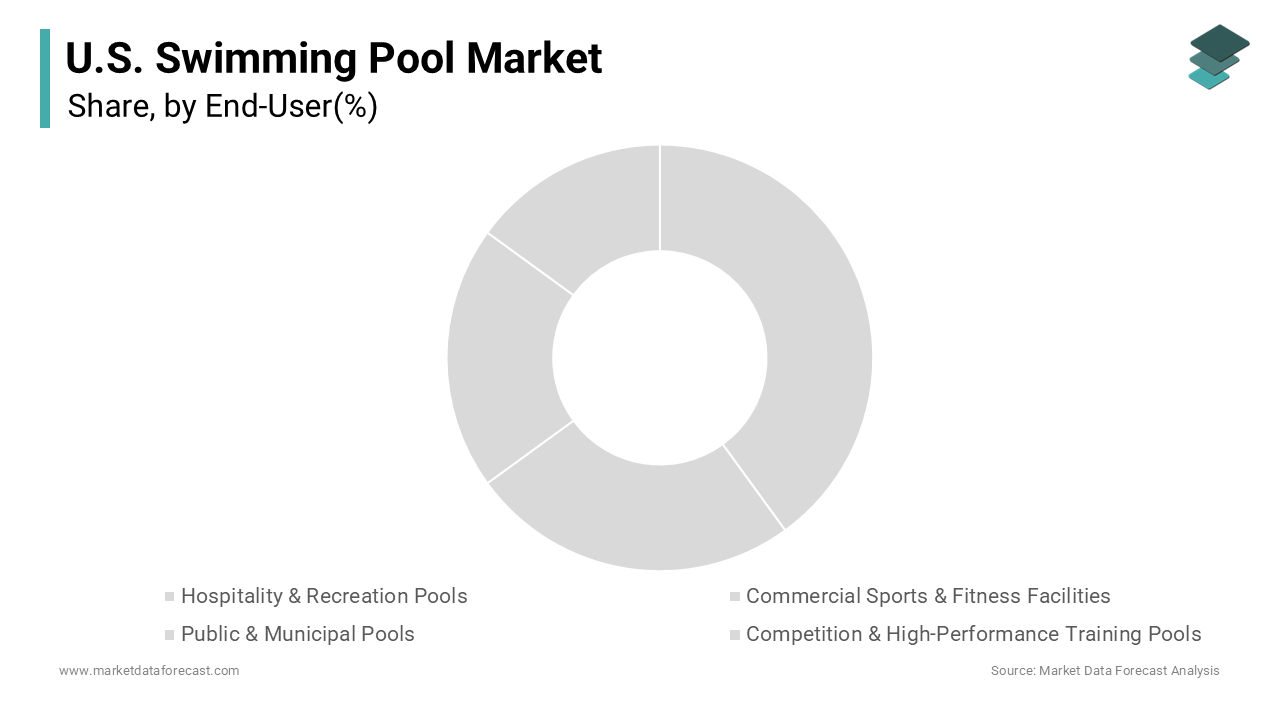
On the other side, the commercial sports and fitness facilities segment is the fastest-growing end-user category and is estimated to register a CAGR of 6.15 during the forecast period owing to the increasing recognition of swimming as a vital component of holistic health and fitness routines. The rapid growth of the commercial sports and fitness segment is primarily driven by the rising health consciousness among Americans and the popularity of swimming as a low-impact exercise. Consumers are increasingly seeking fitness options that provide cardiovascular benefits without stressing joints, making swimming an ideal choice for diverse age groups. As per the Centers for Disease Control and Prevention, regular aerobic activity like swimming helps prevent chronic diseases such as heart disease and type 2 diabetes. This health awareness translates into increased membership at gyms and community centers that offer aquatic facilities. According to the International Health, Racquet and Sportsclub Association, health club memberships have stabilized and grown, with aquatics remaining a key amenity for member retention. The aging population further boosts demand, as older adults prefer water-based exercises for rehabilitation and maintenance of mobility. As per the U.S. Census Bureau, the senior demographic is expanding, creating a larger base for therapeutic and fitness swimming programs. Fitness centers are responding by upgrading their pools with features like swim jets and variable depth zones to cater to serious swimmers and casual users alike. This focus on health and wellness drives continuous investment in new and upgraded commercial aquatic facilities. The integration of swimming into broader fitness regimes ensures sustained growth for this segment.
By Revenue Source Insights
The membership and subscription revenue segment led the market by accounting for the leading share of the U.S. swimming pool market in 2025, particularly within the commercial sports and fitness sector. This model provides a stable and predictable income stream for facility operators, allowing for better financial planning and maintenance investment. The dominance of membership and subscription revenue is driven by the financial stability it offers to pool operators, enabling them to cover high operational costs consistently. Unlike pay-per-entry models, which are subject to seasonal fluctuations and weather dependencies, memberships provide a steady cash flow throughout the year. As per the International Health, Racquet and Sportsclub Association, recurring revenue from memberships accounts for the majority of income for health clubs with aquatic facilities, ensuring operational viability. This stability allows operators to invest in regular maintenance, water quality management, and staff training, which are critical for customer satisfaction and safety. According to the National Swimming Pool Foundation, consistent revenue streams facilitate the adoption of advanced filtration and heating technologies that improve efficiency. Memberships also foster a sense of community and loyalty among users, leading to higher retention rates and reduced marketing costs. As per the Club Industry publication, member engagement programs tied to subscription models enhance customer lifetime value. The predictability of this revenue source makes it easier for facilities to secure financing for expansions or renovations. The shift towards subscription-based services in various industries has reinforced consumer acceptance of this model for fitness and recreation. This financial reliability ensures that membership revenue remains the cornerstone of the commercial pool market.
The ticket and pay-per-entry segment is experiencing rapid growth with a projected CAGR of 5.2% during the forecast period owing to the increasing popularity of casual recreation and the flexibility offered by transactional access. The fast growth of the ticket and pay-per-entry segment is fueled by the rise of casual recreation and the preference for flexible, commitment-free access to swimming facilities. Many consumers, particularly younger demographics and occasional users, prefer paying for single visits rather than committing to long-term memberships. As per the Physical Activity Council, participation in casual swimming activities has increased, driven by the desire for spontaneous leisure and social interaction. Water parks and public leisure pools benefit significantly from this trend, as they attract large volumes of drop-in visitors during peak seasons. According to the World Waterpark Association, attendance at water parks has rebounded strongly, with pay-per-entry tickets generating substantial revenue. The flexibility of this model appeals to tourists and residents alike who may not use facilities regularly enough to justify a membership. As per the National Recreation and Park Association, public pools often see spikes in daily attendance during summer months and holidays, driven by casual users. The ability to capture revenue from non-members expands the customer base beyond loyal subscribers. This trend towards flexible consumption patterns supports the rapid expansion of the pay-per-entry segment. Operators are adapting by offering dynamic pricing and online ticketing to enhance convenience and maximize yield.
By Pool Size Insights
The standard commercial pools segment occupied the highest share of the U.S. swimming pool market in 2025. These pools are characterized by their versatile design and moderate dimensions, suitable for a wide range of recreational and fitness activities. The dominance of standard commercial pools is driven by their versatility and cost efficiency, making them the preferred choice for most commercial and institutional applications. These pools are designed to accommodate various activities including lap swimming, leisure bathing, and aquatic classes, maximizing utility for diverse user groups. As per the National Swimming Pool Foundation, standard-sized pools require less initial capital investment and lower ongoing maintenance costs compared to larger specialized facilities. This economic advantage makes them accessible to a broader range of operators including small gyms, community centers, and boutique hotels. According to the American Hotel and Lodging Association, the majority of hotel pools fall into this category, balancing guest expectations with operational budgets. The modular nature of standard pools allows for easier integration into existing building structures and landscapes. As per the Architectural Record, designers favor standard dimensions for their flexibility in space planning and compliance with building codes. The widespread availability of standardized equipment and parts further reduces maintenance complexity and costs. This practicality and affordability ensure that standard commercial pools remain the most common type installed across the country. The ability to serve multiple purposes without excessive resource consumption solidifies their leading position in the market.
The semi-Olympic pool segment is estimated to register a promising CAGR of 7.1% during the forecast period in the U.S. market owing to the increasing demand for competitive training facilities and high-performance aquatic centers. These pools offer longer lanes and deeper water than standard pools, catering to serious swimmers. The rapid growth of the semi-Olympic pool segment is fueled by the rising demand for competitive training facilities and the professionalization of swimming athletics. Aspiring athletes and professional teams require pools that mimic competitive conditions to optimize performance and technique. As per USA Swimming, the number of registered competitive swimmers has increased, driving the need for high-quality training venues. Semi-Olympic pools provide the necessary length and depth for rigorous training sessions, making them essential for clubs and universities with competitive programs. According to the National Collegiate Athletic Association, investment in athletic facilities has risen, with many institutions upgrading to semi-Olympic standards to attract top talent. The prestige associated with hosting competitive events also motivates communities to build these larger facilities. As per the U.S. Olympic & Paralympic Committee, the development of grassroots training centers supports the national pipeline for international competition. This focus on athletic excellence drives the construction of semi-Olympic pools in both public and private sectors. The ability to host meets and tournaments generates additional revenue and community engagement. This strategic investment in competitive infrastructure supports the fast growth of the segment.
REGIONAL ANALYSIS
U.S. Swimming Pool Market Analysis
The U.S. held a promising share of the global swimming pool market in 2025 due to the high penetration in suburban areas and strong demand in sun-belt regions. The country is a global leader in pool technology and design, driven by a culture of outdoor living and home improvement. The position of the U.S. in the swimming pool market is defined by its diverse climate zones and robust housing market dynamics. Southern and western states such as Florida, Texas, and California account for a significant portion of pool installations due to their warm climates that permit year-round usage. As per the U.S. Census Bureau, population growth in these sun belt states continues to outpace national averages, driving demand for new housing and associated amenities. The prevalence of single-family homes with spacious backyards in these regions provides ideal conditions for pool construction. According to the National Association of Home Builders, pool inclusion rates in new home builds are highest in the South and West, reflecting regional preferences. The mild winters in these areas also extend the swimming season, enhancing the value proposition of pool ownership. As per the National Oceanic and Atmospheric Administration, rising average temperatures in many parts of the country are further encouraging outdoor water activities. The strong correlation between housing starts and pool installations ensures a steady pipeline of new projects. The cultural emphasis on outdoor leisure in these regions reinforces the high demand for swimming pools. This geographic concentration of demand shapes the national market landscape, while the interplay between climate, housing, and lifestyle ensures the U.S. remains a vibrant and evolving market for swimming pools.
COMPETITIVE LANDSCAPE
The competition in the U.S. swimming pool market is characterized by a mix of established multinational corporations and specialized regional manufacturers. This fragmented landscape drives intense rivalry as companies strive to differentiate themselves through technological innovation and service quality. Leading firms compete on the basis of product efficiency durability and smart connectivity features. The market sees frequent introductions of advanced robotic cleaners and automated control systems that offer superior convenience. Price competition remains significant particularly in the equipment segment where standardization is high. However many players focus on value added services such as extended warranties and technical support to justify premium pricing. Strategic alliances and collaborations are common as companies seek to expand their reach and enhance their technical capabilities. The entry of new players with niche technologies adds further complexity to the competitive environment. Established brands leverage their reputation and extensive distribution networks to maintain customer loyalty. Meanwhile smaller firms often target specific regions or applications where they can offer specialized expertise. The overall competitive dynamic encourages continuous improvement and innovation ensuring that customers benefit from increasingly efficient and reliable pool solutions. This vibrant competition fosters a healthy market ecosystem that supports ongoing advancements in aquatic technology.
KEY MARKET PLAYERS
Some of the promising companies that are playing a dominating role in the U.S. Swimming Pool Market include
- Pentair plc
- Hayward Holdings, Inc.
- Fluidra S.A.
- Latham Pool Products, Inc.
- Intex Recreation Corp.
- POOLCORP
- Leslie’s, Inc.
- Maytronics Ltd.
- Waterco Limited
- Natare Corporation
- Myrtha Pools
- America’s Swimming Pool Company (ASP)
Top Players in the U.S. Swimming Pool Market
Pentair plc
Pentair plc is a leading provider of residential and commercial flow technologies with a significant presence in the U.S. swimming pool market. The company offers a comprehensive portfolio of pumps, filters, heaters, and automation systems designed to enhance energy efficiency and user convenience. Pentair strengthens its market position through continuous innovation in smart pool technology, allowing users to control equipment via mobile applications. Recent actions include the expansion of its intelligent control platforms and the introduction of variable speed pumps that meet stringent energy regulations. The company focuses on sustainable solutions that reduce water and energy consumption, aligning with environmental trends. Pentair also invests in strategic partnerships with builders and retailers to ensure widespread product availability. Their commitment to digital integration and operational excellence enables them to deliver superior value to homeowners and commercial facility operators. This approach reinforces their reputation as a trusted partner in the aquatic industry.
Hayward Industries Inc
Hayward Industries Inc is a prominent manufacturer of swimming pool equipment and accessories in the U.S., known for its extensive product range and strong brand recognition. The company produces high quality pumps, cleaners, sanitization systems, and automation controls for both residential and commercial applications. Hayward actively engages in product development to introduce advanced features such as salt chlorine generators and robotic cleaners. Recent initiatives involve enhancing their digital ecosystem with user friendly apps that simplify pool maintenance tasks. The company strengthens its position by expanding distribution networks and collaborating with professional pool service providers. Hayward also emphasizes sustainability by designing energy efficient products that lower operational costs for consumers. Their focus on reliability and performance ensures customer loyalty and repeat business. By leveraging its established manufacturing capabilities and marketing reach, Hayward continues to drive growth and innovation in the competitive swimming pool equipment sector.
Zodiac Pool Systems LLC
Zodiac Pool Systems LLC is a key player in the U.S. swimming pool market, offering a diverse array of cleaning, heating, and filtration solutions. The company is renowned for its innovative robotic pool cleaners and advanced water care systems that automate maintenance processes. Zodiac strengthens its market presence by investing in research and development to create smarter and more efficient products. Recent actions include the launch of next generation robotic cleaners with enhanced navigation capabilities and connectivity features. The company also focuses on expanding its service network to provide timely support to customers and professionals. Zodiac collaborates with industry partners to promote best practices in pool care and safety. Their dedication to technological advancement and customer satisfaction helps them maintain a competitive edge. By delivering reliable and cutting edge solutions, Zodiac supports the evolving needs of pool owners and contributes significantly to the growth of the domestic market.
Top Strategies Used by Key Market Participants
Key players in the U.S. swimming pool market primarily employ product innovation and digital integration to maintain competitive advantage. Companies invest heavily in research and development to create energy efficient pumps and smart automation systems that appeal to environmentally conscious consumers. This focus on technology allows them to differentiate their offerings and command premium prices. Another major strategy involves expanding distribution channels through partnerships with retailers and professional builders. By ensuring broad product availability firms increase market penetration and brand visibility. Strategic acquisitions are also common as companies seek to broaden their product portfolios and acquire specialized technologies. These mergers enable firms to integrate complementary solutions and access new customer segments. Additionally manufacturers emphasize sustainability by designing products that reduce water and energy consumption. This approach aligns with regulatory requirements and consumer preferences for green solutions. Collaborations with service providers further strengthen market positioning by ensuring proper installation and maintenance. These combined strategies drive growth and reinforce the leadership of key participants in the dynamic U.S. swimming pool landscape.
MARKET SEGMENTATION
This research report on the U.S. swimming pool market has been segmented based on the following categories.
By End User
- Hospitality & Recreation Pools
- Commercial Sports & Fitness Facilities
- Public & Municipal Pools
- Competition & High-Performance Training Pools
By Revenue Source
- Membership / Subscription Revenue
- Ticket / Pay-per-Entry Revenue
- Event / Competition / Rental Revenue
- Others
By Pool Size
- Standard Commercial Pools
- Semi-Olympic Pools
- Olympic-size Pools
- Specialty / Theme-based Pools
By Country
- California
- Washington
- Oregon
- New York
- Rest of the United States
Frequently Asked Questions
What is driving the growth of the U.S. Swimming Pool Market?
The growth of the U.S. Swimming Pool Market is driven by increasing residential construction activities, rising demand for luxury outdoor living spaces, and growing interest in recreational and wellness activities.
Which type of swimming pool is most popular in the U.S.?
In-ground swimming pools are the most popular type in the U.S. due to their durability, aesthetic appeal, and increasing adoption in residential properties.
Who are the major players in the U.S. Swimming Pool Market?
Major players in the market include Pentair plc, Hayward Holdings, Inc., Fluidra S.A., Latham Pool Products, Inc., POOLCORP, and Leslie’s, Inc.
What are the major applications of swimming pools in the U.S.?
Swimming pools are widely used in residential homes, hotels, resorts, sports clubs, schools, and recreational centers across the U.S.
What challenges does the U.S. Swimming Pool Market face?
The market faces challenges such as high installation and maintenance costs, water conservation concerns, and seasonal demand fluctuations
What are the key trends in the U.S. Swimming Pool Market?
Key trends in the market include the adoption of smart pool technologies, energy-efficient pool equipment, saltwater systems, and automated cleaning solutions.
Which region in the U.S. has the highest demand for swimming pools?
States with warmer climates such as California, Florida, Texas, and Arizona account for a significant share of swimming pool installations in the U.S.
How is technology influencing the U.S. Swimming Pool Market?
Technology is improving pool management through smart monitoring systems, automated filtration, robotic cleaners, and app-controlled pool equipment.
What materials are commonly used in swimming pool construction?
Concrete, fiberglass, and vinyl liner materials are commonly used for swimming pool construction in the U.S.
How does the commercial sector contribute to the U.S. Swimming Pool Market?
The commercial sector contributes significantly through demand from hotels, resorts, fitness centers, water parks, and public recreational facilities.
Access the study in MULTIPLE FORMATS
Purchase options starting from
$ 1200
Didn’t find what you’re looking for?
TALK TO OUR ANALYST TEAM
Need something within your budget?
NO WORRIES! WE GOT YOU COVERED!
Call us on: +1 888 702 9696 (U.S Toll Free)
Write to us: sales@marketdataforecast.com