- Product Description Description
- Table of Contents TOC
- List of Table & Figure LOT
- Get Free Sample PDF Sample PDF
Market Size, 2025
$226.65 BnMarket Estimate, 2026
$234.92 BnMarket Forecast, 2034
$312.95 BnCAGR, 2026–2034
3.65%U.S. Third-Party Logistics Market Report Summary
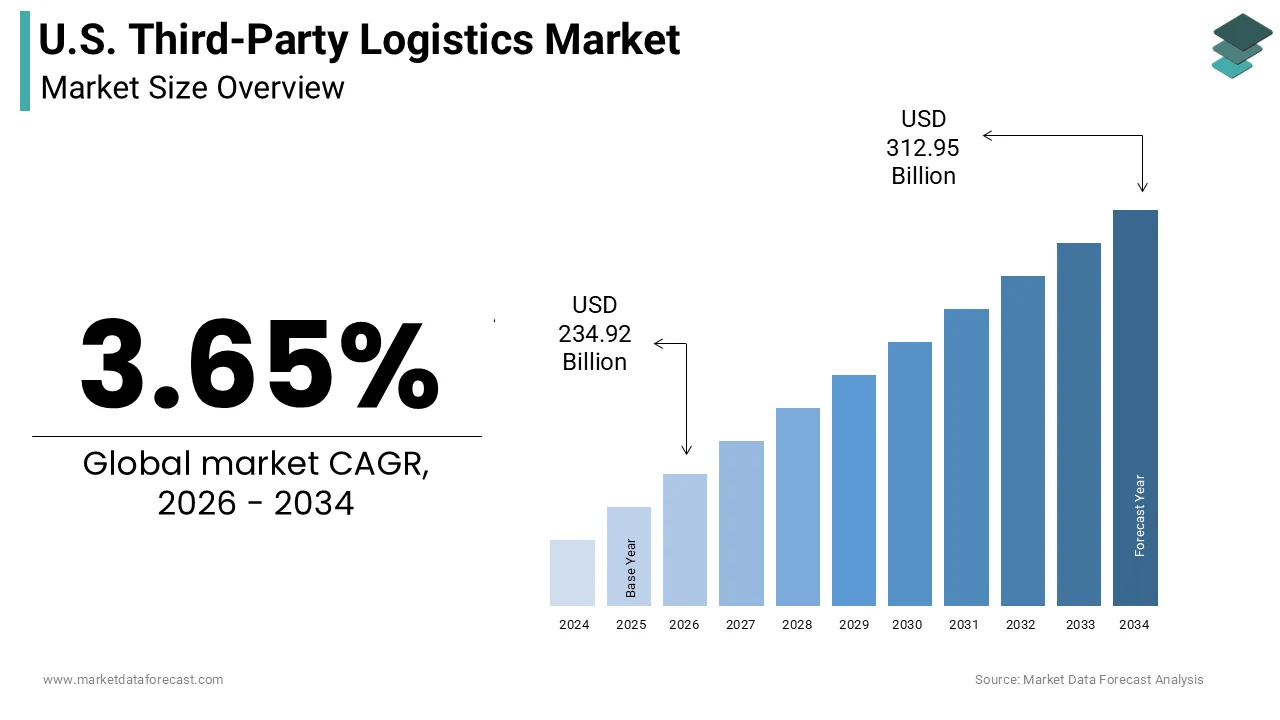
The United States third-party logistics (3PL) market was valued at USD 226.65 billion in 2025 and is projected to reach USD 312.95 billion by 2034, growing from USD 234.92 billion in 2026 at a CAGR of 3.65% during the forecast period. Market growth is driven by increasing outsourcing of logistics operations, rapid expansion of e-commerce, and rising demand for efficient supply chain solutions. Companies are increasingly relying on third-party logistics providers to improve operational efficiency, reduce transportation costs, and enhance delivery capabilities.
Key Market Trends
- Rapid growth of e-commerce and omnichannel retail logistics
- Increasing adoption of warehouse automation and AI-driven logistics
- Rising demand for last-mile delivery solutions
- Expansion of cold chain and specialized logistics services
- Growing integration of IoT, cloud computing, and data analytics in logistics operations
Segmental Insights
- Based on service type, the domestic transportation management (DTM) segment dominated the U.S. third-party logistics market in 2025 by accounting for 48.7% of the regional market share, driven by rising freight movement and transportation optimization needs.
- Based on end user, the retail and e-commerce segment led the market in 2025 by capturing 35.5% of the total market share, supported by increasing online shopping and fulfillment requirements.
Regional Insight
- United States accounted for 85.4% of the North American third-party logistics market share in 2025, making it the dominant regional market due to its advanced transportation infrastructure and large consumer base.
Competitive Landscape
- The U.S. third-party logistics market is highly competitive, with providers focusing on digital transformation, network expansion, and integrated logistics services. Companies are investing in automation, fleet optimization, and smart warehouse technologies to improve efficiency and customer satisfaction.
- Prominent players in the U.S. third-party logistics market include C.H. Robinson Worldwide, Inc., XPO Logistics, Inc., United Parcel Service, FedEx Corporation, DHL Supply Chain, J.B. Hunt Transport Services, Inc., Ryder System, Inc., Kuehne+Nagel, GEODIS, and Expeditors International.
U.S. Third-Party Logistics Market Size
The U.S. third-party logistics market size was calculated to be USD 226.65 billion in 2025 and is anticipated to be worth USD 312.95 billion by 2034, from USD 234.92 billion in 2026, growing at a CAGR of 3.65% during the forecast period.
Third-party logistics (3PL) is the outsourcing of supply chain operations, including warehousing, transportation, and order fulfilment, to a specialized external provider. This market serves as the backbone of modern commerce, enabling companies to focus on core competencies while leveraging the expertise and scale of logistics partners. As per the Bureau of Transportation Statistics (FAF5.6), the total value of shipments moved by all modes of transportation in the United States reached approximately $20.1 trillion, reflecting the immense volume managed through these networks. The complexity of global trade necessitates sophisticated coordination, which third-party logistics providers facilitate through integrated technology platforms. According to the United States Census Bureau, e-commerce sales accounted for 15.4 percent of total retail sales in the fourth quarter of 2023, driving demand for flexible and rapid fulfillment solutions. The physical footprint of this industry is vast, with industry data and Department of Commerce resources identifying approximately 14.8 billion square feet of industrial and warehouse space across the nation as of 2024/2025. Furthermore, the reliance on just-in-time inventory systems has increased vulnerability to disruptions, making robust logistics partnerships essential for resilience. The Federal Reserve Bank of New York produces the Global Supply Chain Pressure Index (GSCPI), which explicitly tracks how supply chain disruptions correlate with inflationary pressures. Their research consistently highlights that logistical bottlenecks remain a primary driver of price volatility for consumer goods. The integration of artificial intelligence and automation into logistics operations is transforming service delivery, enhancing speed and accuracy. These factors collectively define a dynamic market where agility,y technological sophistication, and strategic partnerships determine competitive advantage in an increasingly interconnected global economy.
MARKET DRIVERS
Exponential Growth of E-Commerce and Last Mile Delivery Demands
The rapid expansion of electronic commerce is a major booster for the United States ' third-party logistics market. This creates unprecedented demand for flexible warehousing and rapid last-mile delivery services. Consumers increasingly expect same-day or next-day delivery, which requires decentralized distribution networks and advanced inventory management capabilities. As per the United States Census Bureau, e-commerce sales reached 1.1 trillion dollars in 2023, representing a significant shift in retail dynamics that traditional supply chains cannot accommodate alone. Third-party logistics providers offer the scalability needed to handle fluctuating order volumes, particularly during peak seasons such as holidays. The National Retail Federation (NRF) states that holiday sales reached $964.4 billion in 2023, requiring specialized logistical support to manage surge capacity. Retailers rely on third-party logistics firms to operate fulfillment centers closer to urban populations, reducing transit times and shipping costs. According to McKinsey and Company, last-mile delivery accounts for up to 53 percent of total shipping costs, prompting companies to seek optimized solutions through external partners. The proliferation of mobile shopping apps ensures continuous order flow, necessitating real-time tracking and responsive customer service. Third-party logistics providers invest heavily in automation and robotics to process orders efficiently, meeting the speed expectations of digital consumers. This symbiotic relationship between online retail growth and logistical capability ensures sustained demand for third-party logistics services. The ability to provide seamless omnichannel fulfillment becomes a competitive differentiator for retailers, driving further adoption of outsourced logistics solutions.
Supply Chain Complexity and Need for Specialized Expertise
The increasing complexity of global supply chains is driving a high demand for 3PL services and the expansion of the United States third-party logistics market. Companies are seeking this specialized expertise to navigate regulatory, customs, and multimodal transportation challenges. Modern supply chains involve multiple tiers of suppliers, manufacturers, and distributors across diverse geographies, requiring coordinated management to ensure efficiency and compliance. As per the World Bank, the Logistics Performance Index highlights that efficient logistics are crucial for international trade competitiveness, prompting US firms to partner with experienced providers. Third-party logistics companies possess the knowledge and infrastructure to manage cross-border transactions including customs brokerage and tariff classification. Regulatory changes such as the United States-Mexico-Canada Agreement introduce new compliance requirements that third-party logistics providers help businesses navigate. According to the Council of Supply Chain Management Professionals, many companies lack internal resources to manage these complexities effectively, leading to outsourcing decisions. Third-party logistics firms offer visibility tools and analytics that optimize routing and reduce transit times, enhancing overall supply chain resilience. The rise of nearshoring trends also increases the need for regional logistics expertise, which third-party providers deliver through established networks. By leveraging external expertise, companies can mitigate risks associated with supply chain disruptions and regulatory penalties. This strategic partnership model allows businesses to maintain agility and responsiveness in a volatile global trading environment.
MARKET RESTRAINTS
Volatility in Fuel Prices and Operational Costs
Fluctuations in fuel prices and rising operational costs are a serious limitation for the United States third-party logistics market. This impacts profitability and pricing stability. Transportation constitutes a major component of logistics expenses, with diesel fuel prices directly influencing freight rates and operational budgets. As per the Energy Information Administration, average diesel prices in the United States have experienced significant volatility, ranging from 3.50 to 5.50 dollars per gallon in recent years, creating uncertainty for logistics providers. These fluctuations make it difficult for third-party logistics companies to offer fixed pricing contracts, leading to strained relationships with clients who prefer cost predictability. The American Trucking Associations notes that fuel surcharges are a standard mechanism to mitigate this risk, but they can erode customer trust and competitiveness. Additionally, rising labor costs contribute to financial pressure. Insurance premiums for fleets and facilities have also risen due to increased accident rates and liability claims. According to the National Association of Insurance Commissioners, commercial auto insurance rates have climbed significantly, affecting bottom lines. Third-party logistics providers must absorb some of these costs to remain competitive, which squeezes margins. The inability to fully pass on cost increases to price-sensitive customers limits revenue growth. This economic pressure forces providers to continuously seek efficiency improvements through technology and route optimization. However, the capital investment required for such innovations can be prohibitive for smaller firms. Therefore, cost volatility remains a persistent constraint on market expansion and profitability.
Labor Shortages and Workforce Availability Issues
Persistent labor shortages in the transportation and warehousing sectors restrain the growth of the United States third-party logistics market. This limits operational capacity and service reliability. The industry faces a chronic deficit of qualified truck drivers, warehouse workers, and logistics coordinators, which hampers the ability to meet growing demand. This scarcity forces third-party logistics providers to compete aggressively for talent, driving up wages and benefits, which increases operational expenses. The Bureau of Labor Statistics reports that the median age of heavy truck drivers is over 45, indicating a lack of younger entrants into the profession. Warehouse operations also struggle with high turnover rates due to the physically demanding nature of the work. According to the Warehousing Education and Research Council, retention rates in distribution centers remain low, requiring constant recruitment and training efforts. The lack of skilled personnel leads to delays in shipment processing and reduced service quality, affecting customer satisfaction. Third-party logistics firms must invest in automation to mitigate labor dependencies, but this requires substantial capital expenditure. The ongoing workforce crisis limits the scalability of logistics operations, particularly during peak demand periods. Without a stable and sufficient labor pool, third-party logistics providers cannot fully capitalize on market opportunities. Addressing these human capital challenges is essential for sustaining growth and maintaining service standards in the industry.
MARKET OPPORTUNITIES
Integration of Artificial Intelligence and Automation Technologies
The integration of artificial intelligence and automation technologies opens new pathways for the United States ' third-party logistics market. This allows for improved efficiency and predictive capabilities. Advanced algorithms enable providers to optimize routes, forecast demand, and manage inventory with greater precision than traditional methods. As per McKinsey and Company, artificial intelligence can reduce logistics costs by 15 percent and improve service levels through better decision-making. Third-party logistics firms are deploying autonomous mobile robots in warehouses to streamline picking and packing processes, reducing labor dependency and increasing throughput. The International Federation of Robotics reports that the adoption of service robots in logistics is growing rapidly, driven by the need for speed and accuracy. Machine learning models analyze historical data to predict supply chain disruptions, allowing proactive mitigation strategies. These technologies also enhance visibility for clients, offering real-time tracking and actionable insights. The use of digital twins allows providers to simulate scenarios and test strategies without risking actual operations. Investment in automation improves scalability, enabling third-party logistics firms to handle volume spikes efficiently. Clients benefit from faster turnaround times and reduced error rates, enhancing their competitive position. The continuous evolution of AI tools offers endless possibilities for innovation in logistics services. Providers that lead in technological adoption can differentiate themselves and capture higher-value contracts. This digital transformation reshapes the industry landscape, creating new revenue streams and operational efficiencies.
Expansion into Value-Added Services and Customized Solutions
The expansion into value-added services gives rise to new potential for 3PL providers to deepen client relationships and increase revenue per account, which is expected to propel the expansion of the United States third-party logistics market. Beyond basic transportation and warehousing, clients increasingly seek customized solutions such as kitting, assembly, packaging, and reverse logistics. As per the Council of Supply Chain Management Professionals, value-added services represent a growing segment of the logistics market as companies look to outsource non-core activities. Third-party logistics providers can tailor these services to meet specific industry needs, such as labeling for retail compliance or quality inspection for electronics. The National Retail Federation highlights that efficient reverse logistics is crucial for e-commerce returns management, which third-party providers can optimize. By offering end-to-end solutions, providers become strategic partners rather than mere vendors, enhancing customer stickiness. According to Deloitte, companies that integrate value-added services into their logistics contracts report higher satisfaction and retention rates. The ability to handle complex tasks such as product customization or final assembly close to the point of sale reduces lead times and inventory costs for clients. Third-party logistics firms leverage their infrastructure to perform these tasks efficiently, creating economies of scale. This diversification allows providers to command higher margins and reduce dependence on commoditized transportation services. The trend towards personalization in consumer goods further drives demand for flexible value-added logistics. Providers that innovate in this area can capture niche markets and build sustainable competitive advantages. This strategic shift transforms the role of third-party logistics in the supply chain ecosystem.
MARKET CHALLENGES
Cybersecurity Threats and Data Privacy Risks
Critical cybersecurity threats are severely impacting the United States ' third-party logistics market. These dangers are driven by the rapid increase in the digitization of logistics operations. Third-party logistics providers handle vast amounts of sensitive information, including customer data, shipment details, and proprietary supply chain strategies, making them attractive targets for cyberattacks. As per the Identity Theft Resource Center, the transportation and logistics sector experienced a notable increase in data breaches in recent years, compromising confidential information. Ransomware attacks can disrupt operations, halting shipments and causing substantial financial losses for both providers and clients. The Federal Bureau of Investigation reports that cybercrime complaints related to logistics scams have risen sharply, indicating heightened vulnerability. Third-party logistics firms must invest heavily in cybersecurity infrastructure to protect their networks and maintain client trust. Compliance with data privacy regulations such as the California Consumer Privacy Act adds complexity to data management practices. Any security incident can damage reputations and lead to loss of business as clients seek more secure partners. The interconnected nature of supply chains means that a breach in one provider can cascade through the network. Ensuring robust security protocols across all touchpoints is challenging but essential. Third-party logistics providers must prioritize cybersecurity as a core component of their service offering. Failure to do so can result in catastrophic operational and financial consequences. Managing these digital risks remains a critical challenge for the industry.
Regulatory Compliance and Environmental Sustainability Pressures
Navigating complex regulatory frameworks and meeting environmental sustainability goals present enduring challenges for the United States ' third-party logistics market. Government agencies impose strict regulations on transportation emissions safety standards, and labor practices, which require continuous adaptation and investment. Third-party logistics providers must upgrade fleets and adopt alternative fuels to comply with these rules, increasing capital expenditures. The Department of Transportation enforces hours of service regulations for drivers, which impact scheduling and capacity planning. According to the American Trucking Associations, compliance with these rules reduces flexibility and increases operational complexity. Additionally, customers are demanding greener logistics solutions, pressuring providers to reduce their carbon footprints. The World Economic Forum highlights that sustainable supply chains are becoming a competitive necessity rather than just a regulatory requirement. Third-party logistics firms must balance cost efficiency with environmental responsibility, which can be conflicting objectives. Investing in electric vehicles and sustainable packaging requires significant resources with uncertain immediate returns. Reporting on sustainability metrics adds administrative burdens and requires transparent data collection. Failure to meet regulatory or customer expectations can result in penalties and loss of business. The evolving nature of environmental laws creates uncertainty for long-term planning. Third-party logistics providers must remain agile to adapt to these changing requirements while maintaining profitability. This dual pressure of compliance and sustainability shapes the strategic direction of the industry.
REPORT COVERAGE
| REPORT METRIC | DETAILS |
| Market Size Available | 2025 to 2034 |
| Base Year | 2025 |
| Forecast Period | 2026 to 2034 |
| CAGR | 3.65% |
| Segments Covered | By Service Type, End User, And Region |
| Various Analyses Covered | Global, Regional & Country Level Analysis; Segment-Level Analysis; DROC, PESTLE Analysis; Porter’s Five Forces Analysis; Competitive Landscape; Analyst Overview of Investment Opportunities |
| Regions Covered | New York, Massachusetts, Pennsylvania, Illinois, Ohio, Michigan, Texas, Florida, Georgia, California, Washington, Colorado. |
| Market Leaders Profiled | C.H. Robinson Worldwide, Inc., XPO Logistics, Inc., United Parcel Service (UPS), FedEx Corporation, DHL Supply Chain, J.B. Hunt Transport Services, Inc., Ryder System, Inc., Kuehne+Nagel, GEODIS, Expeditors International of Washington, Inc. |
SEGMENTAL ANALYSIS
By Service Type Insights
The domestic transportation management (DTM) segment held the majority share of 48.7% of the United States third-party logistics market in 2025. This supremacy of the segment is attributed to the country’s vast road infrastructure and the overwhelming reliance on trucking for freight movement. The United States possesses an extensive network of highways and interstates that facilitate the efficient movement of goods across long distances. This infrastructure supports the dominance of domestic transportation as the primary mode of logistics service. The sheer volume of domestic shipments requires sophisticated management solutions to optimize routes, manage fleets, and ensure timely deliveries. Third-party logistics providers leverage their expertise to handle these complex operations, offering shippers cost-effective and reliable transportation services. The flexibility of trucking allows for door-to-door service, which is essential for just-in-time manufacturing and retail distribution. Consequently, the high demand for domestic freight movement ensures that transportation management remains the largest service type in the third-party logistics market. The dominance of the domestic transportation management segment is further reinforced by the widespread adoption of just-in-time inventory practices and the specific needs of retail distribution. Manufacturers and retailers rely on precise and frequent deliveries to minimize inventory holding costs and maintain operational efficiency. Third-party logistics providers offer the agility needed to meet these demanding schedules, ensuring that materials arrive exactly when needed for production or sale. Domestic transportation management services enable retailers to consolidate shipments, optimize load factors, and reduce empty miles, thereby lowering costs. The rise of omnichannel retailing has increased the complexity of distribution networks, requiring seamless integration between online and offline channels. Third-party logistics providers specialize in managing these intricate domestic networks, ensuring that products reach their destinations quickly and reliably. The dependency of key industries on timely domestic transport sustains the leadership of this segment in the third-party logistics market.
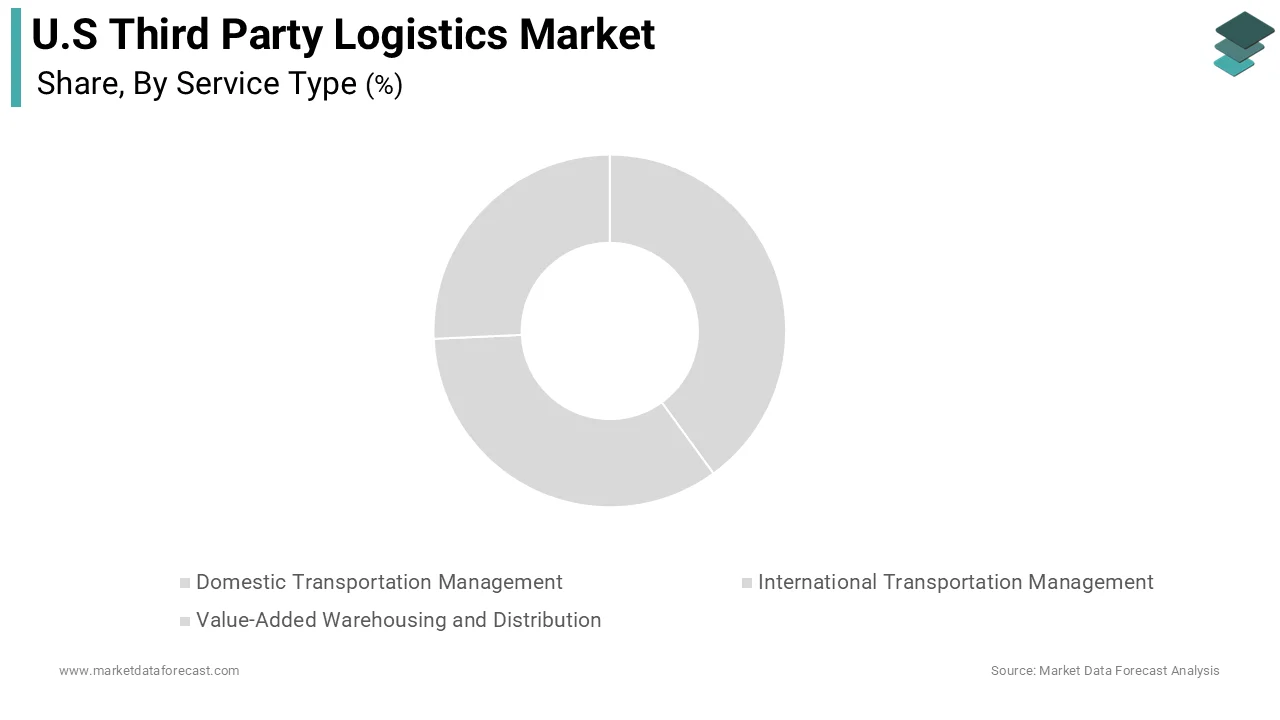
The value-added warehousing and distribution segment is estimated to register the fastest CAGR of 9.2% from 2026 to 2034. This rapid growth is propelled by the explosive expansion of e-commerce and the increasing demand for specialized fulfillment services. Online shoppers expect fast and accurate order processing, which requires advanced warehousing capabilities such as pick and pack kitting and labeling. Third-party logistics providers are investing heavily in automated warehouses and robotics to handle the high volume of small parcel orders efficiently. Value-added services such as product customization and returns management are becoming essential components of the e-commerce supply chain. Third-party logistics firms offer specialized solutions for handling returns, including inspection, refurbishment, and restocking. These services add value for retailers by improving customer experience and recovering value from returned items. The need for speed and flexibility in e-commerce fulfillment ensures that value-added warehousing and distribution remains the fastest-growing segment in the industry. Moreover, the accelerated growth of the value-added warehousing segment is also fueled by the trend towards supply chain resilience and nearshoring. Companies are reshoring or nearshoring production to reduce dependency on distant suppliers and mitigate risks associated with global disruptions. Third-party logistics providers are establishing strategic warehousing facilities near major manufacturing clusters to support these supply chain shifts. Value-added services, such as final assembly quality control and packaging, allow companies to complete products closer to the end market. Warehouses are evolving into distribution centers that perform light manufacturing and customization tasks. Third-party logistics firms offer the infrastructure and expertise to support these operations, enabling companies to reduce lead times and improve service levels. The shift towards localized supply chains drives demand for versatile warehousing solutions that go beyond simple storage. This strategic realignment of global supply chains ensures sustained growth for the value-added warehousing and distribution segment.
By End User Insights
The Retail and E-Commerce segment was the largest segment in the United States Third Party Logistics market and occupied a 35.5% share in 2025. This prominence of the segment is supported by the high volume of consumer goods and the complexity of omnichannel distribution strategies. Retailers manage vast assortments of products that must be delivered to millions of customers through various channels, including physical stores and online platforms. The shift towards omnichannel retailing requires seamless integration of inventory and transportation systems to ensure consistent product availability. Third-party logistics providers offer the scalability and flexibility needed to handle fluctuating demand, particularly during promotional periods and holidays. Retailers rely on third-party logistics firms to manage last-mile delivery, which is often the most expensive and complex part of the supply chain. The ability to provide same-day or next-day delivery has become a key differentiator for retailers. Third-party logistics providers invest in advanced technologies and networks to meet these expectations. The continuous growth of consumer spending and the evolution of retail models ensure that this sector remains the largest end user of third-party logistics services. Furthermore, the dominance of the Retail and e-commerce segment is further reinforced by seasonal demand fluctuations and the need for sophisticated inventory management. Retailers experience significant spikes in demand during holidays and special events, requiring temporary increases in warehousing and transportation capacity. Third-party logistics providers offer flexible solutions that allow retailers to scale operations up or down based on demand without incurring fixed costs. This flexibility is crucial for managing inventory levels and avoiding stockouts or overstock situations. Third-party logistics firms use advanced analytics to forecast demand and optimize inventory placement across distribution networks. The complexity of managing returns, especially after peak seasons, also drives demand for third-party logistics services. Providers offer efficient reverse logistics solutions that help retailers recover value from returned items. The ability to handle seasonal volatility and optimize inventory ensures that the Retail and e-commerce sector remains the primary driver of the third-party logistics market.
The Healthcare and Pharmaceuticals segment is anticipated to witness the fastest CAGR of 11.5% over the forecast period due to strict regulatory compliance requirements and the need for temperature-controlled logistics. Pharmaceutical products often require specific storage and transportation conditions to maintain efficacy and safety. Third-party logistics providers specialize in cold chain logistics, offering validated storage facilities and refrigerated transportation options. Healthcare providers rely on third-party logistics firms to ensure compliance with Good Distribution Practice standards. Third-party logistics providers offer traceability and visibility solutions that meet regulatory requirements. The ability to maintain product integrity during transit is critical for patient safety. This specialized expertise drives healthcare companies to outsource logistics operations to qualified providers. The growing demand for personalized medicine and clinical trial logistics further accelerates growth in this segment. The accelerated growth of the Healthcare and Pharmaceuticals segment is also fueled by the aging population and increased healthcare utilization. As the baby boomer generation ages, the demand for medical services and prescription drugs rises significantly. This trend requires efficient distribution networks to deliver medical supplies, equipment, and medications to hospitals, clinics, and patients. Third-party logistics providers offer specialized services for medical device distribution, including sterilization and kit assembly. Third-party logistics firms manage complex inventory systems to ensure the timely availability of critical medical supplies. The expansion of home healthcare services also drives demand for direct-to-patient logistics. Third-party logistics providers offer last-mile delivery solutions for home healthcare products. The demographic shift and increasing healthcare needs ensure that this sector remains the fastest-growing end user in the third-party logistics market.
REGIONAL ANALYSIS
The United States dominated the North American third-party logistics market and accounted for a 85.4% share in 2025. This dominant position is driven by the country’s massive economy, advanced infrastructure, and high level of trade activity. As per the Bureau of Transportation Statistics, the United States moves trillions of dollars worth of freight annually, reflecting the scale of its logistics operations. The market status is characterized by a mature and highly competitive landscape with numerous global and domestic providers offering comprehensive services. A key driving factor is the widespread adoption of e-commerce, which has transformed consumer expectations and supply chain requirements. The United States Census Bureau reports that online retail sales continue to grow, driving demand for flexible and rapid fulfillment solutions. A further significant driver is the technological advancement in logistics, including automation, artificial intelligence, and data analytics. The Department of Commerce shows that investment in logistics technology is increasing as companies seek to improve efficiency and visibility. The presence of major ports, airports, and rail networks facilitates efficient multimodal transportation. The regulatory environment encourages competition and innovation in the logistics sector. The Federal Maritime Commission oversees ocean shipping practices, ensuring fair competition. The cultural emphasis on convenience and speed further drives demand for advanced logistics services. This combination of economic scale, technological leadership, and infrastructure quality sustains the United States leadership in the regional third-party logistics landscape.
COMPETITIVE LANDSCAPE
The competition in the United States third-party logistics market is intense and characterized by a mix of large global integrators, regional specialists, and niche service providers. Major players compete based on technological sophistication, service reliability, and comprehensive solution offerings. The market sees a trend towards consolidation as larger firms acquire smaller entities to expand their capabilities and footprint. Digital transformation is a key differentiator, with companies investing in platforms that offer real-time visibility and predictive analytics. Customer experience is paramount, leading providers to focus on personalized services and responsive support. Pricing pressure remains significant but is often mitigated by value-added services that enhance overall supply chain efficiency. Sustainability initiatives are becoming increasingly important as clients seek partners who can help them meet environmental goals. Labor availability and cost are critical factors influencing competitive dynamics, particularly in transportation and warehousing. The rise of e-commerce has intensified the need for flexible and scalable logistics solutions. Providers that can integrate seamlessly with client systems and offer end-to-end visibility gain a competitive edge. Innovation in automation and data-driven decision-making continues to shape the competitive landscape.
KEY MARKET PLAYERS
A few major players of the U.S. third-party logistics market include
- C.H. Robinson Worldwide, Inc.
- XPO Logistics, Inc.
- United Parcel Service (UPS)
- FedEx Corporation
- DHL Supply Chain
- J.B. Hunt Transport Services, Inc.
- Ryder System, Inc.
- Kuehne+Nagel
- GEODIS
- Expeditors International of Washington, Inc.
Top Strategies Used by Key Market Participants
Key players in the United States third-party logistics market primarily focus on digital transformation to enhance operational efficiency and customer visibility. Companies invest heavily in artificial intelligence and machine learning to optimize route planning and predict demand fluctuations. Strategic acquisitions of specialized logistics firms enable providers to expand their service portfolios and geographic reach. Emphasis on sustainability drives the adoption of electric vehicles and carbon-neutral shipping options to meet regulatory requirements. Development of value-added services, such as kitting and assembly, helps differentiate offerings and increase customer stickiness. Partnerships with technology startups facilitate the integration of advanced automation and robotics in warehouses. Focusing on last-mile delivery innovations addresses the growing e-commerce demand for rapid and flexible shipping. Data analytics are utilized to provide actionable insights for supply chain optimization. These strategies collectively improve service quality and drive competitive advantage in a rapidly evolving industry landscape.
Leading Players in the US Third-Party Logistics Market
- C.H. Robinson Worldwide Inc is a leading provider of multimodal transportation services and supply chain solutions in the United States. The company leverages its proprietary technology platform to connect shippers with a vast network of carriers, ensuring efficient freight movement. Recent actions include significant investments in artificial intelligence and machine learning to optimize routing and improve load-matching capabilities. C.H. Robinson actively expands its managed services portfolio, helping clients streamline complex logistics operations. The company focuses on sustainability initiatives by offering carbon-neutral shipping options to meet corporate environmental goals. By enhancing its digital tools, C.H. Robinson improves visibility and transparency for customers. These strategic efforts strengthen its position as a trusted partner in global supply chain management. The firm continues to innovate its service offerings to address evolving customer needs in a dynamic market.
- XPO Logistics Inc is a major provider of freight transportation services specializing in less-than-truckload shipping and final-mile delivery. The company operates an extensive network of service centers across North America, enabling reliable and timely freight movement. Recent strategies involve the adoption of advanced digital platforms that enhance customer experience and operational efficiency. XPO Logistics invests heavily in automation technologies within its terminals to accelerate loading and unloading processes. The company prioritizes driver recruitment and retention programs to address labor shortages and ensure service reliability. By focusing on high-value sectors such as e-commerce and healthcare, XPO Logistics tailors its services to specific industry needs. These initiatives help the company maintain a competitive edge through superior service quality. XPO Logistics continues to expand its infrastructure to support growing demand for flexible freight solutions.
- Kuehne + Nagel Inc is a global logistics provider with a strong presence in the United States market, offering sea, air, and road freight services. The company specializes in contract logistics and integrated supply chain solutions for various industries, including pharmaceuticals and technology. Recent actions include the expansion of its warehousing facilities to support e-commerce fulfillment and nearshoring trends. Kuehne + Nagel invests in digitalization initiatives such as its myKN platform to provide real-time shipment tracking and data analytics. The company emphasizes sustainable logistics by promoting green shipping options and optimizing transport routes to reduce emissions. By leveraging its global network, Kuehne + Nagel offers seamless cross-border logistics services. These efforts enhance its ability to deliver customized solutions to US clients. The firm remains committed to innovation and sustainability to strengthen its market position.
MARKET SEGMENTATION
This research report on the US third-party logistics market has been segmented and sub-segmented based on service type, end user & region.
By Service Type
- Domestic Transportation Management
- International Transportation Management
- Value-Added Warehousing and Distribution
By End User
- Automotive
- Energy & Utilities
- Manufacturing
- Life Sciences & Healthcare
- Technology & Electronics
- E-commerce
- Consumer Goods & FMCG
- Food & Beverages
- Others
By Region
- New York
- Texas
- Florida
- Georgia
- California
- Rest of U.S.