- Product Description Description
- Table of Contents TOC
- List of Table & Figure LOT
- Get Free Sample PDF Sample PDF
Market Size, 2025
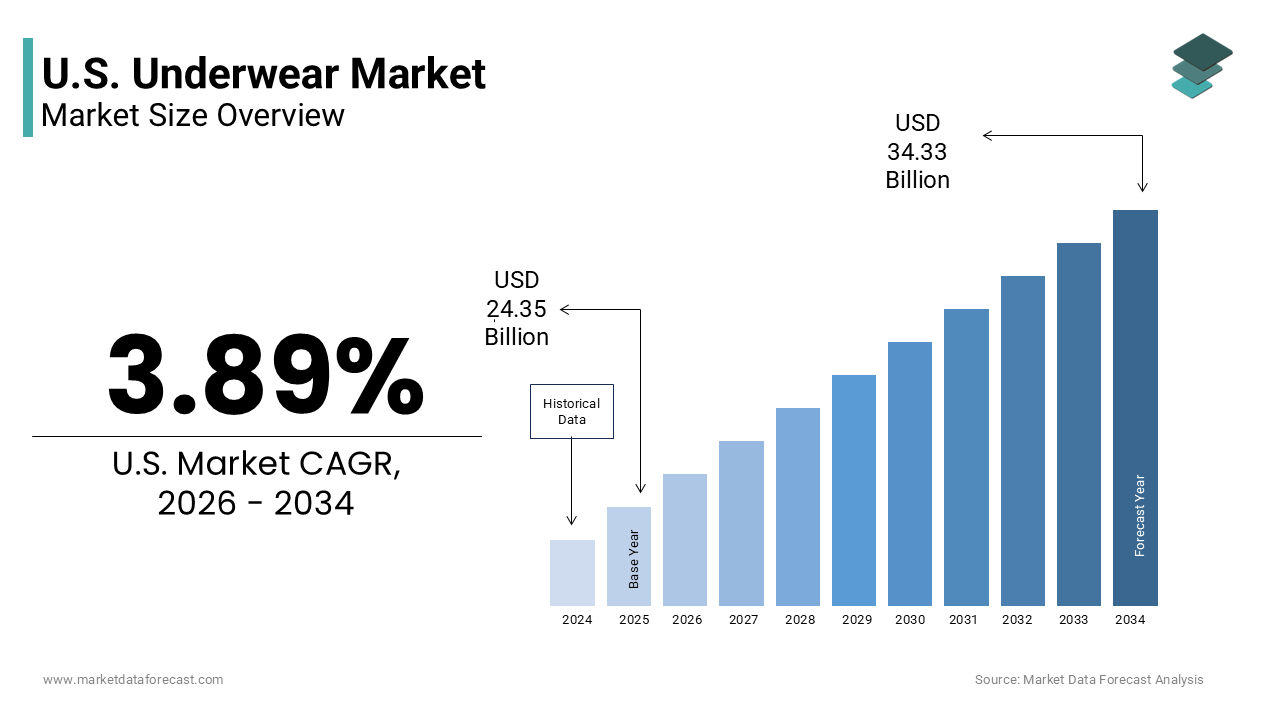
$24.35 BnMarket Estimate, 2026
$25.30 BnMarket Forecast, 2034
$34.33 BnCAGR, 2026–2034
3.89%U.S. Underwear Market Report Summary
The U.S. underwear market was valued at USD 24.35 billion in 2025 and is anticipated to reach USD 25.30 billion in 2026 from USD 34.33 billion by 2034, growing at a CAGR of 3.89% during the forecast period from 2026 to 2034. The growth of the U.S. underwear market is driven by rising consumer focus on comfort, increasing demand for inclusive sizing, and growing adoption of advanced fabric technologies. Expanding awareness regarding body positivity, increasing preference for sustainable and performance-oriented apparel, and growing popularity of direct-to-consumer brands are further accelerating market growth. Moreover, advancements in moisture-wicking and antimicrobial fabrics, expansion of adaptive clothing solutions, and increasing demand for premium intimate apparel are supporting the expansion of the U.S. underwear market.
Key Market Trends
- Rising adoption of inclusive sizing and body-positive product offerings across major underwear brands.
- Increasing demand for advanced fabric technologies featuring moisture management, breathability, and antimicrobial properties.
- Growing popularity of sustainable underwear products made from organic cotton, bamboo fibers, and recycled materials.
- Strong expansion of direct-to-consumer and subscription-based business models for intimate apparel.
- Increasing consumer preference for premium, comfortable, and multifunctional underwear suitable for hybrid lifestyles.
Segmental Insights
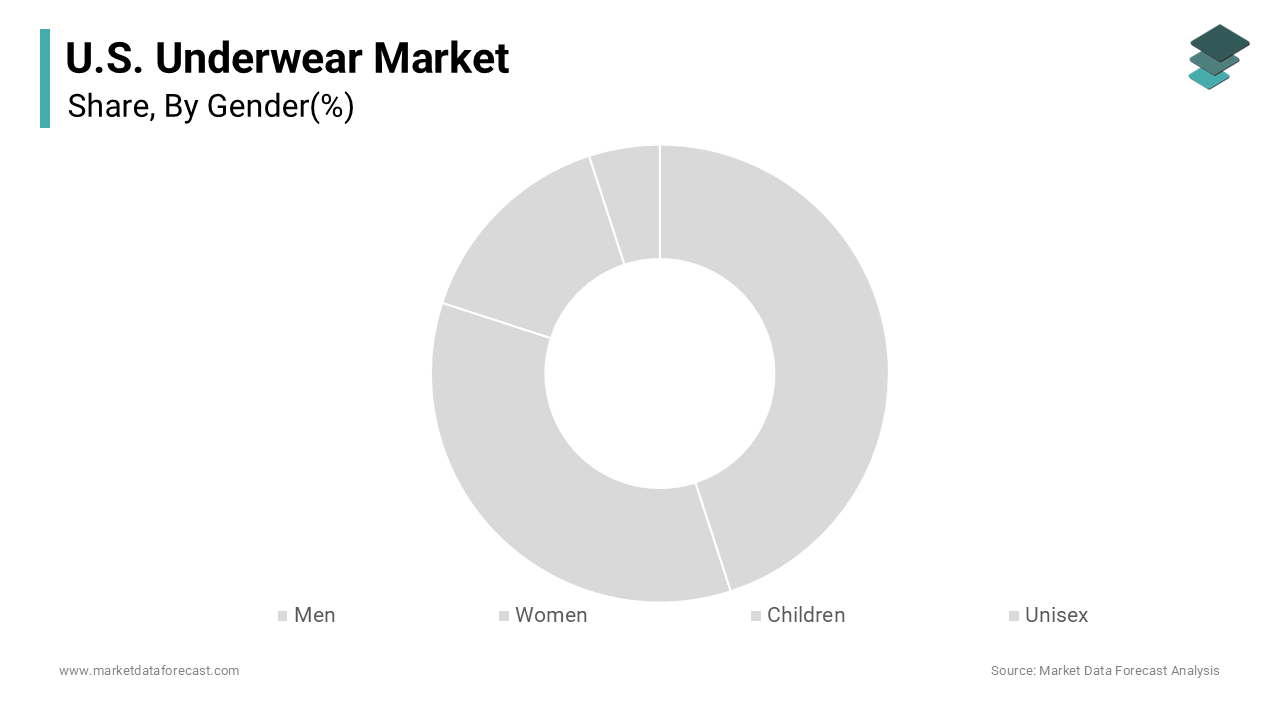
- Based on gender, the women segment dominated the U.S. underwear market and held the largest share in 2025. The segment’s dominance is attributed to a broader range of product categories, higher purchase frequency, growing demand for lingerie and shapewear, and increasing consumer spending on intimate apparel and fashion-oriented products.
- The men segment is projected to witness the fastest CAGR during the forecast period owing to rising awareness of personal grooming, increasing demand for premium and performance-based underwear, growing adoption of moisture-wicking fabrics, and expanding availability of specialized product designs.
- Based on price range, the mass/economy segment accounted for the leading share of the U.S. underwear market in 2025. The dominance of this segment is driven by affordability, widespread availability, bulk purchasing behavior, and consistent replacement demand for essential daily-wear products.
- The luxury segment is anticipated to register the fastest growth during the forecast period due to rising disposable incomes, increasing consumer preference for premium fabrics, growing demand for exclusive designs, and the premiumization of personal care and lifestyle products.
- Based on distribution channel, the online/e-commerce segment held the major share of the U.S. underwear market in 2025 owing to convenience, broad product availability, easy price comparison, growing direct-to-consumer brands, and increasing adoption of digital shopping platforms.
- The specialty stores and brand stores segment is expected to witness notable growth during the forecast period because of increasing demand for personalized fitting services, premium shopping experiences, expert consultations, and access to exclusive brand collections.
Regional Insights
The United States maintained a strong position in the global underwear market in 2025, supported by high consumer spending on apparel, advanced retail infrastructure, and increasing demand for comfort-focused and performance-oriented intimate wear. California remains a major contributor to the U.S. underwear market due to its large consumer base, strong fashion influence, and high adoption of premium and sustainable apparel products. New York, Washington, and Oregon are also witnessing notable growth driven by rising e-commerce penetration, increasing demand for inclusive apparel solutions, and growing consumer preference for innovative fabric technologies.
Competitive Landscape
The U.S. underwear market is highly competitive and characterized by the presence of established apparel manufacturers, premium fashion brands, and direct-to-consumer startups competing through innovation, comfort, sustainability, and brand differentiation. Leading companies are focusing on expanding inclusive sizing ranges, investing in advanced textile technologies, strengthening sustainability initiatives, and enhancing digital retail capabilities. Strategic collaborations with influencers, fashion designers, and e-commerce platforms are further strengthening market positioning across multiple consumer segments. Prominent players in the U.S. underwear market include Hanesbrands Inc., PVH Corp., Jockey International, Inc., Fruit of the Loom, Inc., Victoria's Secret & Co., Calvin Klein, Tommy Hilfiger, American Eagle Outfitters, Inc., Nike, Inc., Under Armour, Inc., Saxx Underwear Co., and MeUndies, Inc.
U.S. Underwear Market Size
The U.S. underwear market size was valued at USD 24.35 billion in 2025 and is anticipated to reach USD 25.30 billion in 2026 from USD 34.33 billion by 2034, growing at a CAGR of 3.89% during the forecast period from 2026 to 2034.
The U.S. underwear market encompasses a comprehensive array of intimate apparel, designed for daily wear, including briefs, boxers, panties, bras, and shapewear. As per the Centers for Disease Control and Prevention, approximately 41.9% of American women are classified as obese, which significantly influences demand for inclusive sizing and supportive structures. Furthermore, data from the National Sleep Foundation indicates that 35% of adults report poor sleep quality, driving interest in specialized sleepwear made from breathable and temperature regulating materials. The cultural shift toward remote work has also redefined daily dressing habits, with consumers prioritizing versatile pieces that transition seamlessly from home to casual outdoor settings. According to the Bureau of Labor Statistics, the average American spends over 1000 dollars annually on apparel and services, with a growing portion allocated to high quality basics. These socioeconomic and health related factors shape the current landscape, emphasizing the need for products that address both physical well-being and psychological confidence. The market is no longer solely driven by fashion trends, but by a holistic approach to personal care, where functionality meets identity.
MARKET DRIVERS
Rising Emphasis on Body Positivity and Inclusive Sizing
Consumers increasingly demand brands that celebrate diverse body shapes and sizes, rather than adhering to narrow beauty standards, which is primarily driving the growth of the U.S. underwear market. This shift is supported by statistical evidence showing that the average American woman wears a size 16 to 18, according to data from the Council of Fashion Designers of America. Despite this reality, many traditional retailers historically limited their size ranges, leading to significant market gaps. Modern brands are responding by expanding offerings to include extended sizes up to 4XL and beyond. As per a survey by Retail Dive, 64% of consumers state that they are more likely to purchase from brands that offer inclusive sizing options. This demand is not merely aesthetic, but functional, as larger bodies require different engineering for support and comfort. The psychological impact of inclusive marketing also drives loyalty, with 70% of Millennials and Generation Z consumers preferring brands that align with their values of diversity and acceptance, as noted by McKinsey. Consequently, companies are investing in diverse model casting and adaptive designs that cater to various physical needs. This driver ensures that the market expands beyond conventional demographics, capturing previously underserved segments. The normalization of all body types in advertising campaigns further reinforces this trend, making inclusivity a core business imperative, rather than a niche strategy.
Integration of Advanced Fabric Technologies for Comfort and Health
Technological advancements in textile manufacturing are further propelling the underwear market expansion in the U.S. Modern consumers prioritize fabrics that offer moisture wicking, breathability, and antimicrobial properties, particularly in an era where health and hygiene are paramount. The rise of athleisure has blurred the lines between workout gear and daily underwear, creating demand for performance oriented intimate wear. According to the Textile Exchange, the global production of sustainable fibers grew to a 8.8% market share in recent years, reflecting industry wide adoption of these materials. Brands are incorporating silver infused threads and bamboo viscose, which naturally resist odor and bacteria, enhancing user experience. According to the data from the International Journal of Clothing Science and Technology, garments made with moisture managing fabrics can reduce skin irritation by up to 40%. This benefit is crucial for individuals with sensitive skin, or those living in humid climates. Furthermore, the development of seamless knitting technologies allows for second skin sensations that eliminate chafing and visible lines under clothing. Consumers are willing to pay premium prices for these engineered solutions, viewing them as investments in daily well-being. This technological integration differentiates products in a saturated market, and drives repeat purchases based on tangible performance improvements, rather than just style.
MARKET RESTRAINTS
Volatility in Raw Material Costs and Supply Chain Disruptions
The fluctuations in the cost of raw materials, such as cotton, nylon and elastane are a significant impediment to the underwear market growth in the U.S. These inputs are subject to global commodity price swings influenced by geopolitical tensions, climate change, and trade policies. According to the World Bank, the price index for cotton increased by over 40% during recent peak periods, impacting production margins for manufacturers. Since underwear requires precise blends of synthetic and natural fibers, any disruption in supply can halt production lines. The reliance on overseas manufacturing, particularly in Asia, exacerbates this issue, as logistical bottlenecks delay shipments. As per the Institute for Supply Management, supplier deliveries to manufacturing organizations have slowed significantly compared to historical standards. These delays force brands to hold higher inventory levels, tying up capital, and increasing storage costs. Small and medium sized enterprises are disproportionately affected, as they lack the bargaining power to secure favorable contracts, or absorb sudden price hikes. The inability to pass these costs fully onto price sensitive consumers further squeezes profitability. Additionally, environmental regulations in sourcing countries are tightening, requiring costly compliance measures. For instance, new laws in major producing nations mandate stricter waste management and labor standards, adding to operational expenses. This financial pressure limits the ability of companies to invest in innovation, or marketing. The unpredictability of input costs makes long term planning difficult, forcing firms to adopt conservative growth strategies. This restraint stifles expansion, and reduces the agility needed to respond to fast changing consumer trends.
High Return Rates Due To Fit and Sizing Inconsistencies
One of the most persistent restraints in the underwear market in the U.S. is the high rate of product returns driven by sizing inconsistencies and fit issues. Unlike outerwear, underwear requires a precise fit for comfort and support, making it highly susceptible to return requests when expectations are not met. According to the National Retail Federation, the return rate for online apparel shoppers averages 24.4%, but for underwear, it can exceed 30%. This discrepancy creates substantial logistical and financial burdens for retailers, who must process, inspect, and restock, or discard returned items. Hygiene concerns often prevent the resale of returned underwear, leading to total loss of inventory value. The lack of standardized sizing across brands confuses consumers, with a size medium in one brand potentially fitting like a small in another. Data from Fit Analytics suggests that 40% of online shoppers hesitate to buy underwear due to fear of incorrect fit. This hesitation suppresses conversion rates, and limits market growth. Brands attempt to mitigate this through detailed size guides and virtual fitting tools, but these solutions are not fool proof. The cost of reverse logistics, including shipping and handling, erodes profit margins significantly. Furthermore, frequent returns negatively impact sustainability goals, by increasing carbon emissions from transportation, and waste from packaging. This operational inefficiency discourages some players from expanding their online assortments. Until a universal sizing standard or more accurate fitting technology is adopted, this restraint will continue to hinder profitability and customer satisfaction in the digital retail space.
MARKET OPPORTUNITIES
Expansion into Adaptive Underwear for Disabled Consumers
The development of adaptive underwear designed for individuals with disabilities and mobility challenges is a promising opportunity for the U.S. underwear market. This segment includes features such as magnetic closures, side opening panels, and seamless tags, to assist those with limited dexterity, or sensory sensitivities. According to the Centers for Disease Control and Prevention, up to 27% of adults in the U.S. live with some form of disability, representing a large potential customer base. Despite this number, mainstream brands have largely overlooked this demographic, leaving a gap in the market. Recent initiatives by major retailers indicate growing recognition of this opportunity, with specialized lines launching to address these needs. As per a report by the Open Style Lab, the adaptive clothing market is expected to grow substantially as awareness increases. Consumers with disabilities often struggle with traditional fasteners and restrictive fabrics, making adaptive designs a necessity, rather than a luxury. The aging population also contributes to this demand, as older adults may face similar mobility issues. Data from the Administration for Community Living shows that the number of Americans aged 65 and older is projected to reach 80.8 million by 2040. This demographic shift ensures a sustained need for accessible clothing solutions. Brands that pioneer in this space can build strong loyalty among underserved communities, and their caregivers. Moreover, inclusive design principles often benefit the general population by enhancing ease of use. By prioritizing accessibility, companies can differentiate themselves, and tap into a lucrative niche with high retention rates. This opportunity aligns with broader social responsibility goals, and opens new revenue streams.
Growth of Direct To Consumer Subscription Models
The adoption of subscription based models presents a compelling opportunity for underwear brands to stabilize revenue and enhance customer retention, which is another notable opportunity for the U.S. market. These services typically offer regular deliveries of essential items, such as panties, socks, or basic bras, at discounted rates. According to McKinsey, subscription e commerce consumers make up a rapidly expanding segment, with apparel being a key category. This model addresses the recurring nature of underwear purchases, as these items require replacement every six to twelve months due to wear and tear. Data from the U.S. Bureau of Labor Statistics indicates that households spend consistently on clothing maintenance, creating a predictable demand pattern. Subscription services reduce the friction of repurchasing by automating the process, ensuring customers never run out of essentials. This convenience fosters brand loyalty, and reduces the likelihood of switching to competitors. Furthermore, subscriptions provide valuable data on consumer preferences, allowing brands to tailor offerings, and improve inventory management. As per a study by Bain and Company, repeat customers spend more over time compared to one time shoppers. This stability helps companies forecast demand more accurately, reducing waste, and optimizing production. Brands can also use subscriptions to introduce new products to existing members, increasing cross selling opportunities. The recurring revenue stream improves cash flow, and supports long term strategic planning. By leveraging this model, companies can build deeper relationships with customers, and create a competitive moat in a crowded market.
MARKET CHALLENGES
Counterfeit Products and Intellectual Property Theft
The proliferation of counterfeit underwear poses a severe challenge to brand integrity and consumer safety in the U.S. market. Illicit manufacturers replicate popular designs and logos, selling them through unauthorized online platforms at a fraction of the original price. According to the Organization for Economic Cooperation and Development, counterfeit and pirated goods account for a significant share of global imports, with apparel being a primary target. These fake products often use substandard materials that lack the support and durability of genuine items, leading to customer dissatisfaction. More critically, they may contain harmful chemicals, or allergens, that pose health risks to users. The Food and Drug Administration has issued warnings about hazardous substances found in counterfeit textiles, including lead and formaldehyde. Authentic brands suffer reputational damage when consumers mistakenly attribute poor quality to their genuine products. Combating this issue requires significant investment in legal action, and authentication technologies, such as holograms and blockchain tracking. However, these measures add to operational costs, and may not fully prevent fraud. The anonymity of digital marketplaces makes it difficult to trace, and shut down, counterfeit operations effectively. As per the International Trademark Association, online enforcement remains a complex, and resource intensive task. Small brands are particularly vulnerable, as they lack the resources to monitor, and protect, their intellectual property globally. This challenge distorts market data, and undermines the value proposition of premium brands. It also erodes consumer trust in online shopping channels, forcing legitimate companies to divert resources from innovation to protection.
Environmental Impact And Sustainability Compliance Pressures
The increasing scrutiny regarding its environmental footprint, particularly concerning synthetic fibers and waste generation is another significant challenge to the underwear market expansion in the U.S. Most underwear is made from nylon, polyester, and elastane, which are petroleum based and non-biodegradable. According to the Environmental Protection Agency, textiles account for over 17 million tons of municipal solid waste annually in the U.S.. The complex construction of intimate garments with multiple layers, elastic, and hooks, makes them difficult to recycle, leading to high landfill rates. Consumers and regulators are demanding greater sustainability, prompting brands to adopt eco friendly practices. However, transitioning to sustainable materials, such as organic cotton or recycled nylon, often involves higher costs, and supply chain complexities. As per the Ellen MacArthur Foundation, less than 1% of material used to produce clothing is recycled into new clothing, highlighting the inefficiency of current systems. Brands face the challenge of balancing affordability with sustainability, as green alternatives often carry premium price tags. Additionally, greenwashing accusations can damage brand reputation if claims are not substantiated. The Federal Trade Commission has tightened guidelines for environmental marketing, requiring rigorous proof of sustainability claims. Compliance with these evolving standards requires significant investment in research, and supply chain transparency. Small manufacturers may struggle to meet these requirements, risking exclusion from major retail channels. This challenge necessitates a fundamental redesign of products and processes, to minimize environmental impact while maintaining performance and affordability.
REPORT COVERAGE
| REPORT METRIC | DETAILS |
| Market Size Available | 2025 to 2034 |
| Base Year | 2025 |
| Forecast Period | 2026 to 2034 |
| CAGR | 3.89% |
| Segments Covered | By Gender, Price Range, Material, Distribution Channel and Region. |
| Various Analyses Covered | Global, Regional and Country-Level Analysis, Segment-Level Analysis, Drivers, Restraints, Opportunities, Challenges; PESTLE Analysis; Porter’s Five Forces Analysis, Competitive Landscape, Analyst Overview of Investment Opportunities |
| Countries Covered | California, Washington, Oregon, New York, United States |
| Market Leaders Profiled | Hanesbrands Inc., PVH Corp., Jockey International, Inc., Fruit of the Loom, Inc., Victoria's Secret & Co., Calvin Klein, Tommy Hilfiger, American Eagle Outfitters, Inc., Nike, Inc., Under Armour, Inc., Saxx Underwear Co., and MeUndies, Inc. |
SEGMENTAL ANALYSIS
By Gender Insights
The women segment dominated the market by holding 54.5% of the U.S. market share in 2025. The dominance of women segment in the U.S. market is driven by the broader variety of product categories available to women, including panties, bras, lingerie, and shapewear, as well as higher frequency of purchase and replacement cycles. Women have access to a wide array of styles, functions, and aesthetics, from everyday basics to luxury lingerie, creating numerous opportunities for purchase. According to the Fashion Institute of Technology, women's underwear collections are updated seasonally with new trends, colors, and designs, encouraging frequent buying. This fashion driven approach transforms underwear from a basic necessity into a form of self-expression and style. Data from Statista indicates that women purchase underwear an average of four times a year, compared to twice for men. The existence of specialized segments, such as bridal lingerie, maternity wear, and shapewear, further expands the market scope. These niche categories address specific life stages and needs, driving additional sales. The emotional connection women often have with lingerie as a confidence booster also fuels demand. Marketing campaigns frequently emphasize empowerment and beauty, resonating with female consumers. As per a survey by Harper's Bazaar, a significant majority of women buy new lingerie to boost their mood or confidence. This psychological aspect encourages impulse buys, and experimentation with new brands. The complexity of fit and style preferences means women often own multiple types of bras and panties for different outfits. This variety necessitates a larger wardrobe, and higher spending. The continuous innovation in women's designs ensures sustained interest and engagement. These factors collectively sustain the women segment's leadership position in the market.
However, the men segment is estimated to grow at the fastest CAGR of 6.2% during the forecast period in the U.S. market owing to the evolving grooming standards, increased focus on male health, and the expansion of specialized product lines. Traditional stigmas surrounding male attention to underwear are diminishing, as men become more conscious of their appearance and comfort. According to a study by Euromonitor International, the men's grooming market in the U.S. has shown consistent annual growth, reflecting this broader trend. Men are increasingly viewing underwear as a key component of their daily routine, rather than an afterthought. The rise of metrosexuality and the influence of male influencers on social media have normalized discussions about fit, fabric, and style. Data from Google Trends shows a significant increase in searches for men's premium underwear brands over the last several years. This heightened interest drives exploration of new products and brands. Men are becoming more educated about the benefits of supportive and breathable fabrics, leading to demand for higher quality options. The availability of specialized products, such as pouch underwear and moisture wicking boxer briefs, caters to these evolving needs. Retailers are expanding their men's sections with dedicated displays, and marketing campaigns that emphasize performance and comfort. This visibility encourages trial and adoption. The focus on health and hygiene also plays a role, as men seek products that prevent irritation and maintain freshness. These cultural and behavioral shifts create a fertile environment for growth in the men's segment.
By Price Range Insights
The mass/economy segment led the market with the largest share of the U.S. market in 2025. The affordability and essential nature of underwear as a daily necessity is majorly propelling the dominance of this segment in the U.S. market. Consumers view basic underwear as a commodity requiring regular replacement due to wear and tear, making price a critical decision factor. According to the Bureau of Labor Statistics, the average American household spends approximately 800 dollars annually on apparel, with a significant portion allocated to basics. For budget conscious families, bulk purchasing of economy underwear offers the best value proposition. Data from Nielsen shows that private label and economy brands account for over 50% of unit sales in the underwear category. The low price point encourages consumers to buy multiple packs, ensuring they have sufficient supply. This segment appeals to a broad demographic, including students, large families, and individuals with limited disposable income. The accessibility of these products in every major retail channel, from Walmart to Target, ensures consistent availability. As per retail industry reports, economy underwear sales remain stable even during economic downturns, as they are considered non discretionary items. The simplicity of design and lack of complex features keep production costs low, allowing for competitive pricing. This combination of low cost, high volume, and universal need sustains the leadership of the Mass/Economy segment in the market.
However, the luxury segment is growing rapidly and is estimated to showcase a CAGR of 8.2% during the forecast period in the U.S. market owing to the increasing disposable income, the premiumization of personal care, and the desire for superior quality and exclusivity. Shoppers are increasingly viewing underwear as an investment in comfort and longevity, rather than a disposable item. According to McKinsey, the luxury personal care market has shown strong annual growth, as buyers seek superior experiences. Luxury underwear often features premium fabrics, such as silk, organic cotton, and modal, which offer enhanced softness and durability. Data from industry surveys indicates that 40% of consumers are willing to spend more on underwear that provides better fit and feel. The perception of luxury underwear as a form of self care and indulgence drives demand among affluent demographics. Brands like Calvin Klein, Tom Ford, and La Perla command premium prices, by emphasizing design exclusivity and brand heritage. As per retail trends, sales of luxury intimates have outpaced the overall market growth, reflecting this shift in consumer values. The desire for status and identity expression through branded luxury goods further fuels this segment. Consumers associate high end underwear with confidence and sophistication. This emotional appeal justifies the higher price point, and encourages repeat purchases. The focus on quality and exclusivity ensures that the Luxury segment continues to expand rapidly.
By Distribution Channel Insights
The online/e-commerce segment led the market with 41.9% of the U.S. market share in 2025. This dominance is primarily driven by the convenience of home shopping, extensive product selection, and the rise of direct to consumer brands. Shoppers can browse thousands of items from multiple brands, and compare prices instantly without leaving home. According to the US Census Bureau, e commerce sales in the apparel category have shown consistent annual growth, reflecting a broader shift in consumer behavior. Online platforms offer access to niche and specialized underwear that may not be available in local stores, particularly for specific sizes or styles. Data from Amazon and other major retailers shows that underwear is among the top searched apparel items online due to this variety. The ability to read detailed customer reviews and view size guides aids decision making, and builds confidence in purchases. As per digital marketing reports, 55% of younger consumers prefer online shopping for underwear, due to the ease of research and comparison. Home delivery eliminates the need for travel, and allows for flexible scheduling, which appeals to busy families. The integration of easy return policies and virtual fitting tools further mitigates the risks associated with online buying. This convenience and accessibility drive frequent transactions, and expand the reach of manufacturers to remote areas. The seamless shopping experience ensures that online remains the preferred channel for a majority of consumers.
On the other end, the specialty stores/brand stores segment is expected to exhibit a CAGR of 7.2% during the forecast period in the U.S. market owing to the rising demand for personalized service, expert fitting, and immersive brand experiences. Underwear, particularly bras, requires a precise fit for comfort and support, making professional assistance valuable. According to the National Sporting Goods Association, a significant portion of consumers prefer buying intimate apparel in store, where they can receive professional advice. Specialty stores employ trained staff who can measure customers, and recommend suitable styles and sizes. Data from industry reports indicates that conversion rates for in store fittings are significantly higher than for online browsing alone. The tactile experience allows users to assess the quality of fabrics and construction, which cannot be fully conveyed through digital media. As per consumer behavior studies, the ability to try on multiple styles side by side reduces purchase anxiety, and increases confidence. Retailers often provide personalized consultations to help customers choose the right products for their body type and needs. This high level of service adds value, and justifies the premium price. The immediate availability of the product for purchase also appeals to buyers, who wish to avoid shipping delays. The trust established through face to face interaction fosters long term customer relationships. These factors collectively sustain the rapid growth of the Specialty Store channel.
COUNTRY ANALYSIS
The U.S. is anticipated to experience strong performance and retain its position as a primary driver of North American apparel growth over the next few years. Its position is characterized by high consumer spending, robust retail infrastructure, and a culture that emphasizes personal comfort and style. American consumers prioritize quality and comfort, leading to consistent demand for premium and specialized products. As per the Bureau of Economic Analysis, personal consumption expenditures on clothing and footwear have remained stable, indicating resilient demand. The presence of major global brands and numerous direct to consumer startups fosters intense competition, and continuous innovation. Retailers in the U.S. are pioneers in adopting technologies, such as virtual fitting rooms and AI driven size recommendations, enhancing the shopping experience. This technological leadership attracts early adopters, and drives online sales growth. The country's diverse population, with varying body types and preferences, supports a wide range of product offerings, from inclusive sizing to adaptive wear. As per the data from the Census Bureau, the population is aging and this increases demand for comfortable and easy to wear underwear. Additionally, the strong influence of American media and celebrity culture sets global trends in lingerie and basics. The integration of health and wellness into fashion narratives further boosts market sophistication. Regulatory standards for textile safety and labeling ensure product quality, reinforcing consumer confidence. These factors collectively sustain the U.S. position as the premier market for underwear, driving global trends and setting benchmarks for product development and retail excellence.
COMPETITIVE LANDSCAPE
The competition in the U.S. underwear market is intense and characterized by a mix of established legacy brands and agile direct to consumer startups. Large companies leverage their extensive resources to dominate through broad distribution networks and heavy marketing spending. They continuously innovate to maintain relevance and protect their market positions against newer entrants. Independent brands often differentiate themselves by focusing on niche segments such as sustainable materials or specific fit needs. These smaller entities utilize digital channels to build direct relationships with consumers and foster community loyalty. The barrier to entry has lowered due to the rise of e commerce platforms allowing new players to launch with minimal overhead. This dynamic environment forces all participants to prioritize speed and agility in product development. Price competition is prevalent in the mass market segment while premium brands compete on brand heritage and emotional connection. Retailers play a crucial role by curating assortments that balance popular staples with emerging trends. Private label offerings from major retailers further intensify pressure on branded manufacturers. Consumer loyalty is increasingly fluid as shoppers experiment with new products influenced by social media trends. Companies must therefore maintain constant engagement through educational content and transparent communication. The ability to adapt quickly to regulatory changes and shifting consumer values determines long term survival. Strategic partnerships and collaborations are common as firms seek to expand their reach and capabilities. Overall the market remains highly fragmented with no single entity holding absolute dominance across all categories.
KEY MARKET PLAYERS
Some of the promising companies that are playing a dominating role in the U.S. underwear market include
- Hanesbrands Inc.
- PVH Corp.
- Jockey International, Inc.
- Fruit of the Loom, Inc.
- Victoria's Secret & Co.
- Calvin Klein
- Tommy Hilfiger
- American Eagle Outfitters, Inc.
- Nike, Inc.
- Under Armour, Inc.
- Saxx Underwear Co.
- MeUndies, Inc.
Top Key Players in the U.S. Underwear Market
Hanesbrands Inc
Hanesbrands Inc maintains a robust presence in the U.S. underwear sector through its extensive portfolio of mass market brands such as Champion Maidenform and Bali. The corporation leverages its strong distribution network across department stores and online platforms to reach a broad consumer base. Recent strategic initiatives include significant investments in sustainable manufacturing processes and eco friendly materials to align with evolving consumer values. The company has also focused on enhancing its digital capabilities by improving e commerce user experiences and personalized marketing. Hanesbrands Inc actively engages in product innovation by introducing seamless and wireless technologies that prioritize comfort. These efforts address the growing demand for versatile intimate wear suitable for remote work and casual lifestyles. The firm continues to optimize its supply chain to ensure product availability and reduce operational costs. By balancing affordability with quality improvements the company solidifies its reputation as a reliable provider of everyday essentials. Its ability to adapt to changing retail dynamics and consumer preferences ensures sustained relevance and growth in the competitive American landscape.
PVH Corp
PVH Corp serves as a major player in the U.S. underwear market primarily through its ownership of the Calvin Klein brand. The company utilizes its global marketing expertise to position Calvin Klein as a leader in premium lifestyle intimates. PVH Corp has recently strengthened its position by launching inclusive advertising campaigns that feature diverse models and body types. This strategy resonates with modern consumers who value representation and authenticity in branding. The corporation has also invested heavily in digital transformation by enhancing its direct to consumer platforms and social media engagement. These initiatives help build stronger connections with younger demographics who prefer online shopping experiences. PVH Corp focuses on sustainability by introducing collections made from recycled materials and organic cotton. These efforts appeal to environmentally conscious buyers and enhance brand loyalty. The company collaborates with influential celebrities and designers to create limited edition lines that generate buzz and drive sales. By combining strong brand heritage with contemporary marketing strategies PVH Corp continues to drive growth and maintain its leadership in the premium underwear segment.
Victoria's Secret and Co
Victoria's Secret and Co remains a dominant force in the U.S. underwear market through its iconic brand recognition and extensive retail footprint. The company has undergone significant transformation in recent years by shifting its brand image to emphasize inclusivity and empowerment. Recent actions include the launch of new product lines that cater to diverse body shapes and sizes such as extended size ranges and adaptive clothing. Victoria's Secret and Co has also revitalized its marketing approach by partnering with advocates and entrepreneurs who represent diverse backgrounds. This strategy helps rebuild trust and relevance among modern consumers. The corporation is investing in store renovations and digital enhancements to improve the customer experience both online and offline. It focuses on product innovation by introducing comfortable fabrics and versatile designs that align with current lifestyle trends. The company actively engages in community initiatives and philanthropy to strengthen its social impact. By embracing change and prioritizing customer needs Victoria's Secret and Co aims to reclaim its position as a preferred destination for underwear. Its ongoing efforts to modernize and diversify its offerings ensure continued competitiveness in the dynamic market.
Top Strategies Used by Key Market Participants
Key players in the U.S. underwear market employ several strategic initiatives to maintain competitiveness and drive growth. Product innovation remains a primary strategy with companies investing heavily in research and development to create comfortable and functional designs. Brands frequently introduce items featuring seamless construction and wireless support to meet evolving consumer preferences for comfort. Digital transformation is another critical approach as firms enhance their online presence through e commerce platforms and social media engagement. Companies utilize data analytics to offer personalized recommendations and improve customer experiences. Strategic collaborations with influencers and celebrities help build credibility and reach targeted audiences effectively. Sustainability initiatives are increasingly prominent with firms adopting eco friendly materials and ethical sourcing practices to appeal to environmentally conscious buyers. Inclusivity has become a core focus with brands expanding size ranges and featuring diverse models in marketing campaigns. These multifaceted strategies enable market participants to adapt to changing trends and sustain long term success in the dynamic industry landscape.
MARKET SEGMENTATION
This research report on the U.S. underwear market has been segmented based on the following categories.
By Gender
- Men
- Briefs
- Boxers
- Boxer-Briefs
- Others
- Women
- Panties
- Bras
- Lingerie
- Others
- Children
- Unisex
By Material
- Natural
- Synthetic
- Blends
- Others
By Price Range
- Luxury
- Mid-range
- Mass/Economy
By Distribution Channel
- Supermarkets/Hypermarkets
- Specialty Stores/Brand Stores
- Department Stores
- Online / E-commerce
- Others
By Country
- California
- Washington
- Oregon
- New York
- Rest of the United States