- Product Description Description
- Table of Contents TOC
- List of Table & Figure LOT
- Get Free Sample PDF Sample PDF
Market Size, 2025
$63.12 BnMarket Estimate, 2026
$69.84 BnMarket Forecast, 2034
$156.93 BnCAGR, 2026–2034
10.65%U.S. Video Streaming Market Report Summary
The U.S. video streaming market was valued at USD 63.12 billion in 2025, is estimated to reach USD 69.84 billion in 2026, and is projected to reach USD 156.93 billion by 2034, growing at a CAGR of 10.65% during the forecast period from 2026 to 2034. The growth of the U.S. video streaming market is driven by the increasing consumer preference for on-demand entertainment, rising broadband and 5G penetration, and the growing adoption of smart devices and connected TVs. The shift from traditional cable television to digital streaming platforms, coupled with rising investments in exclusive original content and personalized viewing experiences, is further supporting market expansion. Moreover, the integration of advertising-supported streaming models and artificial intelligence-powered recommendation systems is enhancing user engagement and revenue generation across the United States.
Key Market Trends
- Rising popularity of subscription-based and ad-supported video streaming platforms among diverse consumer demographics
- Increasing demand for exclusive original content, live sports streaming, and regional programming
- Growing adoption of advertising-supported video-on-demand (AVOD) and FAST channels to attract price-sensitive viewers
- Strong focus on artificial intelligence-driven content personalization and recommendation engines
- Expansion of live streaming capabilities, interactive viewing features, and multi-device compatibility
Segmental Insights
- Based on streaming type, the non-linear / video-on-demand (VOD) streaming segment held the largest share of the U.S. video streaming market in 2025. The segment’s dominance is attributed to the growing consumer preference for flexible viewing schedules, binge-watching culture, and access to extensive on-demand content libraries across genres and languages.
- Based on component, the software segment accounted for the largest share of the U.S. video streaming market in 2025. The dominance of this segment is driven by the increasing demand for scalable streaming platforms, content delivery networks, advanced analytics, and AI-powered personalization technologies.
- The advertising-based revenue model segment is anticipated to witness the fastest growth during the forecast period owing to the rising adoption of lower-cost ad-supported streaming plans and increasing investments from advertisers in connected TV and digital video advertising ecosystems.
Regional Insights
The U.S. video streaming market is witnessing strong growth across California, Washington, Oregon, New York, and the rest of the United States, supported by the high internet penetration, widespread adoption of smart devices, and strong consumer demand for digital entertainment services. California remains one of the leading regional markets due to the presence of major media and technology companies, advanced digital infrastructure, and high consumer spending on entertainment subscriptions.
Competitive Landscape
The U.S. video streaming market is highly competitive and characterized by the presence of global streaming giants, digital entertainment companies, and media conglomerates competing through exclusive content production, advanced streaming technologies, pricing strategies, and platform innovation. Companies are increasingly focusing on original programming, advertising-supported subscription tiers, AI-driven user engagement, and strategic content partnerships to strengthen their market position and expand subscriber bases. Prominent players in the U.S. video streaming market include Netflix, Amazon Prime Video, Disney+, Hulu, YouTube, Max (HBO Max), Paramount+, Apple TV+, Peacock TV, Tubi, Pluto TV, and ESPN+.
U.S. Video Streaming Market Size
The U.S. video streaming market size was valued at USD 63.12 billion in 2025 and is anticipated to reach USD 69.84 billion in 2026 from USD 156.93 billion by 2034, growing at a CAGR of 10.65% during the forecast period from 2026 to 2034.
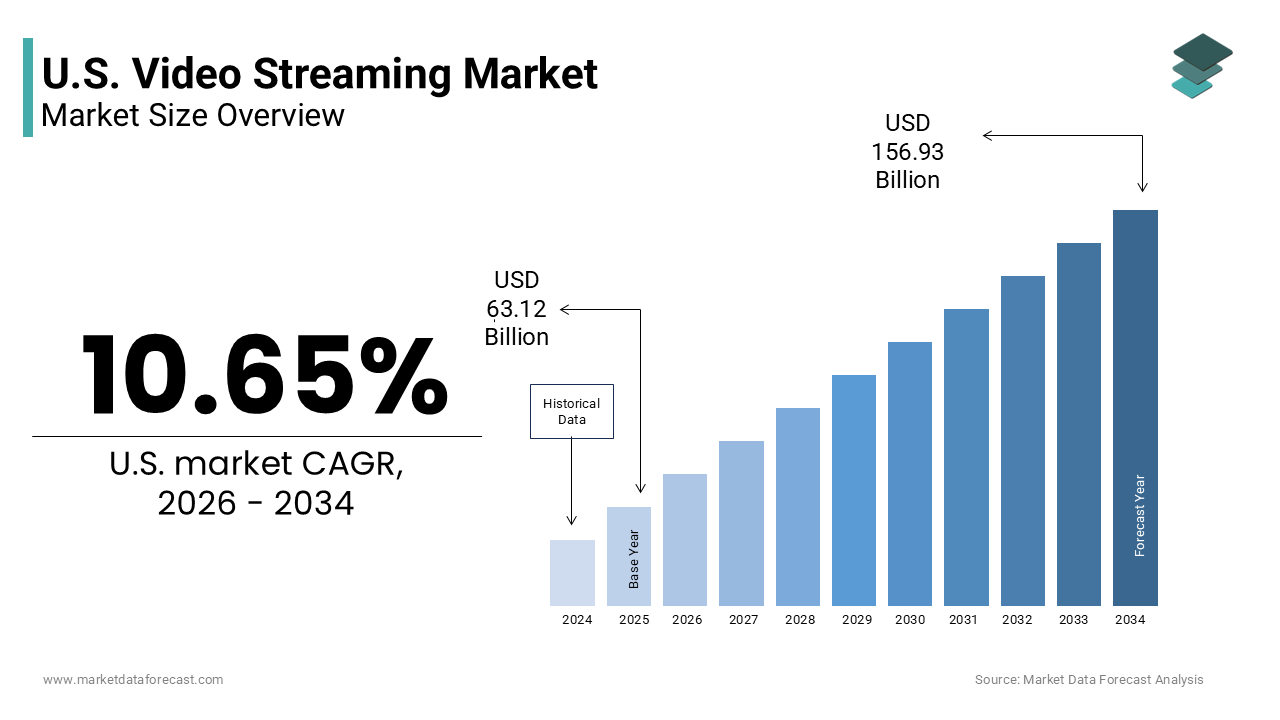
Video streaming represents a mature yet dynamically evolving sector within the broader digital entertainment landscape. It encompasses subscription based video on demand services that deliver content directly to consumers via the internet. This ecosystem has fundamentally altered media consumption habits by shifting viewership from linear television to on demand platforms. According to the Pew Research Center, 83% of U.S. adults reported using a video streaming service in 2024, which underscores the transition toward digital first entertainment models. The proliferation of high speed internet infrastructure supports this shift. According to the Federal Communications Commission, 96% of adults in America use the internet, providing the necessary connectivity for high quality virtual content delivery. Such connectivity enables seamless high definition and ultra-high definition content delivery. Furthermore, the average household now manages multiple subscriptions simultaneously, reflecting a fragmented yet robust demand for diverse content libraries. This environment fosters intense competition among providers who strive to retain subscribers through exclusive original programming and technological enhancements. The market is characterized by continuous innovation in user experience and content personalization. These factors collectively define the current state of the industry as it navigates post pandemic normalization and economic fluctuations. The integration of advertising supported tiers further diversifies revenue streams and accessibility. This structural evolution indicates a market that is adapting to consumer price sensitivity while maintaining growth through strategic segmentation and enhanced value propositions.
MARKET DRIVERS
Pervasive Broadband Penetration Fuels Uninterrupted High Quality Content Consumption
The extensive availability of high speed internet infrastructure is a major factor propelling the expansion of the U.S. video streaming market. Without reliable and fast connectivity, the delivery of high definition and 4K content would be impractical for the majority of households. According to the Federal Communications Commission, 96% of Americans have access to high speed internet, which provides the necessary baseline for smooth streaming experiences. This near universal access ensures that technical barriers to entry are minimal for most consumers. The expansion of fiber optic networks has further enhanced this capability. According to the Fiber Broadband Association, fiber to the home availability in the U.S. increased by 13% in 2023, which is reaching over 78 million homes. This improvement allows for higher bandwidth usage without latency issues, which is essential for live sports streaming and interactive features. Additionally, the rise of 5G technology complements fixed broadband by enabling mobile streaming with comparable quality. As per Verizon, 5G mobility and fixed wireless access continue to grow significantly, with fixed wireless subscribers increasing by over 45% in recent fiscal cycles to provide an alternative for users in areas with limited fixed line options. This dual connectivity framework ensures that consumers can access streaming services across various devices and locations. The reliability of these networks reduces churn caused by technical frustrations and encourages longer viewing sessions. Consequently, infrastructure robustness directly correlates with increased engagement metrics and subscriber retention rates. Providers leverage this stability to introduce data intensive features such as augmented reality interfaces and multi angle viewing options, thereby enhancing the overall value proposition and deepening market penetration.
Escalating Consumer Preference For On Demand Flexibility Drives Subscription Growth
The shift in consumer behavior toward on demand content consumption is further boosting the expansion of the U.S. video streaming market. Modern viewers prioritize control over their entertainment schedules, rejecting the rigid programming of traditional linear television. According to Deloitte, 77% of U.S. consumers find it important to have the ability to watch content whenever they want, which aligns with increasingly busy lifestyles and the desire for personalized entertainment experiences. The ability to binge watch entire seasons or explore niche genres without commercial interruptions significantly enhances user satisfaction. Furthermore, the proliferation of smart TVs and connected devices has simplified access. According to Nielsen, 88% of U.S. households own at least one internet-connected device, which reduces friction in the user journey and makes streaming the default choice for evening entertainment. The customization algorithms employed by major platforms further reinforce this preference by curating content tailored to individual tastes. As per Netflix, internal data suggests that the vast majority of content discovered by users is driven by personalized recommendation engines, demonstrating the power of data driven engagement. This level of personalization creates a sticky user experience that is difficult for traditional media to replicate. The convenience of accessing a vast library of content from a single interface outweighs the cost considerations for many subscribers. Consequently, the demand for flexibility and personalization continues to outpace other factors, sustaining robust subscription growth even in a saturated market. Providers that enhance these features through improved user interfaces and advanced recommendation engines are likely to capture greater market share.
MARKET RESTRAINTS
Market Saturation Leads To Intensified Competition And Subscriber Churn
The high level of saturation that intensifies competition and exacerbates subscriber churn is a major impediment to the growth of the U.S. video streaming market. With numerous providers vying for attention, consumers are increasingly selective about which services they maintain. According to Antenna, the weighted average monthly churn rate for premium streaming services reached 5.5% in 2024, reflecting the ease with which users switch between platforms. This volatility forces companies to invest heavily in customer retention strategies, often at the expense of profitability. The abundance of choices means that no single platform can dominate entirely, leading to a fragmented audience base. According to the Pew Research Center, the percentage of Americans who use streaming services has plateaued at approximately 83%, suggesting limited room for new entrants. As a result, providers must constantly innovate to differentiate themselves, which increases operational costs. The pressure to produce exclusive content has led to escalating production budgets, with major studios regularly spending over 200 million dollars on single flagship series. This financial burden is unsustainable for smaller players, leading to market consolidation. Furthermore, the lack of unique content offerings from newer services makes it difficult to attract subscribers away from established giants. Consumers are becoming more discerning, canceling subscriptions after finishing specific shows and resubscribing later. This hit and run behavior undermines predictable revenue streams and complicates long term planning. The saturation also leads to marketing fatigue, where aggressive advertising fails to convert new users due to overwhelming choice. Consequently, market maturity presents a formidable barrier to sustained growth, requiring strategic pivots toward bundling and niche targeting.
Rising Subscription Costs Trigger Consumer Price Sensitivity And Fatigue
The growing subscription fees is another major restraint for the U.S. video streaming market as consumers exhibit growing price sensitivity and fatigue. After years of introductory pricing, major platforms have implemented multiple price hikes to improve profitability, leading to consumer pushback. According to a survey by Forbes Advisor, 44% of respondents reported they have cancelled a streaming service due to recent price increases. This threshold highlights the delicate balance between revenue generation and customer retention. The cumulative cost of maintaining multiple subscriptions has become burdensome for many households. According to Forbes, the average American spends approximately 92 dollars per month on streaming services. As per Moody’s Analytics, general inflationary pressures have impacted discretionary spending, prompting consumers to audit their recurring expenses more rigorously. This economic context has accelerated the adoption of ad supported tiers, which offer lower prices in exchange for commercial interruptions. However, not all consumers are willing to compromise on viewing experience, leading to cancellations rather than downgrades. The perception of value erosion is further exacerbated by the removal of popular content from libraries to cut costs, which frustrates loyal subscribers. According to a survey by Hub Entertainment Research, 23% of consumers report they have cancelled a service because the content they wanted to watch was no longer available. This trend undermines trust and brand loyalty, making it harder for providers to justify premium pricing. Additionally, the lack of transparency in pricing structures, with hidden fees and tier complexities, contributes to consumer frustration. As a result, price sensitivity acts as a significant brake on market expansion, forcing providers to reconsider their monetization strategies and focus on delivering tangible value to justify costs.
MARKET OPPORTUNITIES
Expansion into Advertising Supported Tiers Unlocks New Revenue Streams
The introduction and expansion of advertising supported subscription tiers is a notable opportunity for the U.S. video streaming market. This model allows providers to capture price sensitive consumers who are unwilling to pay premium fees while generating additional revenue through ad sales. According to recent projections, ad supported video on demand revenue in the U.S. is expected to reach 15 billion dollars by 2027, reflecting rapid advertiser adoption. This shift enables platforms to diversify their income sources beyond subscriber fees, reducing reliance on volatile churn rates. Major services such as Disney Plus and Netflix have reported significant uptake in these lower cost plans. According to Netflix, approximately 40% of all sign-ups in its ad-supported markets now come from the ad tier. This trend indicates a strong market demand for affordable access options. Advertisers are increasingly attracted to streaming platforms due to their ability to offer targeted advertising based on detailed user data. As per eMarketer, connected TV ad spending in the U.S. is expected to grow by double digits annually as more inventory becomes available. This growth provides streaming services with leverage to negotiate higher ad rates and secure long term partnerships. Furthermore, the integration of shoppable ads and interactive features offers innovative ways to engage viewers and drive direct sales. These advancements enhance the value proposition for advertisers and create new monetization avenues for providers. By catering to a broader demographic, including younger audiences who are accustomed to ad supported content, platforms can expand their total addressable market. This strategic pivot not only mitigates the impact of subscription fatigue but also positions streaming services as key players in the digital advertising ecosystem.
Integration of Artificial Intelligence Enhances Content Personalization and Efficiency
The integration of artificial intelligence technologies offers a promising opportunity for the U.S. video streaming market by enhancing content personalization and operational efficiency. AI algorithms analyze vast amounts of user data to deliver highly accurate recommendations, which increase engagement and reduce churn. According to McKinsey, personalization can drive a 10% to 15% increase in revenue for companies that excel at it, highlighting the commercial value of precise targeting. Streaming platforms utilize machine learning to predict viewing preferences and curate individualized homepages, ensuring that users discover relevant content quickly. This capability improves user satisfaction and prolongs session durations, which are critical metrics for advertiser appeal. Beyond recommendations, AI aids in content creation and optimization, with tools that assist in script analysis and audience prediction. As per Warner Bros Discovery, utilizing data driven insights has helped refine content strategies and audience engagement, allowing for more informed investment decisions. Additionally, AI enhances technical operations by optimizing video compression and streaming quality based on real time network conditions. This ensures a consistent viewing experience even during peak usage periods, reducing buffering and technical complaints. The automation of customer support through AI chatbots further improves service efficiency and reduces operational costs. These technological advancements enable providers to scale their services effectively while maintaining high quality standards. By leveraging AI, streaming companies can create a more immersive and responsive user experience that differentiates them from competitors. This strategic adoption of advanced technologies positions the market for sustained innovation and long term growth potential.
MARKET CHALLENGES
Content Fragmentation Complicates User Experience and Increases Costs
Content fragmentation is a significant challenge to the growth of the U.S. video streaming market as exclusive licensing deals scatter popular titles across multiple platforms. This dispersion forces consumers to subscribe to several services to access their desired content, leading to frustration and increased financial burden. According to a study by Deloitte, roughly half of consumers find it difficult to find the content they want across so many different services. The inability to centralize content search undermines the convenience that streaming initially promised. Providers engage in bidding wars for exclusive rights, driving up acquisition costs and inflating subscription prices. As per Variety, the cost of securing premium content rights for beloved franchises has increased by approximately 50% in recent years as platforms battle for exclusivity. This escalation strains profit margins and limits the budget available for original productions. Furthermore, fragmentation hinders the effectiveness of recommendation engines, as they cannot suggest content available on competing platforms. This limitation reduces the overall utility of the user interface and diminishes engagement. Consumers may resort to illegal piracy when legal access becomes too complex or expensive. According to the Digital Citizens Alliance, content fragmentation is a key driver for the billions of dollars in lost revenue attributed to digital piracy annually. The lack of interoperability between services also prevents the creation of unified viewing histories or watchlists, which is disrupting the user journey. This challenge necessitates strategic partnerships or bundling agreements to simplify access, but antitrust concerns often complicate such collaborations. Consequently, content fragmentation remains a persistent obstacle that detracts from user satisfaction and complicates market dynamics.
Regulatory Scrutiny Intensifies Compliance Burdens and Operational Risks
The growing regulatory scrutiny is further challenging the video streaming market expansion in the U.S. Governments are focusing on data privacy, content moderation, and antitrust practices, which compel providers to adapt their business models. According to the Federal Trade Commission, enforcement actions and inquiries regarding consumer privacy and data security have increased significantly over the last several years. Streaming services collect extensive user data for personalization and advertising, making them vulnerable to privacy regulations such as the California Consumer Privacy Act. Compliance with these laws requires significant investment in legal frameworks and security infrastructure. As per reports on corporate compliance, large tech firms now spend millions of dollars annually on privacy and data protection to meet evolving state level legislation. Additionally, antitrust regulators are examining the market dominance of large streaming platforms, particularly regarding their treatment of third party content producers. This scrutiny may lead to forced divestitures or restrictions on exclusive licensing agreements, disrupting current competitive strategies. Content moderation laws are also evolving, with pressure to remove harmful or misleading material more rapidly. Failure to comply can result in hefty fines and reputational damage. The uncertainty surrounding future regulations creates a challenging environment for long term planning and investment. Providers must navigate a complex web of local and federal rules, which varies by jurisdiction and adds layers of administrative complexity. This regulatory landscape demands proactive governance and transparency, diverting resources from innovation and content creation. Consequently, regulatory pressures act as a significant constraint on operational flexibility and market expansion.
REPORT COVERAGE
| REPORT METRIC | DETAILS |
| Market Size Available | 2025 to 2034 |
| Base Year | 2025 |
| Forecast Period | 2026 to 2034 |
| CAGR | 10.65% |
| Segments Covered | By Streaming Type, Component, Revenue Model and Country |
| Various Analyses Covered | Regional & Country Level Analysis, Segment-Level Analysis, DROC, PESTLE Analysis, Porter’s Five Forces Analysis, Competitive Landscape, Analyst Overview on Investment Opportunities |
| Countries Covered | California, Washington, Oregon, New York, and the rest of the United States. |
| Market Leaders Profiled | Netflix, Amazon Prime Video, Disney+, Hulu, YouTube, Max (HBO Max), Paramount+, Apple TV+, Peacock TV, Tubi, Pluto TV, and ESPN+. |
SEGMENTAL ANALYSIS
By Streaming Type Insights
The non-linear video on demand streaming segment held the major share of the U.S. video streaming market in 2025. The growth of the non-linear video on demand streaming segment is attributed to the consumer preference for control over entertainment schedules. According to Nielsen, the share of television viewing attributed to streaming has reached record levels, frequently accounting for over 38% of total TV usage. This substantial engagement level underscores the entrenched nature of VOD services in daily routines. Furthermore, the depth of exclusive original content produced by major platforms serves as a critical retention tool. According to Ampere Analysis, the number of original titles released by streaming giants continues to grow, with hundreds of new seasons launched annually to create a competitive moat that attracts and retains subscribers. The ability to binge watch entire seasons without interruption further enhances user satisfaction and loyalty. As per a survey by Deloitte, a majority of subscribers cite the availability of original content as a top reason for keeping their streaming services. This content driven strategy ensures that VOD platforms remain indispensable to consumers. Additionally, the user interface innovations such as personalized recommendations and seamless cross device synchronization improve the overall experience. These technological enhancements reduce friction and encourage prolonged usage, solidifying the leading position of non-linear streaming in the market landscape.
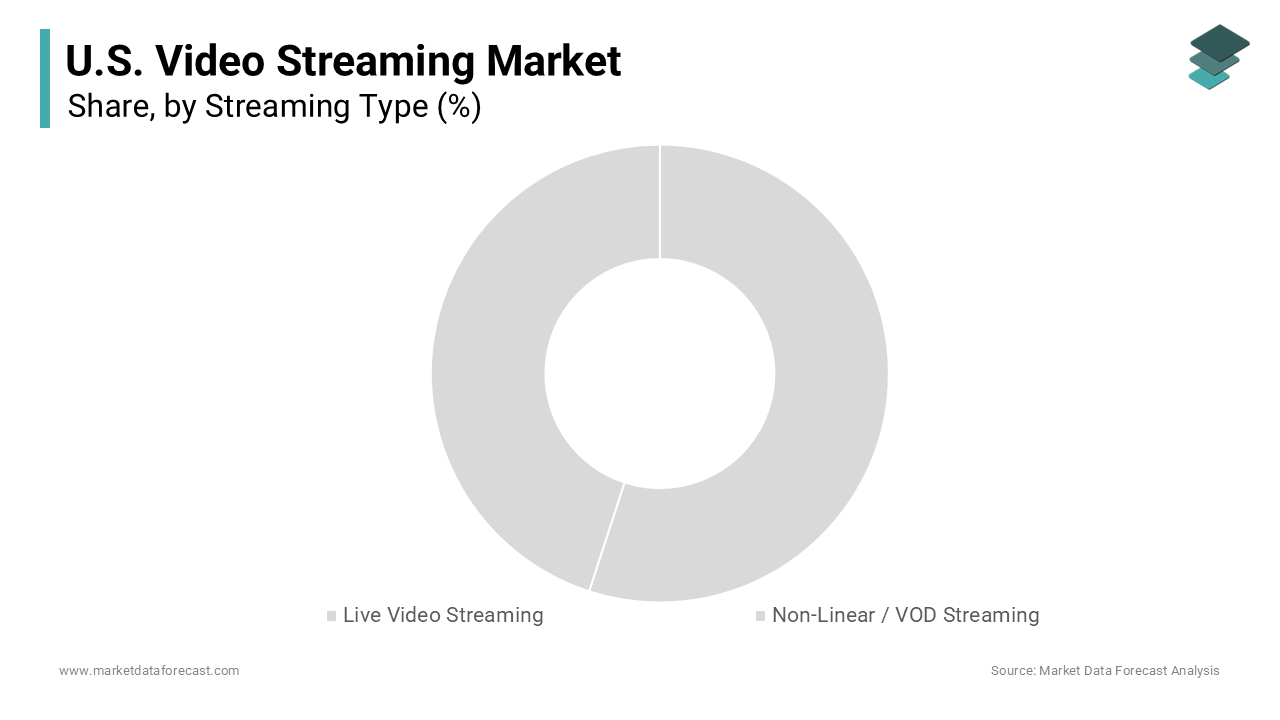
On the other hand, the live video streaming segment is predicted to record a CAGR of 19.2% during the forecast period in the U.S. market owing to the increasing demand for real time engagement and communal viewing experiences. According to recent audience data, the number of viewers watching live sports via streaming platforms in the U.S. is expected to reach over 100 million by 2025 as fans seek flexible ways to watch games without traditional cable subscriptions. Major leagues such as the National Football League and Major League Baseball have secured lucrative deals with digital providers, bringing premium live content directly to online audiences. This shift is further accelerated by the integration of interactive features such as real time statistics, multi camera angles, and social media integration. As per financial reports in the digital media sector, advertising revenue for live streaming events has grown at a double-digit clip, reflecting the high value advertisers place on engaged, real time audiences. Additionally, the rise of live news streaming provides timely information to consumers who prefer digital immediacy over scheduled broadcasts. According to the Pew Research Center, roughly 86% of U.S. adults say they get news from a smartphone, computer, or tablet, highlighting a significant behavioral shift toward live digital consumption. The combination of exclusive live sports rights and enhanced interactive capabilities creates a compelling value proposition that drives rapid subscriber acquisition and revenue growth in this dynamic segment.
By Component Insights
The software segment led the market with the highest share of the U.S. video streaming market in 2025. The dominance of software segment in the U.S. market is attributed to the continuous need for robust, scalable, and secure platforms that can handle massive data traffic and diverse device compatibility. The primary factor sustaining this leadership is the relentless innovation in content delivery networks and encoding technologies. According to technical industry reports, software solutions account for the vast majority of the technical market value in the streaming space, reflecting its critical role in operational efficiency. Streaming providers invest heavily in proprietary software solutions to optimize video quality and reduce latency, which are essential for maintaining user satisfaction. According to Akamai Technologies, technical optimizations in video delivery software can reduce the startup time for videos by up to 50%, directly impacting viewer retention. Furthermore, the integration of advanced analytics and artificial intelligence into software platforms enables precise content recommendation and personalized user experiences. As per IBM, data analytics software helps platforms improve audience engagement by providing deep insights into viewing habits. The necessity for regular updates and security patches to protect against cyber threats also ensures recurring revenue and sustained demand for software solutions. Additionally, the proliferation of smart devices requires software that is adaptable across various operating systems and screen sizes. This versatility ensures that software remains the core enabler of the streaming ecosystem, driving its continued dominance in the market structure.
However, the services segment is a promising segment and is expected to showcase a promising CAGR during the forecast period due to the rising demand for end to end solutions that streamline content ingestion, processing, and distribution. According to industry forecasts, the services segment is expected to grow at a compound annual growth rate of 16.2%, outpacing the software component. A key driver is the need for professional assistance in navigating the evolving regulatory landscape and ensuring compliance with data privacy laws. As per reports from leading consulting firms, media companies have increased their spending on external advisory services by approximately 20% to manage new regulatory requirements. Additionally, the integration of new technologies such as virtual reality and augmented reality requires specialized technical services that most internal teams cannot provide independently. According to Deloitte, many streaming organizations now outsource at least some of their technical operations to third party specialists to accelerate time to market. The demand for customer support services also rises as user bases expand, with providers seeking to maintain high satisfaction levels through responsive assistance. Furthermore, content localization and translation services are crucial for reaching diverse demographic groups within the U.S. These factors collectively contribute to the accelerated growth of the services segment, making it a vital component of the market ecosystem.
By Revenue Model Insights
The subscription based revenue model segment remained the dominant force in the U.S. video streaming market in 2025. The growth of this segment in the U.S. market is majorly credited to the established consumer habit of paying for unlimited access to extensive content libraries. According to Statista, revenue from subscription video on demand in the U.S. exceeded 40 billion dollars in 2024, accounting for the largest portion of the market revenue. This financial superiority allows providers to invest heavily in original content production, which in turn reinforces subscriber loyalty. According to Netflix, their global average revenue per membership remains strong, with the U.S. market providing a high baseline for premium pricing strategies. Furthermore, the bundling of streaming services with other telecommunications packages has expanded the reach of subscription models. According to Leichtman Research Group, approximately 30% of streaming households receive a service through a bundle from an internet or cellular provider, reducing churn and enhancing stickiness. The perception of value among consumers is high, as they view subscriptions as essential utilities for entertainment. Additionally, the ease of automatic billing and seamless renewal processes minimizes friction, encouraging long term commitment. These factors ensure that the subscription model continues to lead the market, providing a stable financial foundation for ongoing innovation and content acquisition.
On the other end, the advertising based revenue model segment is anticipated to record a CAGR of 21.7% in the U.S. market during the forecast period owing to the strategic pivot of major platforms toward hybrid monetization strategies. This segment is expanding at a compound annual growth rate of 22%, reflecting the urgent need for diversified income sources amidst subscription saturation. The primary catalyst for this growth is the introduction of lower cost, ad supported tiers by leading providers, which attract price sensitive consumers. According to advertising industry projections, connected TV ad revenue in the U.S. is expected to grow to nearly 30 billion dollars by 2025, indicating robust advertiser confidence. This shift allows streaming services to tap into the broader digital advertising market, which values the precise targeting capabilities of streaming data. As per marketing data from eMarketer, over two-thirds of advertisers plan to shift more of their budgets from traditional TV to streaming platforms due to better targeting and measurement. Furthermore, advancements in ad technology enable non intrusive and relevant advertisements, improving user acceptance. According to Roku, ad-supported streaming continues to gain significant viewership hours compared to traditional linear TV, offering greater inventory for advertisers. The economic pressure on households has also accelerated the adoption of these tiers, with many consumers opting for cheaper plans during inflationary periods. Additionally, the ability to measure ad performance in real time provides advertisers with actionable insights, enhancing return on investment. These dynamics position the advertising model as a critical growth engine for the future of the streaming industry.
COUNTRY ANALYSIS
The U.S. is likely to maintain its position as the premier market for video streaming innovation and revenue generation globally for the next few years, fueled by its mature digital infrastructure and the cultural shift toward cord cutting. This dominant position is attributed to the widespread availability of high speed broadband connectivity, which enables seamless consumption of high definition content across multiple devices. According to the Federal Communications Commission, 96% of Americans now use the internet, which supports the heavy data demands of modern streaming services and encourages frequent usage. This infrastructure backbone ensures that technical barriers to entry are minimal for the vast majority of the population. Another critical factor is the robust production ecosystem located within the country, particularly in Hollywood, which ensures a steady supply of high quality original content. According to the Motion Picture Association, the entertainment industry supports millions of jobs and produces hundreds of original series and films annually for streaming platforms, creating a competitive advantage in content exclusivity. Furthermore, the high penetration of smart devices, including smart TVs, tablets, and smartphones, facilitates ubiquitous access to streaming services. According to the Consumer Technology Association, the vast majority of U.S. households now own a smart TV, simplifying the user experience and driving adoption. The shift away from traditional cable continues at a rapid pace. According to Nielsen, streaming now regularly surpasses both cable and broadcast television in terms of its share of total TV viewership in the U.S. These elements collectively sustain the U.S. as the leading market for video streaming.
COMPETITIVE LANDSCAPE
The competition in the U.S. video streaming market is characterized by intense rivalry among established media giants and emerging digital platforms. This saturated environment forces companies to continuously innovate their content offerings and technological capabilities to retain subscribers. Major players leverage vast libraries of exclusive intellectual property to differentiate themselves and create loyal user bases. The battle for consumer attention has led to significant investments in original programming with budgets reaching hundreds of millions of dollars for flagship series. Price competition has also intensified as providers introduce varied subscription tiers including ad supported options to appeal to broader demographics. Consolidation activities are frequent as companies seek to achieve scale and reduce operational costs through mergers and acquisitions. The entry of technology firms into the content creation space further complicates the competitive dynamics. Regulatory scrutiny adds another layer of complexity influencing business strategies and market behavior. Ultimately success depends on the ability to balance content quality cost efficiency and user experience in a rapidly evolving digital landscape.
KEY MARKET PLAYERS
A few of the major companies in the U.S. Video Streaming Market include
- Netflix
- Amazon Prime Video
- Disney+
- Hulu
- YouTube
- Max (HBO Max)
- Paramount+
- Apple TV+
- Peacock TV
- Tubi
- Pluto TV
- ESPN+
Top Players in the US Market
Netflix
Netflix remains a pivotal force in the U.S. video streaming landscape by consistently delivering high quality original content and refining its user experience. The company has recently strengthened its position by introducing an advertising supported tier that appeals to price sensitive consumers while opening new revenue streams. Netflix continues to invest heavily in diverse programming including films series and interactive games to maintain subscriber engagement. Its robust recommendation algorithm ensures personalized viewing experiences which drives retention. The platform also focuses on global content localization to attract diverse demographic groups within the country. By leveraging data analytics Netflix optimizes content acquisition and production decisions. These strategic initiatives enable the company to sustain its leadership role despite intensifying competition from other major media entities in the digital entertainment sector.
The Walt Disney Company
The Walt Disney Company leverages its extensive library of iconic franchises to maintain a strong presence in the U.S. streaming sector. Disney Plus serves as the primary vehicle for this strategy offering exclusive access to Marvel Star Wars and Pixar content. The company recently enhanced its market position by bundling its streaming services with Hulu and ESPN Plus providing greater value to subscribers. This integration allows users to access a wider range of content including sports and general entertainment through a single interface. Disney also focuses on theatrical releases that transition to streaming platforms driving cross platform engagement. By capitalizing on its beloved intellectual property the company creates a loyal customer base. These efforts ensure Disney remains a key competitor in the evolving digital media landscape.
Warner Bros Discovery
Warner Bros Discovery combines premium content from HBO and Discovery networks to offer a compelling value proposition in the U.S. market. The company operates Max which features high quality dramas reality shows and live sports events. Recent actions include the consolidation of its streaming assets under the Max brand to simplify user experience and reduce operational costs. Warner Bros Discovery focuses on producing award winning original series that attract critical acclaim and dedicated audiences. The platform also integrates live sports coverage to differentiate itself from competitors relying solely on on demand libraries. By balancing prestige television with broad appeal content the company captures diverse viewer segments. These strategies help Warner Bros Discovery maintain relevance and competitiveness in the crowded streaming environment.
Top Strategies Used by Key Market Participants
Key players in the U.S. video streaming market primarily employ content differentiation and strategic pricing models to secure competitive advantages. Companies invest heavily in exclusive original productions to create unique value propositions that prevent subscriber churn. This approach ensures that viewers must maintain subscriptions to access specific popular titles. Another major strategy involves the introduction of advertising supported tiers which allow providers to capture price sensitive segments while diversifying revenue sources. Bundling services with telecommunications or other digital platforms is also common as it reduces acquisition costs and enhances customer stickiness. Technological innovation plays a crucial role with firms utilizing artificial intelligence for personalized recommendations and improved user interfaces. Additionally, partnerships with sports leagues and live event organizers help attract real time audiences. These multifaceted strategies enable market participants to navigate saturation and sustain growth in a mature industry landscape.
MARKET SEGMENTATION
This research report on the U.S. video streaming market has been segmented based on the following categories.
By Streaming Type
- Live Video Streaming
- Non-Linear / VOD Streaming
By Component
- Software
- Services
By Solutions
- Over-the-Top (OTT)
- Internet Protocol TV (IPTV)
- Cable TV
- Pay-TV
By Platform
- Smartphones and Tablets
- Smart TV
- Laptops and Desktops
- Gaming Consoles
By Revenue Model
- Subscription (SVOD)
- Advertising (AVOD/FAST)
- Rental / Transactional (TVOD)
By Deployment Type
- Cloud
- On-Premises
By End User
- Consumer
- Enterprise
By Country
- California
- Washington
- Oregon
- New York
- Rest of the United States