U.S. Voice over Internet Protocol (VoIP) Market Size, Share, Trends & Growth Forecast Report By Service, By Enterprise Type, By End User, and By Country (California, Texas, Florida, New York & Rest of the United States) – Industry Analysis and Forecast, 2026 to 2034
Market Size, 2025
$54.25 BnMarket Estimate, 2026
$61.90 BnMarket Forecast, 2034
$177.83 BnCAGR, 2026–2034
14.1%U.S. Voice over Internet Protocol (VoIP) Market Size
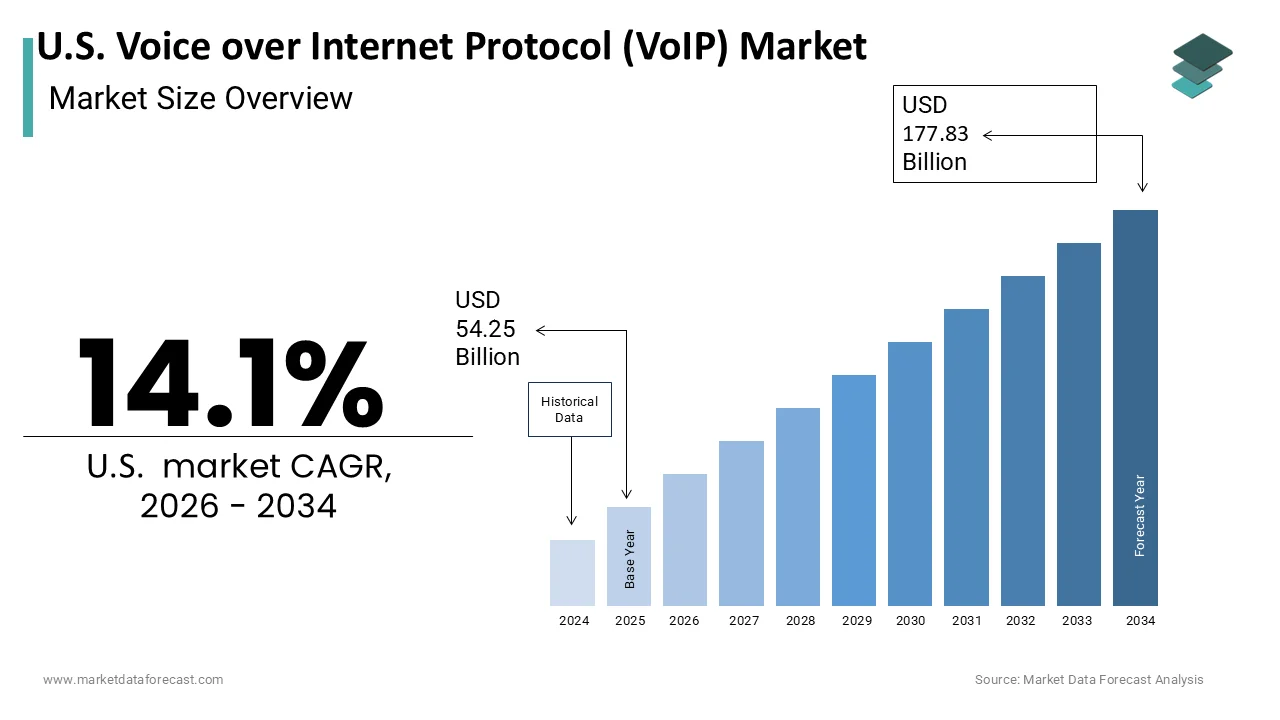
The U.S. Voice over Internet Protocol Market is projected to grow from USD 54.25 billion in 2025 to USD 61.90 billion in 2026 and reach USD 177.83 billion by 2034, registering a CAGR of 14.1% during the forecast period from 2026 to 2034.
As per the Federal Communications Commission, the number of traditional switched access lines in the U.S. declined to 20.6 million in 2023, which reflects a steady migration toward IP-enabled services. This transition is not merely a cost-saving measure but a strategic imperative for organizations seeking seamless connectivity across distributed teams. The proliferation of high-speed broadband networks supports this evolution, with the National Telecommunications and Information Administration stating that 92% of Americans had access to fixed broadband speeds of at least 100 Mbps in 2024. Such infrastructure readiness ensures that voice quality and reliability meet enterprise-grade standards. Furthermore, the integration of artificial intelligence into communication suites allows for real-time transcription and sentiment analysis, adding value beyond simple voice transmission. The market definition now encompasses unified communications as a service, where voice is one component of a larger collaboration ecosystem including video conferencing and instant messaging. This holistic approach drives sustained demand as businesses prioritize digital transformation initiatives that enhance customer engagement and internal productivity through robust, scalable, and intelligent communication solutions.
MARKET DRIVERS
Rising Remote and Hybrid Work Models Drive VoIP Adoption for Seamless Connectivity
The normalization of remote and hybrid work arrangements has fundamentally altered the communication requirements of American enterprises, which is one of the key factors driving the growth of the U.S. voice over internet protocol market. Employees no longer reside within a single physical office, necessitating communication solutions that are location agnostic and device independent. As per the Bureau of Labor Statistics, approximately 20.8% of private industry wage and salary workers teleworked or worked at home for pay in April 2025, creating a persistent demand for flexible communication infrastructure. Traditional phone systems tether users to specific desk phones and physical lines, which are incompatible with a distributed workforce. VoIP solutions allow employees to make and receive calls from laptops, smartphones, or tablets using a single business number, ensuring a professional presence regardless of location. This flexibility enhances employee satisfaction and retention, as workers value the ability to balance professional responsibilities with personal convenience. Companies are increasingly investing in unified communication platforms that integrate voice with video and messaging, providing a cohesive experience for dispersed teams. The need for constant connectivity has also driven the adoption of mobile-first VoIP applications, enabling seamless handoffs between devices. Organizations report higher productivity levels when employees can communicate without friction, as delays in reaching colleagues are minimized. The scalability of VoIP systems allows businesses to add or remove users instantly, accommodating fluctuating team sizes without significant capital expenditure. This adaptability is crucial in a dynamic labor market where project-based teams and freelance collaborations are common. The demand for such agile communication tools continues to grow as companies refine their long-term remote work strategies.
Cost Efficiency and Operational Scalability Propel Enterprise Migration from Legacy Systems
Financial optimization remains another notable factor for the widespread adoption of Voice over Internet Protocol services among U.S. businesses, particularly small and medium-sized enterprises seeking to reduce overhead costs. Traditional Public Switched Telephone Network services involve substantial upfront investments in hardware, maintenance, and long-distance charges, which strain operational budgets. VoIP eliminates the need for expensive on-premises private branch exchange equipment by leveraging existing internet connections for voice transmission. As per the Small Business Administration, average telecommunications expenses for small businesses decreased significantly after switching to cloud-based VoIP solutions, with general industry estimates showing typical savings of 50% to 70% compared to traditional phone systems over three years. This cost reduction is achieved through lower monthly subscription fees and the elimination of per-minute long-distance charges, which are typically included in flat-rate packages. The operational scalability of VoIP allows businesses to adjust their communication capacity in real time, paying only for the seats they use. This pay-as-you-go model contrasts sharply with the rigid contracts and hardware limitations of legacy systems. Enterprises can easily expand their communication network during periods of growth or contract it during downturns without incurring penalties or waste. Additionally, the maintenance burden shifts from internal IT teams to service providers, reducing the need for specialized technical staff. The integration of advanced features such as auto attendants, call routing, and voicemail to email further enhances value without additional costs. These financial benefits enable companies to reallocate resources toward core business activities, driving innovation and competitive advantage. The clear return on investment makes VoIP an attractive option for organizations aiming to streamline operations while maintaining high-quality communication standards.
MARKET RESTRAINTS
Network Dependency and Bandwidth Limitations Restrict Service Reliability in Rural Areas
The inherent reliance of Voice over Internet Protocol on stable and high-speed internet connectivity is a significant restraint to the U.S. market growth, particularly in regions with inadequate broadband infrastructure. Unlike traditional phone lines that operate independently of internet service, VoIP calls are susceptible to latency, jitter, and packet loss if the underlying network is congested or unstable. As per the Federal Communications Commission, approximately 14.5 million Americans in rural areas lacked access to broadband speeds of 100 Mbps download and 20 Mbps upload in 2024. This digital divide limits the effectiveness of VoIP solutions for businesses and residents in these underserved communities. Poor internet quality results in dropped calls, distorted audio, and delayed conversations, which undermine professional communication and customer service standards. Enterprises operating in multiple locations may face inconsistent service quality, complicating the deployment of unified communication systems. The requirement for sufficient bandwidth also means that voice quality can degrade during peak usage times when other data-intensive applications are running simultaneously. Businesses must invest in redundant internet connections or quality of service routers to mitigate these risks, adding to the total cost of ownership. For mission-critical operations, the potential for service interruption poses an unacceptable risk, leading some organizations to retain legacy phone lines as backups. The variability in internet performance across different geographic regions creates a fragmented user experience, hindering the universal adoption of VoIP. Until broadband infrastructure achieves uniform reliability nationwide, network dependency will remain a critical barrier for seamless voice communication in certain parts of the U.S.
Security Vulnerabilities and Regulatory Compliance Concerns Hinder Trust in Cloud Platforms
Concerns regarding data security and regulatory compliance are further hindering the market expansion in the U.S. VoIP systems transmit voice data as packets over the internet, making them vulnerable to eavesdropping, phishing, and denial of service attacks if not properly secured. As per the Cybersecurity and Infrastructure Security Agency, incidents of voice phishing or vishing attacks increased by 40% in 2025, exploiting the trust users place in caller identification systems. Companies handling sensitive information, such as healthcare providers and financial institutions, face strict regulatory requirements under laws like the Health Insurance Portability and Accountability Act and the Gramm-Leach-Bliley Act. Ensuring that VoIP providers meet these stringent compliance standards requires rigorous vetting and often additional encryption measures, which can complicate implementation. The shared responsibility model of cloud services means that businesses must actively manage their own security configurations, such as strong passwords and multi-factor authentication, to prevent unauthorized access. Many organizations lack the specialized cybersecurity expertise required to protect their communication infrastructure effectively. High-profile data breaches involving communication platforms have eroded trust, causing some decision makers to hesitate in migrating fully to cloud-based voice solutions. The fear of intellectual property theft or confidential client information interception remains a significant psychological barrier. Providers must continuously update their security protocols to address evolving threats, but the rapid pace of cybercrime development often outpaces defensive measures. This ongoing security arms race creates uncertainty and hesitation among potential adopters who prioritize data integrity above cost savings.
MARKET OPPORTUNITIES
Integration of Artificial Intelligence Enhances Customer Experience and Operational Analytics
The incorporation of artificial intelligence into Voice over Internet Protocol platforms is a substantial opportunity for the U.S. market. AI-driven features such as real-time speech analytics, sentiment analysis, and automated transcription transform voice calls into actionable data assets. As per the International Data Corporation, spending on AI-enabled customer service solutions in the U.S. is projected to reach 12.5 billion dollars in 2026, reflecting the growing value placed on intelligent communication tools. These technologies allow supervisors to monitor call quality and agent performance in real time, identifying training needs and improving service standards. Automated transcription services enable immediate documentation of conversations, reducing administrative burdens and ensuring accurate record-keeping for compliance purposes. Sentiment analysis helps businesses understand customer emotions during interactions, allowing for proactive intervention when dissatisfaction is detected. AI-powered virtual assistants can handle routine inquiries, freeing human agents to focus on complex issues that require empathy and critical thinking. This hybrid model improves efficiency and reduces wait times, leading to higher customer satisfaction scores. The ability to analyze large volumes of call data provides strategic insights into customer preferences and emerging trends, informing product development and marketing strategies. Enterprises can personalize interactions based on historical data, creating more meaningful connections with clients. The seamless integration of AI into VoIP systems requires minimal additional infrastructure, making it an accessible upgrade for existing users. As natural language processing capabilities advance, the accuracy and utility of these features will continue to improve, offering even greater competitive advantages for early adopters who leverage intelligent communication to differentiate their brand.
Expansion into Unified Communications as a Service Creates Holistic Collaboration Ecosystems
The evolution of Voice over Internet Protocol into Unified Communications as a Service is another prominent opportunity for the U.S. market. Businesses increasingly seek integrated platforms that combine voice, video conferencing, instant messaging, file sharing, and project management tools into a single interface. As per Gartner, the global end-user spending on unified communications as a service is expected to grow by 18% in 2025, driven by the need for streamlined workflows. This convergence eliminates the friction of switching between disparate applications, enhancing productivity and user experience. VoIP serves as the foundational layer for these ecosystems, enabling seamless transitions between communication modes. For example, a user can start with a voice call and escalate to a video conference with screen sharing without disconnecting. This fluidity supports dynamic collaboration, particularly for remote teams working on complex projects. The integration with customer relationship management systems allows sales and support teams to access client data directly within the communication interface, improving context and response times. Providers that offer robust application programming interfaces enable businesses to customize their communication environments to fit specific operational needs. The shift toward holistic platforms encourages long-term customer retention, as organizations become reliant on the integrated workflow efficiencies. This trend also opens new revenue streams for providers through value-added services and premium features. By positioning VoIP as part of a broader digital workplace strategy, companies can justify higher investment levels and achieve greater strategic alignment with their clients’ business objectives.
MARKET CHALLENGES
Interoperability Issues with Legacy Systems Complicate Migration and Integration Processes
A significant challenge facing the U.S. Voice over Internet Protocol market is the technical complexity associated with integrating new IP-based systems with existing legacy infrastructure. Many established enterprises operate with older private branch exchange systems, analog phones, and specialized fax machines that are not natively compatible with modern VoIP protocols. As per the Consumer Technology Association, approximately 25% of US businesses still rely on some form of legacy telephony hardware in 2025, creating a hybrid environment that requires careful management. Achieving seamless interoperability often necessitates the use of analog telephone adapters or gateways, which can introduce points of failure and degrade call quality. The configuration of these intermediary devices requires specialized technical knowledge, increasing the complexity and cost of deployment. Incompatibilities can lead to issues such as failed call transfers, incorrect caller ID display, and difficulties with emergency service location tracking. The transition period during which both systems operate simultaneously can cause confusion for employees and disrupt daily operations. Training staff to navigate the new interface while maintaining proficiency with old procedures adds to the organizational burden. Furthermore, vendor lock-in with proprietary legacy systems can limit the choice of VoIP providers, forcing businesses to select solutions that offer specific compatibility features rather than the best overall value. The lack of standardized protocols across different manufacturers exacerbates these integration challenges, requiring custom solutions for each unique environment. Organizations must carefully plan their migration strategies to minimize downtime and ensure business continuity, often engaging third-party consultants to manage the technical intricacies. This complexity acts as a deterrent for smaller businesses with limited IT resources, slowing the overall rate of adoption in certain sectors.
Regulatory Uncertainty Surrounding Emergency Services and Net Neutrality Impacts Operational Stability
The regulatory landscape governing Voice over Internet Protocol services in the U.S. remains complex and subject to change, which is creating uncertainty for providers and users alike. Issues such as Enhanced 911 service reliability, net neutrality principles, and data privacy laws directly impact the operational stability and legal compliance of VoIP platforms. As per the Federal Communications Commission, ongoing debates regarding the classification of broadband internet access services influence how VoIP traffic is prioritized and managed by internet service providers. If net neutrality protections are weakened, VoIP packets could be deprioritized during times of network congestion, leading to degraded service quality for non-premium users. The requirement for accurate emergency service location tracking is another critical regulatory hurdle, as VoIP users can make calls from any location with internet access. Ensuring that emergency responders receive precise location data requires continuous updates and coordination with local public safety answering points, which vary significantly across jurisdictions. Failure to comply with these regulations can result in substantial fines and legal liabilities for providers. Additionally, evolving data privacy laws at the state level, such as the California Privacy Rights Act, impose strict requirements on how voice data is collected, stored, and shared. Navigating this patchwork of federal and state regulations requires ongoing adaptation and resource allocation to prevent disruptions and maintain compliance.
REPORT COVERAGE
| REPORT METRIC | DETAILS |
| Market Size Available | 2025 to 2034 |
| Base Year | 2025 |
| Forecast Period | 2026 to 2034 |
| Segments Covered | By Service, Enterprise Type, End User, and Region. |
| Various Analyses Covered | Global, Regional and Country-Level Analysis, Segment-Level Analysis, Drivers, Restraints, Opportunities, Challenges; PESTLE Analysis; Porter’s Five Forces Analysis, Competitive Landscape, Analyst Overview of Investment Opportunities |
| Countries Covered | California, Texas, Florida, New York, and the rest of the United States |
| Market Leaders Profiled | RingCentral, Inc., 8x8, Inc., Vonage Holdings Corp., Cisco Systems, Inc., Microsoft Corporation, Zoom Video Communications, Inc., Verizon Communications Inc., AT&T Inc., Nextiva, Inc., Dialpad, Inc., Mitel Networks Corporation, Avaya Holdings Corp. |
SEGMENTAL ANALYSIS
By Service Insights
The Hosted IP PBX segment dominated the market by commanding the largest share of the U.S. market in 2025. The dominance of this segment in the U.S. market is attributed to its ability to provide enterprise-grade communication features without the capital expenditure of on-premises hardware. This model allows businesses to shift from capital expenditures to operational expenditures, which is particularly attractive for organizations seeking financial flexibility. As per the Bureau of Labor Statistics, small and medium-sized enterprises constitute 99.9% of all U.S. businesses, and these entities heavily favor hosted solutions to avoid the high upfront costs associated with traditional private branch exchange systems. The hosted model enables companies to scale their communication infrastructure up or down instantly based on seasonal demand or workforce changes. This agility is crucial in a volatile economic environment where businesses must optimize resources continuously. Providers manage all maintenance and updates, ensuring that users always have access to the latest features without technical intervention. The reduction in IT overhead is significant, as internal teams no longer need to dedicate time to server management or hardware troubleshooting. This operational efficiency translates into lower total cost of ownership over the lifecycle of the service. Furthermore, the reliability of data centers used by hosted providers often exceeds what individual companies can achieve on-site, ensuring higher uptime and business continuity. The widespread availability of high-speed internet across urban and suburban areas supports the seamless delivery of these services, making hosted IP PBX the default choice for modernizing business communications while maintaining budgetary control.
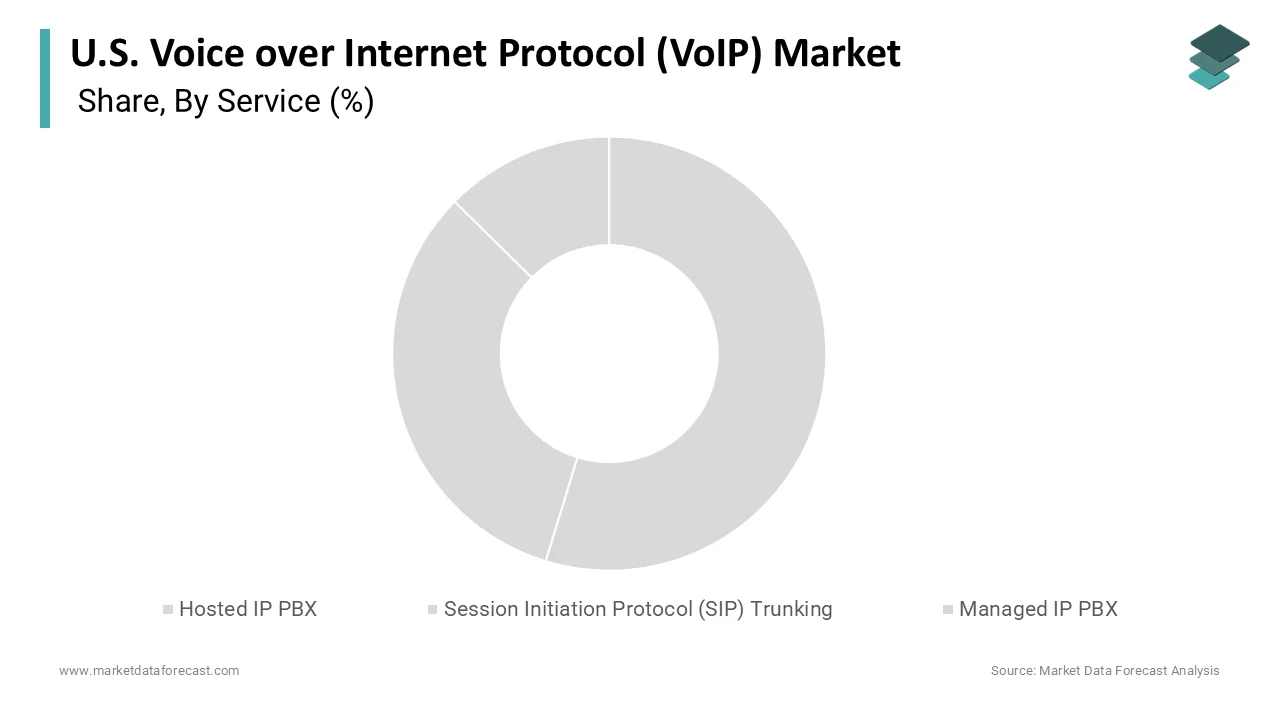
On the other side, the session initiation protocol trunking segment is predicted to expand at a CAGR of 13.1% during the forecast period in the U.S. market, owing to the urgent need for enterprises to decommission legacy Time Division Multiplexing infrastructure. Telecommunications providers are actively retiring copper-based networks, forcing businesses to migrate to IP-based connectivity to maintain service continuity. As per the Federal Communications Commission, the number of traditional switched access lines in the U.S. dropped to 20.6 million in 2023, accelerating the adoption of SIP trunks as the primary replacement technology. SIP trunking allows organizations to consolidate voice and data traffic over a single network connection, simplifying infrastructure management and reducing complexity. This consolidation eliminates the need for separate voice circuits, leading to significant cost savings in line rentals and maintenance. The technology supports higher channel density compared to traditional lines, enabling businesses to handle more concurrent calls with less physical infrastructure. Large enterprises with multiple branch offices benefit from the ability to centralize their telephony management while maintaining local presence numbers. The flexibility of SIP trunks allows for easy adjustment of capacity, enabling businesses to pay only for the bandwidth they use. This scalability is particularly valuable for organizations with fluctuating call volumes. The migration process is supported by mature gateway technologies that ensure compatibility with existing private branch exchange systems, reducing the barrier to entry. As regulatory pressures and maintenance costs for legacy networks increase, the transition to SIP trunking becomes not just a strategic advantage but an operational necessity for sustaining reliable business communications.
By Enterprise Type Insights
The small and medium enterprises segment occupied the major share of the U.S. market in 2025. The growth of the small and medium enterprises segment in the U.S. market is driven primarily by the affordability and low barrier to entry offered by cloud-based communication solutions. These businesses often operate with limited capital and IT resources, which makes the subscription-based model of VoIP highly appealing. As per the Small Business Administration, there are 33.2 million small businesses in the U.S., accounting for 99.9% of all US firms, creating a massive addressable market for scalable communication services. VoIP eliminates the need for significant upfront investment in hardware, allowing small businesses to access enterprise-level features such as auto attendants, call forwarding, and voicemail to email at a fraction of the cost. The predictable monthly pricing structure helps these organizations manage cash flow effectively, avoiding unexpected maintenance expenses. Many VoIP providers offer tiered packages that allow small businesses to start with basic features and upgrade as they grow, ensuring that costs align with usage. The ease of deployment is another critical factor, as most cloud-based systems can be set up without specialized technical knowledge. Employees can begin using the service immediately with softphones on their existing devices, reducing downtime during implementation. This accessibility democratizes advanced communication capabilities, enabling small businesses to project a professional image and compete with larger corporations. The ability to add or remove lines instantly supports the dynamic nature of small business operations, where staffing levels may change frequently. This flexibility and cost efficiency make VoIP an indispensable tool for the survival and growth of the small business sector in the U.S.
On the other hand, the large enterprises segment is estimated to register a CAGR of 12.2% during the forecast period in the U.S. market,t owing to the strategic imperative to consolidate global communication infrastructure. Multinational corporations operate complex networks spanning multiple countries and regions, requiring unified communication standards to ensure consistency and efficiency. VoIP technology enables these organizations to replace disparate legacy systems with a single, centralized platform that manages voice traffic globally. As per Gartner, large enterprises are expected to increase their spending on unified communications infrastructure by 14% in 2025, reflecting the priority placed on standardization. Consolidation reduces operational complexity and allows for centralized management of policies, security, and compliance. It also enables significant cost savings through the optimization of international call routing and the elimination of redundant infrastructure. Large enterprises can leverage their scale to negotiate favorable contracts with global VoIP providers, further reducing per-unit costs. The ability to integrate voice services with other enterprise applications, such as enterprise resource planning and customer relationship management systems, enhances operational visibility and data analytics. Centralized platforms facilitate better monitoring of communication patterns and performance metrics, enabling data-driven decision-making. The transition to a unified IP-based network also supports the deployment of advanced features such as artificial intelligence-driven analytics and automated customer service tools across all locations. This strategic consolidation improves agility, allowing large enterprises to respond quickly to market changes and operational needs. The drive for efficiency and standardization in global operations continues to fuel the rapid adoption of VoIP solutions among the largest corporate entities in the U.S.
By End User Insights
The industrial and commercial segment led the market by holding the major share of the U.S. market in 2025. The growth of the industrial and commercial segment in the U.S. market is driven by the critical need for operational efficiency and enhanced customer service capabilities. Businesses in this sector rely on seamless communication to coordinate supply chains, manage customer inquiries, and support internal workflows. VoIP solutions integrate with customer relationship management systems to provide agents with immediate access to client data, enabling personalized and efficient service. As per the International Data Corporation, commercial enterprises in the U.S. increased their investment in customer experience technologies by 16% in 2024, with voice communication playing a central role in these initiatives. The ability to route calls intelligently based on agent availability and expertise reduces wait times and improves first call resolution rates. Advanced features such as interactive voice response and automated attendants streamline inbound call handling, allowing businesses to manage high volumes of inquiries without proportional increases in staff. The integration of voice with other communication channels, such as chat and email, creates an omnichannel experience that meets modern customer expectations. Commercial entities also benefit from the scalability of VoIP, which allows them to adjust communication capacity during peak seasons or promotional periods. The cost savings associated with VoIP enable businesses to reinvest in other areas of customer service improvement, such as training and technology upgrades. The reliability and clarity of voice connections are essential for maintaining professional relationships and resolving issues effectively. As competition intensifies across commercial sectors, the ability to deliver superior customer experiences through efficient communication infrastructure becomes a key differentiator, driving sustained demand for VoIP solutions in this segment.
On the other hand, the residential segment is estimated to register a promising CAGR of 10.4% during the forecast period in the U.S. market, owing to the widespread adoption of smart home ecosystems and connected devices. Modern households are increasingly equipped with internet-connected devices that require seamless communication capabilities. VoIP services are often bundled with broadband internet and smart home security packages, providing residents with integrated communication solutions. As per the Consumer Technology Association, smart home device shipments in the U.S. reached 150 million units in 2024, creating a fertile environment for residential VoIP adoption. Residents value the convenience of using a single network for internet, television, and voice services, which simplifies billing and technical support. VoIP adapters allow traditional phones to work over internet connections, enabling users to retain familiar hardware while benefiting from lower costs and advanced features. Features such as voicemail to email, call forwarding to mobile devices, and virtual phone numbers appeal to residents who seek flexibility and connectivity. The rise of remote work and online learning has also increased the demand for reliable home communication systems, blurring the lines between residential and business use. Residents appreciate the ability to maintain a separate business line at home without installing additional physical infrastructure. The affordability of residential VoIP plans compared to traditional landline services drives adoption among cost-conscious consumers. As smart home technology continues to evolve, the integration of voice communication into the connected home ecosystem will remain a key growth driver for the residential segment.
COUNTRY LEVEL ANALYSIS
U.S. Voice Over Internet Protocol Market Analysis
The U.S. is expected to preserve its overwhelming dominance in the North American Voice over Internet Protocol market for the next few years due to its advanced telecommunications infrastructure and high rate of digital adoption. The market status is characterized by mature penetration levels among enterprises and accelerating growth in the residential sector, driven by the retirement of legacy copper networks. A primary driving factor is the extensive deployment of high-speed broadband networks, which provides the necessary foundation for high-quality voice transmission. As per the National Telecommunications and Information Administration, 92% of Americans had access to fixed broadband speeds of at least 100 Mbps in 2024, ensuring that VoIP services can be delivered reliably across most of the country. This infrastructure readiness supports the widespread adoption of cloud-based communication platforms among businesses of all sizes. Another significant driver is the strong culture of entrepreneurship and the presence of millions of small and medium-sized enterprises that rely on cost-effective and scalable communication solutions to compete. The U.S. also leads in the integration of artificial intelligence and automation into communication workflows, creating demand for advanced VoIP features that enhance productivity and customer experience. Regulatory initiatives promoting broadband expansion and the transition to IP-based networks further support market growth. The presence of major global VoIP providers and technology innovators in the U.S. fosters a competitive environment that drives continuous improvement in service quality and feature sets. This combination of infrastructure, economic structure, and technological innovation ensures that the U.S. remains the dominant force in the regional VoIP market, setting trends that influence global adoption patterns.
COMPETITIVE LANDSCAPE
The competition in the U.S. Voice over Internet Protocol market is intense and characterized by rapid technological advancement and continuous innovation. Numerous established telecommunications companies compete alongside agile cloud native startups, creating a fragmented yet dynamic landscape. Providers differentiate themselves through unique feature sets such as advanced artificial intelligence integration,n superior customer support, and seamless interoperability with existing business software. Price competition remains significant,t particularly among services targeting small and medium-sized enterprises, where cost sensitivity is high. However,r larger enterprises prioritize reliability, ty secur, and scalability,lity leading to competition based on service quality and infrastructure robustness. Strategic alliances and ecosystem development are critical as companies seek to offer comprehensive unified communication solutions rather than standalone voice services. The barrier to entry is moderate due to the availability of cloud infrastructure,cture but achieving scale and trust requires substantial investment in marketing and technology. Customer retention is a key focus area with providers investing heavily in user experience and customer success programs. The market sees frequent mergers and acquisitions as larger players consolidate resources to enhance their technological capabilities and expand their market reach. This competitive pressure drives continuous improvement in service quality and feature innovation, benefiting end users across various sectors.
KEY MARKET PLAYERS
Some of the companies that are playing a dominating role in the U.S. Voice over Internet Protocol (VoIP) Market include
- RingCentral, Inc.
- 8x8, Inc.
- Vonage Holdings Corp.
- Cisco Systems, Inc.
- Microsoft Corporation
- Zoom Video Communications, Inc.
- Verizon Communications Inc.
- AT&T Inc.
- Nextiva, Inc.
- Dialpad, Inc.
- Mitel Networks Corporation
- Avaya Holdings Corp.
TOP LEADING PLAYERS IN THE MARKET
- RingCentral Inc maintains a prominent position in the U.S. Voice over Internet Protocol landscape by offering comprehensive cloud-based communication solutions. The company focuses on delivering unified communications as a service that integrates voice, video,o and messaging into a single platform. Recent actions include strategic partnerships with major technology providers to enhance artificial intelligence capabilities within its platform. RingCentral has invested heavily in expanding its data center infrastructure to ensure low latency and high reliability for enterprise clients. The company also launched advanced analytics tools that help businesses optimize their communication workflows. These initiatives demonstrate a commitment to innovation and customer-centric development. By continuously updating its feature set and improving user experience, RingCentral strengthens its appeal to both small businesses and large enterprises seeking scalable and efficient communication systems.
- Vonage Holdings Corp contributes significantly to the market through its robust application programming interface platform and business communication services. The company enables developers to embed voice,e vid,eo, and messaging capabilities directly into custom applications. Recent efforts involve enhancing its global network infrastructure to support seamless international connectivity for US-based enterprises. Vonage has introduced new security features to address growing concerns about data privacy and compliance. The company also expanded its partner ecosystem to reach more small and medium-sized businesses. By focusing on developer-friendly tools and flexible integration options, Vonage empowers organizations to create tailored communication experiences. This approach differentiates the company in a competitive landscape and drives adoption among tech-savvy businesses looking for customizable and secure voice solutions.
- 8x8 Inc serves the market with integrated cloud contact center and unified communications platforms. The company emphasizes the convergence of employee and customer communications to provide holistic insights. Recent actions include the acquisition of specialized artificial intelligence firms to enhance real-time analytics and sentiment analysis capabilities. 8x8 has expanded its federal sector offerings to meet strict government compliance requirements. The company also improved its global reach by upgrading its private backbone network for better performance. These steps reinforce its position as a leader in secure and intelligent communication solutions. By focusing on data-driven insights and seamless integration, 8x8 helps organizations improve customer engagement and operational efficiency. Its continued investment in technology ensures it remains a preferred choice for enterprises prioritizing advanced communication features.
TOP STRATEGIES USED BY KEY MARKET PARTICIPANTS
Key players in the U.S. Voice over Internet Protocol market primarily employ product innovation and strategic partnerships to maintain a competitive advantage. Companies frequently integrate artificial intelligence and machine learning into their platforms to offer advanced analytics and automation features. This strategy enhances user experience and provides valuable insights for businesses. Mergers and acquisitions are also common as firms seek to expand their service portfolios and enter new geographic regions. By acquiring specialized technology providers, established companies can quickly incorporate new capabilities such as enhanced security or contact center functions. Another prevalent strategy is the development of robust application programming interfaces that allow seamless integration with third-party software. This approach attracts developers and enterprises looking for customizable solutions. Additionally, providers focus on improving network infrastructure to ensure high reliability and low latency. Offering flexible pricing models and scalable packages helps attract small and medium-sized enterprises. These combined strategies enable market participants to address diverse customer needs and sustain growth in a dynamic environment.
U.S. VOICE OVER INTERNET PROTOCOL MARKET NEWS
- In March 2024, RingCentral Inc launched an advanced artificial intelligence assistant to enhance user productivity and streamline communication workflows for enterprise clients in the U...
- In June 2024, Vonage Holdings Corp expanded its global application programming interface platform to support deeper integration with customer relationship management systems for US based developers.
- In September 2024, 8x8 Inc acquired a specialized analytics firm to improve real-time sentiment analysis capabilities within its cloud contact center solutions.
- In January 2025, RingCentral Inc partnered with a major cybersecurity provider to introduce enhanced encryption and threat detection features for its unified communications platform.
- In May 2025, Vonage Holdings Corp upgraded its private network infrastructure to reduce latency and improve call quality for business customers across the U.S.
MARKET SEGMENTATION
This research report on the U.S. voice over internet protocol market is segmented and sub-segmented into the following categories.
By Service
- Hosted IP PBX
- Session Initiation Protocol (SIP) Trunking
- Managed IP PBX
- Others
By Enterprise Type
- Small & Medium Enterprises (SMEs)
- Large Enterprises
By End User
- Industrial & Commercial
- Residential
By Country
- California
- Texas
- Florida
- New York
- Rest of the United States
Access the study in MULTIPLE FORMATS
Purchase options starting from
$ 1200
Didn’t find what you’re looking for?
TALK TO OUR ANALYST TEAM
Need something within your budget?
NO WORRIES! WE GOT YOU COVERED!
Call us on: +1 888 702 9696 (U.S Toll Free)
Write to us: sales@marketdataforecast.com