- Product Description Description
- Table of Contents TOC
- List of Table & Figure LOT
- Get Free Sample PDF Sample PDF
Market Size, 2025
$13.31 BnMarket Estimate, 2026
$13.93 BnMarket Forecast, 2034
$20.05 BnCAGR, 2026–2034
4.66%U.S. Yogurt Market Report Summary
The U.S. yogurt market was valued at USD 13.31 billion in 2025, is estimated to reach USD 13.93 billion in 2026, and is projected to reach USD 20.05 billion by 2034, growing at a CAGR of 4.66% during the forecast period from 2026 to 2034. The growth of the U.S. yogurt market is driven by the rising consumer awareness regarding gut health, increasing demand for probiotic-rich foods, and the growing preference for convenient and nutritious snacking options. The expanding popularity of high-protein yogurt products, plant-based yogurt alternatives, and functional dairy offerings is further accelerating market growth. Additionally, increasing focus on clean-label ingredients, low-sugar formulations, and sustainable packaging solutions is supporting innovation and product diversification across the yogurt industry in the United States.
Key Market Trends
- Rising demand for probiotic-rich and gut-health-focused yogurt products among health-conscious consumers
- Increasing popularity of plant-based and vegan yogurt alternatives made from almond, oat, coconut, and soy
- Growing adoption of high-protein and functional yogurts targeting fitness and wellness consumers
- Strong focus on clean-label, low-sugar, and natural ingredient formulations across premium yogurt brands
- Expansion of portable and drinkable yogurt formats catering to busy lifestyles and on-the-go consumption
Segmental Insights
- Based on product type, the dairy-based yogurt segment accounted for the largest share of the U.S. yogurt market in 2025. The segment’s dominance is attributed to the strong consumer trust in dairy products as a source of calcium, protein, and essential nutrients, along with the widespread availability of traditional yogurt products across retail channels.
- The non-dairy/plant-based yogurt segment is expected to witness strong growth during the forecast period owing to the rising prevalence of lactose intolerance, increasing vegan population, and growing consumer preference for sustainable and dairy-free alternatives.
- Based on product form, the spoonable/set yogurt segment dominated the U.S. yogurt market in 2025 due to its versatility, convenience, and widespread use as a breakfast item, snack, and cooking ingredient.
- The drinkable yogurt segment is projected to grow at a notable pace during the forecast period owing to the increasing demand for portable, convenient, and ready-to-consume nutritional beverages among busy consumers.
- Based on packaging type, the cups, containers, and tubs segment held the largest share of the market in 2025, supported by their cost efficiency, ease of storage, widespread retail availability, and suitability for both single-serve and family-size packaging formats.
Regional Insights
The U.S. yogurt market is witnessing strong growth across California, Washington, Oregon, New York, and the rest of the United States, supported by the high consumer awareness regarding healthy eating habits, increasing demand for functional foods, and the strong retail presence of dairy and plant-based yogurt brands. California remains one of the leading regional markets owing to its large health-conscious population, growing vegan consumer base, and strong adoption of premium and organic yogurt products.
Competitive Landscape
The U.S. yogurt market is highly competitive and characterized by the presence of global dairy manufacturers, premium health-focused brands, and emerging plant-based yogurt companies competing through product innovation, nutritional enhancements, sustainable packaging, and clean-label offerings. Companies are increasingly focusing on functional nutrition, protein enrichment, low-sugar formulations, plant-based innovations, and digital marketing strategies to strengthen their market presence and attract health-conscious consumers. Prominent players in the U.S. yogurt market include Danone S.A., Chobani LLC, General Mills Inc., Nestlé S.A., The Kraft Heinz Company, FAGE International S.A., Lactalis Group, Yoplait USA Inc., Stonyfield Farm Inc., and Tillamook County Creamery Association.
 Download Free Sample Report
U.S. Yogurt Market Size
The U.S. yogurt market size was valued at USD 13.31 billion in 2025 and is anticipated to reach USD 13.93 billion in 2026 from USD 20.05 billion by 2034, growing at a CAGR of 4.66% during the forecast period from 2026 to 2034
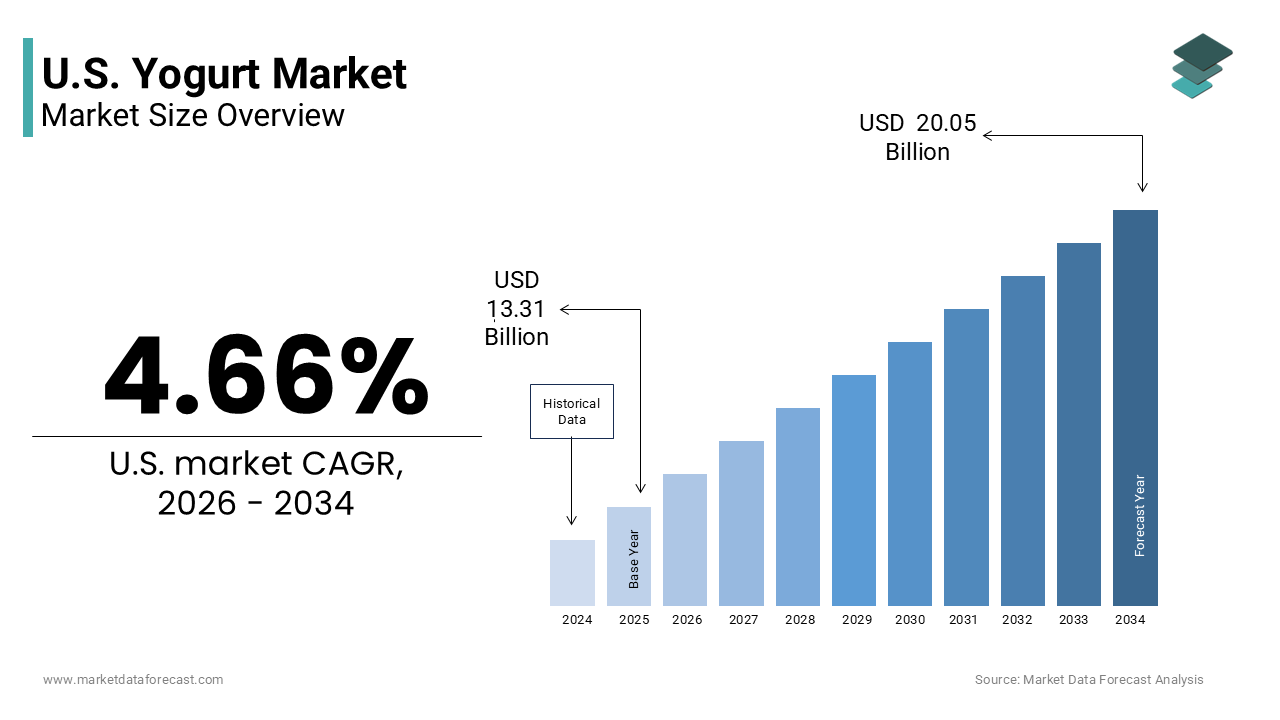
As per the Dietary Guidelines for Americans, dairy consumption is recommended for its contribution to calcium, potassium, and vitamin D intake, yet actual consumption remains below recommended levels for many age groups. According to the U.S. Department of Agriculture Economic Research Service, total fluid milk sales declined by 22% between 2009 and 2024, falling from 55,433 million pounds to 43,179 million pounds, while fermented dairy products like yogurt have seen increased adoption as consumers seek functional benefits. The market is defined by a strong emphasis on probiotic content, which supports gut health and immune function. Regulatory oversight by the Food and Drug Administration ensures strict labeling standards regarding live and active cultures. Consumer behavior is increasingly driven by clean label demands, with shoppers scrutinizing ingredient lists for artificial additives and high sugar content. The landscape is highly competitive, with major conglomerates and niche artisanal brands vying for shelf space through innovation in texture, flavor, and nutritional profiles. This sector continues to evolve as manufacturers address the dual demands of indulgence and wellness in a health conscious society.
MARKET DRIVERS
Rising Consumer Awareness of Gut Health and Probiotics
The growing consumer awareness of gut health and the critical role of probiotics are majorly driving the expansion of the U.S. yogurt market. Modern scientific research has increasingly linked the gut microbiome to overall health, including immune function, mental wellbeing, and metabolic regulation. As per the National Institutes of Health, there is growing public interest in psychobiotics and metabolic health, with the global probiotics category projected to grow at an 8% CAGR through 2029. Yogurt is widely recognized as an accessible and effective source of beneficial bacteria such as Lactobacillus and Bifidobacterium. According to consumer health surveys, a significant majority of Americans actively seek out foods labelled with probiotic benefits, viewing them as essential for preventive healthcare. This trend is particularly strong among Millennials and Generation Z, who prioritize holistic wellness and functional nutrition. The perception of yogurt as a daily health ritual rather than just a snack drives consistent consumption patterns. Manufacturers leverage this driver by highlighting specific strain diversity and colony forming units on packaging, thereby educating consumers and building trust. The alignment of yogurt with broader wellness trends, such as clean eating and natural living, reinforces its position as a preferred choice for those seeking to optimize their internal health ecosystems. This sustained focus on digestive wellness ensures robust demand across various demographic segments.
Convenience and Versatility in Modern Diets
The inherent convenience and culinary versatility of yogurt significantly propel its demand in the fast paced American lifestyle, which is further fuelling the U.S. yogurt market growth. Yogurt serves as a ready to eat protein source that requires no preparation, making it an ideal option for breakfast, snacks, and post workout recovery. As per the Bureau of Labor Statistics, Americans spent an average of 1.13 hours per day on food preparation and cleanup in 2023, reflecting a continued demand for time saving meal solutions. Yogurt fits seamlessly into this narrative, offering a quick and nutritious alternative to processed snacks. Its versatility allows it to be consumed plain, mixed with fruits and granola, or used as a substitute for higher fat ingredients in cooking and baking. According to dietary studies, yogurt is frequently cited as a top choice for healthy snacking due to its satiety inducing properties and nutrient density. The availability of single serve cups and portable pouches enhances its appeal for on the go consumption among students, professionals, and parents. Furthermore, the introduction of drinkable yogurts and yogurt based smoothies caters to consumers seeking hydration and nutrition in a liquid format. This adaptability ensures that yogurt remains a staple in household refrigerators and lunchboxes. The ease of integration into various dietary regimes, from keto to vegetarian, further broadens its consumer base. This combination of convenience and functional utility sustains high volume sales and frequent repurchase rates.
MARKET RESTRAINTS
High Sugar Content and Health Consciousness
The high sugar content in many conventional yogurt products is a key restraint to the growth of the U.S. yogurt market. While yogurt is perceived as a healthy food, many flavored varieties contain added sugars that can exceed the recommended daily limits. As per the Dietary Guidelines for Americans, added sugars should constitute less than 10% of total daily calories, yet some single serve yogurts contain high levels of added sweeteners. This discrepancy has led to skepticism among informed buyers who are actively reducing their sugar intake to prevent weight gain and metabolic issues. According to the Centers for Disease Control and Prevention, the prevalence of diagnosed diabetes in the U.S. reached 40.1 million people by 2026, which has heightened awareness of the risks associated with excessive sugar consumption. Consumers are shifting toward plain, unsweetened yogurts or alternative snacks that offer similar nutritional benefits without the added sweetness. This trend forces manufacturers to reformulate products, which can sometimes compromise taste and texture, leading to consumer dissatisfaction. The presence of artificial sweeteners in low sugar options also raises concerns among those seeking clean label products. The negative perception of sugary yogurts as dessert rather than health food limits their appeal to fitness enthusiasts and parents managing children’s diets. Until the industry successfully balances taste with lower sugar profiles, this restraint will continue to hinder broader adoption among health focused demographics.
Lactose Intolerance and Dairy Sensitivities
Lactose intolerance and dairy sensitivities is further hampering the yogurt market expansion in the U.S. As per the National Institute of Diabetes and Digestive and Kidney Diseases, lactose malabsorption affects approximately 36% of people in the U.S., with varying prevalence across different ethnic groups. Symptoms such as bloating, gas, and digestive discomfort discourage many individuals from consuming regular dairy yogurt. This biological constraint limits the total addressable market for conventional dairy products. Although lactose free options exist, they often carry a price premium and may not fully replicate the texture and taste of traditional yogurt. According to consumer health data, the rise in self-diagnosed dairy sensitivities and allergies has led many shoppers to eliminate dairy entirely from their diets. This shift drives consumers toward plant based alternatives, which are perceived as safer and easier to digest. The stigma associated with dairy induced inflammation further exacerbates the decline in traditional yogurt consumption among certain demographics. Manufacturers face the challenge of catering to these sensitive consumers while maintaining the quality and affordability of their dairy lines. The persistent issue of lactose intolerance necessitates continuous innovation in enzyme treated and non-dairy options to retain customers who might otherwise exit the category entirely.
MARKET OPPORTUNITIES
Expansion of Plant Based and Vegan Yogurt Segments
The expansion of plant based and vegan yogurt segments presents a lucrative opportunity for U.S. yogurt market growth by catering to the rising number of consumers adopting flexible vegetarian and vegan diets. Ingredients such as almond, coconut, oat, and cashew are gaining popularity due to their creamy textures and neutral flavors. As per the Plant Based Foods Association, the plant based yogurt market is estimated to reach 3.63 billion dollars in 2025, indicating a strong market readiness for non-dairy yogurt options. Consumers are increasingly motivated by ethical, environmental, and health considerations to reduce their animal product consumption. This trend opens avenues for manufacturers to innovate with novel bases such as pea protein and hemp, which offer higher protein content compared to traditional nut milks. According to market research, approximately one third of the U.S. population is affected by lactose intolerance, which is driving demand for allergen free and plant based dairy substitutes. Brands can differentiate themselves by focusing on clean labels, organic certifications, and sustainable sourcing practices. The introduction of fortified plant based yogurts with calcium and vitamin D addresses nutritional gaps associated with dairy elimination. Marketing campaigns that highlight the environmental benefits of plant based production further resonate with eco conscious buyers. By tapping into this expanding niche, companies can diversify their portfolios and capture a dedicated customer base willing to pay a premium for ethical and healthy options. This strategic pivot aligns with broader global trends toward sustainability and inclusive nutrition.
Innovation in Functional and Protein Enriched Formulations
Innovation in functional and protein enriched formulations offers a significant opportunity for the U.S. yogurt market. Consumers are increasingly seeking foods that provide additional health benefits beyond basic nutrition, such as muscle recovery, immune support, and stress relief. As per the Global Wellness Institute, the functional food market is estimated to be valued at 249.94 billion dollars in 2026, with dairy products remaining a key sector. Greek yogurt and Icelandic skyr have already established a strong foothold due to their high protein content, but there is room for further enhancement through the addition of collagen, probiotics, and adaptogens. According to nutritional studies, protein intake is crucial for satiety and muscle maintenance, making it a key selling point for fitness oriented consumers. Manufacturers can develop specialized yogurts targeted at specific demographics such as athletes, seniors, or individuals managing weight. The incorporation of prebiotic fibers alongside probiotics creates synbiotic products that offer enhanced digestive benefits. Flavor innovations using natural ingredients like turmeric, ginger, and matcha can appeal to health conscious buyers seeking anti-inflammatory properties. Packaging innovations that emphasize portability and portion control further enhance appeal for on the go consumption. By positioning yogurt as a functional powerhouse rather than just a snack, companies can command higher price points and foster brand loyalty. This approach transforms yogurt into a vital component of a holistic wellness routine, driving repeat purchases and market expansion.
MARKET CHALLENGES
Intense Competition from Alternative Snacks and Breakfast Options
Intense competition from a wide array of alternative snacks and breakfast options is primarily challenging the yogurt market expansion in the U.S. The breakfast and snacking landscape has become increasingly fragmented, with consumers choosing from options such as energy bars, smoothies, oatmeal cups, and savory items. As per the National Restaurant Association, smoothie bowls and protein packed miso dishes are identified as top hot culinary trends for 2026, diverting consumer interest away from traditional yogurt. Smoothie bowls and acai bowls, in particular, offer similar nutritional profiles and customization options, attracting health conscious consumers who view them as more trendy and visually appealing. According to retail data, shelf space for yogurt is highly contested, with retailers often prioritizing higher margin or faster moving items. The convenience of shelf stable snacks that do not require refrigeration further challenges the dominance of cold chain dependent yogurt products. Additionally, the popularity of ketogenic and paleo diets has led some consumers to avoid yogurt due to its carbohydrate content or perceived processing. Brands face the challenge of constantly innovating to remain relevant amidst this crowded field. The inability to differentiate effectively can result in loss of market share to more agile competitors. Marketing efforts must work harder to justify yogurt's place in the daily diet against these diverse alternatives. Overcoming this competitive pressure requires strategic positioning and continuous product development to meet evolving consumer expectations and lifestyle needs.
Supply Chain Volatility and Raw Material Costs
Supply chain volatility and fluctuating raw material costs are further challenging the growth of the U.S. yogurt market. The production of yogurt relies heavily on milk prices, which are subject to global market dynamics, feed costs, and weather conditions. As per the U.S. Department of Agriculture, the 2026 all milk price is forecast to fall from the 2025 level as milk supply increases outpace demand, yet volatility remains a persistent risk. The reliance on specific fruit and flavoring ingredients also exposes producers to agricultural risks such as crop failures and climate change impacts. According to logistics industry reports, transportation costs and labor shortages have increased operational expenses for distributing perishable goods. The need for cold chain logistics throughout the supply chain adds complexity and cost, ensuring product freshness and safety. Any disruption in the supply chain can lead to stockouts and lost sales opportunities, damaging brand reputation. Manufacturers face the challenge of balancing cost efficiency with quality assurance amidst these uncertainties. The pressure to keep retail prices competitive while absorbing rising input costs squeezes profit margins. Smaller brands may struggle to negotiate favorable terms with suppliers, putting them at a disadvantage compared to larger conglomerates. Addressing these logistical and economic complexities is crucial for maintaining operational stability. Failure to mitigate these risks can result in reduced competitiveness and hinder long term growth potential in a price sensitive market environment.
REPORT COVERAGE
| REPORT METRIC | DETAILS |
| Market Size Available | 2025 to 2034 |
| Base Year | 2025 |
| Forecast Period | 2026 to 2034 |
| CAGR | 4.66% |
| Segments Covered | By Product Type, Product Form, Packaging Type, Flavor Profile, Distribution Channel and Region. |
| Various Analyses Covered | Global, Regional & Country Level Analysis, Segment-Level Analysis; DROC, PESTLE Analysis, Porter's Five Forces Analysis, Competitive Landscape, Analyst Overview of Investment Opportunities |
| Countries Covered | California, Washington, Oregon, New York, and the rest of the United States. |
| Market Leader Profiled | Danone S.A., Chobani LLC, General Mills Inc., Nestlé S.A., The Kraft Heinz Company, FAGE International S.A., Lactalis Group, Yoplait USA Inc., Stonyfield Farm Inc., and Tillamook County Creamery Association |
SEGMENTAL ANALYSIS
By Product Type Insights
The dairy based yogurt segment accounted for the largest share of the U.S. yogurt market in 2025. The dominance of the dairy segment in the U.S. market is driven by the entrenched consumer perception of dairy as an essential source of calcium and protein for bone health and overall wellness. As per the Dietary Guidelines for Americans, dairy products are recommended as part of a healthy eating pattern to provide nutrients that are often under consumed, such as calcium, potassium, and vitamin D. According to the U.S. Department of Agriculture, whole milk's share of total fluid milk sales grew to 39% in 2024, indicating that consumer concerns over dairy fat have diminished. The long standing public health messaging around the importance of dairy for preventing osteoporosis and supporting growth has created a habitual demand that is difficult for alternatives to replicate. Parents frequently choose dairy yogurt for their children based on pediatric recommendations, ensuring consistent household purchases. The high biological value of dairy protein further appeals to fitness enthusiasts and older adults seeking to maintain muscle mass. This deep rooted trust in the nutritional efficacy of dairy ensures that it remains the default choice for the majority of consumers. The widespread availability and familiarity of dairy brands reinforce this dominance, making it the benchmark against which other products are measured.
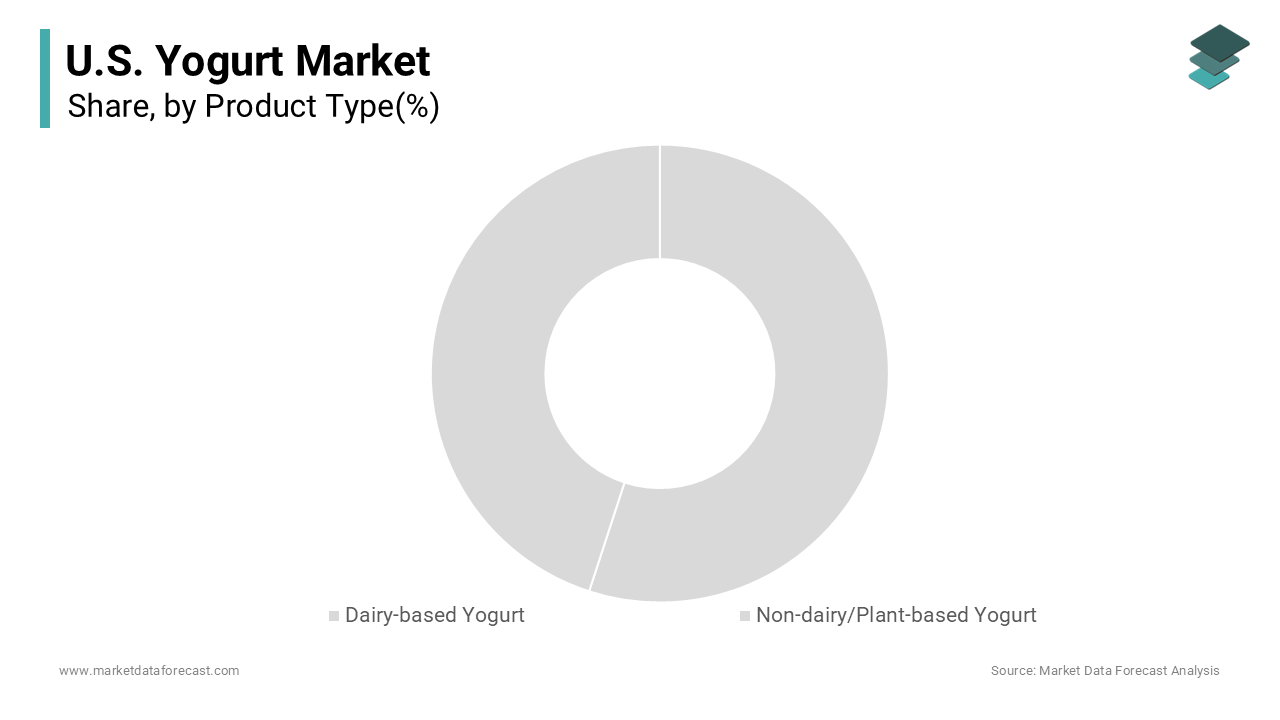
However, the non-dairy plant-based yogurt segment is anticipated to register a promising CAGR of 13.5% during the forecast period in the U.S. market owing to the increasing prevalence of lactose intolerance and dairy allergies among the US population. As per the National Institute of Diabetes and Digestive and Kidney Diseases, lactose malabsorption affects approximately 36% of the U.S. population, creating a significant biological driver for dairy alternatives. This biological constraint drives individuals to seek alternatives that do not cause digestive discomfort, such as bloating or gas. Plant based yogurts made from almonds, coconuts, oats, and soy offer a safe and enjoyable option for these consumers. According to consumer health surveys, the number of individuals self-identifying as lactose intolerant has risen, leading to a surge in demand for dairy free products. The availability of fortified plant based options that provide similar nutritional benefits to dairy further encourages adoption. Manufacturers are responding by improving the texture and flavor of plant based yogurts to make them more appealing to a broader audience. The clear labeling of allergen free products builds trust and confidence among buyers. This health driven necessity ensures that the non-dairy segment continues to grow rapidly as more consumers become aware of their dietary restrictions and seek suitable alternatives.
By Product Form Insights
The spoonable or set yogurt segment accounted for the leading share of the U.S. yogurt market in 2025. The growth of this segment in the U.S. market is primarily attributed to its versatility in meal integration and culinary use, allowing it to serve as a standalone snack, breakfast, or ingredient in recipes. Consumers appreciate the ability to customize spoonable yogurt by adding fresh fruits, nuts, seeds, and granola, creating a personalized and nutritious meal. As per dietary habits data, yogurt is a popular choice for breakfast due to its convenience and satiety inducing properties. The thick consistency of Greek and Icelandic yogurts makes them ideal for cooking and baking, where they can substitute for sour cream, mayonnaise, or butter, reducing fat content while maintaining moisture. According to culinary trends, the use of yogurt in marinades and dips has increased as consumers seek healthier alternatives to high calorie condiments. The visual appeal of layered yogurt parfaits also drives consumption among social media savvy users who enjoy sharing aesthetically pleasing food content. This multifunctionality ensures that spoonable yogurt remains a staple in household refrigerators. The ability to control portion sizes and ingredients further appeals to health conscious individuals managing their diets. This adaptability across various consumption occasions sustains high demand and reinforces the segment's market leadership.
On the other side, the drinkable yogurt segment is predicted to register the fastest CAGR of 9.2% during the forecast period in the U.S. market owing to the need for convenience among consumers with busy and active lifestyles. Drinkable yogurt offers a portable and mess free option that can be consumed quickly without the need for utensils or preparation. As per the Bureau of Labor Statistics, Americans spent an average of 1.13 hours per day on food preparation in 2023, highlighting a strong consumer preference for efficient food solutions. Drinkable yogurt fits seamlessly into this routine, allowing individuals to nourish themselves during commutes, workouts, or breaks. According to retail data, single serve bottles of drinkable yogurt are increasingly stocked in convenience stores, vending machines, and gas stations, enhancing accessibility. The ease of consumption appeals to students, professionals, and parents who value speed and simplicity. The integration of drinkable yogurt into smoothie and shake categories further broadens its appeal. Manufacturers are innovating with resealable caps and ergonomic bottle designs to improve user experience. This focus on convenience ensures that drinkable yogurt captures a growing share of the snacking market. The ability to provide quick energy and nutrition makes it an ideal choice for modern consumers.
By Packaging Type Insights
The cups, containers, and tubs segment led the market by holding the leading share of the U.S. yogurt market in 2025. The dominance of cups, containers and tubs segment in the U.S. market is attributed to their cost efficiency and manufacturing standardization, which allow for high volume production at low costs. Plastic cups and tubs are inexpensive to produce and easy to fill, seal, and label using automated machinery. As per packaging industry data, the widespread availability of plastic resins and established recycling infrastructure support the continued use of this format. Manufacturers benefit from economies of scale, reducing the per unit cost of packaging. According to retail logistics reports, the stackable nature of cups and tubs optimizes shelf space and transportation efficiency, lowering distribution costs. The familiarity of this format among consumers reduces hesitation and encourages purchase. The ability to print vibrant graphics and nutritional information directly on the container enhances brand visibility and consumer engagement. The versatility of cup sizes allows brands to cater to different consumption needs, from single servings to family packs. This operational efficiency ensures that cups and tubs remain the most economical and practical choice for yogurt producers. The consistency in supply and quality further reinforces their market leadership.
On the other hand, the bottles segment is anticipated to record a CAGR of 8.4% during the forecast period in the U.S. market owing to the portability and ease of consumption offered by this format. Bottles are designed for on the go use, allowing consumers to drink yogurt without spills or mess. As per lifestyle trends, the increasing mobility of the workforce and student population creates a demand for handheld food and beverage options. Bottles fit easily into cup holders, bags, and pockets, making them ideal for commuters and travelers. According to retail data, the availability of drinkable yogurt in bottles has increased significantly in convenience stores and vending machines. The ergonomic design of bottles with screw caps or sport tops enhances user experience. The ability to consume the product in one hand appeals to multitasking individuals. Manufacturers are innovating with lightweight and durable materials to improve portability. This focus on convenience ensures that bottles capture a growing share of the yogurt market. The alignment with active lifestyles supports sustained growth for this packaging format.
COUNTRY ANALYSIS
The U.S. is anticipated to maintain its dominant position within the North American yogurt market over the next few years. As the largest consumer of yogurt globally, the country exhibits a mature and dynamic market characterized by high demand and diverse product offerings. The market status is defined by a strong tradition of dairy consumption and a growing interest in functional and plant based alternatives. The presence of major international brands and a robust network of local producers contributes to a competitive and innovative landscape. The U.S. market is fundamentally driven by high per capita consumption and a strong cultural emphasis on health and wellness. As per the Centers for Disease Control and Prevention, the prevalence of adult obesity in the U.S. was 40.3% between 2021 and 2023, which reinforces the role of yogurt as a tool for weight management and metabolic health. The association of yogurt with gut health, weight management, and immune support drives frequent purchases across all demographic groups. According to national health surveys, a significant majority of Americans include yogurt in their weekly diets, viewing it as a healthy snack or breakfast option. The widespread availability of yogurt in schools, workplaces, and healthcare facilities further reinforces its role in daily nutrition. The influence of dietary guidelines and medical recommendations supports sustained demand. The diverse population of the U.S. contributes to a wide range of flavor preferences and dietary needs, driving innovation in the market. The strong retail infrastructure ensures that yogurt is accessible to consumers in urban and rural areas alike. This combination of health awareness and accessibility solidifies the U.S. as the leader in the regional yogurt market.
COMPETITIVE LANDSCAPE
The competitive landscape of the U.S. yogurt market is characterized by intense rivalry among established dairy giants and emerging plant based brands. Incumbent players leverage strong brand equity extensive distribution networks and significant marketing budgets to maintain dominance. However the market is becoming increasingly fragmented as new entrants introduce innovative products targeting specific dietary needs such as vegan keto or lactose free options. Competition is driven by the trend toward premiumization and functional benefits where consumers seek higher protein and lower sugar content. Price competition remains fierce in the value segment while premium brands differentiate through quality and sustainability credentials. Private label offerings from major retailers pose a significant threat by providing comparable quality at lower prices. Regulatory compliance and transparency in labeling are critical factors influencing consumer trust. The rise of alternative snacks and breakfast options further intensifies the battle for shelf space. Overall the market favors companies that can balance innovation with operational efficiency while adapting to shifting consumer values and health trends.
KEY MARKET PLAYERS
A few of the major companies in the U.S. Yogurt Market include
- Danone S.A.
- Chobani LLC
- General Mills Inc.
- Nestlé S.A.
- The Kraft Heinz Company
- FAGE International S.A.
- Lactalis Group
- Yoplait USA Inc.
- Stonyfield Farm Inc.
- Tillamook County Creamery Association
Top Players in the US Market
Chobani LLC
Chobani LLC is a leading innovator in the U.S. yogurt market known for popularizing Greek yogurt and expanding into plant based alternatives. The company focuses on delivering high quality nutritious products that align with modern health trends. Recent strategic initiatives include launching oat milk yogurts and expanding its ready to drink coffee line to diversify revenue streams. Chobani has invested heavily in sustainability programs aiming for zero waste operations and ethical sourcing. The corporation actively engages in community support and inclusive marketing campaigns to build strong brand loyalty. By prioritizing product innovation and social responsibility Chobani strengthens its position as a preferred choice for health conscious consumers. These efforts ensure continued growth and relevance in a competitive landscape while maintaining its reputation for quality and authenticity.
Danone North America
Danone North America contributes significantly to the market through its diverse portfolio including Oikos Activia and Silk brands. The company leverages its global expertise to drive innovation in both dairy and plant based segments. Recent actions involve reformulating products to reduce sugar content and introducing functional benefits such as probiotics and protein enrichment. Danone has committed to achieving carbon neutrality and enhancing packaging sustainability to appeal to environmentally aware buyers. The organization focuses on digital engagement and direct to consumer channels to enhance customer relationships. By integrating health and wellness into its core strategy Danone maintains strong brand equity. These initiatives enable the company to adapt to evolving dietary preferences and sustain its leadership in the dynamic yogurt industry.
General Mills Inc
General Mills Inc plays a pivotal role in the U.S. yogurt market with iconic brands such as Yoplait and Oui. The company utilizes its extensive distribution network to ensure widespread availability across retail channels. Recent strategic moves include launching premium French style yogurts and expanding its organic product lines to capture niche markets. General Mills has invested in supply chain optimization to improve efficiency and reduce environmental impact. The firm focuses on marketing campaigns that highlight taste and tradition to resonate with loyal customers. By balancing innovation with heritage General Mills strengthens its market presence. These strategies help the company maintain competitiveness and drive growth by meeting the diverse needs of American consumers seeking convenient and delicious yogurt options.
Top Strategies Used by Key Market Participants
Key players in the U.S. yogurt market primarily employ product innovation and sustainability strategies to sustain growth. Companies are increasingly launching plant based and functional yogurts to cater to health conscious consumers seeking dairy free and probiotic rich options. This differentiation allows brands to command premium prices and attract niche demographics. Another major strategy involves reducing sugar content and simplifying ingredient lists to align with clean label trends. Manufacturers invest in eco friendly packaging and sustainable sourcing practices to appeal to environmentally aware buyers. Digital marketing and influencer partnerships enhance brand visibility and engage younger audiences. Strategic expansions into adjacent categories such as drinks and snacks diversify revenue streams. By balancing nutritional value with taste and convenience key participants strengthen their market positions and adapt to evolving consumer preferences effectively.
MARKET SEGMENTATION
This research report on the U.S. yogurt market has been segmented based on the following categories.
By Product Type
- Dairy-based Yogurt
- Non-dairy/Plant-based Yogurt
By Product Form
- Spoonable/Set Yogurt
- Drinkable Yogurt
By Flavor Profile
- Plain/Natural
- Flavored
By Packaging Type
- Cups, Containers and Tubs
- Bottles
- Tetra Packs and Pouches
- Others
By Distribution Channel
- Off-Trade
- On-Trade
By Country
- California
- Washington
- Oregon
- New York
- Rest of the United States