- Product Description Description
- Table of Contents TOC
- List of Table & Figure LOT
- Get Free Sample PDF Sample PDF
Market Size, 2025
$170.72 MnMarket Estimate, 2026
$181.70 MnMarket Forecast, 2034
$299.13 MnCAGR, 2026–2034
6.43%U.S. Steel Pipe Market Report Summary
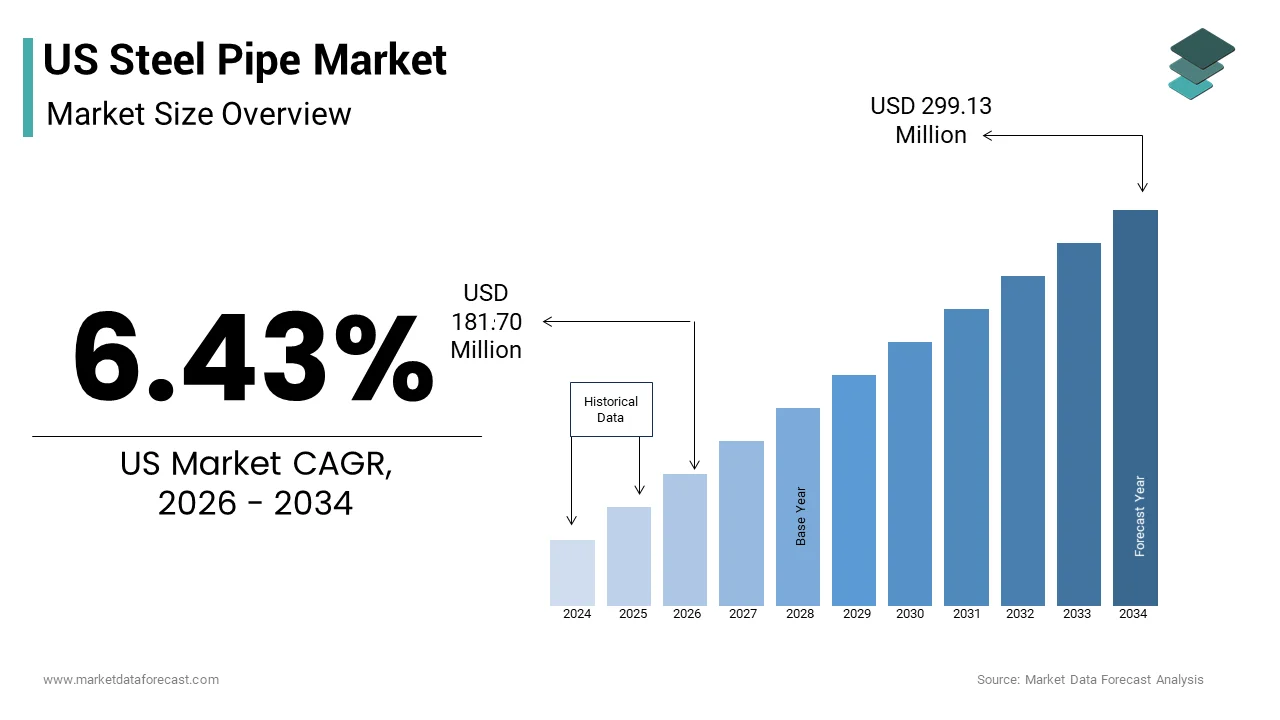
The U.S. steel pipe market was valued at USD 170.72 million in 2025, is estimated to reach USD 181.70 million in 2026, and is projected to reach USD 299.13 million by 2034, expanding at a CAGR of 6.43% during the forecast period from 2026 to 2034. The U.S. steel pipe market is witnessing steady expansion, driven by increasing investments in energy infrastructure, industrial manufacturing, water transmission networks, and commercial construction projects. Rising demand for durable, corrosion-resistant, and high-strength piping solutions across oil and gas, power generation, chemical processing, and municipal infrastructure is supporting market growth. Technological advancements in pipe manufacturing, coupled with growing adoption of advanced welding techniques and premium-grade steel materials, are improving product performance and operational efficiency. Furthermore, ongoing infrastructure modernization initiatives, domestic manufacturing investments, and expanding pipeline replacement programs are expected to create sustained opportunities for the U.S. steel pipe industry.
Key Market Trends
- Infrastructure modernization projects are driving demand for high-performance steel pipes in water, energy, and transportation applications.
- Manufacturers are adopting advanced welding technologies and automated production systems to improve product quality and manufacturing efficiency.
- Rising investments in oil and gas exploration, pipeline expansion, and energy transportation infrastructure continue to support market growth.
- Growing emphasis on corrosion-resistant materials and high-strength steel grades is extending the service life of industrial piping systems.
- Sustainability initiatives, including recyclable steel production and energy-efficient manufacturing processes, are becoming important competitive differentiators.
Segmental Insights
Based on technology, the welded steel pipes segment accounted for the largest share of the U.S. steel pipe market in 2025. The segment continues to dominate due to its cost-effectiveness, manufacturing flexibility, and widespread adoption across construction, infrastructure, energy, and industrial applications requiring reliable piping solutions.
Based on material, the carbon steel pipes segment held 45.3% of the U.S. steel pipe market share in 2025. The segment's leadership is attributed to its excellent mechanical strength, durability, ease of fabrication, and suitability for high-pressure industrial applications across multiple end-use sectors.
Based on application, the oil and gas pipes segment accounted for 22.1% of the U.S. steel pipe market share in 2025. Strong demand for pipeline infrastructure, drilling operations, hydrocarbon transportation, and refinery projects continues to position the oil and gas industry as a major consumer of steel pipe products.
Regional Insights
The United States remains one of the world's leading markets for steel pipes, supported by extensive investments in energy infrastructure, industrial production, commercial construction, and public utility projects. Strong domestic manufacturing capabilities, expanding pipeline replacement programs, and continuous upgrades to water and wastewater infrastructure are reinforcing market growth. Government infrastructure investments, increasing industrial automation, and sustained activity in the oil and gas sector continue to generate demand for high-quality steel piping solutions. As industries prioritize operational reliability, long-term durability, and efficient fluid transportation systems, the United States is expected to maintain its strong position in the global steel pipe market throughout the forecast period.
Competitive Landscape
The U.S. steel pipe market is characterized by intense competition among global steel manufacturers, integrated steel producers, and specialized pipe manufacturers focused on product innovation, manufacturing efficiency, and supply chain optimization. Leading companies are investing in advanced production technologies, premium steel grades, and high-performance pipe solutions to meet evolving industry requirements across energy, construction, and industrial sectors. Strategic acquisitions, capacity expansions, and investments in sustainable steel production are strengthening competitive positioning. Manufacturers are also emphasizing product quality, corrosion resistance, regulatory compliance, and customized engineering solutions to address complex infrastructure and industrial applications. As infrastructure development and industrial investments continue to accelerate, market participants are enhancing operational capabilities and expanding product portfolios to capture emerging growth opportunities.
Prominent players in the U.S. steel pipe market include ArcelorMittal (Luxembourg), United States Steel Corporation (U.S.), Nucor Corporation (U.S.), Tenaris S.A., Nippon Steel Corporation (Japan), Tata Steel (India), and Jindal Steel & Power Limited (India).
US Steel Pipe Market Size
The US steel pipe market size was valued at USD 170.72 million in 2025 and is anticipated to reach USD 181.70 million in 2026 to reach USD 299.13 million by 2034, growing at a CAGR of 6.43% during the forecast period from 2026 to 2034.
The steel pipe are welded and seamless pipes utilized across energy transmission, construction, and water management sectors. As per the American Iron and Steel Institute, domestic steel capacity utilization reached 78.5% in May 2026, indicating robust manufacturing activity driven by sustained industrial demand. The sector is characterized by a complex supply chain that integrates raw material procurement with advanced metallurgical processing to meet stringent safety and performance standards. Regulatory frameworks heavily influence operational protocols by ensuring that products adhere to federal specifications for pressure containment and corrosion resistance. The geographic distribution of manufacturing facilities is concentrated in regions with proximity to both raw material sources and major consumption hubs, optimizing logistical efficiency. According to the Bureau of Transportation Statistics, the nation maintains over 413,000 miles of natural gas transmission pipelines, underscoring the vast installed base that requires continuous maintenance and expansion. This extensive network necessitates a steady supply of high-grade steel pipes to support replacement initiatives and new construction projects. The market dynamics are further shaped by technological advancements in coating and joining techniques that enhance pipeline longevity and reduce environmental risks.
MARKET DRIVERS
Federal Infrastructure Investment Catalyzes Domestic Steel Pipe Demand
The enactment of comprehensive federal legislation by institutionalizing long term demand through substantial capital allocation is substantially fuelling the growth of the United States steel pipe market. The Infrastructure Investment and Jobs Act authorizes approximately 550 billion dollars in new spending, which directly translates into increased requirements for structural and pipeline steel products. According to the American Iron and Steel Institute, every 100 billion dollars of infrastructure investment generates demand for up to 5 million tons of domestic steel, creating a predictable consumption trajectory for manufacturers. This legislative framework prioritizes the rehabilitation of aging water systems, with the Environmental Protection Agency estimating a 625 billion dollar need for drinking water infrastructure improvements over a 20 year period. Such extensive renovation efforts necessitate the replacement of corroded metal pipes with durable steel alternatives that offer superior strength and lifespan. The mandate for using American made iron and steel in federally funded projects further secures market share for domestic producers, shielding them from international competition. These buy America provisions ensure that public funds circulate within the national economy, reinforcing industrial stability. The focus on bridge repair and highway expansion also contributes to secondary demand for steel piping used in culverts and support structures. Construction spending on public infrastructure has shown consistent growth, reflecting the tangible implementation of these federal commitments. Manufacturers are scaling production capacities to meet the anticipated surge in orders, leading to higher employment rates in steel producing regions. This sustained government backing provides a buffer against cyclical downturns in private sector construction by ensuring steady revenue streams for industry participants.
Expansion of Natural Gas Pipeline Networks Drives Seamless Pipe Consumption
The proliferation of liquefied natural gas export facilities and domestic shale production has spurred significant expansion in natural gas transmission infrastructure, which is also bolstering the growth of the United States steel pipe market. According to the Energy Information Administration, natural gas pipeline projects completed in 2025 increased capacity by approximately 6.3 billion cubic feet per day, highlighting the aggressive pace of network development. This expansion is primarily concentrated in the southern and southwestern regions, where shale formations yield abundant hydrocarbon resources requiring efficient transport to coastal export terminals. Seamless steel pipes are preferred for these high pressure applications due to their uniform structural integrity and resistance to leakage under extreme conditions. The shift towards cleaner burning natural gas as a transitional fuel source continues to attract investment from utility companies and energy firms, sustaining long term project pipelines. Regulatory approvals for new interstate pipelines have streamlined in certain jurisdictions, facilitating faster deployment of critical infrastructure. This continuous expansion requires specialized steel grades capable of withstanding high tensile stresses and corrosive environments. Manufacturers are investing in advanced welding technologies to produce longer pipe sections that reduce installation time and costs. The strategic importance of energy independence further motivates federal support for these projects by ensuring a stable demand outlook for steel pipe producers specializing in energy sector applications.
MARKET RESTRAINTS
Volatility in Raw Material Costs Constrains Manufacturing Margins
The fluctuations in the prices of key input materials, such as iron ore, scrap steel, and energy is hindering the growth of the United States steel pipe market. The cost structure of steel production is heavily dependent on global commodity markets, which are subject to geopolitical tensions and supply chain disruptions. According to Trading Economics, scrap steel prices reached an all time high of 427 dollars per ton in April 2026, imposing severe pressure on electric arc furnace operators who rely on recycled metal. These elevated input costs often cannot be fully passed on to customers due to fixed price contracts and competitive bidding processes in the construction and energy sectors. The volatility in energy costs, particularly natural gas and electricity, further exacerbates production expenses, as steel manufacturing is an energy intensive process. Manufacturers face challenges in forecasting accurate profit margins when input prices swing unpredictably within short timeframes. This uncertainty discourages long term capital investment in new facilities or technology upgrades, potentially hindering innovation and efficiency gains. Smaller producers are disproportionately affected as they lack the financial reserves to absorb sudden cost spikes compared to integrated multinational corporations. The reliance on imported raw materials for certain specialty alloys also exposes manufacturers to currency exchange risks and trade barriers.
Stringent Environmental Regulations Increase Compliance Burdens
The imposition of rigorous environmental standards by federal agencies is necessitating significant capital expenditure on pollution control technologies, which is also impeding the growth of the United States steel pipe market. The Environmental Protection Agency has implemented stricter limits on hazardous air pollutants emitted from iron and steel manufacturing facilities, compelling companies to upgrade their emission control systems. As per the study, compliance deadlines for these new standards were set for April 2027 by requiring firms to invest millions of dollars in retrofitting existing plants to meet permissible emission levels. These regulatory mandates increase the overall cost of production, reducing competitiveness against imports from countries with less stringent environmental oversight. The transition towards low carbon manufacturing processes also demands substantial research and development investments, diverting resources from other strategic initiatives. Manufacturers must navigate a complex web of state and federal regulations that often vary by jurisdiction, creating administrative burdens and legal uncertainties. Non-compliance risks severe penalties and operational shutdowns, forcing companies to prioritize regulatory adherence over production optimization. The push for decarbonization also requires shifts in energy sourcing, such as adopting renewable energy or hydrogen based reduction techniques, which are currently more expensive than traditional methods. The cost of installing carbon capture and storage systems can significantly impact project economics, delaying expansion plans. Furthermore, environmental advocacy groups frequently challenge permits for new facilities, which is leading to prolonged litigation and project delays. This regulatory landscape creates an unpredictable business environment where long term planning is difficult by discouraging new entrants and consolidating market power among larger firms with greater compliance capabilities.
MARKET OPPORTUNITIES
Integration of Smart Monitoring Technologies Creates Value Added Opportunities
The incorporation of digital sensors and Internet of Things capabilities to differentiate their products and capture higher value brands is likely to pose as a major factor to bolster the growth of the United States steel pipe market. Smart pipes equipped with real time monitoring systems can detect leaks, corrosion, and structural stress by enabling predictive maintenance and enhancing safety for energy and water utilities. The demand for intelligent infrastructure solutions is growing as operators seek to minimize downtime and reduce environmental liabilities associated with pipeline failures. Manufacturers that partner with technology firms to embed fiber optic sensors or wireless transmitters into pipe walls can offer comprehensive service packages that extend beyond simple product sales. This integration allows for continuous data collection on pipeline health, providing customers with actionable insights for asset management. Steel pipe producers can leverage this trend by developing proprietary monitoring platforms that integrate with customer operational systems, creating recurring revenue streams through software subscriptions and data analytics services. The adoption of digital twins for pipeline networks also enables simulation of operational scenarios, optimizing flow rates and pressure management. This technological evolution positions steel pipes as critical components of smart city infrastructure, attracting investment from municipal governments and utility providers. Companies that lead in this domain can establish strong brand loyalty and command premium pricing, offsetting margin pressures from commoditized standard products.
Development of Corrosion Resistant Alloys Expands Application Scope
The advancements in metallurgical science have enabled the creation of high performance steel alloys with enhanced corrosion resistance, opening new opportunities in harsh operating environments, such as offshore drilling and chemical processing. The development of corrosion resistant alloys is also to expand the growth of the United States steel pipe market. These specialized pipes can withstand extreme temperatures, high pressure, and aggressive chemical exposures, extending service life and reducing maintenance frequency. The use of duplex stainless steels and nickel based alloys is increasing in subsea applications where traditional carbon steel fails prematurely. Manufacturers investing in research and development of these premium grades can access niche markets with higher profit margins and less competition. The growing emphasis on environmental protection drives demand for leak proof solutions in sensitive ecological zones, favoring advanced materials that offer superior integrity. The offshore oil and gas projects require pipes that meet strict certification standards for sour service conditions, creating a barrier to entry for lower quality producers. The expansion of liquefied natural gas terminals along the Gulf Coast further amplifies demand for cryogenic resistant steel pipes capable of handling supercooled fluids. Companies that secure certifications for these specialized applications can establish long term contracts with major energy corporations, ensuring stable order books. The ability to customize alloy compositions for specific project requirements also strengthens customer relationships and fosters collaborative engineering partnerships. This focus on high value added products allows manufacturers to diversify their revenue sources and reduce dependence on volatile commodity cycles. The trend towards deeper water exploration and unconventional resource extraction continues to drive innovation in material science by offering sustained growth potential for technologically advanced steel pipe producers.
MARKET CHALLENGES
Supply Chain Disruptions Impact Timely Project Execution
Persistent vulnerabilities in the global supply chain by affecting the timely delivery of raw materials and finished products to end users is solely to decline the growth of the United States steel pipe market. Geopolitical conflicts and trade restrictions have disrupted the flow of essential inputs such as ferroalloys and specialized coatings, leading to production delays and increased lead times. The port congestion and shipping container shortages have intermittently slowed the import of components, forcing manufacturers to hold higher inventory levels and tie up working capital. These disruptions undermine the reliability of just in time manufacturing models, necessitating a shift towards more resilient but costly supply chain strategies. The dependence on single source suppliers for certain rare earth elements used in alloy production creates additional risk exposure, as any interruption can halt entire production lines. The lack of transparency in tier two and tier three supplier networks makes it difficult to anticipate and mitigate potential hurdles. Labor shortages in the transportation and warehousing sectors further exacerbate delivery delays, impacting customer satisfaction and project schedules. Construction and energy projects often operate on tight timelines, and late delivery of steel pipes can result in substantial penalty clauses and reputational damage for manufacturers. The unpredictability of supply chain conditions complicates production planning and inventory management, leading to inefficiencies and increased operational costs. Companies are increasingly investing in digital supply chain tools to enhance visibility and responsiveness, but these technologies require significant upfront investment and technical expertise.
Skilled Labor Shortages Hinder Production Capacity Utilization
The scarcity of skilled workers in welding, metallurgy, and machine operation with the ability of steel pipe manufacturers to fully utilize their production capacities is to limit the growth of the United States steel pipe market. An aging workforce and insufficient vocational training programs have created a gap in the availability of qualified personnel needed to operate advanced manufacturing equipment. The manufacturing sector faces a persistent shortage of technicians with specialized skills in automated welding and quality control processes. This labor deficit forces companies to offer higher wages and benefits to attract talent, which is increasing operational expenses and squeezing profit margins. The complexity of modern steel production facilities requires workers with proficiency in digital systems and robotics, skills that are not widely available in the current labor pool. Many manufacturers report difficulties in filling key positions by leading to overtime costs and production bottlenecks. The lack of a robust pipeline of young entrants into the trades exacerbates the problem, threatening long term operational sustainability. Training new employees requires significant time and resources, during which productivity is lower than that of experienced workers. The competitive nature of the labor market means that skilled workers can easily move between employers, leading to high turnover rates and loss of institutional knowledge. Addressing this challenge requires collaborative efforts between industry associations, educational institutions, and government agencies to develop comprehensive training programs and promote manufacturing careers.
REPORT COVERAGE
| REPORT METRIC | DETAILS |
| Market Size Available | 2025 to 2034 |
| Base Year | 2025 |
| Forecast Period | 2026 to 2034 |
| CAGR | 5.54% |
| Segments Covered | By Technology, Material, Application, Type, By Country |
| Various Analyses Covered | Global, Regional, and Country Level Analysis, Segment-Level Analysis; DROC, PESTLE Analysis; Porter’s Five Forces Analysis; Competitive Landscape; Analyst Overview of Investment Opportunities. |
| Regions Covered | California, Washington, Oregon, New York & Rest of the United States |
| Market Leaders Profiled | ArcelorMittal (Luxembourg), United States Steel Corporation (U.S.), Nucor Corporation, Tenaris SA, NIPPON STEEL CORPORATION (Japan), Tata Steel (India), Jindal Steel & Power Limited (India). |
SEGMENTAL ANALYSIS
By Technology Insights
The welded steel pipes segment was the largest by accounting for a significant share of the United States steel pipe market in 2025 due to their cost effectiveness and versatility in large diameter applications required for infrastructure projects. The extensive use of welded pipes in water transmission and structural applications where seamless alternatives are prohibitively expensive. According to the American Water Works Association, the nation requires an estimated 625 billion dollars in water infrastructure investment over the next two decades, with a significant portion allocated to replacing aging pipelines with durable welded steel options. These pipes offer superior flexibility in manufacturing various diameters and wall thicknesses, allowing engineers to customize solutions for specific pressure and flow requirements. The electric resistance welding technique has evolved to produce high quality joints that match the strength of the parent material, enhancing reliability in critical applications. The welded pipes account for approximately 65% of total steel pipe consumption in the construction sector, driven by their ability to be produced in longer lengths that reduce installation time and joint costs. The availability of advanced non-destructive testing methods ensures that weld integrity meets stringent safety standards, boosting confidence among utility providers and contractors. Furthermore, the lower production energy requirements compared to seamless pipes align with sustainability goals, making them a preferred choice for environmentally conscious projects.
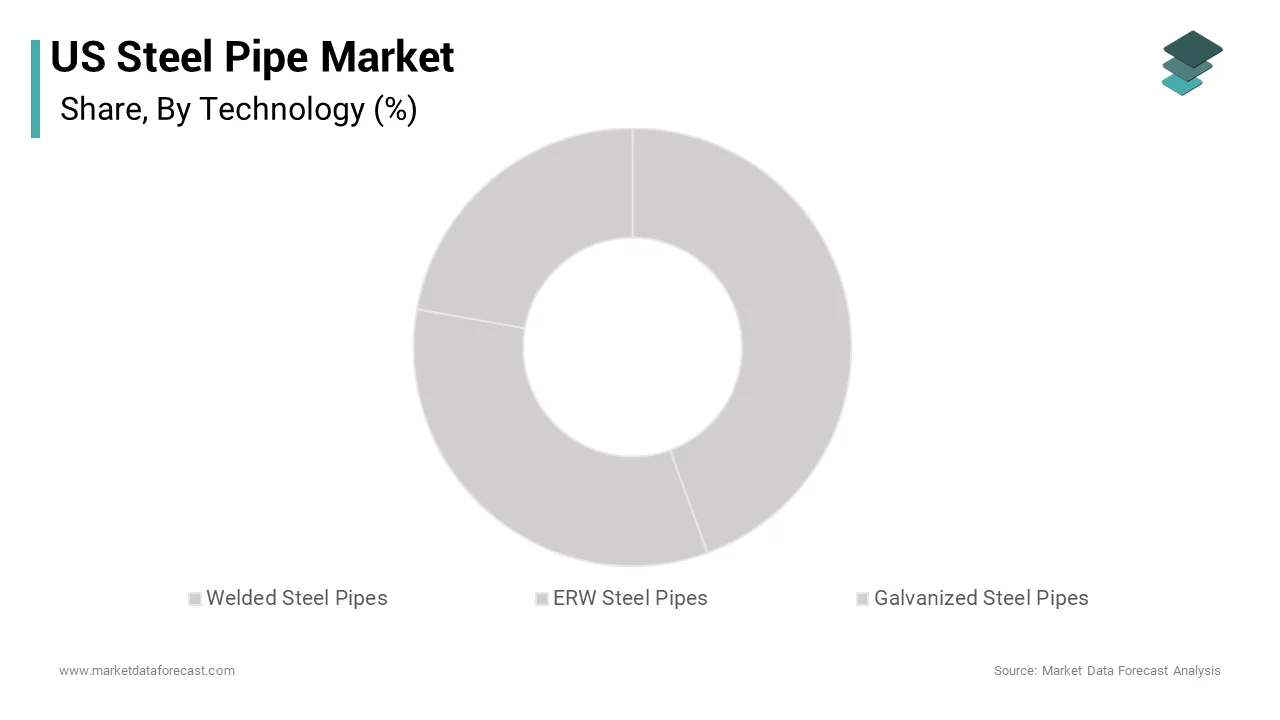
The electric resistance welded steel pipes segment is likely to register a fastest CAGR of 5.8% throughout the forecast period owing to the increasing demand for high frequency ERW pipes in the oil and gas sector, particularly for midstream transportation networks. These pipes offer an optimal balance of strength and cost, making them ideal for low to medium pressure applications where seamless pipes are not technically necessary. The advancement in induction welding technologies has significantly improved the mechanical properties of ERW pipes, allowing them to meet higher pressure ratings previously reserved for seamless varieties. As per reports, modern ERW facilities can achieve production speeds of up to 200 meters per minute by enabling rapid fulfillment of large volume orders for pipeline projects. The automotive industry also contributes to this growth, utilizing precision ERW tubes for structural components and exhaust systems due to their consistent dimensional accuracy. The lightweight nature of high strength ERW grades supports vehicle fuel efficiency mandates, driving adoption among original equipment manufacturers. Additionally, the ability to produce thin-walled pipes with tight tolerances reduces material waste and overall project costs. Regulatory approvals for new pipeline routes often favor cost effective solutions, further boosting the preference for ERW technology in competitive bidding processes.
By Material Insights
The carbon steel pipes segment was the largest by holding 45.3% of the United States steel pipe market share in 2025 owing to its extensive application in oil and gas transmission, where high tensile strength is required to withstand internal pressures and external loads. According to the American Petroleum Institute, over 90% of onshore transmission pipelines are constructed using carbon steel grades such as API 5L X70 and X80, which offer optimal performance for hydrocarbon transport. The material's compatibility with various coating systems enhances its resistance to corrosion, extending service life in diverse environmental conditions. The carbon steel pipes can be easily welded and fabricated, facilitating rapid construction and maintenance of pipeline networks. The abundance of raw materials and established production infrastructure in the United States ensure a stable supply chain by reducing procurement risks for large scale projects. The construction sector also relies heavily on carbon steel for structural piling and scaffolding due to its load bearing capacity and durability. Government infrastructure programs prioritize materials with proven track records, further reinforcing the preference for carbon steel in public works. The development of micro alloyed carbon steels has improved toughness and weldability, allowing for thinner walls and reduced material usage without compromising safety. This evolution enables manufacturers to offer competitive pricing while meeting rigorous performance specifications.
The stainless steel pipes segment is esteemed to grow at a fastest CAGR of 6.2% from 2026 to 2034 with the increasing demand in chemical processing, food and beverage, and pharmaceutical industries. The superior corrosion resistance of stainless steel, which is essential for handling aggressive chemicals and maintaining hygiene standards in sensitive production environments. The strict regulatory requirements for sanitary conditions in food and pharmaceutical production mandate the use of non-reactive materials, positioning stainless steel as the only viable option for many applications. As per health and safety guidelines, the ease of cleaning and sterilization of stainless steel surfaces prevents bacterial contamination, ensuring product safety and compliance with federal regulations. The growing trend towards sustainable packaging and processing equipment also favors stainless steel due to its longevity and recyclability. Manufacturers are introducing duplex stainless steel grades that offer higher strength and better resistance to stress corrosion cracking, expanding the range of applicable uses. The pharmaceutical industry's investment in new production plants to meet rising demand for biologics and vaccines further accelerates the adoption of stainless steel piping systems. These facilities require high purity fluid transfer systems that stainless steel uniquely provides.
By Application Insights
The oil and gas pipes segment was accounted in holding 22.1% of the United States steel pipe market share in 2025 with the global producer of crude oil and natural gas. The extensive network of transmission and distribution pipelines requires continuous expansion and maintenance to support domestic energy consumption and export activities. According to the Energy Information Administration, the United States operates over 413,000 miles of natural gas transmission pipelines, which require regular upgrades and replacements to ensure safe and efficient operation. The development of shale gas resources in regions, such as the Permian Basin and Marcellus Shale has spurred significant investment in gathering and transmission infrastructure, creating sustained demand for large diameter steel pipes. The strategic importance of energy independence motivates federal support for pipeline projects by ensuring a stable regulatory environment for long term investments. The transition towards liquefied natural gas exports has further amplified demand for specialized pipes capable of withstanding cryogenic temperatures and high pressures. Manufacturers benefit from long term contracts with major energy companies, providing visibility into future revenue streams. The integration of advanced monitoring technologies in new pipelines enhances operational efficiency and safety, encouraging the adoption of high quality steel products. Regulatory standards for pipeline safety have become more stringent, prompting operators to replace older lines with modern steel pipes that offer improved durability and leak resistance.
The water pipes segment is expected to grow at an anticipated CAGR of 5.5% from 2026 to 2034 with the urgent needs to upgrade aging municipal water infrastructure and address leakage issues. Many existing water mains were installed over a century ago and are reaching the end of their service life, leading to frequent breaks and water loss. According to the Environmental Protection Agency, approximately 6 billion gallons of treated water are lost daily due to leaks in distribution systems, highlighting the inefficiency of current infrastructure. Federal funding from the Infrastructure Investment and Jobs Act provides substantial financial support for municipalities to replace lead service lines and upgrade main conduits with durable steel alternatives. Steel pipes are increasingly preferred for large diameter transmission mains due to their strength and resistance to external loads, particularly in urban environments with heavy traffic. As per municipal planning documents, cities are prioritizing resilient materials that can withstand soil movement and pressure fluctuations, reducing the frequency of repairs. The growing population and urbanization trends increase water demand, requiring expansion of distribution networks to serve new developments. Climate change impacts, such as extreme weather events, also drive the need for robust infrastructure that can resist flooding and ground instability. Steel pipes offer the necessary durability to meet these challenges, ensuring reliable water delivery.
COMPETITIVE LANDSCAPE
The competition in the United States steel pipe market is characterized by a mix of large integrated producers and specialized manufacturers vying for dominance in diverse application segments. Intense rivalry exists due to the commoditized nature of standard products, prompting firms to differentiate through technical expertise and service quality. Major players leverage economies of scale to offer competitive pricing while investing in research and development to create high value added solutions. The market features moderate barriers to entry due to high capital requirements and stringent regulatory standards, which protect established incumbents from new competitors. Price volatility in raw materials adds complexity to competitive dynamics, forcing companies to adopt sophisticated hedging strategies. Customer loyalty plays a crucial role as buyers prioritize reliability and consistent supply over minor price differences. Innovation in coating technologies and smart monitoring systems provides avenues for differentiation beyond traditional metrics. The presence of imported goods creates additional pressure by leading domestic producers to advocate for trade protections.
KEY MARKET PLAYERS
A few of the market players that are dominating the US steel pipe market are
- ArcelorMittal (Luxembourg)
- United States Steel Corporation (U.S.)
- Nucor Corporation
- Tenaris SA
- NIPPON STEEL CORPORATION (Japan)
- Tata Steel (India)
- Jindal Steel & Power Limited (India)
Top Players In The Market
- United States Steel Corporation remains a pivotal entity in the domestic steel pipe landscape by leveraging its integrated manufacturing capabilities to serve energy and infrastructure sectors. The company has recently focused on modernizing its production facilities to enhance efficiency and reduce carbon emissions, aligning with evolving environmental standards. By investing in advanced tubular technologies, the firm ensures high quality products for demanding oil and gas applications. Its strategic emphasis on operational excellence allows it to maintain consistent supply chains for critical pipeline projects. The corporation actively engages in research and development to create specialized alloys that withstand extreme conditions, thereby strengthening its value proposition to industrial clients. These initiatives demonstrate a commitment to sustaining long term competitiveness through innovation and sustainable practices within the national market framework.
- Nucor Corporation strengthens its position in the steel pipe market through its decentralized operating model and extensive network of electric arc furnace facilities. The company prioritizes customer centric solutions by offering customized tubular products for construction and energy transmission needs. Recent investments in automation and digital technologies have improved production precision and reduced lead times significantly. Nucor focuses on expanding its product portfolio to include high strength low alloy pipes that meet rigorous industry specifications. The firm also emphasizes sustainability by utilizing recycled scrap metal, which reduces environmental impact and appeals to eco conscious buyers. Strategic partnerships with key distributors ensure broad market reach and reliable delivery schedules. These efforts enable Nucor to respond agilely to fluctuating demand patterns while maintaining robust financial performance and operational resilience across diverse industrial segments.
- Tenaris SA contributes significantly to the United States steel pipe market by providing premium threaded and coupled connections for upstream and midstream energy applications. The company operates state of the art manufacturing plants that produce seamless and welded pipes tailored for complex drilling environments. Recent expansions in service center capabilities allow Tenaris to offer comprehensive logistical support and inventory management to operators. The firm invests heavily in proprietary connection technologies that enhance well integrity and safety during extraction processes. By focusing on technical expertise and engineering support, Tenaris differentiates itself from commodity producers. The company also collaborates with energy firms to develop customized solutions for unconventional shale plays.
Top Strategies Used By Key Market Participants
Key players in the United States steel pipe market primarily employ vertical integration strategies to control raw material sourcing and reduce production costs effectively. Companies invest heavily in technological advancements to enhance product quality and develop specialized alloys for demanding applications. Strategic mergers and acquisitions are common as firms seek to expand geographic reach and diversify product portfolios. Participants also focus on sustainability initiatives by adopting cleaner production methods to comply with environmental regulations and appeal to eco conscious customers. Long term contracts with major energy and infrastructure clients ensure stable revenue streams and mitigate market volatility risks. Additionally, manufacturers prioritize operational efficiency through automation and digitalization to improve productivity and reduce labor dependencies. These combined approaches enable companies to maintain competitive advantages and adapt to changing market dynamics while fostering innovation and resilience in their business models.
RECENT MARKET NEWS
- In June 2024, Nucor Corporation completed the expansion of its specialty steel plant in Indiana. This expansion is anticipated to improve product variety and strengthen the Us steel pipe market.
- In September 2024, Tenaris SA launched a new digital logistics platform for customers in Houston. This launch is anticipated to streamline supply chain operations and strengthen the Us steel pipe market.
- In January 2025, United States Steel Corporation introduced a new line of corrosion resistant alloys for pipelines. This introduction is anticipated to meet higher safety standards and strengthen the Us steel pipe market.
MARKET SEGMENTATION
This research report on the US steel pipe market is segmented and sub-segmented into the following categories.
By Technology
- Welded Steel Pipes
- ERW Steel Pipes
- Galvanized Steel Pipes
By Material
- Alloy Steel
- Black Steel
- Carbon Steel
- Iron Steel
- Mild Steel
- Stainless Steel
By Application
- Water Pipes
- Steel Casing Pipes
- Sewage Pipes
- Structural Steel Pipes
- Industrial Steel Pipes
- Steel Scaffolding Pipes
- Oil & Gas Pipes
By Type
- Line
- Standard
- Structural
By Country
- California
- Washington
- Oregon
- New York
- Rest of the United States