- Product Description Description
- Table of Contents TOC
- List of Table & Figure LOT
- Get Free Sample PDF Sample PDF
Global Urea Strippers Market Size, Growth, Trends & Forecast (2026–2034)
The global urea strippers market size was valued at USD 8.39 billion in 2025, is anticipated to reach USD 8.59 billion in 2026, and is projected to scale to USD 10.40 billion by 2034, expanding at a compound annual growth rate (CAGR) of 2.42% during the forecast period from 2026 to 2034. Market growth is primarily driven by rising agricultural reliance on nitrogen-rich fertilizers to feed a growing population, modernization of chemical manufacturing infrastructure, and strict environmental regulations governing ammonia emissions.
Key Executive Metrics (At-a-Glance)
- 2025 Base Valuation: USD 8.39 Billion
- 2026 Current Valuation: USD 8.59 Billion
- 2034 Forecast Valuation: USD 10.40 Billion
- Compound Annual Growth Rate (CAGR): 2.42% (2026–2034)
- Leading Regional Market: Asia Pacific (captured a 45.2% market share in 2025, propelled by heavy agricultural demand in India and China)
- Key Geographic Regions Covered: North America, Europe, Asia-Pacific, Latin America, and Middle East & Africa
Core Market Drivers & Opportunities
- Agricultural Demand: Surging global food production needs and high nitrogenous fertilizer consumption in emerging economies.
- Advanced Technologies: Integration of advanced CO₂ and NH₃ stripping processes (Stamicarbon, Saipem/Snamprogetti) to optimize energy use.
- Emerging Infrastructure Expansion: Fertilizer plant developments and green ammonia integrations across South Asia, Africa, and the Middle East.
Primary Market Restraints & Challenges
- High Capital & Maintenance Costs: Extreme operating environments (temperatures $>180^\circ\text{C}$ and pressures $>140\text{ bar}$) necessitating expensive alloys like zirconium and titanium.
- Corrosion and Technical Complexity: High susceptibility to corrosion, requiring specialized handling, frequent maintenance, and skilled engineering expertise.
Market Segmentation: Largest and Fastest-Growing Sectors
| Segment Category | Largest Segment | Fastest-Growing Segment |
|---|---|---|
| By Material of Construction | Stainless Steel (33.4% share in 2025 due to cost-effectiveness and legacy plant retrofits) | Zirconium (Estimated CAGR of 6.8% from 2025 to 2033 due to superior corrosion resistance) |
| By Capacity | 1500–3500 MTPD (33.2% share in 2025, representing the optimal sweet spot for medium-to-large facilities) | Above 3500 MTPD (CAGR of ~7.2%, driven by gas-based complexes in the Middle East and North Africa) |
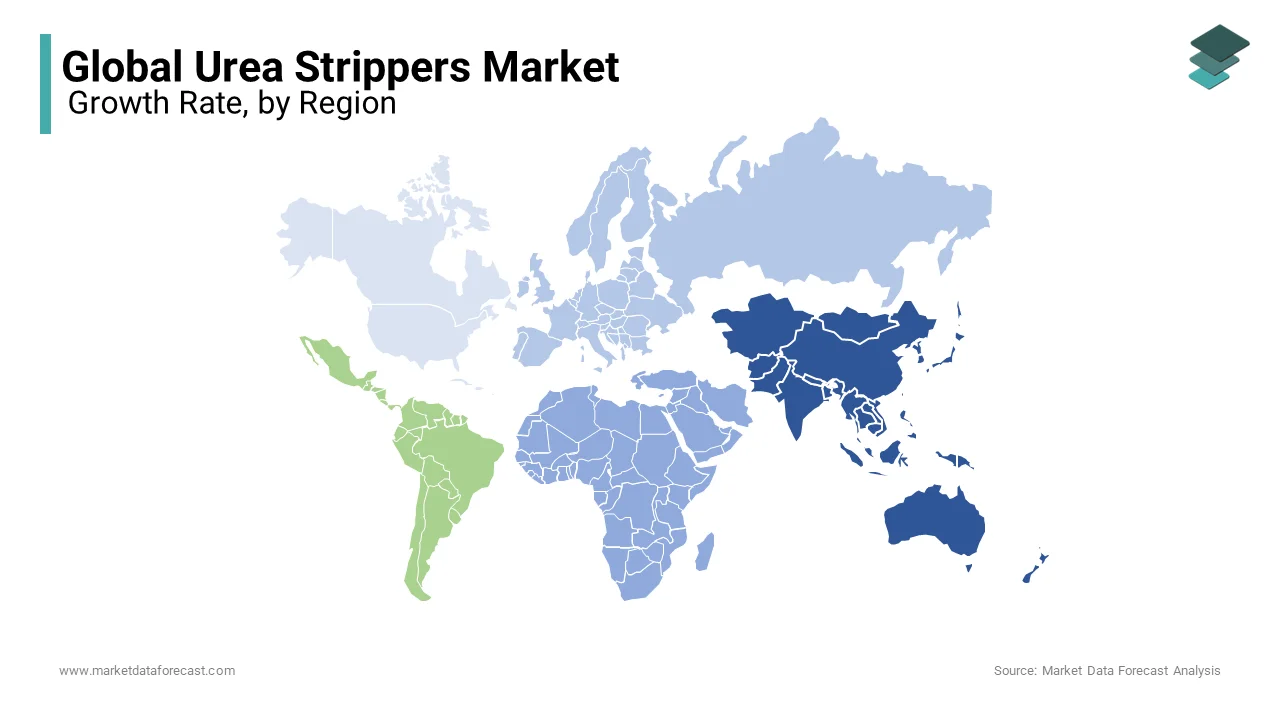
| By Region | Asia Pacific (45.2% share in 2025) | Middle East & Africa (Fueled by natural gas reserves and localized fertilizer projects) |
Major Industry Players Profiled
Key global market participants dominating the urea strippers landscape include Larson & Toubro, Saipem S.p.A. (Maire Tecnimont), Stamicarbon, Urea Casale, Toyo Engineering Corporation, Alfa Laval, NIIK, Thyssenkrupp, Flowtronix, Isgec Heavy Engineering Ltd., Sandvik AB, and Mangiarotti spa.
Global Urea Strippers Market Size
The global urea strippers market size was valued at USD 8.39 billion in 2025 and is anticipated to reach a valuation of USD 8.59 billion in 2026 and USD 10.40 billion by 2034, growing at a CAGR of 2.42% during the forecast period from 2026 to 2034.
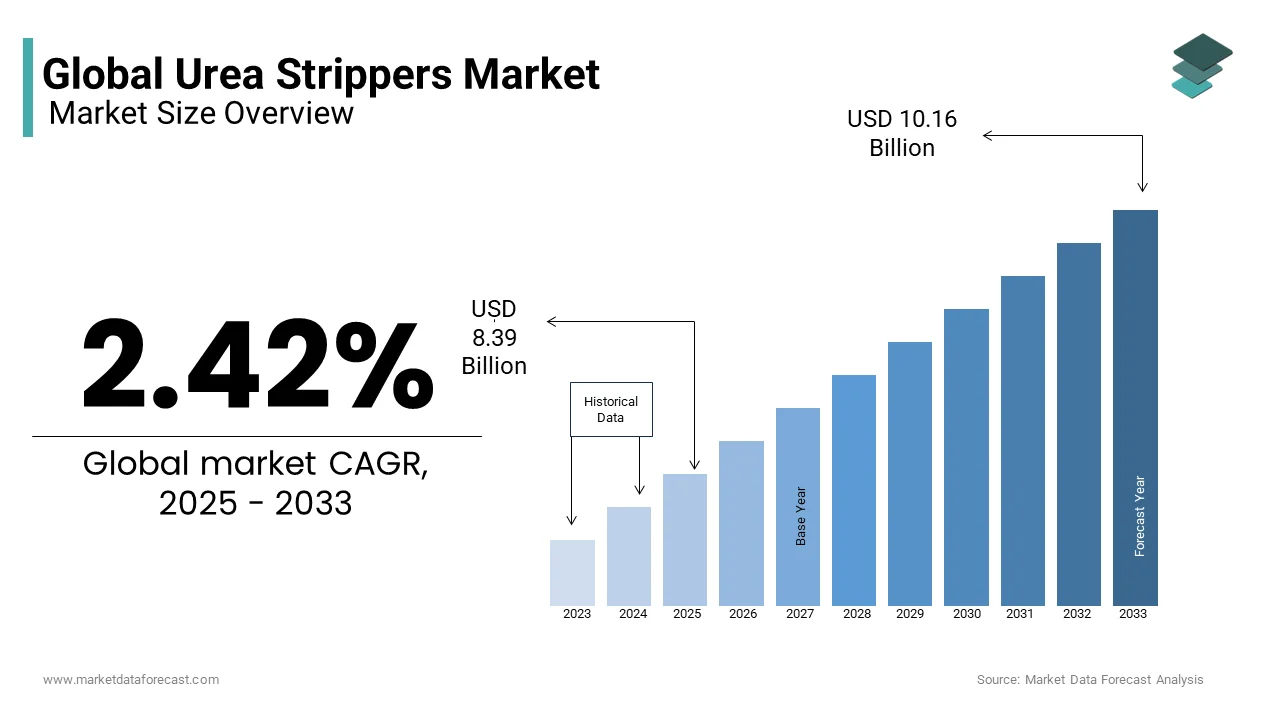
Urea strippers are critical components in the production of urea, a compound widely used in agricultural fertilizers and industrial applications. These systems are designed to remove excess ammonia and carbon dioxide from the urea synthesis loop, enhancing process efficiency and minimizing environmental impact. As global demand for nitrogen-based fertilizers rises to support food production, the significance of urea strippers in optimizing urea manufacturing processes becomes increasingly pronounced.
The technology has evolved significantly over the decades, with modern urea strippers incorporating advanced materials and enhanced thermal efficiency to meet the growing needs of large-scale fertilizer plants. The urea production process relies heavily on efficient gas-liquid separation and ammonia recovery, both of which are facilitated by high-performance stripping systems.
In industrial contexts, urea is also used in the production of melamine, adhesives, and even diesel exhaust fluid (DEF) for emission control in vehicles. This diversification of application areas has further strengthened the relevance of urea strippers in chemical manufacturing. As per the International Fertilizer Association (IFA), urea accounts for a significant portion of global nitrogen fertilizer consumption, reinforcing the necessity of efficient production technologies. As environmental regulations tighten, the role of urea strippers in reducing ammonia emissions and improving process sustainability has become more critical than ever.
MARKET DRIVERS
Rising Demand for Urea in Agriculture
The increasing global reliance on urea-based fertilizers to enhance crop yield and soil fertility is a key driver for the urea strippers market. Urea is the most nitrogen-rich solid fertilizer, making it indispensable in modern agriculture. With the world population projected to reach nearly 10 billion by 2050, the pressure to increase food production has intensified, leading to a surge in urea consumption. In 2023, India alone consumed over 35 million metric tons of urea, as reported by the Indian Department of Fertilizers, underscoring the critical role of urea in maintaining agricultural productivity in emerging economies.
This rising demand directly influences the need for efficient urea production systems, where urea strippers play a pivotal role. The stripping process enhances ammonia recovery and reduces energy consumption in urea manufacturing plants. Countries like China and Brazil have also significantly increased their urea consumption. As governments invest in expanding fertilizer production capacities to meet domestic needs, the demand for advanced urea stripper systems is expected to grow proportionally.
Moreover, the push for sustainable agricultural practices has led to the adoption of more efficient and eco-friendly fertilizer production methods. Urea strippers help reduce ammonia emissions and improve the overall efficiency of urea synthesis, aligning with green manufacturing goals. This growing emphasis on environmental compliance and resource optimization is further boosting the adoption of modern urea stripping technologies across fertilizer manufacturing units globally.
Technological Advancements in Urea Production Processes
Technological innovation in urea manufacturing has significantly contributed to the growth of the urea strippers market. Modern urea production processes, such as the CO₂ stripping process developed by Stamicarbon and the NH₃ stripping process by Saipem (formerly Snamprogetti), have revolutionized the efficiency and environmental performance of urea plants. These technologies rely heavily on advanced urea strippers to optimize ammonia and carbon dioxide recovery, thereby enhancing overall plant efficiency.
The adoption of these advanced technologies is particularly evident in Asia, where countries like India and Indonesia have modernized their fertilizer manufacturing infrastructure. This shift toward energy-efficient and low-emission urea production processes has significantly increased the demand for high-performance urea strippers.
Apart from these, the integration of digital control systems and predictive maintenance technologies in urea plants has further enhanced the operational efficiency of urea strippers. These advancements not only reduce downtime but also improve the longevity and reliability of the equipment. Such technological progress continues to drive investment in modern urea stripper systems, ensuring sustained market growth.
MARKET RESTRAINTS
High Capital and Maintenance Costs
The substantial capital investment required for the installation of advanced stripping systems is one of the primary constraints affecting the urea strippers market. Urea strippers are integral to high-pressure urea synthesis loops, often operating under extreme conditions involving temperatures above 180°C and pressures exceeding 140 bar. As a result, they are constructed using high-grade materials such as zirconium-lined steel or titanium alloys, which significantly increase procurement and installation costs.
This financial burden is particularly challenging for small and medium-scale fertilizer producers in developing economies, limiting their ability to adopt the latest urea stripping technologies.
Moreover, the maintenance of urea strippers involves complex procedures and specialized expertise due to the corrosive nature of the operating environment. Corrosion rates in urea strippers can reach up to 0.5 mm/year in non-optimal conditions, as noted by the European Federation of Corrosion (EFC), necessitating frequent inspections and component replacements. These ongoing operational costs further deter potential investors from upgrading existing systems or establishing new urea manufacturing units. Consequently, despite the efficiency gains offered by modern urea strippers, the high initial and maintenance costs remain a significant barrier to market expansion.
Stringent Environmental Regulations and Compliance Requirements
The urea strippers market is increasingly influenced by stringent environmental regulations aimed at reducing ammonia emissions and improving industrial sustainability. Urea production involves the handling of ammonia and carbon dioxide, both of which can contribute to air pollution and greenhouse gas emissions if not properly managed. Regulatory bodies such as the U.S. Environmental Protection Agency (EPA) and the European Environment Agency (EEA) have imposed strict emission limits on industrial facilities, compelling manufacturers to invest in cleaner technologies and advanced emission control systems.
Meeting such stringent requirements often necessitates the integration of high-efficiency urea strippers that can minimize ammonia losses during the synthesis process. However, retrofitting existing plants to comply with these regulations can be prohibitively expensive, especially for older facilities in regions with aging industrial infrastructure.
Besides, the implementation of carbon pricing mechanisms, such as the EU Emissions Trading System (ETS), has increased the operational costs for urea producers. These regulatory pressures not only increase the cost of compliance but also slow down the adoption of new urea stripping technologies, thereby restraining market growth.
MARKET OPPORTUNITY
Expansion of Urea Production in Emerging Economies
The growing need for self-sufficiency in fertilizer production among emerging economies presents a significant opportunity for the urea strippers market. Countries in Africa, South Asia, and Latin America are increasingly investing in domestic urea manufacturing to reduce their reliance on imports and ensure food security.
Like, in South Asia, Bangladesh has also embarked on a major fertilizer infrastructure expansion. The government has allocated substantial funds for the construction of new urea plants, including the Barapukuria Urea Plant, which incorporates Stamicarbon’s stripping technology to enhance ammonia recovery. As these nations seek to modernize their agricultural supply chains, the demand for high-performance urea strippers is expected to rise sharply. This expansion trend, supported by increasing government investments and private sector participation, is poised to create substantial growth opportunities for the urea strippers market in the coming years.
Integration of Urea Production with Green Ammonia and Renewable Energy
The global shift toward sustainable chemical production has opened new avenues for the urea strippers market through the integration of urea manufacturing with green ammonia and renewable energy sources. Green ammonia, produced using renewable energy-powered electrolysis to generate hydrogen, is gaining traction as a clean alternative to conventional ammonia derived from fossil fuels. This transition is particularly relevant in the context of the European Union’s Green Deal and the U.S. Inflation Reduction Act, both of which provide incentives for low-carbon industrial processes.
Several pilot projects are already underway, including Yara International’s green ammonia plant in Australia and the NEOM project in Saudi Arabia, both of which aim to produce carbon-free urea using green hydrogen. These initiatives require advanced urea strippers capable of handling ammonia derived from renewable sources, which often has different purity profiles and operational characteristics compared to traditional feedstock.
Additionally, the adoption of carbon capture and utilization (CCU) technologies in urea plants is gaining momentum. For example, the Indian government has launched a pilot CCU project at the IFFCO Aonla plant, where CO₂ emissions are captured and reused in urea synthesis. This approach not only reduces environmental impact but also enhances the efficiency of urea strippers by optimizing the gas-liquid separation process.
MARKET CHALLENGES
Complexity of Operating and Maintaining Urea Strippers in Harsh Environments
Urea strippers operate under extreme conditions, including high temperatures (up to 180°C), elevated pressures (exceeding 140 bar), and highly corrosive environments due to the presence of ammonia and carbon dioxide. These challenging conditions significantly increase the complexity of operation and maintenance, posing a major challenge for the urea strippers market. The materials used in the construction of urea strippers, such as zirconium-lined steel and titanium alloys, are not only expensive but also require specialized handling and welding techniques to ensure long-term reliability.
According to the European Federation of Corrosion (EFC), corrosion rates in urea strippers can vary between 0.2 mm/year and 0.5 mm/year depending on operational conditions and material selection. Even minor deviations in process parameters, such as pH levels or temperature fluctuations, can accelerate corrosion and lead to equipment failure. This necessitates frequent inspections, shutdowns for maintenance, and costly repairs, which disrupt production cycles and increase operational expenses.
Moreover, the shortage of skilled technical personnel who are trained in urea plant operations further complicates maintenance activities. In many developing countries, the lack of local expertise forces manufacturers to rely on foreign consultants or original equipment manufacturers (OEMs) for troubleshooting and repairs. This dependency not only delays maintenance but also increases costs. As per the International Labour Organization (ILO), there is a growing skills gap in the chemical engineering workforce, particularly in regions expanding their fertilizer production capabilities. These operational and maintenance challenges hinder the widespread adoption of advanced urea stripping technologies and constrain market growth.
Supply Chain Disruptions and Raw Material Price Volatility
The urea strippers market faces significant challenges due to disruptions in global supply chains and fluctuations in the prices of critical raw materials. Urea strippers are constructed using high-performance alloys such as zirconium, titanium, and stainless steel, all of which are subject to price volatility driven by geopolitical tensions, trade restrictions, and mining output fluctuations.
Additionally, the global supply chain for industrial equipment has been severely impacted by recent geopolitical conflicts and trade restrictions. The Russia-Ukraine war, for example, disrupted the supply of nickel and palladium, both of which are essential for corrosion-resistant alloys used in urea strippers.
Moreover, the ongoing transition to electric vehicles and renewable energy systems has intensified demand for metals like nickel and cobalt, diverting supplies away from the chemical processing industry. These supply-side pressures contribute to increased equipment costs and longer project timelines, making it difficult for new urea plants to come online efficiently.
REPORT COVERAGE
| REPORT METRIC | DETAILS |
| Market Size Available | 2025 to 2034 |
| Base Year | 2025 |
| Forecast Period | 2026 to 2034 |
| CAGR | 2.42% |
| Segments Covered | By Material of Construction, Capacity, and Region. |
| Various Analyses Covered | Global, Regional, & Country Level Analysis, Segment-Level Analysis, DROC, PESTLE Analysis, Porter’s Five Forces Analysis, Competitive Landscape, Analyst Overview on Investment Opportunities |
| Regions Covered | North America, Europe, APAC, Latin America, Middle East & Africa |
| Market Leaders Profiled | Larson & Toubro, Saipem S.p.A., Stamicarbon, Urea Casale, TOYO India, ALFA LAVAL, NIIK, Thyssenkrupp, FLOWTRONIX, Isgec Heavy Engineering Ltd, Kay Iron Works (Jorian) Private Limited, FEECO International, Inc., Sandvik AB, MANGIAROTTI spa, Paramount Limited, and Others. |
SEGMENTAL ANALYSIS
By Material of Construction Insights
Stainless Steel
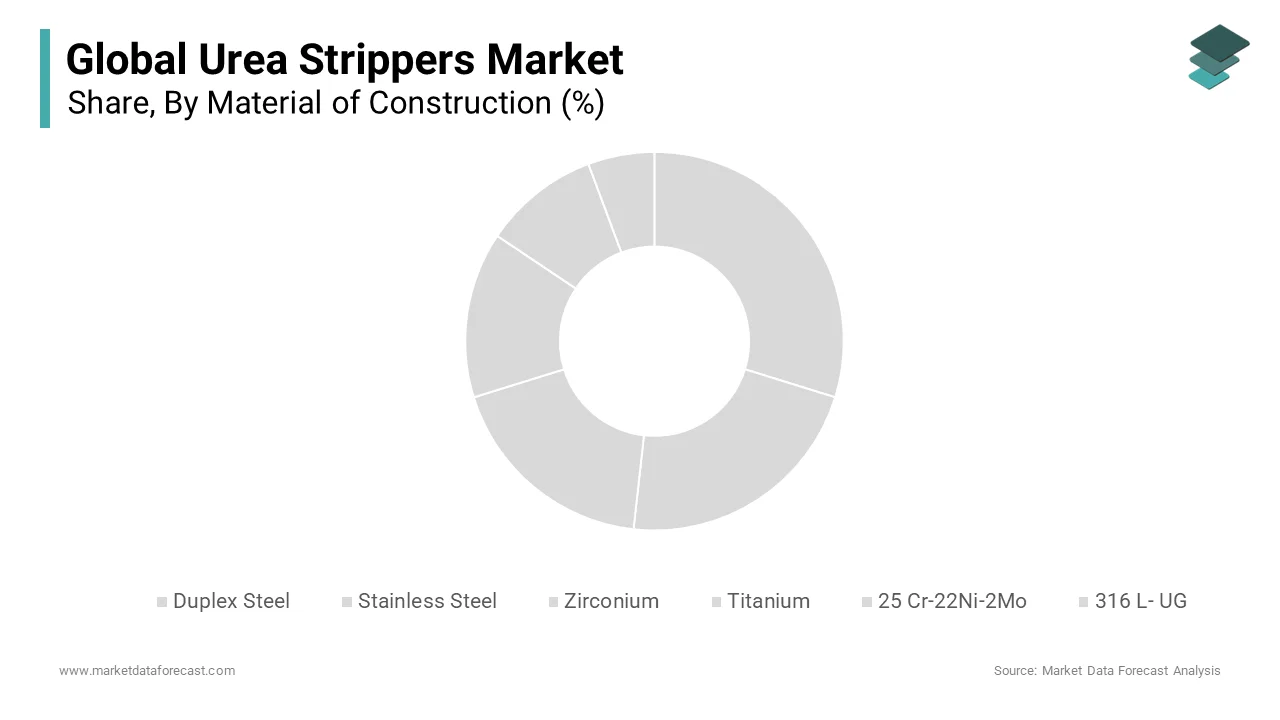
The Stainless steel segment remained the most widely used material in urea stripper construction by accounting for 33.4% in 2025. This dominance is primarily attributed to its cost-effectiveness, widespread availability, and proven performance in moderate operating conditions is one of the key growth factors for this segment. Although not as corrosion-resistant as zirconium or titanium, stainless steel offers a balanced combination of mechanical strength and process compatibility, especially in older urea plants that operate under less severe conditions. The continued reliance on stainless steel-based urea strippers is largely driven by retrofitting activities in legacy fertilizer facilities across regions such as Eastern Europe and parts of Asia. Moreover, advancements in surface treatment technologies, such as passivation and electropolishing, have enhanced the corrosion resistance of stainless steel, extending its usability in newer applications. These factors sustain stainless steel’s leading position in the urea strippers market despite the emergence of more advanced materials.
Zirconium
The Zirconium segment is emerging as the fastest-growing material in the urea strippers market, with an estimated CAGR of 6.8% between 2025 and 2033. Increasing adoption of high-pressure urea synthesis processes, which demand superior corrosion resistance and operational stability, is fuelling the rise of this segment. Zirconium exhibits exceptional resistance to stress corrosion cracking and ammonia-induced degradation, making it ideal for next-generation urea plants that operate at temperatures above 180°C and pressures exceeding 140 bar. The shift toward zirconium is particularly pronounced in countries like China and Indonesia, where large-scale fertilizer expansion projects prioritize long-term reliability and minimal maintenance downtime. Additionally, rising environmental regulations are pushing manufacturers to adopt materials that minimize ammonia emissions and enhance process efficiency. These combined factors are driving zirconium’s accelerated adoption in the urea strippers market.
By Capacity Insights
1500–3500 MTPD
The 1500–3500 metric tons per day (MTPD) segment held the largest share of the urea strippers market of 33.2% in 2025. The growing preference for modular plant designs that allow incremental capacity additions based on demand fluctuations is a key driver behind the dominance of this segment. This segment represents the sweet spot for medium-to-large-scale urea production facilities, balancing operational efficiency, capital expenditure, and scalability. Most modern greenfield urea plants fall within this capacity range, particularly in developing economies seeking to meet domestic fertilizer demand without over-investing in mega-scale infrastructure. Countries like Bangladesh, Egypt, and Nigeria have prioritized this capacity range in recent fertilizer expansion programs, as highlighted in the reports published by the International Fertilizer Industry Association (IFA). Additionally, technological advancements in urea synthesis processes, such as Stamicarbon’s CDU (CO₂ Stripping Urea) and Saipem’s NH₃ stripping process, are optimized for this capacity bracket. These technologies offer higher energy efficiency and lower emissions when deployed at 1500–3500 MTPD scales.
Above 3500 MTPD (CAGR: ~7.2%)
The >3500 MTPD capacity segment is experiencing the highest growth in the urea strippers market and is registering a CAGR of 7.2% from 2025 to 2033. The expansion of gas-based fertilizer complexes in the Middle East and North Africa, where abundant natural gas reserves provide a cost advantage, is one of the primary growth drivers. The surge in demand for this capacity tier is being driven by strategic investments in centralized fertilizer production hubs aimed at achieving economies of scale and reducing per-unit production costs. This segment caters to ultra-large-scale urea manufacturing units that serve national or regional markets, often integrated with ammonia production complexes. The push for self-sufficiency in food production among major agricultural nations is another significant factor fueling this segment’s growth. Additionally, China continues to invest in super-scale urea facilities to replace outdated small-capacity plants, aligning with its broader industrial modernization strategy. These developments are propelling the >3500 MTPD segment into a leadership role in terms of growth velocity within the urea strippers market.
REGIONAL ANALYSIS
Asia Pacific
Asia Pacific commands the lead position in the global urea strippers market by accounting for 45.2% of total demand in 2025. This dominance stems from the region’s heavy reliance on urea-based fertilizers to support intensive agricultural practices, particularly in India, China, and Southeast Asian nations. With over 60% of global urea consumption occurring in Asia, according to the Food and Agriculture Organization (FAO), the need for efficient urea production infrastructure remains acute. India stands out as the single largest consumer of urea in the region, consuming over 35 million metric tons annually as per the Indian Department of Fertilizers. The country has embarked on a massive modernization drive, commissioning several new urea plants equipped with advanced stripping systems. Projects like IFFCO’s Mega Urea Plant in Aonla and the upcoming Paradip Fertilizers facility highlight the ongoing investment in high-efficiency urea production. Southeast Asia, led by Indonesia and Vietnam, is also witnessing a surge in urea demand due to expanding rice cultivation and government-led fertilizer subsidy programs. These factors collectively reinforce Asia Pacific’s leading position in the urea strippers market.
Middle East & Africa
The Middle East and Africa saw strategic growth in the global urea strippers market, which is driven primarily by the region’s abundant natural gas reserves and growing emphasis on food security. Countries like Saudi Arabia, Egypt, and Nigeria are investing heavily in large-scale fertilizer manufacturing to reduce import dependency and capitalize on domestic feedstock advantages. Saudi Arabia leads the regional market with its extensive gas-based fertilizer complexes, which benefit from some of the lowest production costs globally. In North Africa, Egypt has emerged as a key growth hub. Meanwhile, Nigeria is aggressively pursuing localized urea production through initiatives such as the Nigeria Urea Fertilizer Project (NUFP), which aims to produce 3,000 MTPD of urea using modern stripping technology. These developments underscore the Middle East and Africa’s growing significance in the urea strippers market.
Europe
Europe is characterized by a mature fertilizer industry and a strong focus on sustainability and emissions reduction. While the region does not see large-scale capacity additions, there is a steady demand for advanced urea stripping systems to retrofit aging plants and comply with stringent environmental regulations. Germany and France are among the leading consumers of urea in Europe, primarily for industrial applications such as melamine and diesel exhaust fluid (DEF) production. Companies like BASF and Yara International have been upgrading their European urea plants with zirconium-lined strippers to meet EU Industrial Emissions Directive (IED) standards, which mandate ammonia emission levels below 10 mg/Nm³. Poland and Spain have also seen increased interest in urea plant retrofits, particularly in response to carbon pricing mechanisms under the EU Emissions Trading System (ETS). Despite limited growth in production volume, Europe remains a key market for high-performance urea strippers due to its regulatory-driven demand.
North America
North America witnessed niche demand in the global urea strippers market, with demand primarily driven by industrial applications rather than agriculture. The United States dominates the regional market, utilizing urea in sectors such as automotive emissions control, chemical synthesis, and animal feed production. The U.S. Environmental Protection Agency (EPA) mandates the use of diesel exhaust fluid (DEF), which contains urea, for heavy-duty vehicles to meet nitrogen oxide (NOx) emission standards. Major producers like Nutrien and OCI Nitrogen have invested in upgrading their North American urea plants with high-efficiency strippers to support this growing industrial sector. Canada and Mexico contribute relatively smaller shares but are seeing gradual improvements in domestic urea production. Canadian fertilizer manufacturer Agrium (now part of Nutrien) has implemented modern stripping technologies at its Redwater facility to improve process efficiency and reduce environmental impact. In Mexico, the government has launched initiatives to boost local urea production amid rising agricultural demand. While North America remains a niche player in the global urea strippers market, its industrial orientation ensures consistent demand for technologically advanced stripping systems.
Latin America
Latin America is seeing rising demand in the global urea strippers market, with Brazil and Argentina serving as the primary growth engines. Agricultural expansion, particularly in soybean and corn cultivation, has significantly boosted urea demand in the region. Brazil, the largest economy in the region, imports a substantial portion of its urea requirements but has recently intensified efforts to develop domestic production. State-owned Petrobras and private companies such as Yara Brasil have been investing in new urea plants with capacities ranging from 1500 to 3500 MTPD. Argentina has also witnessed a resurgence in fertilizer manufacturing, with YPF and other domestic firms exploring ammonia-urea integration projects. The country’s fertile Pampas region drives high nitrogenous fertilizer demand, necessitating modern urea production facilities equipped with efficient stripping systems.
KEY MARKET PLAYERS
Larson & Toubro, Saipem S.p.A., Stamicarbon, Urea Casale, TOYO India, ALFA LAVAL, NIIK, Thyssenkrupp, FLOWTRONIX, Isgec Heavy Engineering Ltd, Kay Iron Works (Jorian) Private Limited, FEECO International, Inc... .c cc, Sandvik AB, MANGIAROTTI spa, Paramount Limited. Are the market players that are dominating the global urea strippers market.
Top Players In The Market
Stamicarbon (The Netherlands)
Stamicarbon is a leading global technology licensor in the urea production industry and plays a pivotal role in shaping the urea strippers market. As the developer of the well-known CO₂ stripping process, the company has been instrumental in advancing energy-efficient and environmentally sustainable urea manufacturing technologies. Its engineering expertise and strong collaboration with major EPC firms have made its urea stripper designs a preferred choice for new greenfield projects worldwide.
Maire Tecnimont S.p.A. (Italy)
Through its subsidiary Saipem (formerly Snamprogetti), Maire Tecnimont has been a dominant force in the urea production sector. The company’s proprietary NH₃ stripping technology has significantly influenced modern urea plant design, particularly in terms of ammonia recovery and operational efficiency. Their engineering capabilities and strategic partnerships with fertilizer producers across Asia and the Middle East have solidified their position as a key player in the urea strippers market.
Toyo Engineering Corporation (Japan)
Toyo Engineering has established itself as a major contributor to the urea strippers market through its advanced process technologies and extensive project execution experience. The company is known for delivering large-scale urea plants that integrate high-performance stripping systems tailored for extreme operating conditions. With a strong presence in Southeast Asia and the Middle East, Toyo Engineering continues to influence technological advancements and capacity expansions in the global urea industry.
Top Strategies Used By Key Market Participants
Technology Innovation and Licensing
Leading players focus on continuous R&D to enhance urea stripping efficiency, reduce emissions, and improve material durability. By offering proprietary technologies under licensing agreements, companies ensure widespread adoption and long-term revenue streams while maintaining technical leadership.
Strategic Collaborations and Joint Ventures
Collaborating with engineering, procurement, and construction (EPC) firms, governments, and fertilizer producers allows key players to execute large-scale projects more effectively. These alliances help streamline technology deployment and expand regional market access.
Expansion into Emerging Markets
Major companies are intensifying their presence in developing regions where domestic urea production is growing rapidly. This includes supporting local manufacturing initiatives, setting up regional offices, and engaging in turnkey plant development to capture new business opportunities.
COMPETITION OVERVIEW
The urea strippers market is characterized by a concentrated competitive landscape dominated by a few global engineering and technology firms. These companies hold significant influence due to their proprietary urea production processes and long-standing relationships with major fertilizer producers. The competition primarily revolves around technological differentiation, reliability, and after-sales support rather than price-based rivalry. New entrants face substantial barriers due to the need for proven track records, specialized engineering expertise, and compliance with stringent safety and environmental standards. Established players continuously refine their stripping technologies to meet evolving industry demands, including higher energy efficiency and reduced emissions. Additionally, the preference for integrated solutions has led to strategic partnerships between technology licensors and EPC contractors, further consolidating the market. While innovation remains a key differentiator, customer loyalty and regional project execution capabilities also play crucial roles in sustaining competitive advantage within this niche but critical segment of the chemical processing industry.
RECENT HAPPENINGS IN THE MARKET
- In February 2023, Stamicarbon announced a strategic partnership with Indian Farmers Fertiliser Cooperative Limited (IFFCO) to implement its CDU (CO₂ Stripping Urea) technology at the Aonla urea plant, reinforcing its presence in the Indian market and supporting national self-sufficiency in fertilizer production.
- In July 2023, Maire Tecnimont entered into a joint venture with an Egyptian state-owned enterprise to develop a new urea complex in Ain Sokhna, leveraging its NH₃ stripping technology to strengthen its foothold in North Africa and supply both domestic and export markets.
- In November 2023, Toyo Engineering Corporation was awarded a contract by a Nigerian government-backed consortium to engineer and construct a 3,000 MTPD urea plant using high-efficiency stripping systems, marking a significant step into the African market and aligning with regional food security goals.
- In March 2024, Stamicarbon collaborated with Siemens Process Systems Engineering to integrate digital process optimization tools into urea plant operations, enhancing performance monitoring and predictive maintenance for urea strippers and improving overall plant efficiency.
- In August 2024, Maire Tecnimont launched a new sustainability-focused initiative aimed at retrofitting older urea plants with upgraded stripping systems that reduce ammonia emissions and improve carbon footprint profiles, responding to tightening global environmental regulations.
MARKET SEGMENTATION
This research report on the global urea strippers market has been segmented and sub-segmented based on the material of construction, capacity, and region.
By Material of Construction
- Duplex Steel
- Stainless Steel
- Zirconium
- Titanium
- 25 Cr-22Ni-2Mo
- 316 L- UG
By Capacity
- Upto 1,000 MTPD
- 1,000-1,500 MTPD
- 1,500-3,500 MTPD
- Above 3,500 MTPD
By Region
- North America
- Europe
- Asia-Pacific
- Latin America
- The Middle East and Africa