- Product Description Description
- Table of Contents TOC
- List of Table & Figure LOT
- Get Free Sample PDF Sample PDF
Market Size, 2025
$834 MnMarket Estimate, 2026
$918 MnMarket Forecast, 2034
$1,976 MnCAGR, 2026–2034
10.06%U.S. Aromatherapy Market Size
The U.S. aromatherapy market size was valued at USD 834.32 million in 2025, and the market size is expected to be worth USD 1,976.96 million by 2034 from USD 918.25 million by 2026. The market is growing at a CAGR of 10.06% during the forecast period.
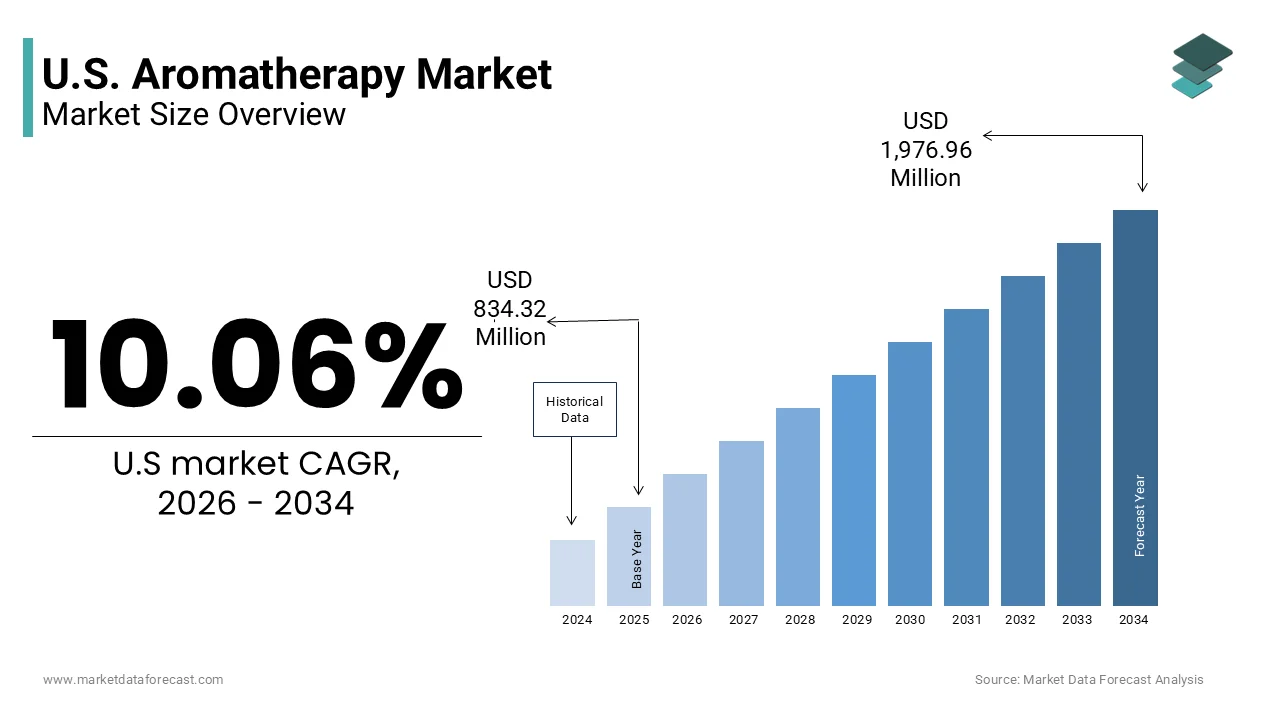
According to the National Center for Complementary and Integrative Health, approximately 10% of U.S. adults have used essential oils in the past 12 months, indicating a significant baseline of consumer engagement. As per the American Botanical Council, sales of herbal supplements, including essential oils, reached 11.3 billion dollars in 2022, reflecting sustained consumer interest in natural health solutions. The National Association for Holistic Aromatherapy emphasizes that professional practice requires rigorous training and adherence to safety guidelines, due to the potent chemical composition of these substances. According to the consumer behavior data from the International Fragrance Association, 75% of consumers associate scent with emotional well-being, which is driving demand for mood enhancing aromatic products. The regulatory landscape remains complex, as the Food and Drug Administration does not approve essential oils for medical treatment, yet monitors claims made by manufacturers regarding therapeutic benefits. This intersection of traditional herbal medicine, modern wellness trends, and regulatory scrutiny defines the contemporary operational environment for industry participants seeking to capitalize on the growing preference for non-invasive health interventions.
MARKET DRIVERS
Escalating Mental Health Awareness Drives Demand for Natural Stress Relief
The rising prevalence of anxiety and stress related disorders in the United States has catalyzed a shift toward non pharmaceutical interventions, including aromatherapy, which is one of the major drivers of the U.S. aromatherapy market. According to the Anxiety and Depression Association of America, anxiety disorders affect 40 million adults in the United States annually, representing 19.1% of the population. As per the American Psychological Association 2023 Stress in America survey, 77% of adults reported experiencing physical symptoms caused by stress, such as headaches and fatigue. This widespread psychological burden has prompted consumers to seek accessible and natural coping mechanisms. Research published in the Journal of Alternative and Complementary Medicine indicates that inhalation of lavender oil significantly reduces cortisol levels and improves sleep quality in individuals with mild anxiety. The National Institutes of Health notes that complementary health approaches are increasingly integrated into mainstream mental health care plans. Furthermore, the destigmatization of mental health issues has encouraged open discussion and experimentation with wellness practices. According to a survey by the Global Wellness Institute, 64% of U.S. consumers prioritize mental well-being over physical fitness when selecting wellness products. This cultural shift, combined with clinical evidence supporting the anxiolytic properties of specific essential oils, creates robust demand for aromatherapy products positioned as stress management tools. The convenience of home diffusion and portable inhalers further enhances adoption among busy professionals seeking immediate relief without side effects associated with prescription medications.
Integration of Aromatherapy into Mainstream Healthcare and Wellness Services
The formal incorporation of aromatherapy into clinical settings and professional wellness services significantly propels the U.S. market growth. According to the American Holistic Nurses Association, over 60% of hospitals in the United States now offer some form of integrative therapy, including aromatherapy for pain management and patient comfort. As per data from the Society for Integrative Oncology, clinical guidelines recommend the use of essential oils, such as ginger and peppermint, to alleviate chemotherapy induced nausea and vomiting. This institutional endorsement enhances consumer confidence and normalizes the use of aromatic interventions for serious health conditions. The National Cancer Institute reports that integrative medicine programs have expanded by 25% in comprehensive cancer centers over the past five years. Furthermore, the spa and hospitality industries have standardized aromatherapy treatments, with the International Spa Association noting that 80% of spas offer essential oil based massages and facials. This commercial integration creates consistent revenue streams and exposes diverse demographic groups to aromatherapy benefits. According to the Bureau of Labor Statistics, employment in personal care services, including massage therapy, is projected to grow 18% from 2022 to 2032. This labor market expansion supports increased service delivery and product consumption. The synergy between clinical validation and commercial availability establishes a sustainable foundation for market expansion beyond niche holistic communities.
MARKET RESTRAINTS
Regulatory Ambiguity and Restrictive Claim Limitations Hinder Product Marketing
The lack of clear regulatory frameworks governing essential oils creates significant barriers for manufacturers attempting to communicate therapeutic benefits, which is significantly hampering the expansion of the U.S. aromatherapy market. According to the Food and Drug Administration, essential oils are generally regulated as cosmetics or dietary supplements rather than drugs, which prohibit manufacturers from making explicit disease treatment claims. As per the Federal Trade Commission, enforcement actions against companies making unsubstantiated health claims have increased by 30% in recent years, leading to substantial financial penalties and reputational damage. This regulatory uncertainty forces brands to use vague language, such as "supports well-being," which may confuse consumers and dilute perceived efficacy. The National Association for Holistic Aromatherapy notes that inconsistent interpretation of regulations across state lines further complicates compliance for national distributors. Furthermore, the absence of standardized testing requirements for purity and potency allows low quality products to enter the market, undermining consumer trust. According to a study published in the Journal of Essential Oil Research, only 50% of commercially available essential oils met label claims for chemical composition. This prevalence of adulterated products exacerbates skepticism among healthcare providers and informed consumers. The inability to distinguish high quality, therapeutic grade oils from synthetic fragrances in retail environments restricts market growth for premium brands. Consequently, manufacturers face elevated marketing costs to educate consumers, while navigating a restrictive legal landscape that limits direct communication of product benefits.
Safety Concerns and Potential Adverse Reactions Limit Broad Consumer Adoption
Potential health risks associated with improper use of essential oils represent a significant restraint on market expansion. According to the American Association of Poison Control Centers, exposure to essential oils accounted for over 12,000 calls to poison control centers in 2022, with children under six years old comprising the majority of cases. As per research published in Pediatrics, ingestion or topical application of certain oils, such as eucalyptus and tea tree, can cause severe toxicity, including seizures and respiratory distress in pediatric populations. This safety profile necessitates strict usage guidelines, which may deter casual consumers seeking simple wellness solutions. The National Institutes of Health highlights that phototoxic reactions from citrus oils can cause severe skin burns upon sun exposure if not properly diluted. Furthermore, allergic contact dermatitis affects approximately 2% of the general population, with sensitivity to common aromatic compounds like linalool and limonene. According to the Contact Dermatitis Journal, the incidence of essential oil related allergies has doubled in the last decade due to increased usage frequency. These safety concerns lead to hesitation among pregnant women, elderly individuals, and pet owners, who are particularly vulnerable to adverse effects. Veterinary toxicologists warn that many essential oils are toxic to cats and dogs, limiting household usage. This risk perception requires extensive consumer education and liability management, increasing operational costs for manufacturers and retailers.
MARKET OPPORTUNITIES
Expansion into Personalized and Precision Aromatherapy Solutions
The emergence of personalized wellness technologies is a significant opportunity for the U.S. aromatherapy market. According to the Global Wellness Institute, the personalized wellness market is valued at 156 billion dollars globally, with consumers increasingly seeking tailored health interventions. As per a survey by McKinsey and Company, 71% of consumers expect personalization from companies, and 76% get frustrated when this does not happen. This demand extends to aromatherapy, where individual responses to scents vary based on genetics, lifestyle, and health status. Companies can leverage artificial intelligence and biometric data to recommend specific essential oil blends for individual needs, such as sleep enhancement or focus improvement. The National Institutes of Health research indicates that genetic variations in olfactory receptors influence scent perception and therapeutic efficacy. By integrating this scientific understanding with digital platforms, brands can offer customized subscription services that adapt to changing user preferences. Furthermore, the development of smart diffusers connected to mobile applications allows for real time adjustment of aroma intensity and duration based on user feedback. According to industry analyses, the smart home device market is projected to grow at a compound annual growth rate of 15% through 2030. This technological convergence enables aromatherapy brands to transition from commodity product sellers to holistic wellness partners, fostering long term customer loyalty and higher lifetime value.
Growth of Clean Label and Sustainable Sourcing Initiatives
The growing consumer demand for transparency and environmental responsibility creates substantial opportunities for the U.S. aromatherapy market expansion. According to the NielsenIQ Global Sustainability Report, 78% of U.S. consumers say that a sustainable lifestyle is important to them. As per the Environmental Protection Agency, the pesticide residue in conventional farming poses significant environmental and health risks, driving preference for organic certified essential oils. Brands that obtain USDA Organic or Fair Trade certifications can command premium pricing and attract environmentally conscious demographics. The Rainforest Alliance notes that sustainable harvesting practices protect biodiversity and ensure long term supply chain stability for rare botanical species. Furthermore, the clean beauty movement has influenced aromatherapy, with consumers rejecting synthetic additives and fillers. According to the Campaign for Safe Cosmetics, over 60% of shoppers check ingredient labels for harmful chemicals before purchasing personal care products. Companies can capitalize on this trend by providing detailed, batch specific testing results and origin stories for their oils. Blockchain technology offers a viable solution for tracking supply chains from farm to bottle, enhancing trust and authenticity. According to industry experts, transparent sourcing practices reduce the risk of adulteration and build brand credibility. This alignment with consumer values not only drives sales but also mitigates regulatory risks associated with undisclosed ingredients and unsustainable practices.
MARKET CHALLENGES
Supply Chain Volatility and Climate Change Impact on Raw Material Availability
The dependence of the aromatherapy industry on agricultural outputs makes it highly vulnerable to climate change and geopolitical instability, which is a major challenge to the U.S. aromatherapy market growth. According to the Intergovernmental Panel on Climate Change, extreme weather events, such as droughts and floods, have reduced crop yields for key aromatic plants like lavender and rose by up to 40% in major producing regions. As per the United Nations Food and Agriculture Organization, climate variability disrupts planting cycles and alters the chemical composition of essential oils, affecting quality and consistency. This supply insecurity leads to price fluctuations that challenge profit margins and inventory planning for manufacturers. According to the National Oceanic and Atmospheric Administration, rising temperatures have shifted growing zones, forcing farmers to relocate or abandon traditional crops. Furthermore, political instability in key sourcing countries, such as Syria and Afghanistan, disrupts the supply of frankincense and rose oil. According to industry analyses, lead times for imported essential oils have increased by 25% due to logistical bottlenecks and trade restrictions. This volatility complicates long term contracts and forces brands to seek alternative suppliers, often at higher costs. The lack of domestic production capacity for many exotic oils exacerbates reliance on imports. Consequently, companies face the dual challenge of maintaining product quality while managing unpredictable input costs. This structural vulnerability requires strategic investments in diversified sourcing and vertical integration to ensure business continuity.
Prevalence of Adulteration and Quality Inconsistency Undermines Market Integrity
The widespread presence of adulterated and synthetic essential oils is further challenging the U.S. aromatherapy market expansion. According to a study by the University of British Columbia, nearly 50% of essential oil samples purchased online contained synthetic additives or carrier oils not listed on the label. As per the International Organization for Standardization, strict guidelines exist for essential oil purity, yet enforcement remains inconsistent across global supply chains. This lack of oversight allows unscrupulous suppliers to dilute products with cheaper alternatives, such as diethyl phthalate or synthetic fragrance compounds. The National Association for Holistic Aromatherapy emphasizes that adulterated oils lack therapeutic benefits and may pose health risks due to unknown chemical constituents. Consumers struggle to differentiate between genuine and fake products due to limited technical knowledge and misleading marketing terms like "therapeutic grade," which have no legal definition. According to Consumer Reports, investigations reveal that even reputable brands occasionally fail independent purity tests. This erosion of trust discourages repeat purchases and hinders the growth of the premium segment. Furthermore, healthcare providers hesitate to recommend aromatherapy due to concerns about product reliability. The industry faces the ongoing challenge of establishing universal certification standards and third party verification mechanisms. Without credible quality assurance, the market remains fragmented and susceptible to reputation damage from high profile contamination incidents.
REPORT COVERAGE
| REPORT METRIC | DETAILS |
| Market Size Available | 2025 to 2034 |
| Base Year | 2025 |
| Forecast Period | 2026 to 2034 |
| CAGR | 10.06% |
| Segments Covered | By Mode of Delivery, Application, End Use, and Region |
| Various Analyses Covered | Global, Regional, and Country Level Analysis; Segment-Level Analysis; DROC; PESTLE Analysis; Porter’s Five Forces Analysis; Competitive Landscape; Analyst Overview of Investment Opportunities |
| Regions Covered | New York, Massachusetts, Pennsylvania, Illinois, Ohio, Michigan, Texas, Florida, Georgia, California, Washington, Colorado |
| Market Leaders Profiled | Edens Garden, doTERRA International, Frontier Natural Products Co-op, Mountain Rose Herbs, Young Living Essential Oils, Rocky Mountain Oils, and Plant Therapy Essential Oils |
SEGMENTAL ANALYSIS
By Mode of Delivery Insights
The topical segment led the market by accounting for 46.4% of the U.S. market share in 2025. The seamless incorporation of essential oils into daily skincare and beauty regimens significantly sustains the dominance of topical application in the U.S. aromatherapy market. According to the Personal Care Products Council, over 90% of American women use personal care products daily, creating a vast existing consumer base for aromatic formulations. As per data from the National Spa and Pool Institute, massage therapy, which relies heavily on topical aromatic oils, generates over 12 billion dollars in annual revenue in the United States. Consumers prefer topical delivery for its dual benefit of moisturizing the skin while delivering therapeutic compounds, such as lavender for calming or tea tree for antimicrobial action. The rise of clean beauty has further accelerated this trend, with brands formulating serums and creams with high concentrations of pure essential oils. According to the Environmental Working Group, 76% of consumers check ingredient labels for natural components before purchasing skincare items. This preference drives manufacturers to replace synthetic fragrances with functional essential oils in topical products. Furthermore, the tactile experience of applying oils enhances the sensory ritual of self care, reinforcing habit formation. The versatility of topical formats, ranging from roll ons to body butters, ensures accessibility across diverse age groups and lifestyle segments. This deep integration into established grooming habits creates enduring momentum for the topical application segment.
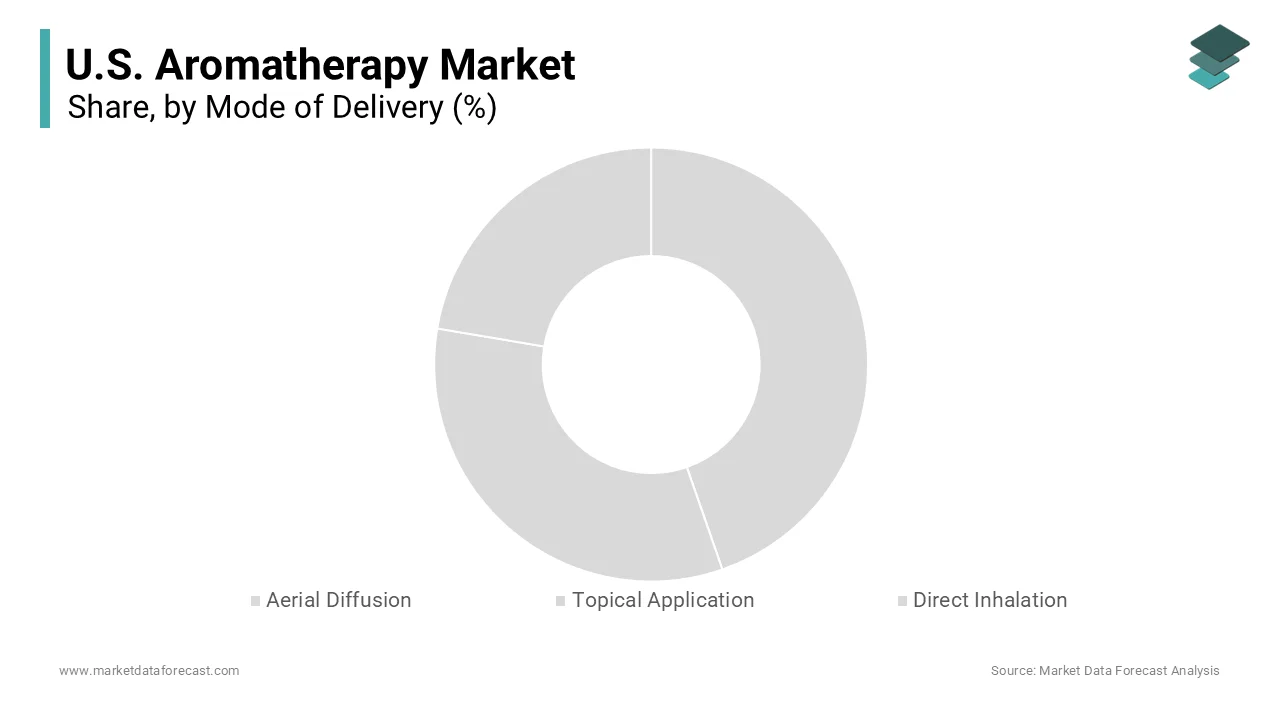
The aerial diffusion segment represents the fastest growing category within the United States aromatherapy market, registering a compound annual growth rate of 14.2% through 2030 according to market forecasts. The dominance of aerial diffusion segment in the U.S. market is driven by the increasing adoption of smart home devices and the desire for ambient wellness environments. The integration of aromatherapy into the Internet of Things ecosystem drives exceptional growth for aerial diffusion products. According to the Consumer Technology Association, sales of smart home devices in the United States reached 180 million units in 2024, with connected diffusers representing a rapidly expanding subcategory. As per industry data, smart diffusers allow users to control scent intensity, timing, and blending via mobile applications, enhancing convenience and customization. This technological advancement appeals to tech savvy millennials and Gen Z consumers, who prioritize seamless integration of wellness into their digital lifestyles. The ability to schedule diffusion cycles for specific times of day, such as energizing citrus blends in the morning and calming lavender in the evening, aligns with circadian rhythm optimization trends. According to the Global Wellness Institute, biohacking and environmental wellness are top priorities for 60% of high income households. Furthermore, voice activated compatibility with platforms like Amazon Alexa and Google Home simplifies operation, encouraging frequent use. Manufacturers are increasingly partnering with tech firms to develop aesthetically pleasing devices that serve as home decor elements. This convergence of functionality, design, and connectivity transforms aromatherapy from an occasional treatment into a continuous ambient experience. The scalability of software updates and subscription based oil refills further enhances customer retention and lifetime value for brands in this segment.
By Application Insights
The relaxation segment was the largest segment and accounted for the highest share of the U.S. aromatherapy market in 2025. The growth of the relaxation segment in the U.S. market is attributed to the pervasive need for stress management and mental decompression in modern society. This category encompasses the use of calming scents, such as lavender, bergamot, and ylang ylang, to induce states of tranquility. The widespread burden of psychological stress in the United States significantly sustains the dominance of the relaxation application segment. According to the American Psychological Association 2023 Stress in America survey, 77% of adults reported experiencing physical symptoms caused by stress, such as headaches and fatigue. As per the Anxiety and Depression Association of America, anxiety disorders affect 40 million adults annually, representing 19.1% of the population. This substantial prevalence creates a consistent and urgent demand for accessible, non pharmaceutical coping mechanisms. Aromatherapy is widely recognized for its anxiolytic properties, with lavender oil being the most researched and utilized scent for relaxation. According to research published in the Journal of Clinical Nursing, inhalation of lavender oil significantly reduces heart rate and blood pressure in stressed individuals. The convenience of using diffusers or rollerballs allows individuals to manage stress throughout the day in various settings, including offices and homes. Furthermore, the destigmatization of mental health issues has encouraged open discussion and experimentation with wellness practices. According to the Global Wellness Institute, 64% of U.S. consumers prioritize mental well being over physical fitness when selecting wellness products. This cultural shift, combined with clinical evidence supporting the calming effects of specific essential oils, creates robust demand for relaxation focused aromatherapy. The low barrier to entry and immediate sensory feedback further reinforce habitual use among stressed populations.
On the other side, the insomnia segment is a promising segment and is estimated to showcase the fastest CAGR of 17.1% during the forecast period in the U.S. market owing to the escalating sleep crisis and the search for natural sleep aids. The rising incidence of sleep disorders in the United States drives rapid expansion for insomnia focused aromatherapy products. According to the Centers for Disease Control and Prevention, one in three adults does not get enough sleep, with chronic sleep deprivation linked to serious health conditions such as heart disease and diabetes. As per the National Sleep Foundation, 50 to 70 million Americans suffer from chronic sleep disorders, creating a massive addressable market for sleep solutions. Traditional pharmaceutical sleep aids are often associated with side effects, such as dependency and grogginess, prompting consumers to seek safer, natural alternatives. Aromatherapy offers a non invasive option, with studies showing that lavender and chamomile oils can improve sleep quality and duration. According to research published in the Journal of Alternative and Complementary Medicine, patients using lavender oil reported significant improvements in sleep scores compared to control groups. The aging population is particularly vulnerable to insomnia, with the National Institute on Aging noting that sleep patterns change significantly after age 60. This demographic shift amplifies demand for gentle, effective sleep aids. Furthermore, the wellness industry has prioritized sleep hygiene, with companies launching dedicated night time aromatic blends and pillow mists. According to the Global Wellness Institute, the sleep economy is valued at 432 billion dollars globally, with aromatherapy playing a key role. This convergence of health urgency and market innovation positions insomnia as the fastest growing application segment.
By End Use Insights
The home use segment was the biggest segment in the U.S. market in 2025 and is expected to continue the dominance in the U.S. market during the forecast period owing to the preference for private and convenient wellness practices. According to the Bureau of Labor Statistics, Americans spend an average of 18 hours per day at home, creating ample opportunity for domestic wellness activities. As per a survey by the National Retail Federation, 70% of consumers prefer purchasing wellness products for home use due to the convenience of immediate access and privacy. The home environment allows individuals to customize their aromatic experience without the time constraints or costs associated with professional services. The proliferation of e commerce platforms has further facilitated this trend, with online sales of home aromatherapy products increasing by 25% annually. According to Amazon retail data, essential oils and diffusers are among the top selling health and household items. Furthermore, the rise of remote work has blurred the lines between professional and personal spaces, leading individuals to create soothing home offices with aromatic diffusers. The ability to control dosage, frequency, and blend composition empowers consumers to tailor their experience to specific needs. According to the Consumer Electronics Association, smart home diffusion devices are primarily purchased for residential use, reflecting this preference. This combination of accessibility, autonomy, and comfort ensures that home use remains the primary channel for aromatherapy consumption.
On the other end, the hospitals and clinics segment is predicted to showcase a promising CAGR of 13.2% during the forecast period in the U.S. market owing to the formal integration of aromatherapy into integrative medicine protocols. The increasing acceptance of complementary therapies within conventional healthcare systems drives rapid expansion for the hospital and clinic segment. According to the American Hospital Association, over 60% of hospitals in the United States now offer integrative medicine services, including aromatherapy for pain and anxiety management. As per the Society for Integrative Oncology, clinical guidelines recommend the use of essential oils to alleviate side effects of cancer treatment, such as nausea and fatigue. This institutional endorsement validates the therapeutic potential of aromatherapy and encourages wider adoption across medical specialties. Nurses and physicians are increasingly trained in aromatic interventions, with the American Holistic Nurses Association certifying thousands of practitioners annually. According to the National Institutes of Health, research funding for integrative health has increased by 15% in recent years, supporting evidence based practice. Furthermore, patient satisfaction scores are a key metric for hospital reimbursement, with aromatherapy contributing to improved patient experiences. According to the Hospital Consumer Assessment of Healthcare Providers and Systems surveys, patients report higher satisfaction when offered complementary therapies. This alignment with value based care models incentivizes healthcare facilities to invest in aromatherapy programs. The expansion of palliative care and hospice services also drives demand for comforting aromatic interventions. This systematic integration into clinical workflows positions hospitals and clinics as the fastest growing end use segment.
COUNTRY LEVEL ANALYSIS
The United States occupied 36.5% of the North American market share in 2025. This market leadership reflects the convergence of high disposable income, a robust wellness culture, and advanced retail infrastructure that distinguishes the United States from international peers. The deeply ingrained wellness culture and substantial economic capacity of American consumers significantly propel United States market dominance. According to the Global Wellness Institute, the U.S. wellness economy is valued at 1.8 trillion dollars, representing the largest national market globally. As per the Bureau of Economic Analysis, personal consumption expenditures on health and personal care reached 2.5 trillion dollars in 2024, with a significant portion allocated to preventive and holistic services. American consumers prioritize self care and mental well being, with surveys indicating that 70% of adults actively engage in wellness activities weekly. This cultural orientation creates a receptive environment for aromatherapy products positioned as essential tools for stress management and lifestyle enhancement. The presence of major retail chains, specialty boutiques, and e commerce giants ensures widespread product availability and competitive pricing. According to the U.S. Census Bureau, e commerce sales for health and personal care products grew by 12% annually, facilitating access to diverse aromatic offerings. Furthermore, the influence of social media and celebrity endorsements amplifies awareness and drives trend adoption. The combination of cultural values, economic strength, and distribution efficiency ensures that the United States remains the central hub for aromatherapy innovation and consumption.
COMPETITIVE LANDSCAPE
The United States aromatherapy market features intense competition among direct selling companies specialized retailers and mainstream consumer goods manufacturers. Established brands leverage strong distribution networks and loyal customer bases to maintain leadership while emerging players differentiate through transparency sustainability and digital innovation. Competition centers on product quality and purity with companies investing in third party testing and certification to build consumer trust. Pricing strategies vary significantly with premium brands emphasizing exclusivity and value based offerings focusing on accessibility. Marketing efforts highlight educational content and community building to engage consumers and foster long term loyalty. The rise of e commerce has lowered entry barriers enabling niche brands to reach specific demographics effectively. Regulatory scrutiny regarding health claims drives companies to adopt compliant labeling and marketing practices. Strategic collaborations with wellness professionals and healthcare providers enhance credibility and expand market reach. Innovation in delivery systems such as smart diffusers and wearable technology creates new opportunities for differentiation. This dynamic landscape encourages continuous improvement in product quality customer service and sustainability practices benefiting consumers through greater choice and value.
KEY MARKET PLAYERS
A few of the dominating players in the U.S. aromatherapy market include
- Edens Garden
- doTERRA International
- Frontier Natural Products Co-op
- Mountain Rose Herbs
- Young Living Essential Oils
- Rocky Mountain Oils
- Plant Therapy Essential Oils.
Top Players in the Market
- doTERRA Holdings LLC operates as a prominent direct selling company specializing in pure essential oils and wellness products within the United States. The company utilizes a multi level marketing model to distribute its CPTG certified pure tested grade oils directly to consumers. doTERRA strengthens its market position through extensive educational initiatives including the doTERRA Healing Hands Foundation which supports global health projects. The company recently expanded its product line to include skincare and home care items infused with essential oils. doTERRA also invests in sustainable sourcing partnerships with farmers worldwide to ensure supply chain transparency. These efforts enhance brand loyalty and differentiate the company from retail competitors by emphasizing community engagement and product purity.
- Young Living Essential Oils LC is a leading distributor of essential oils and related wellness products in the United States market. The company maintains control over its supply chain through seed to seal practices ensuring quality from cultivation to bottling. Young Living recently launched new digital tools for distributors to enhance customer engagement and sales efficiency. The company expanded its manufacturing facilities in Utah to increase production capacity for high demand oils. Young Living also focuses on regulatory compliance and scientific research to validate product safety and efficacy. These strategic actions reinforce its reputation for quality and support sustained growth in the competitive aromatherapy sector.
- Edens Garden Inc is a major online retailer of essential oils and aromatherapy accessories serving the United States market. The company distinguishes itself by offering high quality oils at accessible price points without multi level marketing structures. Edens Garden recently introduced GC MS testing results for all products to provide transparency regarding purity and composition. The company expanded its educational content library with free online courses and blending guides for consumers. Edens Garden also enhanced its e commerce platform with personalized recommendation engines to improve user experience. These initiatives strengthen its position as a trusted resource for both novice and experienced aromatherapy enthusiasts seeking value and clarity.

Top Strategies Used by Key Market Participants
Key players in the United States aromatherapy market employ diverse strategies to maintain competitive advantages and drive growth. Companies prioritize vertical integration by controlling sourcing and manufacturing to ensure product purity and reduce costs. Brands invest heavily in consumer education through workshops online content and certification programs to build trust and expertise. Strategic partnerships with healthcare providers and wellness influencers expand reach and credibility among target demographics. Manufacturers focus on product innovation by developing unique blends smart diffusion devices and sustainable packaging solutions. Digital marketing and social media engagement are leveraged to create communities and foster brand loyalty. Transparency initiatives such as third party testing and clear labeling address consumer concerns about quality. These coordinated efforts enable participants to navigate regulatory challenges and meet evolving consumer preferences for natural wellness solutions.
MARKET SEGMENTATION
This research report on the U.S. aromatherapy market is segmented and sub-segmented into the following categories.
By Mode of Delivery
- Aerial Diffusion
- Topical Application
- Direct Inhalation
By Application
- Skin and Hair Care
- Pain Management
- Relaxation
- Scar Management
- Insomnia
- Cough & Cold
- Others
By End Use
- Home Use
- Spa & Wellness Centers
- Hospitals & Clinics
- Yoga & Meditation Centers
By Region
- New York
- Massachusetts
- Pennsylvania
- Illinois
- Ohio
- Michigan
- Texas
- Florida
- Georgia
- California
- Washington
- Colorado