- Product Description Description
- Table of Contents TOC
- List of Table & Figure LOT
- Get Free Sample PDF Sample PDF
Market Size, 2025
$12.64 BnMarket Estimate, 2026
$13.15 BnMarket Forecast, 2034
$18.09 BnCAGR, 2026–2034
4.07%U.S. Heating Equipment Market Report Summary
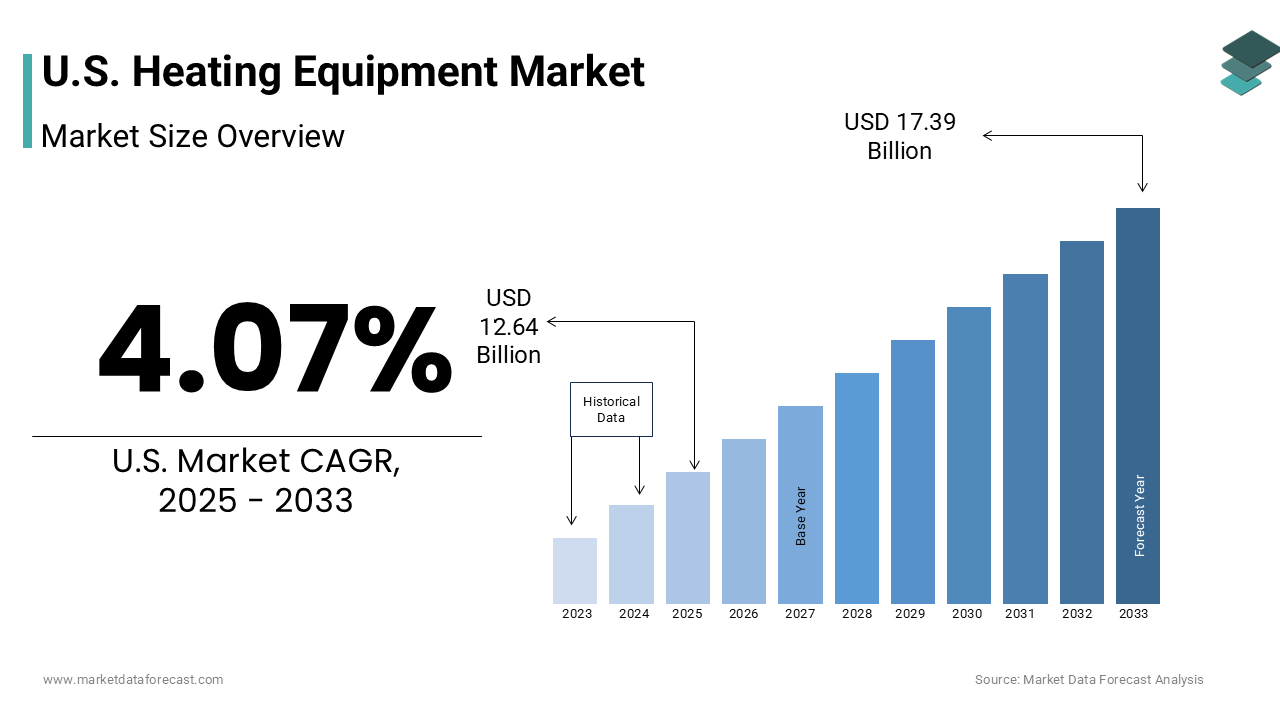
The U.S. heating equipment market was valued at USD 12.64 billion in 2025, is estimated to reach USD 13.15 billion in 2026, and is projected to reach USD 18.09 billion by 2034, growing at a CAGR of 4.07% during the forecast period from 2026 to 2034. The growth of the U.S. heating equipment market is driven by increasing replacement demand from aging housing infrastructure, rising adoption of energy-efficient systems, and expanding government initiatives promoting building electrification. Growing consumer preference for smart connected heating technologies, increasing investments in residential renovation activities, and advancements in heat pump technologies are further accelerating market growth. Moreover, stringent energy efficiency regulations, expansion of smart home ecosystems, and rising demand for sustainable low-emission heating systems are supporting the expansion of the U.S. heating equipment market.
Key Market Trends
- Rising adoption of high-efficiency heat pumps supported by federal tax credits and building electrification initiatives.
- Growing integration of smart thermostats and IoT-enabled heating systems for remote monitoring and predictive maintenance.
- Increasing demand for low-emission and energy-efficient heating technologies aligned with sustainability goals.
- Strong focus on retrofitting aging residential and commercial buildings with advanced heating systems.
- Expansion of cold-climate heat pump technologies capable of operating efficiently in extreme winter conditions.
Segmental Insights
- Based on heating source, the natural gas segment dominated the U.S. heating equipment market and held the largest share in 2025. The segment’s dominance is attributed to extensive natural gas infrastructure availability, lower operational costs compared to alternative fuels, and strong adoption of high-efficiency gas furnaces across residential applications.
- The electric heating segment is projected to witness the fastest CAGR during the forecast period owing to increasing building electrification policies, rising heat pump adoption, expanding renewable energy integration, and growing environmental awareness among consumers.
- Based on equipment type, the furnaces segment accounted for the leading share of the U.S. heating equipment market in 2025. The dominance of this segment is driven by widespread installation of forced-air systems, strong replacement demand from aging furnace units, and continued preference for rapid heating performance in colder regions of the United States.
- The heat pumps segment is anticipated to register notable growth during the forecast period due to increasing government incentives, dual heating and cooling functionality, advancements in inverter and cold-climate technologies, and rising consumer preference for energy-efficient electric systems.
- Based on application, the residential segment held the major share of the U.S. heating equipment market in 2025 owing to the large residential housing base, continuous replacement cycles for aging systems, increasing home renovation activities, and growing demand for smart heating technologies in households.
- The commercial segment is expected to witness rapid growth during the forecast period because of stringent commercial energy efficiency regulations, rising investments in sustainable building infrastructure, and increasing retrofitting activities across office, retail, and hospitality sectors.
Regional Insights
The United States maintained a strong position in the global heating equipment market in 2025, supported by extensive residential infrastructure, strong demand for energy-efficient heating technologies, and ongoing investments in building modernization projects. Northern and Midwestern regions continue to dominate heating equipment demand due to colder climatic conditions and high dependence on centralized heating systems. States including New York, Washington, and California are witnessing notable growth driven by electrification initiatives, adoption of heat pump technologies, and implementation of stringent energy-efficiency building standards.
Competitive Landscape
The U.S. heating equipment market is highly competitive and characterized by the presence of multinational HVAC manufacturers, smart climate technology providers, and regional heating equipment suppliers competing through innovation, energy efficiency, and smart connectivity integration. Leading companies are focusing on expanding heat pump portfolios, strengthening IoT-enabled heating solutions, investing in sustainable low-emission technologies, and enhancing dealer and contractor networks. Strategic collaborations with utilities, smart home technology companies, and government energy-efficiency programs are further strengthening market positioning across residential and commercial heating applications.
Prominent players in the U.S. heating equipment market include Lennox International Inc., Johnson Controls International plc, Honeywell International Inc., Robert Bosch GmbH, Daikin Comfort Technologies North America Inc., Ingersoll Rand plc, Rheem Manufacturing Company, Carrier Global Corporation, Trane Technologies plc, Nortek Global HVAC, Goodman Manufacturing Company L.P., York International Corporation, Emerson Electric Co., American Standard Heating & Air Conditioning, and Bradford White Corporation.
U.S. Heating Equipment Market Size
The United States heating equipment market size was valued at USD 12.64 billion in 2025 and is anticipated to reach USD 13.15 billion in 2026 from USD 18.09 billion by 2034, growing at a CAGR of 4.07% during the forecast period from 2026 to 2034.
According to the U.S. Census Bureau, approximately 145.3 million housing units existed in the country in 2023, with a significant majority relying on centralized heating systems for temperature regulation. As per the Energy Information Administration, database statistics show that nearly 48% of American homes use natural gas as their primary heating fuel, while 39% rely on electricity. According to the American Society of Heating, Refrigerating and Air-Conditioning Engineers, heating loads account for a substantial portion of total building energy consumption, particularly in older structures lacking modern insulation. As per the Department of Energy, space heating represents about 45% of home energy use in the U.S. This high proportion drives continuous innovation in efficiency standards and equipment design. The market is also shaped by stringent building codes and energy conservation mandates that require newer installations to meet higher performance benchmarks. Consequently, the industry is transitioning towards smarter, more connected devices that offer precise control and reduced carbon footprints, aligning with broader national sustainability goals.
MARKET DRIVERS
Retrofitting Aging Housing Stock Drives Replacement Demand
The extensive age of the existing residential housing inventory in the U.S. is majorly driving the heating equipment market growth in the U.S. According to the U.S. Census Bureau, the median year of construction for owner-occupied homes were 1980, indicating that a vast number of properties possess outdated heating systems that operate below current efficiency standards. As per the Department of Energy, estimates reveal that heating systems installed before 2000 often exhibit efficiency levels below 80%, whereas modern, high-efficiency units can achieve ratings above 95%. According to the American Housing Survey, records indicate that approximately 15% of homes have heating systems that are over 20 years old, which increases the likelihood of mechanical failure and inefficient operation. As these older units reach the end of their service life, property owners are increasingly opting for advanced technologies such as condensing gas furnaces or air-source heat pumps. As per the Joint Center for Housing Studies of Harvard University, home renovation and remodeling expenditures reached over 400 billion dollars in 2023, with a significant portion allocated to mechanical system upgrades. This trend is further accelerated by local government incentives and rebate programs aimed at reducing greenhouse gas emissions from residential buildings. The push for electrification in various states also prompts the replacement of fossil-fuel-based systems with electric alternatives, thereby stimulating demand for new heating equipment that aligns with contemporary environmental regulations and consumer preferences for sustainable living solutions.
Stringent Energy Efficiency Standards Propel Technology Adoption
The implementation of rigorous energy efficiency regulations by federal and state authorities is further boosting the expansion of the U.S. heating equipment market. As per the Department of Energy, established new minimum efficiency standards for residential furnaces and boilers took effect in 2023, requiring manufacturers to produce units with higher annual fuel utilization efficiency ratings. According to the Appliance Standards Awareness Project, these updated standards are projected to save consumers billions of dollars in energy costs over the next three decades while significantly reducing carbon emissions. As per the Environmental Protection Agency, the promotion of the Energy Star program certifies heating equipment that exceeds baseline efficiency requirements by at least 10%. According to the Energy Star website, data indicates that certified gas furnaces must have an annual fuel utilization efficiency of 95% or higher compared to the minimum federal standard of 80% for non-condensing units. This regulatory framework compels manufacturers to innovate and produce sophisticated systems that incorporate variable-speed motors, modulating burners, and smart controls. According to the Consortium for Energy Efficiency, reports show that utilities across the U.S. offered over 1 billion dollars in rebates for high-efficiency heating equipment in 2022 to encourage compliance and adoption. Such financial incentives lower the upfront cost barrier for consumers, making premium equipment more accessible. Additionally, several states, including California and New York, have enacted stricter building codes that mandate the use of low-emission heating technologies in new constructions. These legislative measures ensure that the market continuously evolves towards higher performance standards, thereby driving sustained demand for technologically advanced heating solutions that meet both legal requirements and consumer expectations for energy savings.
MARKET RESTRAINTS
High Initial Installation Costs Impede Market Penetration
The substantial upfront financial outlay required for purchasing and installing modern heating equipment is a major restraint limiting market growth, particularly among price-sensitive consumers. According to Angi, the average cost to install a new gas furnace ranges from 2500 to 7500 dollars, while high-efficiency heat pumps can cost between 4000 and 12000 dollars depending on the complexity of the installation and regional labor rates. These expenses pose a significant barrier for homeowners who may lack the necessary capital or access to favorable financing options. According to the Federal Reserve Bank of New York, reports highlight that household debt service payments reached record highs in 2023, which reduces disposable income available for large home improvement projects. Furthermore, the labor shortage in the skilled trades exacerbates installation costs as qualified HVAC technicians command higher wages due to limited availability. According to the Bureau of Labor Statistics, projections indicate that employment in heating, air conditioning, and refrigeration installation and repair is expected to grow, but the current gap between demand and supply keeps service prices elevated. For low- and moderate-income households, these costs are often prohibitive, leading to deferred maintenance or continued use of inefficient older systems. According to the U.S. Department of Agriculture, notes suggest that rural households often face even higher installation costs due to logistical challenges and limited contractor competition in remote areas. Although federal tax credits and rebates exist, they often require upfront payment with reimbursement occurring later, which does not alleviate the immediate financial burden. This economic constraint slows the turnover rate of aging equipment and delays the adoption of energy-efficient technologies, thereby restraining overall market expansion despite the long-term savings potential associated with newer systems.
Supply Chain Volatility Disrupts Equipment Availability
Persistent disruptions in global supply chains continue to hinder the consistent availability of heating equipment and essential components, which is causing delays and price inflation across the U.S and further hampering the U.S. market growth. The manufacturing of heating systems relies heavily on specialized materials such as copper, steel, aluminum, and electronic semiconductors, which have experienced significant price fluctuations and shortages in recent years. As per the Bureau of Labor Statistics, Producer Price Index data shows that prices for iron and steel products increased by over 20% in 2022, affecting the production costs of furnaces and boilers. The semiconductor shortage, which impacted various industries, also affected the production of smart thermostats and control boards integral to modern heating systems. According to the National Association of Manufacturers, over 60% of manufacturing companies faced supply chain disruptions in 2023, leading to extended lead times for equipment delivery. These delays frustrate contractors and consumers alike, often resulting in postponed installations or the selection of less optimal alternatives due to stock unavailability. Additionally, geopolitical tensions and trade policies contribute to uncertainty in the sourcing of raw materials, further complicating procurement strategies for equipment manufacturers. According to the Institute for Supply Management, indicators show that supplier deliveries remain slower than historical averages, which constrains the ability of distributors to maintain adequate inventory levels. This volatility forces companies to hold higher safety stocks, increasing carrying costs and reducing operational efficiency. For end users, the unpredictability of equipment availability undermines confidence in planning home improvement projects during critical winter months. Until supply chains stabilize and become more resilient, the market will continue to face constraints that limit growth potential and disrupt the seamless deployment of heating solutions across residential and commercial sectors.
MARKET OPPORTUNITIES
Electrification Initiatives Create Expansion Avenues
The widespread push towards building electrification is a substantial opportunity for the heating equipment market as policymakers and utilities advocate for the transition from fossil-fuel-based systems to electric alternatives. Several states, including California, Washington, and New York, have implemented regulations that prohibit or restrict the installation of natural gas heaters in new construction projects, favoring electric heat pumps instead. As per the Rocky Mountain Institute, studies show that electrifying space heating could reduce household carbon emissions by up to 50% depending on the local electricity grid mix. This regulatory shift drives demand for air-source and ground-source heat pumps, which are capable of providing both heating and cooling functions. According to the Air-Conditioning, Heating, and Refrigeration Institute, annual sales of heat pumps in the U.S. surpassed 4 million units in 2022, marking a significant milestone in the transition away from gas furnaces. The Inflation Reduction Act provides federal tax credits of up to 2000 dollars for the installation of qualified heat pumps, further incentivizing consumer adoption. Utilities are also expanding rebate programs to manage grid load and promote off-peak usage, making electric heating more economically attractive. According to the International Energy Agency, statements indicate that heat pumps are three to five times more efficient than traditional gas boilers, offering long-term cost savings for users. Manufacturers are responding by developing cold-climate heat pumps that maintain efficiency in temperatures as low as minus 20 degrees Fahrenheit, thereby addressing previous performance limitations in colder regions. This technological advancement expands the viable market for electric heating equipment beyond moderate climates into northern states. As building codes evolve and consumer awareness grows, the electrification trend offers a robust pathway for market expansion and diversification of product portfolios within the heating equipment sector.
Integration of Smart Home Technologies Enhances Value Proposition
The seamless integration of heating equipment with smart home ecosystems offers a lucrative opportunity for market growth by enhancing user convenience, energy management, and system performance. Consumers increasingly seek connected devices that allow remote monitoring and control via smartphones or voice assistants, leading to greater adoption of smart thermostats and Wi-Fi-enabled furnaces. According to Statista, projections indicate that the number of smart home households in the U.S. is expected to reach 57 million by 2025, creating a vast installed base for compatible heating systems. According to the Consumer Technology Association, reports reveal that smart thermostats can reduce heating and cooling costs by approximately 10% to 12% by optimizing temperature settings based on occupancy patterns and user preferences. Manufacturers are incorporating artificial intelligence and machine learning algorithms into heating equipment to enable predictive maintenance and adaptive learning features that improve efficiency and extend equipment lifespan. According to the Google Nest platform, indicators show that users save an average of 10% to 12% on heating bills after installing a smart thermostat, demonstrating tangible financial benefits. Additionally, utility companies are partnering with technology providers to offer demand response programs that reward consumers for allowing temporary adjustments to their heating systems during peak load periods. This interoperability adds value to heating equipment beyond basic functionality, appealing to tech-savvy consumers who prioritize automation and data-driven insights. The rise of Internet of Things connectivity enables real-time diagnostics and troubleshooting, reducing service calls and improving customer satisfaction. As smart home adoption continues to rise, heating equipment manufacturers that prioritize connectivity and digital integration will capture a larger share of the market by meeting evolving consumer expectations for intelligent and responsive home comfort solutions.
MARKET CHALLENGES
Skilled Labor Shortage Constrains Installation Capacity
A persistent shortage of skilled HVAC technicians poses a significant challenge to the heating equipment market in the U.S. by limiting the capacity for timely installation and maintenance of systems. According to the Bureau of Labor Statistics, projections indicate that approximately 43000 openings for heating, air conditioning, and refrigeration mechanics and installers will occur each year over the next decade, largely due to the need to replace workers who transfer to different occupations or retire. However, the pipeline of new entrants into the trade remains insufficient to meet this demand, creating a bottleneck for service providers. According to the National Center for Construction Education and Research, indices reveal that the construction industry faces a labor deficit of over 500000 workers, which impacts all trades including HVAC. This scarcity leads to longer wait times for customers seeking installations or repairs, particularly during peak winter seasons when demand surges. According to the Associated Builders and Contractors, over 80% of contractors reported significant craft worker shortages in 2023, which delayed project completions and increased labor costs. For heating equipment manufacturers, this translates into slower sales cycles as distributors and contractors hesitate to stock inventory they cannot efficiently install. Additionally, the lack of experienced technicians affects the quality of installations, potentially leading to system inefficiencies or premature failures that damage brand reputation. Training programs and apprenticeships take years to produce competent professionals, meaning the labor gap will persist in the near term. This challenge forces companies to invest heavily in recruitment and training initiatives while also exploring automated or simplified installation designs to mitigate dependency on highly specialized labor. Until the workforce pipeline expands, the industry will continue to grapple with capacity constraints that hinder market responsiveness and customer satisfaction.
Fluctuating Energy Prices Influence Consumer Choices
Volatility in energy prices significantly impacts consumer decisions regarding heating equipment purchases and usage patterns, which is further challenging the expansion of the U.S. heating equipment market. The price of natural gas, electricity, and heating oil fluctuates based on global geopolitical events, supply chain dynamics, and seasonal demand shifts, influencing the total cost of ownership for different heating technologies. As per the Energy Information Administration, statistics show that residential natural gas prices in the U.S. varied by over 30% between 2020 and 2023, affecting the economic viability of gas furnaces relative to electric alternatives. When electricity prices rise sharply, the operational cost advantage of heat pumps diminishes, making gas systems more attractive despite environmental concerns. Conversely, spikes in natural gas prices drive interest in electric heating solutions, but only if consumers perceive long-term stability in electricity rates. According to the U.S. Bureau of Labor Statistics, the Consumer Price Index shows that energy costs have experienced double-digit percentage increases in recent years, prompting households to reconsider their heating strategies. This unpredictability complicates the decision-making process for homeowners, who must weigh upfront equipment costs against uncertain future utility bills. Manufacturers face challenges in marketing specific technologies when the economic rationale shifts frequently due to external market forces. Additionally, extreme weather events exacerbated by climate change can cause sudden spikes in energy demand and prices, further destabilizing consumer confidence. According to the American Petroleum Institute, notes suggest that heating oil prices can swing dramatically during cold snaps, affecting millions of households in the Northeast. Such fluctuations discourage long-term investment in new equipment as consumers delay purchases hoping for more favorable economic conditions. This dynamic environment requires market participants to offer flexible financing options and energy guarantee programs to mitigate risk and sustain demand amidst ongoing price instability.
REPORT COVERAGE
| REPORT METRIC | DETAILS |
| Market Size Available | 2025 to 2034 |
| Base Year | 2025 |
| Forecast Period | 2026 to 2034 |
| Segments Covered | By Heating Source, Equipment Type, Application and Region. |
| Various Analyses Covered | Global, Regional, & Country Level Analysis; Segment-Level Analysis, Drivers, Restraints, Opportunities, Challenges, PESTLE Analysis, Porter’s Five Forces Analysis, Competitive Landscape, Analyst Overview of Investment Opportunities |
| Regions Covered | North America, Europe, Asia Pacific, Latin America, Middle East, and Africa |
| Key Market Players | Lennox International Inc., Johnson Controls International plc, Honeywell International Inc., Robert Bosch GmbH, Daikin Comfort Technologies North America Inc., Ingersoll Rand plc, Rheem Manufacturing Company, Carrier Global Corporation, Trane Technologies plc, Nortek Global HVAC, Goodman Manufacturing Company L.P., York International Corporation, Emerson Electric Co., American Standard Heating & Air Conditioning, and Bradford White Corporation. |
SEGMENTAL ANALYSIS
By Heating Source Insights
The natural gas segment dominated the market by accounting for the highest share of the U.S. heating equipment market in 2025. The dominance of natural gas segment in the U.S. market is driven by its cost effectiveness and extensive infrastructure availability. As per the Energy Information Administration, data states that natural gas accounted for approximately 48% of residential heating fuel consumption in 2023, making it the most widely used energy source for space heating. This dominance is driven by the relatively low price of natural gas compared to electricity and heating oil, which provides significant operational savings for homeowners over the lifespan of the equipment. According to the American Gas Association, reports confirm that there are over 73 million natural gas customers in the U.S., with a vast pipeline network ensuring reliable delivery to urban and suburban areas. This widespread accessibility reduces installation complexities and costs for new gas furnaces and boilers. Additionally, natural gas heating systems typically offer higher heating capacities and faster response times than electric alternatives, which is crucial in regions with severe winter conditions such as the Northeast and Midwest. As per the Department of Energy, indicators show that modern condensing gas furnaces can achieve annual fuel utilization efficiency ratings of up to 98%, further enhancing their appeal by minimizing energy waste. Regulatory support for natural gas infrastructure upgrades and the integration of renewable natural gas into existing pipelines also contribute to its sustained market leadership. Despite growing interest in electrification, the entrenched infrastructure and economic advantages of natural gas ensure it remains the primary choice for a majority of American households seeking reliable and affordable heating solutions.
On the other side, the electric heating segment is predicted to grow at the fastest CAGR in the U.S. market during the forecast period owing to the electrification policies and technological advancements. According to the Heat Pump Sales Tracker data, indicators show that heat pump sales grew substantially, outpacing all other heating source categories. This rapid expansion is fueled by federal and state initiatives aimed at decarbonizing the building sector. The Inflation Reduction Act provides substantial tax credits and rebates for the installation of electric heat pumps, making them financially competitive with traditional gas systems. As per the Rocky Mountain Institute, assessments prove that the adoption of cold-climate heat pumps has expanded the viable geographic range for electric heating, allowing effective operation in temperatures as low as minus 20 degrees Fahrenheit. This technological breakthrough addresses previous limitations that restricted electric heating to moderate climates. Additionally, the increasing integration of renewable energy sources into the electrical grid enhances the environmental appeal of electric heating. As per the Environmental Protection Agency, statements clarify that as the grid becomes cleaner, the carbon footprint of electric heating decreases, further skyrocketing demand among environmentally conscious consumers. Utility companies are also promoting electric heating through demand response programs that offer financial incentives for off-peak usage. According to the International Energy Agency, projections show that electric heat pumps will account for a significant share of new heating installations globally, with the U.S. leading this transition in North America. These factors collectively drive the accelerated growth of the electric heating segment, positioning it as the future standard for sustainable home comfort.
By Equipment Type Insights
The furnaces segment was the most dominating segment in the U.S. market and accounted for the leading share of the U.S. market in 2025. The growth of the furnaces segment in the U.S. market is driven by their widespread installation base and proven reliability in colder climates. As per the Energy Information Administration, reports show that forced-air systems primarily powered by natural gas furnaces are installed in approximately 60% of US homes with central heating. This dominance is attributed to the ability of furnaces to rapidly heat large spaces and integrate seamlessly with existing ductwork for both heating and cooling purposes. According to the Air Conditioning Contractors of America, statements reveal that furnace replacements account for a significant portion of HVAC service calls as older units reach the end of their 15 to 20 year lifespan. The familiarity of contractors and consumers with furnace technology simplifies the decision-making process for replacements, reducing hesitation in purchasing. Additionally, furnaces offer a lower upfront cost compared to boiler systems or geothermal installations, making them an accessible option for budget-conscious homeowners. According to the National Association of Home Builders, indicators show that new residential constructions in the Midwest and Northeast predominantly feature gas furnaces due to their effectiveness in handling extreme cold. Modern, high-efficiency furnaces with variable-speed blowers and modulating burners have improved comfort levels and energy efficiency, addressing previous concerns about uneven heating and high operating costs. As per the Department of Energy, verification confirms that newer furnace models achieve annual fuel utilization efficiency ratings of 95% or higher, ensuring compliance with stringent energy standards. These factors collectively sustain the leading position of furnaces in the market despite the emergence of alternative heating technologies.
However, the heat pumps segment is the fastest growing equipment type in the U.S. heating equipment market and is estimated to witness a CAGR of 9.2% during the forecast period owing to their dual functionality as both heating and cooling systems, which offers greater value and space efficiency for homeowners. According to the Heat Pump Sales Tracker data, figures show that heat pump shipments surpassed gas furnace shipments in several states in 2023, marking a historic shift in consumer preference. The versatility of heat pumps allows them to serve year-round comfort needs, reducing the need for separate air conditioning units. As per the International Energy Agency, studies emphasize that heat pumps are three to four times more efficient than traditional gas boilers because they move heat rather than generate it through combustion. This efficiency translates into lower operating costs, especially when paired with solar photovoltaic systems. Federal incentives under the Inflation Reduction Act specifically target heat pump installations, providing up to 2000 dollars in tax credits, which accelerates adoption. As per the Department of Energy, evaluations highlight that advancements in inverter technology have improved the performance of heat pumps in cold climates, expanding their market reach beyond the Sun Belt. Utility companies are also promoting heat pumps through electrification programs aimed at reducing peak demand and carbon emissions. According to the Rocky Mountain Institute, calculations state that widespread heat pump adoption could reduce US residential carbon emissions by 50% by 2035. These factors combine to make heat pumps the most dynamic and rapidly expanding segment in the heating equipment market.
The heat pumps segment is projected to grow with a significant CAGR of 17.9% during the forecast period with the federal and state policies mandating fossil fuel phaseouts in new construction and incentivizing retrofits.
By Application Insights
The residential segment occupied the largest share of the U.S. market in 2025. The dominance of residential segment in the U.S. market can be credited to the vast number of housing units and continuous replacement demand. According to the U.S. Census Bureau, reports confirm that there are approximately 145.3 million housing units in the country, with the majority requiring dedicated heating systems for comfort and safety. Residential applications account for approximately 70% of total heating equipment sales due to the decentralized nature of home heating decisions. According to the American Housing Survey, assessments indicate that nearly 90% of occupied homes have some form of central or space heating equipment, necessitating regular maintenance and periodic replacement. Homeowners are increasingly investing in high-efficiency systems to reduce utility bills and improve indoor air quality. According to the Joint Center for Housing Studies of Harvard University, records indicate that home remodeling and renovation activities reached over 400 billion dollars in 2023, reflecting strong consumer spending in this sector. Additionally, the rise of smart home technology has spurred demand for connected heating devices in residential settings. According to the Consumer Technology Association, data shows that smart thermostat penetration in US homes exceeded 20% in 2023, driving upgrades to compatible heating systems. Government rebates and tax credits targeted at residential energy efficiency further stimulate demand in this segment. As per the Department of Energy, emphasis highlights that residential space heating represents nearly half of home energy use, making it a primary focus for conservation efforts. These factors ensure that the residential segment remains the dominant application area for heating equipment in the U.S.
On the other hand, the commercial segment is the fastest growing application area for heating equipment and is predicted to expand at a CAGR of 6.5% during the forecast period owing to the stringent energy codes for commercial buildings and the increasing focus on sustainability in corporate real estate. As per the Environmental Protection Agency, data states that commercial buildings account for nearly 20% of total US energy consumption, with heating representing a significant portion of this load. New construction of office, retail, and hospitality spaces incorporates advanced heating systems to meet Leadership in Energy and Environmental Design certification requirements. According to the US Green Building Council, records show that LEED-certified projects have increased by 15% annually, driving demand for high-efficiency boilers and heat pumps. Additionally, the retrofitting of older commercial buildings to comply with local benchmarking laws stimulates equipment upgrades. According to the Institute for Market Transformation, tracking reveals that cities like New York and Washington DC have implemented strict emission limits for commercial properties, forcing owners to replace outdated heating systems. The adoption of district heating systems and centralized plant upgrades in urban areas also contributes to market growth. As per the Department of Energy, highlights show that commercial sector electrification initiatives are gaining momentum, with businesses seeking to reduce their carbon footprints. These regulatory and corporate sustainability drivers propel the commercial segment to grow at a faster rate than the mature residential market.
COMPETITIVE LANDSCAPE
The competition in the US heating equipment market is characterized by intense rivalry among established manufacturers and emerging innovators. Major companies compete on the basis of product efficiency technological advancement and customer service excellence. The market features a mix of global conglomerates and regional specialists who strive to differentiate their offerings through unique features and sustainable designs. Innovation drives competitive advantage as firms introduce smart heating solutions that integrate with home automation systems. Energy efficiency standards imposed by regulatory bodies push manufacturers to continuously improve their product performance. Price competition remains significant particularly in the residential segment where consumers are sensitive to upfront costs. However value added services such as installation support and maintenance contracts help companies justify premium pricing. Brand reputation plays a crucial role in influencing purchase decisions with trusted names often securing larger contracts in commercial projects. Distribution channel strength is another key differentiator as companies with robust dealer networks enjoy better market penetration. The shift towards electrification and decarbonization creates new battlegrounds where competitors vie for leadership in heat pump technologies. Collaborative efforts with utilities and government agencies also shape competitive dynamics by promoting specific types of heating systems. Overall the market demands constant adaptation and strategic foresight from participants to sustain growth and profitability amidst evolving consumer expectations and regulatory landscapes.
KEY MARKET PLAYERS
A few of the major companies in the U.S. Heating Equipment Market include
- Lennox International Inc.
- Johnson Controls International plc
- Honeywell International Inc.
- Robert Bosch GmbH
- Daikin Comfort Technologies North America, Inc.
- Ingersoll Rand plc
- Rheem Manufacturing Company
- Carrier Global Corporation
- Trane Technologies plc
- Nortek Global HVAC
- Goodman Manufacturing Company, L.P.
- York International Corporation
- Emerson Electric Co.
- American Standard Heating & Air Conditioning
- Bradford White Corporation
Top Players in the US Heating Equipment Market
Trane Technologies operates as a leading provider of climate control solutions with a strong footprint in the U.S. heating equipment sector. The company focuses on energy efficient systems that reduce carbon emissions while maintaining optimal indoor comfort levels for residential and commercial clients. Recent initiatives include expanding their smart thermostat offerings and integrating artificial intelligence into HVAC controls to enhance user experience. Trane Technologies actively invests in research and development to create sustainable heating products that align with stringent environmental regulations. Their commitment to innovation is evident through partnerships with technology firms to develop connected home solutions. By prioritizing sustainability and digital integration the company strengthens its competitive edge. They also engage in extensive training programs for contractors to ensure proper installation and maintenance of advanced heating systems. This approach builds trust among consumers and industry professionals alike. Trane Technologies continues to launch new product lines that cater to diverse consumer needs ranging from basic furnaces to complex geothermal systems. Their strategic focus on decarbonization and electrification positions them as a forward thinking leader in the evolving market landscape.
Carrier Global Corporation stands out as a major influencer in the US heating equipment industry through its comprehensive portfolio of innovative climate and energy solutions. The company leverages its extensive distribution network to deliver high quality heating systems to a broad customer base across the nation. Carrier emphasizes the development of intelligent heating technologies that offer superior performance and reliability. Recent actions include the launch of next generation heat pumps designed for extreme weather conditions which appeal to homeowners seeking resilience. They actively collaborate with utility companies to promote electrification initiatives that support grid stability and renewable energy adoption. Carrier also focuses on enhancing service capabilities through digital platforms that enable remote monitoring and predictive maintenance. This strategy improves customer satisfaction and reduces downtime for critical heating infrastructure. The company invests heavily in manufacturing upgrades to increase production efficiency and meet growing demand for sustainable products. By championing environmental stewardship and technological advancement Carrier Global Corporation reinforces its reputation as a trusted partner for modern heating needs. Their ongoing efforts to simplify installation processes further drive adoption among contractors and end users.
Lennox International Inc maintains a prominent position in the US heating equipment market by delivering premium quality and innovative comfort solutions. The company is renowned for its high efficiency furnaces and boilers that cater to both residential and light commercial segments. Lennox prioritizes product durability and energy savings which resonates strongly with environmentally conscious consumers. Recent strategies involve expanding their dealer network to improve market reach and customer service accessibility. They have introduced advanced variable capacity heating systems that provide precise temperature control and reduced energy consumption. Lennox also engages in robust marketing campaigns that highlight the long term cost benefits of their premium products. The company invests in digital tools that assist dealers in designing and quoting custom heating solutions efficiently. This empowerment of partners enhances sales effectiveness and customer engagement. Lennox focuses on continuous improvement in manufacturing processes to ensure consistent product quality and faster delivery times. Their commitment to innovation is reflected in regular updates to their product lineup featuring smarter controls and quieter operations. By fostering strong relationships with independent dealers Lennox International Inc ensures widespread availability and expert installation of their heating equipment across the U.S.
Top Strategies Used by Key Market Participants
Key players in the US heating equipment market employ diverse strategies to maintain competitiveness and drive growth. Product innovation remains a primary focus as companies develop energy efficient and smart connected systems. Manufacturers invest heavily in research and development to create technologies that reduce carbon footprints and lower operating costs for consumers. Strategic partnerships with technology firms enable the integration of Internet of Things capabilities into heating units. These collaborations enhance user convenience through remote monitoring and automated adjustments. Expansion of distribution networks is another critical strategy used to reach broader customer bases. Companies strengthen relationships with contractors and dealers through training programs and incentive schemes. Sustainability initiatives play a vital role as firms align their product portfolios with environmental regulations and green building standards. Mergers and acquisitions are utilized to acquire specialized technologies or enter new geographic segments. Digital transformation efforts include launching online platforms for direct sales and customer support. These platforms provide personalized recommendations and streamline the purchasing process. Customer centric approaches such as extended warranties and proactive maintenance services help build brand loyalty. By focusing on these multifaceted strategies key participants ensure they remain agile and responsive to changing market dynamics and consumer preferences in the heating equipment sector.
MARKET SEGMENTATION
This research report on the U.S. heating equipment market has been segmented based on the following categories.
By Heating Source
- Natural Gas
- Electric Heating
By Equipment Type
- Furnaces
- Heat pumps
By Application
- Residential
- Commercial
- Industrial
By Country
- United States