- Product Description Description
- Table of Contents TOC
- List of Table & Figure LOT
- Get Free Sample PDF Sample PDF
Market Size, 2025
$4.07 BnMarket Estimate, 2026
$4.74 BnMarket Forecast, 2034
$15.97 BnCAGR, 2026–2034
16.4%Executive Summary: U.S. Insulin Pump Market
- Market Scope: Comprehensive market analysis of the U.S. insulin pump industry covering product types (pumps and consumables), disease indications (Type 1 and Type 2 diabetes), distribution channels (hospital pharmacies, retail and online pharmacies), and regional/state-level dynamics.
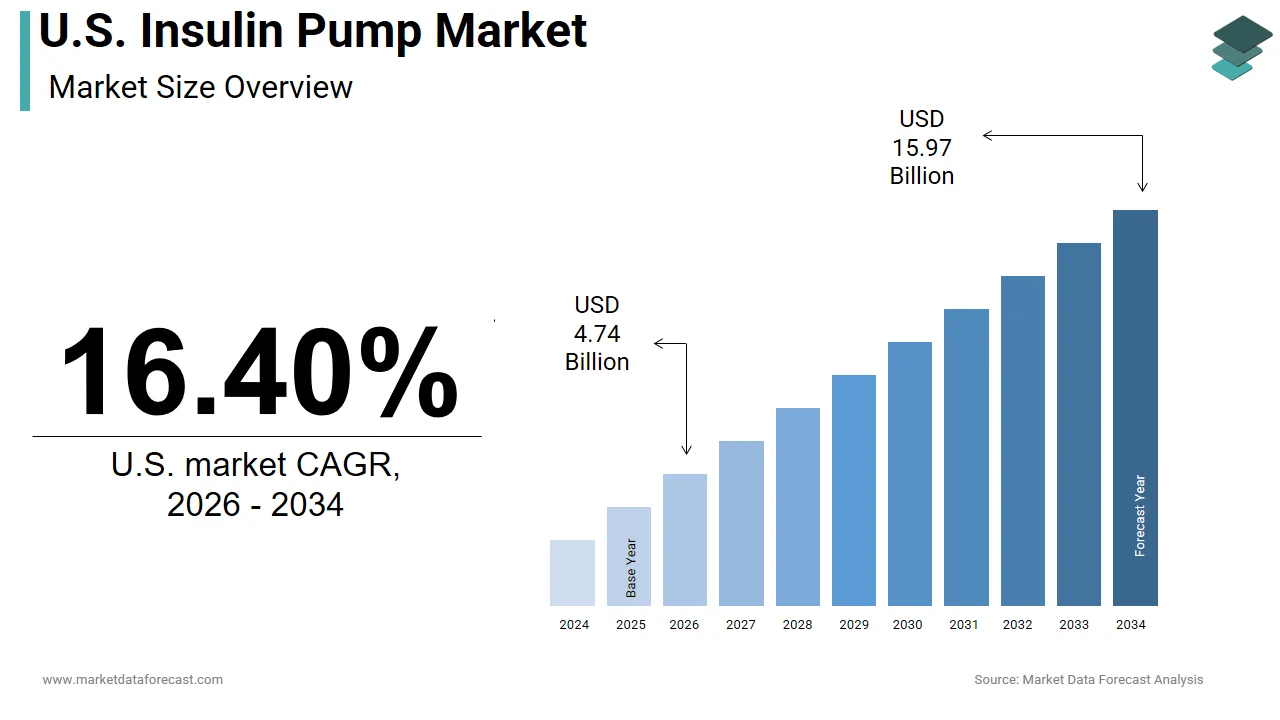
- Market Valuation: Valued at USD 4.07 billion in 2025, estimated at USD 4.74 billion in 2026, and projected to reach USD 15.97 billion by 2034, registering a strong CAGR of 16.40% (2026–2034).
- Primary Growth Drivers: Escalating prevalence of diabetes across the United States; rapid technological innovations in hybrid closed-loop automated insulin delivery systems; and increasing clinical endorsement of intensive insulin management.
Key Market Segment Metrics (2026–2034)
| Category | Leading Segment / Position | Growth Dynamics |
|---|---|---|
| By Product Type | Pumps Segment (held a dominant 65.6% market share in 2025 due to high upfront hardware value and hybrid closed-loop integration) | Consumables Segment is projected to grow at the fastest CAGR of 9.8% driven by recurring daily usage of infusion sets and reservoirs. |
| By Disease Indication | Type 1 Diabetes (maintained market dominance in 2025 owing to absolute physiological insulin dependency and high pediatric penetration) | Type 2 Diabetes is the fastest-growing segment (CAGR of 12.5%), driven by an expansive patient pool and growing adoption of patch pumps. |
| By Distribution Channel | Hospital Pharmacies (held the majority 55.8% share in 2025 due to professional training and clinical oversight during initiation) | Retail and Online Pharmacies are expanding rapidly at a CAGR of 14.2% driven by home delivery and direct-to-consumer models. |
Major Market Players & Market Structure
Market Structure: Highly competitive, innovation-driven medical device market characterized by continuous R&D in artificial intelligence algorithms, hybrid closed-loop interoperability, and strategic distributor partnerships.
Key Companies: Animus Corporation (U.S.), Asante (U.S.), Cellnovo Ltd. (U.K.), Insulet Corporation (U.S.), Medtronic, Inc. (U.S.), Nipro Diagnostic, Inc. (Japan), Ypsomed (Switzerland), Roche (Switzerland), Sooil Development Co., Ltd. (Korea), and Tandem Diabetes Care, Inc. (U.S.).
U.S. Insulin Pump Market Size
The U.S. insulin pump market was valued at USD 4.07 billion in 2025, is estimated to reach USD 4.74 billion in 2026, and is projected to reach USD 15.97 billion by 2034, growing at a CAGR of 16.40% from 2026 to 2034.
An insulin pump is a small, wearable, battery-powered medical device that continuously delivers rapid-acting insulin to help manage blood glucose levels. These systems replace multiple daily injections by providing a steady basal rate and bolus doses for meals, offering enhanced glycemic control and flexibility. According to the Centers for Disease Control and Prevention, approximately 38.4 million Americans have diabetes, representing 11.6 percent of the population, with type 1 diabetes accounting for roughly 5 to 10 percent of these cases. As per the American Diabetes Association, about 1.6 million Americans have type 1 diabetes, and an increasing number of individuals with type 2 diabetes are adopting pump therapy to manage complex insulin regimens. The Food and Drug Administration regulates these devices as class II medical devices requiring rigorous premarket notification and post-market surveillance to ensure safety and efficacy. Technological advancements have led to the development of hybrid closed-loop systems that automatically adjust insulin delivery based on real-time glucose readings from continuous glucose monitors. The market is characterized by a shift towards tubeless patch pumps and integrated ecosystem solutions that reduce the burden of disease management. Regulatory approvals for interoperable devices allow patients to mix and match components from different manufacturers, fostering innovation and competition. This landscape is defined by the critical need for precise insulin dosing to prevent acute complications such as hypoglycemia and long-term sequelae, including neuropathy and retinopathy.
MARKET DRIVERS
Rising Prevalence of Diabetes and Shift Towards Intensive Management
The escalating incidence of diabetes across the United States is a key factor for sustained demand in the United States insulin pump market. According to the Centers for Disease Control and Prevention, the total number of Americans with diabetes has risen to 40.1 million, with approximately 1.5 million new cases diagnosed annually. As per the National Institute of Diabetes and Digestive and Kidney Diseases, the prevalence of type 1 diabetes in children and adolescents has increased by approximately 2 percent per year over the past two decades. This demographic expansion creates a growing base of patients who require lifelong insulin therapy. Furthermore, clinical guidelines from the American Diabetes Association increasingly recommend intensive insulin management using pumps for both type 1 and selected type 2 patients to achieve target hemoglobin A1c levels. Studies indicate that pump therapy can reduce HbA1c by 0.5 to 1.0 percent compared to multiple daily injections, significantly lowering the risk of microvascular complications. The aging population also contributes to demand as older adults with long-standing diabetes seek technologies that simplify dosing and reduce injection fatigue. According to the Endocrine Society, the adoption of pump therapy among adults with type 2 diabetes is accelerating due to the complexity of their regimens and the need for precise basal rate adjustments. This convergence of rising disease prevalence and clinical endorsement of advanced delivery methods drives robust market growth.
Technological Advancements in Hybrid Closed Loop Systems
Rapid innovation in automated insulin delivery systems significantly propels the adoption of modern insulin pumps among diverse patient segments, which further contributes to the expansion of the United States insulin pump market. According to the Food and Drug Administration, several hybrid closed-loop systems have received approval, allowing the pump to communicate with a continuous glucose monitor to automatically adjust basal insulin rates. As per clinical trials published in the New England Journal of Medicine, these automated systems increase time in range by 10 to 15 percent compared to standard pump therapy, reducing the cognitive burden on patients. The integration of artificial intelligence algorithms enables predictive dosing that anticipates glucose trends rather than merely reacting to them. This technological leap addresses a major barrier to pump adoption, which is the fear of hypoglycemia and the effort required for constant manual adjustments. Furthermore, the development of dual hormone pumps that deliver both insulin and glucagon is underway, promising even tighter control. The seamless connectivity with smartphone apps allows for remote monitoring by caregivers, enhancing safety for pediatric patients. These advancements transform insulin pumps from simple delivery devices into intelligent health management systems, driving replacement cycles and attracting new users seeking superior glycemic outcomes.
MARKET RESTRAINTS
High Cost of Devices and Limited Insurance Reimbursement
The substantial financial burden associated with acquiring and maintaining insulin pumps remains a major barrier to market penetration for many Americans, thereby hampering the growth of the United States insulin pump market. According to the American Diabetes Association, the average cost of an insulin pump ranges from 4000 to 6000 dollars, with annual supplies adding another 3000 to 5000 dollars. As per the Kaiser Family Foundation, despite the Affordable Care Act, many private insurance plans impose high deductibles and copayments for durable medical equipment, making out-of-pocket expenses prohibitive for low and middle-income families. Medicare coverage for insulin pumps has historically been restrictive, although recent changes under the Inflation Reduction Act aim to cap insulin costs. Device access remains uneven for beneficiaries. Furthermore, prior authorization requirements and step therapy protocols imposed by insurers create administrative hurdles that delay access to necessary technology. The disparity in coverage between commercial insurance and Medicaid programs exacerbates health inequities, leaving vulnerable populations reliant on less effective injection therapies. The high cost of ownership will continue to restrict overall market growth without comprehensive reimbursement reform. As a result, this limits the widespread adoption of life-saving pump technology among economically disadvantaged patients.
Complexity of Device Operation and Patient Training Requirements
The technical complexity of these systems and the extensive training required for safe operation significantly hinder broader adoption among certain patient demographics, which obstructs the expansion of the United States insulin pump market. According to the Association of Diabetes Care and Education Specialists, mastering pump functions such as basal rate programming, bolus calculations, and site rotation requires significant time and cognitive effort. As per clinical surveillance data, the true first-year discontinuation rate for new pump users averages around 7%, with long-term device abandonment frequently driven by physical wear interference, skin reactions, and overall diabetes burnout. Elderly patients and those with limited health literacy often struggle with the digital interfaces and troubleshooting procedures, leading to potential dosing errors. According to the Food and Drug Administration, adverse event reports frequently cite user error as a contributing factor to hyperglycemic or hypoglycemic episodes in pump users. The need for continuous education and support places a burden on healthcare systems, which may lack sufficient resources for dedicated diabetes educators. Furthermore, the anxiety associated with device malfunction or site failure can deter patients from initiating pump therapy. This operational complexity will remain a persistent restraint on market expansion until user interfaces become more intuitive and support systems more robust.
MARKET OPPORTUNITIES
Expanding Insulin Pump Adoption in Type 2 Diabetes Patients
The growing application of insulin pump therapy for individuals with type 2 diabetes unlocks potential for the United States insulin pump market expansion. This is beyond the traditional type 1 demographic. According to the Centers for Disease Control and Prevention, type 2 diabetes accounts for 90 to 95 percent of all diabetes cases in the United States, representing a vastly larger addressable market. As per the American Diabetes Association, an increasing number of type 2 patients require intensive insulin therapy due to beta-cell decline and insulin resistance. Clinical studies demonstrate that pump therapy can improve glycemic control and reduce hypoglycemia risk in type 2 patients who struggle with multiple daily injections. The development of simplified patch pumps with fewer buttons and automated features makes the technology more accessible to older adults and those less tech-savvy. Furthermore, value-based care models incentivize providers to adopt technologies that reduce hospitalizations and complications associated with poor glucose control. According to industry analyses, the penetration rate of pumps in the type 2 population remains below 5 percent, indicating significant room for growth. Manufacturers can unlock a new revenue stream by targeting this underserved segment with tailored educational programs and cost-effective devices. Doing so will help improve outcomes for millions of Americans.
Integration with Digital Health Platforms and Remote Monitoring
The integration of insulin pumps with digital health ecosystems and remote monitoring tools offers a significant opportunity for enhancing patient engagement and clinical outcomes, which is expected to boost the expansion of the United States insulin pump market. According to the Office of the National Coordinator for Health Information Technology, the adoption of telehealth and remote patient monitoring has accelerated, creating infrastructure for connected diabetes care. As per industry developments, modern pumps transmit real-time data to cloud-based platforms, allowing healthcare providers to review glucose trends and adjust therapy remotely. This capability reduces the frequency of in-person visits and enables timely interventions during periods of instability. According to the American Telemedicine Association, remote monitoring has been shown to improve HbA1c levels and patient satisfaction by providing continuous support and feedback. Furthermore, the use of artificial intelligence to analyze large datasets can identify patterns and predict hypoglycemic events, enabling proactive management. Insurance payers are increasingly recognizing the value of digital therapeutics and may offer incentives for patients who use connected devices to demonstrate adherence. Manufacturers can differentiate their products by leveraging these digital capabilities. Consequently, they can create sticky ecosystems that enhance both patient loyalty and clinical efficacy.
MARKET CHALLENGES
Risk of Device Malfunction and Cybersecurity Vulnerabilities
The potential for technical failures and cybersecurity threats is a significant barrier to the reliability and trustworthiness of these systems, which slows down the growth of the United States insulin pump market. According to the Food and Drug Administration, recalls due to software glitches, battery issues, or occlusion alarms occur periodically, disrupting therapy and posing safety risks. As per research highlighted by the Diabetes Technology Society, vulnerabilities in wireless communication protocols could allow unauthorized access to pump controls, potentially leading to malicious insulin dosing. Although no widespread attacks have been reported, the theoretical risk raises concerns among patients and clinicians regarding the safety of connected devices. Manufacturers must invest heavily in encryption and security testing to protect against evolving cyber threats, which increases development costs and time to market. According to the Department of Homeland Security, medical device cybersecurity is a national priority requiring strict compliance with evolving standards. Furthermore, device malfunctions such as infusion set kinks or pump stoppages can lead to the rapid onset of diabetic ketoacidosis if not detected quickly. Addressing these technical and security challenges requires ongoing vigilance, robust quality assurance, and transparent communication with users to maintain confidence in pump technology.
Supply Chain Disruptions and Manufacturing Constraints
Global supply chain vulnerabilities and manufacturing constraints are persistent challenges to the consistent availability of insulin pumps and supplies, which hold back the expansion of the United States insulin pump market. According to the Semiconductor Industry Association, the shortage of microchips has impacted the production of various medical devices, including insulin pumps, which rely on sophisticated electronics. As per industry reports, lead times for critical components such as sensors, motors, and batteries have extended, causing delays in product launches and inventory replenishment. The concentration of manufacturing facilities in specific geographic regions increases exposure to geopolitical tensions, natural disasters, and logistical bottlenecks. According to the Bureau of Labor Statistics, inflationary pressures on raw materials and transportation costs have elevated production expenses, squeezing profit margins for manufacturers. These cost increases may be passed on to consumers, potentially dampening demand in price-sensitive segments. Furthermore, the reliance on single-source suppliers for proprietary components creates risks of production halts if disruptions occur. Manufacturers must diversify their supply chains and invest in domestic sourcing strategies to enhance resilience. However, these adjustments require significant capital investment and time. The uncertainty surrounding component availability complicates long-term planning and inventory management, affecting the ability to meet fluctuating market demand efficiently and ensuring patients receive timely replacements.
REPORT COVERAGE
| REPORT METRIC | DETAILS |
| Market Size Available | 2025 to 2034 |
| Base Year | 2025 |
| Forecast Period | 2026 to 2034 |
| Segments Covered | By Product Type, Disease Indication, Distribution Channel, and Region. |
| Various Analyses Covered | Global, Regional, and Country-Level Analysis, Segment-Level Analysis, Drivers, Restraints, Opportunities, Challenges; PESTLE Analysis; Porter’s Five Forces Analysis, Competitive Landscape, Analyst Overview of Investment Opportunities |
| Countries Covered | New York, Massachusetts, Pennsylvania, Illinois, Ohio, Michigan, Texas, Florida, Georgia, California, Washington, Colorado. |
| Market Leaders Profiled | Animus Corporation (U.S.), Asante (U.S.), Cellnovo Ltd. (U.K.), Insulet Corporation (U.S.), Medtronics, Inc. (U.S.), Nipro Diagnostic, Inc. (Japan), Ypsomed (Switzerland), Roche (Switzerland), Sooil Development Co., Ltd. (Korea) and Tandem Diabetes Care, Inc. (U.S.). |
SEGMENTAL ANALYSIS
By Product Type Insights
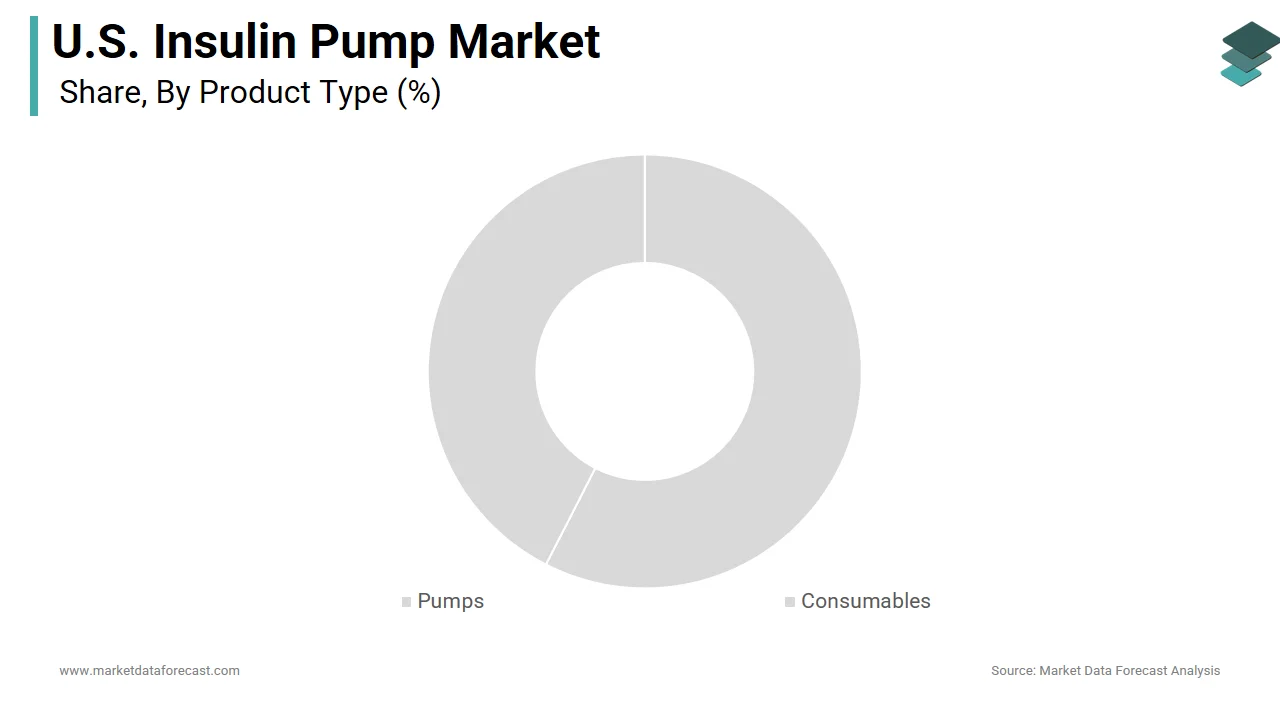
The pumps segment led the United States insulin pump market by accounting for a 65.6% share in 2025. The substantial upfront cost associated with acquiring insulin pump hardware significantly sustains the dominance of the pump segment. This category includes tethered traditional pumps and tubeless patch pumps, which constitute the primary capital equipment investment for patients initiating or upgrading therapy. Unlike consumables, which are purchased monthly at lower individual costs, the pump represents a significant one-time expenditure that drives immediate revenue recognition for manufacturers. The integration of advanced technologies such as hybrid closed-loop algorithms, color touchscreens, and wireless connectivity further elevates the unit price of modern pumps. Furthermore, the replacement cycle for pumps typically occurs every four to five years, creating recurring high-value sales opportunities. The complexity of manufacturing these precision medical devices also contributes to higher margins compared to disposable supplies. This combination of high unit price, technological sophistication, and regulated reimbursement structures ensures that the pump segment remains the primary revenue generator in the market.
In addition, the growing patient and provider preference for sophisticated hybrid closed-loop systems significantly propels the financial leadership of the pump segment. Manufacturers such as Medtronic, Tandem, and Insulet have focused their research and development efforts on integrating artificial intelligence into pump controllers, enabling predictive basal rate adjustments. These advanced features differentiate newer models from legacy devices, driving upgrade cycles among existing users. The proprietary nature of these algorithms creates brand loyalty and reduces switching rates, ensuring sustained revenue streams for incumbent manufacturers. Furthermore, the ability of these systems to integrate with specific continuous glucose monitors creates ecosystem lock-in effects. This technological differentiation, combined with proven clinical outcomes, allows manufacturers to maintain premium pricing strategies. Thus, the shift towards intelligent automated therapy reinforces the pump segment's dominant position in terms of market value and strategic importance.
The consumables segment is likely to experience the fastest CAGR of 9.8% from 2026 to 2034. Moreover, the inherent requirement for frequent replacement of disposable components drives exceptional growth in the consumables segment. This segment includes infusion sets, reservoirs, cartridges, and adhesive patches required for daily pump operation. Unlike the pump device, which is a long-term asset, consumables represent a recurring operational expense that generates steady revenue regardless of economic fluctuations. The growing installed base of pump users directly translates into increased consumption of supplies, amplifying market growth. Furthermore, the introduction of new pump models often requires compatible proprietary consumables, ensuring continued purchases from existing customers. The inability to reuse these sterile components due to infection risks mandates strict adherence to replacement schedules. This predictable consumption pattern provides manufacturers with stable cash flows and opportunities for subscription-based distribution models. The cumulative effect of millions of daily replacements across the user population positions consumables as the fastest-growing segment by volume and recurring revenue potential.
In addition, technological advancements in infusion set design aimed at improving comfort and reliability significantly accelerate segment expansion. According to sources, manufacturers are developing softer cannulas, flexible tubing, and smaller insertion profiles to reduce skin irritation and site failures. Companies like Medtronic and Tandem have introduced angled and vertical insertion options with automated inserters to enhance user experience and adherence. The development of extended wear infusion sets that can remain in place for up to seven days offers convenience for travelers and active individuals, although clinical acceptance varies. These product enhancements encourage users to try premium consumable options often at higher price points. Furthermore, the integration of smart sensors in infusion sets to detect occlusions or dislodgements adds value and drives upgrades. According to research, the availability of diverse consumable options allows patients to customize their therapy, improving satisfaction and retention. This continuous innovation cycle ensures that the consumables segment maintains robust growth momentum driven by both volume expansion and value-added features.
By Disease Indication Insights
In 2025, the Type 1 diabetes segment maintained dominance in the United States insulin pump market and captured a substantial share. The physiological necessity for exogenous insulin in type 1 diabetes significantly fuels the leading position of this indication segment. This condition requires exogenous insulin for survival, making pump therapy a critical management tool. According to the National Institute of Diabetes and Digestive and Kidney Diseases, individuals with type 1 diabetes produce little to no insulin due to autoimmune destruction of pancreatic beta cells. As per the American Diabetes Association clinical standards of care, continuous subcutaneous insulin infusion is recommended as the preferred method of delivery for most children and adults with type 1 diabetes to achieve glycemic targets. This universal requirement creates a large and consistent addressable market for pump manufacturers. The complexity of managing blood glucose levels without endogenous insulin regulation makes the precision of pump therapy particularly valuable for preventing acute complications such as diabetic ketoacidosis. Furthermore, the long duration of the disease means that patients remain on therapy for decades, ensuring long-term device and consumable usage. The strong advocacy from patient organizations and healthcare providers reinforces the standard of care status of pumps for type 1 diabetes. This clinical imperative, combined with high disease awareness, ensures that type 1 diabetes remains the primary driver of insulin pump adoption and revenue.
Moreover, the widespread adoption of insulin pumps in pediatric populations with type 1 diabetes significantly reinforces segment leadership. As per the American Academy of Pediatrics, insulin pumps are increasingly recommended for young patients due to their ability to deliver small, precise doses and accommodate variable eating schedules. Parents and caregivers prefer pumps for the remote monitoring capabilities and reduced need for multiple daily injections, which improves the quality of life for children. According to the T1D Exchange registry, over 60 percent of children with type 1 diabetes in the US use insulin pumps, reflecting high penetration rates in this demographic. Early initiation of pump therapy establishes brand loyalty and habitual use that often continues into adulthood. Furthermore, school and childcare facilities are becoming more accustomed to supporting pump users, reducing barriers to adoption. The emotional and psychological benefits of reduced injection burden also drive preference among families. This foundational usage in the pediatric population creates a sustainable pipeline of lifelong pump users, ensuring the continued dominance of the type 1 diabetes segment.
The type 2 diabetes segment is on the rise and is expected to be the fastest-growing segment in the market by witnessing a CAGR of 12.5% from 2026 to 2034 due to the vast size of the type 2 population and evolving treatment paradigms. Also, the massive prevalence of type 2 diabetes and the progressive nature of the disease drive rapid expansion in this segment. According to the Centers for Disease Control and Prevention, type 2 diabetes accounts for 90 to 95 percent of all diabetes cases in the United States, affecting over 35 million adults. As per the American Diabetes Association, a significant proportion of these individuals eventually require insulin therapy as beta-cell function declines over time. Historically, pumps were reserved for type 1 patients, but clinical evidence now supports their efficacy in type 2 diabetes for improving glycemic control and reducing hypoglycemia. According to the Endocrine Society guidelines, pump therapy is recommended for type 2 patients who fail to achieve targets with multiple daily injections or who experience significant glucose variability. The sheer size of the type 2 population offers a vastly larger addressable market compared to type 1. Furthermore, the aging population contributes to higher incidence rates and the complexity of care. According to industry analyses, pump penetration in type 2 diabetes remains below 5 percent, indicating substantial untapped potential. As awareness increases and stigma decreases, more type 2 patients are seeking advanced delivery methods. This convergence of high disease burden and expanding clinical indications positions type 2 diabetes as the fastest-growing segment in the insulin pump market.
Furthermore, the development of user-friendly patch pumps and simplified interfaces significantly accelerates pump adoption among type 2 patients. According to industry reports, tubeless patch pumps are particularly appealing to type 2 users who may be less tech savvy or reluctant to wear visible tubing. As per clinical data, patch pumps offer discreet wear and easier insertion, which reduces the perceived burden of therapy. The elimination of complex programming requirements in some newer models makes pumps more accessible to older adults who comprise a large portion of the type 2 population. According to the Journal of Clinical Endocrinology and Metabolism, studies show that type 2 patients using patch pumps achieve comparable HbA1c reductions to those using traditional pumps with higher satisfaction scores. Insurance coverage for pumps in type 2 diabetes is also improving as payers recognize the long-term cost savings from reduced complications. Furthermore, direct-to-consumer marketing by manufacturers targets type 2 patients, emphasizing lifestyle freedom and ease of use. These factors, combined with the vast patient pool, create powerful growth momentum for the type 2 diabetes segment.
By Distribution Channel Insights
The hospital pharmacies segment held the majority share of 55.8% of the United States insulin pump market in 2025. The necessity for professional training and clinical oversight during pump initiation is a key factor supporting the supremacy of hospital pharmacies. This channel serves as the primary point of entry for patients initiating pump therapy under clinical supervision. According to the Association of Diabetes Care and Education Specialists, starting insulin pump therapy requires comprehensive education on device operation, carb counting, and troubleshooting, which is typically provided in hospital or clinic settings. This integrated care model reduces the risk of user error and enhances patient safety during the critical learning phase. Furthermore, hospital pharmacies often have established contracts with manufacturers, ensuring reliable supply and competitive pricing for institutional purchases. The ability to bill insurance directly and handle prior authorization processes efficiently makes hospitals a preferred channel for complex durable medical equipment. According to patient surveys, the confidence gained from hands-on training in a clinical setting increases adherence and satisfaction. This combination of educational support, clinical expertise, and administrative efficiency ensures that hospital pharmacies remain the primary channel for initial pump distribution.
Moreover, the integration of pump dispensing with electronic health records and comprehensive care coordination significantly reinforces hospital pharmacy leadership. This seamless process reduces delays and ensures that patients receive timely access to therapy. Hospital pharmacies also coordinate with outpatient services for follow-up care, creating a continuum of support that retains patients within the system. Furthermore, academic medical centers often participate in clinical trials for new pump technologies, giving them early access to innovative devices. This leadership in research and development attracts patients seeking cutting-edge treatments. This structural integration of clinical, administrative, and technological resources ensures sustained dominance for hospital pharmacies.
On the contrary, the retail and online pharmacy segment is expected to exhibit a noteworthy CAGR of 14.2% over the forecast period, owing to convenience, accessibility, and the rise of direct-to-consumer models. In addition, the increasing preference for convenient home delivery and direct-to-consumer purchasing options significantly drives expansion in the retail and online pharmacy segment. As per e-commerce trends, patients appreciate the ability to compare prices, read reviews, and order devices from the comfort of their homes. The rise of digital health platforms allows users to consult with remote providers and have pumps shipped directly to them, bypassing traditional brick-and-mortar constraints. According to Amazon Pharmacy and other online retailers, the availability of automated refill reminders and subscription services enhances adherence and customer loyalty. Furthermore, the COVID-19 pandemic accelerated the adoption of telehealth and remote dispensing, normalizing online acquisition of medical devices. The ability to access a wider variety of brands and models online empowers consumers to make informed choices. This shift towards digital convenience and autonomy positions retail and online pharmacies as the fastest-growing distribution channel.
Also, strategic partnerships between manufacturers and specialty pharmacy networks significantly accelerate growth in this segment. According to industry analyses, major pump manufacturers have established relationships with national specialty pharmacies to streamline insurance verification and shipping processes. As per payer data, many insurance plans mandate the use of specific specialty pharmacies for durable medical equipment dispensing to manage costs and ensure compliance. These pharmacies offer dedicated customer support teams that assist with prior authorizations and billing issues, reducing administrative burden for patients. This hybrid model combines the convenience of home delivery with professional support, enhancing patient satisfaction. Furthermore, retail chains like CVS and Walgreens have expanded their specialty pharmacy capabilities to capture market share. According to retail reports, these chains leverage their extensive logistics networks to ensure rapid and reliable delivery of temperature-sensitive supplies. The combination of insurance integration, professional support, and logistical efficiency drives robust growth for the retail and online pharmacy channel.
COUNTRY ANALYSIS
U.S. Insulin Pump Market Analysis
The United States was the top performer in the global insulin pump market, accounting for a 45.6% share in 2025. Moreover, the substantial burden of diabetes and the sophisticated healthcare ecosystem in the United States significantly propel its market dominance. This market prominence shows the convergence of high diabetes prevalence, advanced healthcare infrastructure, and robust reimbursement mechanisms. According to the Centers for Disease Control and Prevention, approximately 40.1 million Americans have diabetes; however, countries like China and India create the largest patient pools globally for diabetes care. As per the National Institute of Diabetes and Digestive and Kidney Diseases, the US leads in the adoption of advanced diabetes technologies due to widespread access to endocrinologists and diabetes educators. The presence of major global manufacturers such as Medtronic, Tandem, and Insulet within the US fosters a competitive environment that drives innovation and rapid product launches. Furthermore, the Food and Drug Administration maintains a rigorous yet efficient regulatory pathway that encourages the development of next-generation pumps and automated systems. According to the American Diabetes Association, clinical guidelines in the US strongly advocate for intensive insulin management, promoting pump usage. The integration of continuous glucose monitors with pumps is more prevalent in the US than in other regions due to favorable insurance coverage. This combination of high disease burden, technological leadership, and supportive clinical practices ensures that the United States remains the central hub for insulin pump innovation and consumption.
Furthermore, the comprehensive reimbursement landscape and high disposable income in the United States significantly sustain market growth. According to the Centers for Medicare and Medicaid Services, Medicare and most private insurers cover insulin pumps as durable medical equipment, reducing out-of-pocket costs for beneficiaries. As per the Kaiser Family Foundation, the Affordable Care Act mandates coverage for pre-existing conditions, ensuring that individuals with diabetes can access necessary technologies. Furthermore, the Inflation Reduction Act has introduced caps on insulin costs, alleviating financial strain and encouraging adherence to therapy. High consumer spending power allows patients to afford premium pumps and advanced features that may not be accessible in other markets. According to the Bureau of Economic Analysis, personal consumption expenditures on health care remain robust, supporting the adoption of high-value medical devices. The strong advocacy from patient organizations such as JDRF influences policy and raises awareness, driving demand. This convergence of financial accessibility, regulatory support, and consumer demand ensures that the United States maintains its leadership position in the global insulin pump market.
COMPETITIVE LANDSCAPE
The United States insulin pump market features intense competition among established medical device corporations and innovative technology firms. Incumbent players leverage extensive clinical data, regulatory expertise, and robust distribution networks to maintain leadership while challengers differentiate through tubeless designs and user-friendly interfaces. Competition centers on automation capabilities, with companies investing heavily in artificial intelligence algorithms to optimize glycemic control and reduce user burden. Interoperability with continuous glucose monitors has become a critical factor as patients seek integrated ecosystems that simplify management. Pricing strategies are influenced by insurance reimbursement policies and manufacturer rebates, creating a complex financial landscape for consumers. Patent litigation and intellectual property disputes occasionally arise as firms protect proprietary technologies such as infusion set mechanisms and control algorithms. Customer service and educational support differentiate brands as users require ongoing assistance for device operation. The shift towards outpatient and home care models encourages remote monitoring features that enhance safety and convenience. This dynamic environment drives continuous improvement in device functionality, safety, and accessibility, ensuring patients benefit from advanced therapeutic options while manufacturers strive for sustainable growth and market relevance in a highly regulated sector.
KEY MARKET PLAYERS
Some of the companies that are playing a dominating role in the U.S. insulin pump market include
- Animus Corporation (U.S.)
- Asante (U.S.)
- Cellnovo Ltd.
- Insulet Corporation (U.S.)
- Medtronics, Inc. (U.S.)
- Nipro Diagnostic, Inc.
- Ypsomed
- Roche
- Sooil Development Co., Ltd.
- Tandem Diabetes Care, Inc. (U.S.)
TOP PLAYERS IN THE MARKET
- Medtronic plc maintains a prominent position in the United States insulin pump market through its comprehensive portfolio of hybrid closed-loop systems. The company leverages its MiniMed technology to integrate continuous glucose monitoring with automated insulin delivery. The company actively collaborates with healthcare providers to enhance patient education and support services. Medtronic also invests heavily in research and development to improve sensor accuracy and pump reliability. These initiatives reinforce its commitment to innovation while addressing the complex needs of individuals with type 1 and type 2 diabetes across diverse demographic segments.
- Tandem Diabetes Care Inc contributes significantly to the US market through its t:slim X2 insulin pump platform, which utilizes durable medical device design principles. The company focuses on software upgradability, allowing users to access new features without replacing hardware. Tandem recently expanded its Control IQ technology capabilities to include sleep mode and exercise settings for personalized automation. The company strengthens its position by partnering with continuous glucose monitor manufacturers to ensure seamless interoperability. Tandem also emphasizes direct-to-consumer engagement through digital health platforms that provide remote coaching. These efforts enhance user experience and loyalty while demonstrating clinical efficacy in real-world settings for both adult and pediatric populations.
- Insulet Corporation plays a pivotal role in the US insulin pump market with its Omnipod tubeless patch pump system. The company distinguishes itself by offering a waterproof disposable device that eliminates the need for tubing. The company strengthens its market position by expanding insurance coverage access and simplifying the onboarding process for new users. Insulet also invests in manufacturing capacity to meet growing demand for its convenient and discreet therapy option. These strategic actions broaden the addressable market to include type 2 diabetes patients and those seeking simplified management solutions without compromising clinical outcomes.
TOP STRATEGIES USED BY KEY MARKET PARTICIPANTS
Key players in the United States insulin pump market employ strategic approaches to maintain competitive advantages and drive growth. Companies prioritize technological innovation by developing hybrid closed-loop systems that automate insulin delivery based on real-time glucose data. Strategic partnerships with continuous glucose monitor manufacturers ensure seamless interoperability and enhanced user experience. Manufacturers expand indications for use to include type 2 diabetes patients, thereby broadening the addressable market significantly. Investment in direct-to-consumer marketing and digital health platforms enhances patient engagement and brand loyalty. Regulatory approvals for software updates allow companies to add features without hardware replacement, reducing costs. Focus on ease of use and discreet designs addresses patient preferences for convenience and aesthetics. These coordinated efforts enable participants to navigate reimbursement complexities while delivering superior clinical outcomes and sustaining long-term revenue growth in a competitive landscape.
MARKET SEGMENTATION
This research report on the U.S. insulin pump market has been segmented and sub-segmented into the following categories.
By Product Type
-
Pumps
-
Tethered Pumps
-
Patch Pumps
-
Others
-
-
Consumables
By Disease Indication
- Type 1 Diabetes
- Type 2 Diabetes
By Distribution Channel
- Hospital Pharmacy
- Retail & Online Pharmacy
By Country
- New York
- Texas
- Florida
- Georgia
- California
- Rest of U.S.