- Product Description Description
- Table of Contents TOC
- List of Table & Figure LOT
- Get Free Sample PDF Sample PDF
U.S. Medical Equipment Market Size
The U.S. medical equipment market size was valued at USD 749.07 billion in 2025 and is anticipated to reach USD 814.69 billion in 2025 from USD 1594.95 billion by 2034, growing at a CAGR of 8.76% during the forecast period from 2026 to 2034.
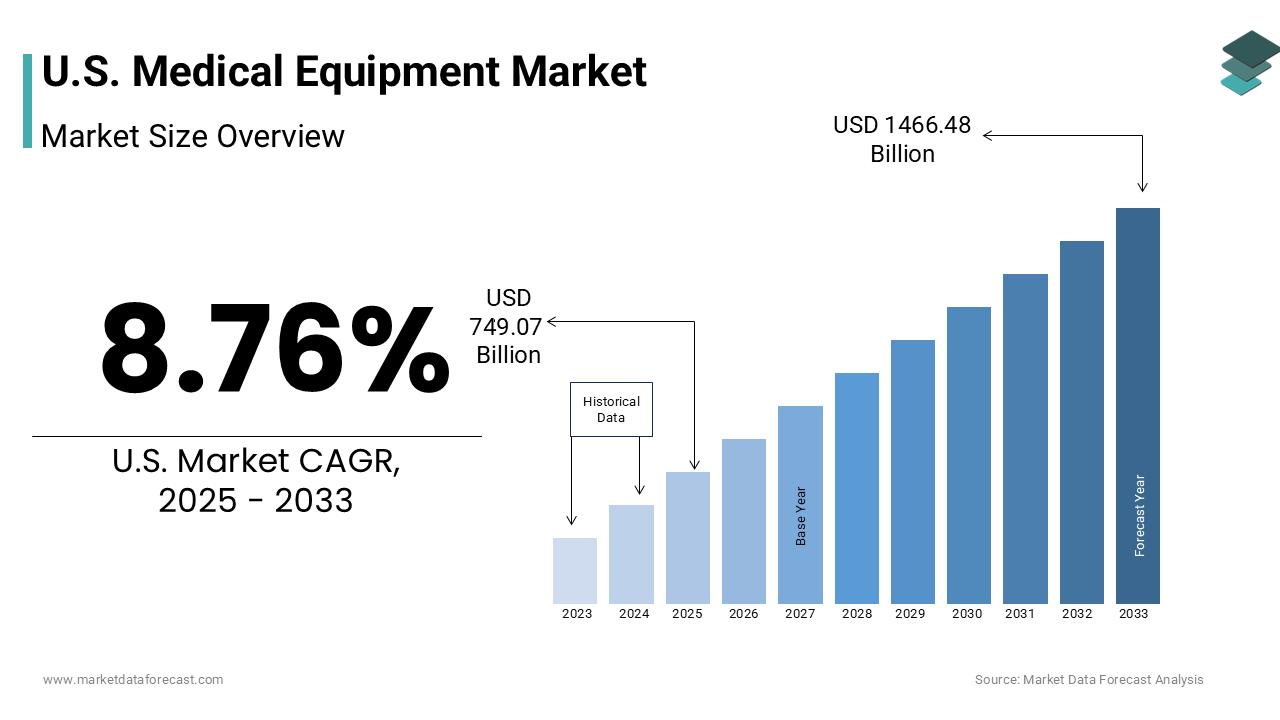
The United States is likely to lead the global medical equipment market through the expansion of decentralized care models and the integration of advanced diagnostic technologies over the next few years. According to the Centers for Disease Control and Prevention, chronic diseases such as heart disease, cancer, and diabetes account for 90% of the nation's $4.1 trillion in annual healthcare costs, driving sustained demand for advanced diagnostic and therapeutic technologies. As per the Food and Drug Administration, the agency oversees more than 6,000 different types of medical devices ranging from simple tongue depressors to complex robotic surgical systems, ensuring safety and efficacy through rigorous regulatory pathways. The National Institutes of Health notes that biomedical research funding exceeding $47 billion annually fuels innovation in device technology, particularly in areas like minimally invasive surgery and personalized medicine. The aging population further amplifies demand with the U.S. Census Bureau projecting that individuals aged 65 and older will comprise 21% of the population by 2030. This demographic shift necessitates increased utilization of home healthcare equipment and remote patient monitoring solutions. The market is characterized by rapid technological integration including artificial intelligence and Internet of Things connectivity, which enhance clinical outcomes and operational efficiency within hospitals and ambulatory care centers.
MARKET DRIVERS
Aging Population and Rising Prevalence of Chronic Diseases
The demographic transition toward an older population combined with the increasing burden of chronic conditions is fuelling the expansion of the medical equipment market growth in the U.S. According to the U.S. Census Bureau, the population aged 65 and older is projected to reach 95 million by 2060, nearly doubling from current levels. As per the Centers for Disease Control and Prevention, six in ten adults in the United States have a chronic disease and four in ten have two or more, creating a substantial need for continuous monitoring and intervention. Conditions such as cardiovascular disease, respiratory disorders, and diabetes require specialized equipment including pacemakers, ventilators, and glucose monitoring systems. The National Institute on Aging highlights that older adults are disproportionately affected by mobility issues and sensory impairments, driving demand for assistive devices and rehabilitation equipment. Furthermore, the prevalence of age related conditions like osteoarthritis and macular degeneration necessitates orthopedic implants and ophthalmic devices. According to the American Heart Association, cardiovascular diseases remain the leading cause of death, requiring extensive use of diagnostic imaging and interventional cardiology tools. This demographic reality ensures a consistent and growing base of patients requiring medical interventions. Healthcare providers must invest in advanced equipment to manage the complexity of care for multimorbid patients. Consequently, the structural growth of the elderly population creates a robust and enduring demand trajectory for diverse medical equipment categories across acute and post -acute care settings.
Technological Advancements in Minimally Invasive and Robotic Surgery
Rapid innovation in surgical technologies, particularly robotics and minimally invasive techniques is further boosting the U.S. medical equipment market expansion. According to the Society of American Gastrointestinal and Endoscopic Surgeons, minimally invasive procedures result in shorter hospital stays, reduced pain, and faster recovery times compared to traditional open surgeries. As per the American College of Surgeons, robotic-assisted surgery was used in approximately 15% of all general surgery procedures by 2024, reflecting surgeon and patient preference for precision and safety. Manufacturers are developing next generation robotic platforms with enhanced dexterity, three dimensional visualization, and haptic feedback, enabling complex procedures in confined anatomical spaces. The Food and Drug Administration has approved numerous novel surgical robots for specialties including urology, gynecology, and general surgery, expanding the addressable market. According to the Journal of the American Medical Association, robotic surgery reduces blood loss and complication rates, leading to lower overall healthcare costs despite higher initial equipment investment. Hospitals are increasingly investing in these systems to attract top surgical talent and maintain competitive advantage. Furthermore, the integration of artificial intelligence into surgical robots allows for real time data analysis and predictive guidance, enhancing procedural accuracy. This technological evolution drives replacement cycles and encourages the adoption of complementary equipment such as advanced endoscopes and energy based surgical tools. Consequently, the shift toward precision surgery sustains high demand for sophisticated medical devices.
MARKET RESTRAINTS
Stringent Regulatory Requirements and Lengthy Approval Processes
The rigorous regulatory framework governing medical device approval in the United States presents a significant barrier to the U.S. medical equipment market. According to the Food and Drug Administration, the premarket approval process for Class III high risk devices can take several years and cost millions of dollars in clinical trials and administrative fees. As per the Medical Device Innovation Consortium, the average time from concept to market for a new medical device is approximately five to seven years, reflecting the extensive testing required to demonstrate safety and efficacy. Regulatory agencies mandate comprehensive data on biocompatibility, sterility, and performance, which delays product launches and increases development risks. Any changes to approved devices often require additional submissions, further extending timelines. According to the Advanced Medical Technology Association, small and medium sized enterprises often struggle with the resource intensity of compliance, limiting their ability to innovate and compete with larger corporations. Furthermore, evolving regulations regarding cybersecurity and software as a medical device add layers of complexity for digital health products. The uncertainty surrounding regulatory decisions can deter investment in early stage technologies. Consequently, the prolonged approval process restricts the flow of innovative products into the market and increases the financial burden on manufacturers, potentially stifling competition and delaying patient access to breakthrough technologies.
High Costs of Advanced Equipment and Reimbursement Constraints
The substantial capital expenditure required for acquiring advanced medical equipment, combined with restrictive reimbursement policies is further hindering the U.S. medical equipment market growth. According to the American Hospital Association, the average cost of a high field magnetic resonance imaging system exceeds $3 million, while robotic surgical platforms can cost up to $2.5 million per unit. As per the Centers for Medicare and Medicaid Services, reimbursement rates for many diagnostic and therapeutic procedures have remained stagnant or declined in real terms despite rising operational costs. Healthcare providers face pressure to justify large equipment purchases through volume and efficiency, which is challenging in value based care models that prioritize outcomes over service quantity. Private insurers also impose prior authorization requirements and narrow coverage criteria, limiting patient access to expensive technologies. According to the Kaufman Hall National Hospital Operating Report, many hospitals operate on thin margins, making it difficult to fund capital upgrades without incurring significant debt. Furthermore, the total cost of ownership includes maintenance, training, and disposables, which adds to the financial burden. These economic constraints force providers to delay replacements or opt for refurbished equipment, slowing the adoption of new technologies. Consequently, high upfront costs and uncertain reimbursement landscapes act as persistent restraints on market expansion, particularly for smaller community hospitals and independent practices.
MARKET OPPORTUNITIES
Expansion of Remote Patient Monitoring and Home Healthcare Devices
The growing emphasis on decentralized care and remote patient monitoring is a substantial opportunity for market expansion in the home healthcare segment. According to the Centers for Disease Control and Prevention, approximately 5.8 million adults in the U.S. received home health care services in 2024, a number driven by an aging population and preference for home based recovery. As per the Federal Communications Commission, broadband expansion initiatives facilitate the transmission of real time health data from wearable devices to healthcare providers, enabling continuous monitoring of chronic conditions. Manufacturers are developing smart connected devices such as blood pressure monitors, pulse oximeters, and glucose sensors that integrate with mobile applications and electronic health records. The National Institute for Occupational Safety and Health notes that remote monitoring reduces hospital readmissions and improves patient adherence to treatment plans. Furthermore, the COVID 19 pandemic accelerated the adoption of telehealth and remote diagnostics, creating a lasting shift in care delivery models. According to the American Telemedicine Association, remote patient monitoring can reduce healthcare costs by up to 38% for high risk patients. Insurance payers are increasingly reimbursing for remote monitoring services, encouraging providers to invest in these technologies. This trend opens new revenue streams for equipment manufacturers beyond traditional hospital settings. By focusing on user friendly, portable, and connected devices, companies can capture a growing market of patients managing health at home.
Integration of Artificial Intelligence and Data Analytics in Diagnostic Equipment
The incorporation of artificial intelligence and advanced data analytics into diagnostic medical equipment offers significant potential for the U.S. market expansion. According to the National Institutes of Health, AI algorithms can analyze medical images such as X rays, CT scans, and MRIs with speed and precision comparable to or exceeding human radiologists. As per the Radiological Society of North America, AI enabled diagnostic tools can detect early signs of diseases like cancer and neurological disorders, improving patient outcomes through timely intervention. Manufacturers are embedding AI capabilities directly into imaging systems to provide real time decision support and automate routine tasks. This integration reduces workload for clinicians and minimizes diagnostic errors. The Food and Drug Administration has established a digital health center of excellence to streamline the review of AI based medical devices, fostering innovation. According to McKinsey and Company, AI applications in healthcare could generate up to $100 billion in annual value through improved productivity and clinical outcomes. Furthermore, predictive analytics embedded in patient monitoring equipment can alert staff to deteriorating conditions before critical events occur. This technological convergence transforms diagnostic equipment from passive tools into intelligent systems. By leveraging AI, manufacturers can differentiate their products and offer value added solutions that enhance clinical workflow and diagnostic confidence.
MARKET CHALLENGES
Supply Chain Vulnerabilities and Raw Material Shortages
Global supply chain disruptions and shortages of critical raw materials pose significant challenges to the U.S. market growth. According to the U.S. Department of Commerce, the medical device industry relies heavily on global suppliers for components such as semiconductors, plastics, and metals, which are subject to geopolitical tensions and logistical bottlenecks. As per the Semiconductor Industry Association, the global share of modern semiconductor manufacturing capacity in the U.S. was approximately 12% in 2024, leaving the domestic medical device industry vulnerable to international shortages. The concentration of manufacturing in specific regions increases exposure to natural disasters and trade restrictions. According to the Bureau of Labor Statistics, inflationary pressures on raw materials and transportation costs have elevated production expenses, squeezing profit margins for manufacturers. These cost increases are often passed on to healthcare providers, potentially dampening demand. Furthermore, the lack of domestic manufacturing capacity for certain critical components creates dependencies that compromise supply security. According to the Advanced Medical Technology Association, diversifying supply chains requires significant capital investment and time, which many companies find challenging. The unpredictability of supply availability complicates inventory management and planning, affecting the ability to meet sudden spikes in demand during health crises. Consequently, supply chain instability remains a persistent challenge affecting market consistency and accessibility.
Cybersecurity Threats and Data Privacy Concerns
The increasing connectivity of medical devices exposes them to cybersecurity threats and data privacy breaches, which is creating significant risks for manufacturers and healthcare providers and further challenging the U.S. market expansion. According to the Food and Drug Administration, the agency has issued numerous recalls and safety communications regarding vulnerabilities in connected medical devices that could allow unauthorized access or manipulation. As per the Department of Health and Human Services, data breaches involving health records affected over 133 million individuals in 2023, compromising patient safety and confidentiality. Hackers targeting medical equipment can disrupt clinical operations, manipulate device settings, or steal sensitive personal health information. The Internet of Medical Things expands the attack surface, making it difficult to secure every connected endpoint. According to the IBM Cost of a Data Breach Report, the average cost of a healthcare data breach reached $10.93 million in 2023, including remediation, legal fees, and reputational damage. Manufacturers must invest heavily in cybersecurity measures such as encryption and regular software updates to protect devices throughout their lifecycle. However, legacy devices often lack the capability to receive security patches, leaving them vulnerable. Furthermore, varying state and federal regulations regarding data privacy create compliance complexities. These security challenges erode trust in connected medical technologies and require ongoing vigilance and investment to mitigate risks effectively.
REPORT COVERAGE
| REPORT METRIC | DETAILS |
| Market Size Available | 2025 to 2034 |
| Base Year | 2025 |
| Forecast Period | 2026 to 2034 |
| Segments Covered | By Type, Product, End user, and Region. |
| Various Analyses Covered | Global, Regional, & Country Level Analysis; Segment-Level Analysis, Drivers, Restraints, Opportunities, Challenges, PESTLE Analysis, Porter’s Five Forces Analysis, Competitive Landscape, Analyst Overview of Investment Opportunities |
| Regions Covered | California, Washington, Oregon, New York, and the rest of the United States. |
| Key Market Players | Medtronic (USA), Johnson & Johnson, Abbott Laboratories, GE Healthcare, Siemens Healthineers, Boston Scientific, Stryker Corporation, Becton, Dickinson and Company (BD), Baxter International, Zimmer Biomet Holdings, 3M Company, B. Braun, Medline Industries, Intuitive Surgical, and Edwards Lifesciences. |
SEGMENTAL ANALYSIS
By Type Insights
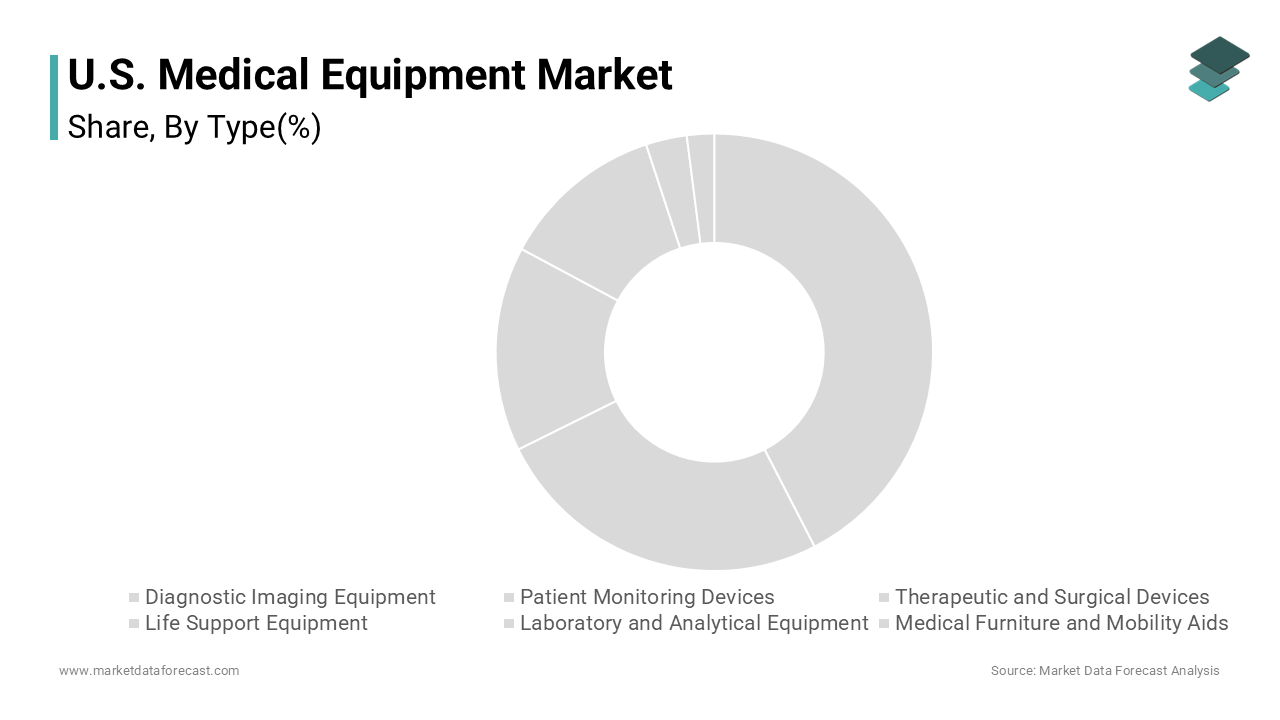
The diagnostic imaging devices segment accounted for the highest share of 29.4% of the U.S. market in 2025. The escalating burden of chronic diseases and cancer in the United States significantly sustains the dominance of diagnostic imaging devices. According to the Centers for Disease Control and Prevention, chronic diseases such as heart disease, cancer, and diabetes are the leading causes of death and disability, affecting 60% of adults. As per the American Cancer Society, approximately 2 million new cancer cases were projected to be diagnosed in 2024, requiring precise imaging for staging, treatment planning, and monitoring. Magnetic resonance imaging and computed tomography are critical for detecting tumors, assessing metastasis, and evaluating treatment response. The National Cancer Institute reports that early detection through advanced imaging improves five year survival rates by up to 20% for many cancer types. Furthermore, the aging population is more susceptible to cardiovascular and neurological conditions, necessitating frequent imaging studies. According to the American Heart Association, cardiovascular disease affects nearly half of all U.S. adults, driving demand for cardiac imaging modalities such as echocardiography and cardiac CT. The integration of imaging into routine screening protocols for breast, lung, and colorectal cancer further amplifies volume. This consistent clinical necessity combined with technological advancements in image resolution ensures that diagnostic imaging remains the largest segment in the medical equipment market.
However, the diabetes care devices segment is estimated to witness a promising CAGR of 12.2% during the forecast period in the U.S. market owing to the increasing incidence of diabetes and obesity in the United States drives exceptional growth for diabetes care devices including glucose monitors and insulin delivery systems. According to the Centers for Disease Control and Prevention, approximately 38.4 million Americans have diabetes, representing 11.6% of the population, with an additional 97.6 million having prediabetes. As per the National Institute of Diabetes and Digestive and Kidney Diseases, obesity affects over 40% of U.S. adults, serving as a primary risk factor for type 2 diabetes. This expanding patient pool creates a massive addressable market for self monitoring blood glucose devices and continuous glucose monitors. The American Diabetes Association recommends regular glucose monitoring for all insulin treated patients to prevent complications. Furthermore, the diagnosis of diabetes at younger ages due to lifestyle factors extends the duration of device usage over a lifetime. According to the International Diabetes Federation, the number of people with diabetes in North America is projected to reach 62 million by 2045. This demographic trend ensures consistent demand for consumables and hardware. Insurance coverage for diabetes supplies has also improved under the Affordable Care Act, reducing financial barriers. Consequently, the sheer scale of the diabetic population positions diabetes care devices as the fastest growing segment in the medical equipment market.
By End User Insights
The hospitals and ambulatory surgery centers segment captured the highest share of the U.S. medical equipment market in 2025. The substantial volume of surgical procedures and acute care services performed in hospitals and ambulatory surgery centers significantly sustains their market dominance. According to the American Hospital Association, U.S. hospitals conduct over 35 million outpatient procedures and see over 33 million admissions annually, requiring extensive use of surgical instruments, imaging systems, and patient monitoring devices. As per the Ambulatory Surgery Center Association, there are over 6,000 Medicare-certified ASCs in the United States, performing millions of procedures each year, driven by the shift toward minimally invasive and cost effective care settings. These facilities require high end medical equipment such as robotic surgical systems, anesthesia machines, and sterile processing units to ensure patient safety and operational efficiency. The Centers for Medicare and Medicaid Services reimburses hospitals for complex cases that demand advanced technology infrastructure. Furthermore, hospitals serve as trauma centers and intensive care units, requiring specialized equipment for critical care management. According to the Bureau of Labor Statistics, employment in hospital settings remains robust, supporting the continuous operation and maintenance of medical devices. The concentration of specialized medical professionals in these facilities also drives the adoption of innovative technologies for training and practice. This high throughput of patients and procedures ensures that hospitals and ASCs remain the largest consumers of medical equipment in the United States.
On the other end, the clinics segment is expected to showcase a CAGR of 10.5% during the forecast period in the U.S. market owing to the strategic shift toward outpatient care and preventive health services. According to the Centers for Medicare and Medicaid Services, outpatient visits now account for a significant and growing portion of all healthcare encounters, reflecting a preference for convenient and cost effective care. As per the Medical Group Management Association, independent physician practices and community clinics are increasingly equipped with diagnostic and therapeutic devices to provide comprehensive care onsite. This trend reduces the need for hospital referrals and lowers overall healthcare costs. Clinics are adopting point of care testing devices, portable ultrasound systems, and digital health tools to enhance diagnostic capabilities. The American Academy of Family Physicians emphasizes the importance of immediate diagnostic feedback in primary care settings to improve patient outcomes. Furthermore, the rise of urgent care centers and retail clinics expands access to medical equipment in non-traditional settings. For instance, these facilities require compact and user friendly devices that can be operated by diverse staff members. The decentralization of healthcare services driven by consumer demand for accessibility positions clinics as a high growth segment. This structural change in care delivery models ensures sustained demand for medical equipment tailored to outpatient environments.
REGIONAL ANALYSIS
United States Medical Equipment Market Analysis
The United States is likely to maintain its dominant position in the global medical equipment sector by fostering a regulatory environment that balances innovation with rigorous clinical oversight. The sophisticated healthcare infrastructure and substantial financial resources in the United States significantly propel its market dominance. According to the Centers for Medicare and Medicaid Services, national health expenditures reached $4.8 trillion in 2023, with a significant portion allocated to medical services and equipment. As per the Organisation for Economic Co operation and Development, the United States spends 16.6% of its GDP on healthcare, which is significantly higher than the average of other developed nations, enabling greater access to advanced technologies. The presence of world class hospitals, research institutions, and medical device manufacturers creates a dynamic innovation hub. The Food and Drug Administration maintains a rigorous yet efficient regulatory pathway that encourages the development and launch of novel medical devices. According to the Advanced Medical Technology Association, the United States is home to over 6,500 medical technology companies employing hundreds of thousands of workers. This dense cluster of expertise fosters collaboration and rapid commercialization of new products. Furthermore, the fee for service payment model historically incentivized the adoption of high technology equipment, although this is shifting toward value based care. The combination of financial capacity, regulatory clarity, and industrial strength ensures that the United States remains the largest and most influential market for medical equipment globally.
COMPETITIVE LANDSCAPE
The United States medical equipment market features intense competition among multinational corporations specialized device manufacturers and emerging technology firms. Established players leverage extensive distribution networks regulatory expertise and brand recognition to maintain leadership while agile innovators differentiate through novel mechanisms and digital integration. Competition centers on technological advancement with companies investing billions in research to develop robotic systems artificial intelligence diagnostics and minimally invasive tools. Pricing pressure from hospital group purchasing organizations and government reimbursement policies forces manufacturers to demonstrate superior clinical value and cost efficiency. Patent protection and intellectual property rights remain critical battlegrounds as firms seek to protect proprietary innovations and extend market exclusivity. Strategic collaborations with healthcare providers and technology companies accelerate product development and market entry. The shift toward outpatient care drives demand for portable and user friendly devices creating new competitive dynamics. Regulatory compliance and cybersecurity standards serve as key differentiators ensuring patient safety and data privacy. This dynamic environment fosters continuous innovation improving patient care while companies strive for sustainable growth and market relevance in a highly regulated sector.
KEY MARKET PLAYERS
A few of the major companies in the global U.S. medical equipment market include
- Medtronic (USA)
- Johnson & Johnson
- Abbott Laboratories
- GE Healthcare
- Siemens Healthineers
- Boston Scientific
- Stryker Corporation
- Becton, Dickinson and Company (BD)
- Baxter International
- Zimmer Biomet Holdings
- 3M Company
- B. Braun
- Medline Industries
- Intuitive Surgical
- Edwards Lifesciences
Top in the U.S. Medical Equipment Market
Medtronic plc
Medtronic plc stands as a global leader in the United States medical equipment market with a diversified portfolio spanning cardiovascular surgical and diabetes care solutions. The company leverages its extensive research and development capabilities to advance minimally invasive technologies and robotic assisted surgery systems. Medtronic recently strengthened its market position by launching next generation insulin pump platforms and expanding its remote patient monitoring services. The company actively collaborates with healthcare providers to integrate artificial intelligence into clinical workflows enhancing diagnostic accuracy and patient outcomes. Medtronic also invests heavily in manufacturing infrastructure to ensure reliable supply of critical devices. These initiatives reinforce its commitment to innovation while addressing complex health challenges and maintaining operational excellence across diverse therapeutic areas in the U.S. healthcare system.
Johnson and Johnson
Johnson and Johnson contributes significantly to the U.S. medical equipment market through its MedTech segment focusing on orthopedics surgery and vision care. The company utilizes advanced robotics and digital surgery platforms to transform procedural standards and improve precision. Johnson and Johnson recently expanded its orthopedic portfolio by introducing innovative joint reconstruction implants designed for enhanced durability and patient mobility. The company engages in strategic partnerships to accelerate the development of smart surgical tools and data analytics solutions. Furthermore Johnson and Johnson maintains robust clinical trial networks to generate real world evidence supporting product efficacy. These efforts strengthen its competitive stance by addressing unmet surgical needs and delivering personalized treatment solutions to patients and surgeons across the United States healthcare landscape.
Abbott Laboratories
Abbott Laboratories plays a pivotal role in the U.S. medical equipment market with strong positions in diagnostics cardiovascular and neuromodulation devices. The company is renowned for its continuous glucose monitoring systems which have revolutionized diabetes management for millions of Americans. Abbott recently announced significant investments in manufacturing capacity to support the production of next generation structural heart devices and point of care diagnostic tests. The company actively pursues collaborations with technology firms to integrate digital health capabilities into its medical devices. Abbott also emphasizes sustainability in its operations and supply chain. Through sustained innovation and strategic expansion Abbott reinforces its leadership in developing life saving diagnostic and therapeutic equipment that addresses critical health needs in the United States.
Top Strategies Used by Key Market Participants
Key players in the United States medical equipment market employ strategic approaches to maintain competitive advantages and drive growth. Companies prioritize mergers and acquisitions to acquire innovative technologies and expand product portfolios rapidly. Strategic partnerships with academic institutions and technology firms facilitate access to cutting edge research and artificial intelligence capabilities. Manufacturers invest heavily in research and development to create minimally invasive and robotic surgical solutions that improve patient outcomes. Regulatory engagement initiatives ensure streamlined approval processes and compliance with evolving safety standards. Digital transformation efforts integrate connected health features into devices enabling remote monitoring and data analytics. Market participants also focus on value based care models by demonstrating cost effectiveness and clinical efficiency. These coordinated strategies enable companies to navigate complex regulatory environments while delivering high quality medical technologies to diverse healthcare settings effectively.
MARKET SEGMENTATION
This research report on the U.S. medical equipment market has been segmented & sub-segmented into the following categories.
By Type
- Diagnostic Imaging Equipment
- Patient Monitoring Devices
- Therapeutic and Surgical Devices
- Life Support Equipment
- Laboratory and Analytical Equipment
- Medical Furniture and Mobility Aids
By Product
- Disposables and Consumables
- Instruments and Equipment
- Software and Digital Solutions
- Accessories and Spare Parts
By End User
- Hospitals and Clinics
- Homecare and Diagnostic Centers
- Ambulatory Surgical Centers (ASCs)
- Research and Academic Institutes
- Long-term Care Facilities and Nursing Homes
By Country
- California
- Washington
- Oregon
- New York
- Rest of the United States