- Product Description Description
- Table of Contents TOC
- List of Table & Figure LOT
- Get Free Sample PDF Sample PDF
Market Size, 2025
$31.50 BnMarket Estimate, 2026
$33.47 BnMarket Forecast, 2034
$54.36 BnCAGR, 2026–2034
6.25%U.S. Roofing Market Report Summary
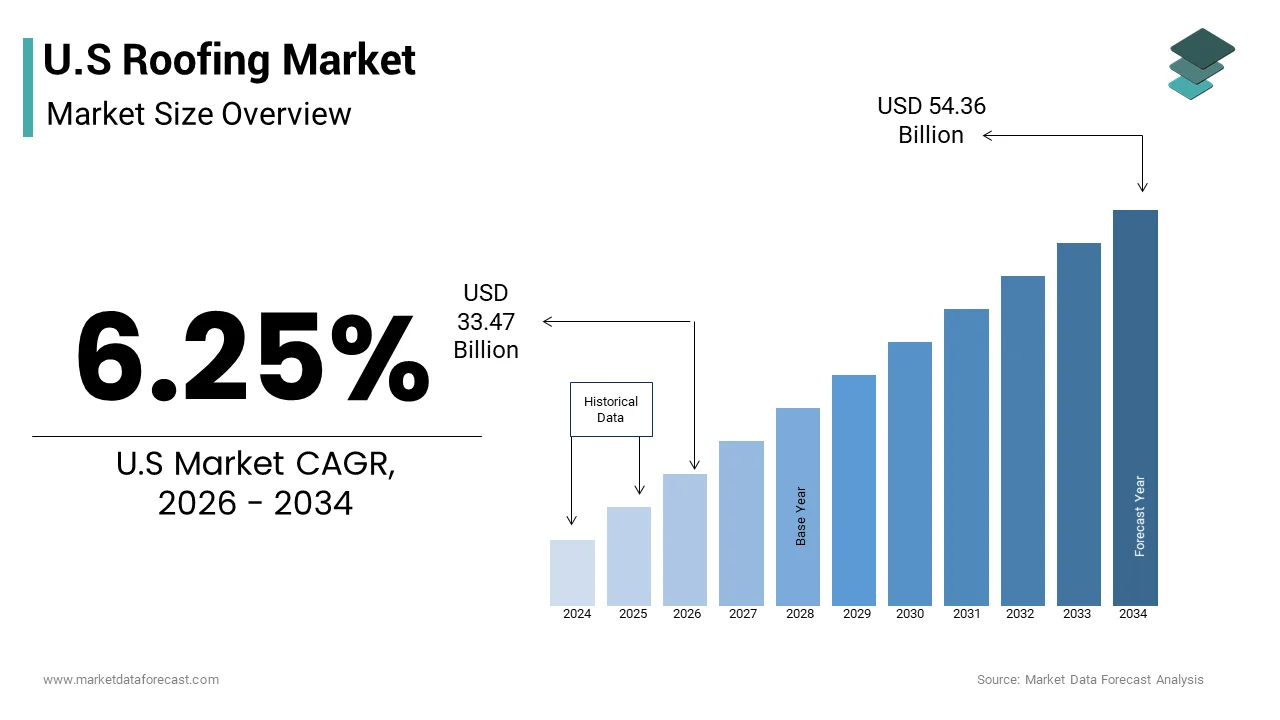
The U.S. roofing market was valued at USD 31.50 billion in 2025, is anticipated to reach USD 33.47 billion in 2026, and is projected to reach USD 54.36 billion by 2034, growing at a CAGR of 6.25% during the forecast period from 2026 to 2034. The growth of the U.S. roofing market is driven by the rising demand for energy-efficient and sustainable roofing materials, increasing residential construction activity, and the growing need for roof repair and replacement due to aging infrastructure. The market is also benefiting from advancements in roofing technologies such as cool roofing systems, solar-integrated roofs, and durable composite materials that enhance performance and longevity.
Key Market Trends
- Increasing adoption of eco-friendly roofing materials and green building certifications to support sustainability goals.
- Growing trend of solar roofing installations as part of renewable energy initiatives.
- Rising investments in storm-resistant and weatherproof roofing solutions due to climate change-related concerns.
- Surge in residential renovation and remodeling activities across urban and suburban regions.
- Integration of digital tools and drone technologies for roof inspection and maintenance operations.
Segmental Insights
- Based on roofing, the sloped roofs segment was the largest in 2025, capturing a dominant share of the U.S. roofing market. The preference for sloped roofs is primarily driven by their aesthetic appeal, effective water drainage, and suitability for residential homes in diverse climatic conditions.
- Based on sector, the residential roofing segment dominated the U.S. roofing market in 2025, occupying 62.1% of the total market share. The segment’s growth is attributed to increasing housing starts, home renovation trends, and demand for roof replacement in aging structures.
Competitive Landscape
The U.S. roofing market is highly fragmented, with a mix of global corporations and regional contractors competing on product innovation, pricing, and distribution efficiency. Companies are increasingly focusing on energy-efficient materials, installation technologies, and strategic partnerships with construction firms. Major players in the U.S. roofing market include GAF Materials Corporation, Owens Corning, CertainTeed (Saint-Gobain), Carlisle Companies Inc., Johns Manville (Berkshire Hathaway), IKO Industries, TAMKO Building Products, Atlas Roofing Corporation, Beacon Building Products, ABC Supply Co., Holcim Elevate (Firestone Building Products), Duro-Last Inc., Malarkey Roofing Products, CentiMark Corporation, Tecta America, Flynn Group, Baker Roofing Company, IronHead Roofing, Sika Sarnafil, and MFM Building Products.
U.S Roofing Market Size
The U.S roofing market size was valued at USD 31.50 billion in 2025 and is anticipated to reach USD 33.47 billion in 2026 to USD 54.36 billion by 2034, growing at a CAGR of 6.25% during the forecast period from 2026 to 2034.
MARKET OVERVIEW
Roofing refers to the construction, materials, and maintenance of a building's roof. This market encompasses a diverse array of materials including asphalt shingles metal tiles clay and concrete as well as emerging synthetic composites designed to withstand varied climatic conditions. The market dynamics are deeply intertwined with the overall health of the housing sector and broader economic indicators. As per the US Census Bureau there were approximately 142 million housing units in the United States in 2023 with a significant portion requiring periodic maintenance or complete roof replacement due to aging infrastructure. The average lifespan of a standard asphalt shingle roof is between 15 and 20 years which creates a consistent baseline demand for replacement services regardless of new construction trends. The market also reflects a shift towards energy efficient solutions as homeowners seek to reduce utility costs. This foundational context underscores the market's resilience and its pivotal role in maintaining property value and structural integrity across the nation.
MARKET DRIVERS
Aging Housing Stock Drives Consistent Replacement Demand
The substantial volume of aging residential properties in the country is a key driver for sustained demand within the United States roofing market. A significant proportion of the existing housing inventory was constructed several decades ago and has reached or exceeded the typical service life of its original roofing materials. According to the US Census Bureau’s American Housing Survey Data, the median age of housing units in the United States reached 44 years, meaning more than half of all American homes are old enough to require major non-discretionary exterior updates, including structural roofing. Asphalt shingles cover approximately 75% of residential roofs in the US. Standard varieties have a life expectancy ranging from 15 to 30 years depending on material tier. Consequently, homes constructed during the peak construction booms of the 1980s and 1990s are currently undergoing their second or third roof replacement cycles. This demographic reality ensures a steady stream of retrofit projects that are less susceptible to the volatility of new construction starts. The National Association of Home Builders states that regular maintenance and replacement of roofing systems are essential for preserving property value and preventing water damage which can lead to costly structural repairs. Furthermore as these older homes often lack modern energy efficient features homeowners are increasingly opting for advanced roofing materials during replacement to improve insulation and reduce cooling costs. This trend amplifies the value of each replacement transaction. The sheer scale of this aging inventory provides a robust and predictable revenue base for roofing contractors and material manufacturers ensuring market stability even during periods of economic uncertainty when new building permits may decline.
Severe Weather Events Accelerate Repair and Replacement Cycles
The increasing frequency and intensity of severe weather phenomena across the country greatly accelerate the need for roofing repairs and full system replacements, which boosts the expansion of the United States roofing market. Climate related disruptions such as hailstorms hurricanes tornadoes and heavy snowfall cause extensive damage to roofing materials leading to immediate and urgent demand for restoration services. According to the National Oceanic and Atmospheric Administration the United States experienced 28 separate billion dollar weather and climate disasters in 2023 alone reflecting a trend of escalating environmental risks. Hail damage in particular is a major driver of roofing claims as it can compromise the integrity of asphalt shingles and metal panels without causing immediate leaks that are visible to homeowners. The Insurance Information Institute (III) notes that wind and hail account for approximately 50% of all homeowners property insurance claim payouts. This makes it the leading driver of property damage losses nationwide and prompts a substantial, ongoing volume of carrier-approved roof replacements. In regions prone to hurricanes such as Florida and the Gulf Coast building codes have been updated to require more resilient roofing systems which drives up the cost and complexity of replacements but also ensures higher quality installations. Additionally wildfires in the western states have led to increased adoption of fire resistant roofing materials such as class A rated shingles and metal roofs. These environmental pressures not only create immediate spikes in demand following disaster events but also encourage proactive upgrades among homeowners seeking to mitigate future risks. This dynamic transforms roofing from a deferred maintenance item into a critical component of disaster preparedness and property protection.
MARKET RESTRAINTS
Labor Shortages Constrain Industry Capacity and Growth
The persistent shortage of skilled labor is a significant restraint on the growth and operational efficiency of the United States roofing market. The construction industry has long faced challenges in attracting and retaining qualified workers and the roofing sector is particularly affected due to the physically demanding nature of the work and safety risks involved. According to the Associated General Contractors of America more than 80 percent of construction firms reported difficulty in filling craft worker positions in 2023 with roofing being one of the hardest trades to staff. This labor deficit leads to project delays increased labor costs and reduced capacity for contractors to take on new jobs. The Bureau of Labor Statistics indicates that the construction sector needs to hire hundreds of thousands of new workers annually just to keep pace with retirement rates and industry expansion yet recruitment efforts have fallen short. The aging workforce exacerbates this issue as experienced roofers retire and fewer young entrants join the trade due to perceived stigma and lack of vocational training opportunities. This scarcity of talent forces companies to compete aggressively for limited resources driving up wages and squeezing profit margins. Furthermore the lack of skilled installers can compromise the quality of roofing installations leading to premature failures and warranty claims which damage reputations and increase long term costs. The market must maintain a strategic focus on workforce development and apprenticeship programs. Without this, it will continue to struggle with capacity constraints that limit its ability to meet growing demand effectively.
Volatility in Raw Material Prices Impacts Profit Margins
The fluctuation in prices of key raw materials is also a substantial constraint for the financial stability and planning capabilities of participants in the United States roofing market. Roofing materials such as asphalt steel aluminum and petroleum based synthetics are subject to global commodity price swings influenced by geopolitical tensions supply chain disruptions and changes in energy costs. According to the Producer Price Index data from the Bureau of Labor Statistics prices for roofing and siding materials have experienced significant volatility with double digit percentage increases observed in recent years. Asphalt a primary component of shingles is directly linked to crude oil prices meaning that any instability in the energy market translates immediately to higher production costs for manufacturers. These cost increases are often passed down to contractors and ultimately to consumers which can dampen demand as homeowners delay non urgent replacements due to budget constraints. Additionally the unpredictability of material costs makes it difficult for contractors to provide accurate fixed price bids leading to disputes and potential losses if prices rise between the quoting and purchasing phases. Supply chain bottlenecks further complicate this issue as seen during recent global disruptions where lead times for certain roofing components extended by weeks or months. This uncertainty discourages investment in new projects and forces companies to hold larger inventories which ties up capital. The inability to stabilize input costs undermines profitability and complicates long term strategic planning for both manufacturers and service providers in the roofing ecosystem.
MARKET OPPORTUNITIES
Integration of Solar Roofing Technologies Presents Growth Avenues
The convergence of roofing and renewable energy offers a compelling opportunity for the United States roofing market expansion. This growth is driven by the widespread adoption of solar-integrated roofing systems. As homeowners and businesses increasingly prioritize sustainability and energy independence the demand for building integrated photovoltaics has surged. According to the Solar Energy Industries Association solar installations in the United States have grown consistently with residential solar accounting for a significant share of new capacity. Traditional solar panels mounted on existing roofs are being replaced by solar shingles and tiles that serve as both the protective covering and the energy generator offering aesthetic advantages and improved durability. Companies like Tesla and GAF Energy have introduced products that blend seamlessly with conventional roofing materials making them more attractive to design conscious consumers. Federal incentives such as the Investment Tax Credit which allows homeowners to deduct 30 percent of the cost of installing solar energy systems from their federal taxes further stimulate adoption. This financial support lowers the barrier to entry and accelerates the return on investment for property owners. Moreover local utilities in various states offer net metering programs that credit solar energy system owners for the electricity they add to the grid enhancing the economic appeal. As building codes in states like California mandate solar readiness or installation for new constructions the market for solar roofing is poised for substantial growth. This trend not only diversifies revenue streams for roofing contractors but also positions them as key players in the green energy transition creating a high value niche within the broader market.
Adoption of Cool Roofing Materials for Energy Efficiency
The rising emphasis on energy efficiency and urban heat island mitigation drives the adoption of cool roofing materials, which is expected to propel the United States roofing market forward. These roofs reflect more sunlight and absorb less heat than standard roofs. This trend presents a significant opportunity for manufacturers and contractors to offer specialized products that comply with increasingly stringent energy codes and sustainability standards. According to the Environmental Protection Agency cool roofs can lower roof surface temperature by up to 50 degrees Fahrenheit compared to conventional materials reducing air conditioning costs by 10 to 15 percent. Many states and municipalities have incorporated cool roof requirements into their building codes particularly in warm climates where cooling loads are high. For instance the California Energy Code mandates specific reflectance and emittance values for low slope roofs on non residential buildings. The LEED green building certification program also awards points for installing cool roofs encouraging commercial developers to adopt these technologies. As energy prices remain volatile property owners are motivated to invest in solutions that provide long term operational savings. The Cool Roof Rating Council provides standardized ratings that help consumers compare products fostering transparency and trust in the market. Furthermore advancements in pigment technology have enabled the production of cool roofs in a wider variety of colors addressing previous aesthetic limitations. This evolution expands the appeal of cool roofing beyond industrial applications to residential sectors where curb appeal is paramount. Market participants can capture a growing segment of the market focused on sustainable building practices. They can achieve this by aligning product offerings with environmental regulations and consumer demand for cost savings.
MARKET CHALLENGES
Regulatory Compliance and Building Code Complexity
Navigating the complex and fragmented landscape of building codes and regulatory requirements is a major impediment to the United States roofing market. This is a significant challenge for roofing professionals operating across different jurisdictions in the country. Building codes are typically adopted at the state and local levels leading to a patchwork of regulations that vary widely in terms of stringency material specifications and installation standards. According to the International Code Council while many jurisdictions adopt the International Building Code as a baseline numerous local amendments introduce unique requirements that contractors must master. This inconsistency increases the administrative burden on companies that operate in multiple regions as they must ensure compliance with diverse rules regarding wind uplift resistance fire ratings and energy efficiency. Failure to adhere to these codes can result in failed inspections fines and liability issues in the event of structural failure. Additionally the frequent updates to codes driven by advancements in technology and lessons learned from natural disasters require continuous education and training for workforce personnel. The National Roofing Contractors Association emphasizes that staying current with code changes is essential for maintaining professional credibility and avoiding legal repercussions. However the cost and time associated with tracking these regulatory shifts can be prohibitive for smaller firms. Moreover permitting processes can be lengthy and bureaucratic delaying project start dates and affecting cash flow. This regulatory complexity acts as a barrier to entry for new players and imposes ongoing operational challenges for established entities requiring them to invest heavily in compliance management and legal expertise to mitigate risks.
Environmental Disposal and Sustainability Pressures
The environmental impact of roofing waste and the growing pressure to adopt sustainable disposal practices constitute a major hurdle for the United States roofing market. Roofing tear offs generate millions of tons of waste annually with asphalt shingles alone accounting for a significant portion of construction and demolition debris. According to the Environmental Protection Agency an estimated 11 to 13 million tons of asphalt shingle waste are generated each year in the United States much of which ends up in landfills. As landfill capacities dwindle and tipping fees rise the cost of disposing of old roofing materials has increased substantially affecting project budgets. Several states have implemented bans or restrictions on landfilling asphalt shingles mandating recycling instead which requires specialized processing facilities that are not uniformly available across the country. This logistical hurdle complicates waste management for contractors who must transport materials to distant recycling centers adding to transportation costs and carbon footprints. Furthermore consumers and regulators are increasingly demanding circular economy practices such as the use of recycled content in new roofing products. While technologies exist to recycle shingles into pavement or new shingles the infrastructure for widespread collection and processing remains underdeveloped. Manufacturers face pressure to design products that are easier to recycle or biodegradable which often involves higher production costs. Balancing economic viability with environmental responsibility requires significant investment in supply chain innovation and collaboration with waste management entities posing a persistent operational and financial challenge for the industry.
REPORT COVERAGE
| REPORT METRIC | DETAILS |
| Market Size Available | 2024 to 2033 |
| Base Year | 2024 |
| Forecast Period | 2025 to 2033 |
| CAGR | 6.25% |
| Segments Covered | By Sector, Installation, Roofing, Material, and Country |
| Various Analyses Covered | Global, Regional, and Country Level Analysis, Segment-Level Analysis; DROC, PESTLE Analysis; Porter’s Five Forces Analysis; Competitive Landscape; Analyst Overview of Investment Opportunities. |
| Regions Covered | US, Canada, and the Rest of North America |
| Market Leaders Profiled | GAF Materials Corporation, Owens Corning, CertainTeed (Saint-Gobain), Carlisle Companies Inc., Johns Manville (Berkshire Hathaway), IKO Industries, TAMKO Building Products, Atlas Roofing Corporation, Beacon Building Products, ABC Supply Co., Holcim Elevate (Firestone Building Products), Duro-Last Inc., Malarkey Roofing Products, CentiMark Corporation, Tecta America, Flynn Group, Baker Roofing Company, IronHead Roofing, Sika Sarnafil, MFM Building Products |
SEGMENT ANALYSIS
By Sector Insights
Residential Sector Dominance
The residential segment led the United States roofing market and captured a 56.4% share in 2025. This leading position of the segment was driven by the vast volume of single family homes requiring regular maintenance and replacement. According to the US Census Bureau there are over 142 million housing units in the country with single family detached homes constituting the majority of this stock. The prevalence of asphalt shingles which are the dominant material for residential roofs means that a significant portion of these structures reach the end of their service life simultaneously creating cyclical waves of demand. Data from the National Association of Home Builders indicates that roof replacement is one of the most common home improvement projects undertaken by homeowners often driven by the need to protect property value and prevent interior water damage. The typical lifespan of residential roofing materials ranges from 15 to 25 years meaning that homes built during the housing booms of the late 1990s and early 2000s are currently entering their primary replacement window. This demographic trend ensures a consistent baseline of demand that is less volatile than commercial construction cycles. Furthermore the rise in home equity has enabled homeowners to invest in higher quality roofing systems including impact resistant shingles and energy efficient options. The Federal Reserve reports that household wealth has grown substantially providing the financial capacity for such discretionary but necessary upgrades. This combination of aging infrastructure and financial capability solidifies the residential sector's position as the market leader.
In addition, severe weather events disproportionately affect residential areas driving a substantial volume of insurance backed roofing repairs and replacements. The residential sector benefits from widespread property insurance coverage which facilitates immediate funding for roof restoration following hail wind or storm damage. According to the Insurance Information Institute wind and hail damage account for the majority of property insurance claims in the United States with roofing being the most frequently repaired component. In states like Texas Oklahoma and Colorado hailstorms cause billions of dollars in damage annually prompting millions of residential roof replacements. The frequency of these events has increased as per the National Oceanic and Atmospheric Administration which notes a rising trend in severe convective storms across the central and southern United States. Homeowners in these regions are increasingly opting for impact resistant roofing materials classified as Class 3 or Class 4 under UL 2218 standards to qualify for insurance premium discounts. This dynamic creates a dual driver of demand where immediate repair needs are met with upgraded materials that offer better longevity. Additionally local building codes in hurricane prone states such as Florida mandate specific roofing standards for residential properties further driving the adoption of high performance systems. The interplay between climate risk insurance mechanisms and regulatory requirements ensures that the residential sector remains the primary revenue generator for the roofing industry.
Industrial and Logistics
On the other hand, the industrial and logistics segment is estimated to register the fastest CAGR of 7.2% over the forecast period due to the explosive expansion of e commerce and the consequent need for large scale distribution centers. According to the Commercial Edge data on industrial construction starts showed a significant increase with millions of square feet of new warehouse space being developed annually to meet consumer demand for rapid delivery. These facilities typically feature large flat or low slope roofs that require specialized membrane systems such as Thermoplastic Polyolefin or PVC which are durable and energy efficient. The Council of Supply Chain Management Professionals reports that logistics costs have risen prompting companies to invest in modern automated warehouses that require robust roofing solutions to protect sensitive equipment and inventory. The shift towards just in time inventory management has further accelerated the construction of last mile delivery hubs in urban and suburban areas. These structures often incorporate sustainable roofing technologies such as cool roofs and solar integrations to reduce operational costs and meet corporate sustainability goals. The General Motors and Amazon among other major corporations have committed to building net zero facilities which drives the adoption of advanced roofing materials. This sustained investment in industrial infrastructure ensures that the logistics segment outpaces other sectors in terms of growth rate as the economy continues to digitize and prioritize supply chain resilience.
Industrial and logistics facilities are increasingly adopting sustainable roofing standards to comply with environmental regulations and achieve energy efficiency targets. The Environmental Protection Agency highlights that commercial and industrial buildings are significant contributors to energy consumption prompting stricter codes for roof reflectivity and insulation. Many industrial developers are pursuing LEED certification which requires the use of roofing materials that minimize heat absorption and reduce the urban heat island effect. According to the US Green Building Council thousands of industrial projects have achieved LEED status in recent years driving demand for high performance membranes and coated metal roofs. Additionally the Inflation Reduction Act provides tax incentives for businesses that install energy efficient roofing systems including those integrated with solar photovoltaics. This financial support lowers the total cost of ownership for industrial property owners making sustainable roofing an attractive investment. The Department of Energy states that cool roofs can reduce peak cooling demand by 10 to 15 percent in commercial buildings leading to substantial operational savings. As multinational corporations commit to carbon neutrality goals the demand for green roofing solutions in the industrial sector continues to surge. This regulatory and economic alignment positions the industrial and logistics segment as the fastest growing area in the roofing market with a projected compound annual growth rate exceeding that of traditional residential and commercial sectors.
By Installation Insights
Replacement and Renovation
The replacement and renovation segment held the majority share of the United States roofing market in 2025. This supremacy of the segment was credited to the extensive aging infrastructure and the accumulated backlog of deferred maintenance. A large proportion of the existing building stock was constructed decades ago and has reached the end of its useful life necessitating comprehensive roof replacements. According to the Joint Center for Housing Studies at Harvard University the median age of homes in the United States is nearly 40 years indicating that millions of properties require major exterior renovations. Roofing is a critical component of this maintenance cycle as failed roofs can lead to severe structural damage and mold issues. The American Society of Home Inspectors notes that roof defects are among the most common findings in home inspections prompting buyers and owners to prioritize replacement. Furthermore during economic downturns homeowners and businesses often defer non essential repairs creating a pent up demand that surges when economic conditions improve. This cyclical nature ensures a robust pipeline of replacement projects that outweighs new construction volumes. The National Roofing Contractors Association estimates that replacement activities account for approximately two thirds of the total roofing market revenue reflecting the maturity of the built environment. As property owners recognize the importance of preventive maintenance to avoid costly emergency repairs the trend towards scheduled replacements continues to strengthen the dominance of this segment.
Insurance funded restoration projects constitute a major driver for the replacement and renovation segment particularly in regions prone to severe weather. When storms cause damage to roofs insurance policies typically cover the cost of replacement rather than minor repairs leading to a high volume of full system installations. According to the Insurance Research Council property insurance claims related to wind and hail result in billions of dollars in payouts annually with roofing being the primary expense. In states such as Florida Louisiana and Texas where hurricane and hail risks are high the frequency of insurance backed replacements is significantly elevated. The Federal Emergency Management Agency also provides assistance for roof repairs in declared disaster zones further supporting this segment. Additionally changes in insurance policies have led to stricter requirements for roof age and condition prompting insurers to mandate replacements for older roofs to maintain coverage. This regulatory and financial framework ensures a steady stream of replacement projects that are less sensitive to economic fluctuations than new construction. The National Oceanic and Atmospheric Administration reports that the number of billion dollar weather disasters has increased in recent years directly correlating with spikes in roofing replacement demand. This dynamic reinforces the leadership of the replacement and renovation segment in the overall market structure.
New Installation
However, the new installation segment is anticipated to witness the fastest CAGR of 6.1% between 2026 and 2034 owing to a sustained surge in residential construction starts aimed at addressing housing shortages. According to the US Census Bureau housing starts have remained robust with hundreds of thousands of new single family and multifamily units authorized annually. The demand for new housing is fueled by demographic trends including millennial homebuying activity and population growth in sunbelt states. Each new residential unit requires a complete roofing system creating direct demand for new installation services. The National Association of Home Builders reports that builder confidence has improved as supply chain constraints ease allowing for more consistent project completions. Furthermore the shift towards suburban and exurban living has increased the construction of detached homes which typically utilize pitched roofs and asphalt shingles. This geographic shift expands the market for new roofing installations in previously underserved areas. Additionally government programs aimed at increasing affordable housing stock have spurred the development of multifamily complexes which require large scale roofing contracts. The Department of Housing and Urban Development highlights that rental vacancy rates remain low encouraging developers to continue building new apartment complexes. This sustained momentum in residential construction ensures that the new installation segment experiences higher growth rates compared to the mature replacement market.
Commercial real estate development and urban revitalization initiatives are accelerating the growth of the new installation segment in the roofing market. Despite the rise of remote work there is continued investment in mixed use developments office renovations and retail spaces that require new roofing systems. Urban revitalization projects often involve the construction of new public facilities schools and community centers which contribute to the demand for new roofing installations. Additionally the growth of the hospitality and healthcare sectors has led to the development of new hotels and medical facilities which require specialized roofing solutions for durability and hygiene. Local governments are also investing in infrastructure projects that include new buildings such as libraries and municipal offices. These public sector investments provide a stable source of demand for new roofing installations. The combination of private commercial development and public infrastructure spending ensures that the new installation segment grows rapidly capturing market share from the slower moving replacement sector.
By Roofing Insights
Leading Segment: Slope Roof
The slope roofs segment dominated the United States roofing market and accounted for a 61.8% share in 2025. This dominance of the segment was attributed to its widespread use in residential architecture across the country. The majority of single family homes in the United States feature pitched or sloped roofs which facilitate water drainage and snow shedding making them ideal for varied climatic conditions. According to the National Association of Home Builders over 80 percent of new single family homes are constructed with sloped roofs reflecting consumer preference for traditional aesthetics and functional performance. Asphalt shingles which are the most common roofing material are specifically designed for sloped applications and cover the vast majority of these structures. The architectural diversity of American housing from colonial to craftsman styles relies heavily on sloped roof designs to define character and curb appeal. Furthermore sloped roofs allow for attic space which provides additional storage and insulation benefits enhancing energy efficiency. The Department of Energy notes that proper attic ventilation in sloped roofs can significantly reduce cooling loads in summer months. This functional advantage combined with aesthetic versatility ensures that sloped roofs remain the preferred choice for residential builders and homeowners. The sheer volume of residential construction and replacement activities thus sustains the leading position of the slope roof segment in the overall market.
The slope roof segment benefits from a wide range of material options that offer varying levels of cost effectiveness and durability appealing to diverse consumer segments. Asphalt shingles clay tiles metal panels and wood shakes are all viable options for sloped roofs allowing homeowners to choose based on budget and style preferences. According to the Metal Roofing Alliance metal roofing has gained popularity for sloped applications due to its longevity and resistance to severe weather offering a premium alternative to asphalt. However asphalt shingles remain the most cost effective option with prices ranging from affordable basic grades to high end architectural styles. This versatility allows the slope roof segment to capture both entry level and luxury markets. The National Roofing Contractors Association indicates that asphalt shingles account for the majority of residential roofing installations due to their ease of installation and widespread availability. Additionally advancements in shingle technology have improved the durability and aesthetic appeal of asphalt products making them competitive with more expensive materials. The ability to offer scalable solutions from budget friendly to premium ensures that sloped roofs maintain their dominance in the market. This material flexibility supports a broad customer base and drives consistent demand across different economic cycles.
Flat and Low Slope Roof
On the other hand, the flat and low slope roof segment is likely to experience the fastest CAGR of 6.4% during the forecast period. This rapid growth of the segment is propelled by the expansion of commercial and industrial construction which predominantly utilizes these roofing systems. Large format buildings such as warehouses shopping malls and office complexes require flat or low slope roofs to accommodate HVAC systems solar panels and other mechanical equipment. These structures often cover large footprints making flat roofs the most practical and cost effective design choice. The efficiency of installing membrane systems such as TPO and PVC on large flat surfaces reduces labor time and material waste compared to sloped alternatives. Additionally flat roofs allow for easier maintenance and inspection of building systems which is crucial for commercial operations. This trend is expected to continue as e commerce and logistics expand ensuring rapid growth for the flat and low slope segment.
Flat and low slope roofs are increasingly becoming platforms for green roofing and solar energy installations driving their growth in the market. Urban areas are adopting green roofs to manage stormwater reduce heat islands and improve air quality while flat roofs provide the ideal surface for these vegetative systems. According to the Environmental Protection Agency green roofs can retain up to 75 percent of rainwater reducing the burden on municipal sewer systems. Additionally the flat surface area is optimal for solar panel arrays which require unobstructed exposure to sunlight. The Solar Energy Industries Association notes that commercial solar installations are growing rapidly with many businesses leveraging their flat roofs to generate renewable energy. Tax incentives and rebates for green and solar roofs further encourage adoption among commercial property owners. The General Services Administration has mandated the use of green roofs on federal buildings setting a precedent for private sector adoption. This multifunctional utility of flat roofs transforms them from mere protective covers into active components of sustainable building strategies. As sustainability becomes a priority for corporations and municipalities the demand for flat and low slope roofing systems capable of supporting these technologies continues to accelerate.
By Material Insights
Asphalt Shingles (Included in Others/General Category or Implicitly Dominant)
The asphalt shingles segment was the largest by occupying a significant share of the United States roofing market in 2025. This prominence of the segment was supported by its overwhelming prevalence in residential construction. Asphalt shingles are the most widely used roofing material in the country covering approximately 75 percent of all residential roofs. According to the Asphalt Roofing Manufacturers Association the affordability ease of installation and variety of styles make asphalt shingles the default choice for homeowners and builders. The material's adaptability to different climates and its proven track record of performance contribute to its sustained dominance. Furthermore the continuous innovation in asphalt technology such as the development of architectural and impact resistant shingles has expanded its appeal to higher end markets. The National Association of Home Builders confirms that asphalt shingles remain the top choice for new single family home construction due to their cost effectiveness relative to other materials. The extensive network of contractors skilled in asphalt installation ensures that supply and labor are readily available keeping costs competitive. This widespread acceptance and infrastructure support solidify the position of the "Others" segment as the market leader. The sheer volume of residential replacements and new builds ensures that asphalt shingles continue to drive the majority of roofing material sales in the United States.
The cost efficiency and wide availability of asphalt shingles further reinforce the leadership of the "Others" segment in the roofing market. Compared to metal tile or synthetic alternatives asphalt shingles offer a lower initial investment making them accessible to a broader range of consumers. According to HomeAdvisor the average cost of installing an asphalt shingle roof is significantly lower than that of metal or slate roofs providing a compelling value proposition for budget conscious homeowners. The raw materials for asphalt shingles including fiberglass and asphalt are abundantly available in the United States ensuring stable supply chains and consistent pricing. The manufacturing infrastructure for asphalt shingles is well established with numerous production facilities located across the country reducing transportation costs and lead times. This logistical advantage allows for quick delivery and installation which is crucial for both new construction and emergency repairs. Additionally the recycling infrastructure for asphalt shingles is growing with many states mandating or encouraging the reuse of shingle waste in pavement production. This emerging sustainability angle enhances the material's appeal without compromising its cost advantages. The combination of low upfront costs reliable supply and improving environmental credentials ensures that asphalt shingles remain the dominant material in the US roofing market.
Metals
However, the metals segment is on the rise and is expected to be the fastest growing segment in the market by witnessing a CAGR of 7.4% from 2026 to 2034. The swift expansion of the segment is fuelled by its superior durability and long term value proposition. Metal roofs can last 40 to 70 years significantly outlasting traditional asphalt shingles which appeals to homeowners seeking lifelong solutions. According to the Metal Roofing Alliance the market share of metal roofing has increased steadily as consumers recognize the reduced lifecycle costs despite higher initial investments. Metal roofs are resistant to fire wind and hail making them ideal for regions prone to severe weather. The Insurance Institute for Business and Home Safety reports that homes with metal roofs may qualify for insurance discounts due to their resilience. This financial incentive combined with the aesthetic versatility of modern metal roofing which can mimic tile wood or slate has broadened its appeal. The construction industry is also seeing increased adoption of metal roofing in commercial applications due to its lightweight nature and ease of installation over existing roofs. This retrofit capability reduces labor costs and waste further driving growth. As sustainability becomes a key consideration the recyclability of metal roofing materials aligns with green building standards. The American Iron and Steel Institute highlights that steel roofing products contain significant recycled content and are fully recyclable at the end of their life. These factors collectively propel the metals segment as the fastest growing category in the roofing market.
Energy efficiency and sustainability trends are accelerating the growth of the metals segment in the United States roofing market. Metal roofs reflect solar radiant heat which can reduce cooling costs by 10 to 25 percent according to the Department of Energy. This energy saving potential is increasingly valued by homeowners and businesses facing rising utility bills. Many metal roofing products are coated with reflective pigments that enhance their cool roof performance meeting strict energy codes in various states. The Cool Roof Rating Council certifies numerous metal roofing products for their high solar reflectance and thermal emittance properties. Additionally metal roofs are ideal platforms for solar panel installations due to their structural strength and longevity. The Solar Energy Industries Association notes that the compatibility of metal roofs with solar mounts encourages dual adoption of both technologies. As corporate and residential consumers prioritize carbon footprint reduction the demand for sustainable roofing materials like metal continues to rise. Local governments are also offering incentives for installing energy efficient roofs further boosting market growth. The combination of operational savings environmental benefits and regulatory support positions metal roofing as a high growth segment that aligns with future building trends.
REGIONAL ANALYSIS
United States Market Status and Driving Factors
The United States was the top performer in the global roofing market and accounted for a 29.3% share in 2025. This growth of the US market was fuelled by a combination of aging infrastructure severe weather impacts and technological innovation. According to the US Census Bureau the vast housing stock of over 142 million units provides a consistent baseline for replacement demand ensuring market stability. The frequency of extreme weather events as documented by the National Oceanic and Atmospheric Administration serves as a critical accelerator for repair and replacement activities particularly in coastal and central regions. Economic indicators such as interest rates and labor availability significantly influence market dynamics with the Associated General Contractors of America highlighting persistent labor shortages as a key constraint. However federal initiatives such as the Inflation Reduction Act provide tailwinds through incentives for energy efficient and solar integrated roofing systems. The market is also shaped by evolving consumer preferences towards sustainability and durability driving the adoption of metal cool roofs and synthetic materials. Regional variations exist with the South and West experiencing higher growth due to population migration and weather related damages while the Northeast and Midwest focus on replacement and energy efficiency upgrades. The regulatory landscape comprising local building codes and insurance requirements further dictates material selection and installation standards. Overall the United States roofing market is resilient adapting to environmental and economic challenges while embracing innovation to meet the demands of a modernizing built environment.
COMPETITIVE LANDSCAPE
The competition in the United States roofing market is characterized by a fragmented landscape with a mix of large multinational corporations and numerous regional manufacturers. Leading companies compete primarily on product quality brand reputation and distribution efficiency while smaller players often focus on niche segments or local service excellence. The market sees intense rivalry due to the presence of well established brands that offer comprehensive warranties and extensive product portfolios. Innovation plays a crucial role in differentiation as firms strive to introduce energy efficient and durable materials that appeal to environmentally conscious consumers. Price competition remains significant particularly in the residential segment where cost sensitivity is high among homeowners. Strategic partnerships with contractors and distributors are essential for maintaining market visibility and ensuring product availability. The entry of new technologies such as solar roofing and smart materials adds another layer of complexity as traditional manufacturers adapt to changing demands. Labor shortages and raw material volatility further intensify competitive pressures forcing companies to optimize operations and supply chains. Overall the market dynamics require continuous adaptation and strategic investment to sustain growth and profitability in a highly competitive environment.
KEY MARKET PLAYERS
A few of the market players in the U.S roofing market include
- GAF Materials Corporation
- Owens Corning
- CertainTeed (Saint-Gobain)
- Carlisle Companies Inc.
- Johns Manville (Berkshire Hathaway)
- IKO Industries
- TAMKO Building Products
- Atlas Roofing Corporation
- Beacon Building Products
- ABC Supply Co.
- Holcim Elevate (Firestone Building Products)
- Duro-Last Inc.
- Malarkey Roofing Products
- CentiMark Corporation
- Tecta America
- Flynn Group
- Baker Roofing Company
- IronHead Roofing
- Sika Sarnafil
- MFM Building Products
Top Players In The Market
- Owens Corning stands as a pivotal entity in the United States roofing sector renowned for its extensive portfolio of residential and commercial solutions. The company leverages its integrated manufacturing capabilities to produce high quality asphalt shingles insulation and roofing systems that cater to diverse consumer needs. Recent strategic initiatives include the expansion of its production facilities to enhance supply chain resilience and meet growing demand for energy efficient materials. Owens Corning actively invests in research and development to introduce innovative products such as solar ready shingles and cool roof technologies that align with sustainability goals. Their strong distribution network ensures broad market accessibility while partnerships with contractors strengthen brand loyalty. By focusing on digital tools for customer engagement and contractor support the company reinforces its competitive edge. These efforts collectively bolster their position as a leader in delivering durable and aesthetically pleasing roofing solutions across the nation.
- GAF operates as a dominant force in the North American roofing industry offering a comprehensive range of residential and commercial roofing materials. The company is widely recognized for its advanced shingle technologies and robust warranty programs that provide confidence to homeowners and contractors alike. GAF has recently focused on expanding its sustainable product lines including reflective roofing membranes and recycled content shingles to address environmental concerns. Their investment in training programs for certified installers ensures high quality application standards which enhances customer satisfaction and brand reputation. Additionally GAF has strengthened its digital presence by providing online resources and design tools that facilitate easier product selection and project planning. The company continues to innovate with smart roofing solutions that integrate with home energy systems. These strategic moves enable GAF to maintain its leadership status by delivering reliable and innovative roofing solutions that meet evolving market demands.
- CertainTeed is a leading manufacturer in the United States roofing market known for its premium quality shingles and sustainable building materials. The company emphasizes innovation through the development of high performance roofing products that offer superior durability and energy efficiency. Recent actions include the launch of new solar integrated roofing systems that allow homeowners to generate renewable energy while protecting their homes. CertainTeed has also expanded its recycling initiatives to reduce waste and promote circular economy practices within the industry. Their commitment to sustainability is further demonstrated by the introduction of cool roof technologies that help lower urban heat islands. The company strengthens its market position by collaborating with architects and builders to specify their products in high end residential and commercial projects. Through continuous product enhancement and a focus on environmental responsibility CertainTeed maintains a strong reputation for quality and innovation in the competitive roofing landscape.
Top Strategies Used By Key Market Participants
Key players in the United States roofing market primarily employ product innovation and strategic acquisitions to solidify their competitive positions. Companies heavily invest in research and development to create energy efficient and sustainable roofing materials such as cool roofs and solar integrated shingles that meet evolving regulatory standards and consumer preferences. Expansion of manufacturing capacities is another critical strategy aimed at mitigating supply chain disruptions and ensuring timely delivery to customers. Major participants also focus on strengthening their distribution networks by partnering with local suppliers and contractors to enhance market reach and service quality. Digital transformation initiatives including the adoption of augmented reality tools for visualization and online platforms for order management are increasingly utilized to improve customer experience. Additionally firms prioritize workforce training programs to address labor shortages and ensure high quality installation standards. Sustainability driven strategies such as recycling programs and the use of recycled content in products are becoming central to corporate agendas. These multifaceted approaches enable companies to adapt to market dynamics while driving growth and maintaining leadership in the industry.
MARKET SEGMENTATION
This research report on the U.S roofing market is segmented and sub-segmented into the following categories.
By Sector Type
- Residential
- Commercial
- Offices and Retail
- Industrial and Logistics
- Others
- Infrastructure
By Installation Type
- New Installation
- Replacement / Renovation (Re-Roofing)
By Roofing Type
- Slope Roof
- Flat / Low-Slope Roof
By Material Type
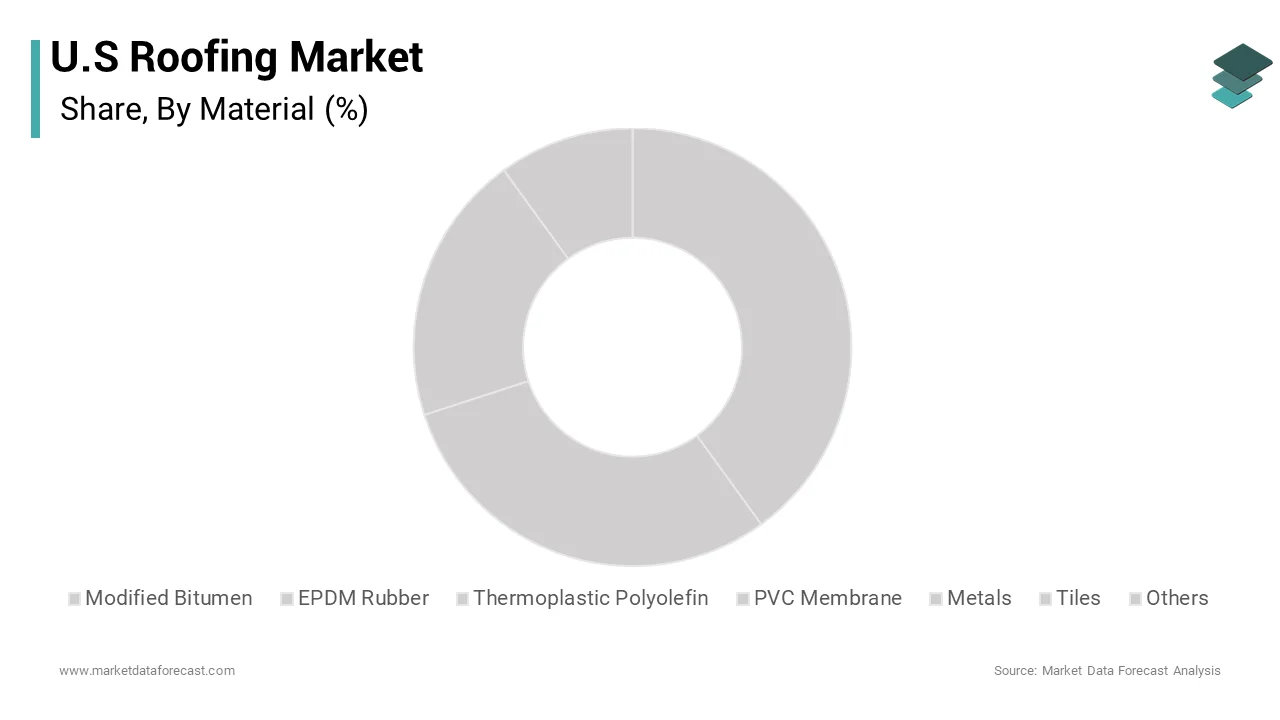
- Modified Bitumen
- EPDM Rubber
- Thermoplastic Polyolefin
- PVC Membrane
- Metals
- Tiles
- Others
By Country
- USA
- Canada
- Mexico