- Product Description Description
- Table of Contents TOC
- List of Table & Figure LOT
- Get Free Sample PDF Sample PDF
Market Size, 2025
$26.47 BnMarket Estimate, 2026
$27.98 BnMarket Forecast, 2034
$43.66 BnCAGR, 2026–2034
5.72%Global Vanilla Market Report Summary
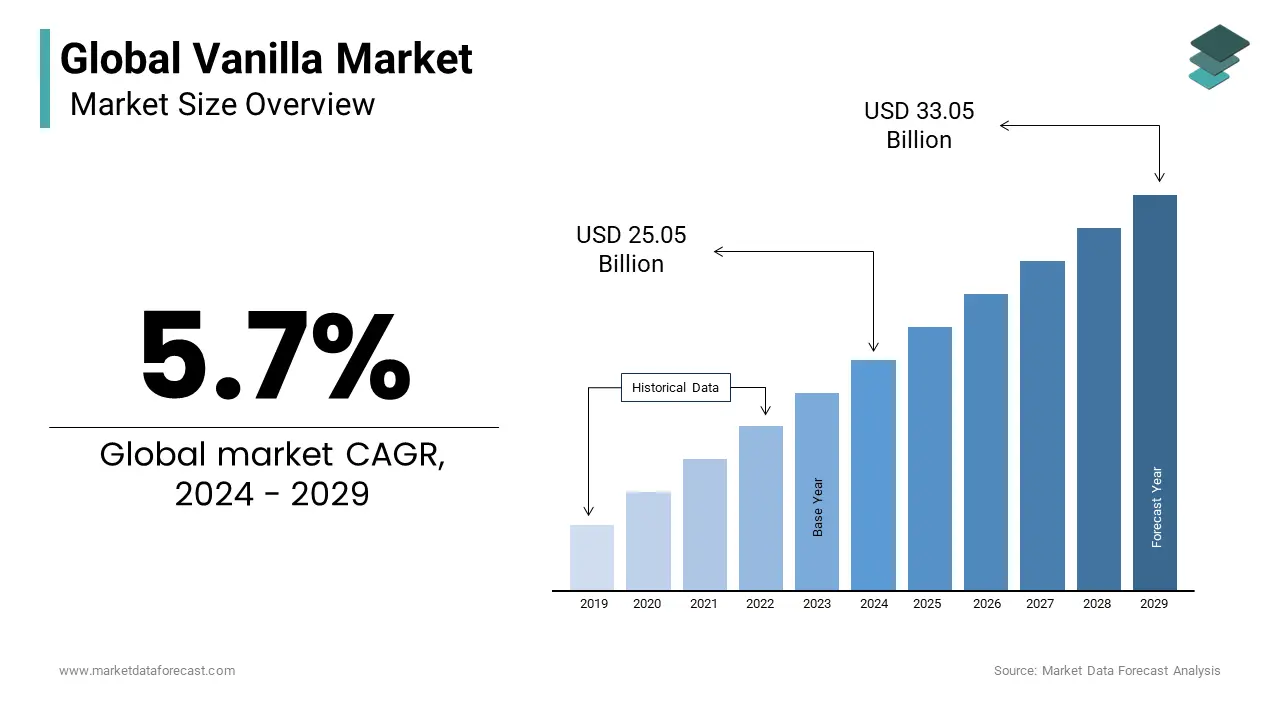
The global vanilla market was valued at USD 26.47 billion in 2025, is estimated to reach USD 27.98 billion in 2026, and is projected to reach USD 43.66 billion by 2034, growing at a CAGR of 5.72% during the forecast period. Market growth is driven by increasing demand for natural flavoring ingredients, rising consumption of bakery and confectionery products, and expanding applications across food, beverages, cosmetics, and personal care industries. Vanilla remains one of the most widely used flavors globally due to its versatility and consumer preference for natural taste profiles. The growing clean label trend and premium product demand are further supporting steady market expansion.
Key Market Trends
- Rising demand for natural and clean label flavoring ingredients is driving market growth.
- Increasing consumption of bakery, confectionery, and dairy products is boosting vanilla demand.
- Growing applications in cosmetics and personal care products are supporting market expansion.
- Expansion of premium and artisanal food products is enhancing product adoption.
- Innovation in natural flavor extraction and formulation technologies is influencing market development.
Segmental Insights
- Based on form, the liquid extract segment held a substantial share of the global vanilla market in 2025. This dominance is attributed to its convenience, strong flavor profile, and widespread use in food and beverage applications.
- Based on application, the food and beverages segment accounted for 58.1% of the global vanilla market share in 2025, driven by extensive use in bakery, dairy, confectionery, and beverage products.
- Based on nature, the conventional vanilla segment held the majority share of the global vanilla market in 2025, supported by large scale production and broader commercial availability.
Regional Insights
- The global vanilla market is experiencing steady growth across regions, supported by rising demand for natural flavors and processed food products.
- North America was the leading contributor, accounting for 60.6% of the global vanilla market share in 2025, driven by strong consumption of flavored food products, advanced food processing industry, and growing preference for premium ingredients.
Competitive Landscape
The global vanilla market is highly competitive, with key players focusing on flavor innovation, sustainable sourcing, and expansion of distribution networks to strengthen their market position. Companies are investing in natural ingredient development, clean label solutions, and premium flavor formulations. Prominent players in the global vanilla market include Archer Daniels Midland Company, Givaudan SA, Sensient Technologies Corporation, Dohler GmbH, International Flavors & Fragrances, McCormick & Company, Inc, Kerry Group plc, and Organic Spices Inc..
Global Vanilla Market Size
The global vanilla market size was valued at USD 26.47 billion in 2025, and the global market size is predicted to reach USD 43.66 billion by 2034 from USD 27.98 billion in 2026, with a growing CAGR of 5.72%.
Vanilla is a flavouring derived from the seed pods of the Vanilla orchid (Vanilla plani folia), primarily grown in tropical regions like Madagascar and Mexico. This market is characterized by its reliance on labor intensive agricultural practices and complex supply chains that connect smallholder farmers in tropical regions with major food and beverage manufacturers worldwide. Vanilla is widely regarded as the second most expensive spice after saffron due to the intricate pollination and curing processes required to develop its signature aroma. As per a study, Madagascar supplies approximately 80 percent of the world's high-quality natural vanilla beans, while FAO data indicates it accounts for roughly 40 percent of total global production volume, making it the central hub for price determination. The market operates within a volatile economic environment where prices fluctuate significantly based on weather conditions political instability and speculative trading. Regulatory frameworks regarding food safety and labeling are stringent particularly in the European Union and North America requiring rigorous testing for synthetic adulterants. Consumer demand is driven by the premiumization of food products and the growing preference for natural ingredients over artificial flavorings. The market includes various forms such as whole beans extracts pastes and powders each serving distinct culinary and industrial applications. Sustainability initiatives are increasingly influencing procurement strategies as companies seek to ensure ethical sourcing and support farmer livelihoods. The integration of blockchain technology for traceability is emerging as a critical tool for verifying origin and quality. This dynamic landscape requires stakeholders to navigate environmental social and governance challenges while meeting evolving consumer expectations.
MARKET DRIVERS
Rising Demand For Natural And Clean Label Ingredients
The escalating consumer preference for natural and clean label ingredients gives a big boost to the vanilla market. Modern shoppers are increasingly scrutinizing product labels and avoiding artificial additives such as vanillin which is synthetically derived from lignin or guaiacol. As per the 2024 International Food Information Council (IFIC) Food & Health Survey, 62 percent of consumers cite healthfulness as a major purchase driver, while 25 percent explicitly define healthy food as having limited or no artificial ingredients. This shift in behavior compels food and beverage manufacturers to replace synthetic flavors with natural vanilla extract to maintain market relevance and brand trust. The perception of natural vanilla as a premium and authentic ingredient enhances the appeal of end products ranging from ice cream and chocolates to baked goods and dairy items. Regulatory bodies in various regions have also tightened restrictions on the use of artificial flavors in products labeled as natural further boosting demand for genuine vanilla. The growth of the organic food sector reinforces this trend as organic vanilla commands higher prices and appeals to health conscious demographics. Manufacturers are reformulating their portfolios to align with these preferences leading to increased procurement of natural vanilla beans. The transparency of supply chains becomes a competitive advantage as brands highlight their commitment to natural sourcing. This driver ensures sustained growth for the natural vanilla segment despite higher costs. The alignment with broader wellness trends supports long term market expansion.
Expansion Of The Premium Confectionery And Bakery Sector
The expansion of the premium confectionery and bakery sector significantly drives the demand for high quality vanilla and accelerates the growth of the vanilla market. As disposable incomes rise in emerging economies and consumers in developed markets seek indulgent experiences the market for gourmet desserts and artisanal baked goods is flourishing. As per sources, the global confectionery landscape is projected to reach substantial valuations with premium segments showing robust growth rates. Vanilla is an essential flavor profile in these products providing a foundational taste that complements chocolate fruit and other premium ingredients. High end chocolatiers and patisseries prioritize the use of single origin vanilla beans to create unique and sophisticated flavor profiles that differentiate their offerings. The trend toward experiential dining and home baking during recent years has further amplified the consumption of premium vanilla products. Consumers are willing to pay a premium for products that feature real vanilla specks and authentic aroma rather than artificial imitations. This willingness to pay supports higher price points for natural vanilla enabling farmers and suppliers to invest in quality improvement. The proliferation of specialty coffee shops and dessert bars also contributes to demand as vanilla flavored lattes and pastries remain popular choices. The association of vanilla with luxury and comfort drives its continued prominence in the premium food sector. This driver fosters innovation in product development and packaging.
MARKET RESTRAINTS
Extreme Price Volatility And Supply Instability
Extreme price volatility and supply instability hinder the expansion of the vanilla market. This is due to the concentrated nature of production and susceptibility to external shocks. Madagascar’s dominance in global supply means that any disruption in the region has immediate and severe impacts on global prices. As per the World Bank vanilla prices have experienced dramatic fluctuations ranging from 50 dollars per kilogram to over 600 dollars per kilogram within short periods. This unpredictability makes it difficult for manufacturers to plan budgets and set stable retail prices for end products. Cyclones droughts and political unrest in producing regions can devastate crops leading to sudden shortages and price spikes. Speculative trading and hoarding by intermediaries further exacerbate price instability creating an unreliable market environment. Smallholder farmers often suffer during price crashes while facing high risks during boom cycles. The lack of financial instruments such as futures contracts for vanilla limits the ability of stakeholders to hedge against price risks. Manufacturers may switch to synthetic alternatives or reduce vanilla content in formulations to manage costs which negatively impacts demand for natural vanilla. This financial uncertainty discourages long term investment in sustainable farming practices. The instability undermines the reliability of vanilla as a consistent ingredient for large scale industrial production. This restraint necessitates diversified sourcing strategies which are challenging to implement.
Labor Intensive Cultivation And Production Processes
The labor intensive nature of vanilla cultivation and production is a significant restraint on the scalability and cost efficiency of the vanilla market. Vanilla orchids require hand pollination because the natural pollinator the Melipona bee is found only in Mexico and is not present in major producing regions like Madagascar and Indonesia. As per the International Labour Organization the vanilla sector relies heavily on manual labor for pollination harvesting and the lengthy curing process which can take several months. This dependence on human labor increases production costs and makes the supply chain vulnerable to labor shortages and wage fluctuations. The curing process involves specific steps such as blanching sweating drying and conditioning which require skilled workers to ensure quality. Any deviation in these steps can result in inferior product quality reducing market value. The aging population of farmers and the migration of younger generations to urban areas threaten the availability of skilled labor. The high cost of labor contributes to the overall high price of natural vanilla making it less competitive against synthetic alternatives. Mechanization is not feasible due to the delicate nature of the orchid flowers and beans. This structural constraint limits the potential for rapid expansion of production capacity. The reliance on manual processes ensures that vanilla remains a high cost ingredient. This restraint hinders affordability and mass market penetration.
MARKET OPPORTUNITIES
Development Of Sustainable And Ethical Sourcing Initiatives
The development of sustainable and ethical sourcing initiatives offers a strong opening for the growth of the vanilla market. This paves the way to enhance brand value and secure supply chains. Consumers and retailers are increasingly demanding transparency and accountability in the sourcing of agricultural commodities. Research published in Society of Chemical Industry (SCI) journals indicates that novel extraction technologies (such as supercritical fluid extraction) allow for the preservation of delicate aromatic compounds often degraded in traditional solvent extraction processes. Companies that invest in direct trade relationships and fair wage programs can differentiate their products and build stronger connections with conscious consumers. These initiatives help stabilize incomes for farmers reducing the incentive to sell to illicit markets or engage in premature harvesting. The implementation of blockchain technology for traceability allows brands to verify the origin and journey of vanilla beans from farm to fork. This transparency builds trust and justifies premium pricing for ethically sourced vanilla. Partnerships with non governmental organizations and local cooperatives facilitate the dissemination of training and resources to improve crop yields and quality. The focus on sustainability aligns with corporate social responsibility goals and regulatory requirements in major markets. This opportunity enables companies to mitigate supply risks and enhance their reputation. The emphasis on ethical practices supports long term viability. It fosters resilience in the supply chain.
Innovation In Vanilla Extraction And Formulation Technologies
Innovation in extraction and formulation technologies provides a clear path for the expansion of the vanilla market. This sets the stage to improve efficiency and product diversity. Advances in extraction methods such as supercritical carbon dioxide extraction enable the production of high purity vanilla oleoresins with enhanced flavor profiles and longer shelf lives. As per the Society of Chemical Industry these technologies allow for the preservation of delicate aromatic compounds that are often lost in traditional solvent extraction processes. The development of micro encapsulation techniques enables the incorporation of vanilla flavors into dry mixes and functional foods without degradation during processing. This innovation expands the application scope of vanilla beyond traditional bakery and confectionery sectors into health supplements and savory products. The creation of standardized vanilla blends helps manufacturers achieve consistent flavor intensity while managing costs. Research into alternative vanilla species such as Vanilla tahitensis and Vanilla pompona provides new flavor dimensions that appeal to niche markets. The integration of artificial intelligence in quality control ensures uniformity and detects adulteration more effectively. These technological advancements reduce waste and improve yield efficiency. The focus on innovation drives product differentiation and value addition. It opens new revenue streams for producers and manufacturers.
MARKET CHALLENGES
Prevalence Of Adulteration And Fraudulent Practices
The prevalence of adulteration and fraudulent practices is hampering the integrity and trustworthiness of the vanilla market. Due to the high value of natural vanilla, there is a strong incentive for bad actors to dilute extracts with synthetic vanillin or coumarin. Data aggregated in the United States Pharmacopeia (USP) Food Fraud Database indicates that a significant number of commercial vanilla records involve undeclared synthetic additives or adulteration. This fraud undermines consumer confidence and damages the reputation of legitimate brands and farmers. Detecting adulteration requires sophisticated analytical techniques such as carbon isotope ratio analysis which are expensive and not always accessible to smaller manufacturers. The lack of standardized global testing protocols creates loopholes that fraudsters exploit. Regulatory enforcement varies across countries making it difficult to combat cross border trafficking of counterfeit vanilla. The presence of fake products in the market depresses prices for genuine vanilla and distorts market dynamics. Brands face legal and reputational risks if their supply chains are compromised by adulterated ingredients. The cost of implementing rigorous testing and verification measures adds to operational expenses. This challenge necessitates greater collaboration between industry stakeholders and regulatory authorities. Ensuring authenticity remains a persistent hurdle. It threatens the sustainability of the natural vanilla sector.
Impact Of Climate Change On Crop Yields
The impact of climate change on crop yields holds back the long-term sustainability of the vanilla market. Vanilla orchids are highly sensitive to changes in temperature rainfall patterns and humidity levels. Agricultural research applying Intergovernmental Panel on Climate Change (IPCC) climate projections warns that the increasing frequency of extreme weather events, such as cyclones and droughts in Madagascar, severely threatens vanilla production. Rising temperatures can alter the flowering cycles and reduce the quality of the beans. Changes in precipitation patterns affect the curing process which relies on specific humidity conditions. The vulnerability of smallholder farmers to climate shocks limits their ability to invest in adaptive measures such as irrigation systems or shade structures. Soil degradation and deforestation further exacerbate the risks associated with climate variability. The uncertainty of future yields makes it difficult for farmers to plan and for buyers to secure long term contracts. Insurance products for climate risks are largely unavailable or unaffordable for small scale producers. The potential decline in suitable growing areas due to climate shifts may force relocation of farms. This challenge requires urgent investment in climate resilient agricultural practices. It threatens the stability of global supply. Adaptation strategies are essential for survival.
REPORT COVERAGE
| REPORT METRIC | DETAILS |
| Market Size Available | 2025 to 2034 |
| Base Year | 2025 |
| Forecast Period | 2026 to 2034 |
| CAGR | 5.72% |
| Segments Covered | By Form, Application, Nature, and Region |
| Various Analyses Covered | Global, Regional and Country Level Analysis; Segment-Level Analysis; DROC; PESTLE Analysis; Porter’s Five Forces Analysis; Competitive Landscape; Analyst Overview of Investment Opportunities |
| Regions Covered | North America, Europe, APAC, Latin America, Middle East & Africa |
| Market Leaders Profiled | Archer Daniels Midland Company, Givaudan SA, Sensient Technologies Corporation, Dohler GmbH, International Flavors & Fragrances, McCormick & Company, Inc, Kerry Group plc, Organic Spices Inc. |
SEGMENTAL ANALYSIS
By Form Insights
The liquid extract segment dominated the vanilla market and accounted for a substantial share in 2025. This dominance of the segment is driven by its versatility ease of use and widespread adoption in both industrial food processing and household baking. Also, this form includes pure vanilla extract which is a solution of vanilla bean compounds in alcohol and water. Liquid vanilla extract commands the market because it is the standard ingredient for large scale food and beverage manufacturing due to its consistency and ease of integration into production lines. Manufacturers prefer liquid extracts because they can be easily pumped mixed and standardized across large batches ensuring uniform flavor profile in products such as ice cream yogurt and baked goods. As per the International Dairy Foods Association's 2026 trends report, the United States ice cream industry produces approximately 1.23 billion gallons annually. While historically dominant, Chocolate has recently surpassed Vanilla as the top flavor choice among American consumers. The solubility of liquid extract in both water and fat based systems makes it indispensable for diverse product formulations. Industrial buyers value the stability of liquid extract during high temperature processing such as pasteurization and baking where other forms might degrade or lose potency. The ability to adjust concentration levels precisely allows manufacturers to control costs while maintaining flavor intensity. Supply chains for liquid extract are well established ensuring reliable availability for continuous production schedules. The regulatory definition of vanilla extract provides a clear standard for quality assurance reducing liability risks for manufacturers. This structural dependence on liquid extract for mass production secures its leading position. The efficiency of using liquid forms in automated mixing systems further reinforces its dominance. So, the focus on operational efficiency drives sustained demand. Consumer preference for convenience in home baking significantly contributes to the dominance of the liquid extract segment. Home bakers and cooking enthusiasts favor liquid vanilla extract because it is ready to use and requires no additional preparation such as scraping beans or dissolving powder. The American Society of Baking and culinary experts consistently identifies vanilla extract as a primary pantry staple for home bakers. The familiarity of liquid extract in traditional recipes passed down through generations ensures consistent household demand. Retailers prominently display liquid vanilla extract in the baking aisle making it easily accessible to shoppers. The perceived authenticity of liquid extract compared to artificial imitations drives consumers to choose it for special occasions and everyday baking. The availability of various grades from pure to imitation allows consumers to select options based on budget and quality preferences. Marketing campaigns by major brands emphasize the superior flavor of pure liquid extract enhancing its appeal. The ease of measuring liquid ingredients using standard kitchen tools reduces barriers to usage. This convenience factor ensures that liquid extract remains the primary choice for domestic consumption. The cultural significance of baking with vanilla supports long term loyalty. The focus on ease and tradition sustains market leadership.
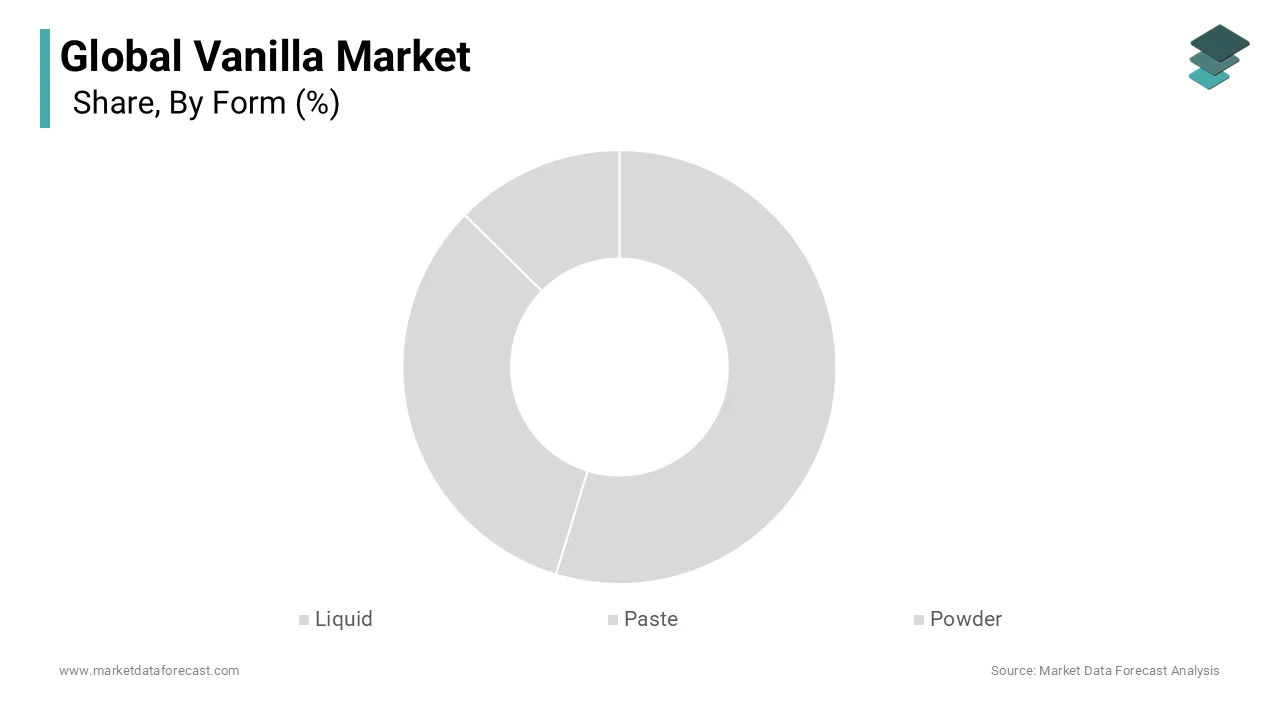
The vanilla paste segment is on the rise and is expected to be the fastest growing segment in the market by witnessing a CAGR of 4.3% over the forecast period due to the desire for visual appeal and intense flavor in premium culinary applications. Vanilla paste is gaining popularity among professional chefs and amateur bakers. It is growing rapidly because it offers the visual appeal of real vanilla seeds without the labor intensive process of splitting and scraping whole beans. This feature has become highly desirable in the era of social media where the aesthetic presentation of food is paramount. Digital food marketing trends confirm that chefs and home bakers increasingly adopt vanilla bean paste for its visual appeal, as the visible vanilla specks signal 'gourmet' quality and enhance the aesthetic value of desserts on visual platforms like Instagram. The thick consistency of vanilla paste allows for easy incorporation into batters frostings and custards providing both flavor and visual texture. Professional pastry chefs prefer paste for its ability to deliver a potent vanilla flavor profile that rivals whole beans while offering greater convenience. The perception of vanilla paste as a premium and artisanal ingredient aligns with the trend toward gourmet home cooking. Retailers are expanding their specialty baking sections to include high quality vanilla pastes catering to this demand. Cooking shows and celebrity chefs frequently demonstrate the use of vanilla paste influencing consumer behavior and driving trial. The ability to achieve restaurant quality results at home enhances its value proposition. This visual and functional advantage drives rapid adoption. The focus on aesthetics and quality supports fast growth. Superior flavor retention and shelf stability are key drivers of growth for the vanilla paste segment. Unlike liquid extracts which can evaporate or degrade over time vanilla paste maintains its potency and aroma for extended periods due to its low moisture content and high concentration of vanilla solids. As per food science studies vanilla paste retains volatile aromatic compounds more effectively than liquid extracts when exposed to heat during baking processes. This stability ensures that the final product delivers a robust and authentic vanilla taste. The inclusion of natural thickeners and sugar in vanilla paste helps preserve the flavor profile and prevents oxidation. Consumers appreciate the longevity of vanilla paste bottles which can last longer than liquid extracts once opened. The concentrated nature of paste means that less product is needed to achieve desired flavor levels offering economic value despite higher upfront costs. The versatility of paste in both cold and hot applications expands its utility in diverse recipes. Manufacturers are innovating with organic and single origin pastes to attract discerning buyers. The focus on quality and efficiency drives professional and consumer adoption. The technical advantages of paste support its rapid market expansion. The emphasis on performance and durability ensures sustained growth.
By Application Insights
The food and beverages segment led the vanilla market as it captured a 58.1% share in 2025. This sector includes bakery products dairy items confectionery and beverages. The food and beverages segment held the top spot because vanilla is the foundational flavor for the global dairy and bakery industries which consume the largest volumes of vanilla products. Ice cream yogurt and milk based desserts rely heavily on vanilla for flavor masking and enhancement. As per the FAO Food Outlook (2025) and IDF World Dairy Situation, global milk production is forecast to reach approximately 992.7 million tonnes in 2025. In the flavored milk segment, chocolate remains the dominant flavor globally, followed by vanilla and fruit variants (e.g., strawberry). The bakery sector including cookies cakes and pastries also utilizes vast quantities of vanilla to complement sweet profiles and enhance aroma. The universal appeal of vanilla makes it a safe and popular choice for mass market products ensuring consistent high volume demand. Industrial manufacturers prioritize vanilla for its ability to blend seamlessly with other flavors such as chocolate and fruit. The standardization of vanilla flavors in these industries drives bulk purchasing of extracts and powders. The reliance on vanilla for product differentiation in crowded retail shelves reinforces its importance. The cultural association of vanilla with comfort and indulgence supports steady consumption. This structural dependency on vanilla in core food categories secures its leading position. Hence, the focus on mass production and consistency drives sustained demand. And, the integration into daily diets ensures market stability. Versatility in beverage formulations significantly contributes to the dominance of the food and beverages segment. Vanilla is a key ingredient in a wide range of drinks including coffee teas smoothies and alcoholic beverages. The ability of vanilla to enhance the sweetness and aroma of beverages without adding excessive sugar makes it valuable for health conscious formulations. Ready to drink protein shakes and meal replacements often use vanilla to mask the taste of supplements and improve palatability. The craft cocktail industry also utilizes vanilla infusions and syrups to create complex flavor profiles. The adaptability of vanilla to both hot and cold beverages expands its application scope. Beverage manufacturers innovate with vanilla blends to create unique seasonal offerings driving periodic spikes in demand. The integration of vanilla into functional beverages supports wellness trends. This broad applicability ensures that vanilla remains indispensable in the beverage sector. The focus on flavor enhancement and masking drives continuous usage. The diversity of beverage types supports market leadership.
The cosmetics segment is experiencing the fastest growth of 5.9% in the vanilla market owing to the increasing use of natural fragrances and skin soothing properties in personal care products. Brands are leveraging vanilla for its sensory and therapeutic benefits, resulting in a robust growth rate for this segment. The cosmetics segment is growing rapidly because consumers are increasingly seeking natural and recognizable scents in personal care products replacing synthetic fragrances. Vanilla is prized for its warm comforting and universally appealing aroma which is associated with relaxation and well being. As per sources, the demand for natural ingredients in cosmetics has risen significantly, with consumers preferring products labeled with familiar botanical names over complex chemical nomenclature. Vanilla extract and oleoresins are used in lotions body washes shampoos and perfumes to provide a natural scent profile. The aromatherapy benefits of vanilla which include stress reduction and mood enhancement appeal to health conscious buyers. Brands market vanilla infused products as luxurious and soothing enhancing their emotional appeal. The trend toward clean beauty encourages the use of natural vanilla over synthetic vanillin which may cause sensitivities in some individuals. The versatility of vanilla allows it to blend well with other natural scents such as lavender and citrus. This sensory appeal drives product innovation and launches. The focus on natural wellness supports rapid adoption in the cosmetics sector. The emotional connection to scent drives brand loyalty. Skin soothing and antioxidant properties are key drivers of growth for the vanilla segment in cosmetics. Vanilla contains vanillin and other phenolic compounds that exhibit antioxidant and anti inflammatory effects beneficial for skin health. Cosmetic formulations incorporating vanilla are marketed for their ability to calm irritated skin and provide hydration. The inclusion of vanilla in anti aging creams serums and masks appeals to consumers seeking multifunctional benefits. The natural origin of vanilla aligns with the trend toward botanical skincare solutions. Manufacturers highlight the therapeutic properties of vanilla to differentiate their products in a competitive market. The gentle nature of vanilla makes it suitable for sensitive skin types expanding its target audience. The combination of sensory pleasure and skin benefits enhances product value. The focus on holistic beauty supports the integration of vanilla into premium skincare lines. This functional advantage drives rapid market expansion. The emphasis on health and beauty ensures sustained growth.
By Nature Insights
The conventional vanilla segment held the majority share of the vanilla market in 2025. This supremacy of the segment is credited to its widespread availability lower cost and established supply chains. This segment includes vanilla grown using standard agricultural practices without organic certification. Conventional vanilla is more affordable to produce and buy. As a result, it dominates the market, catering to mass-market manufacturers and consumers. The lower production costs allow for competitive pricing which is crucial for large scale food and beverage companies operating on thin margins. As per comparative agricultural assessments, conventional agriculture accounts for the majority of global crop production primarily due to higher yields (averaging 20–25% higher than organic). While organic farming often has lower external input costs (fertilizers/pesticides), it typically incurs higher labor costs and requires price premiums to ensure profitability. This economic advantage enables conventional vanilla to be used in a wide range of products from budget friendly ice creams to commercial baked goods. The established supply chains for conventional vanilla ensure consistent availability and reliability for industrial buyers. Retailers stock conventional vanilla extracts and beans extensively due to their high turnover rates. The familiarity of conventional vanilla among consumers reduces barriers to purchase. The ability to source conventional vanilla from multiple regions reduces dependency on specific suppliers. This cost efficiency supports the dominant position of the conventional segment. The focus on affordability and volume drives sustained demand. The integration into mainstream products ensures market leadership. Established supply chains and high production volume contribute significantly to the dominance of the conventional vanilla segment. Decades of infrastructure development have created robust networks for sourcing processing and distributing conventional vanilla. The consistency of supply ensures that manufacturers can meet continuous demand without significant disruptions. The familiarity of conventional quality standards simplifies procurement and quality control processes for buyers. Retailers benefit from predictable pricing and availability which facilitates inventory management. The widespread acceptance of conventional vanilla in industrial applications reinforces its ubiquity. The lack of stringent certification requirements reduces administrative burdens for producers and traders. This operational efficiency supports the leading position of the conventional segment. The focus on scalability and reliability ensures long term sustainability. The entrenched nature of conventional supply chains makes it difficult for alternative segments to surpass its volume.
The organic vanilla segment is expected to exhibit a noteworthy CAGR of 17.4% between 2026 and 2034. This quick surge is supported by increasing consumer demand for chemical free and sustainably sourced ingredients. Organic certification guarantees that vanilla is grown without prohibited substances appealing to health aware buyers. As per the Research Institute of Organic Agriculture the global landscape for organic food continues to expand with consumers willing to pay a premium for certified products. Organic vanilla is perceived as safer and healthier driving its adoption in premium food and beverage formulations. Parents prefer organic vanilla for children’s products due to reduced exposure to potential toxins. The alignment with clean label trends enhances the appeal of organic vanilla. Retailers are expanding their organic sections to meet this growing demand. Marketing campaigns emphasize the purity and safety of organic vanilla building trust. This health driven demand ensures sustained growth for the organic segment. The focus on wellness and safety supports rapid adoption. The willingness to pay for quality drives market expansion. Environmental sustainability and ethical sourcing are key drivers of growth for the organic vanilla segment. Organic farming practices promote soil health biodiversity and water conservation aligning with consumer values regarding environmental protection. Consumers prefer organic vanilla because it supports eco-friendly farming methods and fair labor practices. Certification programs such as USDA Organic and EU Organic provide assurance of ethical sourcing. Brands leverage these certifications to differentiate their products and build brand loyalty. The focus on sustainability resonates with younger demographics who prioritize corporate responsibility. The integration of organic vanilla into sustainable supply chains enhances brand reputation. This value driven purchasing behavior supports rapid growth. The emphasis on environmental stewardship ensures long term viability. The alignment with global sustainability trends drives market expansion.
REGIONAL ANALYSIS
North America Vanilla Market Analysis
North America was the top performer in the global vanilla market and accounted for a 60.6% share in 2025. This dominance of the North American market is driven by high consumption of vanilla flavored products and strong demand for premium ingredients. The United States is the primary contributor to regional growth. In addition, the substantial demand for vanilla in North American bakery and dairy industries, fueled by high consumption rates, secures its dominant market position. As per the United States Department of Agriculture the United States is one of the largest importers of vanilla beans and extracts globally driven by robust demand from food manufacturers. The trend toward premiumization has increased the uptake of pure vanilla extract and vanilla paste over artificial imitations. Consumers are willing to pay more for high quality natural vanilla in gourmet and artisanal products. The presence of major food and beverage companies drives industrial demand. The growing interest in home baking and cooking shows further boosts retail sales. The regulatory framework supports clear labeling of natural versus artificial flavors enhancing consumer trust. The focus on quality and authenticity drives market growth. The region leads in innovation and product development. The strong distribution network ensures wide availability.
Europe Vanilla Market Analysis
Europe was the second largest player in the global vanilla market and captured a 34.3% share in 2025. This growth of the European market is propelled by strict regulations on artificial flavors and a strong preference for natural ingredients. France Germany and the United Kingdom are key markets. As per Regulation (EC) No 1334/2008, products labeled with 'natural vanilla flavouring' must ensure that at least 95% of the flavouring component is obtained from vanilla beans. This regulatory environment drives demand for genuine vanilla beans and extracts. Consumers in Europe are highly aware of food quality and sustainability preferring organic and ethically sourced vanilla. The strong culinary traditions in countries like France emphasize the use of high quality vanilla in patisserie and gastronomy. The focus on clean label products supports market growth. The presence of specialized importers and distributors facilitates access to premium vanilla. The emphasis on traceability and origin enhances consumer confidence. The region leads in sustainable sourcing initiatives. The focus on quality and compliance drives market standards.
Asia Pacific Vanilla Market Analysis
Asia Pacific is a rapidly growing region in the global vanilla market due to increasing disposable incomes and the expansion of the food and beverage industry. China India and Japan are key contributors. It is seeing robust growth owing to rising disposable incomes and the adoption of Western dietary habits including increased consumption of baked goods and dairy products. As per a study, the expanding middle class and rapid urbanization in the Asia-Pacific region are driving higher spending on premium food items, including vanilla-infused confectionery and beverages. Vanilla is increasingly used in local confectionery and beverage formulations to appeal to changing tastes. The growth of the quick service restaurant sector drives demand for vanilla flavored items. The presence of local vanilla producers in Indonesia and Papua New Guinea supports regional supply. The focus on urbanization and modernization drives market expansion. The increasing awareness of natural ingredients supports premium product adoption. The region offers significant growth potential. The focus on convenience and taste drives consumption.
Latin America Vanilla Market Analysis
Latin America is an emerging market for vanilla with potential for growth owing to local production and increasing domestic consumption. Mexico and Madagascar are key sources but regional consumption is rising. The region holds a niche but growing share due to its role as a primary producer of vanilla particularly in Mexico. As per research, urbanization in Latin America is facilitating growth in the food and beverage sector, supporting a steady increase in local consumption of vanilla-flavored products. The cultural significance of vanilla in Mexican cuisine supports domestic demand. The export oriented nature of the market is shifting slightly toward local value addition. The focus on sustainable farming practices attracts international buyers. The region benefits from favorable growing conditions. The potential for growth exists as domestic industries expand. The focus on quality and origin drives market interest. The emerging status offers opportunities for investment.
Middle East and Africa Vanilla Market Analysis
The Middle East and Africa region is anticipated to expand during the forecast period for the vanilla market due to the growth of the hospitality and confectionery sectors. South Africa and the United Arab Emirates are key locations. The MEA region is witnessing gradual growth due to the expansion of the hospitality industry and increasing demand for imported luxury food products. As per World Bank economic updates, the region is experiencing a recovery in tourism (a key economic driver), which industry analysts identify as a primary catalyst for the growing demand for premium foods and beverages. The region relies heavily on imports for vanilla supply. The focus on high end dining experiences supports premium vanilla adoption. The potential for growth exists as local manufacturing expands. The focus on quality and branding drives market entry. The emerging status offers niche opportunities. The adaptation to local tastes is essential.
COMPETITIVE LANDSCAPE
The competitive landscape of the vanilla market is characterized by intense rivalry among multinational flavor houses specialized ingredient suppliers and local traders. Major players compete on supply chain reliability product quality and sustainability credentials to capture market share. The high value of vanilla attracts numerous intermediaries leading to fragmentation in the sourcing sector. Established companies leverage vertical integration and long term contracts with farmers to secure consistent supply and mitigate price volatility. Innovation in extraction technologies and flavor formulation provides a competitive edge for firms seeking to differentiate their offerings. Transparency and traceability are critical factors influencing buyer decisions as brands seek to avoid adulterated products. Regulatory compliance regarding food safety and labeling standards shapes competitive dynamics. Private label offerings from large retailers add pressure on branded suppliers to demonstrate value. Market dynamics require continuous adaptation to climate risks and geopolitical instability. Consolidation activities allow larger firms to expand their geographic footprint. Brand reputation and ethical sourcing practices influence customer loyalty. This complex environment fosters strategic alliances and technological advancements. Maintaining relevance requires a balance of cost efficiency and sustainability.
Key Market Players
Some of the key players in the vanilla market are
- Archer Daniels Midland Company
- Givaudan SA
- Sensient Technologies Corporation
- Dohler GmbH
- International Flavors & Fragrances
- McCormick & Company, Inc
- Kerry Group plc
- Organic Spices Inc.
Top Players in the Market
- Givaudan SA is a global leader in flavors and fragrances with a significant presence in the vanilla market through its extensive sourcing network and innovation capabilities. The company focuses on sustainable sourcing initiatives such as the Sourcing for Shared Value program to support vanilla farmers in Madagascar and other regions. Recent actions include investing in advanced extraction technologies to create high quality natural vanilla extracts and oleoresins. Givaudan collaborates with local cooperatives to ensure ethical practices and supply chain transparency. These efforts strengthen its position as a preferred supplier for major food and beverage manufacturers. The company emphasizes research and development to create unique vanilla flavor profiles that meet evolving consumer preferences. Its commitment to sustainability and quality drives customer loyalty and long term growth. Givaudan continues to expand its portfolio with organic and fair trade certified vanilla products. This strategic approach ensures resilience against market volatility. The focus on innovation and responsibility enhances brand reputation.
- Symrise AG is a key participant in the global vanilla market known for its integrated supply chain and commitment to sustainability. The company sources vanilla directly from farmers in Madagascar and Papua New Guinea ensuring traceability and quality control. Recent strategies involve expanding its Ahupua’a program which supports local communities and promotes environmentally friendly farming practices. Symrise has invested in processing facilities to enhance the efficiency and consistency of vanilla extract production. The company offers a wide range of vanilla products including pure extracts pastes and flavor solutions for various applications. These actions reinforce its reputation as a reliable and ethical partner for global brands. Symrise focuses on innovation to develop clean label and natural vanilla ingredients. The emphasis on community engagement and environmental stewardship strengthens its market position. The company continues to drive growth through strategic partnerships and product differentiation. This holistic approach supports sustainable business practices.
- Mane SA is a prominent player in the global vanilla market specializing in natural ingredients and flavor creation. The company leverages its vertical integration to control the entire supply chain from bean sourcing to final product formulation. Recent actions include strengthening partnerships with vanilla growers in Madagascar to secure high quality raw materials. Mane has introduced innovative vanilla solutions such as cold process extracts that preserve delicate aromatic compounds. The company emphasizes transparency and sustainability through its Responsible Sourcing Charter. These initiatives enhance its credibility among conscious consumers and corporate clients. Mane focuses on creating customized vanilla flavors that cater to specific regional tastes and trends. The investment in research and development drives continuous improvement in product quality. The commitment to ethical sourcing and innovation supports market expansion. Mane remains agile in responding to changing consumer demands. This strategic focus ensures competitive advantage.
Top Strategies Used by Key Market Participants
Key players in the vanilla market employ diverse strategies to maintain competitiveness and drive growth. Vertical integration is central as companies control supply chains from farm to factory to ensure quality and traceability. Sustainability initiatives focus on supporting farmer livelihoods and promoting eco friendly agricultural practices. Product innovation involves developing new extraction methods and flavor profiles to meet clean label demands. Strategic partnerships with local cooperatives enhance supply security and community relations. Digital technologies such as blockchain are used for transparency and fraud prevention. Companies prioritize regulatory compliance and certification to build trust with global buyers. These combined approaches help operators navigate price volatility while ensuring long term profitability in a complex industry landscape.
MARKET SEGMENTATION
This research report on the global vanilla market has been segmented and sub-segmented based on form, application, nature, and region.
By Form
- Liquid
- Paste
- Powder
By Application
- Food and Beverages
- Pharmaceuticals
- Cosmetics
By Nature
- Organic
- Conventional
By Region
- North America
- Europe
- Asia Pacific
- Latin America
- the Middle East and Africa