- Product Description Description
- Table of Contents TOC
- List of Table & Figure LOT
- Get Free Sample PDF Sample PDF
Market Size, 2025
$41.96 BnMarket Estimate, 2026
$44.31 BnMarket Forecast, 2034
$68.57 BnCAGR, 2026–2034
5.61%Global Water Soluble Polymers Market Report Summary
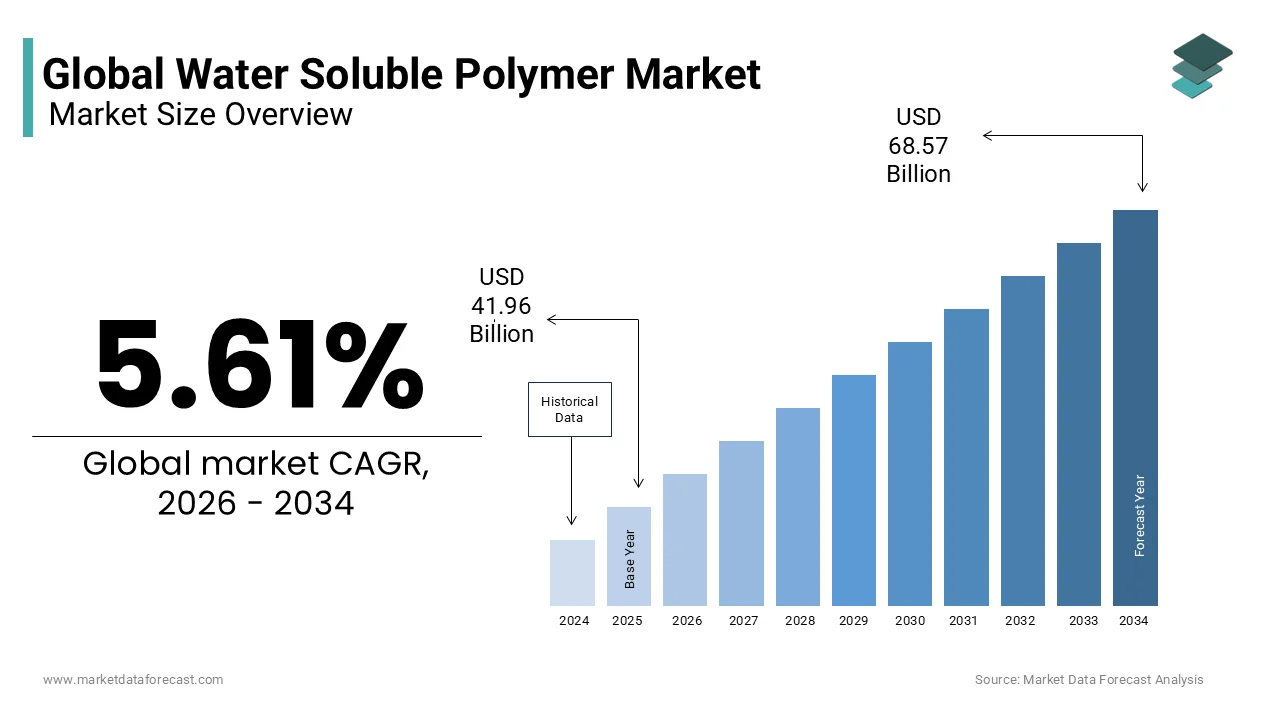
The global water soluble polymers market was valued at USD 41.96 billion in 2025, is estimated to reach USD 44.31 billion in 2026, and is projected to reach USD 68.57 billion by 2034, growing at a CAGR of 5.61% during the forecast period from 2026 to 2034. The growth of the global water soluble polymers market is driven by increasing demand for efficient water treatment solutions, expanding industrial manufacturing activities, and rising applications across oil and gas, food processing, pharmaceuticals, and personal care industries. Water soluble polymers are widely used for their superior thickening, flocculating, binding, and stabilizing properties, making them essential in numerous industrial processes. Additionally, stringent environmental regulations and growing investments in wastewater treatment infrastructure are further supporting market expansion.
Key Market Trends
-
Rising demand for advanced water treatment solutions is driving the adoption of water soluble polymers in municipal and industrial applications.
-
Increasing industrialization is expanding the use of water soluble polymers in oil and gas, mining, paper, textiles, and food processing industries.
-
Growing focus on sustainable wastewater management and environmental compliance is boosting market growth.
-
Advancements in high-performance synthetic and bio-based polymers are enhancing product efficiency and application versatility.
-
Increasing investments in infrastructure development and industrial wastewater recycling are creating new growth opportunities.
Segmental Insights
-
Based on raw material, the synthetic polymers segment dominated the global water soluble polymers market in 2025. The segment's leadership is attributed to its superior chemical stability, consistent performance, high durability, and widespread use in demanding industrial applications.
-
Based on application, the water treatment segment held the largest share of the global water soluble polymers market in 2025. The segment's dominance is driven by the critical role of water soluble polymers in flocculation, coagulation, sludge dewatering, and municipal and industrial wastewater treatment processes.
Regional Insights
-
The global water soluble polymers market is witnessing steady growth due to increasing demand for industrial process optimization, expanding water treatment infrastructure, and growing environmental sustainability initiatives.
-
North America dominated the global water soluble polymers market by accounting for 32.2% of the market share in 2025. The region's leadership is supported by advanced water treatment infrastructure, stringent environmental regulations, strong industrial activity, and increasing investments in sustainable wastewater management technologies.
-
Europe remains a significant market due to strict environmental policies, increasing adoption of high-performance specialty polymers, and expanding industrial applications.
Competitive Landscape
The global water soluble polymers market is highly competitive, with manufacturers focusing on product innovation, sustainable polymer technologies, and capacity expansion to strengthen their market positions. Companies are investing in research and development, strategic partnerships, and advanced production technologies to meet the increasing demand for high-performance water soluble polymers across water treatment, industrial processing, pharmaceuticals, and personal care applications. Key players operating in the global water soluble polymers market include Arkema SA, Ashland Global Holdings Inc., Barzaghi Srl, BASF SE, Dow Inc., Kemira Oyj, Kuraray Co. Ltd., Merck KGaA, Mitsubishi Chemical Holdings Corporation, SPCM SA, Gantrade, SNF Group, Nitta Gelatin Inc., and CP Kelco.
 Download Free Sample Report
Global Water Soluble Polymer Market Size
The global water soluble polymer market size was valued at USD 41.96 billion in 2025 and is projected to reach USD 68.57 billion by 2034 from USD 44.31 billion in 2026, growing at a CAGR of 5.61%.
Water soluble polymers are macromolecular compounds that dissolve or disperse in water to form viscous solutions or gels, serving critical functions as thickeners, flocculants, binders, and stabilizers across diverse industrial sectors. These materials include both synthetic varieties such as polyacrylamide and polyvinyl alcohol, and natural derivatives like starch and cellulose ethers. The significance of this sector is underscored by its pivotal role in environmental management and resource efficiency. According to the United Nations World Water Development Report, global wastewater generation is rising as industrialization expands, driving the urgent need for effective treatment chemicals where water soluble polymers act as essential flocculants. Furthermore, as per data from the Food and Agriculture Organization of the United Nations, agriculture accounts for approximately 70% of global freshwater withdrawals, creating immense pressure to optimize water usage through soil conditioning agents derived from these polymers. The market is also influenced by the shift toward sustainable packaging, with polyvinyl alcohol gaining traction as a biodegradable alternative for single use films. Regulatory frameworks such as the European Union’s REACH regulation strictly monitor the safety and environmental impact of these substances, pushing manufacturers toward bio based and non-toxic formulations. The versatility of water soluble polymers in enhancing product performance while reducing environmental footprints positions them as indispensable components in modern industrial processes.
MARKET DRIVERS
Stringent Environmental Regulations on Wastewater Treatment
The implementation of rigorous environmental regulations governing industrial effluent discharge is fuelling the expansion of the water soluble polymer market. Governments worldwide are enforcing stricter limits on suspended solids, heavy metals, and organic pollutants in wastewater released by manufacturing, mining, and municipal facilities. According to the United States Environmental Protection Agency, the National Pollutant Discharge Elimination System program under the Clean Water Act mandates that industrial facilities obtain permits limiting pollutant discharge, necessitating advanced treatment technologies. Water soluble polymers, particularly polyacrylamide and polydadmac are highly effective flocculants that aggregate fine particles for easier removal, ensuring compliance with these legal standards. As per data from the European Environment Agency, about 75% of urban wastewater in central European countries receives tertiary treatment, a process heavily reliant on polymeric additives to achieve high clarity and purity. In China, the Ministry of Ecology and Environment has intensified inspections under the Water Pollution Prevention and Control Law, forcing industries to upgrade their treatment infrastructure. This regulatory pressure creates a non-negotiable demand for high efficiency flocculants. Municipalities are also expanding capacity to handle growing populations, further driving consumption. The inability to meet discharge standards results in severe fines and operational shutdowns, making investment in effective polymer based treatment solutions a critical priority for industrial operators globally.
Expansion of Enhanced Oil Recovery Techniques
The growing adoption of enhanced oil recovery techniques in the petroleum industry is further boosting the water soluble polymer market expansion. As conventional oil reserves deplete, producers increasingly rely on tertiary recovery methods to extract remaining crude from mature fields. According to the International Energy Agency, enhanced oil recovery is a technically proven process capable of unlocking vast additional oil resources, making it a strategic focus for major energy companies. In polymer flooding, water soluble polymers are injected into reservoirs to increase the viscosity of the displacing water, improving sweep efficiency and oil displacement. As per reports from the Society of Petroleum Engineers, polymer flooding is a well-established enhanced oil recovery method used to increase oil recovery rates from reservoirs beyond primary and secondary recovery levels. Major oil producing nations such as Saudi Arabia and Canada are investing heavily in these technologies to maximize asset value. The harsh conditions of underground reservoirs require polymers with high thermal and salinity stability, driving innovation in copolymer formulations. Despite fluctuations in crude oil prices, the long term economic viability of enhanced oil recovery ensures sustained demand. The technical complexity of these operations favors specialized high molecular weight polymers, creating a lucrative niche within the broader market. This industrial application remains a cornerstone of demand due to the critical role polymers play in extending the life of oil fields.
MARKET RESTRAINTS
Volatility in Raw Material Prices and Supply Chain Disruptions
Significant volatility in the prices of key raw materials such as acrylamide monomers, acrylic acid, and natural feedstocks are impeding the water soluble polymer market growth. These inputs are derived from petrochemical sources or agricultural crops, both of which are subject to fluctuating market conditions. According to the World Bank, global commodity markets are experiencing significant price shifts driven by geopolitical tensions and supply chain bottlenecks that affect chemical and energy costs. As per the American Chemistry Council, regulatory and supply chain pressures impact the manufacturing of critical chemistries and the availability of precursors for synthetic water soluble polymers. For natural polymers, weather events affecting crop yields can lead to scarcity and price spikes for starch and cellulose. These fluctuations compress profit margins for manufacturers who often operate on long term contracts with fixed pricing. Additionally, logistical disruptions caused by port congestion and transportation shortages delay the delivery of raw materials, impacting production schedules. For instance, a significant portion of polymer producers report supply chain delays affecting their ability to meet customer demand. This instability forces companies to maintain high inventory levels, tying up capital and increasing operational risks. Until raw material markets stabilize, the industry faces persistent pressure on profitability and growth potential.
Environmental Concerns Regarding Non-Biodegradable Synthetic Polymers
Growing environmental concerns regarding the persistence and toxicity of synthetic water soluble polymers in aquatic ecosystems impose significant constraints on market growth. While these polymers are effective in industrial applications, many synthetic variants such as polyacrylamide degrade slowly and may release harmful monomers like acrylamide, which is classified as a probable human carcinogen. According to the European Chemicals Agency, there is increasing scrutiny on the environmental fate of synthetic polymers, leading to stricter restrictions on their use in certain applications. As per research published in Environmental Science and Technology, microplastic pollution from degraded synthetic polymers poses risks to marine life and enters the food chain. This has prompted regulators in regions like Europe and North America to favor bio based and readily biodegradable alternatives. Consequently, manufacturers face pressure to reformulate products, which involves costly research and development efforts. Some end users, particularly in consumer facing industries, are voluntarily switching to natural polymers to align with sustainability goals, reducing demand for traditional synthetic options. The lack of clear degradation pathways for many synthetic polymers creates uncertainty regarding long term liability. This regulatory and social pressure limits the expansion of synthetic segments and forces a costly transition toward greener chemistries, which is acting as a brake on overall market momentum.
MARKET OPPORTUNITIES
Development of Bio Based and Biodegradable Alternatives
The accelerating shift toward sustainability presents a major opportunity for the water soluble polymer market growth. Consumers and corporations are increasingly prioritizing environmentally friendly materials, driving demand for polymers derived from renewable resources such as corn, cassava, and wood pulp. According to the European Bioplastics Association, the global production capacity for bio based plastics is expected to grow significantly, with water soluble applications being a key segment. As per data from the United States Department of Agriculture, innovations in enzymatic processing have improved the performance of starch and cellulose derivatives, making them competitive with synthetic counterparts in terms of viscosity and stability. These natural polymers offer complete biodegradability, addressing environmental concerns associated with synthetic residues. Industries such as personal care, detergents, and agriculture are actively seeking green alternatives to meet corporate sustainability targets. For instance, bio based superabsorbent polymers are gaining traction in hygiene products. Government incentives for green chemistry and circular economy initiatives further support this transition. Manufacturers who invest in bio based technologies can differentiate their products and command premium pricing. This trend opens new markets in eco conscious segments and reduces dependency on fossil fuel feedstocks, positioning bio based polymers as a high growth avenue within the industry.
Expansion in Personal Care and Cosmetic Applications
The expanding personal care and cosmetics industry offers substantial opportunities for water soluble polymers due to their versatile functional properties in formulation. These polymers serve as thickeners, film formers, emulsifiers, and conditioning agents in products such as shampoos, lotions, and serums. According to market analysis, the global personal care market is projected to reach significant valuations in the coming years, driven by rising disposable incomes and grooming awareness. As per trends identified by industry researchers, consumers are demanding multifunctional products that offer sensory benefits such as smoothness and hold, which water soluble polymers like carbomers and hydroxyethyl cellulose provide effectively. The rise of clean beauty has also spurred innovation in natural polymer derivatives that meet safety and sustainability criteria. Hair care formulations increasingly utilize cationic polymers for detangling and shine, while skin care products rely on hyaluronic acid and other hydrophilic polymers for hydration. The trend toward miniaturization and travel sized products requires stable formulations that maintain consistency, further driving demand for high performance rheology modifiers. Manufacturers are developing novel polymers that enhance texture without leaving residue, appealing to discerning consumers. This dynamic sector provides a steady and growing revenue stream for polymer suppliers who can offer customized and innovative solutions.
MARKET CHALLENGES
Technical Limitations in Extreme Operating Conditions
The technical limitations of many water soluble polymers under extreme operating conditions such as high temperature, high salinity, and shear stress pose a significant challenge to the water soluble polymer market growth. In industries like oil and gas or mining, fluids often encounter harsh environments that can degrade polymer chains, reducing their effectiveness. According to research in the Journal of Applied Polymer Science, standard polyacrylamide suffers from hydrolysis and precipitation in high salinity brines, limiting its utility in offshore drilling. As per field data from energy companies, polymer degradation can lead to increased operational costs due to the need for higher dosages or frequent replacements. Developing polymers with enhanced stability requires complex chemical modifications, such as sulfonation or copolymerization, which increase production costs. Furthermore, mechanical shear during pumping and mixing can break polymer chains, diminishing viscosity and performance. This necessitates the use of specialized equipment and handling procedures, adding to operational complexity. The lack of universal solutions means that manufacturers must develop tailored formulations for specific conditions, slowing down product deployment. Until more robust and resilient polymers are commercially viable at scale, industries facing extreme conditions will continue to face performance gaps. This technical barrier restricts market penetration in high value but demanding sectors.
Complex Regulatory Compliance and Registration Processes
Navigating the complex web of global regulatory compliance and registration processes presents a persistent challenge for the water soluble polymer market expansion. Different regions have varying requirements for chemical safety assessment, labeling, and environmental impact studies. According to the European Chemicals Agency, registering a new substance under REACH can take several years and involve significant costs, creating a high barrier to entry for smaller firms. As per data regarding the United States Toxic Substances Control Act, new polymers must undergo rigorous pre-manufacture notice reviews, delaying time to market. In Asia, regulations are evolving rapidly, with countries like China updating their chemical inventories and testing standards frequently. This lack of harmonization forces multinational companies to maintain separate compliance teams and documentation for each market, increasing administrative burdens. Additionally, changing regulations regarding microplastics and biodegradability require continuous monitoring and potential reformulation. Non-compliance can result in severe penalties, product bans, and reputational damage. The uncertainty surrounding future regulatory directions makes long term planning difficult. Manufacturers must balance innovation with compliance, often diverting resources from research to regulatory affairs. This complex landscape slows the introduction of new products and increases the cost of doing business globally.
REPORT COVERAGE
| REPORT METRIC | DETAILS |
| Market Size Available | 2025 to 2034 |
| Base Year | 2025 |
| Forecast Period | 2026 to 2034 |
| CAGR | 5.61% |
| Segments Covered | By Raw Material, Application, and Region. |
| Various Analyses Covered | Global, Regional and Country Level Analysis; Segment-Level Analysis; DROC; PESTLE Analysis; Porter’s Five Forces Analysis; Competitive Landscape; Analyst Overview of Investment Opportunities |
| Regions Covered | North America, Europe, APAC, Latin America, Middle East & Africa |
| Market Leaders Profiled | Arkema SA, Ashland Global Holdings Inc, Barzaghi Srl, BASF SE, Dow Inc, Kemira Oyj, Kuraray Co. Ltd, Merck KGaA, Mitsubishi Chemical Holdings Corp, SPCM SA, SNF Group, Gantrade, Nitta Gelatin Inc, and CP Kelco |
SEGMENTAL ANALYSIS
By Raw Material Insights
The synthetic polymers segment captured the highest share of the global market in 2025 due to their superior chemical stability, consistency, and performance in demanding industrial applications. Materials such as polyacrylamide and polyvinyl alcohol offer precise molecular weight control and tailored functionality that natural polymers often cannot match. According to the Society of Petroleum Engineers, synthetic polymers are essential for enhanced oil recovery operations where high thermal and salinity resistance is required, a sector that consumes millions of tons of these materials annually. As per data from the International Water Association, municipal and industrial wastewater treatment facilities globally rely heavily on synthetic polyacrylamide for sludge dewatering and solid liquid separation due to its high efficiency at low dosages. The ability of synthetic polymers to withstand extreme pH levels and mechanical shear makes them indispensable in mining and papermaking industries. Furthermore, the established production infrastructure for petrochemical derivatives ensures a steady supply chain and competitive pricing for bulk industrial users. This reliability and performance superiority cements the dominance of synthetic polymers in high volume industrial sectors where process efficiency is critical.
On the other hand, the natural polymers segment is predicted to record a promising CAGR in the global market over the forecast period owing to the global shift toward sustainability and bio based solutions. Consumers and regulators are increasingly favoring renewable and biodegradable materials over petroleum derived synthetics due to environmental concerns. According to the European Bioplastics Association, demand for bio based polymers is rising across various sectors including personal care and food packaging. As per data from the Food and Agriculture Organization of the United Nations, crops such as guar and cassava are being promoted as sustainable sources for industrial polymers, supporting rural economies while reducing carbon footprints. Natural polymers like xanthan gum and guar gum are fully biodegradable and non-toxic, which is making them ideal for applications where environmental safety is paramount. This trend is particularly strong in Europe and North America where strict regulations limit the use of synthetic microplastics. Companies are investing in extraction technologies to improve the purity and performance of natural polymers, making them competitive alternatives. The alignment with corporate sustainability goals and consumer preferences for green products drives the rapid adoption of natural water soluble polymers.
By Application Insights
The water treatment segment captured the leading share of the global market in 2025 due to the critical role these materials play in municipal and industrial effluent management. Polymers are essential for coagulation, flocculation, and sludge dewatering processes that remove suspended solids and contaminants from water. According to the United Nations World Water Development Report, global wastewater generation is projected to increase, necessitating expanded treatment capacity. As per data from the Environmental Protection Agency, stringent discharge limits for total suspended solids and phosphorus require advanced treatment technologies where polymers are key enablers. Municipalities worldwide are upgrading facilities to meet these standards, driving consistent demand for polyacrylamide and other flocculants. Industrial sectors such as mining and power generation also consume large volumes of water and produce significant wastewater, further boosting demand. The efficiency of polymers in reducing sludge volume lowers disposal costs, providing an economic incentive for their use. This fundamental need for clean water and compliant waste disposal ensures that water treatment remains the largest consumer of water soluble polymers globally.
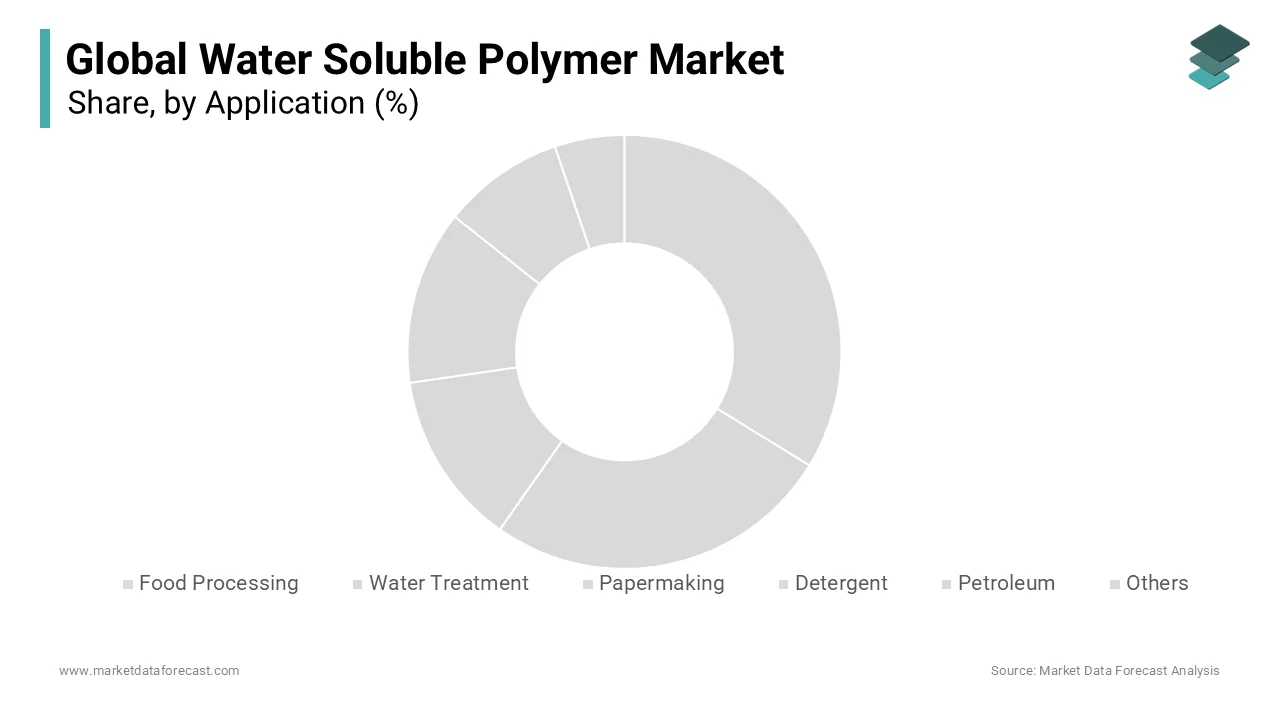
However, the petroleum segment is the fastest growing application and is projected to record a prominent CAGR in the global market over the forecast period owing to the widespread adoption of enhanced oil recovery techniques to maximize extraction from mature fields. As conventional reserves decline, oil companies increasingly rely on polymer flooding to improve sweep efficiency and recover residual oil. According to the International Energy Agency, enhanced oil recovery could unlock hundreds of billions of barrels of additional resources, making it a strategic priority for major producers. As per data from the Society of Petroleum Engineers, polymer flooding can increase recovery rates by 5% to 15%, offering significant economic benefits despite fluctuating oil prices. Major oil producing countries such as Saudi Arabia, Canada, and China are investing heavily in these technologies, driving demand for high molecular weight polyacrylamide. The technical requirement for polymers that can withstand high salinity and temperature in reservoirs drives innovation and value in this segment. As fields age, the need for tertiary recovery methods becomes more urgent, ensuring long term growth. This application offers high margins for specialized polymer suppliers who can deliver performance under harsh conditions.
REGIONAL ANALYSIS
North America Water Soluble Polymers Market Analysis
North America held 32.2% of the global market share in 2025 and is expected to maintain steady growth over the next few years, supported by continued investment in advanced oil and gas extraction, stringent environmental standards, advanced industrial infrastructure and stringent environmental regulations. The United States is the primary contributor, with significant demand from the oil and gas sector for enhanced oil recovery and hydraulic fracturing applications. According to the United States Energy Information Administration, the US remains a top global producer of crude oil, sustaining high consumption of polyacrylamide and guar gum. As per data from the Environmental Protection Agency, strict wastewater discharge regulations drive municipal and industrial treatment facilities to use high efficiency flocculants. Canada also contributes through its oil sands operations which require large volumes of polymers for bitumen extraction and tailings management. The region benefits from the presence of major chemical manufacturers and advanced research institutions that drive innovation in bio based and high performance polymers. Consumer preference for sustainable products in personal care and food sectors further boosts demand for natural polymers. The mature market focuses on value added solutions and regulatory compliance, maintaining steady growth.
Europe Water Soluble Polymers Market Analysis
Europe is likely to see moderate growth in the upcoming years as the region transitions toward circular economy models and prioritizes the elimination of synthetic microplastics. Europe market is characterized by strong regulatory frameworks promoting sustainability and circular economy principles. The European Union’s REACH regulation and Green Deal initiative drive the shift from synthetic to bio based and biodegradable water soluble polymers. According to Eurostat, the region has high rates of wastewater treatment and recycling, supporting steady demand for treatment chemicals. As per data from the European Bioplastics Association, Europe is a leader in the development and adoption of bio based polymers for packaging and personal care applications. Germany, France, and the United Kingdom are key markets with advanced chemical industries and high consumer awareness of environmental issues. The paper and pulp industry, a traditional consumer of polymers, is innovating towards greener processes, influencing material choices. Strict limits on microplastics encourage the replacement of synthetic polymers with natural alternatives in detergents and cosmetics. Europe’s focus on sustainability drives innovation and premium product adoption, shaping global trends in the water soluble polymer sector.
Asia Pacific Water Soluble Polymers Market Analysis
Asia Pacific is anticipated to sustain its dominant market position and rapid growth for the next few years due to intensive industrialization and government-led water infrastructure projects. Asia Pacific represents the largest and fastest growing region, fueled by rapid industrialization and urbanization. China and India are the primary drivers, with expanding manufacturing bases in textiles, paper, and mining consuming vast quantities of water soluble polymers. According to the National Bureau of Statistics of China, the country’s industrial output continues to grow, driving demand for process chemicals. As per data from the Indian Ministry of Jal Shakti, significant investments in water infrastructure and sanitation programs are boosting demand for wastewater treatment polymers. The region’s large population and rising middle class increase consumption of packaged foods and personal care products, further driving demand for natural and synthetic hydrocolloids. Southeast Asian countries like Indonesia and Thailand contribute through their agricultural and mining sectors. The availability of raw materials such as guar and cassava supports local production of natural polymers. Asia Pacific’s dynamic growth is supported by government initiatives to improve water quality and industrial efficiency, ensuring long term market expansion.
Latin America Water Soluble Polymers Market Analysis
Latin America is poised for gradual growth in the coming years as regional industries modernize their extraction processes and environmental compliance becomes a higher priority. Latin America holds a noteworthy share of the global market, with Brazil and Argentina as key contributors due to their strong agricultural and mining sectors. Brazil is a major producer of guar gum and other natural polymers, leveraging its agricultural base for both domestic use and export. According to the Brazilian Institute of Geography and Statistics, the country’s mining and oil industries drive demand for flocculants and drilling fluids. As per data from regional energy agencies, offshore oil exploration in Brazil requires specialized water soluble polymers for enhanced recovery and drilling operations. The agricultural sector uses polymers for soil conditioning and irrigation efficiency, supporting crop yields in diverse climates. Economic volatility can impact investment, but the fundamental need for resource extraction and food production sustains demand. Mexico also contributes through its manufacturing and water treatment sectors. The region is gradually adopting stricter environmental standards, influencing the shift toward more sustainable polymer solutions. Latin America’s resource richness positions it as a key supplier and consumer in the global water soluble polymer market.
Middle East and Africa Water Soluble Polymers Market Analysis
Middle East and Africa is expected to experience steady growth over the next few years, driven by the expansion of water desalination initiatives and continued investment in the petroleum sector. The Middle East, particularly Saudi Arabia and the United Arab Emirates, drives demand through its massive oil and gas industry which utilizes polymers for enhanced oil recovery and drilling. According to the Organization of the Petroleum Exporting Countries, the region holds the majority of global oil reserves, ensuring sustained demand for extraction chemicals. As per data from national water authorities, water scarcity in the region drives extensive investment in desalination and wastewater treatment facilities, boosting demand for flocculants. In Africa, South Africa and Nigeria are key markets with growing mining and municipal water treatment sectors. Urbanization and industrial development in Africa are increasing the need for water management solutions. While the market is currently smaller, infrastructure investments and economic diversification efforts are creating new opportunities. The region’s focus on water security and energy production will drive gradual but steady growth in the water soluble polymer sector.
COMPETITIVE LANDSCAPE
The competition in the global water soluble polymer market is characterized by intense rivalry among large multinational chemical corporations and specialized regional manufacturers. Major players compete primarily on the basis of product quality price competitiveness and technological innovation. The market features a mix of integrated petrochemical companies with vast resources and niche producers focusing on specific natural or synthetic polymer types. Innovation drives competitive advantage as firms strive to develop bio based and biodegradable alternatives that meet stringent environmental regulations and consumer preferences. Pricing strategies play a crucial role particularly in commodity driven segments such as water treatment where cost efficiency is paramount for municipal and industrial buyers. Companies invest significantly in research and development to create customized solutions that address specific application challenges in industries like oil and gas or personal care. The entry of new players from emerging markets adds pressure on incumbents to offer competitive pricing and localized support. Regulatory compliance and sustainability credentials are becoming increasingly important factors influencing buyer decisions. Collaborations with academic institutions and industry consortia help accelerate innovation and standardize best practices. This multifaceted competition ensures continuous improvement in product offerings but requires substantial investment in technology and supply chain management.
KEY MARKET PLAYERS
Some of the key players in the global water soluble polymer market are
- Arkema SA
- Ashland Global Holdings Inc
- BarzaghiSrl
- BASF SE
- Dow Inc
- Kemira Oyj
- Kuraray Co. Ltd
- Merck KGaA
- Mitsubishi Chemical Holdings Corp
- SPCM SA
- Gantrade
- SNF Group
- Nitta Gelatin Inc
- CP Kelco
Top Players in the Market
- BASF SE maintains a leading position in the global water soluble polymer market through its comprehensive portfolio of synthetic and bio based solutions for diverse industrial applications. The company offers high performance polyacrylamides and cellulose derivatives that serve critical roles in water treatment papermaking and personal care sectors. Recent strategic initiatives include expanding production capacities in Asia to meet growing regional demand and investing in sustainable raw material sourcing. BASF actively collaborates with customers to develop customized formulations that enhance process efficiency and environmental compliance. The company also focuses on digital tools to optimize supply chain logistics and reduce carbon footprints. By leveraging its extensive research capabilities and global network BASF strengthens its reputation as an innovation leader. This commitment to sustainability and customer centric solutions ensures its continued dominance in the evolving polymer landscape.
- The Dow Chemical Company plays a pivotal role in the global water soluble polymer market by providing advanced materials that drive sustainability and performance in key industries. The company specializes in cellulose ethers and acrylic polymers used in construction detergents and oil recovery applications. Recent actions include the launch of new bio based product lines that align with circular economy goals and regulatory standards. Dow invests heavily in research and development to create polymers with improved biodegradability and lower toxicity profiles. The company also expands its manufacturing footprint in emerging markets to enhance local supply reliability. By partnering with industry stakeholders Dow promotes best practices in water management and resource efficiency. Its focus on innovation and environmental stewardship reinforces its position as a trusted supplier of high quality water soluble polymers worldwide.
- SNF Group contributes significantly to the global water soluble polymer market as a specialized manufacturer of polyacrylamide and flocculants for water treatment and mining sectors. The company operates a vast global network of production facilities ensuring consistent supply and technical support for clients. Recent strategic moves include acquiring regional competitors to broaden market reach and enhance technological capabilities. SNF focuses on developing tailored solutions for complex wastewater challenges and enhanced oil recovery operations. The company also invests in sustainable production methods to reduce energy consumption and waste generation. By prioritizing customer collaboration and application expertise SNF delivers value added services that improve operational efficiency. Its dedication to quality and innovation solidifies its reputation as a key player in the industrial water soluble polymer segment.
Top Strategies Used by Key Market Participants
Key players in the water soluble polymer market employ several strategic approaches to maintain and enhance their competitive positions. Product innovation remains a primary strategy with companies investing heavily in research and development to create novel formulations with improved efficacy and safety profiles. Expansion into digital health solutions is another critical tactic as firms integrate telemedicine and mobile applications to support patient engagement and adherence. Strategic partnerships with healthcare providers and insurance companies help facilitate better access to treatments and improve reimbursement coverage. Marketing campaigns focused on disease awareness and education are widely used to drive diagnosis rates and encourage early intervention. Companies also pursue geographic expansion within the region to tap into underserved markets and increase their customer base. Additionally many firms focus on portfolio diversification by adding combination therapies that address multiple symptoms simultaneously. These strategies collectively enable market participants to navigate regulatory challenges meet evolving patient needs and sustain growth in a dynamic healthcare environment.
MARKET SEGMENTATION
This research report on the global water soluble polymer market has been segmented and sub-segmented based on the following categories
By Raw Material
- Synthetic
- Polyacrylamide
- Polyvinyl Alcohol (PVA)
- Polyacrylic Acid
- Others
- Natural
- Guar Gum
- Gelatin
- Xanthan Gum
- Others
- Semisynthetic
- Methylcellulose
- Hydroxyethylcellulose
- Others
By Application
- Food Processing
- Water Treatment
- Papermaking
- Detergent
- Petroleum
- Others
By Region
- North America
- Europe
- Asia Pacific
- Latin America
- Middle East & Africa