- Product Description Description
- Table of Contents TOC
- List of Table & Figure LOT
- Get Free Sample PDF Sample PDF
Market Size, 2025
$2.82 BnMarket Estimate, 2026
$2.9 BnMarket Forecast, 2034
$3.66 BnCAGR, 2026–2034
2.95%Executive Summary: Global Wiper Motor Aftermarket Market
- Market Scope: Comprehensive global wiper motor aftermarket analysis covering replacement windshield wiper motors, linkages, electrical components, vehicle types, distribution channels, and regional automotive maintenance frameworks.
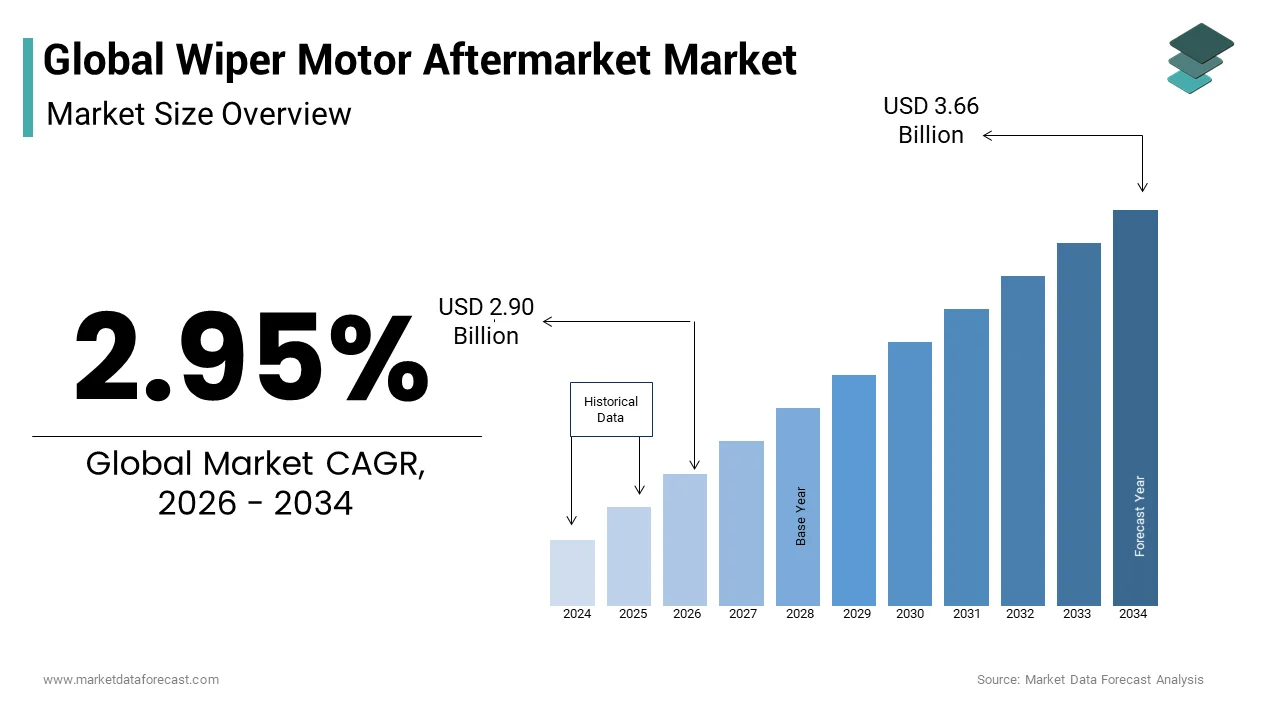
- Market Valuation: Valued at USD 2.82 billion in 2025, reaching USD 2.90 billion in 2026, and projected to scale up to USD 3.66 billion by 2034, registering a steady CAGR of 2.95% (2026–2034).
- Primary Growth Drivers: Aging global vehicle parc and extended service life; stringent road safety regulations and mandatory windshield visibility standards; rapid expansion of e-commerce platforms for auto parts; and growing demand for remanufactured, sustainable components. Market restraints include competition from low-cost counterfeit products, technological complexity tied to ADAS integration, and raw material supply chain volatility.
Key Market Segment Metrics (2026–2034)
| Category | Leading Segment (Base Position) | Fastest-Growing Segment |
|---|---|---|
| By Vehicle Type | Passenger Cars (dominant market share in 2025 driven by a massive global inventory of over 1.4 billion registered passenger vehicles) | Light Commercial Vehicles (projected at a high CAGR of 8.08% fueled by the e-commerce and last-mile delivery boom) |
| By Distribution Channel | Independent Garages, Specialists, and Repairers (supported by a vast network of out-of-warranty vehicle servicing) | Online E-Commerce Platforms and Direct-to-Consumer retail channels |
| By Region | North America (captured 33.9% market share in 2025 anchored by an aging average vehicle age of 12.5 years and a strong DIY culture) | Asia-Pacific (fastest-growing regional hub driven by rapid motorization, fleet expansion, and aging vehicle volumes in China and India) |
Major Market Players & Market Structure
Market Structure: Highly competitive global automotive aftermarket landscape characterized by intense rivalry between multinational original equipment manufacturers, independent parts suppliers, and specialized remanufacturers competing on product quality, distribution reach, and pricing.
Key Companies: Bosch Automotive Service Solutions Inc., Valeo S.A., Denso Corporation, Robert Bosch GmbH, DOGA Automotive, Febi Bilstein, Lucas TVS Ltd., Magneti Marelli, PSV Wipers Ltd., Trico Products, WAI Global, and Wexco Industries Inc.
Global Wiper Motor Aftermarket Market Size
The global wiper motor aftermarket market size was valued at USD 2.82 billion in 2025 and is anticipated to reach USD 2.90 billion in 2026 and USD 3.66 billion by 2034, growing at a CAGR of 2.95% from 2026 to 2034.
Wiper motor aftermarket encompasses the distribution and sale of replacement windshield wiper motors, linkages, and associated electrical components for vehicles that are no longer under original manufacturer warranty or require repairs outside authorized dealership networks. This sector is critical for maintaining vehicle safety and visibility during adverse weather conditions, ensuring compliance with road safety regulations globally. The significance of this component is underscored by its direct impact on driver visibility, and according to the National Highway Traffic Safety Administration, poor visibility is a factor in roughly 20% of weather related traffic accidents. Furthermore, as per data from the Federal Highway Administration, there are over 284 million registered vehicles in the United States alone, with an average age of 12.5 years and this indicates a substantial pool of aging vehicles requiring maintenance and part replacements. The aftermarket serves this vast inventory by providing cost effective alternatives to original equipment manufacturer parts. In Europe, the European Commission mandates strict standards for vehicle lighting and visibility equipment, which drives the demand for compliant replacement parts. The market is characterized by a mix of independent manufacturers, remanufacturers, and distributors who cater to both professional repair shops and do it yourself consumers. As vehicle complexity increases with integrated rain sensors and smart wiping systems, the aftermarket must adapt to supply technologically advanced components that match original performance specifications while offering competitive pricing.
MARKET DRIVERS
Aging Global Vehicle Parc and Extended Service Life
The increasing average age of vehicles on the road is fuelling the expansion of the wiper motor aftermarket market. Modern vehicles are built with higher durability and better corrosion resistance, allowing them to remain in service for longer periods. According to S&P Global Mobility, the average age of light vehicles in the United States reached 12.5 years in 2023, while in Europe, the average age exceeds 12 years. This aging fleet requires more frequent maintenance and part replacements as components wear out over time. Wiper motors, being electromechanical devices subject to constant use and environmental exposure, are prone to failure after several years of operation. As per data from the Auto Care Association, approximately 75% of vehicle owners utilize independent repair shops for their maintenance needs, which are creating a robust demand for aftermarket parts. The economic incentive to repair rather than replace older vehicles further fuels this trend. In developing markets such as India and Brazil, where new vehicle ownership costs are high, consumers prefer to extend the life of existing cars through regular repairs. This behavior sustains a steady demand for affordable replacement wiper motors. Additionally, the lack of comprehensive warranty coverage for older vehicles pushes consumers toward the aftermarket for cost effective solutions. The sheer volume of out of warranty vehicles ensures a consistent revenue stream for aftermarket suppliers.
Stringent Road Safety Regulations and Visibility Standards
Strict road safety regulations mandating optimal windshield visibility are further promoting the expansion of the global wiper motor aftermarket market. Governments worldwide enforce laws that require vehicles to have operational wiping systems to ensure driver safety during rain, snow, or dust storms. According to the European Union General Safety Regulation, all motor vehicles must be equipped with windscreen wiping and washing systems that meet specific performance criteria. Non compliance can result in failed vehicle inspections, fines, or prohibition from road use. In the United States, state level vehicle inspection programs often include checks for wiper functionality, prompting drivers to replace faulty motors before inspection. As per reports from the Department for Transport in the United Kingdom, visibility related defects are among the common reasons for vehicle test failures. These regulatory pressures compel vehicle owners to maintain their wiper systems in good working order, driving replacement sales. Furthermore, insurance companies may deny claims for accidents caused by poor visibility due to malfunctioning wipers, adding financial incentive for timely repairs. The aftermarket benefits from this regulatory environment by offering compliant replacement parts that meet safety standards at lower costs than original equipment. This legal framework ensures that wiper motor replacement is not optional but a mandatory aspect of vehicle upkeep.
MARKET RESTRAINTS
Competition from Low Cost Counterfeit Products
The prevalence of low cost counterfeit and substandard wiper motors acts as a significant restraint on the wiper motor aftermarket market. Unregulated manufacturers, particularly in emerging economies, produce imitation parts that mimic branded products but fail to meet quality and safety standards. According to the OECD and EUIPO, the global trade in counterfeit auto parts accounts for a significant portion of the total illicit trade, with wiper motors being a common target due to their relatively simple construction. These counterfeit products often use inferior materials and lack proper sealing, leading to premature failure and potential electrical hazards. As per consumer protection reports, complaints regarding fake auto parts have been a persistent concern for safety advocates in Europe, eroding consumer trust in the aftermarket channel. The price disparity between genuine aftermarket parts and counterfeits can be as high as 50%, tempting price sensitive consumers to choose cheaper options. This undermines the revenue of reputable manufacturers who invest in quality control and research. Furthermore, the failure of counterfeit parts can damage the vehicle’s electrical system, leading to higher repair costs and negative perceptions of aftermarket reliability. Combating this issue requires significant investment in anti-counterfeit technologies and brand protection efforts, which increases operational costs for legitimate players.
Technological Complexity and Integration with Advanced Driver Assistance Systems
The increasing integration of wiper systems with Advanced Driver Assistance Systems and rain sensors are further hampering the global wiper motor aftermarket market expansion. Modern wiper motors are no longer simple electromechanical devices but complex units with embedded electronics that communicate with the vehicle’s central computer. According to the Society of Automotive Engineers, modern vehicles may have up to 100 electronic control units, many of which interact with peripheral systems like wipers. Replacing these sophisticated motors requires specialized diagnostic tools and software calibration, which many independent repair shops lack. As per data from the Auto Care Association, only about 40% of independent garages are equipped to handle complex ADAS related repairs, limiting the addressable market for complex wiper motor replacements. This technological barrier forces consumers to return to authorized dealerships for repairs, bypassing the traditional aftermarket channels. Additionally, proprietary software locks and encrypted communication protocols used by original equipment manufacturers restrict third party access to necessary calibration data. This limits the ability of aftermarket manufacturers to produce fully compatible replacement units. The high cost of training technicians and acquiring diagnostic equipment further discourages small players from entering this segment. Consequently, the shift toward smarter, interconnected vehicle systems constrains the growth of the conventional wiper motor aftermarket.
MARKET OPPORTUNITIES
Expansion of E-Commerce Platforms for Auto Parts
The rapid growth of e-commerce platforms dedicated to automotive parts offers a major opportunity for the wiper motor aftermarket market. Online retailers provide consumers with easy access to a wide range of replacement parts, detailed product information, and competitive pricing. The online auto parts sales are projected to grow at a compound annual growth rate of 6% globally through 2027. Platforms like Amazon, eBay, and specialized auto parts websites allow customers to search for specific wiper motors by vehicle make, model, and year, simplifying the purchasing process. As per global consumer trends, over 60% of car owners now research auto parts online before making a purchase, indicating a shift in consumer behavior. This digital shift enables aftermarket manufacturers to reach a broader audience, including do it yourself enthusiasts who prefer to install parts themselves. Direct to consumer sales models reduce distribution costs and allow for higher margins. Furthermore, online reviews and ratings help build brand credibility and trust, encouraging repeat purchases. The convenience of home delivery and easy return policies further enhances the appeal of online shopping. By leveraging digital marketing and data analytics, companies can target specific customer segments and optimize inventory management, driving growth in the aftermarket sector.
Rising Demand for Remanufactured and Sustainable Parts
The growing emphasis on sustainability and circular economy principles creates significant opportunities for remanufactured wiper motors in the aftermarket. Remanufacturing involves restoring used motors to original equipment specifications, offering a cost effective and environmentally friendly alternative to new parts. According to the Automotive Parts Remanufacturers Association, the remanufacturing industry saves millions of tons of raw materials and energy annually by reusing core components. Consumers and businesses are increasingly aware of the environmental impact of disposable parts, driving demand for green alternatives. As per reports from the European Environment Agency, the automotive sector is under pressure to reduce waste and carbon emissions, favoring remanufactured products. Remanufactured wiper motors typically cost 30% to 50% less than new units while offering similar performance and warranty coverage. This price advantage appeals to budget conscious consumers and fleet operators looking to reduce maintenance costs. Additionally, government incentives for sustainable practices and corporate social responsibility initiatives encourage the adoption of remanufactured parts. Major aftermarket players are investing in remanufacturing facilities and certification programs to ensure quality and reliability. This trend aligns with global sustainability goals and opens new revenue streams for companies that can effectively market the benefits of remanufactured components.
MARKET CHALLENGES
Supply Chain Disruptions and Raw Material Volatility
Supply chain disruptions and volatility in raw material prices pose significant challenges to the wiper motor aftermarket market. The production of wiper motors relies on materials such as copper, steel, and rare earth magnets, whose prices fluctuate based on global market conditions. According to the World Bank, commodity prices experienced significant swings in recent years due to geopolitical tensions and post pandemic recovery issues. These fluctuations increase manufacturing costs and squeeze profit margins for aftermarket suppliers. Additionally, logistical bottlenecks and shipping delays can disrupt the availability of parts, leading to stockouts and lost sales. As per data from the Institute for Supply Management, lead times for automotive components have extended significantly, affecting the ability of distributors to meet customer demand. The reliance on global supply chains, particularly for electronic components used in smart wiper motors, exacerbates these vulnerabilities. Semiconductor shortages, for instance, have impacted the production of integrated wiper modules, forcing manufacturers to delay shipments. These disruptions force companies to hold higher inventory levels, tying up capital and increasing storage costs. Managing these risks requires diversification of suppliers and investment in local sourcing, which can be costly and time consuming. The uncertainty in supply chains remains a persistent challenge for market stability.
Lack of Standardization and Compatibility Issues
The lack of standardization in wiper motor designs and compatibility across different vehicle models presents a major challenge for the aftermarket industry. Original equipment manufacturers use proprietary designs and mounting configurations, making it difficult for aftermarket suppliers to produce universal replacement parts. According to automotive industry reports, there are thousands of unique wiper motor variants in circulation, requiring extensive cataloging and inventory management. As per data from aftermarket distributors, returns due to fitment issues account for approximately 10% of online sales, resulting in logistical costs and customer dissatisfaction. The rapid introduction of new vehicle models with updated wiper systems further complicates the landscape, requiring continuous product development and validation. Aftermarket manufacturers must invest heavily in reverse engineering and testing to ensure their products match original specifications. This process is time consuming and expensive, particularly for low volume vehicle models. Furthermore, the absence of standardized diagnostic protocols for smart wiper systems makes troubleshooting and installation difficult for independent mechanics. This fragmentation increases operational complexity and reduces efficiency for aftermarket players. Addressing these compatibility issues requires collaboration with original equipment manufacturers and investment in advanced design tools, which may not be feasible for smaller companies.
REPORT COVERAGE
| REPORT METRIC | DETAILS |
| Market Size Available | 2025 to 2034 |
| Base Year | 2025 |
| Forecast Period | 2026 to 2034 |
| CAGR | 2.95% |
| Segments Covered | By Vehicle Type, Distribution Channel, and Region. |
| Various Analyses Covered | Global, Regional and Country Level Analysis, Segment-Level Analysis, DROC, PESTLE Analysis, Porter’s Five Forces Analysis, Competitive Landscape, Analyst Overview of Investment Opportunities |
| Regions Covered | North America, Europe, APAC, Latin America, Middle East & Africa |
| Market Leaders Profiled | DOGA Automotive, Febi Bilstein, Lucas TVS Ltd., Magneti Marelli, PSV Wipers Ltd., Robert Bosch GmbH, Trico Products, Valeo S.A, WAI Global, Wexco Industries Inc., and Others. |
SEGMENTAL ANALYSIS
By Application Insights
The passenger cars segment accounted for the major share of the global market in 2025 due to the sheer volume of registered vehicles globally. According to the International Organization of Motor Vehicle Manufacturers, there are over 1.4 billion passenger cars in operation worldwide, representing the largest pool of potential replacement candidates. The high usage frequency of passenger cars exposes wiper systems to regular wear and tear, necessitating periodic maintenance. As per data from national transport authorities, passenger cars account for approximately 75% of all vehicle miles traveled, increasing the likelihood of component failure. The diverse range of passenger car models creates a broad demand for various wiper motor types, from basic brush DC to advanced brushless units. The aftermarket benefits from the long service life of passenger cars, with owners often keeping vehicles for over 10 years. This extended ownership period ensures a steady stream of replacement part sales. Furthermore, the emotional attachment and aesthetic considerations of passenger car owners drive them to maintain visibility systems in optimal condition. The vastness of this segment provides economies of scale for manufacturers and distributors, reinforcing its dominant position.
On the other end, the light commercial vehicles segment is the fastest growing application segment and is predicted to showcase a CAGR of 8.08% over the forecast period owing to the explosive growth of e-commerce and last mile delivery services. The surge in online shopping has led to a significant increase in the number of delivery vans and trucks on the road, which operates intensively in all weather conditions. For instance, delivery vehicle fleets have expanded by over 15% annually in recent years. These vehicles accumulate high mileage quickly, accelerating the wear and tear on wiper motors and linkages. As per fleet management reports, light commercial vehicles require more frequent maintenance cycles compared to passenger cars due to their heavy usage patterns. The need for uninterrupted delivery operations compels fleet operators to prioritize timely repairs and replacements. The aftermarket benefits from this operational urgency, providing quick turnaround solutions for broken wiper systems. The standardization of light commercial vehicle platforms also facilitates the production of compatible aftermarket parts. This logistical boom ensures that the light commercial vehicle segment will continue to grow rapidly.
REGIONAL ANALYSIS
North America Market Analysis
North America accounted for 33.9% of the global market share in 2025 and is expected to maintain steady growth over the next few years as the aging vehicle population continues to drive demand for replacement parts, a massive aging vehicle parc and strong do it yourself culture. The United States accounts for the majority of this share, with over 284 million registered vehicles. According to S&P Global Mobility, the average age of vehicles in the US has reached 12.5 years, creating a substantial demand for replacement parts. The presence of major auto parts retailers facilitates easy access to aftermarket wiper motors. As per data from the Auto Care Association, the aftermarket industry in North America is highly organized and regulated, ensuring quality standards. Canada also contributes to regional growth with similar vehicle aging trends. The harsh winter weather in many parts of North America increases the usage and wear of wiper systems, driving frequent replacements. High labor costs encourage individual consumers to perform DIY repairs, boosting retail sales. The region’s mature automotive infrastructure and high disposable income support sustained market growth. Regulatory emphasis on vehicle safety further mandates functional wiper systems, ensuring consistent demand.
Europe Market Analysis
Europe is anticipated to focus on sustainable maintenance solutions and regulatory compliance in the coming years. The European market is characterized by stringent environmental regulations and a high density of older vehicles. Countries like Germany, France, and the United Kingdom are key contributors, with strict vehicle inspection regimes that mandate functional wiper systems. According to the European Automobile Manufacturers Association, the average age of cars in Europe exceeds 12 years, driving aftermarket demand. The European Union’s focus on circular economy principles promotes the use of remanufactured wiper motors, which are gaining popularity. As per data from the European Environment Agency, sustainability initiatives encourage consumers to choose eco friendly aftermarket options. The presence of numerous independent repair shops and specialized distributors ensures wide availability of parts. Harsh weather conditions in Northern Europe increase the stress on wiper systems, leading to higher replacement rates. The region’s well developed logistics network supports efficient distribution of aftermarket components. Regulatory compliance and environmental consciousness are the primary drivers of market dynamics in Europe.
Asia Pacific Market Analysis
Asia Pacific will likely witness rapid expansion as the increasing volume of vehicles on the road reaches the age where component replacement becomes necessary over the next few years. Asia Pacific represents the fastest growing region, fueled by rapid motorization and increasing vehicle ownership. China and India are the primary growth engines, with millions of new vehicles entering the road each year. According to the International Organization of Motor Vehicle Manufacturers, Asia Pacific is the largest automotive market globally, creating a vast future aftermarket base. As these vehicles age, the demand for replacement wiper motors will surge. The rising middle class is becoming more aware of vehicle maintenance and safety, driving aftermarket sales. As per data from local automotive associations, the number of independent repair shops is growing rapidly, improving access to aftermarket parts. E commerce platforms are expanding reach to rural areas, boosting sales. Lower labor costs in some countries encourage professional repairs, while DIY culture is growing in urban centers. The region’s diverse climate conditions, from monsoons to dust storms, necessitate robust wiper systems. Government initiatives to improve road safety are also contributing to market growth.
Latin America Market Analysis
Latin America is projected to see continued growth as economic factors encourage vehicle owners to extend the lifespan of their current fleet for the next few years. The region is characterized by a mix of new and older vehicles, with a strong preference for cost effective aftermarket solutions. According to economic reports, high import tariffs on new vehicles encourage consumers to maintain existing cars for longer periods, boosting aftermarket demand. As per data from local automotive chambers, the informal repair sector is significant, driving sales of affordable wiper motors. Economic volatility often leads consumers to delay new car purchases, extending the life of current vehicles. The tropical climate in many parts of Latin America results in heavy rainfall, increasing wiper usage and wear. Local manufacturers are emerging to supply affordable parts, reducing reliance on imports. The growth of e commerce is beginning to transform the distribution landscape, offering greater variety and convenience. Despite economic challenges, the essential nature of wiper motors ensures steady demand.
Middle East and Africa Market Analysis
The Middle East and Africa are representing an emerging opportunity with unique challenges. Gulf Cooperation Council countries like Saudi Arabia and the United Arab Emirates have high vehicle ownership rates and extreme weather conditions, including sandstorms, which accelerate wiper wear. According to regional automotive reports, the demand for durable and high performance wiper motors is high in these areas. In Africa, South Africa and Nigeria are key markets, with a growing used car import sector that drives aftermarket demand. As per data from trade associations, the lack of authorized service centers in many areas relies heavily on the aftermarket for repairs. Infrastructure development is improving distribution networks, but challenges remain. The hot and dusty environment requires specialized wiper systems, creating niche opportunities. Economic diversification efforts in the Middle East are boosting the automotive sector. In Africa, increasing urbanization and mobility needs are driving vehicle usage. The market is fragmented but shows potential for growth as automotive penetration increases.
COMPETITIVE LANDSCAPE
The competition in the global wiper motor aftermarket market is characterized by intense rivalry among established original equipment manufacturers and specialized aftermarket suppliers. Major players compete primarily on the basis of product quality price competitiveness and distribution reach. The market features a mix of large multinational corporations with broad portfolios and niche regional manufacturers focusing on specific vehicle segments. Innovation drives competitive advantage as firms strive to develop energy efficient and smart wiper motors that integrate with advanced driver assistance systems. Pricing strategies play a crucial role particularly in price sensitive emerging markets where cost effectiveness is paramount. Companies invest significantly in building robust supply chains and digital platforms to ensure timely delivery and easy part identification. The presence of counterfeit products poses a significant challenge forcing legitimate manufacturers to invest in brand protection and quality assurance measures. Collaborations with auto parts retailers and e commerce platforms are becoming increasingly common to enhance market penetration. This multifaceted competition ensures continuous improvement in product offerings but requires substantial investment in technology and customer service to maintain leadership.
KEY MARKET PLAYERS
These are the market players that are dominating the global wiper motor aftermarket market.
- DOGA Automotive
- Febi Bilstein
- Bosch Automotive Service Solutions Inc.
- Denso Corporation
- Lucas TVS Ltd.
- Magneti Marelli
- PSV Wipers Ltd.
- Robert Bosch GmbH
- Trico Products
- Valeo S.A,
- S.A.I Global
- Wexcand o Industries Inc.
Top Players In The Market
- Bosch Automotive Service Solutions Inc maintains a dominant position in the global wiper motor aftermarket through its extensive distribution network and reputation for high quality original equipment equivalent parts. The company leverages its deep engineering expertise to produce durable brush and brushless DC motors that meet stringent performance standards. Recent strategic initiatives include expanding its digital catalog systems to simplify part identification for independent repair shops and do it yourself consumers. Bosch actively invests in research and development to create energy efficient motors compatible with modern vehicle electronics and rain sensing systems. The company also strengthens its market presence by partnering with major auto parts retailers to ensure widespread product availability. By offering comprehensive warranty support and technical training programs Bosch builds trust among professional technicians. This commitment to quality and accessibility ensures Bosch remains a preferred choice for reliable windshield wiping solutions globally.
- Valeo SA contributes significantly to the wiper motor aftermarket by providing innovative visibility systems that integrate advanced technologies such as smart sensors and automated controls. The company focuses on developing lightweight and compact motors that enhance vehicle aerodynamics and fuel efficiency. Recent actions include the launch of remanufactured wiper motor programs that align with circular economy principles and reduce environmental impact. Valeo actively collaborates with fleet operators to offer customized maintenance solutions that minimize downtime and operational costs. The company also expands its production capabilities in emerging markets to serve growing automotive sectors in Asia and Latin America. By emphasizing sustainability and technological innovation Valeo addresses the evolving needs of modern vehicles. Its strong brand recognition and commitment to safety standards reinforce its position as a key supplier in the global aftermarket landscape.
- Denso Corporation plays a pivotal role in the global wiper motor aftermarket by delivering high precision electromechanical components known for their reliability and longevity. The company utilizes its extensive manufacturing infrastructure to produce a wide range of wiper motors suitable for diverse vehicle types from passenger cars to commercial trucks. Recent strategic moves include enhancing its e commerce platforms to provide direct access to verified replacement parts for consumers and independent garages. Denso invests heavily in quality control processes to ensure every aftermarket unit matches original equipment specifications. The company also engages in technical workshops to educate mechanics on the installation and calibration of modern wiper systems. By focusing on durability and customer support Denso maintains strong relationships with distributors and end users. This dedication to excellence and service solidifies its reputation as a trusted provider of essential automotive visibility components worldwide.
Top Strategies Used By Key Market Participants
Key players in the wiper motor aftermarket market employ several strategic approaches to maintain and enhance their competitive positions. Product innovation remains a primary strategy with companies investing heavily in research and development to create novel formulations with improved efficacy and safety profiles. Expansion into digital health solutions is another critical tactic as firms integrate telemedicine and mobile applications to support patient engagement and adherence. Strategic partnerships with healthcare providers and insurance companies help facilitate better access to treatments and improve reimbursement coverage. Marketing campaigns focused on disease awareness and education are widely used to drive diagnosis rates and encourage early intervention. Companies also pursue geographic expansion within the region to tap into underserved markets and increase their customer base. Additionally many firms focus on portfolio diversification by adding combination therapies that address multiple symptoms simultaneously. These strategies collectively enable market participants to navigate regulatory challenges meet evolving patient needs and sustain growth in a dynamic healthcare environment.
MARKET SEGMENTATION
This research report on the global wiper motor aftermarket market is segmented and sub-segmented into the following categories.
By Vehicle Type
- Commercial Vehicle
- Heavy Motor Vehicle
- Light Motor Vehicle
- Passenger Cars
By Distribution Channel
- Wholesalers and Distributors
- Component Part Manufacturers Sales
- Specialists, Repairers, and Suppliers
- Franchised Dealers
- Independent Garages
- Other Suppliers
By Region
- North America
- Europe
- Asia Pacific
- Latin America
- Middle East & Africa