- Product Description Description
- Table of Contents TOC
- List of Table & Figure LOT
- Get Free Sample PDF Sample PDF
Market Size, 2025
$5.17 BnMarket Estimate, 2026
$5.74 BnMarket Forecast, 2034
$8.54 BnCAGR, 2026–2034
5.73%Global Wipes Market Size, Growth, Trends & Forecast (2026–2034)
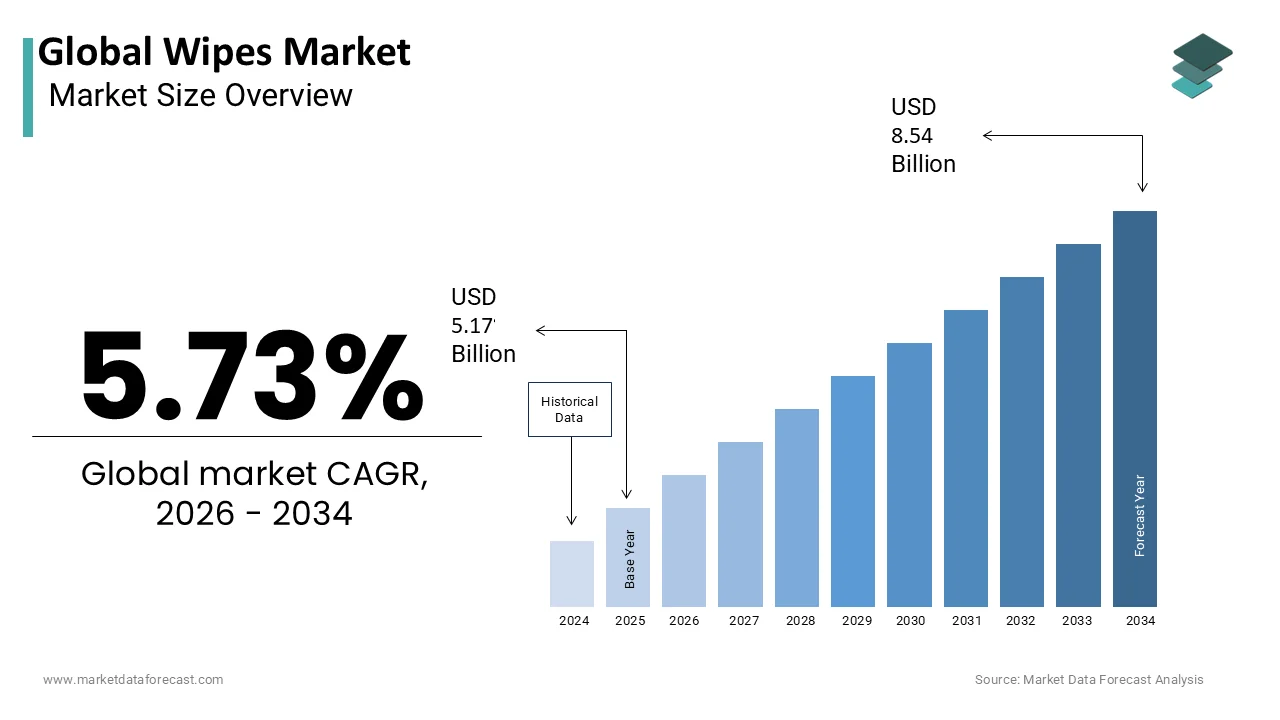
The global wipes market size was valued at USD 5.17 billion in 2025, stands at USD 5.74 billion in 2026, and is predicted to reach USD 8.54 billion by 2034, registering a compound annual growth rate (CAGR) of 5.73% from 2026 to 2034. Driven by rising institutional hygiene protocols, urban convenience-oriented consumption, and a shift toward sustainable non-woven substrates, the market continues its steady expansion.
Key Executive Metrics (At-a-Glance)
- 2025 Base Valuation: USD 5.17 Billion
- 2026 Current Valuation: USD 5.74 Billion
- 2034 Forecast Valuation: USD 8.54 Billion
- Compound Annual Growth Rate (CAGR): 5.73% (2026–2034)
- Dominant Application Segment: Personal Care (anchored by essential hygiene routines, elder care, and daily cosmetic applications)
- Fastest-Growing Application Segment: Household Wipes (scaling at a CAGR of 6.8% driven by urban lifestyles and multi-use surface solutions)
- Dominant Type Segment: Disposable Wipes (capturing primary share through cross-contamination control and on-the-go convenience)
- Fastest-Growing Type Segment: Non-Disposable Wipes (projected at a CAGR of 9.2% fueled by circular economy shifts and textile durability innovations)
- Dominant Distribution Channel: Supermarkets & Hypermarkets (leading via extensive assortments and reliable supply chain logistics)
- Fastest-Growing Distribution Channel: Online Channels (projected at a highest CAGR of 12.5% driven by digital penetration and subscription models)
- Dominant Regional Market: Europe (holding a 35.7% market share in 2025, heavily regulated by strict environmental mandates and plastic-free directives)
Core Market Drivers & Challenges
- Institutional Hygiene Protocols: Escalating incidences of healthcare-associated infections propel the deployment of medical-grade disinfectant wipes in clinical settings.
- Urbanization & Dual-Income Lifestyles: Time scarcity among urban consumers drives robust demand for ready-to-use, multipurpose personal care and household convenience formats.
- Environmental Regulations & Wastewater Strains: The Single-Use Plastics Directive and municipal sewer blockages caused by non-dispersible wipes impose heavy operational hurdles and higher substrate costs.
- Raw Material Volatility: Price fluctuations in natural fibers, wood pulp, and bio-based polymers squeeze manufacturer margins.
Global Wipes Market Segmentation Breakdown
| Segment Category | Leading Sub-Segment (2025 Base) | Fastest-Growing Sub-Segment (2026–2034) |
|---|---|---|
| By Application | Personal Care (essential hygiene commodities across all age groups) | Household (CAGR 6.8%; driven by urban convenience cleaning and biodegradable plant-based formats) |
| By Type | Disposable (commands major share due to infection prevention and portability) | Non-Disposable (CAGR 9.2%; driven by sustainable multi-use materials and textile durability advances) |
| By Distribution Channel | Supermarkets & Hypermarkets (extensive product assortments and physical retail dominance) | Online Channels (CAGR 12.5%; fueled by direct-to-consumer subscriptions and data analytics) |
| By Region | Europe (35.7% share in 2025; driven by high hygiene standards and stringent green laws) | North America (30.3% share in 2025; steady growth supported by high hygiene and convenience indices) |
Major Industry Players Profiled
Key enterprises shaping the competitive global wipes market include S.C. Johnson & Son, Procter & Gamble, E.I. du Pont de Nemours and Company, Reckitt Benckiser Group plc, Kimberly-Clark Corporation, Rockline Industries, Asia Pacific Fortuna Sari, Clorox Company, Contec Inc, Embuer, Nice-Pak, and Robinson Healthcare Limited, among others.
 Download Free Sample Report
Global Wipes Market Size
The global Wipes market size was valued at USD 5.17 billion in 2025, and the market size is predicted to reach USD 8.54 billion by 2034, up from USD 5.74 billion in 2026. The market is growing at a CAGR of 5.73%. From 2026 to 2034.
Wipes refer to pre-moistened or dry pieces of non-woven fabric or paper designed for single-use cleaning, personal hygiene, and disinfecting. These saturated substrates serve as convenient alternatives to traditional cloths and sponges, offering pre-measured cleaning solutions that enhance sanitation efficiency. In Europe, the sector has evolved significantly due to heightened consumer awareness regarding health and hygiene standards following recent global public health events. According to Eurostat, total household consumption expenditure across the European Union remains heavily concentrated in housing, water, electricity, gas, and other fuels, while household budgets allocate less than 9% to miscellaneous goods and services,s including personal care items. As per the European Environment Agency, plastic-containing disposable wet wipes continue to bypass standard wastewater filtration and generate significant marine litter along coastline ecosystems rather than dissolving like conventional paper. According to the World Health Organization, regular hand hygiene practices using soap and clean water reduce global diarrheal disease episodes by approximately 30% to 4,8% depending on the specific community setting. As per the German Federal Institute for Risk Assessment, regulatory evaluations of consumer contact materials target chemical migration limits, toxicological profiles, and microbiological safety levels for food packaging and textiles. This transition aligns with the European Single-Use Plastics Directive, which mandates stricter labeling and disposal guidelines for plastic-containing wipes. The integration of advanced nonwoven technologies such as spunlace and airlaid fabrics enables manufacturers to produce stronger yet softer substrates that dissolve more efficiently in water treatment facilities while maintaining superior cleaning performance for end users across various demographic segments.
MARKET DRIVERS
Rising Prevalence of Healthcare-Associated Infections Driving Institutional Hygiene Protocols
The escalating incidence of healthcare-associated infections is a key factor fuelling the growth of the wipes market. It is driving the expanded adoption of medical-grade disinfectant wipes across hospitals and long-term care facilities. According to the European Centre for Disease Prevention and Control, approximately 4.3 million patients acquire at least one healthcare-associated infection during an acute care hospital stay each year in the European region, presenting an ongoing challenge for institutional clinical safety protocols. This alarming statistic has compelled healthcare administrators to enforce rigorous surface decontamination protocols where alcohol based and quaternary ammonium compound wipes offer rapid pathogen elimination compared to traditional mopping methods. As per the World Health Organization, alcohol-based hand rubs or standard surface chemical disinfection formulations achieve targeted microbial reductions when integrated into hospital hand hygiene and environmental cleaning bundles. According to the Robert Koch Institute, structural compliance with hospital surface cleaning guidelines requires structured, risk-based environmental surface disinfection across high-touch clinical zones rather than isolated product interventions. Furthermore, the United Kingdom National Health Service mandates the use of single-use wipes for high-touch surfaces such as bed rails and door handles to prevent cross-contamination between patient rooms. This demographic shift drives continuous procurement of medical wipes by both institutional providers and private caregivers seeking reliable infection control measures.
Expanding Urbanization and Dual-Income Households Fueling Convenience-Oriented Consumption
Rapid urbanization and the proliferation of dual-income households have fundamentally altered domestic cleaning habits, which in turn accelerates the expansion of the wipes market. This creates robust demand for time-saving hygiene products like multipurpose and baby wipes. According to Eurostat, approximately 75% of the total European Union population resides within urban areas, which continues to shape localized retail consumption and municipal infrastructure planning patterns. As per the European Foundation for the Improvement of Living and Working Conditions, structural variations in weekly working hours and intense time pressures experienced by dual-earner households drive a persistent consumer preference for flexible home care options. This time scarcity drives preference for ready-to-use wipes that require no preparation or rinsing, enabling quick cleanup of spills and surfaces. According to the Netherlands Organisation for Applied Scientific Research, independent laboratory validations of environmental exposure and chemical contact materials focus heavily on toxicological thresholds, user exposure risks, and safe dermal limits. This lifestyle evolution ensures sustained volume growth as consumers increasingly value immediate gratification and ease of use over cost savings associated with reusable alternatives.
MARKET RESTRAINTS
Stringent Environmental Regulations Targeting Plastic Content in Nonwoven Substrates
Regulatory frameworks aiming to reduce plastic pollution impede the growth of the wipes market. These rules place heavy operational limits on manufacturers who use synthetic fibers like polyester and polypropylene to make wipes. According to the European Commission, the Single Use Plastics Directive enforces mandatory labeling requirements and extended producer responsibility for wet wipes, driving the market to transition toward sustainable, plastic-free alternatives. As per European Bioplastics e.V., the global production capacity for bioplastics is scaling up significantly, showing an active market growth trend that expands the supply of biodegradable polymers across consumer goods industries. According to the UK Government Department for Environment, Food and Rural Affairs, manufacturers face an estimated net loss of profit of 209 million pounds due to the higher input costs required to transition wet wipe substrates to plastic-free materials. Furthermore, according to the French Ministry of Ecological Transition, France enforces a comprehensive environmental cost labeling system under the AGEC law, requiring consumer brands to display product eco-scores based on unified life cycle assessments. These regulatory pressures necessitate substantial capital investment in research and development to create viable alternatives that meet both performance expectations and environmental compliance standards without compromising product integrity or affordability for mainstream consumers.
Inadequate Wastewater Infrastructure Leading to Sewer Blockages and Maintenance Costs
Improper disposal of wipes causes persistent sewer blockages and strains municipal wastewater systems with high costs and operational work, which slows down the expansion of the wipes market. According to Water UK, the water industry and its customers spend approximately 100 million pounds annually to clear sewer blockages caused by the improper flushing of disposable wet wipes. As per UK Parliament Committees, flushed sanitary products and wipes accumulate with oils and grease to form massive fatbergs that clog municipal sewage networks and trigger sewer overflows. As per Water UK, comprehensive field investigations reveal that wet wipes cause 93% of all sewer network blockages, forcing water companies to allocate substantial operational budgets toward emergency maintenance. According to Water UK, flushed baby wipes and non-flushable personal care substrates clump together inside domestic drainage systems, driving up municipal repair costs across urban centers. The infrastructure mismatch creates liability concerns for manufacturers who face increasing pressure to develop truly disintegrating formulations that break down rapidly in water. Until widespread infrastructure upgrades occur or consumer behavior shifts significantly, the industry will continue to grapple with negative public perception. It will also face potential litigation related to environmental damage and utility service disruptions.
MARKET OPPORTUNITIES
Development of Fully Compostable and Home Degradable Wipe Formats
The growing consumer preference for sustainable packaging and zero-waste lifestyles offers a lucrative opportunity for manufacturers in the wipes market. This trend allows them to innovate with fully compostable wipe solutions. According to the European Compost Network, compostable packaging solutions are increasingly being adopted for single-use applications to contribute to soil regeneration and divert plastic materials from landfills. As per the Austrian Standards Institute, manufacturing procurement actively relies on recognized industrial compostability and OK Compost labeling certifications to align with standard criteria. According to the Danish Environmental Protection Agency, national waste strategies are expanding cross-value chain management scenarios to transition consumer infrastructure toward sustainable bio-based and biodegradable polymers. Furthermore, as per the United Nations Development Programme, local governments are implementing circular economy interventions across municipal sectors to enhance absolute resource efficiency and mitigate institutional waste metrics. This trend enables brands to command higher price points while building loyalty among eco-aware demographics. Companies can align product development with circular economy principles to mitigate regulatory risks. They can also capitalize on the shifting retail landscape that favors transparency and environmental stewardship in personal care and household categories.
Integration of Skincare Benefits and Premium Ingredients in Personal Care Wipes
The merging of hygiene and skincare habits presents a major growth area for premium wet wipes in the global wipes market. These high-end products are increasingly formulated with skin-boosting elements like hyaluronic acid, niacinamide, and probiotics. According to the European Society of Contact Dermatitis, routine diagnostic patch testing reveals rising consumer sensitization rates to common cosmetic surfactants in widespread personal care formulations. As per the European Commission Scientific Committee on Consumer Safety, regulatory bodies enforce precise cosmetic limits on fragrance compounds to minimize individual allergic contact dermatitis risks. According to the Mayo Clinic, clinical treatment guidelines for contact dermatitis emphasize the immediate avoidance of known local chemical irritants alongside the localized application of protective anti-itch ointments. As per a McKinsey survey, over 40% of European consumers prioritize overall ease of use and immediate portability when selecting modern packaging options for daily convenience goods. This diversification allows manufacturers to target niche consumer segments with specific dermatological needs, thereby enhancing brand differentiation and margin potential. By leveraging clinical endorsements and scientific validation, companies can elevate wipes from commodity items. Doing so transforms them into essential skincare staples in daily beauty routines.
MARKET CHALLENGES
Volatility in Raw Material Prices for Natural Fibers and Bio-Based Polymers
Fluctuating costs of key raw materials like wood pulp, cotton, and polylactic acid cause major financial challenges for manufacturers in the wipes market. These companies struggle to maintain competitive pricing structures as a result. According to the Food and Agriculture Organization, global food and agricultural trade volumes remain highly exposed to major external shocks, forcing natural fiber and crop networks to manage extreme weather disruptions. As per industry documentation, the European pulp and paper industry optimizes extensive virgin biomass and recovered raw material streams to stabilize manufacturing outputs across industrial supply lines. According to the Food and Agriculture Organization, the global food price tracking index incorporates macro averages from distinct foundational commodity export segments to analyze macro volatility indicators. This cost pressure forces manufacturers to either absorb margin-eroding expenses or pass costs to consumers, risking volume declines. The lack of diversified sourcing options for specialized nonwoven materials leaves the industry vulnerable to external shocks, complicating strategic planning and profitability targets in an increasingly cost-sensitive retail environment.
Consumer Misconceptions Regarding Flushability and Proper Disposal Methods
Clear labeling efforts have failed to resolve persistent consumer confusion regarding the flushability of wipes, which holds back the expansion of the global wipes market. Consequently, this misunderstanding continues to undermine environmental initiatives and create reputational risks for companies. According to the Australian Competition and Consumer Commission, international consumer enforcement authorities prioritize active structural market interventions to guarantee lower pricing metrics and transparent quality standards for daily goods. As per the Australian Competition and Consumer Commission, dedicated regulatory task forces proactively intervene against major global digital marketplaces to disrupt unfair or exploitative consumer product distribution methods. As per the International Green Purchasing Network, production lines are shifting to integrated low-carbon manufacturing frameworks to visually track and isolate carbon expenditures across the entire raw material lifecycle. According to the Belgian Competition Authority, regulatory bodies issue formal opinions on domestic commercial sustainability agreements to align private industrial commitments with broad packaging guidelines. This disconnect between consumer behavior and technical reality necessitates costly litigation and public relations efforts to defend brand integrity while regulators push for stricter definition enforcement and standardized testing protocols to protect wastewater infrastructure and public health interests.
REPORT COVERAGE
| REPORT METRIC | DETAILS |
| Market Size Available | 2025 to 2034 |
| Base Year | 2025 |
| Forecast Period | 2026 to 2034 |
| Segments Covered | By Product, Material, Cleaning Tools, and Region. |
|
Various Analyses Covered | Global, Regional & Country-Level Analysis, Segment-Level Analysis, DROC, PESTLE Analysis, Porter’s Five Forces Analysis, Competitive Landscape, Analyst Overview on Investment Opportunities |
| Regions Covered | North America, Europe, APAC, Latin America, Middle East & Africa |
|
Market Leaders Profiled | S.C. Johnson & Son, Procter & Gamble, E.I. du Pont de Nemours and Company, Reckitt Benckiser Group plc, Kimberly-Clark Corporation, Rockline Industries, Asia Pacific Fortuna Sari, Clorox Company, Contec Inc, Embuer, Nice-Pak and Robinson Healthcare Limited and others. |
SEGMENTAL ANALYSIS
By Application Insights
In 2025, the personal care segment held the majority share of the wipes market primarily because of the essential nature of hygiene products in daily routines across all age groups. According to the European Centre for Disease Prevention and Control, rigorous health tracking and epidemiological monitoring establish institutional protocols for hand hygiene in clinical networks to mitigate community pathogen transmissions. As per the World Health Organization, international public health guidelines advocate for clean water infrastructure and basic soap availability to systematically lower global skin-borne and infectious disease transmission rates. Furthermore, according to the United Nations Department of Economic and Social Affairs, the global population aged 65 and older is projected to double by 2050, accelerating market expansion and structural consumer updates within elder care commodity networks. As per the European Commission Directorate-General for Public Health, centralized regional health frameworks establish harmonized long-term medical assistance metrics to coordinate unified healthcare support across member nations. The demographic pressure ensures steady volume growth as personal care wipes transition from optional convenience items to essential health maintenance tools. These factors collectively sustain the leading position of the personal care segment through recurring purchase cycles and high brand loyalty.
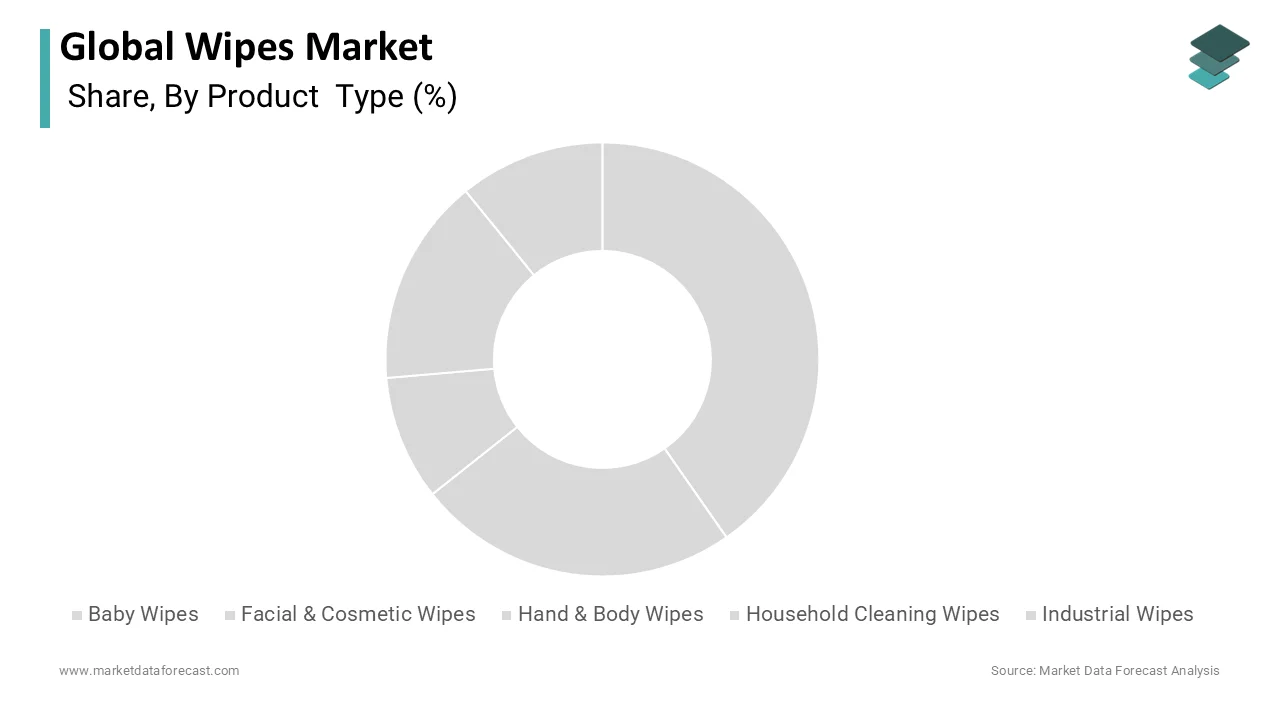
The integration of advanced skincare ingredients into personal care wipes has transformed them from basic cleaning tools into premium beauty essentials, driving significant value growth. According to the European Cosmetic and Perfumery Association (Cosmetics Europe), cosmetic developers are shifting production lines to multi-benefit facial hygiene commodities to tap into expanding consumer premium skincare expenditures. As per international cosmetics regulatory frameworks, consumer brands continuously modify personal care formulations with premium active ingredients to track evolving personal skin care trends. According to the European Commission, uniform cosmetic safety updates enforce strict tracking of botanical raw extracts to mitigate systemic skin barrier inflammation and sensitization patterns. As per the European Commission Scientific Committee on Consumer Safety, consumer demands for rapid skincare convenience tools are driving the inclusion of multi-use chemical formulations across daily cleansing segments. The trend allows manufacturers to differentiate products in a saturated market by leveraging scientific endorsements and premium positioning. The increasing disposable income in Western Europe enables consumers to prioritize quality and skin health benefits over price sensitivity, sustaining the dominance of the personal care segment.
The household segment is likely to experience the fastest CAGR of 6.8% during the forecast period as urban lifestyles drive demand for convenient cleaning alternatives. According to the United Nations Department of Economic and Social Affairs, over 75% of the European population lives in dense urban areas, concentrating household consumption volumes across regional municipal blocks. As per the European Foundation for the Improvement of Living and Working Conditions (Eurofound), structural work-life policy frameworks optimize household labor balances to manage professional employment shifts among dual-income families. According to the European Commission, retail markets are experiencing a steady shift toward multi-use surface solutions to satisfy integrated environmental compliance rules. As per the European Commission Joint Research Centre, changing household demographic shapes require retailers to introduce smaller individual product configurations to minimize absolute material waste metrics. This structural shift in cleaning behavior ensures robust volume expansion as manufacturers introduce specialized variants for kitchens, bathrooms, ms and electronics.
Rapid development of biodegradable plant-based household wipes is attracting a new segment of environmentally aware consumers, driving accelerated growth in this category. According to European Bioplastics e.V., the global production capacity for alternative bio-based polymers is scaling up dynamically to diversify raw material access for commercial packaging lines. As per the European Commission, mandatory eco-labeling and single-use plastic restrictions drive consumer groups to actively check product materials for synthetic components. According to the UK Government Department for Environment, Food and Rural Affairs, national sustainability mandates are phasing out synthetic fibers to foster the rapid adoption of alternative biodegradable personal substrates. As per the European Commission Joint Research Centre, strict standardized environmental certification rules like industrial compostability protocols protect retail markets from deceptive marketing assertions. Moreover, the innovations allow manufacturers to overcome regulatory hurdles and negative perceptions associated with traditional wipes.
By Type Insights
The disposable segment remained the largest in 2025 and occupied a commanding share of the wipes market. This prominence of the segment was credited to its inherent ability to prevent cross-contamination and ensure maximum hygiene in both personal and professional settings. According to the World Health Organization, multimodal infection prevention and control strategies focus heavily on standardized hand hygiene protocols to systematically reduce healthcare-associated infections across global clinical networks. As per the European Centre for Disease Prevention and Control, regional infection containment guidelines dictate specific environmental decontamination and home-care self-isolation frameworks to manage viral pathogen exposures. According to the Commission for Hospital Hygiene and Infection Prevention (KRINKO) at the Robert Koch Institute, healthcare facilities must enforce precise microbiological validation criteria for the chemical disinfection and routine cleaning of all hard clinical surfaces. This economic and safety advantage ensures that disposable wipes remain the preferred choice for institutions prioritizing infection control and operational efficiency.
The unparalleled convenience and portability of disposable wipes drive their widespread adoption among consumers who prioritize ease of use and time savings in daily life. According to Eurostat, personal care commodities and miscellaneous household services account for an average of 8.9% of total household consumption expenditure across the European Union. As per the European Commission Joint Research Centre, regional consumer tracking frameworks utilize precise product lifecycles to calculate changing family consumption expenditures on daily non-durable goods. According to the European Commission Scientific Committee on Consumer Safety, cosmetic safety evaluations mandate strict chemical compound testing on all on-the-go topical personal care formulations to safeguard public skin health. As per the European Commission Directorate-General for Public Health, expanding retail markets for specialized lifestyle cosmetics drive continuous changes in regional cosmetic preservation chemical guidelines. This accessibility and adaptability to modern lifestyles ensure that disposable wipes maintain their dominant market position despite environmental concerns.
The non-disposable segment is expected to exhibit a noteworthy CAGR of 9.2% from 2026 to 2034, as governments and consumers push for sustainable alternatives to single-use plastics. According to the European Commission, regional circular economy directives promote the systematic adoption of durable multi-use surface solutions to divert single-use material waste streams from landfills. As per the French Ministry of Ecological Transition, state initiatives mandate environmental product regulations to encourage sustainable raw material consumption and improve absolute life-cycle transparency. According to the UK Government Department for Environment, Food and Rural Affairs, national environmental legislation introduces active statutory restrictions against single-use plastic substrates to protect civic water networks. As per the European Commission Joint Research Centre, regional sustainability platforms implement evidence-based resource metrics to validate the lifecycle integrity of commercial fabrics. These regulatory and cultural shifts create a fertile environment for rapid expansion of the non-disposable segment.
Innovations in textile technology have significantly improved the performance and durability of non-disposable wipes, making them viable competitors to disposable options. According to the European Committee for Standardization (CEN), standardized regional testing mandates enforce rigorous performance metrics to classify structural material effectiveness in technical cleaning textiles. As per the German Institute for Hohenstein Testing, standardized durability quality standards evaluate textile degradation and appearance retention by processing fabrics through 30 controlled washing cycles. According to the European Commission Scientific Committee on Consumer Safety, chemical product oversight panels mandate explicit safety evaluations for antimicrobial active substances used on commercial surfaces. As per studies, centralized laundry certification bodies perform unannounced annual technical processing checks to verify standard hygienic requirements inside commercial laundries. These technological enhancements remove traditional barriers to adoption and support the rapid growth of the non-disposable segment.
By Distribution Channel Insights
The supermarkets and hypermarkets segment led the wipes market and captured a significant share in 2025. This leading position of the segment was attributed to its ability to offer extensive product assortments and convenient one-stop shopping experiences. According to Eurostat, spending on food, non-alcoholic beverages, personal care, and domestic hygiene products collectively forms a major share of total European consumer household budget allocations. As per the German Retail Federation (HDE), commercial grocery stores modify physical retail floor placements to align with active consumer shifting preferences across everyday household consumables. According to the National Institute of Statistics and Economic Studies of France (INSEE), fast-moving consumer goods sectors utilize clear pack variations to capture distinct consumer purchasing baseline spending segments. According to the UK Government Department for Environment, Food and Rural Affairs, national supermarket networks are transforming retail shelf displays to phase out plastic-containing variants ahead of upcoming environmental bans. This combination of accessibility, variety and promotional power sustains the dominance of supermarkets and hypermarkets in the distribution landscape.
The robust supply chain infrastructure of supermarkets and hypermarkets ensures consistent product availability ty which is critical for maintaining consumer loyalty in the hygiene sector. According to the European Logistics Association (ELA), automated multi-temperature and omnichannel distribution centers utilize flow-through warehouse innovations to pick and route fast-moving fresh consumer goods. As per German industrial logistics audits, regional drugstore chains deploy centralized, varied-automation logistics sites to manage on-shelf item availability across thousands of retail stores. According to French supply chain research, major grocery distribution channels optimize logistics networks to reconcile physical retail distribution with expanding online grocery formats. As per the UK Government Department for Environment, Food and Rural Affairs, grocery distributors are restructuring product inventories to verify absolute business compliance with newly implemented nonwoven material laws. This operational excellence ensures that supermarkets remain the primary touchpoint for wipe purchases across Europe.
The online channels segment is predicted to witness the highest CAGR of 12.5% during the forecast period as digital penetration deepens and subscription models gain popularity for recurring hygiene needs. According to Eurostat, online consumer purchasing dynamics remain highly expansive across the European Union, with 78% of active internet users ordering goods or services online. As per German digital commerce tracking, over 75% of domestic retail companies are systematically expanding investments in direct subscription commerce models to secure dedicated recurring household revenues. According to the European Commission, consumer retail platforms utilize native applications and dedicated enterprise websites to secure more than 8% of total commercial web sales turnover across European markets. According to the UK Office for National Statistics, promotional campaigns and digital marketing events drive a steady volume increase in the non-store retail sector for consumer household essentials. These factors collectively drive rapid expansion of online channels as consumers increasingly prioritize convenience and variety in their shopping habits.
Advanced data analytics and direct-to-consumer engagement strategies employed by online retailers are driving accelerated growth in the wipes market segment. According to the European Interactive Digital Advertising Alliance (EDAA), data-driven behavioral advertising frameworks mandate clear mechanisms for user choice, explicit notification, and privacy controls across all regional consumer markets. As per the European Union Digital Services Act (DSA), strict structural regulatory rules govern algorithmic transparency and personalized target marketing options within all active digital platforms. According to the European Commission, national consumer protection rules penalize misleading online descriptions to ensure authentic raw material and sustainability disclosures on daily care items. As per the European Cosmetic and Perfumery Association (Cosmetics Europe), online brand networks use detailed online product component listings to satisfy mandatory cosmetic safety and declaration directives. These sophisticated marketing techniques enable online channels to capture market share rapidly by creating compelling and personalized shopping experiences.
COUNTRY LEVEL ANALYSIS
Europe Wipes Market Analysis
Europe dominated the global wipes market and held a 35.7% share in 2025. It maintains a mature and highly regulated position in the global market. The European market reveals strong demand for sustainable and high-quality products. Stringent environmental laws and high consumer awareness drive this market. According to the European Commission, the Single Use Plastics Directive introduces mandatory awareness campaigns, product labeling, and extended producer responsibility schemes for wet wipes to curb marine waste. As per Germany's Federal Environmental Agency (Umweltbundesamt), German environmental standards enforce strict multi-use options and material restrictions to reduce single-use beverage and food container volumes. According to the UK Government Department for Environment, Food and Rural Affairs, the United Kingdom is actively rolling out a legislative ban on plastic-containing wet wipes to reduce persistent synthetic infrastructure blockages across all regional municipal jurisdictions. As per the European Commission Scientific Committee on Consumer Safety, cosmetic oversight networks mandate explicit restrictions on volatile ingredients and preservation chemicals within everyday baby wipes to maintain strict product safety. High disposable income and established retail infrastructure ensure steady demand despite market saturation. Regulatory pressure continues to shape product formulation and packaging, driving innovation in compostable and plastic-free solutions.
North America Wipes Market Analysis
North America was positioned second in the global wipes market and accounted for a 30.3% share in 2025. This growth of the North American market was driven by high hygiene standards and convenience-oriented lifestyles. According to the United States Environmental Protection Agency, federal chemical and manufacturing product evaluations focus on enforcing rigid pesticide registration rules for commercial and domestic surface disinfectants. As per the United States Census Bureau, national population and socioeconomic analytics chart income distributions across household brackets to evaluate household purchasing baselines. According to the United Nations Environment Programme, public environmental programs across major sovereign territories drive international updates to restrict plastic volumes and scale sustainable commercial packaging alternatives. As per the United States Environmental Protection Agency, distinct state-level jurisdictions are implementing individual, strict regulatory controls on per- and polyfluoroalkyl substances within regional consumer manufacturing chains. Major retail chains in the region invest heavily in private label wipes offering competitive pricing and driving volume sales. The region benefits from advanced manufacturing capabilities and strong research and development investments in nonwoven technologies. High per capita consumption rates ensure sustained revenue growth despite maturity in key segments.
Asia Pacific Wipes Market Analysis
Asia Pacific is the fastest-growing region in the global wipes market due to rising disposable incomes and an expanding middle-class population. According to the China National Commercial Information Center, industrial nonwoven production lines are expanding their technical capacity to satisfy domestic commercial demand for single-use personal hygiene commodities. As per the National Bureau of Statistics of China, urban retail sales of everyday consumer goods reached 14,292.1 billion yuan, demonstrating an active 1.8% year-on-year market expansion. As per the Ministry of Housing and Urban Affairs of India, the active expansion of the Swachh Bharat Mission drives the production and utilization of personal hygiene and waste-management substrates across civic centers. According to the Ministry of Economy, Trade and Industry of Japan, chemical and functional textile manufacturing units are scaling up the production of advanced sanitary products to support consumer demographic shifts. Local manufacturers are investing in capacity expansion to meet growing domestic demand and reduce reliance on imports. E-commerce platforms are expanding reach to rural areas, driving adoption of wipes in previously underserved markets. The region benefits from favorable demographic trends and increasing westernization of lifestyle habits.
Latin America Wipes Market Analysis
Latin America shows strong potential in the global wipes market owing to economic recovery and increasing retail modernization. As per the Brazilian National Health Surveillance Agency (ANVISA), manufacturers must secure standard chemical compliance registrations to supply disposable consumer personal care lines within the domestic market. As per the Brazilian Institute of Geography and Statistics, retail sales for personal care products, pharmaceuticals, and toiletries increased by 1.6%, showing an active domestic consumption shift for basic necessity goods. According to the National Institute of Statistics and Censuses of Argentina (INDEC), household expenditure baselines show structured spending reorganizations to safeguard basic hygiene commodity access amidst broader retail adjustments. As per the National Administrative Department of Statistics of Colombia (DANE), domestic manufacturing sectors report expanded output values for essential tissue and hygiene products to meet shifting supermarket demands. Local producers are focusing on cost-effective formulations to cater to price-sensitive consumers. Increasing urbanization in major cities drives demand for convenient cleaning solutions. Government health campaigns promote hygiene practices, boosting demand for disinfectants and hand wipes. The region benefits from trade agreements that reduce tariffs on raw materials and machinery. Cultural emphasis on cleanliness and family care sustains steady demand for baby and personal care wipes.
Middle East and Africa Wipes Market Analysis
The Middle East and Africa region is expected to grow notably in the global market from 2026 to 2034. It offers unique opportunities driven by tourism and healthcare development. As per the Ministry of Economy of the United Arab Emirates, consumer retail markets are showing increased expansion within the luxury personal care segment due to rising hospitality allocations. According to the Saudi General Authority for Statistics, inbound visitor spending surged to 300 billion SAR, generating a 6% year-on-year increase that directly expands the commercial footprint of retail convenience sectors. According to Statistics South Africa, formal retail sales indexes show that general dealers in personal care and household items maintain a major share of total commercial trade revenue. As per the Central Agency for Public Mobilization and Statistics of Egypt (CAPMAS), consumer price indexes track real-world consumption adjustments for personal health and basic care commodities to assess local inflation pressures. High temperatures in the region drive demand for refreshing and cooling personal care wipes. Tourism hubs require high standards of cleanliness,s s driving demand for industrial and hospitality wipes. Local manufacturing is developing to reduce import dependency and cater to specific regional preferences. International brands are entering the market through partnerships with local distributors. Government investments in healthcare infrastructure create opportunities for medical-grade wipes. The region benefits from young demographics and rising health consciousness, driving long-term growth potential.
COMPETITIVE LANDSCAPE
The competition in the wipes market is intense and characterized by continuous innovation and strategic differentiation among global and regional players. Major corporations leverage their established brand equity and extensive distribution networks to maintain dominance, while niche players focus on specialized segments such as organic or luxury wipes. Environmental sustainability has become a key battleground, with companies racing to develop plastic-free and compostable alternatives to meet regulatory mandates and consumer expectations. Price competition remains fierce in the mass market segment, prompting manufacturers to optimize supply chains and offer private label options. Product differentiation through added skincare benefits and unique fragrances helps brands command premium prices and foster loyalty. Regulatory compliance regarding labeling and disposal instructions adds complexity, requiring significant investment in legal and operational adjustments. Mergers and acquisitions are common as larger entities seek to consolidate market presence and acquire innovative technologies. The rise of e-commerce has lowered entry barriers, allowing direct-to-consumer brands to challenge traditional retail giants with agile marketing and personalized offerings. This dynamic environment forces all participants to remain agile and responsive to shifting trends.
KEY MARKET PLAYERS
Some of the companies that are playing a dominant role in the Global Wipes Market include:
- S.C. Johnson & Son, Inc.
- Procter & Gamble
- E. I. du Pont de Nemours and Company
- Reckitt Benckiser Group plc
- Kimberly-Clark Corporation
- Rockline Industries
- Asia Pacific Fortuna Sari
- The Clorox Company
- Contec, Inc.
- Embuer
- Nice-Pak Products, Inc.
- Robinson Healthcare Limited
TOP LEADING PLAYERS IN THE MARKET
- Procter and Gamble maintains a dominant position through its extensive portfolio of trusted brands such as Pampers and Swiffer. The company consistently invests in research and development to enhance product efficacy and sustainability. Recent actions include launching plastic-free wet wipes made from plant-based fibers to address environmental concerns. They have also expanded their manufacturing capacity in Europe to meet rising demand for hygiene products. Procter and Gamble leverages strong distribution networks to ensure widespread availability across retail and online channels. Their commitment to innovation is evident in the introduction of advanced skin care ingredients in baby wipes. This strategic focus on quality and sustainability strengthens consumer loyalty and drives long term growth in the global wipes sector.
- Kimberly-Clark is a leading player known for its Huggies and Kleenex brands, which are synonymous with quality and reliability. The company focuses on developing hypoallergenic and dermatologist-tested products to cater to sensitive skin needs. Recently, they have introduced compostable wipe options to align with global sustainability goals. Kimberly-Clark has strengthened its market position by expanding production facilities in Asia Pacific to serve growing populations. They actively engage in consumer education campaigns promoting proper disposal methods to mitigate environmental impact. Their investment in digital marketing enhances brand visibility and engagement with younger demographics. These initiatives demonstrate their commitment to meeting evolving consumer preferences while maintaining high standards of hygiene and comfort.
- Essity is a major global hygiene and health company with strong brands like Libero and Tena. The company prioritizes sustainable solutions by developing wipes from renewable materials and reducing plastic usage. Essity has recently launched innovative adult care wipes designed for dignity and ease of use in healthcare settings. They have expanded their industrial wipe offerings to meet stringent cleaning standards in commercial environments. Essity collaborates with retailers to optimize supply chain efficiency and reduce carbon footprints. Their focus on circular economy principles drives the development of fully biodegradable products. By addressing specific needs in personal and professional hygiene, Essity continues to strengthen its reputation as a responsible and innovative market leader.
TOP STRATEGIES USED BY KEY MARKET PARTICIPANTS
Key players in the wipes market primarily focus on product innovation by developing biodegradable and plastic-free formulations to comply with environmental regulations. Companies invest heavily in research and development to create hypoallergenic and skincare-infused variants that appeal to health-conscious consumers. Strategic partnerships with raw material suppliers ensure consistent access to sustainable fibers such as cotton and viscose. Brands expand their distribution networks by strengthening e-commerce platforms and subscription models to enhance customer convenience and retention. Marketing efforts emphasize transparency and eco-certification to build trust and differentiate products in a competitive landscape. Manufacturers also optimize production processes to reduce costs and improve efficiency while maintaining high quality standards. These strategies enable companies to adapt to changing consumer preferences and regulatory requirements effectively.
MARKET SEGMENTATION
This research report on the global wipes market has been segmented and sub-segmented based on product, material, cleaning tools, and region.
By Product Type
- Baby Wipes
- Facial & Cosmetic Wipes
- Hand & Body Wipes
- Household Cleaning Wipes
- Industrial Wipes
By Application
- Personal Care
- Household Use
- Industrial Cleaning
- Healthcare
By Formulation
- Wet Wipes
- Dry Wipes
By End User
- Residential
- Commercial
- Industrial
By Distribution Channel
- Supermarkets/Hypermarkets
- Convenience Stores
- Online Retail
- Specialty Stores
By Region
- North America
- Europe
- Asia Pacific
- Latin America
- The Middle East and Africa