- Product Description Description
- Table of Contents TOC
- List of Table & Figure LOT
- Get Free Sample PDF Sample PDF
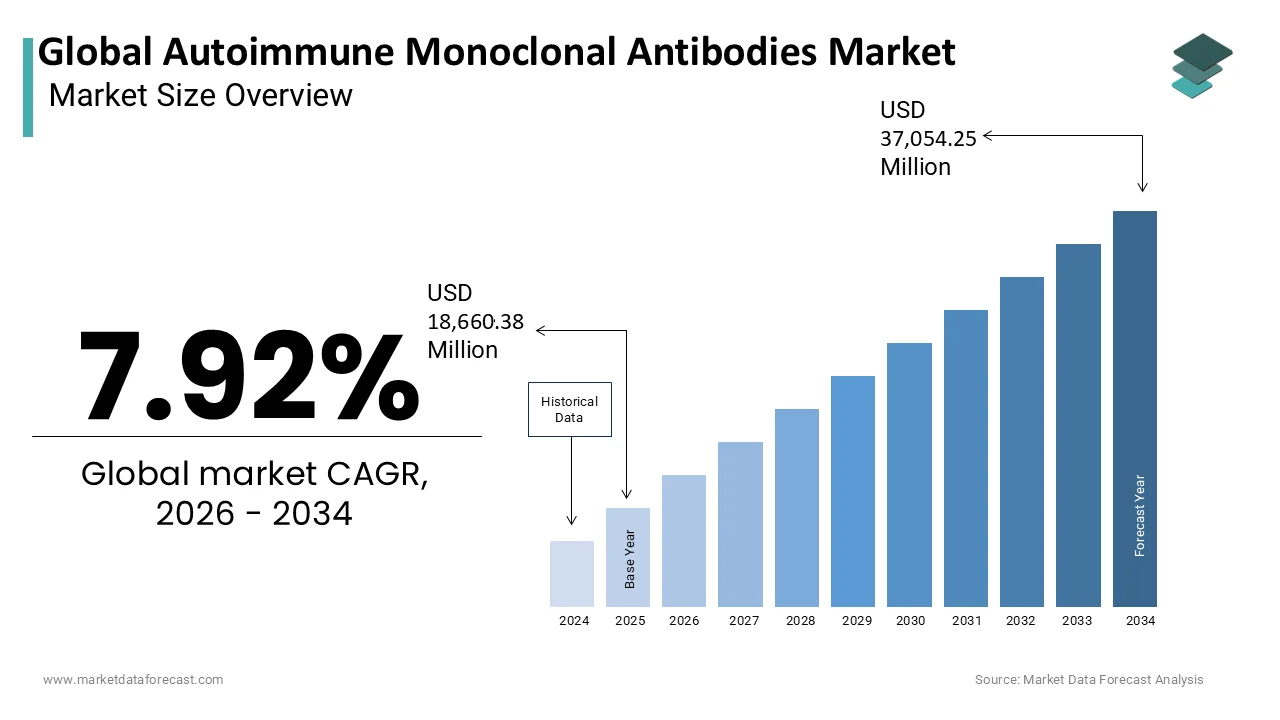
Market Size, 2025
$18,660.38 MnMarket Estimate, 2026
$20,138.28 MnMarket Forecast, 2034
$37,054.25 MnCAGR, 2026–2034
7.92%Executive Summary: Autoimmune Monoclonal Antibodies Market
- Market Scope: Comprehensive global autoimmune monoclonal antibodies market analysis covering biological sources, disease application segments, hospital distribution end-users, regional leadership frameworks, and epidemiological drivers.
- Market Valuation: Valued at USD 18,660.38 million (2025), estimated at USD 20,138.28 million (2026), and projected to reach USD 37,054.25 million by 2034, registering a steady CAGR of 7.92% (2026–2034). (Note: Historical market size was USD 17,290.94 million in 2024).
- Primary Growth Drivers: Increasing prevalence of autoimmune diseases, rising incidence of serious arthritis and multiple sclerosis cases, advancements in genomics R&D, expansion of next-generation sequencing platforms, and growing clinical demand for target-specific antibody-based therapeutics.
Key Market Segment Metrics (2026–2034)
| Category | Leading Segment (Historical / Base Position) | Fastest-Growing Segment |
|---|---|---|
| By Source Type | Humanized Monoclonal Antibodies (accounted for the highest revenue share) | Fully-Humanized Monoclonal Antibodies & Advanced Recombinant Biologics |
| By Application Area | Autoimmune & Inflammatory Disease Management (driven by rheumatoid arthritis cases) | Targeted Biological Therapy Adoption & Novel Autoimmune Indication Lines |
| By End User & Distribution | Hospital Pharmacies & Specialized Infusion Centers (identified as leading end users) | Outpatient Specialty Clinics & Ambulatory Care Biologic Delivery Centers |
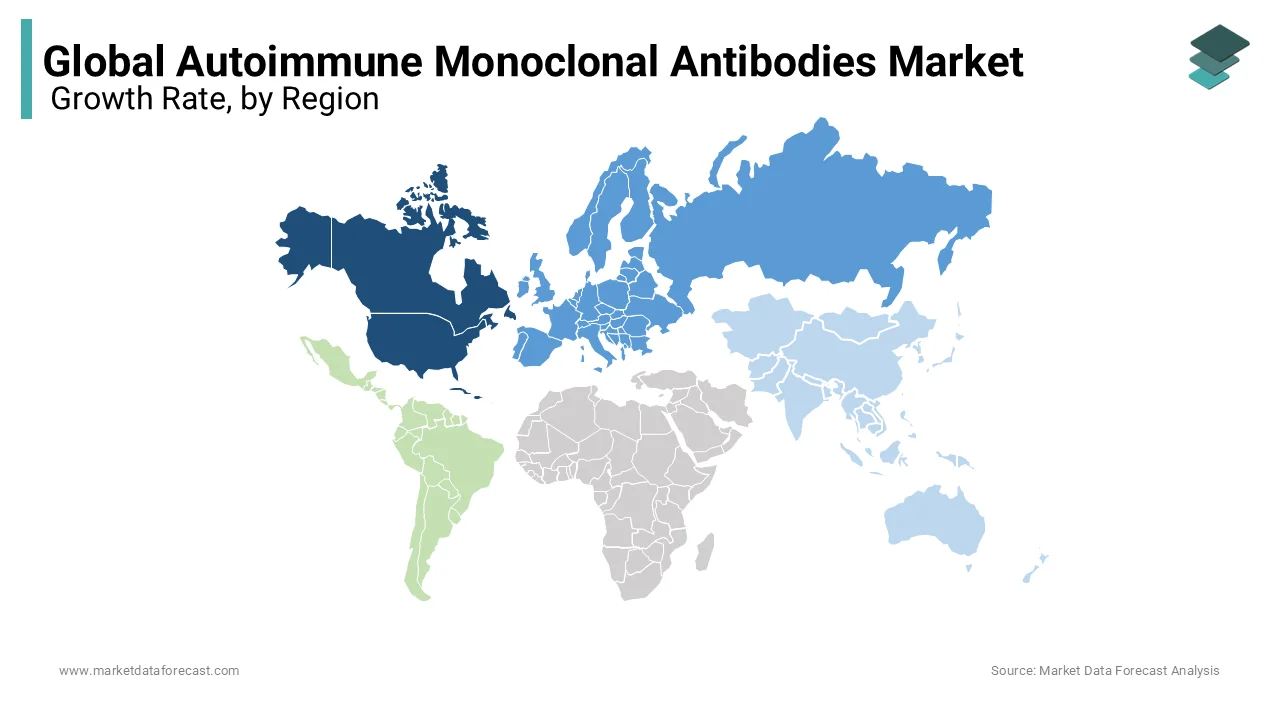
| By Region / Country | North America (commanded 45.0% of the global market), followed by Europe (second-largest market) | North America (projected to register the highest regional CAGR of 8.47%) & Asia-Pacific |
Major Market Players & Market Structure
Market Structure: Highly competitive global biopharmaceutical and immunology landscape featuring major multinational pharmaceutical corporations competing intensely on advanced biologic therapies, next-generation monoclonal antibody formulations, biosimilar development, and expanding clinical indications.
Key Companies: GlaxoSmithKline, AstraZeneca, F. Hoffmann-La Roche, Bristol-Myers Squibb, Johnson & Johnson, Innovent Biologics, Takeda Pharmaceutical, Amgen, Biogen, and UCB.
Global Autoimmune Monoclonal Antibodies Market Size
The Global Autoimmune Monoclonal Antibodies Market is projected to grow from USD 18,660.38 million in 2025 to USD 20,138.28 million in 2026 and reach USD 37,054.25 million by 2034, registering a CAGR of 7.92% from 2026 to 2034.
Autoimmune monoclonal antibodies are a specialized class of biologic therapeutics designed to target specific immune system pathways involved in chronic inflammatory and autoimmune disorders. These engineered proteins offer precision medicine capabilities that surpass traditional immunosuppressants by minimizing off-target effects. According to the American Autoimmune Related Diseases Association, approximately 50 million Americans suffer from at least one autoimmune condition, creating a substantial patient base requiring advanced therapeutic interventions. This high prevalence drives continuous innovation in antibody engineering and clinical development. According to the National Institutes of Health, autoimmune diseases rank among the top ten leading causes of death for women under sixty-five years old, underscoring the critical need for effective treatments. Such severity metrics justify significant investment in monoclonal antibody research and development. Regulatory agencies prioritize fast-track approvals for novel mechanisms addressing unmet medical needs. The complexity of manufacturing these biologics requires stringent quality control and specialized infrastructure. Patient advocacy groups actively influence policy to improve access and reimbursement. Clinical guidelines increasingly recommend early biologic intervention to prevent irreversible organ damage. This shift in treatment paradigms sustains long-term demand for targeted therapies. The market evolves through continuous refinement of humanization techniques and delivery methods. Scientific advancements ensure sustained relevance in modern healthcare systems.
MARKET DRIVERS
Increasing Prevalence of Chronic Autoimmune Disorders
The rising global incidence of chronic autoimmune disorders is a key factor propelling the global autoimmune monoclonal antibodies market expansion by expanding the addressable patient population. Environmental factors and genetic predispositions contribute to this epidemiological shift. According to the World Health Organization, the global burden of autoimmune diseases has increased by 30% over the past two decades due to improved diagnostic capabilities and lifestyle changes. This surge creates urgent demand for effective disease-modifying therapies. According to the Centers for Disease Control and Prevention, rheumatoid arthritis affects 1.3 million adults in the United States alone, with many requiring biologic intervention after failing conventional treatments. Such statistics highlight the persistent need for advanced therapeutic options. Early diagnosis initiatives identify patients sooner, extending treatment duration and improving outcomes. Aging populations in developed nations further amplify disease prevalence as immune regulation declines with age. Public health campaigns raise awareness, reducing stigma and encouraging help-seeking behavior. Healthcare systems allocate more resources to specialty care clinics managing complex cases. Insurance coverage expansions reduce financial barriers for eligible patients. Pharmaceutical companies respond by investing in pipeline diversity to address various autoimmune targets. This demographic and clinical momentum ensures robust market growth driven by fundamental healthcare needs rather than transient trends.
Advancements in Biologic Engineering and Personalized Medicine
Technological breakthroughs in biologic engineering further aid the global autoimmune monoclonal antibodies market growth by enhancing drug efficacy and safety profiles. Precision medicine approaches allow customization of therapies based on individual genetic markers. According to Nature Biotechnology, over 80% of new monoclonal antibodies approved in recent years utilize fully human or humanized platforms, reducing immunogenicity risks compared to earlier murine-derived molecules. This technical evolution improves patient tolerance and adherence. According to the Journal of Clinical Investigation, next-generation antibodies with modified Fc regions demonstrate enhanced half-lives, allowing less frequent dosing intervals that improve quality of life. Patients prefer subcutaneous administration over intravenous infusions when possible, driving innovation in delivery devices. Biosimilar development increases competition and lowers costs, expanding access to broader populations. Regulatory agencies streamline approval processes for biosimilars with proven equivalence. Academic collaborations accelerate target validation and mechanism elucidation. Digital health tools monitor real-world effectiveness, informing future design iterations. Manufacturing innovations reduce production costs and increase supply reliability. These scientific and operational advances create a virtuous cycle of improvement. Clinicians gain confidence in prescribing newer agents due to robust clinical data. This technological leadership sustains market expansion through continuous value addition.
MARKET RESTRAINTS
High Treatment Costs and Reimbursement Challenges
Exorbitant treatment costs and complex reimbursement landscapes are primarily impeding the autoimmune monoclonal antibodies market growth by limiting patient access. Biologic therapies often cost tens of thousands of dollars annually, straining healthcare budgets. According to the Kaiser Family Foundation, average annual spending on specialty drugs, including monoclonal antibodies, exceeds 60,000 dollars per patient in the United States, creating significant financial pressure on payers. Insurance providers implement strict prior authorization requirements to control utilization. According to the Commonwealth Fund, high out-of-pocket costs lead to medication non-adherence in nearly 25% of patients prescribed expensive biologics. This financial barrier prevents optimal disease management and worsens long-term outcomes. Value-based pricing models remain underdeveloped, causing friction between manufacturers and payers. Budget impact analyses restrict formulary inclusion in public health systems. Patients face administrative burdens navigating coverage appeals and exceptions. Small employers struggle to afford comprehensive benefit packages covering specialty medications. Global price disparities create ethical dilemmas regarding equitable access. Manufacturers face pressure to justify premium pricing through demonstrably superior outcomes. These economic constraints slow market penetration despite clinical efficacy. Stakeholders seek sustainable financing models to balance innovation incentives with affordability goals.
Risk of Immunogenicity and Adverse Events
The inherent risk of immunogenicity and serious adverse events further hinders the autoimmune monoclonal antibodies market growth by complicating long-term therapy management. Patients may develop anti-drug antibodies that neutralize therapeutic effects or cause hypersensitivity reactions. According to the Journal of Allergy and Clinical Immunology, approximately 10 to 30% of patients treated with monoclonal antibodies develop detectable anti-drug antibodies, potentially leading to loss of response or infusion reactions. This variability necessitates careful monitoring and dose adjustments. The Food and Drug Administration mandates black box warnings for several autoimmune biologics due to increased infection risks, including tuberculosis reactivation. Such safety concerns deter some clinicians from initiating therapy early in the disease course. Patients require regular screening for latent infections before starting treatment, adding logistical complexity. Long-term safety data remain limited for newer agents, creating uncertainty among prescribers. Post-marketing surveillance identifies rare but severe side effects that may restrict usage. Liability concerns influence prescribing patterns and insurance coverage decisions. Manufacturing consistency is critical to minimize immunogenic potential, requiring rigorous quality control. These safety challenges necessitate robust patient education and support programs. Balancing efficacy with safety remains a central tension in market dynamics.
MARKET OPPORTUNITIES
Expansion into Rare Autoimmune Indications
Targeting rare autoimmune indications is a significant opportunity for the autoimmune monoclonal antibodies market by addressing underserved patient populations with high unmet needs. Orphan drug designations provide regulatory and commercial incentives for developing therapies for conditions affecting small numbers of patients. According to the National Organization for Rare Disorders, over 7,000 rare diseases exist, with approximately 80% having autoimmune components, representing a vast untapped therapeutic landscape. Regulatory agencies offer market exclusivity periods and tax credits to encourage development. According to the European Medicines Agency, orphan drug approvals have increased by 40% in the last five years, demonstrating viable pathways for niche indications. High pricing power compensates for smaller patient volumes, ensuring profitability. Patient advocacy groups for rare diseases are highly organized, facilitating clinical trial recruitment and market access. Diagnostic improvements identify previously undiagnosed cases, expanding addressable markets. Academic centers specialize in rare disease management, creating referral networks. Real-world evidence generation supports reimbursement negotiations. Platform technologies allow rapid adaptation of existing antibodies to new targets. This strategic focus diversifies revenue streams beyond saturated mainstream indications. Companies build specialized expertise in rare disease commercialization. Such specialization creates competitive moats and long-term sustainability.
Development of Subcutaneous and Home Administration Formats
The development of subcutaneous and home administration formats offers a major opportunity for the autoimmune monoclonal antibodies market by enhancing patient convenience and reducing healthcare system burden. Transitioning from intravenous infusions to self-injected subcutaneous doses empowers patients and frees up clinical resources. According to the Journal of Managed Care Pharmacy, home-based biologic administration reduces overall treatment costs by 20 to 30% by eliminating facility fees and nursing time. This economic efficiency appeals to payers and providers alike. Patient preference surveys indicate a strong desire for autonomy and reduced travel burden associated with clinic visits. The FDA approves numerous subcutaneous formulations based on bioequivalence studies, accelerating market entry. Device innovation improves injection ease and pain reduction, enhancing adherence. Telehealth integration supports remote monitoring of home-administered therapies. Specialty pharmacies manage distribution and patient education effectively. Reduced exposure to hospital environments lowers infection risks for immunocompromised patients. Manufacturers differentiate products through user-friendly delivery systems. This shift aligns with broader healthcare trends toward decentralization and patient-centricity. Expanded access reaches rural and mobility-limited populations. Such format innovations drive volume growth and customer loyalty.
MARKET CHALLENGES
Complex Manufacturing and Supply Chain Vulnerabilities
Complex manufacturing processes and supply chain vulnerabilities challenge the autoimmune monoclonal antibodies market by creating production bottlenecks and quality risks. Biologic production requires living cell cultures and intricate purification steps that are sensitive to minor variations. According to the International Society for Pharmaceutical Engineering, batch failure rates in biologic manufacturing can reach 15% due to contamination or process deviations, leading to significant supply disruptions. Such instability threatens patient continuity of care. Cold chain logistics maintain product stability during distribution, adding cost and complexity. According to the World Health Organization, temperature excursions during transport compromise product integrity in up to 5% of shipments globally. Geopolitical tensions and trade restrictions impact raw material availability. Single-source dependencies for critical reagents increase vulnerability to supplier failures. Scaling up production while maintaining quality consistency requires substantial capital investment. Regulatory inspections impose strict compliance standards that slow process changes. Talent shortages in bioprocessing engineering limit expansion capacity. Cybersecurity threats target intellectual property and operational technology. These operational complexities require robust risk management strategies. Companies must balance efficiency with resilience to ensure reliable supply. Failure to manage these challenges results in reputational damage and lost market share.
Patent Cliffs and Biosimilar Competition
Impending patent expirations and rising biosimilar competition further challenge the global autoimmune monoclonal antibodies market by eroding pricing power and market share for originator products. Loss of exclusivity allows multiple competitors to enter the market with lower-priced alternatives. According to the Congressional Budget Office, biosimilars generate average savings of 20 to 30% compared to reference biologics, pressuring originators to reduce prices or lose volume. This competitive dynamic forces continuous innovation to maintain differentiation. Physician switching inertia slows biosimilar adoption initially, but accelerates over time as confidence grows. According to the Generic Pharmaceutical Association, biosimilar uptake varies significantly by therapeutic area, with autoimmune indications seeing faster penetration due to high treatment volumes. Payers mandate biosimilar use through formulary tiering and step therapy protocols. Originator companies invest heavily in lifecycle management strategies, including new indications and formulation improvements. Legal disputes over patent validity create uncertainty and delay market entry. Marketing efforts must emphasize unique value propositions beyond price. Small molecule competitors also emerge targeting similar pathways. This multifaceted competition compresses margins and shortens product lifecycles. Companies must adapt business models to thrive in a post-patent environment. Strategic planning becomes critical for long-term viability.
REPORT COVERAGE
| REPORT METRIC | DETAILS |
| Market Size Available | 2025 to 2034 |
| Base Year | 2025 |
| Forecast Period | 2026 to 2034 |
| Segments Analysed | By Source, Application, End User, and Region |
| Various Analyses Covered | Global, Regional & Country Level Analysis, Segment-Level Analysis, DROC, PESTLE Analysis, Porter’s Five Forces Analysis, Competitive Landscape, Analyst Overview of Investment Opportunities |
| Regions Analysed | North America, Europe, Asia Pacific, Latin America, the Middle East, and Africa |
| Key market players
| GlaxoSmithKline plc (U.K.), AstraZeneca plc (U.K.), F. Hoffmann-La Roche Ltd |
SEGMENTAL ANALYSIS
By Source Insights
The humanized monoclonal antibodies segment had the dominant share of the global market in 2025 and is expected to maintain dominance in the autoimmune therapeutics landscape due to their optimal balance between efficacy and reduced immunogenicity compared to earlier-generation biologics. According to the Journal of Clinical Immunology, humanized antibodies now constitute over 65% of newly approved autoimmune biologics because they retain murine antigen-binding specificity while minimizing human anti-mouse antibody responses. This structural advantage allows for repeated dosing without significant loss of therapeutic effect or adverse immune reactions. Pharmaceutical manufacturers prioritize this platform as it extends treatment duration and improves patient adherence in chronic conditions like rheumatoid arthritis. According to the American College of Rheumatology, guidelines highlight that humanized agents demonstrate superior long-term safety profiles in clinical trials spanning five years or more. Regulatory agencies favor these molecules due to predictable pharmacokinetics and lower risk of serum sickness. Biotechnology firms invest heavily in complementarity-determining region grafting technologies to refine humanization processes. This technical maturity reduces development timelines and increases approval success rates. Payers increasingly reimburse humanized therapies based on robust real-world evidence supporting cost-effectiveness. The widespread adoption across multiple autoimmune indications creates economies of scale in manufacturing. Consequently, humanized antibodies serve as the industry standard against which newer formats are benchmarked. Their established clinical utility ensures continued market leadership despite emerging alternatives.
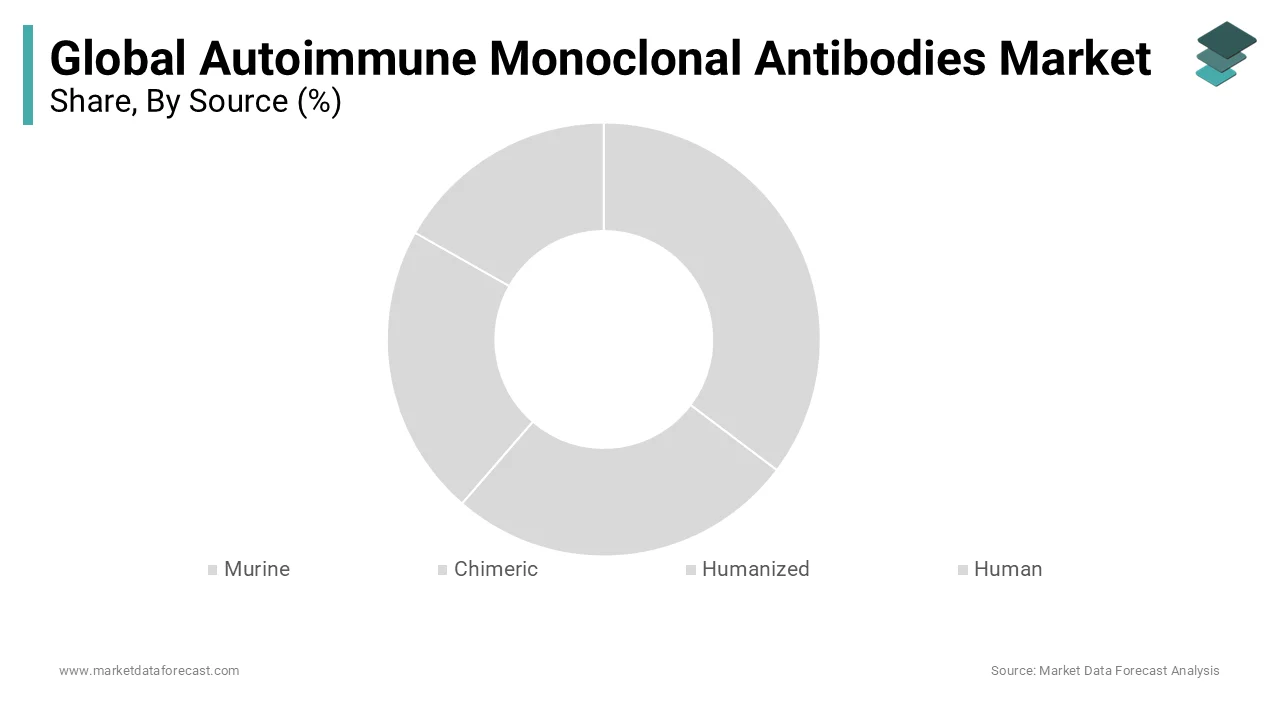
On the other end, the fully human monoclonal antibodies segment is estimated to register a promising CAGR of 13.3% over the forecast period in the global market owing to the advances in transgenic mouse and phage display platforms. According to Nature Biotechnology, fully human candidates accounted for 40% of late-stage autoimmune pipeline assets in 2023, reflecting a strategic shift toward eliminating residual immunogenicity risks. These molecules exhibit pharmacokinetic profiles identical to endogenous immunoglobulins, enabling less frequent dosing schedules that improve quality of life. Patients and clinicians prefer fully human options for lifelong therapies where cumulative exposure increases sensitization potential. According to the National Institutes of Health, fully human antibodies show 30% lower discontinuation rates due to adverse events compared to chimeric counterparts in head-to-head studies. Manufacturing yields have improved significantly through optimized Chinese hamster ovary cell lines, reducing production costs per gram. Intellectual property landscapes for fully human platforms have matured, allowing broader commercialization beyond originator companies. Regulatory pathways are well-defined, accelerating review cycles for biosimilar and novel entries. Venture capital funding increasingly targets next-generation fully human discovery engines. This financial support fuels innovation in target validation and affinity maturation. The convergence of technological feasibility, clinical superiority, and economic viability propels rapid expansion of this segment.
By Application Insights
The rheumatoid arthritis segment accounted for the largest share of the global market in 2025 and is estimated to remain the dominant application segment in the autoimmune monoclonal antibodies market due to high prevalence and extensive biologic utilization. According to the Arthritis Foundation, approximately 1.3 million adults in the United States live with rheumatoid arthritis, creating a substantial and sustained patient pool for targeted therapies. Early intervention protocols mandate biologic initiation within three months of diagnosis, driving consistent prescription volumes. Tumor necrosis factor inhibitors and interleukin-6 receptor antagonists form the backbone of treatment algorithms endorsed by major rheumatology societies. According to the Annals of the Rheumatic Diseases, over 60% of moderate to severe rheumatoid arthritis patients receive at least one monoclonal antibody during their disease course. Long-term management requires continuous therapy, generating recurring revenue streams unlike acute indications. Biosimilar entry has expanded access without eroding overall market value due to volume growth. Clinical trial infrastructure for rheumatoid arthritis is highly developed, facilitating rapid evaluation of new mechanisms. Patient advocacy groups actively promote awareness and treatment adherence, supporting market stability. Reimbursement policies in major markets recognize biologics as standard of care, reducing financial barriers. The depth of therapeutic options allows sequencing strategies that extend product lifecycles. This entrenched ecosystem solidifies rheumatoid arthritis as the primary commercial driver.
However, the systemic lupus erythematosus segment is the fastest-growing application segment and is predicted to register a CAGR of 15.4% over the forecast period owing to the recent approvals of novel targeted biologics addressing unmet needs. According to the Lupus Research Alliance, only two monoclonal antibodies received regulatory approval for systemic lupus erythematosus in the past decade, yet both achieved blockbuster status within three years of launch. Historically limited therapeutic options created pent-up demand that new entrants rapidly captured. Advances in understanding B-cell and interferon pathways enabled precise targeting previously unattainable with broad immunosuppressants. According to the New England Journal of Medicine, pivotal trial data showed a 50% reduction in flare rates with belimumab and anifrolumab, validating mechanistic approaches. Diagnostic improvements increase identification of eligible patients, expanding the addressable population. Pediatric and renal lupus subpopulations now have dedicated biologic indications, broadening market scope. Real-world evidence demonstrates reduced corticosteroid dependence, lowering long-term complication costs. Payers recognize value in preventing organ damage, justifying premium pricing. Pipeline diversity includes dual-specific antibodies and Fc-engineered variants, promising further differentiation. Academic centers establish specialized lupus clinics, enhancing referral networks. This confluence of scientific breakthrough, regulatory success, and clinical need accelerates segment growth beyond mature indications.
By End User Insights
The hospitals and clinics segment led the market with the largest share of the global market in 2025 as primary sites for monoclonal antibody administration and ongoing patient management. According to the Centers for Medicare and Medicaid Services, hospital outpatient departments account for 70% of infused biologic claims due to complex administration requirements and monitoring needs. Intravenous formulations necessitate clinical supervision for infusion reactions and dose adjustments, reinforcing institutional centrality. Specialty rheumatology and neurology clinics embedded within health systems provide continuity of care essential for chronic autoimmune diseases. According to the American Hospital Association, integrated delivery networks negotiate bulk purchasing agreements, securing favorable pricing and supply consistency. Electronic health record integration enables seamless tracking of treatment response and adverse events, supporting value-based care models. Infusion centers within hospitals offer standardized protocols, ensuring safe delivery across diverse patient populations. Training programs for nursing staff maintain competency in managing biologic therapies. Referral patterns concentrate complex cases at tertiary centers with multidisciplinary expertise. Insurance preauthorization processes often require hospital-based documentation, streamlining access. The physical infrastructure and clinical workforce required for safe biologic use create high switching costs. This operational dependency sustains hospital dominance despite alternative site trends.
On the other hand, the research institutes segment is the fastest-growing end-user segment and is predicted to record a CAGR of 12.2% over the forecast period owing to the expanding translational research and biomarker discovery initiatives. According to the National Science Foundation, federal funding for autoimmune disease research increased by 18% in fiscal year 2023, directly boosting procurement of research-grade monoclonal antibodies. Academic laboratories utilize these reagents to elucidate disease mechanisms, validate drug targets, and develop companion diagnostics. Collaborative consortia between universities and pharmaceutical companies accelerate preclinical testing using standardized antibody panels. According to the Journal of Autoimmunity, over 80% of novel autoimmune biomarkers identified in the last five years originated from academic research settings. Flow cytometry and single-cell sequencing technologies require high-specificity antibodies, driving demand for validated research tools. Grant cycles create predictable purchasing patterns aligned with funding disbursements. Core facilities centralize antibody resources, improving accessibility for individual investigators. Industry-sponsored investigator-initiated trials provide additional revenue streams and material access. Open science initiatives promote sharing of reagent databases, reducing duplication. The critical role of basic research in de-risking clinical development ensures sustained investment. This foundational activity underpins future therapeutic innovation, making research institutes a dynamic growth engine.
REGIONAL ANALYSIS
COUNTRY LEVEL ANALYSIS
North America Autoimmune Monoclonal Antibodies Market Analysis
North America led the market with the largest share of the global market in 2025 and is expected to experience steady and mature market consolidation over the next few years, supported by advanced healthcare infrastructure and high biopharmaceutical adoption rates. North America holds the largest share of the global autoimmune monoclonal antibodies market, characterized by advanced healthcare infrastructure and favorable reimbursement environments. According to the Centers for Disease Control and Prevention, 24 million Americans suffer from autoimmune diseases, creating the world's largest treated patient population. High per capita healthcare spending enables widespread adoption of premium-priced biologics without significant access barriers. The Food and Drug Administration maintains expedited review pathways for breakthrough autoimmune therapies, accelerating time to market. Private insurers and public payers cover most approved monoclonal antibodies, recognizing long-term cost offsets from prevented disability. Major pharmaceutical headquarters located in the region facilitate early access programs and clinical trial enrollment. Patient advocacy organizations exert strong influence on policy and coverage decisions. Real-world evidence generation is robust due to integrated electronic health records supporting post-market surveillance. Biosimilar uptake is gradual, preserving originator revenues while expanding access. Telehealth integration improves monitoring adherence in rural areas. Regulatory harmonization with Canada streamlines cross-border development. The concentration of specialty pharmacies ensures efficient distribution and patient support services. This comprehensive ecosystem sustains North American leadership through synergistic interactions among stakeholders.
Europe Autoimmune Monoclonal Antibodies Market Analysis
Europe is anticipated to achieve steady and value-driven market expansion over the next few years, influenced by rigorous health technology assessments and biosimilar integration. The European Medicines Agency has approved over 30 monoclonal antibodies for autoimmune indications, providing broad therapeutic options across member states. According to Eurostat, autoimmune disease prevalence affects 5 to 8% of the European population, translating to millions of potential biologic users. National health technology assessment bodies evaluate cost-effectiveness rigorously, influencing pricing and access negotiations. Cross-border healthcare directives enable patient mobility for specialized treatments in centers of excellence. The European Reference Networks connect rare autoimmune disease experts, improving diagnosis and management consistency. Biosimilar penetration is higher than in North America due to proactive tendering and physician education. Publicly funded research programs support local biotechnology innovation, reducing import dependency. Harmonized pharmacovigilance systems enhance safety monitoring across jurisdictions. Digital health initiatives integrate biologic tracking into national registries. Variability in national budgets creates access disparities, requiring adaptive commercial strategies. Despite fragmentation, Europe's collective scale and regulatory sophistication maintain its position as a critical market pillar balancing innovation with affordability.
Asia Pacific Autoimmune Monoclonal Antibodies Market Analysis
Asia Pacific is the fastest-growing regional market, propelled by rising disease awareness, expanding insurance coverage, and domestic biopharmaceutical capabilities. According to the Asian Pacific League of Associations for Rheumatology, diagnosed autoimmune cases increased by 25% across key markets between 2019 and 2023 due to improved diagnostic access. National health insurance schemes in Japan, South Korea, and China progressively include biologics, reducing out-of-pocket burdens. Local manufacturers develop affordable biosimilars and novel antibodies tailored to regional genetic profiles. Government initiatives promote domestic production through fast-track approvals and manufacturing subsidies. Urbanization and aging demographics increase disease burden, amplifying treatment demand. Multinational companies establish regional hubs to navigate complex regulatory landscapes. Clinical trial participation grows as investigators gain experience with global standards. Traditional medicine integration creates unique combination therapy opportunities. Price controls necessitate volume-driven business models differing from Western approaches. Infrastructure investments expand infusion capacity beyond major cities. Cultural stigma around chronic illness diminishes, encouraging help-seeking behavior. This multifaceted transformation positions Asia Pacific as the primary growth vector reshaping global market dynamics through scale and localization.
Latin America Autoimmune Monoclonal Antibodies Market Analysis
Latin America occupies an emerging position in the autoimmune monoclonal antibodies market, marked by progressive healthcare reforms and increasing biologic accessibility. According to the Pan American Health Organization, autoimmune disease mortality declined by 15% in the region over the past decade, reflecting improved treatment availability. Brazil, Mexico, and Argentina lead adoption through public health system inclusion of key biologics for severe cases. Private insurance expansion covers middle-class populations previously excluded from advanced therapies. Regional regulatory harmonization efforts reduce approval delays for multinational products. Local patient registries generate real-world data supporting coverage decisions. Biosimilar entry lowers costs, enabling broader population access. Specialist training programs address historical workforce shortages in rheumatology and neurology. Non-governmental organizations fill gaps in patient support and education. Economic volatility creates reimbursement uncertainty, requiring flexible pricing strategies. Import dependencies expose supply chains to currency fluctuations. Telemedicine adoption bridges geographic disparities in specialist access. Growing middle class demands higher quality care, driving system upgrades. This evolving landscape presents both challenges and opportunities as Latin America transitions toward sustainable biologic integration within constrained resource environments.
Middle East and Africa Autoimmune Monoclonal Antibodies Market Analysis
The Middle East and Africa represents a nascent but strategically important regional market, characterized by concentrated wealth pockets and developing healthcare infrastructure. According to the World Health Organization Eastern Mediterranean Regional Office, autoimmune disease diagnosis rates doubled in Gulf Cooperation Council countries since 2015 due to enhanced screening programs. High-income nations like Saudi Arabia and the United Arab Emirates achieve near-Western-level biologic access through government-funded healthcare. Medical tourism hubs attract patients from neighboring countries seeking advanced treatments. South Africa serves as a continental gateway with specialized care centers.
COMPETITIVE LANDSCAPE
The competition in the Autoimmune Monoclonal Antibodies Market is intense and characterized by rapid innovation alongside aggressive commercial strategies. Major pharmaceutical corporations compete primarily on clinical efficacy, safety profiles,s and ease of administration rather than price alone. The entry of biosimilars creates downward pressure on pricing for mature products, ts forcing originators to differentiate through superior service and novel indications. Patent cliffs loom over several blockbuster antibodies, prompting significant investment in next-generation molecules with unique mechanisms of action. Small biotechnology firms disrupt traditional dynamics by introducing highly specialized therapies for rare autoimmune conditions. Collaborative networks between academia and industry accelerate discovery and validation of new targets. Regulatory pathways favor breakthrough designations, enabling faster market entry for innovative treatments. Payers exert increasing influence through strict formulary controls and value-based contracting requirements. Patient advocacy groups shape market access by highlighting unmet needs and treatment barriers. Geographic expansion into Asia Pacific and Latin America offers growth but requires adaptation to local regulatory and reimbursement frameworks. Supply chain reliability becomes a critical differentiator as manufacturing complexities increase. Companies must balance innovation speed with rigorous quality standards to maintain trust. This dynamic environment demands agility, strategic foresight, and continuous investment in scientific and operational excellence to sustain long-term success.
KEY MARKET PLAYERS
Some of the notable companies leading the global autoimmune monoclonal antibodies market profiled in this report are
- GlaxoSmithKline plc (U.K.)
- AstraZeneca plc (U.K.)
- F. Hoffmann-La Roche Ltd. (Switzerland)
- Bristol-Myers Squibb (U.S.)
- Johnson & Johnson (U.S.)
- Innovent Biologics, Inc. (China)
- Takeda Pharmaceutical Company Ltd. (Japan)
- Amgen Inc. (U.S.)
- Biogen Inc. (U.S.)
- UCB Company (Belgium).
TOP LEADING PLAYERS IN THE MARKET
- AbbVie Inc. maintains a formidable presence in the autoimmune monoclonal antibodies market through its flagship adalimumab portfolio and robust pipeline expansion. The company actively invests in next-generation biologics targeting novel inflammatory pathways beyond tumor necrosis factor inhibition. AbbVie recently secured regulatory approvals for new indications of its existing antibodies, extending product lifecycles and broadening patient access. Strategic collaborations with academic institutions accelerate clinical development of innovative candidates. The firm enhances manufacturing capabilities to ensure consistent supply of high-quality biologics globally. AbbVie focuses on patient support programs that improve adherence and treatment outcomes. These initiatives strengthen brand loyalty among clinicians and patients alike. The company also pursues strategic acquisitions to complement its internal research efforts. Such moves diversify therapeutic offerings and mitigate reliance on single products. AbbVie's commitment to scientific excellence drives continuous innovation in autoimmune care. This approach sustains its leadership position amidst evolving competitive landscapes.
- Johnson & Johnson leverages its extensive pharmaceutical division to deliver impactful autoimmune monoclonal antibody therapies worldwide. The company prioritizes research into interleukin inhibitors and other targeted mechanisms for conditions like psoriasis and rheumatoid arthritis. Recent launches of subcutaneous formulations enhance patient convenience and reduce healthcare system burdens. Johnson & Johnson invests heavily in real-world evidence generation to demonstrate long-term safety and efficacy. Partnerships with digital health firms integrate remote monitoring into treatment protocols. The organization expands production facilities to meet growing global demand for biologics. Regulatory engagements facilitate faster approvals in key markets across North America and Europe. Patient education campaigns raise awareness about early intervention benefits. Johnson & Johnson also explores combination therapies to address refractory cases. These multifaceted efforts reinforce its reputation as a trusted partner in autoimmune management. The company balances innovation with accessibility to serve diverse patient populations effectively.
- Roche Holding AG contributes significantly to the autoimmune monoclonal antibodies market through its pioneering work in B cell depletion therapies. The company specializes in developing highly specific antibodies for multiple sclerosis and systemic lupus erythematosus. Roche recently advanced several pipeline candidates into late-stage clinical trials, showcasing commitment to unmet medical needs. Investments in personalized medicine platforms enable tailored treatment approaches based on genetic profiles. The firm collaborates with diagnostic divisions to create companion tests that optimize patient selection. Manufacturing innovations improve yield and reduce the environmental impact of biologic production. Roche engages with payers to establish value-based contracts that align cost with outcomes. Global access initiatives expand availability in emerging markets through tiered pricing models. Scientific publications highlight clinical benefits driving physician confidence. Roche's dedication to transformative science ensures sustained relevance in autoimmune therapeutics. This strategic focus supports long-term growth and patient-centric innovation.
TOP STRATEGIES USED BY KEY MARKET PARTICIPANTS
Key players in the Autoimmune Monoclonal Antibodies Market employ diverse strategies to maintain competitive advantage and drive sustainable growth. Product lifecycle management remains central as companies seek new indications and formulation improvements for existing antibodies. Subcutaneous delivery systems gain prominence to enhance patient convenience and reduce administration costs. Strategic partnerships with biotechnology firms accelerate pipeline development through shared expertise and resources. Mergers and acquisitions allow large pharmaceutical entities to acquire innovative platforms and expand therapeutic portfolios. Biosimilar defense strategies include launching authorized generics or improving original molecules to retain market share. Pricing negotiations with payers focus on demonstrating long term value and cost offsets from reduced hospitalizations. Global expansion targets emerging markets where rising diagnosis rates create new opportunities. Digital health integration supports remote monitoring and adherence tracking for chronic therapies. Regulatory engagement ensures fast-track approvals for breakthrough therapies addressing severe conditions. Investment in manufacturing automation improves supply chain resilience and product consistency. These comprehensive approaches enable companies to navigate complex market dynamics while delivering improved patient outcomes.
RECENT HAPPENINGS IN THIS MARKET
- In October 2020, the US Food and Drug Administration (FDA) designated CARsgen's CT041 CLDN18.2 CAR-T cells as an orphan drug to combat gastric and gastroesophageal junction cancers.
- In October 2018, Amgen announced the introduction of Amgevita, a biosimilar to adalimumab, in Europe. Growing the number of treatment services open to the millions of people who suffer from chronic inflammatory diseases
- Imraldi, an adalimumab biosimilar, was launched by Biogen in October 2018.
- In October 2017 - Anti-PD-1 Monoclonal Antibody MGA012: Incyte and MacroGenics Announce a Global Collaboration and Licensing Agreement. Anti-PD-1 therapy is becoming a mainstay in cancer care across a wide range of tumor types, and we hope that adding MGA012 to our clinical pipeline would help us achieve our long-term immuno-oncology growth goals.
MARKET SEGMENTATION
This research report on the global autoimmune monoclonal antibodies market has been segmented and sub-segmented into the following categories.
By Source
- Murine
- Chimeric
- Humanized
- Human
By Application
- Systemic Lupus Erythematosus
- Rheumatoid Arthritis
- Multiple Sclerosis
- Transplant Rejection/Graft Versus Host Disease
By End-user
- Hospitals/Clinics
- Research Institutes
- Diagnostic Laboratories
By Region
- North America
- Europe
- Asia Pacific
- Latin America
- The Middle East and Africa