- Product Description Description
- Table of Contents TOC
- List of Table & Figure LOT
- Get Free Sample PDF Sample PDF
Market Size, 2025
$321.79 MnMarket Estimate, 2026
$438.92 MnMarket Forecast, 2034
$5,259 MnCAGR, 2026–2034
36.40%Executive Summary: Achondroplasia Treatment Market
- Market Scope: Comprehensive global achondroplasia treatment market analysis covering therapy types, routes of administration, distribution channels, regional market leadership, and clinical research benchmarks.
- Market Valuation: Valued at USD 321.79 million (2025), estimated at USD 438.92 million (2026), and projected to reach USD 5,259 million by 2034, registering an exceptionally high CAGR of 36.40% (2026–2034).
- Primary Growth Drivers: Increasing R&D investment, rising incidence of achondroplasia, new drug approvals, and government support for treatment research. Notable regulatory and clinical benchmarks include the European Commission approval of once-weekly TransCon hGH for pediatric growth failure and a University of Arkansas-funded clinical trial involving participants receiving 10 g of an achondroplasia-specific dietary supplement.
Key Market Segment Metrics (2026–2034)
| Category | Leading Segment (2025 Position) | Fastest-Growing Segment |
|---|---|---|
| By Treatment Type | Vosoritide (expected to hold the major market share) and human growth hormone therapies | Targeted disease-modifying therapies and novel molecular treatments |
| By Route & Distribution | Hospital pharmacies (expected to drive primary distribution channel growth) | Parenteral administration routes and online pharmacy channels |
| By End User | Hospitals and specialized pediatric endocrinology clinics | Specialized care centers administering long-term growth therapies |
| By Region / Country | North America (anticipated to dominate with a 35.2% market share; Europe projected to grow at a healthy CAGR) | Asia-Pacific (expected to show lucrative growth driven by rising healthcare access) |
Major Market Players & Market Structure
Market Structure: Highly competitive global rare-disease biopharmaceutical landscape featuring specialized biotechnology innovators and major pharmaceutical corporations competing intensely on novel drug development, clinical research, growth-hormone formulations, vosoritide commercialization, regulatory approvals, and targeted treatments addressing the underlying mechanisms of achondroplasia.
Key Companies: Ascendis Pharma A/S, BridgeBio Pharma, QED Therapeutics, BioMarin Pharmaceutical, Pfizer, Therachon Holding AG, and RIBOMIC.
Global Achondroplasia Treatment Market Size
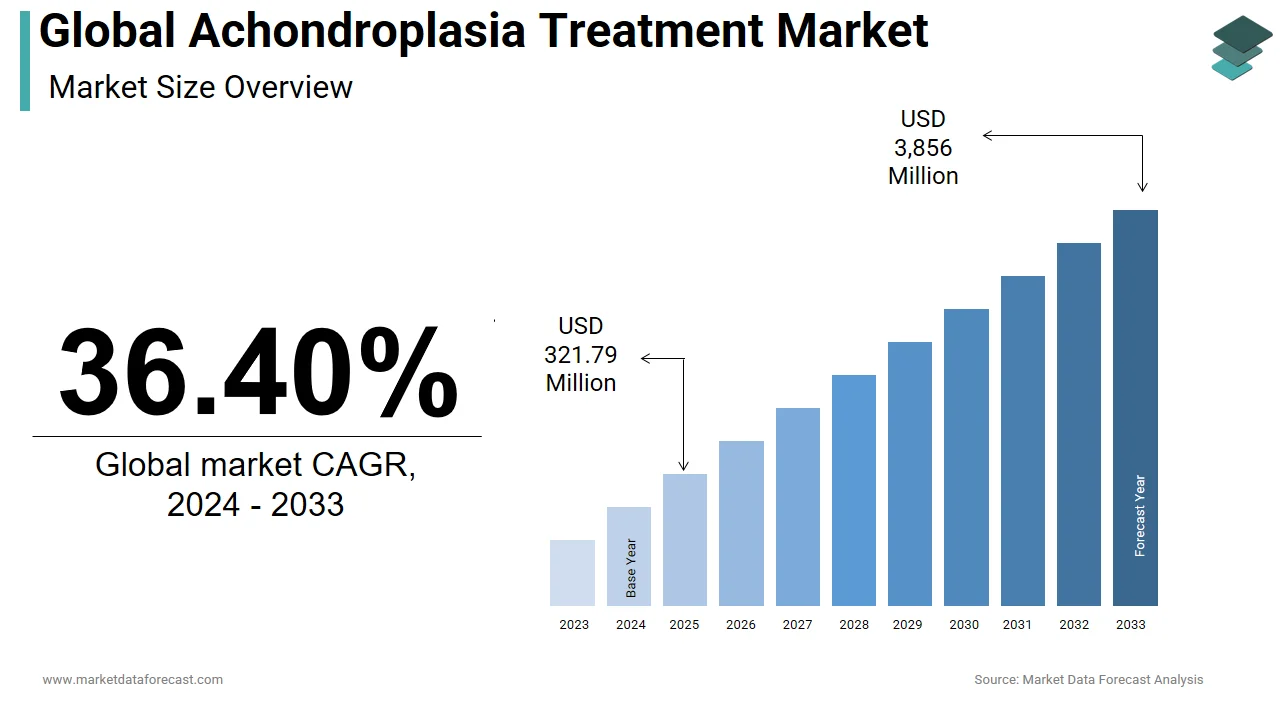
The global achondroplasia treatment market was valued at USD 321.79 million in 2025, is estimated to reach USD 438.92 million in 2026, and is projected to reach USD 5,259 million by 2034, growing at a CAGR of 36.40% from 2026 to 2034.
MARKET DRIVERS
The increasing investments in research and development for the treatment and management of achondroplasia is one of the major key drivers boosting the growth of the achondroplasia treatment market. R&D investments usually result in the identification and development of innovative therapies and treatments for achondroplasia, which can involve growth hormone therapies, medicine therapies, and other medical procedures that target the condition's underlying causes or symptoms. The availability of new treatments may increase demand and give patients and their families optimism.
The rising incidence of achondroplasia is further fuelling the market’s growth rate. A hereditary condition called achondroplasia causes dwarfism. It leads to abnormal bone development and can be brought on by a FGFR3 gene mutation. Achondroplasia patients are shortened-statured and have disproportionately short arms and legs. Hence, the rising incidence of achondroplasia leads to proper treatment. This factor also boosts the market growth during the projected period.
The rising drug approval and launches are anticipated to lavish the growth rate of the achondroplasia treatment market. The rising approval and launch of drugs by the key market participants are anticipated to fuel market expansion. For instance, Ascendis Pharma A/S manufactures drugs as of January 2022. Endocrinology announced that TransCon hGH, a once-weekly subcutaneous injection, had been approved by the European Commission (EC) to treat pediatric patients who were experiencing failure to grow due to insufficient naturally occurring growth hormone secretion or growth hormone deficiency. TransCon hGH contains somatropin, which provides the body with therapeutic doses of unaltered somatropin (hGH).
The other factors contributing to the market expansion include growing government initiative support for the research and development of achondroplasia treatment, the rising government initiative, and launches of drug approval boosted the growth of the market.
MARKET RESTRAINTS
The poor reimbursement policies and the lack of awareness are the major factors hampering the market growth. Insufficient or unfavorable reimbursement policies are having a detrimental effect on the market. Reimbursement in the field of healthcare refers to the payment obtained by healthcare professionals for their services, typically from insurance companies or public assistance programs. Financial difficulties may arise for both patients and healthcare providers if the reimbursement rules for Achondroplasia therapies are inadequate. As a result, patients may have less access to treatment options, and the market may grow more slowly as a result of potential patients' viable financial constraints. Lack of awareness leads to insufficient knowledge, which could lead to delayed diagnosis and reduced demand for the treatment; hence, these two factors majorly hinder the market growth during the projected period. The short-duration effectiveness of growth hormone therapy and the high cost associated with the drugs are the other factor that limits the market growth during the projected period.
REPORT COVERAGE
| REPORT METRIC | DETAILS |
| Market Size Available | 2025 to 2034 |
| Base Year | 2025 |
| Forecast Period | 2026 to 2034 |
| Segments Covered | By Treatment Type, Route of administration, Distribution channel and Region |
| Various Analyses Covered | Global, Regional & Country Level Analysis, Segment-Level Analysis, Drivers, Restraints, Opportunities, Challenges; PESTLE Analysis; Porter’s Five Forces Analysis, Competitive Landscape, Analyst Overview of Investment Opportunities |
| Regions Covered | North America, Europe, Asia Pacific, Latin America, the Middle East, and Africa |
SEGMENT ANALYSIS
By Treatment Type Insights
Based on the treatment type, the vosoritide segment is expected to hold the major share of the market during the projected period. A novel therapy called vosoritide targets the underlying genetic causes of achondroplasia. It is a C-type natriuretic peptide (CNP) precursor that inhibits abnormal bone formation in Achondroplasia by binding to the FGFR3 receptor. Vosoritide is an appropriate therapy for patients and medical professionals because of its unique therapeutic strategy. Hence, this segment majorly boosted the market growth during the projected period.
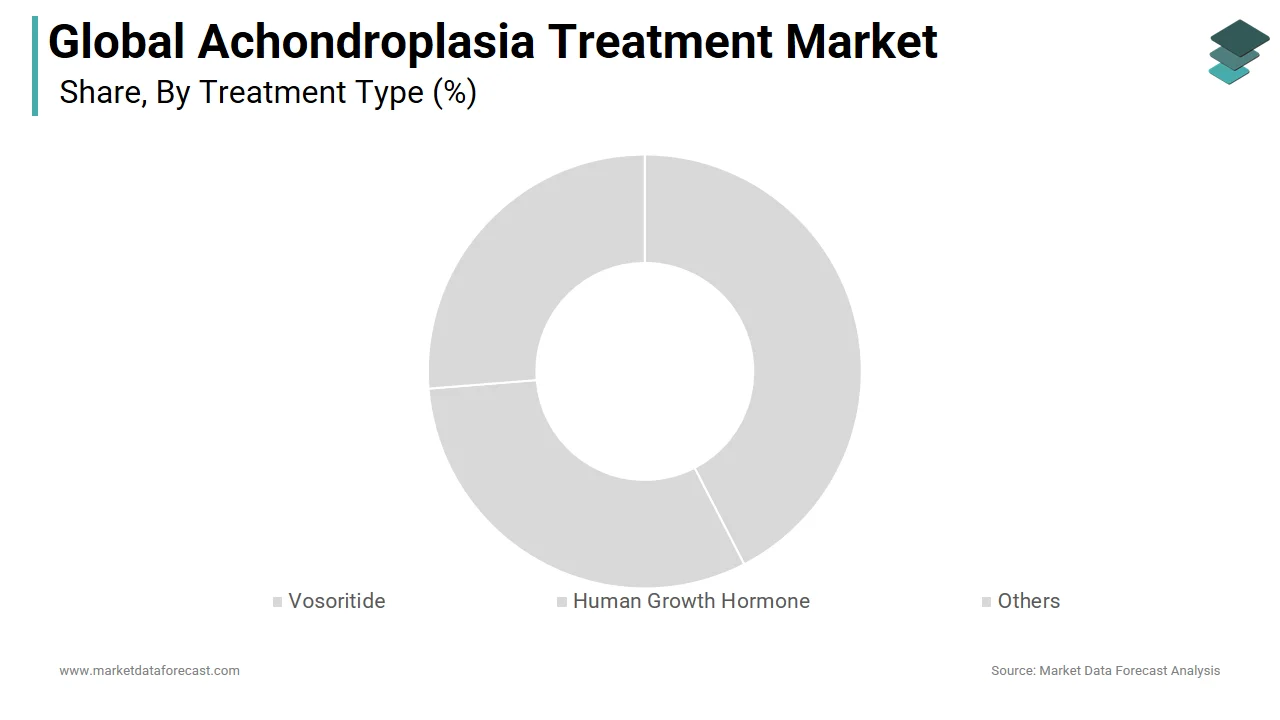
Human growth hormone is another segment predicted to hold a significant share of the market during the forecast period. Due to its well-established therapeutic benefits, alternative treatment strategy, flexibility, patient demand, insurance coverage, and possibility for usage in conjunction with other medicines, the human growth hormone (HGH) segment has the potential to drive growth in the Achondroplasia treatment market. It gives people with achondroplasia and their medical professionals a further choice they can consider when creating treatment plans.
By Route of Administration Insights
Based on the route of administration, the parenteral segment is anticipated to grow at a healthy CAGR during the forecast period. Due to its positive effects in terms of drug delivery effectiveness, patient compliance, customized dosing, direct targeting, quick onset of action, clinical efficacy, skilled involvement, potential for combination therapy, and regulatory approval, the parenteral segment in the market for achondroplasia treatments can be a market driver. All of these factors contributed to the market growth during the projected period.
By Distribution Channel Insights
Based on the distribution channel, the hospital pharmacies segment is anticipated to fuel the market growth during the projected period. Due to its specialized expertise, immediate medication availability, emergency care capabilities, participation in research and clinical trials, partnership with healthcare providers, insurance coverage, referrals from patient networks, and connections to advocacy and support groups, the hospital pharmacies segment in the market for the treatment of achondroplasia this factor can act as a market driver fostering the expansion of the market for therapies for achondroplasia.
The online pharmacies segment is also anticipated to grow at a healthy CAGR during the projected period. The pandemic has strengthened digital health services and platforms due to its ease of convenience; hence, this factor also propelled the expansion of the segment and boosted the market growth during the projected period.
REGIONAL ANALYSIS
North America region is anticipated to hold the dominant position in the market with a market share of 35.2% during the projected period. The increasing prevalence of achondroplasia, favorable health reimbursement, and improved awareness are projected to propel the global market for achondroplasia therapy to significant growth in the next years. For instance, the University of Arkansas funded a clinical experiment in April 2022 to characterize the skeletal muscle amino acid kinetics to an Extrinsic allergic alveolitis EAA challenge, i.e., an oral amino acid tolerance test (OATT), to ascertain the health of the muscles. Trial participants received 10 g of an achondroplasia-specific dietary supplement for that reason. Therefore, an increase in clinical trials showing the effectiveness of supplements for treating achondroplasia may lead to the introduction of novel supplements and thereby support the expansion of the market under study in the area. The market for achondroplasia treatments is expanding in North America due to these advancements in the healthcare system, rising health expenses, and growing awareness of cutting-edge cancer treatments.
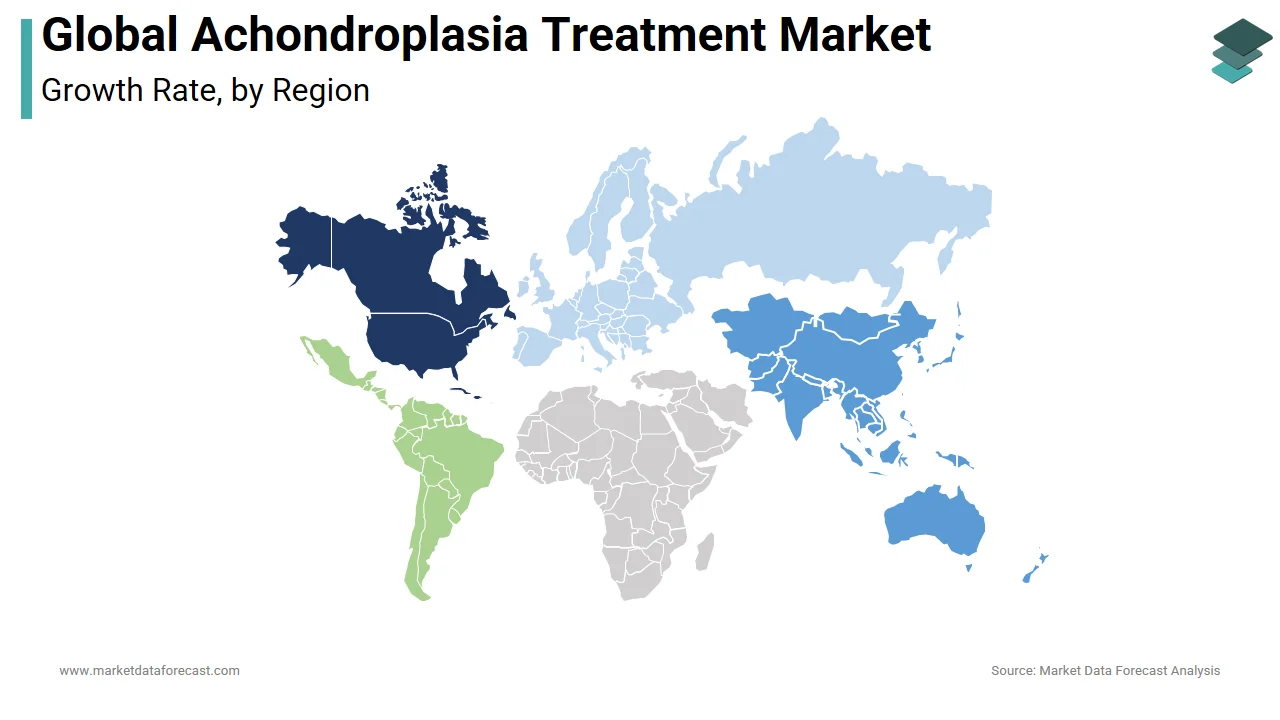
Asia Pacific region is also expected to show lucrative growth in the market during the forecast period. Due to its large population, rising healthcare spending, increased awareness, enhanced healthcare infrastructure, clinical research activities, government initiatives, expansion of health insurance, medical tourism, and presence of patient advocacy groups, the APAC region has the potential to be a market driver in the achondroplasia treatment market. The Achondroplasia treatments market is expanding in the APAC region due to a combination of these factors.
Europe region is also expected to grow at a healthy CAGR during the projected period. Achondroplasia treatment market growth in the region is being driven by Europe's developed healthcare infrastructure, high healthcare spending, robust pharmaceutical industry, clinical research initiatives, government support, comprehensive healthcare systems, awareness campaigns, health insurance coverage, patient advocacy, and medical tourism. This factor encourages innovation, research, and accessibility in the field of managing achondroplasia and boosts the market growth in this region.
Latin America, the Middle East, and Africa are expected to hold a significant share of the market during the forecast period.
KEY MARKET PLAYERS
The prominent key players in the global Achondroplasia treatment market are Ascendis Pharma A/S, BridgeBio Pharma, Inc., QED Therapeutics, BioMarin Pharmaceutical Inc., Pfizer Inc., Therachon Holding AG, and RIBOMIC Inc.
RECENT MARKET DEVELOPMENTS
- In March 2023, The U.S. Food and Drug Administration (FDA) has accepted the biotechnology company's additional New Drug Application (sNDA) for VOXZOGO (vosoritide) for injection to broaden treatment in the country to include children with achondroplasia under the age of five. BioMarin Pharmaceutical Inc. is dedicated to transforming lives through genetic discovery. The most frequent cause of disproportionately small stature is achondroplasia.
- In June 2023, At the 2023 American Society of Clinical Oncology (ASCO), Myriad Genetics, Inc., a provider of genetic testing and precision medicine, unveiled new studies and an expansion of its Precise Oncology Solutions portfolio.
- In January 2020, Chemical industry leader Wacker Biotech produces goods for all significant international industries. A biopharmaceutical business that specializes in creating medications for oncology and endocrinology applications, the company Provides Active Ingredients for the Treatment of Achondroplasia in Children.
MARKET SEGMENTATION
This research report on the global achondroplasia treatment market has been segmented and sub-segmented into treatment type, route of administration, distribution channel and region.
By Treatment Type
- Vosoritide
- Human Growth Hormone
- Others
By Route of Administration
- Oral
- Parenteral
By Distribution Channel
- Hospital Pharmacies
- Retail Pharmacies
- Online Pharmacies
By Region
- North America
- Latin America
- Europe
- Asia-Pacific
- Middle East and Africa