- Product Description Description
- Table of Contents TOC
- List of Table & Figure LOT
- Get Free Sample PDF Sample PDF
Market Size, 2025
$2.41 BnMarket Estimate, 2026
$2.54 BnMarket Forecast, 2034
$3.81 BnCAGR, 2026–2034
5.22%Global Testosterone Replacement Therapy Market Summary
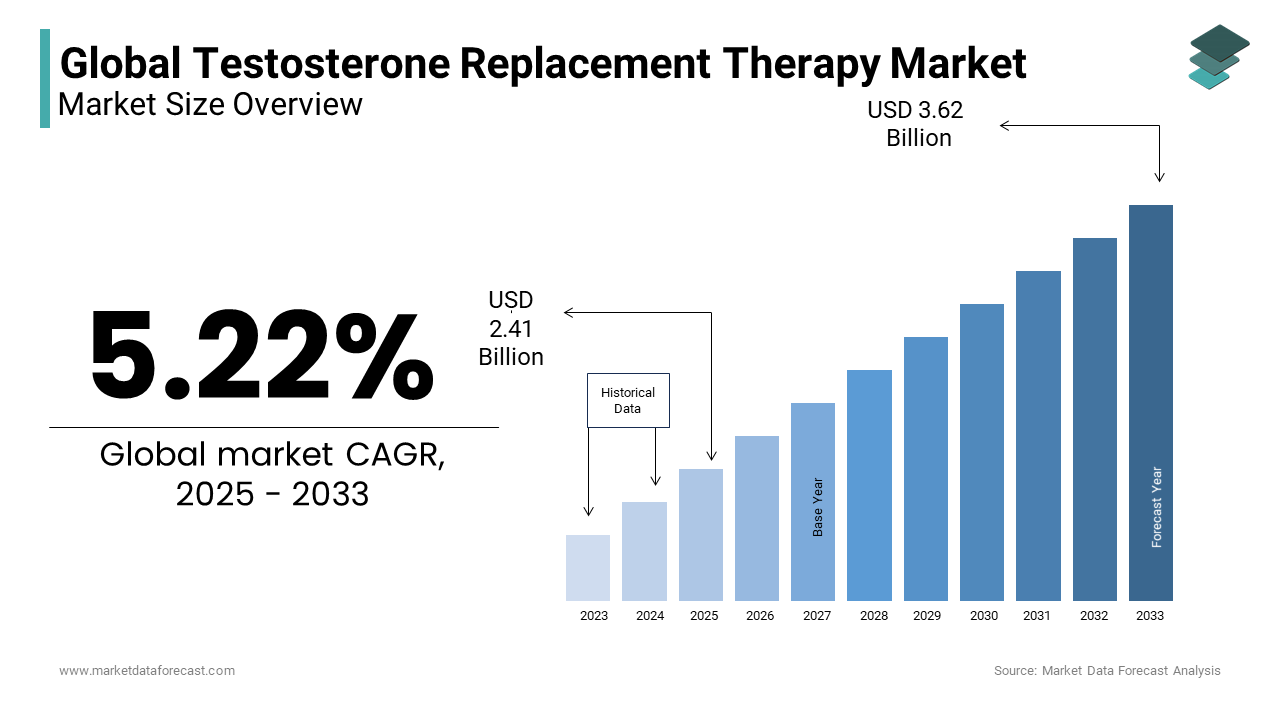
The Global Testosterone Replacement Therapy Market size was valued at USD 2.29 billion in 2024 and is anticipated to reach USD 3.62 billion by 2033, growing at a CAGR of 5.22 % from 2024 to 2033. The Market is gaining momentum due to the rising demand for remote cardiac care, the growing burden of cardiovascular diseases, and technological advancements in AI-powered diagnostics and wearable cardiac monitoring devices.
Key Market Trends & Insights
- Global dominated the global Market with a largest share in 2024.
- Global is projected to grow at the fastest rate between 2024 and 2033.
- Based on technology, the IT services segment is the fastest-growing with a projected CAGR of 5.22 %.
- AI and wearable tech adoption are key trends driving innovation in the Market.
Market Size & Forecast
- 2024 Market Size: USD 2.29 Billion
- 2033 Projected Market Size: USD 3.62 Billion
- CAGR (2024–2033): 5.22 %
- Global: Largest Market in 2024
- Global: Fastest-growing region
Global Testosterone Replacement Therapy Market Size
The Global Testosterone Replacement Therapy Market is projected to grow from USD 2.41 billion in 2025 to USD 2.54 billion in 2026 and reach USD 3.81 billion by 2034, registering a CAGR of 5.22% during the forecast period from 2026 to 2034.
Testosterone Replacement Therapy (TRT) is a hormone replacement therapy where androgens testosterone is replaced. This testosterone therapy is often prescribed to improve male sexual characteristics. Erectile dysfunction is caused by a lack of production of testosterone. Testosterone Replacement is used for the diagnosis of Erectile dysfunction. Moreover, Testosterone Replacement Therapy has many advantages: reducing body fat, improving brain function and cognitive ability, decreasing the risk of diabetes, lowering harmful cholesterol levels, increasing confidence, and creating a more positive mood, and others. TRT is the definitive treatment of hypogonadism and may improve symptoms such as fatigue and anemia. Testosterone Replacement Therapy usage has become increasingly popular in recent times.
MARKET DRIVERS
The rise in testosterone deficiency and hormonal imbalance disorders, including menopause drives the global testosterone replacement therapy market growth.
The growing adoption of testosterone replacement therapy by people is propelling market growth. The increasing preference for testosterone replacement therapy is primarily driven by the growing recognition of hypogonadism as a medical condition and the availability of new treatment options. In addition, an increase in the geriatric population with the danger of testosterone insufficiency is boosting the testosterone replacement therapy market growth. For instance, a study by the Indian Journal of Endocrinology and Metabolism says that more than 20.7% of diabetes patients worldwide suffer from hypogonadism, particularly patients aged 40 to 79 years.
In addition, the growing awareness regarding the advantages of testosterone replacement therapy is promoting the market’s growth rate. For instance, the Endocrine Society spreads awareness about hypogonadism among medical professionals by publishing clinical practice guidelines on testosterone therapy. Furthermore, the improved insurance coverage for testosterone replacement therapy is anticipated to boost the adoption of these treatments.
MARKET RESTRAINTS
Side effects associated with testosterone replacement therapies are slightly restraining the growth rate of the global testosterone replacement therapy market. Moreover, the lack of awareness among people and infrastructure in emerging countries hinders market growth. In addition, the strict FDA rules associated with using testosterone drugs prevent market growth.
REPORT COVERAGE
| REPORT METRIC | DETAILS |
| Market Size Available | 2025 to 2034 |
| Base Year | 2025 |
| Forecast Period | 2026 to 2034 |
| Segments Covered | By Product Type, Active Ingredient, and Region |
| Various Analyses Covered | Global, Regional & Country Level Analysis, Segment-Level Analysis, Drivers, Restraints, Opportunities, Challenges; PESTLE Analysis; Porter’s Five Forces Analysis, Competitive Landscape, Analyst Overview of Investment Opportunities |
| Regions Covered | North America, Europe, Asia Pacific, Latin America, the Middle East, and Africa |
| Market Leader Profiled | Pfizer Inc., Allergan Plc., AbbVie Inc., Bayer AG., Eli Lilly and Company, Endo Pharmaceuticals |
SEGMENTAL ANALYSIS
By Product Type Insights
The testosterone injections segment accounted for a significant global market share in 2025. The segment is expected to register a healthy CAGR during the forecast period. The growing number of people with diabetes, dyslipidemia, metabolic syndrome, and obesity propel the segment's growth. Moreover, the availability of programs such as patient assistance programs is promoting the segment's growth rate. The direct administration benefits and rise in the adoption of testosterone injections are growing, and this is expected to lead to the growth of the testosterone injections segment during the forecast period.
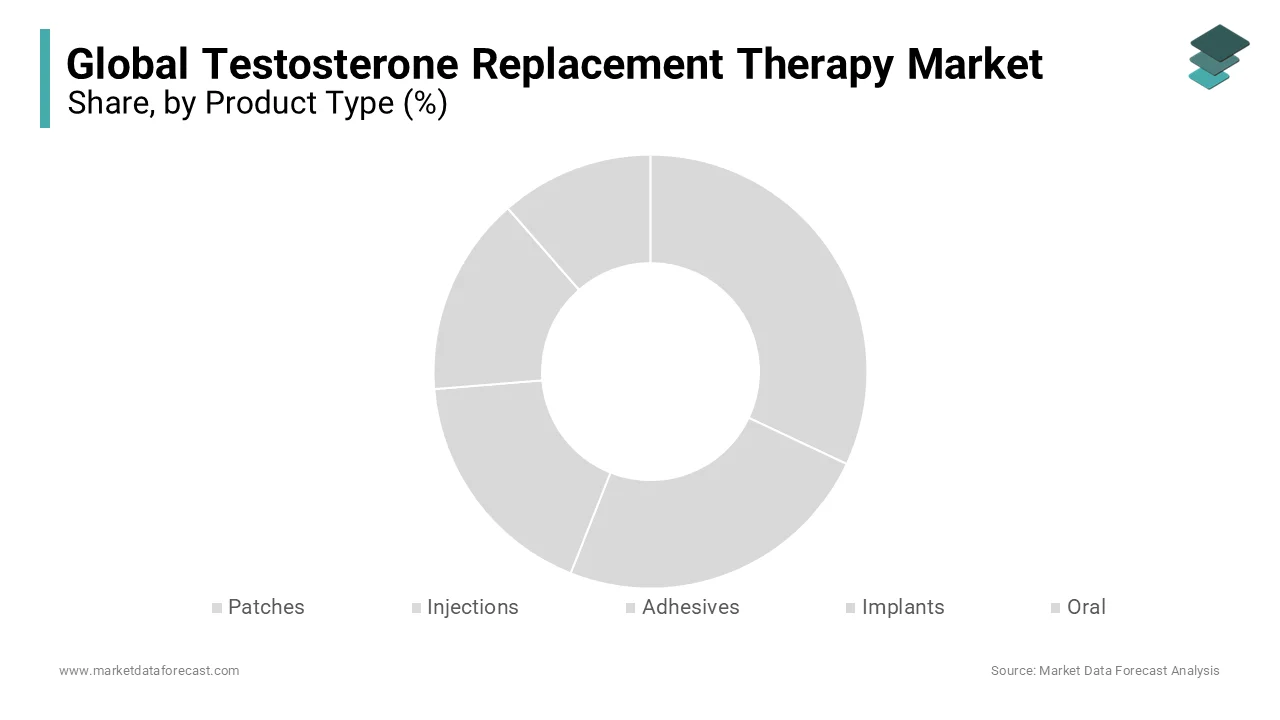
However, the testosterone adhesives Segment is expected to grow at a healthy CAGR during the forecast period.
By Active Ingredient Insights
The testosterone undecanoate segment is predicted to lead the testosterone replacement therapy market during the forecast period owing to the increasing adoption rate of the new therapies in the healthcare sector.On the other hand, the testosterone enanthate segment is predicted to showcase a healthy CAGR in the coming years.
REGIONAL ANALYSIS
North America had the biggest share of the global market in 2025. The regional market is expected to grow at a promising CAGR during the forecast period. The rise in the number of people affected by the testosterone deficiency problem in North America is primarily propelling the regional market growth. In addition, YOY growth in the geriatric population and the increasing number of people suffering from hypogonadism is expected to boost the regional market growth. The U.S. and Canada have contributed significantly to the North American market and helped to register the domination among the other regions in the global market. For instance, according to the Boston University School of Medicine, only in the United States, more than 4 to 5 million men suffer from hypogonadism, and most older men suffer from low testosterone levels. The rising incidence of hypogonadism and the presence of key market participants are further anticipated to fuel the market's growth rate.
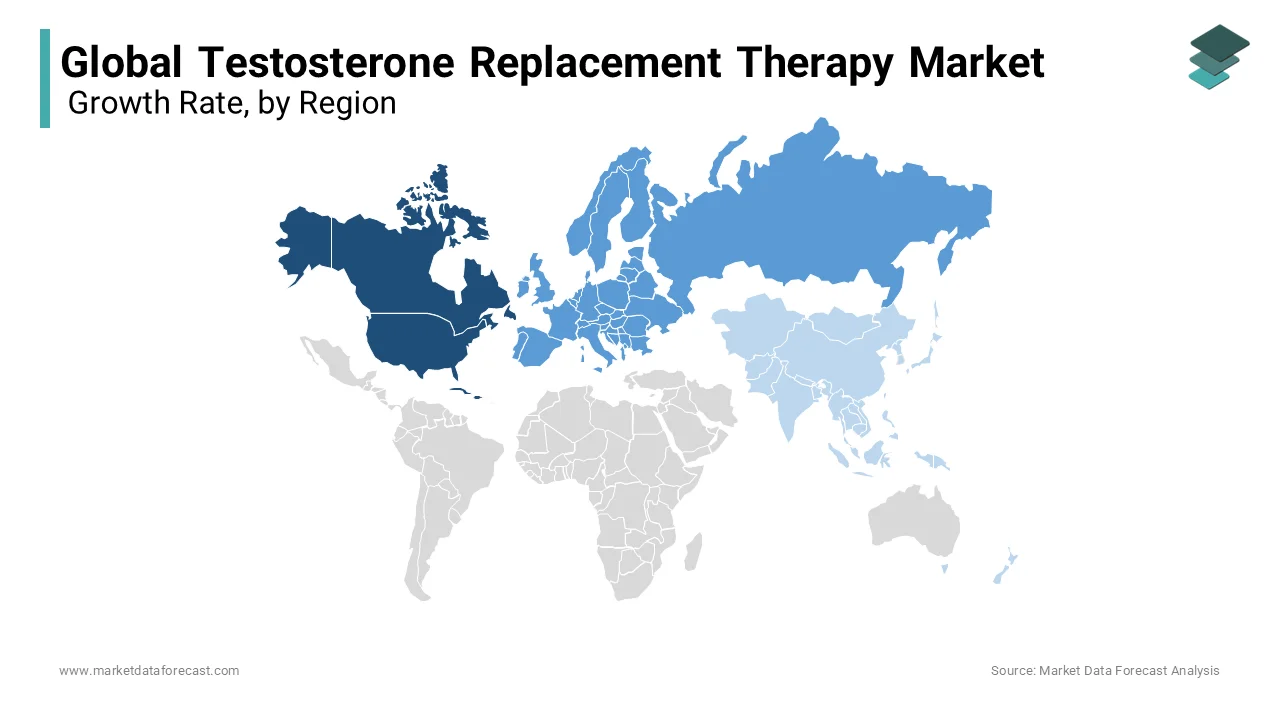
Europe accounted for the second-largest share of the global market in 2025 and is predicted to showcase a healthy CAGR during the forecast period. The factors driving the European market are the increasing aging population and YOY growth in several people suffering from hypogonadism. European countries such as the UK and Germany held a significant share of the region in the past. In addition, the growing awareness among the EU population regarding the advantages of testosterone replacement therapy and increasing investments to conduct R&D further propel regional market growth. According to the European Association of Urology, in Europe, the number of hypogonadisms in men aged 40-79 ranged from 2.1% to 5.7%, and in middle-aged men ranged from 2.1% to 12.8%, which means hypogonadism is more common in aged men with obesity and with bad health. These factors are boosting the European testosterone replacement therapy market.
Due to factors such as a vast population base and lifestyle changes, the Asia-Pacific is expected to have the fastest growth rate during the forecast period. As a result, the Asia Pacific region has the world's third-largest market for testosterone replacement therapy by revenue share. The vast population base and increasing awareness of testosterone replacement therapy in emerging countries drive regional market growth. Moreover, India and China are the biggest market contributors in the Asia Pacific due to their high populations.
KEY MARKET PLAYERS
Some of the prominent companies dominating the global testosterone replacement therapy market profiled in this report are Pfizer Inc., Allergan Plc., AbbVie Inc., Bayer AG., Eli Lilly and Company, Endo Pharmaceuticals, Kyowa Kirin International Plc., Novartis AG. and Mylan N.V., among others.
MARKET SEGMENTATION
This research report on the global testosterone replacement therapy market has been segmented and sub-segmented based on the product type, active ingredient, and region.
By Product Type
- Patches
- Injections
- Adhesives
- Implants
- Oral
By Active Ingredient
- Testosterone Undecanoate
- Testosterone Enanthate
- Testosterone Cypionate
- Methyl Testosterone
By Region
- North America
- Europe
- Asia Pacific
- Latin America
- Middle East and Africa