- Product Description Description
- Table of Contents TOC
- List of Table & Figure LOT
- Get Free Sample PDF Sample PDF
Market Size, 2025
$1119 MnMarket Estimate, 2026
$1280.1 MnMarket Forecast, 2034
$3755 MnCAGR, 2026–2034
14.4%Global Progesterone Market Report Summary
The global progesterone market was valued at USD 1,119 million in 2025 and is estimated to reach USD 1,280.14 million in 2026, and is projected to reach USD 3,755 million by 2034, growing at a CAGR of 14.4% from 2026 to 2034. Market growth is driven by increasing demand for hormonal therapies, rising prevalence of reproductive health disorders, and growing use of progesterone in contraception and fertility treatments. Progesterone plays a critical role in regulating menstrual cycles, supporting pregnancy, and treating hormonal imbalances. The expansion of women’s health awareness, advancements in drug formulations, and increasing adoption of assisted reproductive technologies are further fueling market growth globally.
Key Market Trends
- Rising demand for hormonal therapies and reproductive health treatments.
- Increasing use of progesterone in contraception and fertility management.
- Growing prevalence of hormonal disorders and infertility issues.
- Advancements in drug delivery systems and formulations.
- Expansion of women’s health awareness and healthcare access.
Segmental Insights
- Based on type, the synthetic progesterone segment dominated the global progesterone market in 2025 due to its widespread clinical use and cost-effectiveness.
- Based on mode of delivery, the oral segment led the market by capturing 55.4% share in 2025, driven by ease of administration and patient compliance.
- Based on application, the contraception segment held the largest share of 45.3% in 2025, supported by increasing use of hormonal contraceptives worldwide.
Regional Insights
The global progesterone market is witnessing strong growth across major regions due to increasing healthcare awareness and rising demand for hormonal therapies.
- North America led the market in 2025 with 38.2% share, supported by advanced healthcare infrastructure and high adoption of hormonal treatments.
- Europe followed with 26.3% share in 2025, driven by established healthcare systems and growing focus on women’s health.
- Asia-Pacific is expected to witness significant growth due to improving healthcare infrastructure and increasing adoption of modern pharmaceutical treatments.
Competitive Landscape
The global progesterone market is competitive, with the presence of pharmaceutical companies focusing on product development, expanding therapeutic applications, and improving drug delivery systems. Market players are investing in research and development, strategic collaborations, and expanding global distribution networks to strengthen their market position.
Prominent companies operating in the global progesterone market include Estrellas Life Sciences Private Limited, Bionpharma Inc., Besins Healthcare, AbbVie Inc., Merck KGaA, Sofgen Pharmaceuticals, Teva Pharmaceutical Industries Ltd., Virtus Pharmaceuticals LLC, Bluebell Pharma Group Company, Aquatic Remedies Pvt. Ltd., Intas Pharmaceuticals Ltd., Shanghai Yijing Industrial Co., Ltd., and Wuhan Honor Bio-Pharm Co., Ltd.
Global Progesterone Market Size
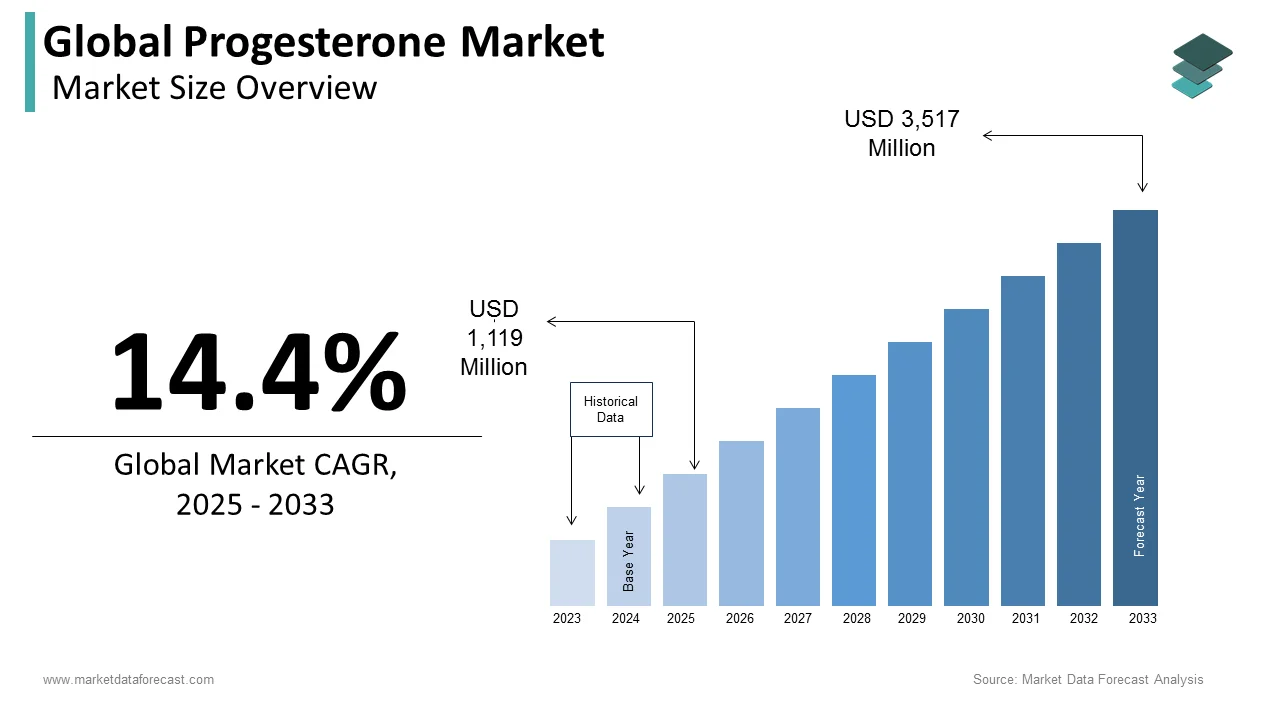
The size of the global progesterone market was worth USD 1,119 million in 2025. The global market is anticipated to grow at a CAGR of 14.4% from 2026 to 2034 and be worth USD 3,755 million by 2034 from USD 1,280.14 million in 2026.
The progesterone is indispensable for regulating the menstrual cycle, maintaining pregnancy, and supporting various physiological functions. Beyond its natural role, synthetic and bioidentical forms of progesterone are critical therapeutic agents used in assisted reproductive technologies, hormone replacement therapy, and the management of gynecological disorders such as endometriosis and abnormal uterine bleeding. According to the World Health Organization, approximately 17.5% of the adult population globally experiences infertility, translating to roughly one in six people who require medical intervention to conceive. Furthermore, the demographic shift toward delayed childbearing in developed nations has intensified the demand for reproductive support. Data from Eurostat indicates that the mean age of women at childbirth in the European Union reached 30.9 years in 2023, a trend that correlates strongly with higher rates of ovulatory dysfunction and the subsequent need for progesterone supplementation during in vitro fertilization cycles. Additionally, the aging female population faces significant menopausal symptoms, with the North American Menopause Society stating that up to 80% of women experience vasomotor symptoms like hot flashes, driving the sustained utilization of hormone therapies.
MARKET DRIVERS
Surging Global Infertility Rates and Expansion of Assisted Reproductive Technologies
The escalating global prevalence of infertility, coupled with the widespread adoption of assisted reproductive technologies, where progesterone supplementation is a clinical standard, is significantly elevating the growth of the progesterone market. Infertility affects millions of couples worldwide, and ovulatory disorders represent a leading cause, necessitating hormonal support to facilitate implantation and sustain early pregnancy. According to the Centers for Disease Control and Prevention, about 12% of women aged 15 to 44 in the United States have difficulty getting pregnant or carrying a pregnancy to term, creating a vast patient pool requiring intervention. In the context of in vitro fertilization, luteal phase support with progesterone is universally recognized as essential because the stimulation protocols used often compromise the body's natural production of the hormone. The European Society of Human Reproduction and Embryology reports that over 1 million assisted reproductive technology cycles are performed annually in Europe alone, with nearly every cycle involving some form of progesterone administration. As societal trends continue to favor delayed parenthood, the biological necessity for exogenous progesterone increases, given that ovarian reserve and function decline with age. This direct correlation between rising infertility rates, the increasing volume of fertility treatments, and the mandatory nature of progesterone in these protocols ensures a consistent and growing demand for both synthetic and micronized formulations across global healthcare systems.
Increasing Adoption of Hormone Replacement Therapy for Menopausal Management
The growing acceptance and utilization of hormone replacement therapy to manage the debilitating symptoms of menopause and prevent long term health consequences, such as osteoporosis, is significantly boosting the growth of the progesterone market. As women live longer, the duration of the postmenopausal period extends, amplifying the need for effective symptom management to maintain quality of life. Progesterone is a component of HRT for women with an intact uterus, as it counteracts the proliferative effects of estrogen on the endometrium, thereby preventing endometrial hyperplasia and cancer. The North American Menopause Society emphasizes that combined estrogen and progesterone therapy is the most effective treatment for moderate to severe vasomotor symptoms, which affect up to 80% of menopausal women. Recent shifts in clinical guidelines have rehabilitated the image of HRT following earlier safety concerns, leading to a resurgence in prescriptions. Data from the International Menopause Society indicates that awareness campaigns and updated safety profiles have encouraged more women to seek treatment, particularly with the advent of bioidentical progesterone, which is perceived to have a safer side effect profile regarding breast cancer risk compared to synthetic progestins. With the global population of women over 50 projected to reach 1.2 billion by 2060, according to the United Nations, the addressable market for menopausal hormone therapy continues to expand significantly, driving sustained consumption of progesterone products.
MARKET RESTRAINTS
Stringent Regulatory Scrutiny and Safety Concerns Regarding Long-Term Use
The rigorous regulatory oversight and lingering safety concerns associated with long term hormone therapy, particularly regarding cardiovascular events and cancer risks is significantly restricting the growth of the progesterone market. Although progesterone is essential for protecting the endometrium, the historical data from large-scale studies such as the Women's Health Initiative created a lasting caution among clinicians and patients regarding the potential link between hormone therapy and increased risks of breast cancer, stroke, and venous thromboembolism. According to warnings issued by the US Food and Drug Administration, hormone replacement therapies carry boxed warnings detailing these serious risks, which necessitate careful patient screening and limit the duration of use for many individuals. This regulatory environment forces manufacturers to conduct extensive and costly post-marketing surveillance studies to prove the safety of new formulations or delivery methods. The European Medicines Agency similarly maintains strict guidelines that restrict the indication of HRT to the lowest effective dose for the shortest possible time. Consequently, many women who could benefit from therapy remain untreated due to fear of adverse outcomes, a phenomenon known as the "HRT gap."
Availability of Non-Hormonal Alternatives and Contraceptive Options
The increasing availability and preference for non-hormonal alternatives for both contraception and the management of gynecological conditions is limiting the growth of the progesterone market. For contraception, a significant segment of the population is shifting toward non-hormonal methods such as copper intrauterine devices, barrier methods, or permanent sterilization due to concerns about hormonal side effects like weight gain, mood changes, and libido reduction. As per data from the Guttmacher Institute, the utilization of long-acting reversible contraceptives that do not rely solely on progestin has risen steadily, reflecting a consumer desire to avoid systemic hormonal exposure. Furthermore, in the management of conditions like heavy menstrual bleeding and endometriosis, non-hormonal pharmacological options such as tranexamic acid and non-steroidal anti-inflammatory drugs are increasingly prescribed as first-line therapies. The development of novel non-hormonal treatments for menopausal symptoms, including neurokinin 3 receptor antagonists, which have shown efficacy in reducing hot flashes without hormones, further diversifies the therapeutic landscape. The US Food and Drug Administration approval of such non-hormonal agents provides clinicians with viable alternatives that bypass the risks associated with progesterone.
MARKET OPPORTUNITIES
Development of Novel Bioidentical and Transdermal Delivery Systems
The burgeoning demand for bioidentical progesterone and advanced transdermal delivery systems to differentiate their portfolios and address safety concerns is certainly a factor to boost new opportunities for the growth of the progesterone market. Bioidentical progesterone, which is chemically identical to the hormone produced by the human body, is increasingly preferred by patients and clinicians due to its perceived superior safety profile regarding breast cancer risk and metabolic effects compared to synthetic progestins. As per clinical studies published in menopause journals, micronized progesterone administered via transdermal routes avoids first-pass metabolism in the liver, thereby reducing the risk of venous thromboembolism and triglyceride elevation. The global trend toward personalized medicine and wellness has fueled the growth of compounding pharmacies and specialized manufacturers offering customized bioidentical formulations. Companies investing in innovative delivery mechanisms such as gels, sprays, and patches can capture significant market share by offering improved patient compliance and reduced side effects like drowsiness associated with oral administration. The North American Menopause Society has endorsed the use of micronized progesterone as the preferred progestogen for women with a uterus undergoing HRT, validating this segment.
Expansion into Neuroprotective and Traumatic Brain Injury Therapies
The repurposing of progesterone for neuroprotective applications in the treatment of traumatic brain injury and stroke is attributed to bolstering the growth of the progesterone market. Preclinical and clinical research have demonstrated that progesterone possesses potent anti-inflammatory, anti-edematous, and neurorestorative properties that can mitigate secondary brain injury following trauma. According to findings from the National Institutes of Health, progesterone administration has been shown to reduce intracranial pressure and improve functional outcomes in animal models and early phase human trials of traumatic brain injury. This therapeutic avenue represents a paradigm shift from viewing progesterone solely as a reproductive hormone to recognizing it as a critical neurosteroid. The global burden of traumatic brain injury is immense, with the World Health Organization estimating that it is a leading cause of death and disability worldwide, creating a massive unmet medical need. Pharmaceutical companies that successfully navigate the clinical trial process to gain regulatory approval for progesterone in acute neurological settings could unlock a vast new market distinct from gynecology. The potential for orphan drug designation and expedited review pathways for such indications further enhances the attractiveness of this opportunity.
MARKET CHALLENGES
Complexity of Bioequivalence Standards and Generic Substitution Issues
The scientific and regulatory complexity surrounding bioequivalence standards for different formulations between oral micronized progesterone and synthetic progestins is one of the major challenges for the growth of the progesterone market. The pharmacokinetics of progesterone are highly variable depending on the route of administration, food intake, and the specific formulation vehicle, making it difficult to establish true therapeutic equivalence between brand-name and generic products. As per guidance documents from the US Food and Drug Administration, demonstrating bioequivalence for progesterone requires rigorous fasting and fed studies due to its erratic absorption profile, which increases the cost and time required for generic approvals. This complexity often leads to confusion among prescribers and patients regarding the interchangeability of products, potentially resulting in suboptimal therapeutic outcomes if a patient is switched to a generic with different absorption characteristics. The variability in serum levels can compromise endometrial protection in HRT or luteal support in fertility treatments, leading to clinical failures. Furthermore, the lack of standardized potency assays for compounded bioidentical preparations adds another layer of uncertainty.
Volatility in Raw Material Sourcing and Supply Chain Dependencies
The supply chain vulnerabilities stemming from the reliance on a limited number of global suppliers for key raw materials, primarily plant sterols like diosgenin extracted from wild yams and soy, is another factor contributing to the decline in the growth of the progesterone market. The extraction and semi-synthesis of progesterone are concentrated in specific geographic regions, making the supply chain susceptible to agricultural fluctuations, climate change impacts, and geopolitical tensions. According to industry analysis from the pharmaceutical supply chain sector, disruptions in the harvest of Dioscorea species due to adverse weather patterns can lead to sudden shortages and price spikes for the active pharmaceutical ingredient. Furthermore, the consolidation of manufacturing capacity for steroid intermediates in a few countries creates a regulatory shutdown or quality issue at a major facility that can ripple through the global market, causing widespread drug shortages. The US Food and Drug Administration frequently lists progesterone injections and capsules on its drug shortage database, highlighting the fragility of the supply network. These supply constraints not only jeopardize patient access to critical therapies for pregnancy maintenance and menopause but also force manufacturers to incur higher costs for inventory buffering and alternative sourcing strategies.
REPORT COVERAGE
| REPORT METRIC | DETAILS |
| Market Size Available | 2025 to 2034 |
| Base Year | 2025 |
| Forecast Period | 2026 to 2034 |
| Segments Covered | By Type, Mode of Delivery, Application, Region |
| Various Analyses Covered | Global, Regional & Country Level Analysis, Segment-Level Analysis; DROC, PESTLE Analysis; Porter's Five Forces Analysis, Competitive Landscape, Analyst Overview of Investment Opportunities |
| Regions Covered | North America, Europe, APAC, Latin America, Middle East & Africa |
| Market Leader Profiled | Estrellas Life Sciences Private Limited, Bionpharma Inc., Sofgen Pharmaceuticals, Teva Pharmaceuticals Industries Ltd |
SEGMENTAL ANALYSIS
By Type Insights
The synthetic progesterone segment was the largest by accounting for a dominant share of the progesterone market in 2025 due its fundamental role as the progestogen component in the vast majority of hormonal contraceptives used worldwide. Synthetic progestins such as levonorgestrel, drospirenone, and norethindrone are engineered to have higher bioavailability and longer half-lives than natural progesterone by making them ideal for once-daily oral dosing or long-acting reversible contraceptives. According to the United Nations Department of Economic and Social Affairs, over 150 million women globally rely on hormonal contraceptives, with combined oral pills representing the most common method. The Guttmacher Institute reports that progestin-only pills and implants are critical for women who cannot take estrogen, further expanding the addressable population for synthetic variants. The chemical modification of these molecules allows for potent suppression of ovulation at very low doses, a feature that natural micronized progesterone struggles to achieve efficiently in oral form due to rapid hepatic metabolism.

The natural progesterone segment is projected to grow at the fastest CAGR of 7.8% during the forecast period, owing to the increasing clinical and patient preference for bioidentical progesterone, driven by emerging data suggesting a safer profile regarding breast cancer and cardiovascular risks compared to synthetic progestins. Large-scale observational studies have indicated that micronized progesterone does not appear to increase the risk of breast cancer to the same extent as certain synthetic progestins when used in hormone replacement therapy. According to findings published in the British Medical Journal, the use of micronized progesterone in combination with estrogen was associated with a lower risk of venous thromboembolism and stroke compared to synthetic alternatives. The North American Menopause Society has updated its guidelines to recommend micronized progesterone as the preferred progestogen for women with an intact uterus undergoing menopausal hormone therapy. This endorsement has significantly influenced prescribing patterns, with clinicians increasingly switching patients from synthetic to natural formulations. The rising awareness among consumers about the differences between "bio-identical" and "synthetic" hormones, amplified by digital health information platforms, is driving demand for products that mimic the body's own chemistry.
By Mode of Delivery Insights
The oral delivery segment was the largest by holding 55.4% of the global progesterone market share in 2025, with the strong patient preference for oral medications due to their ease of administration, portability, and lack of pain or infection risk associated with injections or insertion devices. Adherence to long-term hormonal therapies is dependent on the simplicity of the regimen, and oral tablets represent the most user-friendly format. According to the World Health Organization, adherence to medication is a key determinant of treatment success, and oral routes consistently demonstrate higher persistence rates compared to parenteral or topical methods in chronic conditions. In the context of contraception, the daily pill remains the most recognizable and widely accepted method globally, with the Centers for Disease Control and Prevention reporting that oral contraceptives are used by nearly 14% of women of reproductive age in the United States alone. For menopausal hormone therapy, the ability to combine estrogen and progesterone in a single oral tablet simplifies the regimen further, enhancing compliance. The psychological comfort of swallowing a pill versus administering an injection or inserting a vaginal suppository cannot be overstated, particularly for younger demographics and those managing sensitive conditions.
The injectable delivery segment is growing at the fastest CAGR of 8.5% over the coming years, with its indispensable role in luteal phase support during assisted reproductive technology cycles, where high and consistent serum progesterone levels are vital for embryo implantation. While oral and vaginal routes are used, intramuscular injection of progesterone in oil remains the gold standard in many high-risk IVF protocols due to its ability to deliver reliably high concentrations of the hormone directly into the bloodstream. As per statistics from the European Society of Human Reproduction and Embryology, the number of IVF cycles performed annually continues to rise, exceeding 1 million in Europe and growing rapidly in Asia and North America. Clinical guidelines often mandate injectable progesterone for patients with a history of recurrent miscarriage or those undergoing specific stimulation protocols where endogenous production is severely suppressed. The American Society for Reproductive Medicine notes that despite the discomfort of injection, many clinics prefer this route for its proven efficacy in improving live birth rates in complex cases. As infertility rates climb and more couples seek advanced fertility treatments, the volume of progesterone injections administered globally increases correspondingly. The inability of other delivery modes to consistently replicate the pharmacokinetic profile of intramuscular injection in these critical scenarios ensures a steady and accelerating demand for injectable formulations within the fertility sector.
By Application Insights
The contraception segment was the largest by holding 45.3% of the progesterone market share in 2025, owing to the immense global demand for reliable birth control methods to manage population growth and empower women's reproductive choices. Progestins are the active ingredient in a wide array of contraceptives, including pills, implants, injections, and intrauterine devices, making them central to modern family planning. According to the United Nations Population Fund, there are over 1.1 billion women worldwide who need family planning, yet approximately 257 million have an unmet need for modern contraception. Bridging this gap is a priority for international health organizations, driving massive procurement volumes of progestin-based products. The Guttmacher Institute reports that satisfying the unmet need for contraception would prevent tens of millions of unintended pregnancies annually, underscoring the critical public health imperative. Governments in developing nations heavily subsidize progestin-only methods due to their safety profile for breastfeeding women and ease of distribution. The sheer volume of users, ranging from adolescents to perimenopausal women, creates a consistent and high-volume demand stream that dwarfs other therapeutic applications. This universal necessity for pregnancy prevention ensures that contraception remains the largest application segment, underpinned by sustained policy support and funding from both public and private sectors globally.
The application segment is projected to expand at a CAGR of 6.9% during the forecast period, owing to the rapid expansion of this segment, which is driven by the escalating global prevalence of polycystic ovary syndrome (PCOS) and other ovulatory dysfunction disorders that necessitate progesterone therapy to regulate cycles and protect the endometrium. PCOS affects a significant portion of women of reproductive age, often causing infrequent or absent periods, which can lead to endometrial hyperplasia if left untreated. According to the World Health Organization, PCOS affects approximately 8 to 13% of reproductive-aged women globally, making it one of the most common endocrine disorders. As diagnostic capabilities improve and awareness campaigns reduce the stigma surrounding menstrual health, more women are seeking medical intervention for irregular cycles. The increasing incidence of obesity, a major risk factor for PCOS, further exacerbates the pool of patients requiring regulation.
REGIONAL ANALYSIS
North America Progesterone Market Analysis
North America was the largest contributor in the global progesterone market by capturing 38.2% of the share in 2025, where the United States, which boasts the highest expenditure on reproductive health services and serves as the primary hub for pharmaceutical innovation and the adoption of advanced bioidentical formulations. According to the Centers for Disease Control and Prevention, the mean age of mothers at first birth in the US reached 27.3 years in recent data, with delays more pronounced in urban centers. Furthermore, the North American Menopause Society's active promotion of micronized progesterone over synthetic progestins has shifted prescribing habits significantly. The presence of major pharmaceutical companies and a favorable regulatory environment for new drug approvals further solidifies the region's position. High awareness levels regarding menopausal symptoms and the availability of direct-to-consumer advertising drive patient demand for effective therapies.

Europe Progesterone Market Analysis
Europe progesterone market was ranked second by holding 26.3% of the share in 2025, with a diverse mix of mature healthcare systems in Western Europe and growing markets in Eastern Europe, all contributing to steady demand driven by state-funded reproductive health programs. The market status is defined by strong government support for family planning and a cautious but steady adoption of hormone replacement therapy following updated safety guidelines. According to Eurostat, the total fertility rate in the EU stood at 1.46 births per woman in 2023, well below the replacement level, driving policy interventions that increase access to progesterone for conception support. Additionally, the aging female population in countries like Germany, Italy, and France creates a sustained demand for menopausal management solutions. The European Medicines Agency's rigorous but clear pathways for approving bioidentical progesterone have fostered trust among clinicians. Furthermore, the rising prevalence of endometriosis and PCOS in the region, coupled with comprehensive national health coverage, ensures high treatment rates.
Asia-Pacific Progesterone Market Analysis
The Asia-Pacific progesterone market is anticipated to have a significant growth opportunity in the coming years with a rapid transition from traditional remedies to modern pharmaceutical interventions, driven by improving healthcare infrastructure and rising disposable incomes. A critical driving factor is the massive population base combined with changing social norms that are leading to delayed marriages and childbearing, particularly in developed economies like Japan, South Korea, and China. As per reports from the World Health Organization, infertility rates in Asia are rising, prompting a surge in the utilization of assisted reproductive technologies where progesterone is essential. Additionally, the growing middle class is increasingly willing to spend on premium healthcare services, including fertility preservation and advanced menopause management. Local manufacturing initiatives in countries like India and China are making generic progesterone products more affordable, thereby increasing penetration in lower-income segments. The relaxation of family planning policies in countries like China has also led to a temporary spike in demand for fertility support. Furthermore, increasing awareness of women's health issues and the destigmatization of menstrual disorders are driving higher diagnosis and treatment rates.
Latin America Progesterone Market Analysis
Latin America progesterone market growth is a blend of public health initiatives and a growing private healthcare sector focused on reproductive wellness. The high rate of teenage pregnancy and the subsequent need for post-abortion care and cycle regulation, alongside a growing demand for contraception among sexually active women, is escalating the growth of the progesterone market. According to the Pan American Health Organization, access to modern contraceptives has improved significantly, yet unmet needs remain, driving ongoing procurement of progestin-based methods. Additionally, the rising prevalence of obesity and metabolic syndrome in the region is contributing to higher rates of PCOS and menstrual irregularities, increasing the demand for therapeutic progesterone. The expansion of private health insurance coverage in urban centers like São Paulo and Mexico City is enabling more women to access fertility treatments and menopause care. Government initiatives aimed at reducing maternal mortality also emphasize the importance of prenatal care, including progesterone supplementation for women at risk of preterm birth.
Middle East and Africa Progesterone Market Analysis
The Middle East and Africa progesterone market growth is likely to grow, with Gulf Cooperation Council countries boasting advanced healthcare facilities and high spending on fertility treatments, while many African nations face challenges related to access and infrastructure. A key driving factor in the Middle East is the culturally high value placed on childbirth and the prevalence of consanguineous marriages, which can contribute to genetic factors affecting fertility, driving demand for advanced reproductive assistance. As per data from regional health ministries, countries like Saudi Arabia and the UAE have invested heavily in specialized fertility centers, creating a niche but high-value market for progesterone products. The World Health Organization notes that increasing the contraceptive prevalence rate is a top priority in sub-Saharan Africa to improve maternal health outcomes. Initiatives by international NGOs to supply affordable contraceptives and essential medicines are beginning to unlock latent demand.
COMPETITIVE LANDSCAPE
The competition within the progesterone market is characterized by intense rivalry between specialized hormonal health companies and large diversified pharmaceutical corporations striving for dominance. Major competitors differentiate themselves through the development of bioidentical versus synthetic formulations and the innovation of delivery mechanisms that improve patient compliance and safety profiles. The landscape features a constant race to demonstrate superior clinical outcomes regarding breast cancer risk and cardiovascular safety in hormone replacement therapy. Companies frequently engage in strategic litigation to protect patents on unique delivery systems while simultaneously launching generic versions of off-patent products to capture volume. Regulatory compliance and pharmacovigilance have become critical battlegrounds as authorities demand rigorous post-market surveillance data. Pricing pressure from government tenders and insurance payers compels firms to optimize manufacturing costs while maintaining high-quality standards. The shift toward personalized medicine has further intensified competition as vendors strive to offer tailored hormonal solutions for specific demographic groups.
KEY MARKET PLAYERS
Some of the companies that are playing a dominating role in the global progesterone market include
- Estrellas Life Sciences Private Limited
- Bionpharma Inc.
- Besins Healthcare
- AbbVie Inc
- Merck KGaA
- Sofgen Pharmaceuticals
- Teva Pharmaceuticals Industries Ltd.
- Virtus Pharmaceuticals LLC
- Bluebell Pharma Group Company
- Aquatic Remedies Pvt. Ltd.
- Intas Pharmaceuticals Ltd.
- Shanghai Yijing Industrial Co., Ltd.
- Wuhan Honor Bio-Pharm Co., Ltd.
TOP PLAYERS IN THE MARKET
- Besins Healthcare stands as a global leader specializing exclusively in hormonal health with a particular focus on micronized progesterone therapies. The company has pioneered transdermal and vaginal delivery systems that offer superior bioavailability and safety profiles compared to traditional oral synthetics. Besins recently strengthened its market position by expanding its manufacturing capabilities in Europe and the United States to meet the surging demand for bioidentical hormone replacement therapy. The firm actively engages in clinical research to validate the long term benefits of its natural progesterone formulations for menopausal management and fertility support.
- Merck KGaA maintains a robust presence in the progesterone market through its extensive portfolio of synthetic progestins and active pharmaceutical ingredients used in contraceptives and hormone therapies worldwide. The company leverages its deep expertise in steroid chemistry to supply high-quality raw materials to generic manufacturers and branded product developers globally. Recent actions include strategic investments in sustainable manufacturing processes to reduce the environmental impact of hormone production while ensuring supply chain resilience. Merck has also expanded its partnerships with fertility clinics to provide comprehensive solutions for assisted reproductive technologies, including luteal phase support protocols. The organization focuses on digital health integration to improve patient adherence to hormonal regimens.
- AbbVie Inc operates as a major contributor to the progesterone market via its women's health division, which offers a wide array of hormonal contraceptives and therapies containing various progestin compounds. The company is deeply involved in advancing reproductive health by developing novel combination products that address specific patient needs, such as acne reduction or mood stabilization alongside contraception. Recent efforts by AbbVie have centered on acquiring niche biotechnology firms to enhance its pipeline of non-oral progesterone delivery systems. The firm has launched several educational campaigns aimed at destigmatizing menstrual health issues and promoting awareness of treatment options for conditions like endometriosis. Additionally, AbbVie actively collaborates with healthcare providers to optimize prescribing practices and ensure safe usage of hormonal products.
TOP STRATEGIES USED BY KEY MARKET PARTICIPANTS
Key players in the progesterone market primarily employ strategies focused on product innovation and strategic acquisitions to diversify their portfolios and capture emerging opportunities. Companies heavily invest in research and development to create novel bioidentical formulations and advanced delivery systems such as transdermal gels and vaginal inserts. Mergers and acquisitions allow larger entities to absorb specialized technologies and expand their geographic reach rapidly. Another prevalent strategy involves forming strategic partnerships with fertility clinics and menopause societies to drive clinical education and promote best practices. Manufacturers also focus on optimizing supply chains to ensure the consistent availability of raw materials amidst global fluctuations. Enhancing regulatory compliance across multiple jurisdictions is a critical strategic priority to facilitate seamless product launches. Furthermore, companies are increasingly adopting patient support programs to improve adherence and outcomes. These combined efforts enable market participants to strengthen their positions and address the evolving needs of women's health effectively.
MARKET SEGMENTATION
This research report on the global progesterone market has been segmented & sub-segmented into the following categories.
By Type
- Natural
- Synthetic
By Mode of Delivery
- Injectable
- Suspended form
- Oral
By Application
- Regulation of the Menstrual Cycle
- Dysfunctional Uterine Bleeding
- Endometrial Cancer
- Contraception
- Hyperplastic Precursor Lesions
By Region
- North America
- Europe
- Asia Pacific
- Latin America
- Middle East & Africa