- Product Description Description
- Table of Contents TOC
- List of Table & Figure LOT
- Get Free Sample PDF Sample PDF
Market Size, 2025
$1.57 BnMarket Estimate, 2026
$1.65 BnMarket Forecast, 2034
$2.46 BnCAGR, 2026–2034
5.10%Executive Summary: Pregnancy Testing Market
- Market Scope: Comprehensive global pregnancy testing industry analysis covering test types, distribution channels, regional leadership frameworks, strategic corporate developments, and competitive landscapes.
- Market Valuation: Valued at USD 1.57 billion (2025), estimated at USD 1.65 billion (2026), and projected to reach USD 2.46 billion by 2034, registering a steady CAGR of 5.10% (2026–2034).
- Primary Growth Drivers: Rising unplanned pregnancy rates (approx. 44% globally), demand for early detection to improve maternal outcomes, technological advancements enhancing test sensitivity, digital health platform integration, and e-commerce expansion. Restraints include stringent FDA/EMA regulatory scrutiny and cultural stigma.
Key Market Segment Metrics (2026–2034)
| Category | Leading Segment (2025 Position) | Fastest-Growing Segment |
|---|---|---|
| By Test Type | HCG urine tests (dominated global market in 2025 due to accessibility and high accuracy) | LH urine tests (projected to grow at a CAGR of 11.3% through 2033) |
| By Distribution Channel | Pharmacies (held largest distribution share at 42.4% in 2025) | Online retail (expanding at a CAGR of 16.8% driven by demand for discreet access) |
| By Region / Country | North America (led with 38.5% market share in 2025, supported by advanced infrastructure) | Asia-Pacific (high-potential market witnessing increased sales via e-commerce penetration) |
Major Market Players & Market Structure
Market Structure: Highly competitive global diagnostics and consumer health landscape driven by digital test innovations, app connectivity, bundled telehealth services, and eco-conscious packaging initiatives.
Key Companies: Abbott Laboratories, Cardinal Health, Church & Dwight, Germaine Laboratories, Kent Pharmaceuticals, Piramal Enterprises, Prestige Brands Holdings, F. Hoffmann-La Roche Ltd., Procter & Gamble Co., Quidel Corporation, SPD Swiss Precision Diagnostics, and QIAGEN N.V.
Global Pregnancy Testing Market Size
The global pregnancy testing market size was valued at USD 1.57 billion in 2025 and is anticipated to reach USD 1.65 billion in 2026 from USD 2.46 billion by 2034, growing at a CAGR of 5.10% during the forecast period from 2026 to 2034.
Pregnancy Testing refers to the diagnostic solutions designed to detect the presence of human chorionic gonadotropin (hCG), a hormone produced during pregnancy, in urine or blood. These tests are pivotal in early pregnancy confirmation and are broadly categorized into over-the-counter (OTC) urine-based kits and clinical blood-based assays. The market extends beyond mere conception verification, playing a critical role in reproductive healthcare management, including monitoring gestational progress and identifying potential complications such as ectopic pregnancies or miscarriages.
As per the World Health Organization, approximately 140 million births occur globally each year, underscoring the persistent demand for reliable and timely pregnancy diagnostics. In low- and middle-income countries, a significant share of pregnancies are unintended, as highlighted by the Guttmacher Institute, amplifying the necessity for accessible testing mechanisms.
Furthermore, the integration of digital health technologies has catalyzed innovation, with smart pregnancy tests now offering enhanced sensitivity and connectivity features. The expansion of telehealth services, particularly post-pandemic, has also increased the utilization of home-based testing, enabling discreet and immediate results. Regulatory frameworks, such as those enforced by the U.S. Food and Drug Administration and the European Medicines Agency, ensure test accuracy and reliability, fostering consumer trust.
MARKET DRIVERS
Increasing Incidence of Unplanned Pregnancies and Rising Demand for Early Detection
The escalating prevalence of unplanned pregnancies is a pivotal factor propelling the global demand for pregnancy testing solutions. Like, nearly 44% of all pregnancies worldwide were unintended in 2022, amounting to approximately 121 million unintended pregnancies annually. This figure is particularly pronounced in regions with limited access to contraception and sexual education, such as parts of Sub-Saharan Africa and South Asia, where unintended pregnancy rates exceed 60 per 1,000 women of reproductive age. The imperative for early pregnancy detection stems from the need to make timely reproductive health decisions, including prenatal care initiation or consideration of termination options where legally permissible. Early detection significantly improves maternal and fetal outcomes, as the Centers for Disease Control and Prevention emphasize that beginning prenatal care in the first trimester increases the likelihood of healthy birth outcomes. Moreover, modern urine-based tests can detect hCG as early as seven to ten days after conception, enabling women to act swiftly. The psychological and logistical benefits of at-home testing, privacy, convenience, and immediacy, further amplify adoption. In urban populations across India and China, home pregnancy test sales have surged, reflecting changing social dynamics and increasing female autonomy in healthcare decisions. This behavioral shift, combined with the medical necessity of early diagnosis, solidifies unplanned pregnancy rates as a fundamental driver of market expansion.
Advancements in Test Sensitivity and Digital Integration Enhancing Consumer Confidence
Technological innovation in pregnancy testing has significantly elevated product efficacy and user engagement, thereby stimulating market growth. Contemporary tests now boast detection thresholds as low as 10–25 mIU/mL of hCG, enabling accurate results within days of a missed period, a substantial improvement over earlier generations that required higher hormone concentrations. As per data published by the American Association for Clinical Chemistry, digital pregnancy tests exhibit over 99% accuracy when used correctly, rivaling laboratory-based blood tests. This precision has bolstered consumer trust, particularly among tech-savvy demographics who prioritize reliability and immediacy. Furthermore, the integration of digital platforms, such as smartphone-linked tests that interpret results and track menstrual cycles, has transformed pregnancy testing into a holistic reproductive health tool. For instance, companies like Clearblue have introduced connected devices that sync with mobile applications to provide personalized fertility insights. These digital enhancements not only improve user experience but also encourage repeat usage and brand loyalty. The convergence of biomedical engineering and digital health ecosystems is redefining the utility of pregnancy tests, transitioning them from simple diagnostic tools to integral components of proactive reproductive wellness management, thereby expanding their market footprint.
MARKET RESTRAINTS
Stringent Regulatory Scrutiny and Compliance Burdens in Test Accuracy and Labeling
The Pregnancy Testing Market faces significant constraints due to rigorous regulatory oversight, particularly concerning test accuracy, labeling claims, and post-market surveillance. Regulatory bodies such as the U.S. Food and Drug Administration (FDA) and the European Medicines Agency (EMA) mandate that all pregnancy tests demonstrate a minimum sensitivity of 25 mIU/mL of hCG and undergo clinical validation before commercialization. In 2022, the FDA issued warning letters to manufacturers for unsubstantiated claims regarding early detection capabilities, highlighting the strict enforcement of truth-in-advertising standards. These compliance requirements increase time-to-market and development costs, particularly for small and medium-sized enterprises lacking robust regulatory affairs infrastructure. Additionally, misinterpretation of test results due to ambiguous instructions or evaporation lines has led to public health concerns. In addition, regulatory agencies have mandated enhanced user instructions and, in some cases, required clinical validation in diverse demographic cohorts to ensure equitable performance across skin tones and urinary concentrations. These evolving standards, while essential for patient safety, impose substantial financial and operational burdens on manufacturers. Consequently, regulatory complexity remains a critical barrier to market entry and innovation acceleration.
Cultural Stigma and Limited Access in Conservative and Rural Regions
Despite technological advancements, socio-cultural barriers continue to impede the widespread adoption of pregnancy testing, particularly in conservative and rural communities across Asia, the Middle East, and parts of Africa. In many societies, premarital pregnancy or unplanned conception carries significant stigma, discouraging women from seeking early diagnosis. This cultural reluctance directly suppresses demand for home-based testing kits, even when available. Additionally, in rural India, only a limited portion of women have access to basic reproductive health products, including pregnancy tests, as documented by the National Family Health Survey-5 (NFHS-5), due to distribution gaps and low health literacy. Pharmacists in remote areas often lack training to counsel patients on test usage, further limiting effective deployment. The absence of privacy in communal living environments also deters discreet testing. These socio-behavioral and infrastructural challenges restrict market penetration, particularly for premium digital tests that require internet access and technological familiarity.
MARKET OPPORTUNITIES
Expansion of E-Commerce and Direct-to-Consumer Health Platforms
The rapid proliferation of digital commerce and telehealth ecosystems presents a transformative opportunity for the Pregnancy Testing Market. Platforms such as Alibaba Health in China and PharmEasy in India have integrated pregnancy tests into subscription-based wellness boxes, offering discreet delivery and personalized health tracking. This shift enables manufacturers to bypass traditional retail bottlenecks and reach underserved populations directly. Moreover, direct-to-consumer (DTC) models allow for data-driven engagement, where users receive follow-up recommendations based on test outcomes, such as prenatal vitamins or virtual consultations. The anonymity and convenience of online purchasing are particularly appealing in regions where stigma surrounds reproductive health. Additionally, integration with fertility apps and digital health records enhances long-term customer retention. This digital transformation not only broadens market reach but also fosters a more proactive, informed consumer base, positioning e-commerce as a cornerstone of future market expansion.
Integration with Fertility and Women’s Health Monitoring Ecosystems
A growing convergence between pregnancy testing and comprehensive women’s health platforms is unlocking new market potential. Modern consumers increasingly seek integrated solutions that span fertility tracking, ovulation prediction, and early pregnancy confirmation within a single ecosystem. Devices such as the Ava bracelet and OvuSense monitor physiological parameters, including basal body temperature and hormonal fluctuations, and sync with apps that predict fertile windows and confirm conception. These systems enhance the utility of pregnancy tests by embedding them within a longitudinal health journey. Furthermore, healthcare providers are increasingly adopting these platforms for remote patient monitoring, especially in managing conditions like polycystic ovary syndrome (PCOS) or recurrent miscarriages. Such integrations not only improve clinical outcomes but also generate recurring revenue through software subscriptions and data analytics. With women now viewing reproductive health as a continuous process rather than isolated events, the evolution of pregnancy tests into intelligent, connected devices represents a strategic growth avenue for innovators.
MARKET CHALLENGES
Risk of False Results Due to User Error and Biological Variability
The potential for inaccurate results stemming from user error or physiological anomalies is a persistent challenge in the Pregnancy Testing Market. Despite high analytical sensitivity, real-world performance can be compromised by improper usage, such as testing too early, using diluted urine, or misreading results. False positives, though less common, can occur in cases of chemical pregnancies, recent miscarriages, or certain medical conditions like trophoblastic disease. As per the American College of Obstetricians and Gynecologists, up to 30% of early pregnancies end in undetected chemical loss, leading to confusion when tests initially show positive results followed by menstruation. Additionally, user literacy plays a critical role. Variability in urine concentration, medication interference (e.g., fertility drugs containing hCG), and storage conditions further complicate reliability. These inaccuracies can lead to delayed medical care, emotional distress, or inappropriate decision-making. Manufacturers face the challenge of designing foolproof interfaces while educating consumers on optimal usage. In low-literacy settings, pictorial instructions and voice-guided tests are being explored, but scalability remains limited. Ensuring consistent accuracy across diverse populations and usage scenarios continues to be a critical operational and reputational challenge.
Environmental Impact and Sustainability Concerns in Test Disposal
The environmental footprint of disposable pregnancy tests is emerging as a significant challenge for the industry. Each test comprises plastic casing, absorbent pads, and conjugate strips, most of which are non-biodegradable and contribute to medical waste. The integration of electronic components in digital tests exacerbates the issue, introducing e-waste concerns due to non-replaceable batteries and mixed-material construction. Furthermore, improper disposal can lead to contamination, as test strips may contain trace biological residues. While some manufacturers have initiated take-back programs, participation remains low. Regulatory pressure is mounting. Companies like Swiss Precision Diagnostics have begun exploring biodegradable materials and modular designs, but cost and scalability hinder widespread adoption. As consumer awareness of sustainability, the industry faces mounting pressure to innovate beyond functionality and address lifecycle sustainability, a complex challenge requiring cross-sector collaboration.
REPORT COVERAGE
| REPORT METRIC | DETAILS |
| Market Size Available | 2025 to 2034 |
| Base Year | 2025 |
| Forecast Period | 2026 to 2034 |
| CAGR | 4.69% |
| Segments Covered | By Product, Test Type, Distribution Channel and Region |
| Various Analyses Covered | Global, Regional & Country Level Analysis, Segment-Level Analysis; DROC, PESTLE Analysis; Porter's Five Forces Analysis, Competitive Landscape, Analyst Overview of Investment Opportunities |
| Regions Covered | North America, Europe, Asia Pacific, Latin America, Middle East & Africa |
| Market Leaders Profiled | Abbott Laboratories, Cardinal Health, Church & Dwight, Germaine Laboratories, Kent Pharmaceuticals, Piramal Enterprises, Prestige Brands Holdings, Procter & Gamble Co., Quidel Corporation, and SPD Swiss Precision Diagnostics. |
SEGMENTAL ANALYSIS
By Test Type Insights
The HCG urine test segment dominated the global pregnancy testing market by accounting for a substantial share of the global market in 2025. This overwhelming share is primarily driven by its accessibility, non-invasive nature, and widespread adoption in both clinical and home settings. The primary factor underpinning its dominance is consumer preference for at-home testing, which offers privacy, immediacy, and ease of use. These kits are widely available without a prescription, require no specialized training, and deliver results in under five minutes, making them ideal for early detection. Additionally, technological advancements have significantly improved accuracy, with leading brands such as Clearblue and First Response achieving sensitivity levels of 10–25 mIU/mL of hCG, comparable to laboratory tests. Like, modern urine-based assays demonstrate over 97% accuracy when used correctly after a missed period. In low- and middle-income countries, where access to clinical facilities is limited, urine tests serve as a critical first-line diagnostic tool. This combination of medical reliability, cultural acceptability, and logistical convenience solidifies the hCG urine test as the cornerstone of the global pregnancy diagnostics landscape.
The luteinizing hormone (LH) urine test segment is experiencing the fastest growth in the pregnancy testing market and is projected to expand at a CAGR of 11.3% during forecast period. This surge is fueled by the rising incidence of infertility and the increasing integration of ovulation prediction into reproductive planning. Unlike traditional pregnancy confirmation tools, LH tests are used to identify the fertile window by detecting the pre-ovulatory LH surge, enabling couples to time conception accurately. The growing prevalence of delayed childbearing is a key driver. Furthermore, digital fertility trackers that incorporate LH monitoring, such as the Mira Fertility Analyzer and OvuSense, have gained traction. These devices offer quantitative hormone tracking, enhancing precision over qualitative strip tests. The convergence of reproductive health awareness, technological innovation, and demographic shifts positions the LH urine test as the fastest-evolving segment within the broader pregnancy testing ecosystem.
By Product Insights
The line indicator test is anticipated to account for a promising share of the worldwide market during the forecast period. The increase in the female population, growing awareness, and ease of use are the major factors driving the line indicator tests.
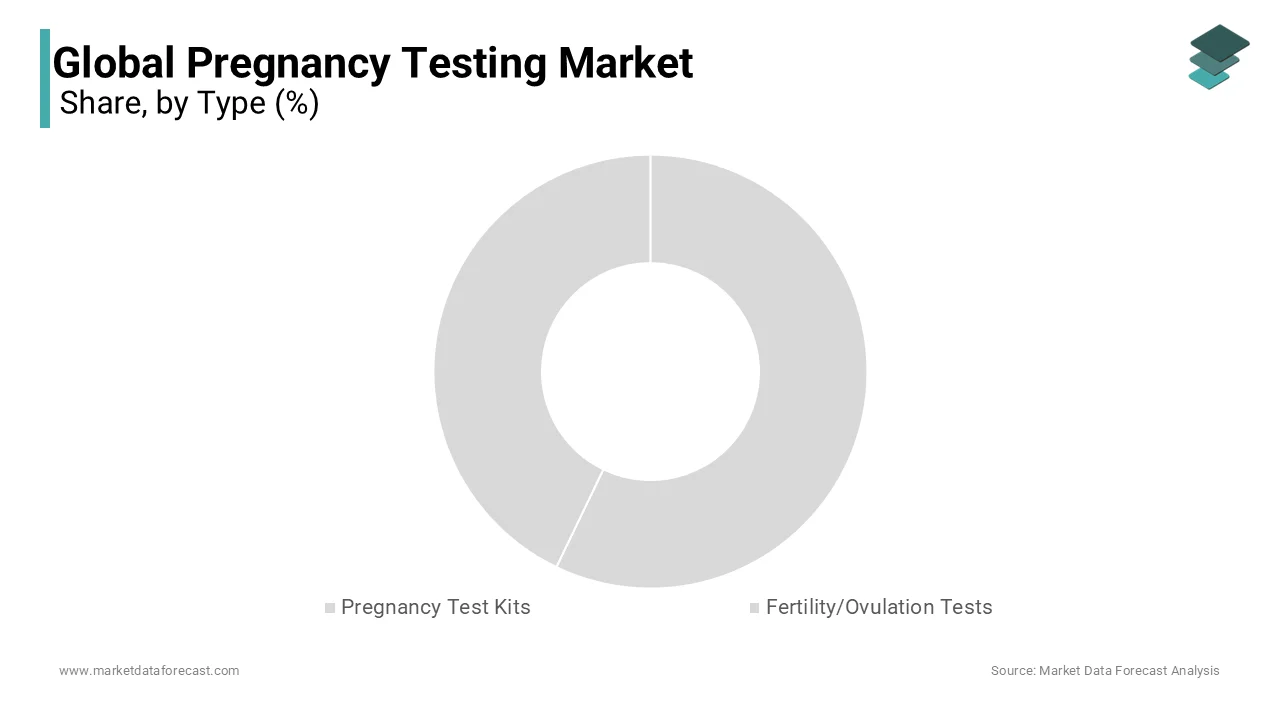
On the other hand, the pregnancy test kits segment is expected to propel the global pregnancy testing market throughout the forecast. It is due to the growing number of product approvals and various products in the market. In addition, the rise of technological advancements, increasing research and development activities, ease of availability, and accessibility of home-based pregnancy test kits are other reasons that will drive this sub-segment.
By Distribution Channel Insights
The pharmacies segment holds the largest share of the pregnancy testing market, capturing 42.4% of the global market share in 2025. This dominance stems from pharmacies’ strategic position as trusted, accessible, and immediate sources of over-the-counter reproductive health products. A further driver is their proximity to consumers and integration within primary healthcare ecosystems, enabling real-time counseling and product selection. In countries like Germany and Canada, community pharmacists are authorized to provide reproductive health advice, increasing consumer confidence in self-testing products. Additionally, pharmacies offer a balance between privacy and professional guidance, unlike supermarkets, where products are often displayed openly, or online platforms, which lack immediate human interaction. The presence of both generic and premium brands in pharmacy outlets further broadens consumer choice. This physical-digital hybrid model, where pharmacists recommend products and patients later refill online, reinforces pharmacies as the central node in the diagnostic supply chain. Their role as frontline health advisors, especially in underserved urban and rural areas, ensures sustained market leadership.
The online retail segment is the fastest-growing distribution channel in the pregnancy testing market and is expanding at a CAGR of 16.8% in the coming years. This rapid ascent is propelled by the increasing demand for discreet, stigma-free access to reproductive health products, particularly among younger demographics. A further growth driver is the expansion of e-pharmacy platforms that offer confidential packaging, same-day delivery, and subscription models. The integration of telehealth services, where users can consult physicians post-test, further enhances the value proposition. Additionally, social media marketing and influencer endorsements have normalized conversations around reproductive health, reducing purchase hesitation. Platforms like Amazon and 1mg in India now offer bundled fertility kits, combining pregnancy and ovulation tests with digital tracking apps, increasing average order value. This shift toward digital-first engagement, combined with logistical efficiency and personalized marketing, positions online retail as the most dynamic force in the market’s distribution evolution.
REGIONAL ANALYSIS

North America Pregnancy Testing Market Analysis
North America led the global pregnancy testing market by holding a 38.5% share of the global market in 2025. The region’s pre-eminence is anchored in its advanced healthcare infrastructure, high consumer awareness, and robust regulatory framework that ensures product accuracy and safety. The United States, in particular, drives regional demand due to high rates of unplanned pregnancies and widespread adoption of at-home diagnostics. Additionally, the proliferation of telehealth and digital health platforms has accelerated the integration of smart pregnancy tests into routine reproductive care. The presence of major manufacturers such as Abbott and QuidelOrtho further strengthens domestic supply chains. Moreover, insurance coverage for reproductive health services, including follow-up diagnostics, enhances consumer confidence in self-testing. The FDA’s stringent validation requirements ensure that only high-sensitivity tests reach the market, fostering trust.
Europe Pregnancy Testing Market Analysis
Europe holds a significant share of the global pregnancy testing market. The region’s market maturity is characterized by strong public health systems, high health literacy, and progressive reproductive policies that support early diagnosis and family planning. Countries like Germany, the UK, and France exhibit high per capita consumption of home pregnancy kits, driven by widespread availability in pharmacies and supermarkets. The demand for digital and app-connected tests is particularly pronounced in Scandinavia. Regulatory harmonization under the EU’s In Vitro Diagnostic Regulation (IVDR) has enhanced product reliability, requiring clinical evidence for all tests. In the UK, online sales of pregnancy tests grew in 2023, reflecting shifting consumer behaviour toward digital health solutions. Additionally, government initiatives in countries like Sweden and the Netherlands promote early prenatal registration, indirectly boosting test usage.
Asia-Pacific Pregnancy Testing Market Analysis
The Asia-Pacific region represents a key market for pregnancy testing. Its position is shaped by a complex interplay of demographic scale, urbanization, and evolving social norms around reproductive autonomy. Countries like India, China, and Indonesia contribute significantly due to large populations and rising female workforce participation. Urban centers such as Mumbai, Shanghai, and Jakarta have witnessed an annual increase in home pregnancy test sales, driven by e-commerce penetration and digital payment adoption. Cultural factors also influence usage patterns. South Korea has seen a surge in fertility tracking due to one of the world’s lowest birth rates, prompting government subsidies for reproductive health products. These dynamics position Asia-Pacific as a high-potential market with significant room for expansion.
Latin America Pregnancy Testing Market Analysis
Latin America accounts for a notable share of the pregnancy testing market. The region’s market dynamics are influenced by high rates of unintended pregnancies and expanding access to reproductive healthcare. Public health initiatives, such as Mexico’s Programa de Salud Reproductiva, have increased the distribution of free pregnancy tests in rural clinics, improving early diagnosis rates. However, cultural stigma surrounding premarital pregnancy continues to limit open discussion and test adoption, particularly among adolescents. On the commercial front, pharmacy chains like Farmacias Similares in Mexico and Drogaria Araujo in Brazil have expanded their diagnostic product lines, reporting double-digit growth in pregnancy test sales. While challenges remain, the region shows steady growth potential driven by public health investment and digital transformation.
Middle East and Africa Pregnancy Testing Market Analysis
The Middle East and Africa collectively hold 6% of the global pregnancy testing market, as per the World Health Organization’s 2023 regional health report. The region’s market is characterized by stark disparities between urban and rural access, with Gulf Cooperation Council (GCC) countries demonstrating far greater penetration than sub-Saharan nations. In Saudi Arabia and the UAE, rising female education and workforce participation have increased demand for reproductive autonomy tools. However, mobile health (mHealth) initiatives are bridging gaps Kenya’s “M-Tiba” platform enables users to purchase and receive reproductive health kits via mobile money. Religious and cultural norms also influence usage; in conservative areas, male guardianship laws can delay access to testing. Nevertheless, governments in Egypt and South Africa are investing in maternal health programs, including free test distribution. The region’s growth trajectory, though uneven, is supported by digital innovation and public health prioritization.
COMPETITIVE LANDSCAPE
The competition in the pregnancy testing market is shaped by a blend of technological innovation, brand trust, and strategic market positioning. Established diagnostic companies leverage their scientific expertise and regulatory credibility to dominate clinical and laboratory segments, while consumer health brands focus on user-centric design and accessibility in the over-the-counter space. The market is witnessing a convergence of healthcare and digital technology, prompting players to differentiate through smart features, app integration, and personalized health tracking. Brand reputation plays a critical role, as consumers prioritize accuracy and discretion when selecting home testing kits. Smaller innovators are challenging incumbents by introducing eco-friendly designs, rapid-read formats, and AI-powered interpretation tools. However, high regulatory barriers and the need for clinical validation limit the entry of low-quality alternatives. Competitive dynamics are further influenced by distribution strength, with companies vying for shelf space in pharmacies and visibility on e-commerce platforms. Strategic partnerships with telehealth providers and fertility clinics are becoming essential for end-to-end service delivery. As consumer awareness grows and reproductive autonomy gains prominence, companies are increasingly focused on education, privacy, and holistic wellness to build lasting customer relationships. The interplay of science, technology, and social trends defines a highly dynamic and evolving competitive environment.
KEY MARKET PLAYERS
Some of the promising companies playing a leading role in the global pregnancy testing market include
- Abbott Laboratories
- Cardinal Health
- Church & Dwight
- Germaine Laboratories
- Kent Pharmaceuticals
- Piramal Enterprises
- Prestige Brands Holdings
- F. Hoffmann-La Roche Ltd
- Procter & Gamble Co.
- Quidel Corporation
- SPD Swiss Precision Diagnostics
- QIAGEN N.V.
Top Players in the Pregnancy Testing Market
- Abbott Laboratories is a global leader in diagnostic innovation, with a strong footprint in the pregnancy testing segment through its rapid, reliable, and user-friendly testing solutions. The company has consistently prioritized accuracy and accessibility, offering both clinical and over-the-counter products that cater to diverse healthcare environments. Its focus on research-driven development has enabled the integration of advanced immunoassay technologies into pregnancy diagnostics, ensuring high sensitivity and early detection. Abbott’s extensive distribution network and reputation for quality have made its products a preferred choice among healthcare providers and consumers alike. By aligning with global maternal health initiatives, the company reinforces its role in improving reproductive healthcare outcomes. Its commitment to regulatory compliance and product safety further strengthens consumer trust, positioning Abbott as a cornerstone player in the competitive landscape of pregnancy diagnostics.
- Roche is a pioneer in in vitro diagnostics, bringing scientific rigor and technological sophistication to the pregnancy testing market. The company specializes in high-precision blood-based hCG assays used in clinical laboratories and hospital settings, where quantitative hormone measurement is critical for early pregnancy monitoring and complication detection. Roche’s diagnostic platforms, known for their automation and integration with laboratory information systems, enhance efficiency and reduce human error. The company’s emphasis on innovation and quality assurance ensures that its tests meet the highest global standards. Through continuous investment in R&D, Roche has advanced the capabilities of pregnancy-related diagnostics, enabling earlier and more accurate results. Its global presence and collaborations with healthcare institutions support widespread adoption in both developed and emerging markets. Roche’s focus on clinical excellence and seamless integration into diagnostic workflows solidifies its leadership in the professional segment of the pregnancy testing domain.
- QIAGEN has established a distinctive presence in the pregnancy testing market through its expertise in molecular diagnostics and sample processing technologies. While traditionally known for genetic testing, the company has expanded its role in reproductive health by supporting early pregnancy assessment through reliable nucleic acid detection platforms. Its technologies are instrumental in confirming viable pregnancies and identifying chromosomal abnormalities in conjunction with prenatal screening. QIAGEN’s solutions are widely used in specialized clinics and reference laboratories, where precision and reproducibility are paramount. The company’s focus on end-to-end workflow integration—from sample collection to analysis—enhances diagnostic confidence and operational efficiency. By collaborating with research institutions and healthcare providers, QIAGEN contributes to advancing the scientific understanding of early gestation. Its commitment to innovation, regulatory compliance, and scalable diagnostic solutions positions it as a key enabler in the evolving landscape of reproductive diagnostics.
Top Strategies Used by Key Market Participants
- One major strategy employed by leading players is the integration of digital health technologies into traditional testing platforms. Companies are increasingly developing smart pregnancy tests that connect with mobile applications to deliver personalized insights, track menstrual cycles, and provide fertility guidance. This shift transforms a one-time diagnostic event into an ongoing health management tool, enhancing user engagement and brand loyalty. By incorporating Bluetooth-enabled readers and AI-driven analytics, firms are delivering more intuitive and informative experiences, aligning with the growing consumer preference for connected health solutions.
- Another key approach is strategic collaboration with telehealth providers and e-pharmacies. Market leaders are partnering with digital health platforms to offer bundled services that include test kits, virtual consultations, and follow-up care. These alliances expand market reach, particularly in remote or underserved areas, while ensuring a seamless user journey from testing to medical advice. Such integrations also strengthen brand visibility and accessibility in the rapidly growing online health economy.
- A third pivotal strategy is geographic expansion into emerging markets through localized product development and distribution networks. Companies are tailoring packaging, instructions, and branding to align with cultural sensitivities and language preferences. By establishing regional partnerships and investing in awareness campaigns, they are improving access and trust in areas with limited reproductive healthcare infrastructure, thereby capturing untapped demand and reinforcing long-term market presence.
Global Pregnancy Testing Market News
- In March 2024, Abbott Laboratories launched a next-generation digital pregnancy test with enhanced sensitivity and mobile app connectivity, designed to provide early and accurate results while integrating with fertility tracking platforms to support reproductive planning.
- In June 2023, Roche partnered with a leading European telehealth provider to offer a bundled prenatal diagnostic package, combining its quantitative hCG blood test with virtual consultations and personalized health reports for early pregnancy monitoring.
- In September 2023, QIAGEN expanded its reproductive health portfolio by introducing a sample stabilization technology specifically optimized for early pregnancy biomarkers, enabling more reliable detection in point-of-care and remote settings.
- In January 2024, a major consumer health division of a global pharmaceutical company introduced a discreet, eco-conscious pregnancy test with biodegradable packaging, targeting environmentally aware urban consumers in North America and Western Europe.
- In May 2024, a prominent diagnostics firm collaborated with a women’s health startup to launch an AI-powered interpretation system for urine-based pregnancy tests, reducing user error and improving result clarity through smartphone integration.
MARKET SEGMENTATION
This research report on the global pregnancy testing market has been segmented and sub-segmented based on the product, test type, distribution channel, and region.
By Test Type
- HCG Blood Test
- HCG Urine Test
- LH Urine Test
- FSH Urine Test
By Product
- Pregnancy Test Kits
- Strip Tests
- Midstream Kits
- Cassette Tests
- Digital Tests
- Fertility/Ovulation Tests
- Line Indicator Tests
- Digital Tests
By Distribution Channel
- Hospitals & Specialty Clinics
- Pharmacies
- Online Retail
- Others (Supermarkets and Specialty Retail)
By Region
- North America
- Europe
- Asia Pacific
- Latin America
- Middle East and Africa