- Product Description Description
- Table of Contents TOC
- List of Table & Figure LOT
- Get Free Sample PDF Sample PDF
Market Size, 2025
$11.20 BnMarket Estimate, 2026
$11.71 BnMarket Forecast, 2034
$16.68 BnCAGR, 2026–2034
4.52%Executive Summary: Advanced Wound Care Market
- Market Scope: Comprehensive global advanced wound care market analysis covering chronic wound prevalence, bioactive dressings, negative pressure wound therapy, smart monitoring dressings, and outpatient care shifts.
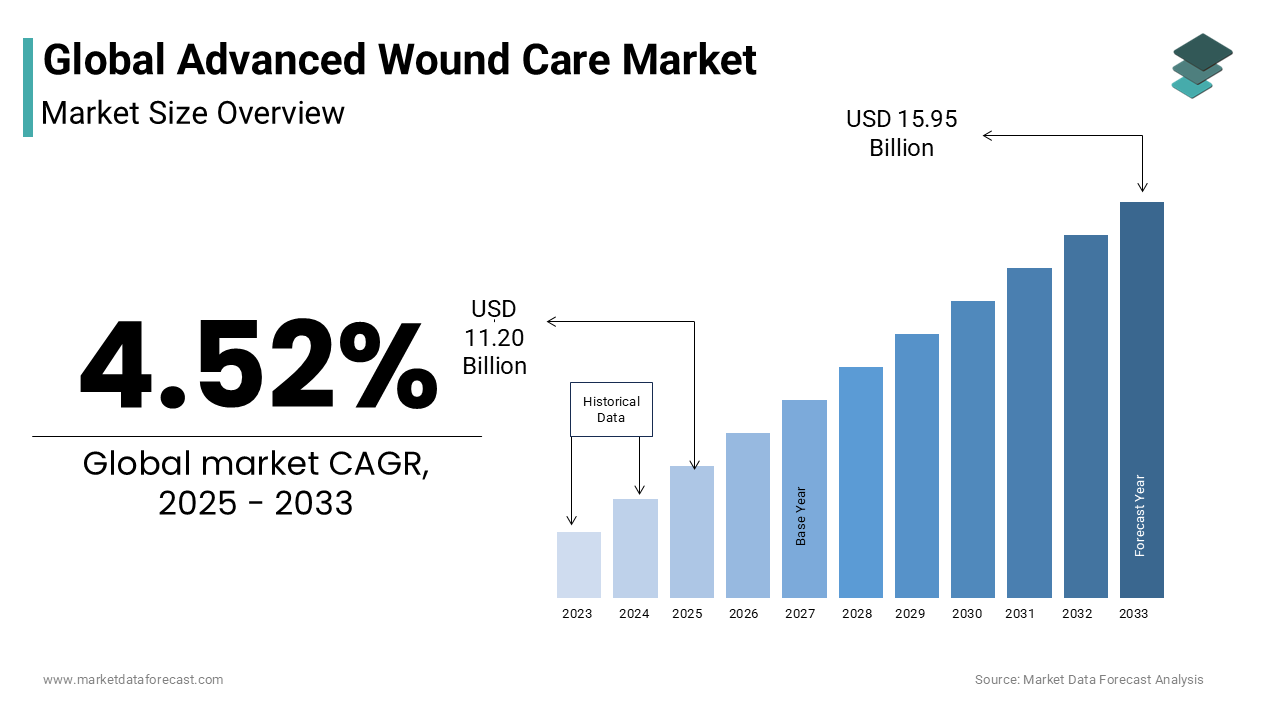
- Market Valuation: Valued at USD 11.20 billion (2025), estimated at USD 11.71 billion (2026), and projected to reach USD 16.68 billion by 2034, registering a steady CAGR of 4.52% (2026–2034).
- Primary Growth Drivers: Rising diabetes- and aging-linked chronic wounds, high annual surgical volumes, bioactive/NPWT advancements, and home-based care model shifts. Key challenges include high product costs, inconsistent reimbursement, and certified specialist shortages.
Key Market Segment Metrics (2026–2034)
| Category | Leading Segment (Position) | Fastest-Growing Segment |
|---|---|---|
| By Product, Application, End-User & Region | Dressings segment (dominated market with 62.3% share in 2025) & Skin ulcers (accounted for 56.3% of application demand) & In-patient services (represented 55.5% end-user consumption) & North America (led with 40.5% global share in 2024) | Therapy devices (projected to grow at a CAGR of 10.8%) & Surgical wounds (expand at a CAGR of 9.6%) & Outpatient services (fastest-growing category at a CAGR of 10.2%) |
| By Regional Leadership | North America (40.5% global share supported by over 8 million chronic wound patients in the U.S.) | Asia-Pacific (rapid growth driven by Japan’s aging population where 29% are over 65) |
Major Market Players & Market Structure
Market Structure: Highly competitive global advanced wound care device landscape featuring major medical technology enterprises driving negative pressure therapy approvals, localized manufacturing expansions, and supply chain resilience.
Key Companies: Acelity, Coloplast, 3M Healthcare, Medtronic, Integra LifeSciences, Derma Sciences, ConvaTec, Smith & Nephew, Mölnlycke, and Organogenesis.
Global Advanced Wound Care Market Size
The global advanced wound care market size was valued at USD 11.20 billion in 2025 and is anticipated to reach USD 11.71 billion in 2026 from USD 16.68 billion by 2034, growing at a CAGR of 4.52% during the forecast period from 2026 to 2034.
Advanced Wound Care refers to the innovative medical products designed to accelerate healing in complex wounds such as chronic ulcers, surgical incisions, burns, and traumatic injuries. Unlike traditional dressings, advanced wound care technologies, including hydrogels, foams, alginates, antimicrobial dressings, and negative pressure wound therapy (NPWT) systems, provide a moist healing environment, reduce infection risk, and support tissue regeneration. These solutions are increasingly vital as healthcare systems confront the rising burden of non-healing wounds linked to aging populations and chronic diseases.
Over 2% of the population in developed countries suffers from chronic wounds at any given time, with venous leg ulcers alone affecting approximately 1% of adults over 60 in the United States, as per the American Venous Forum. In Europe, the European Wound Management Association points out that wound care consumes up to 2-3% of annual healthcare budgets, underscoring its systemic impact. Additionally, the National Pressure Injury Advisory Panel estimates that more than 2.5 million patients in the U.S. develop pressure injuries annually, requiring specialized interventions. With growing emphasis on outpatient care and home-based treatment, advanced wound care is evolving into a multidisciplinary field integrating biologics, smart dressings, and digital monitoring to improve clinical outcomes and reduce hospitalization duration.
MARKET DRIVERS
Rising Prevalence of Chronic Diseases Leading to Complex Wounds
The escalating global burden of chronic diseases such as diabetes, cardiovascular disorders, and obesity, which significantly impair wound healing, is a primary driver of the advanced wound care market. According to the International Diabetes Federation, approximately 537 million adults were living with diabetes in 2021, a figure projected to rise to 643 million by 2030. Around 108,000-130,000 lower-limb amputations occur annually in diabetic patients in the U.S. alone, many of which could be prevented with early advanced wound care intervention. Additionally, in the United Kingdom, the National Institute for Health and Care Excellence estimates that chronic wounds cost the NHS over £5 billion annually, with pressure ulcers and venous leg ulcers accounting for 80% of expenditures. These statistics show the urgent need for advanced dressings and biologic therapies that promote granulation, reduce infection, and shorten healing time, particularly in aging and comorbid populations.
Growing Geriatric Population with Increased Susceptibility to Wounds
Demographic aging is a critical demand factor propelling the expansion of the advanced wound care market. According to the United Nations Department of Economic and Social Affairs, the global population aged 65 and over is expected to reach 1.5 billion by 2050, nearly doubling from 2020 levels. This demographic shift is directly correlated with higher incidences of pressure injuries, surgical complications, and impaired tissue regeneration. In Japan, where 29% of the population is already over 65, the Ministry of Health, Labour and Welfare points out an increase in hospitalizations for chronic wounds between 2015-2022. Similarly, the European Commission projects that by 2030, one in four Europeans will be aged 65 or older, intensifying demand for outpatient and home-based wound management. Advanced dressings that reduce dressing change frequency and pain—such as silicone-based and hydrocolloid technologies—are increasingly preferred in geriatric care. Moreover, age-related conditions like frail skin, reduced mobility, and malnutrition necessitate specialized wound care protocols, driving adoption of NPWT, antimicrobial dressings, and growth factor therapies in both clinical and domiciliary settings.
MARKET RESTRAINTS
High Cost of Advanced Wound Care Products and Limited Reimbursement
The high cost of innovative products coupled with inconsistent or inadequate reimbursement policies is one of the most significant restraints in the advanced wound care market. In many European countries, national health systems restrict coverage to only the most severe cases, delaying access to effective treatments. Additionally, the lack of standardized coding and billing procedures for newer biologic skin substitutes complicates insurance claims. These financial barriers limit market penetration, particularly in low- and middle-income countries, and hinder timely intervention, ultimately increasing long-term healthcare costs through prolonged healing and complications.
Lack of Skilled Wound Care Professionals and Standardized Protocols
The global shortage of trained wound care specialists and the absence of uniform clinical guidelines for managing complex wounds is another critical restraint. In the U.S., as per the Wound, Ostomy and Continence Nurses Society, there are fewer than 7,000 certified wound care nurses serving a population where over 8 million patients have chronic wounds. This gap leads to suboptimal treatment, misdiagnosis, and prolonged healing times. Furthermore, the absence of standardized protocols results in inconsistent treatment approaches; a 2023 multicenter study in The Lancet Global Health found that only 40% of hospitals in Southeast Asia follow evidence-based guidelines for diabetic foot ulcer management. Without structured education, certification, and protocol adoption, even the most advanced wound care products may be underutilized or improperly applied, undermining their clinical and economic value.
MARKET OPPORTUNITIES
Integration of Smart Dressings and Real-Time Monitoring Technologies
The development of smart dressings embedded with biosensors and wireless connectivity to enable real-time monitoring of wound parameters is a transformative opportunity in the advanced wound care market. These next-generation dressings can detect pH, temperature, moisture levels, and biomarkers of infection, transmitting data to clinicians via mobile platforms. Additionally, the Massachusetts Institute of Technology has developed a color-changing hydrogel that visually indicates infection, aiding caregivers in low-resource settings. As telehealth and remote patient monitoring expand, smart dressings offer a scalable solution for managing chronic wounds outside hospitals, improving outcomes while reducing clinical workload and healthcare costs.
Expansion of Home-Based and Outpatient Wound Care Services
The shift toward decentralized healthcare delivery presents a major opportunity for the advanced wound care market, particularly in home and outpatient settings. In Japan, the Ministry of Health, Labour and Welfare promotes home-based wound care through its Long-Term Care Insurance Program, resulting in a rise in home nursing visits for pressure ulcer management since 2019. Similarly, in Australia, the Royal Commission into Aged Care Quality and Safety recommended expanding domiciliary wound services to reduce hospitalizations. Portable NPWT devices, such as Smith & Nephew’s Pico system, have enabled patients to receive continuous therapy at home, improving mobility and quality of life. With rising healthcare costs and aging populations, the trend toward outpatient and home care is expected to accelerate, creating sustained demand for user-friendly, effective, and self-managed advanced wound care solutions.
MARKET CHALLENGES
Ensuring Regulatory Compliance and Clinical Validation for Novel Products
The rigorous regulatory scrutiny required for new products, particularly biologics, skin substitutes, and combination devices is a major challenge facing the advanced wound care market. In the European Union, the transition to the Medical Device Regulation (MDR) has intensified requirements for post-market surveillance and clinical evidence, leading to delays in commercialization. As per MedTech Europe, more than 40% of advanced wound care devices previously CE-marked under the old directive have not yet been recertified under MDR. Additionally, payers increasingly demand real-world evidence of efficacy and cost-effectiveness before reimbursement. A 2023 study in JAMA Dermatology found that fewer than one-third of commercially available skin substitutes had robust Level I clinical trial data supporting their use. Manufacturers must navigate complex classification systems, varying global standards, and payer expectations, which slows innovation adoption. Without harmonized regulatory pathways and standardized outcome metrics, even clinically effective products face prolonged market entry timelines and limited uptake.
Managing Wound Heterogeneity and Personalized Treatment Approaches
The high degree of variability in wound types, etiologies, and patient conditions, which complicates the development of universally effective treatments, is another critical challenge. As per a 2022 multicenter analysis published in Wound Repair and Regeneration, 68% of diabetic foot ulcers exhibit polymicrobial biofilms, which resist standard antimicrobial dressings and require tailored debridement and therapy. The lack of standardized diagnostic tools for wound assessment further exacerbates the issue. Additionally, patient-specific factors such as nutrition, vascular status, and glycemic control influence healing outcomes, requiring multidisciplinary coordination. The absence of predictive algorithms or AI-driven decision support systems limits clinicians’ ability to match the right product to the right wound at the right time. As the market moves toward precision medicine, overcoming this heterogeneity through biomarker-based diagnostics and adaptive treatment protocols remains a formidable yet essential challenge.
REPORT COVERAGE
| REPORT METRIC | DETAILS |
| Market Size Available | 2025 to 2034 |
| Base Year | 2025 |
| Forecast Period | 2026 to 2034 |
| CAGR | 4.69% |
| Segments Covered | By Type, Application, End-User, Region |
| Various Analyses Covered | Global, Regional & Country Level Analysis, Segment-Level Analysis, Drivers, Restraints, Opportunities, Challenges; PESTLE Analysis; Porter's Five Forces Analysis; Competitive Landscape; Analyst Overview of Investment Opportunities |
| Regions Covered | North America, Europe, Asia Pacific, Latin America, Middle East & Africa. |
| Key Market Players | Acelity, Coloplast, 3M Healthcare, Medtronic, Integra Lifesciences, Derma Sciences, ConvaTec, Smith & Nephew, Molnylcke, and Organogenesis |
SEGMENTAL ANALYSIS
By Type Insights
The dressings segment dominated the advanced wound care market by capturing 62.3% share in 2025. The widespread clinical use of advanced materials such as hydrocolloids, foams, alginates, and antimicrobial dressings in both acute and chronic wound management is driving the lead position of this segment. According to the American Diabetes Association, 15–25% of diabetic patients develop foot ulcers during their lifetime, necessitating frequent dressing changes that are both protective and bioactive. Additionally, the versatility of dressings, applicable in hospitals, long-term care facilities, and home settings, enhances their utility. The global shift toward outpatient care further amplifies demand, as self-managed dressings improve patient mobility and reduce hospital visits. With continuous innovation in moisture management, infection control, and pain reduction, advanced dressings remain the cornerstone of modern wound care protocols.
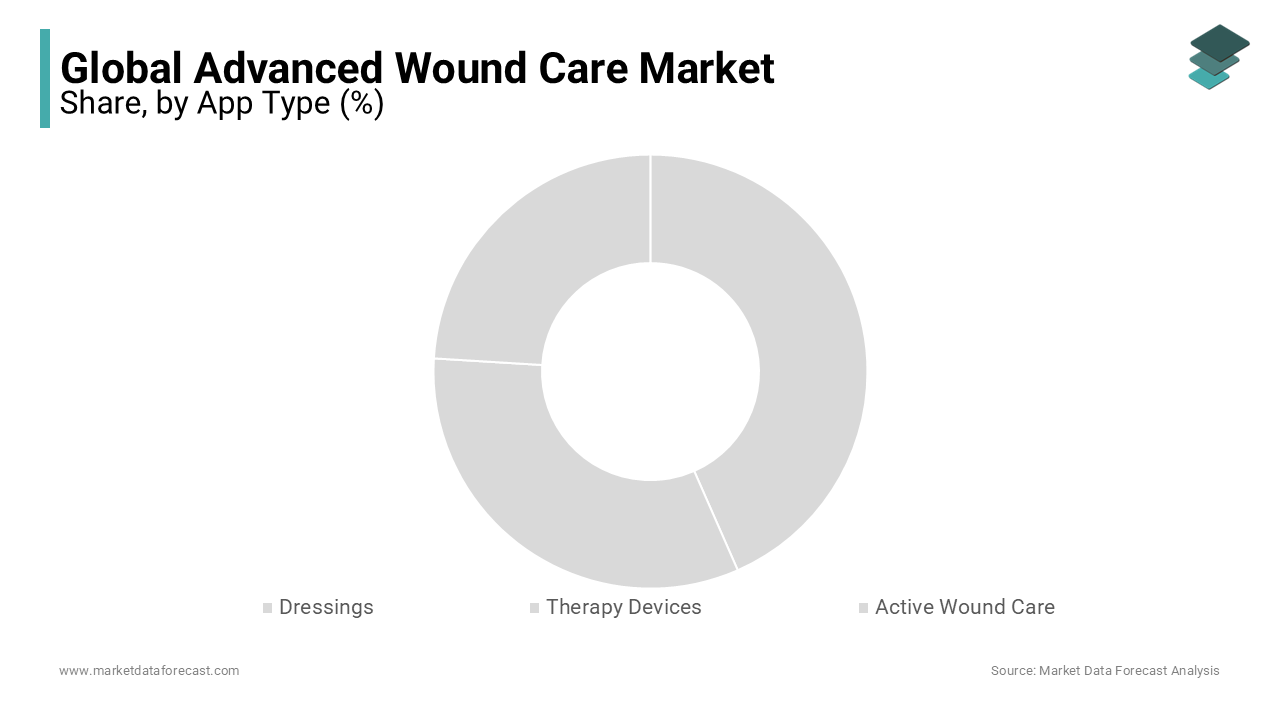
The therapy devices segment is projected to grow at a CAGR of 10.8% from 2026 to 2034 and is making it the fastest-growing category in the advanced wound care market. This surge is fueled by the increasing adoption of negative pressure wound therapy (NPWT) systems, electrotherapy devices, and ultrasound-based treatments that actively stimulate tissue regeneration. NPWT use in diabetic foot ulcers reduces amputation risk and accelerates healing. The U.S. Food and Drug Administration has cleared multiple portable NPWT devices since 2020, enabling home-based treatment and reducing hospitalization costs. Besides, the rise of minimally invasive surgical techniques has increased demand for adjunctive therapies that enhance closure rates. A multicenter trial published in JAMA Surgery demonstrated that electrical stimulation therapy reduced healing time in pressure ulcers by 29% compared to standard care. With aging populations and rising surgical volumes, over 310 million procedures were performed globally in 2022, as per the World Health Organization, the need for active, technology-driven wound healing solutions is accelerating, positioning therapy devices at the forefront of clinical innovation
By Application Insights
The skin ulcers segment represented the prominent application in the advanced wound care market by accounting for 56.3% of total demand in 2025. This dominance is credited to the high prevalence of chronic ulcer types, diabetic foot ulcers (DFUs), venous leg ulcers (VLUs), and pressure injuries, driven by aging populations and metabolic disorders. According to the International Diabetes Federation, over 537 million adults live with diabetes globally, with 15–25% developing DFUs, leading to around 108,000-130,000 lower-limb amputations annually in the U.S. alone, as reported by the American Podiatric Medical Association. Venous insufficiency affects nearly 1% of adults over 60 in developed nations, with low healing rates within several weeks without advanced interventions. As per the estimates by the National Pressure Injury Advisory Panel, 2.5 million patients in the U.S. develop pressure ulcers each year, costing hospitals over $9-11 billion annually. The prolonged healing timelines necessitate sustained use of advanced dressings, biologics, and monitoring systems, making skin ulcers the most resource-intensive and clinically significant application in the market.
The surgical wounds segment is anticipated to grow at a CAGR of 9.6% during the forecast period and is emerging as the fastest-growing application in the advanced wound care market. This growth of surgical wounds is driven by the rising volume of surgical procedures and the increasing focus on preventing surgical site infections (SSIs), which affect 2–5% of all operations, according to the U.S. Centers for Disease Control and Prevention. With over 310 million surgeries performed annually worldwide, as reported by the World Health Organization, even a small reduction in complications yields significant clinical and economic benefits. Advanced wound care products such as antimicrobial incisional dressings, NPWT for closed incisions, and biosynthetic barriers are now standard in high-risk procedures like cardiothoracic and orthopedic surgeries. Furthermoe, the expansion of ambulatory surgery centers and same-day discharges has increased demand for durable, infection-resistant dressings that support healing outside hospitals. As surgical volumes grow and infection prevention becomes a quality metric, advanced wound care for surgical sites is becoming indispensable
By End-User Insights
The in-patient services segment constituted the largest end-user in the advanced wound care market by representing a 55.5% of total consumption in 2025. This prominence is because of the high concentration of complex, acute, and post-surgical wounds managed within hospitals and long-term care facilities. Additionally, in-patient facilities are primary adopters of high-cost therapies such as NPWT and biologic skin substitutes, which require clinical supervision. In the UK, NHS hospitals spend over £2.8 billion annually on wound care, with 75% allocated to in-patient treatments, as per the National Institute for Health and Care Excellence. With hospitals serving as the frontline for severe wound management, in-patient services remain the principal channel for advanced wound care product deployment.
The outpatient services segment is projected to expand at a CAGR of 10.2% from 2026 to 2034 and is making it the fastest-growing end-user category in the advanced wound care market. This growth is driven by the global shift toward decentralized care, cost containment strategies, and patient preference for home-based treatment. There has been an increase in home-based wound care visits between 2020 and 2023, supported by telehealth integration and portable NPWT devices. In Japan, the Ministry of Health, Labour and Welfare has expanded insurance coverage for home nursing services, resulting in a rise in outpatient wound management. Additionally, outpatient clinics specializing in diabetic foot care and wound healing centers are proliferating; as per the U.S. Wound Registry, over 2,500 certified wound care centers operating outside hospitals. With rising healthcare costs and aging populations, the trend toward early discharge and domiciliary care is accelerating, creating sustained demand for user-friendly, effective, and self-managed advanced wound care solutions.
REGIONAL ANALYSIS
North America Advanced Wound Care Market Analysis
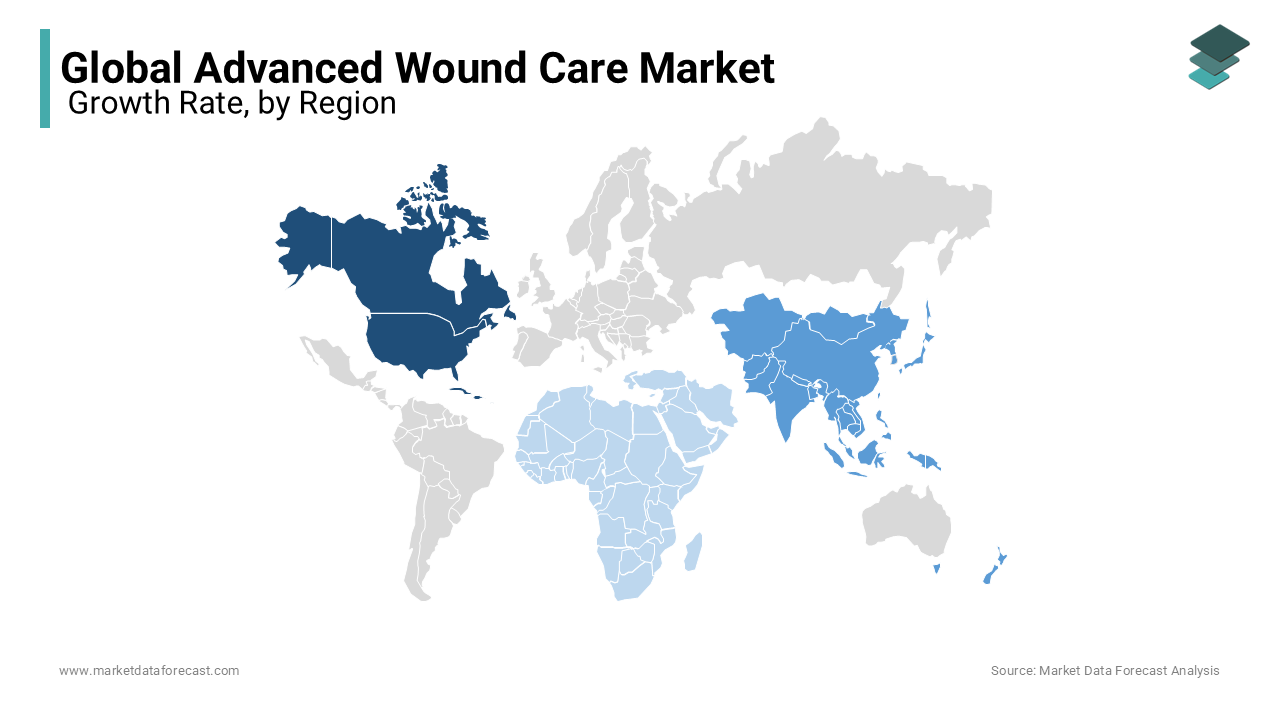
North America held the largest share of the advanced wound care market at 40.5% of global value in 2024. The region’s position is anchored in its robust healthcare infrastructure, high prevalence of chronic diseases, and strong reimbursement support for advanced therapies. In the United States, over 8 million people suffer from chronic wounds, with diabetic foot ulcers alone affecting 15–25% of the 37 million diabetic patients. The Centers for Medicare & Medicaid Services covers a wide range of advanced dressings and NPWT systems, facilitating widespread adoption. The U.S. Food and Drug Administration has cleared many advanced wound care products, fostering innovation. Canada has expanded its wound care networks in long-term care facilities. Additionally, the presence of leading manufacturers such as Smith & Nephew, 3M, and Acelity ensures rapid technology diffusion. With high healthcare spending and a focus on value-based care, North America remains the epicenter of clinical advancement and market maturity in advanced wound care.
Europe Advanced Wound Care Market Analysis
Europe captures a significant position in the global advanced wound care market, with Germany, the UK, and France leading in clinical adoption and regulatory standardization. The region’s market is shaped by aging populations and well-established healthcare systems that prioritize evidence-based treatment. According to the European Commission, over 44 million Europeans are aged 80 or older by 2030, significantly increasing the risk of pressure ulcers and slow-healing wounds. However, cost containment pressures limit access. Germany operates a large number of specialized wound care centers, while Sweden and the Netherlands lead in home-based care integration. The implementation of the EU Medical Device Regulation has intensified clinical evidence requirements, slowing product approvals but enhancing safety. With strong research institutions and growing emphasis on outpatient management, Europe remains a critical market for innovation tempered by fiscal responsibility.
Asia-Pacific Advanced Wound Care Market Analysis
The Asia-Pacific region is experiencing rapid growth due to rising healthcare investment and urbanization. China, India, and Japan are driving expansion, with Japan’s aging population creating urgent demand; the Ministry of Health, Labour and Welfare states that 29% of its citizens are over 65, increasing susceptibility to pressure injuries and diabetic ulcers. Australia’s Royal Commission into Aged Care Quality and Safety has recommended expanding advanced wound care in residential facilities, where pressure ulcer rates exceed 10%. With rising disposable incomes, medical tourism, and government-backed health schemes, APAC is transforming into a high-potential market for both domestic and multinational wound care providers.
Latin America Advanced Wound Care Market Analysis
Latin America holds a key share of the global advanced wound care market, with Brazil, Mexico, and Argentina leading in clinical adoption. The region faces a growing burden of diabetes and obesity, with as per the International Diabetes Federation, over 70 million adults in Latin America have diabetes, contributing to rising rates of foot ulcers and amputations. In Brazil, the Ministry of Health estimates that 15% of diabetic patients develop foot ulcers, yet access to advanced dressings remains limited outside urban centers. However, private hospitals in São Paulo and Mexico City are adopting NPWT and biologic substitutes, driven by medical tourism and insurance expansion. With increasing awareness and public-private partnerships, Latin America is emerging as a market with untapped potential despite structural inequities.
Middle East and Africa Advanced Wound Care Market Analysis
The Middle East and Africa collectively account for a small share of the global advanced wound care market, but are witnessing strategic development due to healthcare modernization and disease burden. The UAE and Saudi Arabia are investing heavily in specialized wound care centers as part of Vision 2030 and UAE Centennial 2071 initiatives. With rising urbanization and government-backed training programs, the region is prioritizing wound care as a component of non-communicable disease management, signaling a transformative shift in clinical infrastructure and patient access.
COMPETITIVE LANDSCAPE
The advanced wound care market is characterized by intense competition driven by technological differentiation, clinical validation, and geographic expansion. Leading multinational companies compete not only on product efficacy but also on integration into care pathways, ease of use, and cost-effectiveness. The race to develop bioactive dressings, antimicrobial technologies, and wearable therapy systems has intensified, with firms incorporating real-world data to support claims. In the Asia-Pacific region, competition is further shaped by diverse regulatory environments, varying reimbursement models, and differing standards of care. While global players dominate with established brands and extensive distribution, regional manufacturers are emerging with cost-competitive alternatives, challenging pricing structures. The shift toward outpatient and home-based care has elevated the importance of user-friendly, discreet, and self-managed solutions, prompting innovation in portable NPWT and single-use devices. Digital health integration—such as apps for wound tracking and AI-based healing prediction—is becoming a key differentiator. Companies are also investing in education and certification programs to influence clinical practice and build loyalty among healthcare providers. Regulatory scrutiny, particularly under evolving frameworks like the EU MDR, adds complexity, favoring firms with robust clinical portfolios. As healthcare systems prioritize value-based outcomes, the competitive landscape is shifting toward holistic solutions that combine superior technology, clinical support, and economic efficiency.
KEY MARKET PLAYERS
A few of the noteworthy companies in the global advanced wound care market include
- Acelity
- Coloplast
- 3M Healthcare
- Medtronic
- Integra LifeSciences
- Derma Sciences
- ConvaTec
- Smith & Nephew
- Mölnlycke
- Organogenesis
Top Players in the Market
Smith & Nephew
Smith & Nephew has established a significant presence in the Asia-Pacific advanced wound care market through its innovative portfolio of negative pressure wound therapy (NPWT) systems, antimicrobial dressings, and biologic matrices. The company’s PICO single-use NPWT device has gained widespread adoption in outpatient and home care settings across Australia, Japan, and India, offering mobility and discreet treatment for surgical and chronic wounds. It also launched the BRAVA® system for diabetic foot ulcers in India, tailored to high-burden, resource-conscious environments. The company has strengthened its distribution network in Southeast Asia and invested in local regulatory teams to accelerate product approvals. By integrating digital tools for remote monitoring and patient engagement, Smith & Nephew is advancing personalized wound care delivery and reinforcing its reputation for clinical excellence and technological leadership in the region.
3M Company
3M plays a pivotal role in the Asia-Pacific advanced wound care market through its broad range of scientifically engineered dressings, including the Tegaderm™ and Bioline™ portfolios, which are widely used in hospitals, clinics, and home settings. The company’s focus on moisture management, adhesion technology, and infection prevention has made its products a standard in critical care and surgical units across Japan, Australia, and China. It has also partnered with public health institutions in Indonesia and Vietnam to support infection control initiatives in wound management. 3M invests heavily in clinical research and collaborates with key opinion leaders to generate region-specific evidence for product efficacy. Its robust supply chain and localized manufacturing in Malaysia ensure consistent availability. By combining material science innovation with practical clinical solutions, 3M continues to strengthen its influence across diverse healthcare environments in the Asia-Pacific region.
Mölnlycke Health Care
Mölnlycke Health Care is a leading contributor to advanced wound care in the Asia-Pacific region, recognized for its clinically driven products such as Mepilex® and Mepitel® dressings, designed to minimize trauma during changes and manage exudate effectively. The company has deepened its engagement in Japan and Australia by aligning its offerings with national wound care guidelines and participating in clinical training programs for nurses and podiatrists. It has also expanded its digital outreach through webinars and e-learning platforms in India and the Philippines to improve wound assessment skills among healthcare providers. The company emphasizes sustainability, introducing recyclable packaging and eco-efficient production methods in its regional operations. By focusing on patient comfort, clinical outcomes, and caregiver efficiency, Mölnlycke has built strong trust among clinicians and is shaping best practices in wound management across diverse Asia-Pacific healthcare systems.
Top Strategies Used by the Key Market Participants
Key players in the advanced wound care market are leveraging innovation, clinical evidence generation, and strategic partnerships to strengthen their positions. Companies are investing in R&D to develop smart dressings, bioengineered tissues, and portable therapy devices that enhance healing and reduce complications. Expansion into high-growth regions like Asia-Pacific is achieved through localized product development, regulatory alignment, and distribution alliances. Firms are intensifying collaborations with hospitals, wound care centers, and professional societies to provide training and build clinical credibility. Digital integration is a growing focus, with mobile apps and telehealth platforms enabling remote monitoring and patient adherence. Reimbursement support programs and health economics studies are deployed to demonstrate cost-effectiveness to payers. Additionally, sustainability initiatives—such as recyclable packaging and energy-efficient manufacturing—are enhancing brand value. Mergers and acquisitions are used to gain access to novel technologies, while lifecycle management of existing products ensures prolonged market relevance. These strategies collectively enable companies to differentiate offerings, improve patient outcomes, and maintain competitive advantage in a rapidly evolving therapeutic landscape.
RECENT MARKET HAPPENINGS
- In January 2022, Smith & Nephew launched the PICO 7 single-use NPWT system in Australia and Japan, offering enhanced usability and extended wear time to support outpatient wound management and strengthen its presence in the Asia-Pacific region.
- In June 2022, 3M introduced Tegaderm™ CHG Securement Dressing in India, combining antimicrobial protection with secure catheter fixation to reduce infection risks in critical care settings.
- In March 2023, Mölnlycke Health Care partnered with the Japanese Society of Wound Healing to launch a training initiative for nurses on advanced dressing techniques, improving clinical adoption of its Safetac® products.
- In September 2023, Smith & Nephew received regulatory approval for its BRAVA® negative pressure therapy in India, targeting diabetic foot ulcers and expanding access to advanced care in high-burden, underserved areas.
- In February 2024, 3M expanded its manufacturing capacity in Malaysia to increase regional supply resilience and support growing demand for Tegaderm™ and Bioline™ wound care products across Southeast Asia.
MARKET SEGMENTATION
This research report on the global advanced wound care market has been segmented and sub-segmented based on type, application, end-user and region.
By Type
- Dressings
- Therapy Devices
- Active Wound Care
By Application
- Skin Ulcers
- Surgical Wounds
- Burn Wounds
By End User
- In-Patient Services
- Outpatient Services
By Region
- North America
- Europe
- Asia-Pacific
- Latin America
- The Middle East and Africa