- Product Description Description
- Table of Contents TOC
- List of Table & Figure LOT
- Get Free Sample PDF Sample PDF
Market Size, 2025
$754 MnMarket Estimate, 2026
$806 MnMarket Forecast, 2034
$1375 MnCAGR, 2026–2034
6.9%Global Wound Debridement Products Market Size, Growth, Trends & Forecast (2026–2034)
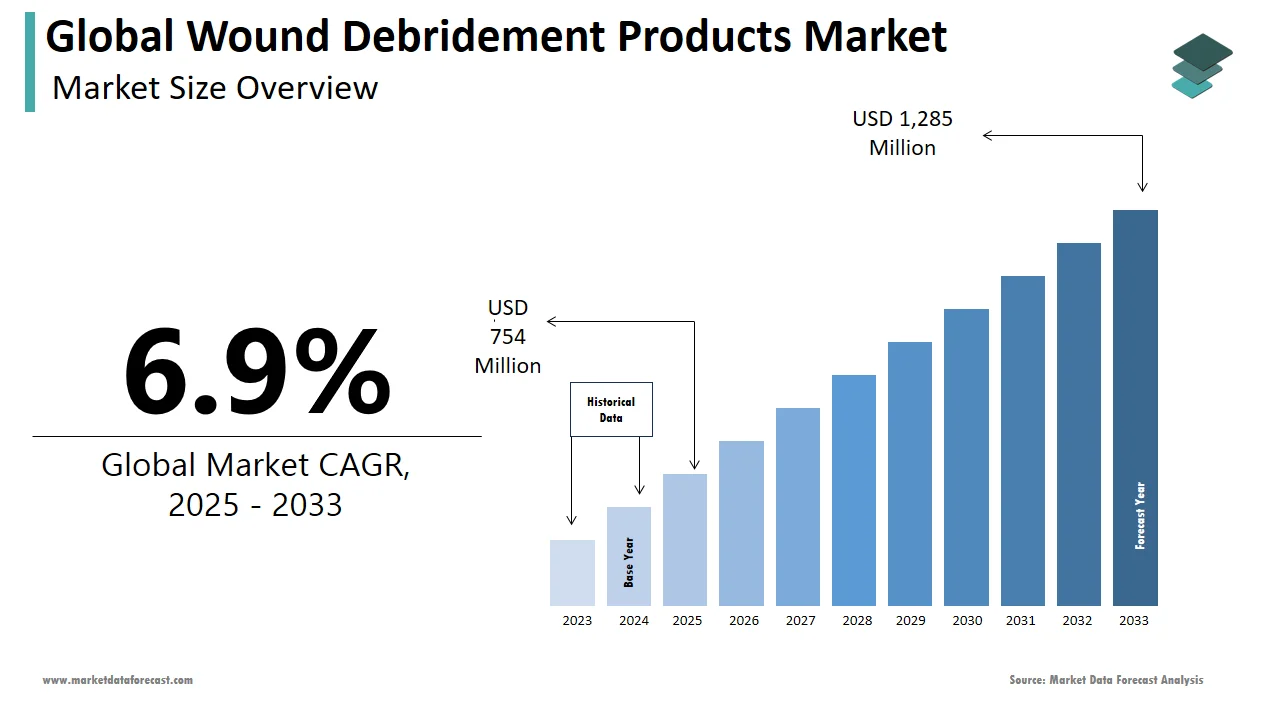
The global wound debridement products market size was valued at US$ 754 million in 2025, is estimated to reach US$ 806.03 million in 2026, and is projected to scale up to US$ 1,375 million by 2034, registering a compound annual growth rate (CAGR) of 6.9% during the forecast period from 2026 to 2034. Driven by the rising global prevalence of chronic wounds (such as diabetic foot ulcers, venous leg ulcers, and pressure ulcers), an aging population, increasing diabetes and obesity rates, and continuous technological advancements in selective and hydrological debridement devices, the market continues to expand robustly worldwide.
Key Executive Metrics (At-a-Glance)
- 2025 Base Valuation: US$ 754 Million
- 2026 Current Valuation: US$ 806.03 Million
- 2034 Forecast Valuation: US$ 1,375 Million
- Compound Annual Growth Rate (CAGR): 6.9% (2026–2034)
- Dominant Method Segment: Selective Methods (anticipated to hold a major market share due to precise necrotic tissue removal and healthy tissue preservation)
- Dominant Wound Type Segment: Chronic Wounds (leading share driven by high frequencies of diabetic ulcers, venous ulcers, and pressure ulcers)
- Dominant Product Segment: Hydrological Debridement Devices (major market share owing to high efficacy in continuous irrigation and debris removal)
- Dominant Regional Market: North America (anchored by well-established healthcare infrastructure, high chronic wound prevalence, and strong R&D investments)
Core Market Drivers
- Rising Chronic Wound Burden: Increasing global cases of diabetic foot ulcers, pressure ulcers, and venous leg ulcers fueled by aging demographics, obesity, and rising diabetes rates.
- Technological Innovations: Introduction of ultrasonic debridement technologies, advanced enzymatic solutions, and hydrological devices that selectively remove necrotic tissue while minimizing patient discomfort.
Primary Market Restraints & Challenges
- High Costs & Reimbursement Barriers: Substantial capital expenses for advanced modern debridement technology, coupled with inadequate reimbursement policies, strict regulatory frameworks, and budget constraints in developing regions.
Global Wound Debridement Products Market Segmentation Breakdown
| Segment Category | Leading Sub-Segment (Largest) | Fastest-Growing / Notable Sub-Segment |
|---|---|---|
| By Method of Debridement | Selective Methods (preserves healthy tissue, minimizes pain, and lowers infection risks) | Autolytic & Enzymatic / Chemical Debridement (projected for healthy CAGR growth) |
| By Type of Wound | Chronic Wounds (largest share driven by diabetic, venous, and pressure ulcers) | Acute Wounds & Burn Wounds (substantial share and healthy CAGR via surgeries and trauma) |
| By Product | Hydrological Debridement Devices (major share for efficient continuous irrigation and tissue cleaning) | Mechanical Debridement Pads (notable share for cost-effective home care and self-care settings) |
| By Region | North America (market leader with established facilities and high chronic disease incidence) | Asia-Pacific (fastest-growing regional market driven by large population base and rising healthcare spending) |
Major Industry Players Profiled
Key enterprises shaping the global wound debridement products market include Coloplast A/S, ArthroCare Corporation, Advanced Medical Solutions Group plc, Misonix Inc., MediWound Ltd, Derma Sciences, Inc., PuriCore plc, and Smith & Nephew Plc..
 Download Free Sample Report
Global Wound Debridement Products Market
The global wound debridement products market was worth US$ 754 million in 2025 and is anticipated to reach US$ 1,375 million by 2034, up from US$ 806.03 million in 2026, with a CAGR of 6.9% during the forecast period 2026 to 2034.
MARKET DRIVERS
The growing incidence of chronic wounds is one of the key factors driving the market for wound debridement products. Chronic wounds including venous leg ulcers, pressure ulcers and diabetic foot ulcers, provide a serious healthcare burden on a global scale. Chronic wounds are becoming more common due to factors including an aging population, a growing patient population of diabetes and obesity and longer life expectancy. Effective debridement procedures are often needed for these wounds to eliminate necrotic tissue and improve healing. To address this worldwide health concern, there is a rising need for wound debridement solutions.
Technological advancements further fuel the growth rate of the wound debridement products market. The efficacy and efficiency of wound debridement have increased due to the introduction of novel products and methods. Ultrasonic debridement technologies, for instance, have made it possible to remove necrotic tissue while leaving healthy tissue unharmed selectively, minimizing patient pain and lowering the risk of consequences. The cAsia Pacificity to eliminate necrotic tissue and encourage wound healing has also improved because of developments in enzymatic debridement solutions and dressings. By providing more sophisticated and effective solutions, continuous research and development initiatives in the area of wound debridement continue to fuel market expansion.
The growing healthcare costs contribute to the growth of the wound debridement products market. Healthcare spending is growing significantly worldwide, especially in emerging nations. Offering innovative wound care solutions is getting more attention as economies expand and healthcare infrastructure becomes better. To lessen the burden of chronic wounds and their related problems, governments and healthcare organizations are spending more on wound care treatment. Wound debridement products are in greater demand because of this increased expenditure. The availability of sophisticated wound debridement solutions and growing patient and healthcare professional awareness of the need for good wound treatment are further factors driving market expansion.
MARKET RESTRAINTS
The high cost of modern debridement technology and products is a significant barrier to the market for wound debridement products. Although these cutting-edge solutions have several advantages over conventional ones in terms of efficacy and efficiency, they are often more expensive. Their adoption may be limited by this, especially in healthcare systems with tight budgets and reimbursement restrictions. Healthcare professionals may find it difficult to afford wound debridement solutions, preferring conventional debridement techniques or more affordable alternatives. Patients may encounter financial obstacles while trying to obtain advanced debridement treatments, particularly in areas with little healthcare coverage or high out-of-pocket costs.
Inadequate reimbursement coverage for wound debridement procedures and products, insufficient awareness among healthcare professionals about the benefits and proper use of wound debridement products and stringent regulations and complex approval processes for wound debridement products hinder the market growth. The presence of alternative wound treatment methods, such as negative pressure wound therapy or enzymatic debridement, concerns regarding adverse effects and potential complications associated with certain wound debridement products and reluctance among healthcare professionals to adopt new wound debridement techniques or products further impede the growth of the wound debridement products market.
REPORT COVERAGE
| REPORT METRIC | DETAILS |
| Market Size Available | 2025 to 2034 |
| Base Year | 2025 |
| Forecast Period | 2026 to 2034 |
| Segments Covered | By Method of Debridement, Type of Wound, Product, and Region. |
| Various Analyses Covered | Global, Regional, and Country-Level Analysis, Segment-Level Analysis, Drivers, Restraints, Opportunities, Challenges; PESTLE Analysis; Porter’s Five Forces Analysis, Competitive Landscape, Analyst Overview of Investment Opportunities |
| Regions Covered | North America, Europe, Asia Pacific, Latin America, Middle East & Africa |
| Market Leaders Profiled | Coloplast A/S, ArthroCare Corporation, Advanced Medical Solutions Group plc, Misonix Inc., MediWound Ltd, Derma Sciences, Inc., PuriCore plc, Smith & Nephew Plc., and Others. |
SEGMENTAL ANALYSIS
By Method of Debridement Insights

Based on the debridement method, the selective wounds segment is anticipated to account for the major share of the global market during the forecast period. The selective wound debridement method can effectively remove the necrotic tissue while preserving healthy tissue, which is one of the major factors driving segmental growth. It can also minimize patient discomfort and pain and reduces the risk of infection and promotes faster healing, which are further propelling the growth rate of the selective wounds segment.
The autolytic debridement segment is predicted to witness a considerable share of the global market during the forecast period.
The enzymatic or chemical debridement segment is anticipated to showcase a healthy CAGR during the forecast period.
By Type of Wound Insights
Based on the type of wound, the chronic wounds segment is expected to hold the largest share of the global wound debridement products market during the forecast period. The growing prevalence of chronic diseases and conditions, such as diabetes and venous ulcers, increasing geriatric population and rising demand for advanced wound care products and therapies drive the growth of the chronic wounds segment in the global market. The growing incidence of pressure ulcers and foot ulcers and the rising focus on wound management and patient care in healthcare settings further contribute to the growth of the chronic wounds segment in the worldwide market.
The acute wounds segment is estimated to capture a substantial share of the global market during the forecast period owing to the growing number of surgical procedures and trauma cases, rising awareness and adoption of wound care protocols and increasing advancements in healthcare infrastructure and surgical techniques. The rising emphasis on infection prevention and control measures and growing demand for faster healing and reduced complications in acute wound management further fuel the growth rate of the acute wounds segment in the worldwide market.
The burn wounds segment is anticipated to witness a healthy CAGR during the forecast period. Factors such as the growing number of burn injuries and accidents, increasing number of advancements in burn care techniques and therapies and rising awareness of the importance of specialized burn wound care. The implementation of strict safety regulations in industries and households and growing emphasis on improving burn wound healing outcomes and reducing complications further contribute to the growth of the burn wounds segment in the global market.
By Product Insights
Based on the product, the hydrological debridement devices segment is estimated to occupy the major share of the wound debridement products market during the forecast period. The effectiveness of hydrological debridement devices in removing necrotic tissue and debris is one of the major factors propelling segmental growth. The benefits of hydrological debridement devices such as enhanced wound healing through continuous irrigation, reduced pain and discomfort for patients, ease of use and versatility in various wound types further contribute to the growth rate of the segment. The rising demand for minimally invasive procedures supports the growth of the hydrological debridement devices segment.
The mechanical debridement pads segment is anticipated to account for a notable share of the global market during the forecast period. Mechanical debridement pads are a simple and cost-effective debridement method. The growing usage of mechanical debridement pads in home care settings and for self-care contributes to the growth of the mechanical debridement pads segment in the worldwide market.
REGIONAL ANALYSIS
North America Wound Debridement Products Market Analysis
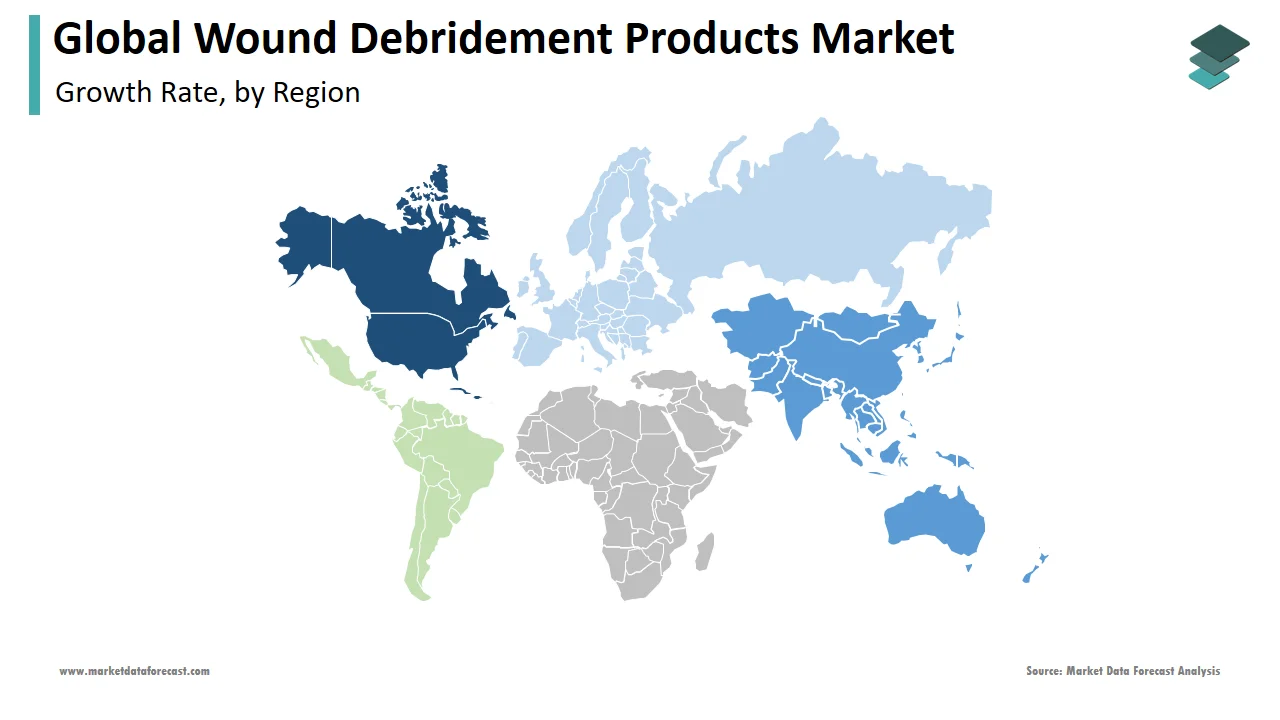
Geographically, the North American region held the largest share of the global market in 2024, followed by Europe and this pattern is expected to continue during the forecast period. The presence of well-established healthcare infrastructure and advanced wound care facilities, the growing prevalence of chronic wounds, such as diabetic foot ulcers and the increasing geriatric population and age-related chronic conditions majorly drive the growth of the North American market. The strong market presence of key wound care product manufacturers and growing emphasis on research and development of innovative wound debridement products further boost the growth rate of the North American market. The U.S. had the major share of the North American market in 2024 and the domination of the U.S. is estimated to continue during the forecast period.
Europe Wound Debridement Products Market Analysis
Europe is a noteworthy regional market for wound debridement products and is anticipated to hold a substantial share of the global market during the forecast period. The growing incidence of chronic wounds, increasing aging population, and strong government support for advanced wound care and healthcare infrastructure drive the European market growth. The growing awareness about wound care management and infection control, technological advancements in wound debridement devices and therapies and rising demand for effective and cost-efficient wound care solutions further boost the growth rate of the European market.
Asia Pacific Wound Debridement Products Market Analysis
Asia Pacific is a lucrative region for wound debridement products and is estimated to grow at the fastest CAGR during the forecast period owing to the large population base and increasing healthcare expenditure. The rising prevalence of chronic diseases and associated wounds, increasing geriatric population, growing awareness about wound care, rapid adoption of advanced wound care products and technologies and growing focus on improving healthcare infrastructure and access to care further support the Asia Pacific market growth.
KEY MARKET PARTICIPANTS
Some notable companies in the global wound debridement products market profiled in the report are
- Coloplast A/S
- ArthroCare Corporation
- Advanced Medical Solutions Group plc
- Misonix Inc.
- MediWound Ltd
- Derma Sciences, Inc.
- PuriCore plc
- Smith & Nephew Plc.
GLOBAL WOUND DEBRIDEMENT PRODUCTS MARKET NEWS
- In 2021, Healogics Launches Program to Make 2021 The Year of Healing for Chronic Wounds. The Healogics program will focus on a specific wound type, know the risk level, and find the best wound care for those wounds. There is a webpage for the program that includes our 2021 The Year of Healing with downloadable patient-education tools and links to resources that can help improve overall health.
- In 2021, Sanara MedTech Inc. announced a partnership with Pixalere Healthcare Inc. to advance wound and skin care technology.
- In 2021, Essity acquired the company Hydrofera to manufacture advanced wound care products.
- The MolecuLightDXTM device was selected as a "Top Innovation in Wound Care 2022" Award from Wound Management & Prevention (WMP) Journal in 2022, according to MolecuLight Inc.
- PolyNovo launches revolutionary NovoSorb® BTM synthetic wound matrix technology at Arab Health 2022. It is used for the temporary closure of the wound and helps in generating new tissue.
- In May 2020, SANUWAVE Health Ine announced the dermAsia PacificE system solution. It is beneficial for patients suffering from foot ulcers.
- In May 2020, MediWound Ltd. announced its expansion in Europe with a distribution agreement with GENFA MEDICA SA for its NexoBrid.
MARKET SEGMENTATION
This research report on the global wound debridement products market has been segmented based on the method of debridement, type of wound, product, and region.
By Method of Debridement
- Selective Methods
- Larvae Debridement Therapy or Bio-Surgical Debridement
- Enzymatic or Chemical Debridement
- Autolytic Debridement
- Non-Selective Methods
- Mechanical Debridement
- ultrasound
- Sharp and Surgical Debridement
By Type of Wound
- Acute Wounds
- Surgical Wounds
- Traumatic Wounds
- Abrasions
- Necrotizing Fasciitis
- Lacerations
- Contusions
- Toxic Epidermal Necrolysis
- Burn Wounds
- Chemical Burns
- Electrical Burns
- Flash Burns
- Radiation Burns
- Thermal Burns
- Chronic Wounds
- Diabetic Ulcers
- Venous Ulcers
- Pressure Ulcers
By Product
- Hydrological Debridement Devices
- Low-Frequency Ultrasound Devices
- Surgical Wound Debridement Devices
- Mechanical Debridement Pads
- Traditional Wound Debridement Devices
- Larval Therapy
By Region
- North America
- Europe
- Asia Pacific
- Latin America
- Middle East and Africa