- Product Description Description
- Table of Contents TOC
- List of Table & Figure LOT
- Get Free Sample PDF Sample PDF
Market Size, 2025
$140.5 BnMarket Estimate, 2026
$151.2 BnMarket Forecast, 2034
$271.9 BnCAGR, 2026–2034
7.6%Global Air Dried Food Market Report Summary
The global air dried food market was valued at USD 140.54 billion in 2025, is estimated to reach USD 151.24 billion in 2026, and is projected to reach USD 271.95 billion by 2034, growing at a CAGR of 7.61% during the forecast period. Market growth is driven by increasing demand for convenient, long shelf life food products and rising consumer preference for minimally processed and preservative free foods. Air dried foods retain nutritional value, flavor, and texture, making them popular across snacks, ready to eat meals, and functional food categories. The expansion of busy lifestyles, along with growing demand for lightweight and portable food options, is further supporting global market growth.
Key Market Trends
- Rising demand for convenient and long shelf life food products is driving market growth.
- Increasing consumer preference for natural and minimally processed foods is supporting adoption.
- Growing popularity of healthy snacks and functional foods is boosting demand.
- Expansion of retail and e commerce channels is improving product availability.
- Technological advancements in drying techniques are enhancing product quality and efficiency.
Segmental Insights
- Based on type, the spray dried segment was the largest and held 40.9% of the global air dried food market share in 2025. This dominance is attributed to its efficiency, scalability, and widespread use in powdered food and beverage products.
- Based on product, the dried fruits and vegetables segment accounted for 35.2% of the global air dried food market share in 2025. The segment’s growth is driven by increasing demand for healthy snacks and natural food ingredients.
Regional Insights
- The global air dried food market is experiencing strong growth across regions, supported by changing consumer lifestyles and food preferences.
- North America was the leading region in 2025, driven by high consumer awareness, strong demand for convenience foods, and well developed retail infrastructure.
Competitive Landscape
The global air dried food market is moderately competitive, with key players focusing on product innovation, quality enhancement, and expansion of distribution networks to strengthen their market position. Companies are investing in advanced drying technologies, new product development, and branding strategies. Prominent players in the global air dried food market include Sensient Technologies, Flex Foods, Spectrum Brands, FREEZE DRY Foods, and Ziwi pet oil.
Global Air-dried Food Market Size
The global air-dried food market size was valued at USD 140.54 billion in 2025, and the global market size is expected to reach USD 271.95 billion in 2034 from USD 151.24 billion in 2026, with a CAGR of 7.61% between 2026 and 2034.
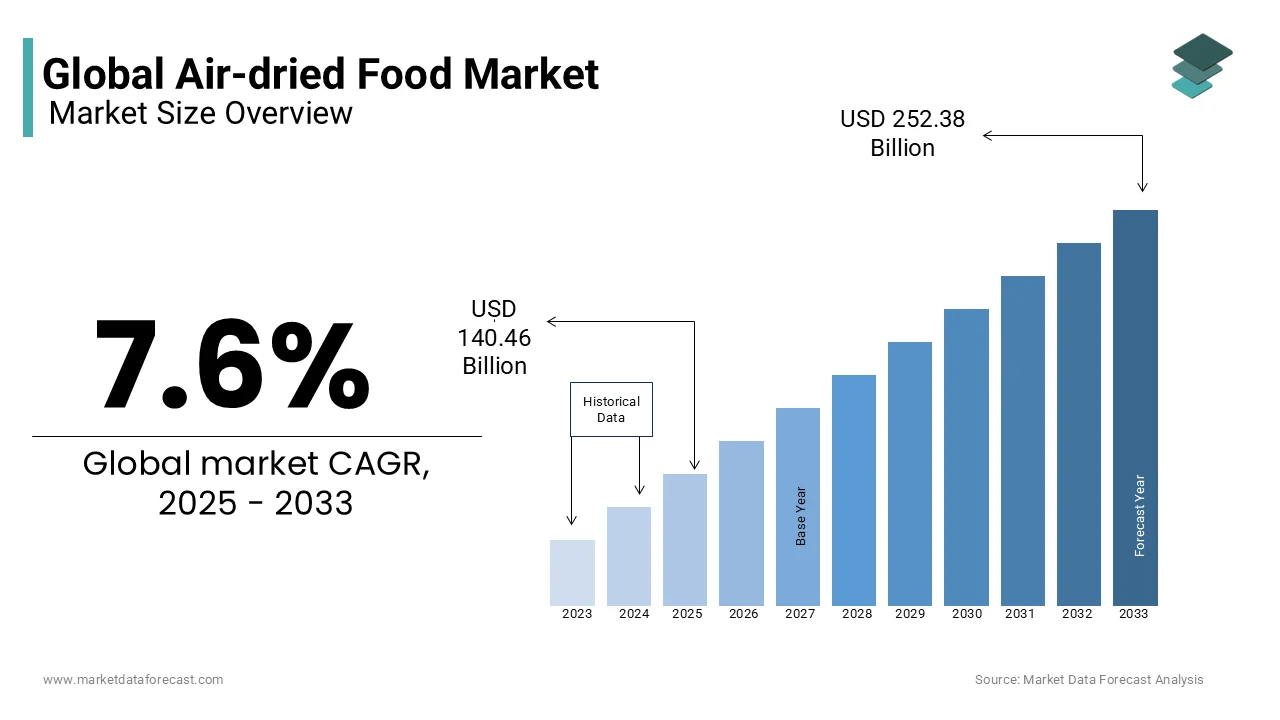
Air-dried food is a type of food, commonly found in pet nutrition, that has been preserved through a gentle, low-temperature dehydration process. Unlike freeze drying which relies on sublimation or spray drying which creates powders air drying maintains the structural integrity of whole foods such as fruits vegetables meats and herbs. This method is increasingly recognized for its ability to retain higher levels of heat sensitive vitamins and enzymes compared to traditional thermal processing. According to the Food and Agriculture Organization of the United Nations approximately one third of all food produced globally is lost or wasted highlighting the critical need for preservation technologies that extend shelf life without compromising quality. Air drying serves as an effective solution to this challenge by reducing weight and volume thereby facilitating storage and transportation. As per the World Health Organization the rising prevalence of lifestyle related diseases has prompted consumers to seek minimally processed food options that offer clean labels and natural ingredients. The market is further influenced by the growing demand for convenient yet healthy snack alternatives among urban populations. Regulatory bodies such as the European Food Safety Authority emphasize strict hygiene standards for dried food production ensuring consumer safety. The integration of advanced control systems in drying chambers allows for precise temperature and humidity management optimizing energy efficiency and product consistency. This technological evolution supports the scalability of air dried food production meeting the demands of a health conscious global populace.
MARKET DRIVERS
Increasing consumer preference for clean label and minimally processed foods drives market expansion
The escalating consumer preference for clean label and minimally processed foods serves as a primary driver for the Air-dried Food Market. This trend is driven by individuals seeking transparency and simplicity in their dietary choices. Modern shoppers are increasingly scrutinizing ingredient lists avoiding artificial preservatives colors and flavors that are commonly found in conventional snacks. Air dried foods naturally align with this trend as the preservation method relies solely on the removal of water eliminating the need for chemical additives. According to Ingredion’s Consumer Food Preference Trends, 68 percent of consumers state they will pay more for products that contain only recognizable ingredients, while IFIC data notes that 64 percent try to choose foods made with clean ingredients. This shift is particularly evident among millennials and Generation Z who prioritize health and wellness in their consumption habits. As per a study, sales of products with clean label attributes (such as natural or free from artificial ingredients) have grown significantly, outpacing the growth of the overall food and beverage market. Air dried fruits and vegetables retain their natural sweetness and texture appealing to those seeking nutritious alternatives to sugary confectionery. Furthermore the perception of air dried foods as wholesome and authentic resonates with the farm to table movement. Retailers are responding by expanding their offerings of private label air dried snacks catering to this demand. The alignment of air drying technology with clean label principles ensures sustained growth as consumers continue to reject ultra processed options in favor of whole food based solutions.
Rising demand for convenient and portable nutrition solutions fuels adoption among urban demographics
The rising demand for convenient and portable nutrition solutions significantly propels the Air-dried Food Market. This is because busy urban lifestyles necessitate easy to consume healthy options. Air dried foods offer a lightweight and non perishable alternative to fresh produce making them ideal for on the go consumption without refrigeration. According to the United Nations Department of Economic and Social Affairs more than 55 percent of the world population lives in urban areas a figure projected to increase to 68 percent by 2050. This urbanization trend correlates with increased time poverty and a reliance on ready to eat meals and snacks. As per the Euromonitor International report the global snacking industry continues to expand with health focused snacks gaining traction among working professionals and students. Air dried meat jerky fruit chips and vegetable crisps provide essential nutrients and energy in a compact form fitting seamlessly into busy schedules. The extended shelf life of these products reduces food waste at the household level offering economic benefits to consumers. Additionally the versatility of air dried ingredients allows for easy incorporation into meal preparations such as salads soups and trail mixes. Manufacturers are innovating with single serve packaging formats that enhance portability and portion control. This convenience factor combined with nutritional benefits positions air dried foods as a staple in the modern urban diet driving consistent market growth.
MARKET RESTRAINTS
High energy consumption associated with prolonged drying processes increases production costs
High energy consumption associated with prolonged drying processes acts as a major restraint on the Air-dried Food Market. This is caused by increased production costs and impacted profit margins. Unlike faster methods such as spray drying air drying requires extended exposure to warm air to achieve desired moisture levels leading to substantial electricity or fuel usage. According to the International Energy Agency the food industry accounts for approximately 30 percent of global total energy consumption with thermal processes like drying being major contributors. This high energy dependency makes manufacturers vulnerable to fluctuating utility prices which can erode profitability especially for small and medium sized enterprises. As per the United States Department of Energy industrial drying operations often operate at low efficiency due to heat loss and inadequate insulation in older facilities. The environmental footprint of energy intensive drying also conflicts with corporate sustainability goals prompting companies to invest in costly upgrades. While innovations such as heat pump dryers offer improved efficiency the initial capital expenditure remains a barrier to widespread adoption. Consequently the final retail price of air dried products may be higher than conventionally processed alternatives limiting accessibility for price sensitive consumers. Until renewable energy sources become more affordable and integrated into manufacturing facilities the high operational costs will continue to constrain market expansion and competitiveness.
Limited consumer awareness regarding the benefits of air drying compared to other methods restricts market penetration
Limited consumer awareness regarding the specific benefits of air drying compared to methods like freeze-drying or dehydrating limits penetration of the Europe air-dried market. Consequently, brand differentiation is hindered. Many consumers conflated air dried products with traditionally dehydrated items which are often perceived as tough chewy or less nutritious. According to the Journal of Food Science there is a knowledge gap among general consumers about the nuanced differences in texture nutrient retention and flavor profile between various drying techniques. This lack of understanding makes it challenging for manufacturers to justify premium pricing for air dried goods. As per the Consumer Goods Forum, effective communication of sustainability and health attributes is crucial for influencing purchase behavior; however, the "education gap" typically refers to broad nutritional transparency and environmental impact (e.g., carbon footprint) rather than specific technical drying sub-types. The absence of clear labeling standards further exacerbates confusion leading to inconsistent consumer experiences. Without distinct positioning air dried foods risk being commoditized alongside lower quality dried snacks. Marketing efforts often focus on health claims rather than explaining the technological superiority of air drying in preserving cellular structure and enzymes. This educational deficit hinders the development of a loyal customer base that values the unique qualities of air dried products. Bridging this awareness gap requires targeted campaigns and transparent labeling to highlight the superior quality and nutritional benefits inherent to the air drying process.
MARKET OPPORTUNITIES
Expansion into emerging markets with growing middle class populations offers significant growth potential
The expansion into emerging markets with growing middle-class populations presents a substantial opportunity for the air-dried food market. This potential is driven by rising disposable incomes and evolving consumer dietary preferences. Countries in Asia Pacific Latin America and Africa are experiencing rapid urbanization and a shift towards westernized consumption patterns including increased demand for packaged and convenient foods. According to research, rising incomes in emerging markets are projected to drive a 40% increase in global food demand by 2040, as hundreds of millions of consumers transition into middle-income brackets and seek higher-quality, premium food products. While the World Bank expects 327 million people to benefit from food security interventions by 2030, the "doubling" metric is no longer the standard baseline for that specific year. As per the Asian Development Bank rising health consciousness in these regions is driving demand for nutritious snacks that offer an alternative to traditional high sugar or high fat options. Air dried fruits and meats appeal to these consumers due to their perceived naturalness and long shelf life which suits regions with inconsistent cold chain infrastructure. Local manufacturers are leveraging indigenous fruits and vegetables to create unique air dried products that cater to regional tastes while reducing post harvest losses. Government initiatives supporting food processing industries in countries like India and Brazil provide incentives for investment in drying technologies. Furthermore the export potential of exotic air dried products from these regions to developed markets offers additional revenue streams. Companies can diversify their geographic footprint by tapping into emerging economies. This strategy capitalizes on untapped demand to drive sustainable long-term growth.
Innovation in hybrid drying technologies enhances product quality and operational efficiency
Innovation in hybrid drying technologies that combine air drying with other methods such as microwave or vacuum assistance paves the way to enhance product quality and operational efficiency, which is expected to propel the growth of the Europe air-dried market. These advanced systems reduce drying time significantly while better preserving color texture and nutritional content compared to conventional hot air drying. According to the Institute of Food Technologists hybrid drying techniques can reduce energy consumption by up to 40 percent while improving the rehydration properties of dried foods. This technological advancement allows manufacturers to produce higher quality products at competitive prices addressing both cost and quality constraints. As per the European Federation of Food Science and Technology research into optimized drying protocols is leading to the development of novel textures and flavors that appeal to discerning consumers. For instance vacuum air drying preserves the vibrant color of fruits making them more visually appealing on retail shelves. The ability to customize drying parameters for specific ingredients enables the creation of premium niche products such as gourmet dried mushrooms or artisanal fruit leathers. Investment in research and development facilitates the commercialization of these technologies allowing early adopters to gain a competitive edge. By adopting hybrid systems companies can differentiate their offerings and meet the evolving expectations of quality conscious consumers. This innovation drives value addition and opens new market segments for high end air dried foods.
MARKET CHALLENGES
Inconsistent quality and texture issues due to variable raw material characteristics pose production challenges
Inconsistent quality and texture issues arising from variable raw material characteristics hold back the expansion of the Air-dried Food Market. This affects consumer satisfaction and brand reliability. The outcome of air drying is highly dependent on the initial moisture content size and ripeness of the raw produce which can vary significantly between batches and seasons. According to the Food and Agriculture Organization of the United Nations natural variations in agricultural products require precise adjustments in drying parameters to maintain uniformity. Failure to achieve consistent texture such as excessive hardness or uneven dryness can lead to product rejection and negative consumer feedback. As per the Journal of Food Engineering maintaining standardization in large scale production is complex and requires sophisticated monitoring systems that many smaller producers lack. Inconsistent quality undermines brand trust and makes it difficult to establish long term contracts with retail partners who demand strict specifications. Additionally seasonal availability of high quality raw materials can disrupt production schedules leading to supply chain inefficiencies. Manufacturers must invest in rigorous quality control measures and supplier partnerships to mitigate these risks. However the cost of such interventions can be prohibitive for smaller players. Until advanced sorting and preprocessing technologies become more accessible the industry will struggle with variability. This challenge necessitates continuous improvement in agricultural sourcing and processing techniques to ensure product consistency.
Stringent regulatory compliance and food safety standards increase operational complexity and costs
Stringent regulatory compliance and food safety standards increase operational complexity and costs for participants in the Air-dried Food Market. This creates barriers to entry and expansion. Authorities such as the European Food Safety Authority and the United States Food and Drug Administration impose rigorous requirements on hygiene contamination control and labeling for dried food products. According to the World Health Organization foodborne illnesses remain a significant public health concern prompting regulators to enforce strict monitoring of microbial loads in dried foods. Compliance with these standards necessitates investment in advanced testing laboratories staff training and certification processes which add to operational expenses. As per the Global Food Safety Initiative small and medium sized enterprises often struggle to meet international safety benchmarks limiting their access to global markets. The risk of product recalls due to contamination such as salmonella or mold further threatens brand reputation and financial stability. Additionally varying regulations across different countries complicate export activities requiring manufacturers to adapt their processes for each market. The burden of documentation and audit readiness diverts resources from innovation and marketing. Non compliance can result in severe penalties and market exclusion. Therefore navigating the complex regulatory landscape requires robust quality management systems and legal expertise. This ongoing compliance burden constrains agility and increases the cost of doing business in the air dried food sector.
REPORT COVERAGE
| REPORT METRIC | DETAILS |
| Market Size Available | 2025 to 2034 |
| Base Year | 2025 |
| Forecast Period | 2026 to 2034 |
| CAGR | 7.61% |
| Segments Covered | By Type, Product, and Region |
| Various Analyses Covered | Global, Regional & Country Level Analysis, Segment-Level Analysis, DROC, PESTLE Analysis, Porter’s Five Forces Analysis, Competitive Landscape, Analyst Overview on Investment Opportunities |
| Regions Covered | North America, Europe, APAC, Latin America, Middle East & Africa |
| Market Leaders Profiled | Sensient Technologies, Flex Foods, Spectrum Brands, FREEZE-DRY Foods, and Ziwi pet oil |
SEGMENTAL ANALYSIS
By Type Insights
The spray-dried segment held the majority share of 40.9% of the global air-dried food market in 2025 because of its efficiency in producing powders and instant ingredients. Apart from this, the dominance of the spray-dried segment is mainly attributed to its unparalleled efficiency in converting liquid food materials into dry powders which are essential for the instant food and beverage industry. This method allows for the continuous production of high volume items such as milk powder coffee creamers and soup bases at a relatively low cost. According to the International Dairy Federation spray drying accounts for the majority of global milk powder production due to its ability to handle large throughput while maintaining solubility. The technology enables the creation of free flowing particles with controlled bulk density which is critical for packaging and transportation efficiency. Furthermore the rapid drying process minimizes thermal damage to heat stable nutrients ensuring consistent quality. The widespread adoption of spray drying in the production of infant formula and nutritional supplements further cements its market leadership. Manufacturers benefit from the scalability of spray dryers which can be adjusted to meet fluctuating demand. This combination of economic efficiency operational scalability and product versatility ensures that spray drying remains the cornerstone of the industrial dried food sector.
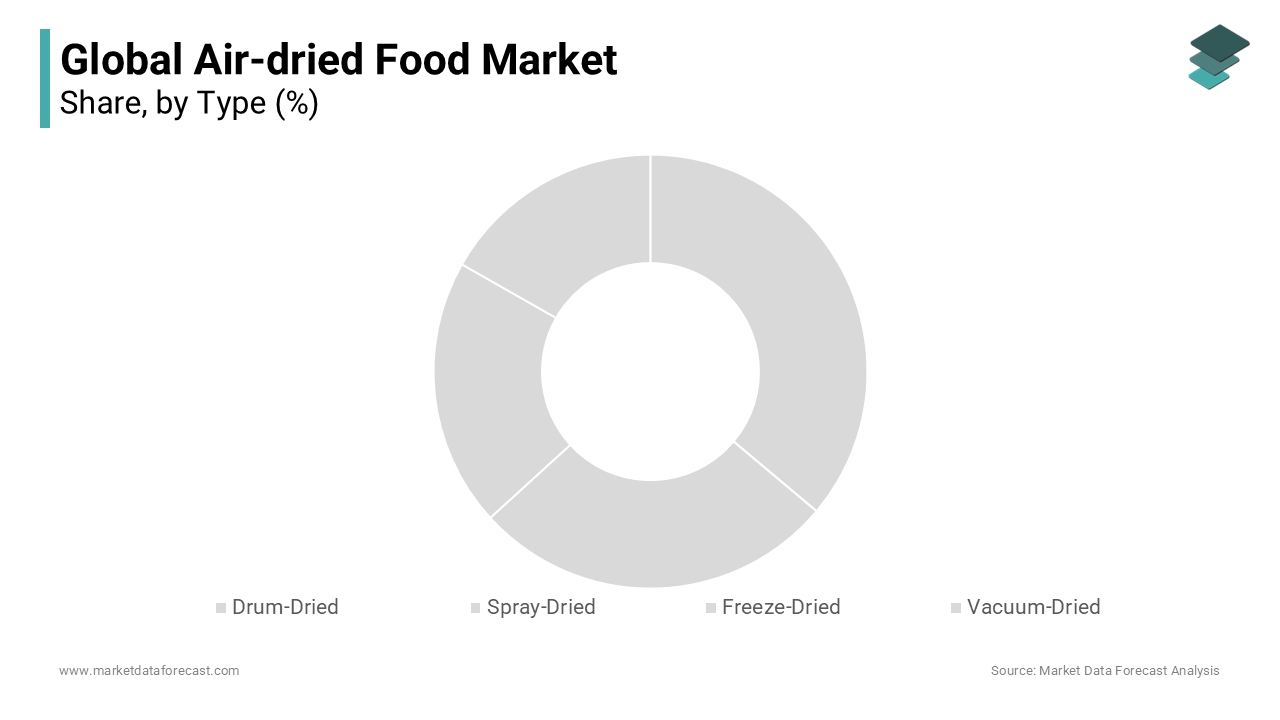
The freeze-dried segment is likely to experience the fastest CAGR of 7.8% from 2026 to 2034 due to superior nutrient retention and premium positioning. This rapid expansion of the segment is also fueled by consumer demand for high quality preserved foods that retain the original flavor texture and nutritional profile of fresh ingredients. Unlike thermal drying methods freeze drying occurs at low temperatures preserving heat sensitive vitamins and antioxidants. According to the Institute of Food Technologists freeze dried fruits and vegetables retain up to 97 percent of their nutritional value compared to fresh produce making them highly attractive to health conscious consumers. According to various sources, the market for freeze-dried ingredients is expanding rapidly in the pharmaceutical and functional food sectors due to superior shelf-life and biological stability. The aerospace and outdoor recreation industries also drive demand for lightweight and nutritious freeze dried meals. Advances in automation have reduced the historically high costs of freeze drying making it more accessible for mainstream food applications. Retailers are increasingly stocking freeze dried snacks such as strawberry slices and yogurt bites which appeal to children and adults alike. The premium perception of freeze dried products allows manufacturers to command higher prices offsetting production costs. Additionally the ability to rehydrate freeze dried foods quickly without losing structural integrity enhances their utility in culinary applications. This convergence of quality convenience and health benefits positions freeze drying as the most dynamic growth driver in the dried food technology landscape.
By Product Insights
The dried fruits and vegetables segment was the largest segment in the air-dried food market and held a 35.2% share in 2025. This supremacy of the segment is supported by its widespread use as healthy snacks and culinary ingredients. The top position of dried fruits and vegetables is driven by the global shift towards plant based diets and the increasing consumption of natural snacks as alternatives to processed confectionery. Consumers recognize dried fruits such as raisins apricots and mangoes as concentrated sources of fiber vitamins and minerals. According to the United States Department of Agriculture per capita consumption of dried fruits in North America has remained steady with a slight upward trend due to their inclusion in breakfast cereals and baked goods. As per the World Health Organization recommendations to increase fruit and vegetable intake have prompted manufacturers to offer convenient dried options that meet daily nutritional requirements. The versatility of dried vegetables in soups stews and ready meals further expands their application base. Supply chain improvements have ensured year round availability of diverse varieties reducing seasonal constraints. Additionally the clean label nature of dried fruits aligns with consumer preferences for minimal processing. Retailers promote these products in the health food aisle enhancing visibility and sales. The integration of dried fruits into trail mixes and energy bars also boosts demand from the fitness community. This broad acceptance across multiple consumer segments and usage occasions solidifies the leading position of dried fruits and vegetables in the market.
The dried meat and seafood segment is on the rise and is expected to be the fastest growing segment in the market by witnessing a CAGR of 6.5% over the forecast period owing to the popularity of high protein snacks and jerky variants. This accelerated growth of the segment is fuelled by the rising popularity of high protein low carbohydrate diets such as Keto and Paleo which emphasize meat based snacks. Beef jerky turkey sticks and dried fish are perceived as satisfying and nutritious alternatives to carb heavy snacks. According to the National Cattlemen's Beef Association sales of beef jerky in the United States have grown by over 10 percent annually reflecting strong consumer interest. Innovation in flavors such as teriyaki spicy and exotic herbs attracts younger demographics who seek variety. The portability of dried meat makes it ideal for outdoor activities and office snacking. Manufacturers are focusing on grass fed and organic meat sources to appeal to premium buyers. Additionally the development of shelf stable seafood snacks addresses the challenge of perishability in fish consumption. Marketing campaigns highlighting the protein content and satiety benefits further drive adoption. The expansion of distribution channels including convenience stores and online platforms ensures easy access. This combination of dietary trends flavor innovation and convenience positions dried meat and seafood as the most rapidly expanding product category.
REGIONAL ANALYSIS
North America Air Dried Food Market Analysis
North America led the air dried food market in 2025. This position of the North American market is driven by high consumer awareness and robust retail infrastructure. It maintains its leadership position due to the strong presence of health conscious consumers who prioritize convenience and nutrition. The United States and Canada have well established markets for dried snacks including fruits meats and instant ingredients. As per sources, the production of dried fruits and nuts is substantial with California being a major global supplier. The prevalence of busy lifestyles encourages the consumption of ready to eat dried foods. Retail giants such as Walmart and Costco offer extensive selections of private label dried products enhancing accessibility. The trend towards clean label and organic certifications is particularly strong in this region influencing product development. Furthermore the high disposable income allows consumers to purchase premium dried goods such as freeze dried fruits and artisanal jerky. Regulatory standards set by the Food and Drug Administration ensure safety and quality fostering consumer trust. The integration of dried ingredients into meal kits and subscription services further stimulates market growth. This mature ecosystem of production distribution and consumption sustains North Americas dominant market share.
Europe Air Dried Food Market Analysis
Europe followed closely behind in the Air-dried food market. This growth of the European market is propelled by stringent food safety standards and a strong tradition of preserved food consumption. Europe holds a prominent position in the market because of its rich culinary heritage which includes various dried meats cheeses and fruits. Countries such as Italy Spain and Germany have long standing traditions of producing prosciutto salami and dried fruits which are integral to local diets. According to research the European Union is a major producer and exporter of dried agricultural products. As per research, regulations on food labeling and additives encourage the production of natural and minimally processed dried foods. The growing vegan and vegetarian populations in countries like the United Kingdom and Germany drive demand for dried plant based proteins and snacks. Retailers are increasingly dedicating shelf space to organic and sustainably sourced dried products. The emphasis on sustainability and reducing food waste supports the adoption of drying technologies that extend shelf life. Additionally the tourism industry boosts the sales of traditional dried delicacies as souvenirs. Government initiatives promoting healthy eating habits further reinforce market growth. The presence of advanced food processing technologies ensures high quality standards. This blend of tradition regulation and innovation keeps Europe as a key player in the global dried food market.
Asia Pacific Air Dried Food Market Analysis
Asia Pacific is the fastest growing region in the air-dried market due to rising disposable incomes and changing dietary habits. The region is emerging as a dynamic landscape owing to rapid urbanization and the expanding middle class in countries like China India and Japan. Consumers in this region are increasingly adopting western snacking habits while maintaining preference for traditional dried foods such as dried fish and fruits. According to the Asian Development Bank economic growth in the region has led to higher spending on packaged and convenience foods. As per the Food and Agriculture Organization of the United Nations Asia is a major producer of tropical fruits which are increasingly being processed into dried snacks for both domestic and export markets. The rise of e commerce platforms facilitates the distribution of dried food products to remote areas. Local manufacturers are investing in modern drying technologies to improve quality and safety. Government support for the food processing industry in countries like Thailand and Vietnam encourages exports. The young population is particularly receptive to innovative dried snack formats such as fruit chips and meat jerky. Increasing health awareness drives demand for nutritious alternatives to fried snacks. This combination of economic growth cultural acceptance and technological advancement positions Asia Pacific as a high growth potential market.
Latin America Air Dried Food Market Analysis
Latin America grew steadily in the global market owing to its abundant agricultural resources and traditional preservation methods. It leverages its rich biodiversity to produce a wide variety of dried fruits and meats such as charqui and dried mango. The region is a major exporter of dried agricultural products to North America and Europe. According to the Inter American Institute for Cooperation on Agriculture the potential for value added dried food products is significant due to the abundance of raw materials. As per the Economic Commission for Latin America and the Caribbean efforts to reduce post harvest losses through drying technologies are gaining traction. Traditional methods are being modernized to meet international safety standards. The growing urban population in Brazil and Mexico is driving demand for convenient snacks. Local brands are innovating with exotic flavors to differentiate their products. Government initiatives supporting small scale farmers help stabilize the supply chain. The tourism sector also contributes to the sales of artisanal dried foods. Although infrastructure challenges exist investment in processing facilities is increasing. The regions focus on sustainable agriculture aligns with global trends favoring natural dried products. These factors contribute to the steady growth of the dried food market in Latin America.
Middle East and Africa Air Dried Food Market Analysis
The Middle East and Africa is likely to expand in the air-dried market during the forecast period due to traditional reliance on dried foods for preservation and nutrition. Moreover, the MEA have a long history of using drying techniques to preserve food in hot climates making dried dates meats and grains staples in local diets. According to the Food and Agriculture Organization of the United Nations dried dates are a significant economic commodity in the Middle East with high export volumes. As per the African Union initiatives to improve food security through better storage and processing technologies are encouraging the adoption of modern drying methods. The growing population and urbanization in countries like Nigeria and Egypt create demand for affordable and shelf stable food options. International aid organizations promote drying technologies to reduce food waste and improve nutrition. The halal certification of dried meat products opens up export opportunities to Muslim majority countries. Retail modernization in urban centers is introducing packaged dried snacks to new consumers. Challenges such as inconsistent electricity supply hinder large scale industrial drying but solar drying technologies offer sustainable solutions. The cultural acceptance of dried foods provides a strong foundation for market expansion. Investment in infrastructure and technology transfer will further unlock the potential of this region.
COMPETITIVE LANDSCAPE
The competition in the Air-dried Food Market is intense and fragmented featuring a mix of multinational corporations and specialized regional producers. Major players compete on the basis of product quality brand recognition and distribution reach to capture consumer loyalty. The market sees continuous innovation in flavors and packaging to differentiate offerings in a crowded landscape. Private label brands from retail chains pose a significant threat by offering comparable quality at lower prices. Established companies respond by emphasizing premium ingredients and sustainable sourcing practices. Regulatory compliance regarding food safety and labeling adds complexity to operations influencing competitive dynamics. The rise of health consciousness drives demand for organic and non GMO products forcing companies to adapt their portfolios. Mergers and acquisitions are common as firms seek to expand their geographic presence and product ranges. Overall the market rewards agility and innovation requiring companies to constantly evolve to meet changing consumer demands and maintain their competitive edge effectively.
Key Market Players
Some of the notable companies in the global Air-dried Food market are
- Sensient Technologies
- Flex Foods
- Spectrum Brands
- FREEZE-DRY Foods
- Ziwi pet oil
Top Players in the Market
- Nestlé S.A. is a global leader in the food and beverage industry with a significant presence in the air dried and preserved food sector. The company leverages its extensive research and development capabilities to create high quality dried products including coffee creamers soups and snack items. Nestlé contributes to the global market by ensuring consistent supply and maintaining strict quality standards across its diverse product portfolio. Recently the company has focused on sustainability initiatives by sourcing raw materials from responsible suppliers and reducing environmental impact in processing facilities. They have also expanded their range of plant based dried ingredients to meet growing consumer demand for healthy options. These strategic actions strengthen their market position by aligning with modern dietary trends and enhancing brand loyalty among health conscious consumers worldwide.
- Dole plc is a prominent player in the fresh and dried fruit market known for its premium quality air dried and freeze dried products. The company plays a crucial role in the global market by providing nutritious and convenient snack options such as dried mangoes pineapples and bananas. Dole contributes to sustainability by implementing efficient water usage and energy conservation methods in its drying facilities. Recent actions include the launch of new organic dried fruit lines that cater to the clean label trend. The company has also invested in advanced packaging technologies to extend shelf life and maintain freshness. By focusing on innovation and ethical sourcing Dole strengthens its reputation as a trusted provider of healthy snacks. These efforts help the company capture a larger share of the health focused consumer market globally.
- Jack Link’s Beef Jerky is a dominant force in the dried meat segment particularly known for its beef jerky and protein snacks. The company significantly influences the global market by setting high standards for flavor and quality in dried meat products. Jack Link’s contributes to market growth through aggressive marketing campaigns and partnerships with sports organizations to promote its brand. Recent strategies include expanding its product line to include turkey and pork jerky as well as keto friendly options. The company has also enhanced its distribution network by increasing availability in convenience stores and online platforms. By focusing on product innovation and broad accessibility Jack Link’s strengthens its market position. These actions ensure that the brand remains a top choice for consumers seeking high protein and convenient snack solutions.
Top Strategies Used by the Key Market Participants
Key players in the Air-dried Food Market primarily focus on product innovation and diversification to meet evolving consumer preferences. Companies invest heavily in research and development to create new flavors and textures that appeal to health conscious buyers. Strategic partnerships with local farmers ensure a steady supply of high quality raw materials while supporting sustainable agriculture. Expansion into emerging markets is a common strategy to tap into growing middle class populations with increasing disposable incomes. Brands also emphasize clean label certifications and organic sourcing to build trust and differentiate their products. Digital marketing and e commerce platforms are utilized to reach wider audiences and provide convenient purchasing options. Additionally companies adopt advanced drying technologies to improve energy efficiency and reduce production costs. These strategies collectively help participants maintain competitiveness and drive growth in the dynamic global food industry.
MARKET SEGMENTATION
This research report on the global Air-dried Food market has been segmented and sub-segmented based on type, product, and region.
By Type
- Drum-Dried
- Spray-Dried
- Freeze-Dried
- Vacuum-Dried
By Product
- Dried Processed Food
- Dried Fruits and Vegetables
- Dried Dairy
- Dried Meat and Seafood
By Region
- North America
- Europe
- Asia Pacific
- Latin America
- Middle East and Africa