- Product Description Description
- Table of Contents TOC
- List of Table & Figure LOT
- Get Free Sample PDF Sample PDF
Market Size, 2025
$8.80 BnMarket Estimate, 2026
$9.27 BnMarket Forecast, 2034
$14.08 BnCAGR, 2026–2034
5.36%Global Ammonium Sulphate Market Summary
The global ammonium sulphate market size was valued at USD 8.80 billion in 2025, is anticipated to reach USD 9.27 billion in 2026, and is projected to reach USD 14.08 billion by 2034, expanding at a CAGR of 5.36% from 2026 to 2034. The growth of the global ammonium sulphate market is driven by rising demand for nitrogen-based fertilizers, increasing crop production to meet global food security needs, and the widespread use of ammonium sulphate in soil pH regulation. Additionally, growing industrial applications in pharmaceuticals, food additives, and water treatment further support market expansion.
Key Market Trends
- Increasing adoption of ammonium sulphate as a soil nutrient enhancer in agriculture.
- Rising demand for cost-effective nitrogen fertilizers in emerging economies.
- Expanding use in industrial sectors such as food processing, pharmaceuticals, and water treatment.
- Growing emphasis on sustainable farming practices is boosting fertilizer demand.
- Strategic collaborations among manufacturers to ensure supply chain stability.
Segmental Insights
- Based on application, the fertilizer application segment dominated the global ammonium sulphate market in 2025, supported by its role in enhancing soil fertility and crop yields.
Regional Insights
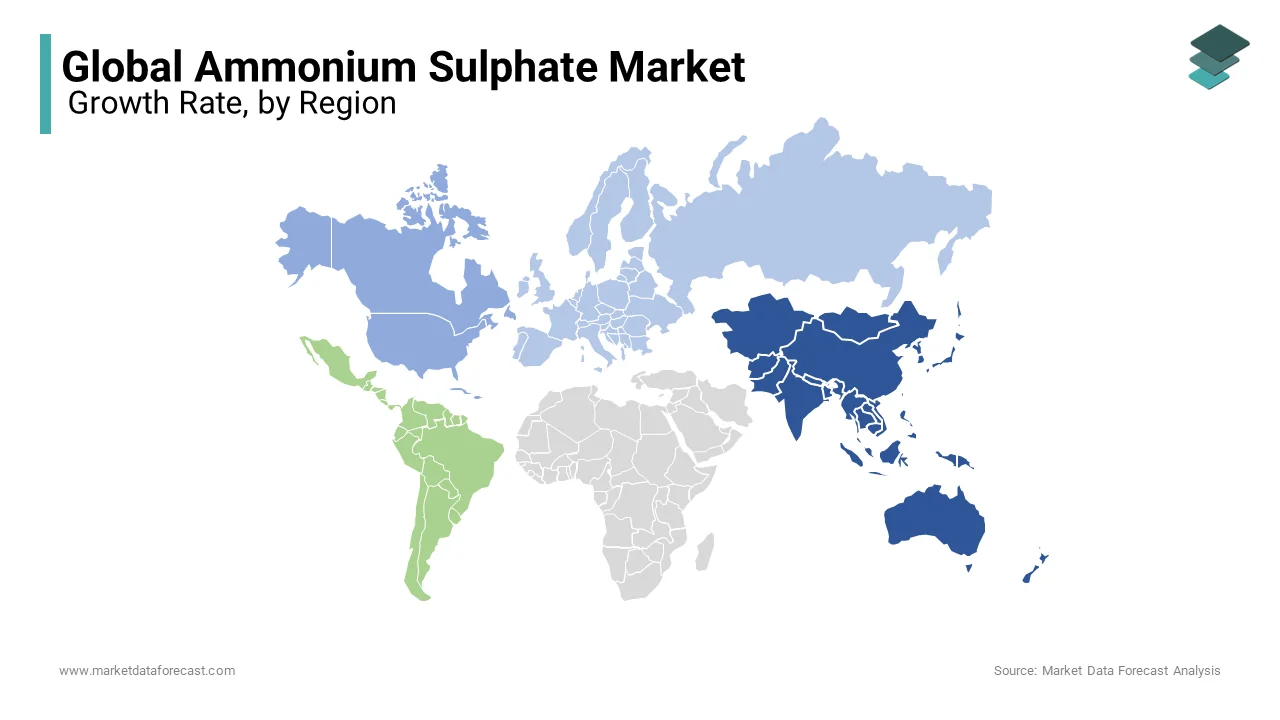
- Asia-Pacific outperformed other regions in the global ammonium sulphate market by accounting for 45.8% of the share in 2025, driven by high agricultural production in China, India, and Southeast Asia.
- North America showed stable growth, with demand supported by advanced agricultural practices and water treatment applications.
- Europe maintained a steady market, supported by its strong focus on sustainable crop nutrition solutions.
- Latin America is witnessing growing adoption of ammonium sulphate fertilizers, particularly in Brazil and Argentina.
- Middle East & Africa are emerging markets, where rising investment in agriculture is expected to fuel future demand.
Competitive Landscape
Leading companies in the global ammonium sulphate market include BASF (Germany), Evonik (Germany), Sumitomo Corporation (Japan), Lanxess (Germany), Domo Chemicals (Germany), Arkema (France), Fibrant (Netherlands), Royal DCM (Netherlands), Novus International (U.S.), and ArcelorMittal (Luxembourg). These players are focusing on capacity expansions, regional partnerships, and diversification into industrial-grade ammonium sulphate to strengthen their market presence.
Global Ammonium Sulphate Market Size
The global ammonium sulphate market size was valued at USD 8.80 billion in 2025 and is anticipated to reach a valuation of USD 9.27 billion in 2026 and USD 14.08 billion by 2034, growing at a CAGR of 5.36% from 2026 to 2034.
Ammonium sulphate is a crystalline inorganic salt with the chemical formula (NH₄)₂SO₄. It is predominantly utilized as a high-nitrogen fertilizer in agriculture, supplying both nitrogen and sulphur, two essential nutrients for plant development. Beyond agronomic applications, it serves as a key precipitating agent in protein purification within biotechnological processes and finds use in flame retardants and water treatment systems. The compound is primarily produced as a by-product of caprolactam and acrylonitrile manufacturing in the chemical industry, with synthetic production routes also contributing to supply.
MARKET DRIVERS
Expanding Agricultural Demand in Sulphur-Deficient Soils
The escalating depletion of soil sulphur reserves due to reduced atmospheric deposition and intensified farming practices has significantly elevated the demand for sulphur-enriched fertilizers, which is propelling the growth of the Ammonium sulphate market. According to the research, a portion of global croplands are deficient in available sulphur, a figure that has risen since the early 2000s due to cleaner industrial emissions and low-sulphur fuel mandates. In India, a leading consumer of ammonium sulphate, the area affected by sulphur deficiency expanded hectares, as per a study. This nutrient gap directly enhances the agronomic value of ammonium sulphate, which delivers nitrogen and sulphur in a readily absorbable form. Its solubility and compatibility with irrigation systems further promote adoption in high-efficiency farming zones across Southeast Asia and sub-Saharan Africa.
By-Product Availability from Petrochemical and Steel Industries
Global ammonium sulphate supply largely comes as a by-product from steel manufacturing and caprolactam production, which accelerates the expansion of the ammonium sulphate market. As per the study, global crude steel production was substantial in 2025, with China contributing a portion of it. These operations generate substantial volumes of ammonia-rich off-gases, which, when treated with sulphuric acid, yield ammonium sulphate at scale. In China, by-product ammonium sulphate from coking plants is in notable tons annually, accounting for a portion of the country’s total supply, as per research. This cost-effective production route ensures a steady supply stream, reducing dependency on synthetic nitrogen synthesis and enhancing economic viability in regions with robust industrial activity.
MARKET RESTRAINTS
Competition from Low-Cost Nitrogen Fertilizers
The persistent burden from alternative nitrogen fertilizers such as urea and ammonium nitrate, which offer higher nitrogen content at lower per-unit costs, is restraining the growth of the ammonium sulphate market. Urea, containing nitrogen compared to ammonium sulphate, remains the most widely traded nitrogen fertilizer globally. According to the study, urea constituted a portion of the total nitrogen fertilizer trade, driven by its efficiency and established distribution networks. In regions like North America and Western Europe, where sulphur deposition from atmospheric sources remains relatively sufficient, farmers prioritize nitrogen density and cost-effectiveness, favoring urea despite its lack of sulphur.
Environmental and Regulatory Constraints on By-Product Sourcing
The reliance on by-product ammonium sulphate from industries such as steel and caprolactam manufacturing introduces supply vulnerability due to tightening environmental regulations, which stands as an impediment to the global ammonium sulphate market. In the European Union, stringent emissions standards under the Industrial Emissions Directive have led to the closure or retrofitting of numerous coke ovens, reducing ammonia recovery potential. According to Eurostat, there was a decline in coke production across EU member states between 2015 and 2022, directly impacting by-product ammonium sulphate output. Furthermore, caprolactam producers face a push to shift toward greener processes, which potentially reduces ammonia by-product yields.
MARKET OPPORTUNITIES
Rising Adoption in Precision and Sustainable Agriculture
The global shift toward precision farming and sustainable nutrient management is likely to set up new opportunities for the expansion of the ammonium sulphate market. This strategic opening is particularly in regions embracing soil health monitoring and balanced fertilization. As per the research, a portion of smallholder farms in South Asia and Sub-Saharan Africa are implementing soil testing programs to optimize fertilizer use, a trend supported by digital agriculture platforms. Ammonium sulphate’s dual nutrient profile aligns with the principles of site-specific nutrient management, especially in rice-wheat cropping systems where sulphur demand exceeds natural replenishment. The integration of ammonium sulphate into data-driven farming systems provides a scalable opportunity as the global business for precision agriculture is expanding.
Expansion in Non-Agricultural Biotechnological Applications
Rising applications in biopharmaceutical manufacturing, particularly in the downstream purification of monoclonal antibodies and recombinant proteins, beyond traditional use, are likely to promote new opportunities for the growth of the ammonium sulphate market. Its high solubility and salting-out properties make it indispensable in precipitation and crystallization steps during large-scale bioprocessing. According to the study, global biopharmaceutical production capacity increased, with many active biologics in clinical development requiring protein purification. In the United States, ammonium sulphate is used in more than a portion of industrial-scale protein isolation protocols.
MARKET CHALLENGES
Logistical and Handling Constraints Due to the Hygroscopic Nature
Its hygroscopic properties give significant logistical problems in tropical and high-humidity regions where caking and degradation during storage and transport are prevalent, which is a constraint impacting the ammonium sulphate market. This characteristic necessitates specialized packaging, moisture barriers, and climate-controlled warehousing, increasing supply chain costs. In Indonesia, where relative humidity often exceeds, an annual loss in fertilizer efficacy has been recorded for improperly stored ammonium sulphate. These handling complexities limit its deployment in remote agricultural zones lacking infrastructure, which hampers its potential in vital growth markets. Moreover, blending with other fertilizers is often restricted due to compatibility issues.
Price Volatility Linked to Feedstock and Energy Markets
The production cost is closely tied to the price of sulphuric acid and ammonia, both of which are influenced by energy markets and upstream petrochemical dynamics, which hinder the growth of the ammonium sulphate market. The natural gas prices in Europe surged in 2022 compared to the previous year, directly impacting ammonia synthesis costs. In addition, the average production cost of ammonium sulphate in Western Europe rose year-on-year, according to a study. Besides, sulphuric acid prices fluctuated during the same period due to changes in smelter output and sulphur supply from oil refineries. This financial instability discourages long-term procurement contracts and complicates budgeting for agricultural cooperatives and national fertilizer programs in developing economies reliant on imports.
REPORT COVERAGE
| REPORT METRIC | DETAILS |
| Market Size Available | 2025 to 2034 |
| Base Year | 2025 |
| Forecast Period | 2026 to 2034 |
| CAGR | 5.36% |
| Segments Covered | By Application, and Region |
| Various Analyses Covered | Global, Regional & Country Level Analysis, Segment-Level Analysis, DROC, PESTLE Analysis, Porter’s Five Forces Analysis, Competitive Landscape, Analyst Overview of Investment Opportunities |
| Regions Covered | North America, Europe, APAC, Latin America, Middle East & Africa |
| Market Leaders Profiled | BASF (Germany), Evonik (Germany), Sumitomo Corporation (Japan), Lanxess (Germany), Domo Chemicals (Germany), Arkema (France), Fibrant (Netherlands), Royal DCM (Netherlands), Novus International (U.S.), ArcelorMittal (Luxembourg) |
SEGMENTAL ANALYSIS
By Application Insights
The fertilizer application segment was the largest and held a substantial share of the global ammonium sulphate market in 2025. Ammonium sulphate’s dual nutrient profile, which delivers both nitrogen and sulfur, is primarily attributed to the growth of the fertilizer application segment. It is important for crop productivity. With millions of metric tons of nitrogen fertilizers applied globally each year, ammonium sulfate fills a strategic niche in sulfur-deficient soils. According to research, sulfur-deficient soils cover a portion of global croplands, amplifying demand for sulfur-containing fertilizers. Furthermore, in regions like South Asia and Sub-Saharan Africa, government subsidies on ammonium sulphate have incentivized its use.
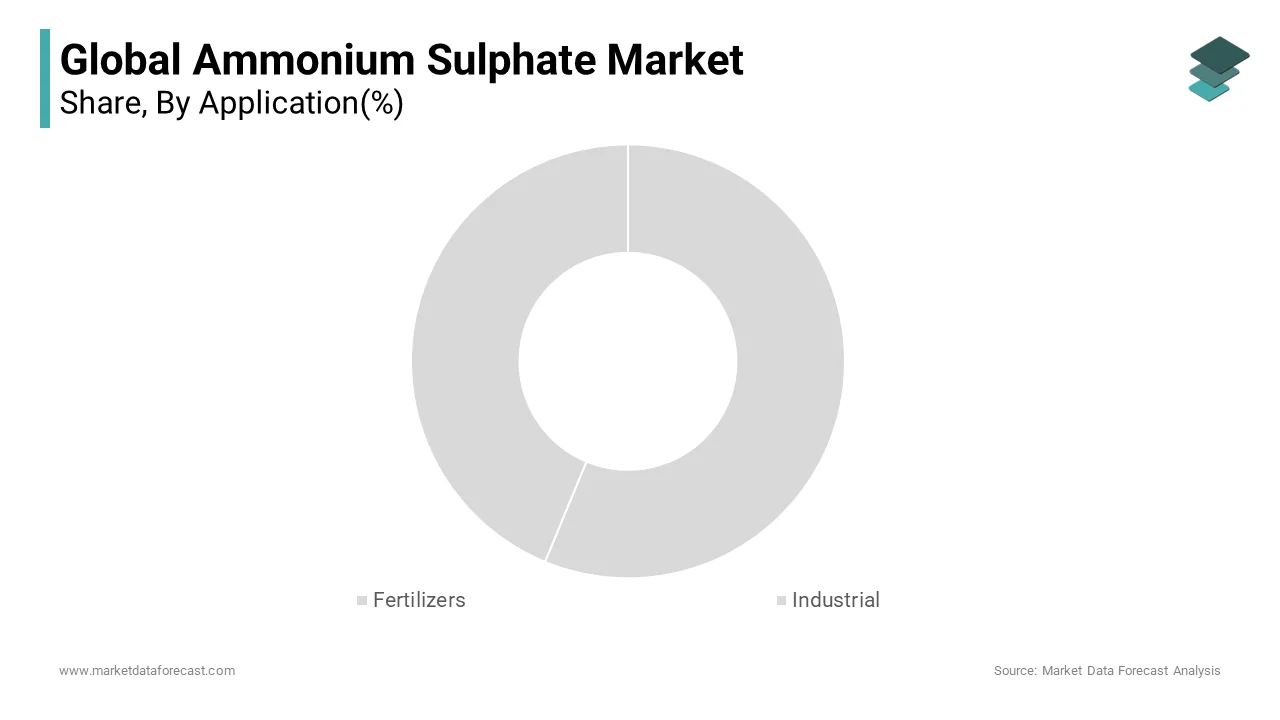
The industrial application segment is likely to grow with an expected CAGR of 5.8% from 2025 to 2033, owing to the rising demand in water treatment and flame retardants. Furthermore, the global flame retardant market, where ammonium sulphate is used in wood-based composites and textiles, is growing annually, according to a study. The construction boom in Southeast Asia, particularly in Vietnam and Indonesia, has increased demand for fire-safe materials.
REGIONAL ANALYSIS
Asia-Pacific Ammonium Sulphate Market Analysis
Asia-Pacific outperformed other regions in the global ammonium sulphate market in 2025 by accounting for 45.8% of the global market share. The prominence of the Asia Pacific in the global market is mainly due to its massive agricultural base and expanding industrial capacity. China, India, and Indonesia are acting as pivotal hubs. China alone produces significant metric tons annually, according to the study, making it the world’s largest producer. India’s demand is surging due to soil sulfur deficiency affecting a portion of its cultivated land, as per research. Moreover, Southeast Asia’s rapid urbanization has increased industrial use, particularly in Indonesia, where ammonium sulphate is used in nickel processing, a sector that saw production growth.
North America Ammonium Sulphate Market Analysis
North America is the next leading region in the global ammonium sulphate market by occupying 16.2% of the share in 2025, with the United States spearheading regional consumption. North America relies more on synthetic and by-product ammonium sulphate from refining and chemical industries. According to a study, the U.S. produced notable tons of ammonium sulphate, primarily as a by-product of coke oven operations and caprolactam manufacturing. Agricultural demand remains stable, particularly in the Midwest, where corn and soybean farmers apply ammonium sulphate to correct sulfur deficiencies in no-till farming systems. As per research, a portion of Midwestern soils tested below optimal sulfur levels, increasing fertilizer use. Apart from these, the EPA’s Clean Air Act mandates sulfur recovery from refineries, indirectly supporting ammonium sulfate production. Companies have reported an increase in sulfur recovery efficiency since 2020, which enhances supply availability.
Europe Ammonium Sulphate Market Analysis
Ammonium sulphate market growth is likely to be driven by mature agricultural practices and stringent environmental regulations. Germany, France, and Poland are key consumers. Fertilizer use is stable, but the industrial segment is gaining traction. Eurostat data from 2025 shows that over 70% of EU wastewater treatment facilities now use chemical coagulants, including ammonium sulphate, to meet urban wastewater directives. Besides, Europe’s push for circular economy models has increased the recovery of ammonium sulphate from flue gas desulfurization (FGD) in coal and biomass plants. The European Environment Agency notes that 18% of power plants in Germany and Poland have adopted FGD systems that produce usable ammonium sulphate.
Middle East & Africa Ammonium Sulphate Market Analysis
The Middle East and Africa are likely to be the most lucrative regions in the ammonium sulphate market due to rising consumption in Egypt, South Africa, and Nigeria. Agricultural modernization and fertilizer import expansion are largely contributing to the growth of ammonium sulphate in the Middle East and Africa. Egypt saw an increase in ammonium sulphate imports, driven by state-led irrigation projects in the regions. In Sub-Saharan Africa, a smaller share of smallholder farmers use sulfur-containing fertilizers, indicating vast untapped potential.
Latin America Ammonium Sulphate Market Analysis
Latin America is expected to grow in the global ammonium sulphate market during the forecast period, with Brazil and Argentina as primary consumers. The region’s usage is closely tied to large-scale soybean, sugarcane, and corn farming. According to research, in Brazil, a portion of its arable land is sulfur-deficient, prompting increased ammonium sulfate application.
COMPETITIVE LANDSCAPE
The ammonium sulphate market features a competitive landscape shaped by both agricultural giants and industrial chemical producers. Competition is driven by product purity, supply chain reliability, pricing, and technical support. Major players differentiate themselves through integrated production, sustainability credentials, and agronomic services. Regional manufacturers in China and India compete with global firms on cost, while multinational companies emphasize quality and innovation. The rise of by-product ammonium sulphate from caprolactam and coke-oven plants has intensified competition among chemical firms.
KEY MARKET PLAYERS
A few of the dominating players in the global ammonium sulphate market include
- BASF (Germany)
- Yara International
- Evonik (Germany)
- Sumitomo Corporation (Japan)
- Nutrien Ltd.
- SABIC (Saudi Basic Industries Corporation)
- Lanxess (Germany)
- Domo Chemicals (Germany)
- Arkema (France)
- Fibrant (Netherlands)
- Royal DCM (Netherlands)
- Novus International (U.S.)
- ArcelorMittal (Luxembourg)
Top Players In The Market
- Yara International plays a significant role in the Asia-Pacific ammonium sulphate market through its extensive fertilizer distribution network and precision nutrient solutions. The company supplies high-purity ammonium sulphate to key agricultural markets by supporting sulfur-deficient crop systems. Yara has intensified its focus on digital farming tools by launching the Yara Digital Farming Platform in India and Thailand to optimize fertilizer application.
- Nutrien is a major contributor to the Asia-Pacific ammonium sulphate supply chain by leveraging its global production and distribution capabilities to meet growing agricultural demand. It also strengthened partnerships with local cooperatives and agri-retailers to expand its reach. Through its 4R Nutrient Stewardship program, Nutrien promotes efficient fertilizer use, aligning with regional sustainability goals.
- SABIC is a key industrial supplier of ammonium sulphate in the Asia-Pacific region, primarily serving the chemical and water treatment industries. SABIC has established strong trade and technical collaborations with industrial users in China, South Korea, and Malaysia, while headquartered in Saudi Arabia. It also invested in R&D to improve product purity for high-end industrial applications. SABIC’s focus on circular economy practices, including waste-to-resource conversion in its Jubail complex, supports environmental compliance and strengthens its value proposition among industrial buyers across the region.
Top Strategies Used By Key Market Participants
Key players in the ammonium sulphate market employ vertical integration, strategic partnerships, capacity expansion, sustainability initiatives, and digital agriculture integration to strengthen their positions. Companies are investing in downstream logistics and blending facilities to ensure product availability. Others are forming joint ventures with local distributors to penetrate rural markets. Expansion of caprolactam-linked production units enhances by-product ammonium sulphate output. Firms are also adopting precision farming tools to promote efficient fertilizer use. Regulatory compliance and low-carbon production methods are being prioritized to meet environmental standards.
MARKET SEGMENTATION
This research report on the global ammonium sulphate market is segmented and sub-segmented into the following categories.
By Application
- Fertilizers
- Industrial
By Region
- North America
- Europe
- Asia Pacific
- Latin America
- The Middle East and Africa