- Product Description Description
- Table of Contents TOC
- List of Table & Figure LOT
- Get Free Sample PDF Sample PDF
Market Size, 2025
$12.86 BnMarket Estimate, 2026
$13.39 BnMarket Forecast, 2034
$18.46 BnCAGR, 2026–2034
4.1%Global Angina Pectoris Drugs Market Size, Growth, Trends & Forecast (2026–2034)
The global angina pectoris drugs market size was valued at USD 12.86 billion in 2025, is estimated to reach USD 13.39 billion in 2026, and is projected to scale up to USD 18.46 billion by 2034, registering a compound annual growth rate (CAGR) of 4.10% during the forecast period from 2026 to 2034. Driven by the rising incidence of ischemic heart diseases, expanding geriatric populations, and the adoption of sedentary, westernized diets leading to widespread diabetes and obesity, the market is positioned for steady long-term expansion globally.
Key Executive Metrics (At-a-Glance)
- 2025 Base Valuation: USD 12.86 Billion
- 2026 Current Valuation: USD 13.39 Billion
- 2034 Forecast Valuation: USD 18.46 Billion
- Compound Annual Growth Rate (CAGR): 4.10% (2026–2034)
- Dominant Regional Market: North America (commanding over 33% of global market share backed by structured healthcare infrastructure, high disease burden, and major pharmaceutical players)
- Fastest-Growing Regional Market: Asia Pacific (projected to grow rapidly driven by surging cardiovascular problems and improving regional healthcare facilities)
Core Market Drivers
- Rise of Ischemic Heart Diseases: Escalating cardiovascular disease prevalence serving as the primary cause of death and disability globally.
- Aging Demographics & Lifestyle Habits: Growing elderly populations combined with risk factors like obesity, smoking, and diabetes boosting anti-anginal drug demand.
Primary Market Restraints & Challenges
- Limited Novel Compound Approvals: Scarcity of targeted research and few recent approvals for innovative branded treatments, compounded by widespread generic substitution.
- Patient Non-Adherence: High rates of medication non-compliance among cardiovascular patients hindering optimal therapeutic outcomes.
Global Angina Pectoris Drugs Market Segmentation Breakdown
| Segment Category | Key Offerings / Sub-Segments |
|---|---|
| By Therapeutic Class | Beta-Blockers, Calcium Antagonists, Anticoagulants, Anti-Platelets, Others (including Nicorandil, Ivabradine, Ranolazine) |
| By Region | North America (Dominant), Europe (EU5 Leading), Asia Pacific (Fastest-Growing), Latin America, Middle East & Africa |
Major Industry Players Profiled
Key enterprises shaping the global angina pectoris drugs market include Sanofi, Bayer HealthCare, Cardeus Pharmaceuticals, CardioVascular BioTherapeutics (CVBT), Merck & Co. Inc., Anthera Pharmaceuticals, Cardium Therapeutics, Astellas Pharma, Ark Therapeutics Group plc, Torrent Pharmaceuticals Limited, Circ Pharma Limited, HUYA Bioscience International LLC, Lacer S.A., Viromed Co. Ltd., and Baxter Healthcare Corporation.
Global Angina Pectoris Drugs Market Size
The size of the global angina pectoris drugs market was worth USD 12.86 billion in 2025. The global market is anticipated to grow at a CAGR of 4.1% from 2026 to 2034 and be worth USD 18.46 billion by 2034 from USD 13.39 billion in 2026.
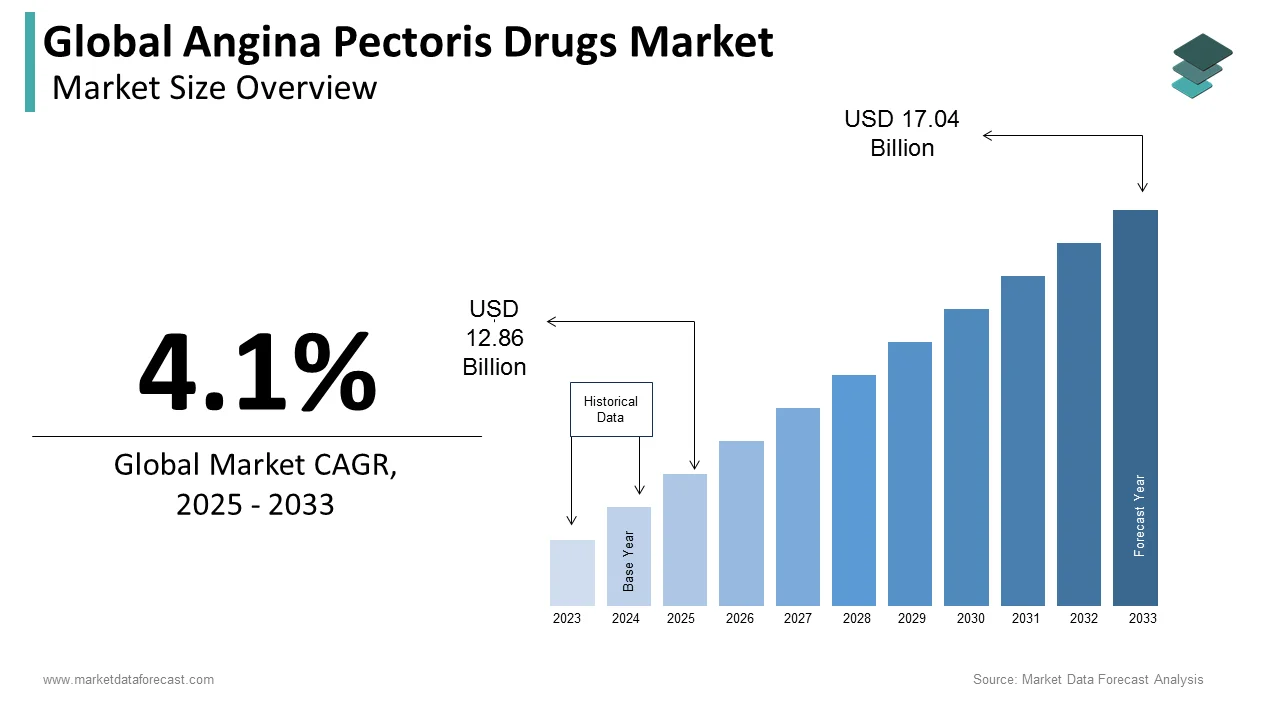
Angina pectoris is a medical condition identified by precordial heaviness or distress due to temporary myocardial ischemia without infarction, elicited by physical or mental stress. Angina pectoris is classified as - stable, unstable, microvascular, and Prinzmetal. Angina pectoris is an initial symptom of coronary heart disease and significantly affects life quality, costs to society, and workability.
MARKET DRIVERS
The increase in the number of ischemic heart diseases, the rising geriatric population, the adoption of a rich, westernized diet, and the subsequent growth of smoking, obesity, and diabetes are significantly driving the global angina development pectoris drugs market.
Several new investigational drugs are being tested to treat chronic angina and reduce currently marketed drugs' side effects. The increased prevalence of cardiovascular diseases and the rise in the geriatric population are driving market growth. Growing research and development projects in the healthcare segment and augmented healthcare expenditure further expand the angina pectoris drugs market.
The angina pectoris drug market growth is further influenced by the increase in the prevalence of cardiovascular diseases and an increase in the geriatric population. The leading cause of death on the earth is cardiovascular disease. In 2015, 17.7 million people died from heart disease, accounting for 31% of all deaths worldwide. Ischemic heart disease's high prevalence has become a major medical and social concern, creating a market opportunity for market players in all geographies. Synergistic combinations, current clinical trials, and other pharmacological advances, such as novel routes of administration, dosing regimens, and so on, are all trends in the development of antianginal drugs. Increasing healthcare research and development programs and increased healthcare spending are boosting the angina pectoris drugs market forward.
MARKET RESTRAINTS
Currently, only a few research activities are being conducted specifically to treat angina pectoris. Not many approvals have been granted for the novel compounds in the past few years, limiting the market growth. A majority of patients with chest pain remain undiagnosed with the possibility of suffering from angina or buying generic medicines instead of specific branded medicines, which hampers the demand in the global Angina Pectoris drugs market. Along with this, non-adherence to cardiovascular medications has also been observed among patients suffering from cardiovascular diseases, which may further hinder the market growth.
Ischemic heart disease is the most common cause of death and disability worldwide, and angina is the most common symptom. Angina affects about 9 million people in the United States, and its treatment can be challenging. The changing regulatory landscape in the United States creates a favorable climate for transformative healthcare innovations. The new Clinical Trials Regulation will impact clinical trials of Advanced Therapy Medicinal Products in the EU. Industry worries about innovative therapy ROIs appear to be a challenge to drug development.
REPORT COVERAGE
| REPORT METRIC | DETAILS |
| Market Size Available | 2025 to 2034 |
| Base Year | 2025 |
| Forecast Period | 2026 to 2034 |
| Segments Covered | By Therapeutic Class and Region. |
| Various Analyses Covered | Global, Regional, and Country-Level Analysis, Segment-Level Analysis, Drivers, Restraints, Opportunities, Challenges; PESTLE Analysis; Porter’s Five Forces Analysis, Competitive Landscape, Analyst Overview of Investment Opportunities |
| Regions Covered | North America, Europe, Asia Pacific, Latin America, Middle East & Africa |
| Market Leaders Profiled | Sanofi, Bayer HealthCare, Cardeus Pharmaceuticals and CardioVascular BioTherapeutics (CVBT), Merck & Co. Inc., Anthera Pharmaceuticals, Cardium Therapeutics, Astellas Pharma, Ark Therapeutics Group plc, Torrent Pharmaceuticals Limited, Circ Pharma Limited, HUYA Bioscience International LLC, Lacer S.A., Viromed Co. Ltd., Baxter Healthcare Corporation., and Others. |
SEGMENTAL ANALYSIS
By Therapeutic Class Insights
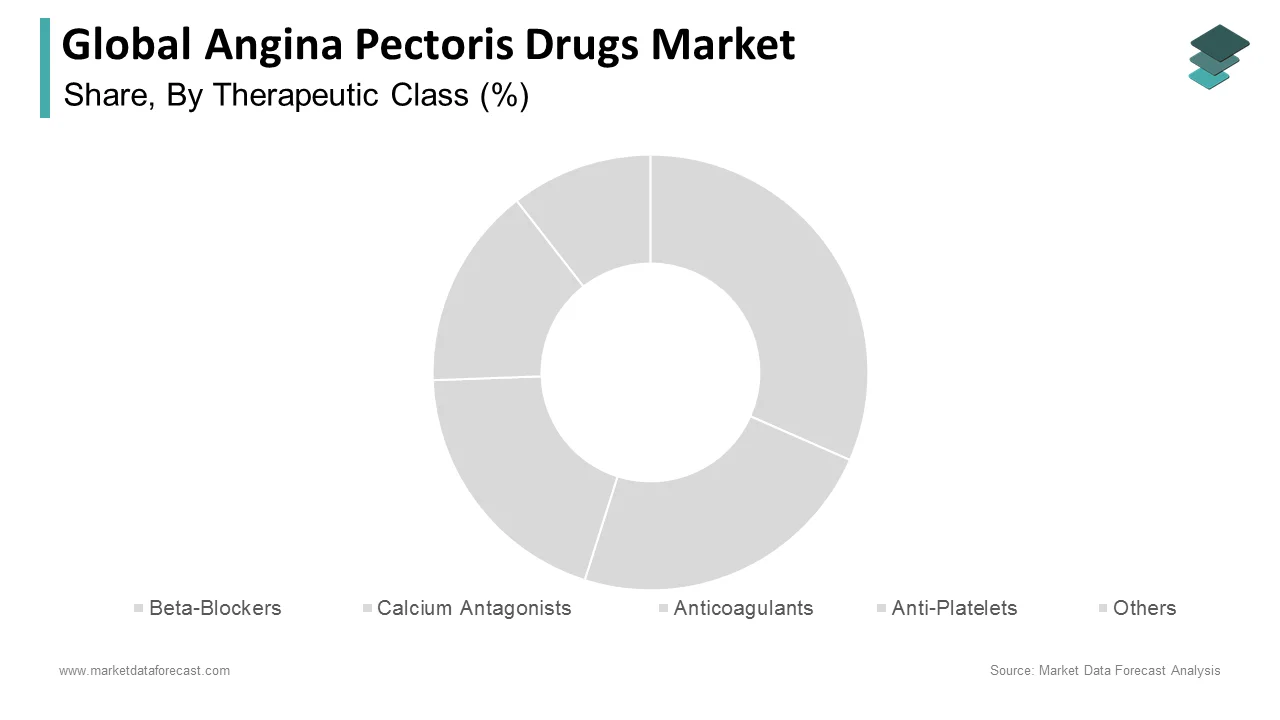
Beta-blockers work by blocking the hormone epinephrine (adrenaline) effects, which causes the heart to beat more slowly and with less force, thus easing the blood pressure. Combining nitrates with beta-blockers is most used to block tachycardia and generate a synergetic anti-ischaemic effect. The Beta-Blocker market now is predominately generic, with key patent expirations impacting GlaxoSmithKline's Coreg and AstraZeneca's Toprol. Post Pfizer's Norvasc patent being determined invalid in 2007, the Calcium Antagonist market is predominantly generic.A few of the emerging anti-anginal drugs are nicorandil, ivabradine, ranolazine, and trimetazidine.
REGIONAL ANALYSIS
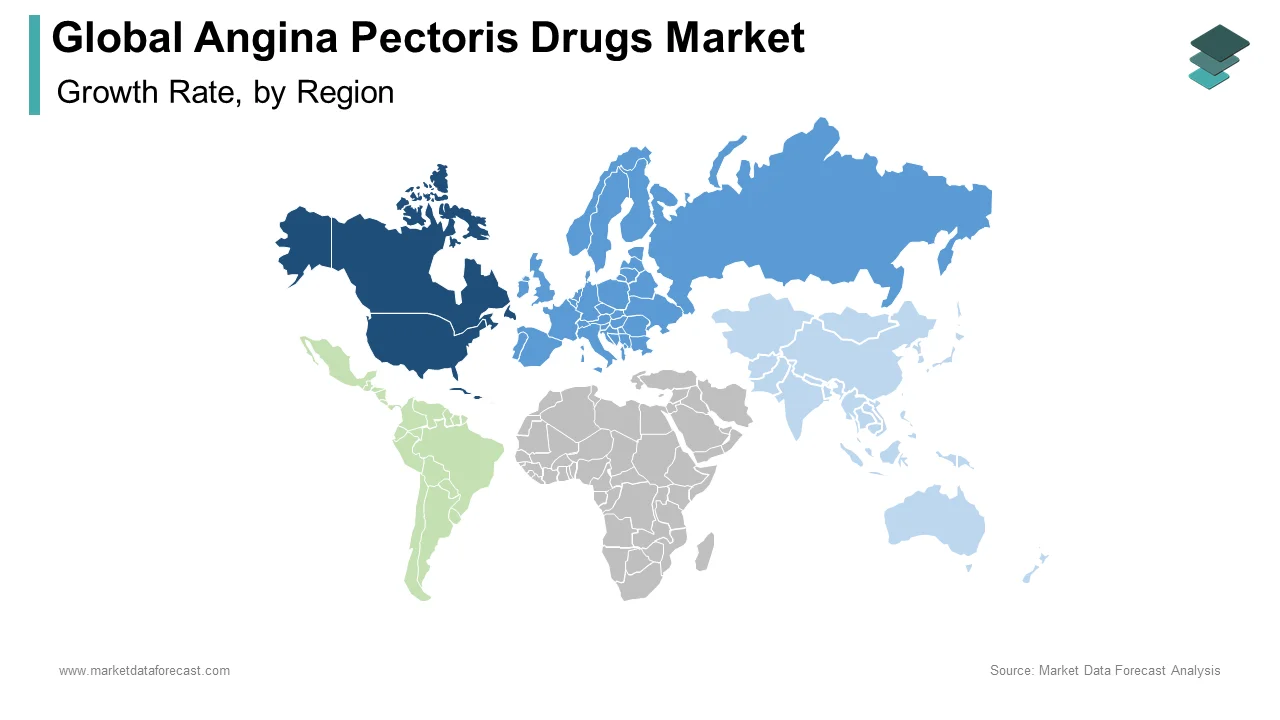
Geographically, the global angina pectoris drugs market was dominated by North America in 2025, with an overall market share of over 33% globally. Europe and Asia-Pacific followed North America. North America controls the Angina Pectoris Drugs market is driven by the organized healthcare infrastructure, increased adoption of therapeutics, and key manufacturers in the U.S. responsible for its large share. Ischaemic heart disease is among the significant cause of death and disability worldwide, while angina represents its most common symptom. It is estimated that approximately 9 million patients in the USA suffer from angina and its treatment is challenging. Moreover, the increasing incidence of cardiac disorders due to the sedentary lifestyle and favorable regulatory initiatives fuel market growth. Approximately 9.8 million Americans are estimated to experience angina annually, with 500,000 new angina cases occurring every year.
The European market follows North America, with EU5 leading the market share due to developed medical care facilities and a good reimbursement scenario.
The Asia Pacific is predicted to grow at a rapid pace in the coming few years. Asia Pacific region represents a vast market opportunity for the anti-angina drug market owing to the increasing number of cardiovascular problems and improvising healthcare facilities.
The Middle East and Africa represent the least market share, but a vast market opportunity has been anticipated with the increasing burden of ischemic heart diseases in these regions. Furthermore, Ischemic heart disease is the leading cause of death globally. The vast majority of it occurs outside the high-income world, increasing market opportunities in low- and middle-income countries.
KEY MARKET PLAYERS
Some of the key competitors leading the Global Angina Pectoris Drugs Market profiled in this report are
- Sanofi
- Bayer HealthCare
- Cardeus Pharmaceuticals
- CardioVascular BioTherapeutics (CVBT)
- Merck & Co. Inc.
- Anthera Pharmaceuticals
- Cardium Therapeutics
- Astellas Pharma
- Ark Therapeutics Group plc
- Torrent Pharmaceuticals Limited
- Circ Pharma Limited
- HUYA Bioscience International LLC
- Lacer S.A.
- Viromed Co. Ltd.
- Baxter Healthcare Corporation
GLOBAL ANGINA PECTORIS DRUGS MARKET NEWS
- AstraZeneca and Recordati S.p.A. collaborated in May 2017 to launch Metoprolol succinate; a beta-blocker used to treat angina pectoris.
- The FDA approved Xarelto (rivaroxaban) in October 2018, and it can be used to treat chronic angina alongside beta-blockers, nitrates, calcium channel blockers, and ACE inhibitors.
- Kapspargo Sprinkle (metoprolol succinate) extended-release capsules for the treatment of hypertension (high blood pressure), angina pectoris (chest pain), and heart failure were released in the United States on August 6, 2018, according to Sun Pharmaceutical Industries Ltd. (in patients with heart failure, to reduce the risk of cardiovascular mortality and heart-failure hospitalization).
- 15th of April 2020 In Wednesday's trading, Dr. Reddy's Laboratories jumped more than 3% after the company announced the launch of an approved generic version of the NitroDur (nitroglycerin) Transdermal Infusion System. Nitro-Dur is used to avoid chest pain attacks (angina), but it does not treat angina that has already started.
MARKET SEGMENTATION
This research report on the global angina pectoris drugs market has been segmented and sub-segmented based on the therapeutic class and region.
By Therapeutic Class
- Beta-Blockers
- Calcium Antagonists
- Anticoagulants
- Anti-Platelets
- Others
By Region
- North America
- Europe
- Asia Pacific
- Latin America
- The Middle East and Africa