- Product Description Description
- Table of Contents TOC
- List of Table & Figure LOT
- Get Free Sample PDF Sample PDF
Market Size, 2025
$4.38 BnMarket Estimate, 2026
$4.53 BnMarket Forecast, 2034
$5.99 BnCAGR, 2026–2034
3.53%Executive Summary: North America Angina Pectoris Drugs Market
- Market Scope: Comprehensive North America angina pectoris drugs market analysis covering drug class segments, condition types, pharmacy distribution channels, regional leadership frameworks, and healthcare compliance standards across the United States and Canada.
- Market Valuation: Valued at USD 4.38 billion (2025), estimated at USD 4.53 billion (2026), and projected to reach USD 5.99 billion by 2034, registering a steady CAGR of 3.53% (2026–2034).
- Primary Growth Drivers: Rising prevalence of coronary artery disease, an aging geriatric population, and increasing awareness of cardiovascular health management. Key technological and strategic trends include widespread adoption of evidence-based treatment guidelines, development of fixed-dose combination therapies to improve patient adherence, and integration of digital health solutions for remote patient monitoring and personalized medication adjustments.
Key Market Segment Metrics (2026–2034)
| Category | Leading Segment (2025 Position) | Fastest-Growing Segment |
|---|---|---|
| By Drug Class & Type | Beta blockers segment (dominated as first-line therapy for chronic stable angina) | Antiplatelets segment (expected to grow at the fastest CAGR of 6.8%) |
| By Condition & Channel | Stable angina (led condition type); hospital pharmacies remained critical for acute therapy supply | Specialized outpatient clinics and digital health management channels |
| By Technology & Formulation | Standard oral tablets, capsules, and acute injectable formulations | Fixed-dose combination therapies and digital remote monitoring tool integrations |
| By Region | United States (dominated the market with an 83.6% share in 2025) | Canada (exhibits steady growth supported by its universal healthcare system) |
Major Market Players & Market Structure
Market Structure: Highly competitive North American pharmaceutical landscape characterized by strategic healthcare partnerships to enhance disease awareness, heavy investment in digital health adherence tools, and generic drug expansions for cost-effective solutions.
Key Companies: Sanofi, Bayer HealthCare, Cardeus Pharmaceuticals, CardioVascular BioTherapeutics (CVBT), Merck & Co., Inc., Pfizer Inc., Anthera Pharmaceuticals, Circ Pharma Limited, HUYA Bioscience International LLC, Lacer S.A., Viromed Co. Ltd., and Baxter Healthcare Corporation.
 Download Free Sample Report
North America Angina Pectoris Drugs Market Size
The size of the North America angina pectoris drugs market was worth USD 4.38 billion in 2025. The North American market is anticipated to grow at a CAGR of 3.53% from 2026 to 2034 and be worth USD 5.99 billion by 2034 from USD 4.53 billion in 2026.

Angina pectoris is a clinical syndrome characterized by chest pain or discomfort due to coronary heart disease, where the heart muscle does not receive enough oxygen-rich blood. In North America, this condition remains a primary manifestation of ischemic heart disease, necessitating a robust pharmaceutical landscape for symptom management and prevention of acute cardiac events. The therapeutic approach involves a combination of antiplatelet agents, beta blockers, calcium channel blockers, nitrates, and ranolazine to reduce myocardial oxygen demand and improve supply. According to the Centers for Disease Control and Prevention, approximately 20.5 million adults aged 20 and older in the United States live with coronary artery disease, which stands as the underlying cause behind most cases of angina pectoris. The aging demographic in both the United States and Canada significantly influences the prevalence of this condition. A study indicates that major cardiovascular diseases account for roughly 20% of all annual deaths in Canada, underscoring a vital requirement for optimal therapeutic and pharmacological health strategies. Healthcare systems are increasingly focusing on guideline-directed medical therapy to optimize patient outcomes and reduce hospital readmissions. The market operates within a framework of strict regulatory oversight by the Food and Drug Administration and Health Canada, ensuring the safety and efficacy of new and generic formulations. Recent trends indicate a shift toward personalized medicine and combination therapies to address comorbidities such as hypertension and diabetes. This dynamic environment drives continuous innovation in drug delivery systems and formulation technologies to enhance patient adherence and quality of life.
MARKET DRIVERS
Rising Prevalence of Coronary Artery Disease Drives Therapeutic Demand
The escalating prevalence of coronary artery disease is a fundamental driver for the North America angina pectoris drugs market. This is due to the direct correlation between arterial blockage and symptomatic angina. Lifestyle factors, including sedentary behavior, poor dietary habits, and high stress levels, contribute to the accumulation of plaque in coronary arteries, leading to reduced blood flow. According to data published by the American Heart Association, over 20.5 million Americans aged 20 and older have coronary artery disease, establishing a vast patient landscape that demands long-term pharmacological management. The chronic nature of this condition necessitates daily medication to prevent anginal episodes and mitigate the risk of myocardial infarction. As per the National Institutes of Health, the prevalence of coronary artery disease increases significantly with age, impacting approximately 20% of individuals aged 65 and older. This demographic shift in North America ensures a steady and growing demand for antianginal medications. Healthcare providers prioritize early intervention and aggressive lipid-lowering therapy alongside antianginal drugs to stabilize plaque and improve endothelial function. The integration of digital health tools for monitoring symptoms further supports medication adherence. Public health initiatives aimed at raising awareness about heart health encourage earlier diagnosis and treatment initiation. Consequently, the pharmaceutical industry responds with a diverse portfolio of generics and branded therapies to meet the varying needs of this expanding patient population.
Aging Population Amplifies Need for Chronic Cardiac Management
The rapid aging of the population in the region disproportionately affects older adults with cardiovascular conditions, which further propels the expansion of the North America angina pectoris drugs market. Consequently, this amplifies the need for chronic cardiac management solutions, including angina pectoris drugs. Age is a non-modifiable risk factor for the development of atherosclerosis and subsequent angina symptoms. Projections issued by the United States Census Bureau show that Americans aged 65 and older will expand from 52 million in 2018 to roughly 95 million by 2060, representing a monumental demographic shift. This demographic expansion places immense pressure on healthcare systems to provide effective and sustainable treatment options for age-related heart conditions. The Canadian Institute for Health Information shows that seniors command the highest per capita prescription drug spending, with cardiovascular therapies serving as a primary spending driver across provincial drug plans. Older patients often present with multiple comorbidities such as diabetes and hypertension requiring complex medication regimens that include antianginal agents. The physiological changes associated with aging affect drug metabolism and tolerance, necessitating careful dose adjustments and monitoring. Geriatric care guidelines emphasize the importance of maintaining quality of life through symptom control, which drives the prescription of long-acting nitrates and beta blockers. Pharmaceutical companies are developing formulations with improved safety profiles specifically for elderly patients. This demographic trend ensures a consistent and increasing volume of prescriptions for angina medications across the region.
MARKET RESTRAINTS
Patent Expirations of Key Branded Drugs Restrain Revenue Growth
The expiration of patents for key branded antianginal drugs restrains revenue growth in the North America angina pectoris drugs market. This facilitates the entry of lower-cost generic alternatives. When patent protection ends, multiple manufacturers can produce bioequivalent versions, leading to intense price competition and significant erosion of brand value. According to the U.S. Food and Drug Administration, generic medication access has risen substantially due to consistent annual approvals of generic entries, which continuously expand options for cardiovascular therapeutic access. This surge in generic availability allows payers and pharmacy benefit managers to negotiate lower prices, shifting market share away from originator companies. As per the Association for Accessible Medicines, generic and biosimilar alternative medications saved the U.S. healthcare system 408 billion dollars in 2022, with cardiovascular therapies driving a massive portion of the total economic relief. While this benefits patients and insurers, it reduces the profit margins for innovator companies, limiting their ability to reinvest in research and development for new antianginal therapies. The rapid uptake of generics means that branded products lose the majority of their market volume within months of patent expiry. Companies must rely on lifecycle management strategies such as developing extended-release formulations or combination products to maintain competitiveness. However, these efforts often yield diminishing returns compared to the initial blockbuster status of the original drug. This structural market dynamic constrains overall revenue potential for established pharmaceutical players in the angina segment.
High Cost of Novel Therapies Limits Accessibility and Adoption
The high cost of novel therapies and advanced diagnostic procedures limits accessibility and adoption of newer antianginal treatments in certain patient segments across the region, which impedes the expansion of the North America angina pectoris drugs market. While innovative drugs offer improved efficacy or fewer side effects, their premium pricing creates barriers for uninsured or underinsured individuals. The Kaiser Family Foundation demonstrates that average annual premiums for employer-sponsored health insurance reached 23,966 dollars for family coverage in 2023, placing significant upward pressure on household out-of-pocket costs. High deductibles and copayments discourage some patients from adhering to prescribed regimens involving expensive branded medications. According to the Commonwealth Fund, roughly 20% of American adults reported not filling a prescription or skipping scheduled doses due to steep out-of-pocket medical costs. This financial toxicity is particularly relevant for newer agents like ranolazine or ivabradine, which may not be covered by all insurance formularies without prior authorization. In Canada, while public coverage exists for seniors and low-income individuals, gaps remain for working-age adults without private insurance. Pharmaceutical manufacturers face pressure to justify high prices through demonstrated clinical superiority, which is difficult in a market saturated with effective low-cost generics. Payers increasingly utilize step therapy protocols requiring patients to try cheaper alternatives first. These economic constraints slow the penetration of innovative therapies and restrict market growth to those with comprehensive insurance coverage.
MARKET OPPORTUNITIES
Development of Combination Therapies Creates New Opportunities
The development of combination therapies creates significant opportunities for the North America angina pectoris drugs market. This helps to address the complex pathophysiology of coronary artery disease and improve patient adherence. Combining two or more mechanisms of action in a single pill simplifies regimens for patients who often take multiple medications for comorbidities. According to the American Journal of Medicine, fixed-dose combinations significantly reduce non-adherence by 26% compared to free-equivalent drug components, offering a critical clinical intervention for chronic cardiac conditions like angina. Pharmaceutical companies are investing in formulations that combine beta blockers with calcium channel blockers or nitrates with antiplatelet agents to provide comprehensive symptom relief and cardiovascular protection. As per formal guidelines established by the European Society of Cardiology, optimized combination therapy is recommended to achieve baseline symptom control and manage ischemia effectively in chronic coronary syndromes. The convenience of once daily dosing enhances quality of life and reduces the pill burden associated with polypharmacy. Regulatory pathways for approving combination products are well established, allowing for faster time to market. Manufacturers can differentiate their offerings in a crowded generic market by providing unique value propositions through synergistic effects. This strategy also allows for patent extensions and brand loyalty among prescribers who appreciate the simplified prescribing process. The trend toward holistic cardiovascular care supports the adoption of these multifaceted therapeutic solutions.
Integration of Digital Health Solutions Enhances Patient Monitoring
The integration of digital health solutions enhances patient monitoring and management, creating opportunities for optimized use of these drugs in the region, which is likely to accelerate the expansion of the North America angina pectoris drugs market. Wearable devices and mobile applications enable real-time tracking of heart rate, blood pressure, and physical activity, allowing for personalized medication adjustments. According to the Pew Research Center, roughly 21% of adults in the United States regularly wear a smartwatch or fitness tracker, establishing a growing baseline for remote digital health integration. These technologies provide clinicians with valuable data to assess the effectiveness of antianginal therapies and identify triggers for anginal episodes. As per the Centers for Disease Control and Prevention, national telehealth utilization sustained significant growth post-pandemic, expanding clinical opportunities for frequent virtual follow-ups and remote medication reviews. Digital platforms can send reminders for medication intake, improving adherence rates, which are often suboptimal in chronic disease management. Pharmaceutical companies are partnering with tech firms to develop companion apps that educate patients about their condition and treatment plan. This data-driven approach supports precision medicine by tailoring drug choices and dosages to individual patient profiles. Insurance providers are beginning to reimburse for digital monitoring services, recognizing their potential to reduce hospitalizations. The synergy between pharmacotherapy and digital tools creates a more engaged and informed patient population, driving better clinical outcomes and sustained drug utilization.
MARKET CHALLENGES
Adverse Effects and Drug Interactions Pose Clinical Challenges
Adverse effects and drug interactions present significant clinical challenges in managing angina pectoris, which in turn slow the growth of the North America angina pectoris drugs market. These complications ultimately disrupt treatment plans and diminish the patient's quality of life. Many antianginal medications such as beta blockers and calcium channel blockers can cause hypotension, bradycardia, fatigue, and edema, leading to discontinuation or dose reduction. According to the World Health Organization, adverse drug-drug interactions pose an outsized clinical risk in elderly patient demographics experiencing complex polypharmacy. For instance, combining nitrates with phosphodiesterase 5 inhibitors used for erectile dysfunction can cause severe hypotension, which is life-threatening. The U.S. Food and Drug Administration confirms that adverse drug reactions and preventable medication errors directly cause more than 100,000 hospitalizations annually across the healthcare system. Clinicians must carefully balance efficacy with tolerability, often requiring trial and error to find the optimal regimen. Patients with comorbidities such as asthma or diabetes may have contraindications to certain antianginal classes, limiting therapeutic options. The complexity of managing these interactions requires extensive patient education and regular monitoring, which strains healthcare resources. Non-adherence due to side effects undermines the effectiveness of treatment and increases the risk of acute cardiac events. Developing drugs with better safety profiles and fewer interactions remains a priority but is scientifically challenging. This clinical complexity necessitates a multidisciplinary approach to care.
Variability in Insurance Coverage Impacts Treatment Consistency
Variability in insurance coverage negatively impacts treatment consistency for angina pectoris patients across the region, which inhibits the expansion of the North American market. As a result, this creates significant disparities in access to optimal pharmacological care. Different insurance plans have varying formularies, prior authorization requirements, and tiered copayment structures that influence which drugs are prescribed and filled. According to the Employee Benefit Research Institute, approximately 35% of covered employees in the United States are enrolled in a high-deductible health plan, a financial structure that can delay or defer access to high-tier branded therapeutics. Pharmacy benefit managers frequently change preferred drug lists, forcing patients to switch medications or pay higher out-of-pocket costs. Canada's Drug Agency highlights that provincial public drug plans maintain separate formulary listing criteria, resulting in geographic variations in therapeutic access depending on a patient's province of residence. This fragmentation disrupts continuity of care and can lead to therapeutic inertia where clinicians stick to older, cheaper drugs rather than optimizing therapy. Patients may experience gaps in medication availability during transitions between jobs or insurance plans. The administrative burden of navigating coverage restrictions distracts from clinical care and frustrates both providers and patients. Standardizing coverage policies and improving transparency could mitigate these issues but remains a complex policy challenge. Until then, variability in coverage will continue to hinder consistent and equitable treatment for angina patients.
REPORT COVERAGE
| REPORT METRIC | DETAILS |
| Market Size Available | 2025 to 2034 |
| Base Year | 2025 |
| Forecast Period | 2026 to 2034 |
| Segments Covered | By Therapeutic Class and Region. |
| Various Analyses Covered | Global, Regional and Country-Level Analysis, Segment-Level Analysis, Drivers, Restraints, Opportunities, Challenges; PESTLE Analysis; Porter’s Five Forces Analysis, Competitive Landscape, Analyst Overview of Investment Opportunities |
| Countries Covered | United States, Canada, Mexico, Rest of North America |
| Market Leaders Profiled | Sanofi, Bayer HealthCare, Cardeus Pharmaceuticals and CardioVascular BioTherapeutics (CVBT), Merck & Co. Inc., Anthera Pharmaceuticals, Cardium Therapeutics, Astellas Pharma, Ark Therapeutics Group plc, Torrent Pharmaceuticals Limited, Circ Pharma Limited, HUYA Bioscience International LLC, Lacer S.A., Viromed Co. Ltd., and Baxter Healthcare Corporation.. |
SEGMENTAL ANALYSIS
By Therapeutic Class Insights
The beta blockers segment led the North America angina pectoris drugs market and captured a significant share in 2025. This leading position of the segment was attributed to its universal recommendation in major clinical guidelines as first-line therapy for chronic stable angina. These agents reduce myocardial oxygen demand by decreasing heart rate and contractility, providing effective symptom relief and improving exercise tolerance. Also, the strong clinical endorsement ensures that physicians prescribe them routinely upon diagnosis. National prescription indicators compiled via the Medical Expenditure Panel Survey confirm that millions of adults in the United States are prescribed beta-blockers annually, reflecting their deeply entrenched role in cardiovascular standard care. The availability of numerous generic formulations such as metoprolol and atenolol makes them cost-effective for both payers and patients, facilitating widespread adoption. Their proven safety profile and long-term benefits in reducing mortality after myocardial infarction further reinforce their dominance. Additionally, beta blockers address comorbidities such as hypertension and heart failure, which are common in angina patients, allowing for simplified treatment regimens. The extensive clinical experience and familiarity among healthcare providers ensure that beta blockers remain the cornerstone of antianginal therapy despite the emergence of newer agents. This combination of guideline authority, efficacy, and affordability sustains their market leadership.
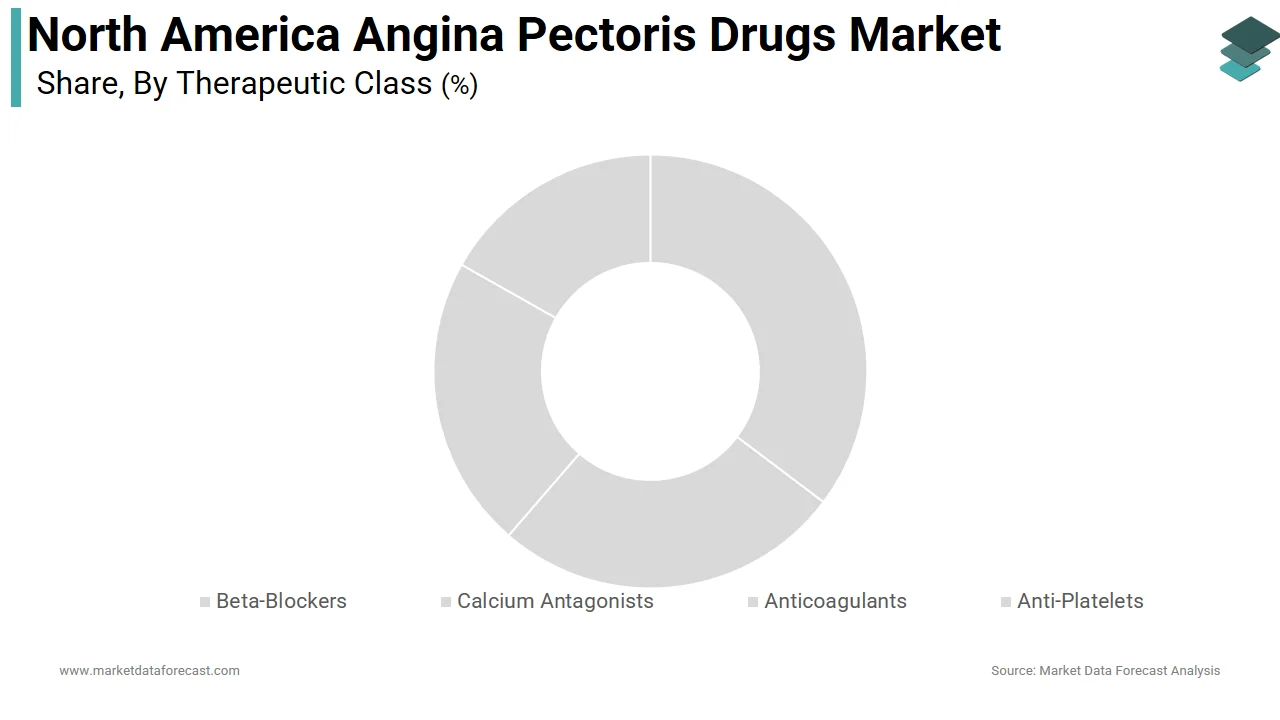
The proven efficacy of beta blockers in managing comorbidities commonly associated with angina pectoris sustains their leadership in the North America market. Many patients with coronary artery disease also suffer from hypertension, heart failure, or arrhythmias conditions that beta blockers effectively treat simultaneously. According to official metrics from the Centers for Disease Control and Prevention, approximately 48% of adults in the United States have hypertension, a prevalent condition frequently managed with beta-blockers alongside standard angina regimens. This dual benefit reduces pill burden and improves patient adherence to complex medication regimens. By addressing multiple cardiovascular risks with a single drug class, clinicians can optimize therapeutic outcomes while minimizing polypharmacy risks. The extensive real-world evidence supporting their use in diverse patient populations builds confidence among prescribers. Insurance formularies typically prioritize beta blockers due to their low cost and broad indications, ensuring easy access for patients. Pharmaceutical companies continue to support this segment through educational initiatives highlighting the multifaceted benefits of these drugs. The ability to tailor therapy using selective and non-selective agents allows for personalized care. These factors collectively ensure that beta blockers remain the preferred initial choice for comprehensive cardiovascular management in angina patients.
The antiplatelets segment is on the rise and is expected to be the fastest-growing segment in the market by witnessing a CAGR of 6.8% from 2026 to 2034 due to the critical focus on secondary prevention of acute coronary events. While not primarily antianginal in terms of symptom relief, antiplatelets are indispensable for preventing thrombotic complications in patients with established coronary artery disease. Joint clinical guidelines published by the American College of Cardiology and the American Heart Association recommend dual antiplatelet therapy for patients undergoing percutaneous coronary intervention and long-term single antiplatelet coverage for stable ischemic heart disease. This universal recommendation ensures consistent prescription rates across the patient population. The introduction of newer-generation P2Y12 inhibitors with improved safety profiles and faster onset of action has accelerated market growth. Physicians are increasingly aware of the importance of platelet inhibition in reducing the risk of myocardial infarction and stroke in angina patients. Public health campaigns emphasizing the silent nature of plaque rupture encourage proactive pharmacological protection. The shift toward personalized antiplatelet therapy based on genetic testing and platelet function assays further stimulates the adoption of advanced agents. This strategic emphasis on preventing catastrophic events rather than just managing symptoms fuels the rapid expansion of the antiplatelet segment.
The expansion of percutaneous coronary interventions PCI in the region significantly drives the demand for antiplatelet drugs, as these procedures require rigorous antithrombotic management to prevent stent thrombosis. PCI is a common revascularization strategy for patients with symptomatic angina who do not respond adequately to medical therapy alone. Clinical data profiles maintained by Yale Medicine establish that approximately 900,000 percutaneous coronary intervention (PCI) procedures are executed annually in the United States, with each case requiring definitive peri-procedural antiplatelet coverage. According to coronary care protocols outlined by the American College of Cardiology, post-procedural patients typically receive dual antiplatelet therapy pairing aspirin with a designated P2Y12 inhibitor for a baseline of six to twelve months. The development of drug-eluting stents has reduced restenosis rates but heightened the need for effective platelet inhibition to mitigate thrombotic risks. Newer antiplatelet agents offer better predictability and fewer drug interactions, making them preferable in high-risk populations. Clinical trials continuously validate the superiority of potent antiplatelets in reducing adverse cardiac events, reinforcing their standard of care status. Hospital protocols strictly enforce antiplatelet administration during and after PCI, ensuring high compliance. The integration of these drugs into discharge planning and follow-up care creates a reliable and growing revenue stream. This procedural dependency ensures that antiplatelets remain a dynamic and rapidly expanding segment within the broader angina management landscape.
COUNTRY LEVEL ANALYSIS
U.S. Angina Pectoris Drugs Market Analysis
The United States dominated the North America angina pectoris drugs market and accounted for an 83.6% share in 2025. This dominance of the US market was driven by its high healthcare spending and large prevalence of coronary artery disease. The country has a well-developed pharmaceutical infrastructure with rapid adoption of new therapies and extensive insurance coverage for cardiovascular medications. According to data compiled by the Centers for Disease Control and Prevention, heart disease stands as the leading cause of death in the United States, representing a significant public health burden that impacts millions of individuals across the country. The presence of major pharmaceutical companies and research institutions fosters innovation in antianginal drug development. Moreover, the Organisation for Economic Co-operation and Development (OECD) shows that the United States spends more per capita on prescription drugs than any other member nation, an expenditure environment that shapes access to both innovative branded medications and generic treatments. The aging baby boomer population contributes significantly to the patient pool, driving consistent demand for beta blockers, calcium channel blockers, and antiplatelets. Regulatory approvals by the Food and Drug Administration are swift, facilitating quick market entry for novel agents. Private insurance plans and Medicare Part D provide substantial reimbursement for cardiovascular drugs, ensuring affordability for seniors. The high prevalence of obesity and diabetes further exacerbates the burden of angina, necessitating aggressive medical therapy. These factors combine to make the United States the largest and most influential market for angina pectoris drugs in North America.
Canada Angina Pectoris Drugs Market Analysis
Canada exhibits steady growth in the North America angina pectoris drugs market due to its universal healthcare system, which ensures broad access to essential cardiovascular medications for all citizens. The country faces a rising burden of ischemic heart disease due to an aging population and lifestyle factors similar to those in the United States. According to the Canadian Institute for Health Information, cardiovascular diseases are a primary cause of acute care hospitalizations and deaths across the provinces, driving targeted public health interventions. The Pan Canadian Pharmaceutical Alliance negotiates bulk purchasing agreements for drugs, including antianginals, helping to control costs and improve accessibility. Also, the National Center for Biotechnology Information shows that overall Canadian prescription drug spending continues to rise, with cardiovascular agents remaining one of the highest-volume drug categories driving public and private drug plan costs. Provincial formularies guide prescribing practices, ensuring that evidence-based therapies such as beta blockers and statins are widely available. The single payer system reduces administrative barriers, allowing for consistent treatment patterns across regions. Generic substitution policies encourage the use of cost-effective alternatives, enhancing sustainability. Public awareness campaigns promote heart-healthy lifestyles and early detection of symptoms, leading to timely initiation of drug therapy. The integration of primary care services with specialized cardiology centers ensures comprehensive management of angina patients. These structural advantages support a stable and growing market for angina pectoris drugs in Canada.
COMPETITIVE LANDSCAPE
The competition in the North America angina pectoris drugs market is characterized by the presence of established multinational pharmaceutical companies and numerous generic manufacturers offering cost-effective alternatives. Major players dominate due to their strong brand equity, extensive clinical data, and robust distribution networks. The market features high fragmentation in the generic segment, where price competition is intense, driving down margins for older molecules. Competition is driven by product efficacy, safety profiles, and ease of administration rather than just cost. Innovators focus on developing novel mechanisms of action and combination products to differentiate their offerings. Generic companies compete on manufacturing efficiency and supply chain reliability to secure contracts with large pharmacy benefit managers. Strategic alliances with healthcare systems and insurers are crucial for formulary inclusion and preferred status. The shift toward value-based healthcare encourages competitors to demonstrate superior patient outcomes and cost-effectiveness. Continuous investment in clinical trials and real-world evidence generation helps companies maintain credibility. Regulatory compliance and quality assurance remain key differentiators in this highly regulated environment. The dynamic interplay between innovation and affordability shapes the competitive landscape, requiring agility and strategic foresight.
KEY MARKET PLAYERS
The major players in the North America angina pectoris drugs market include
- Sanofi
- Bayer HealthCare
- Cardeus Pharmaceuticals
- CardioVascular BioTherapeutics (CVBT)
- Merck & Co., Inc.
- Pfizer Inc.
- Anthera Pharmaceuticals
- Cardium Therapeutics
- Astellas Pharma
- Ark Therapeutics Group plc
- Novo Nordisk A/S
- Torrent Pharmaceuticals Limited
- Bayer AG
- Circ Pharma Limited
- HUYA Bioscience International LLC
- Lacer S.A.
- Viromed Co. Ltd.
- Baxter Healthcare Corporation
TOP PLAYERS IN THE MARKET
- Pfizer Inc maintains a robust presence in the North America angina pectoris drugs market through its extensive portfolio of cardiovascular therapies, including beta blockers and antiplatelet agents. The company leverages its strong brand recognition and established distribution networks to ensure wide availability of essential medications. Recent actions include investing in digital health platforms that support patient adherence and monitoring for chronic heart conditions. Pfizer collaborates with healthcare providers to promote guideline-directed medical therapy, ensuring optimal patient outcomes. These initiatives strengthen its market position by enhancing patient engagement and clinical support. The company also focuses on expanding its generic drug offerings to provide cost-effective solutions for insurers and patients. By prioritizing innovation and accessibility, Pfizer reinforces its leadership in managing ischemic heart disease across the region.
- Novo Nordisk A/S contributes significantly to the market by addressing the metabolic comorbidities often associated with angina, such as diabetes and obesity. The company’s focus on integrated care models helps reduce cardiovascular risk factors that exacerbate angina symptoms. Recent actions involve launching educational programs for clinicians on managing patients with both diabetes and coronary artery disease. Novo Nordisk partners with cardiology associations to highlight the importance of holistic treatment approaches. These efforts enhance its reputation as a comprehensive partner in cardiovascular health. The company also invests in research to develop therapies that offer cardioprotective benefits beyond glucose control. By aligning its products with broader heart health goals, Novo Nordisk strengthens its relevance in the angina management landscape.
- Bayer AG plays a vital role in the market through its leading antiplatelet therapies, which are critical for preventing thrombotic events in angina patients. The company provides high-quality aspirin and other antithrombotic agents that are standard in secondary prevention protocols. Recent actions include expanding manufacturing capabilities in North America to ensure consistent supply of essential cardiovascular medicines. Bayer engages in public health campaigns to raise awareness about the risks of untreated coronary artery disease. These strategies build trust among healthcare professionals and patients alike. The company also supports clinical research to validate the efficacy of its products in diverse patient populations. By maintaining high standards of quality and reliability, Bayer solidifies its position as a key provider of antianginal and preventive therapies.
TOP STRATEGIES USED BY KEY MARKET PARTICIPANTS
Key players in the North America angina pectoris drugs market primarily employ strategic partnerships with healthcare providers and patient advocacy groups to enhance disease awareness and treatment adherence. Companies invest heavily in digital health solutions such as mobile apps and remote monitoring tools to support chronic disease management. Product lifecycle management involves developing extended-release formulations and combination therapies to improve convenience and efficacy. Expansion into value-based care models allows firms to demonstrate real-world effectiveness and cost savings to payers. Regulatory engagement ensures rapid approval of new indications and formulations. Educational initiatives for clinicians focus on updated guidelines and best practices for managing complex cases. These combined strategies enable participants to maintain a competitive advantage and drive sustained growth in a mature therapeutic area.
MARKET SEGMENTATION
This research report on the North America angina pectoris drugs market has been segmented and sub-segmented into the following categories.
By Therapeutic Class
- Beta-Blockers
- Calcium Antagonists
- Anticoagulants
- Anti-Platelets
- Others
By Country
- United States
- Canada
- Rest of North America