- Product Description Description
- Table of Contents TOC
- List of Table & Figure LOT
- Get Free Sample PDF Sample PDF
Market Size, 2025
$1.26 BnMarket Estimate, 2026
$1.68 BnMarket Forecast, 2034
$17.08 BnCAGR, 2026–2034
33.63%Asia Pacific Ambulatory Surgical Centers Market Report Summary
The Asia Pacific ambulatory surgical centers market was valued at USD 1.26 billion in 2025, is estimated to reach USD 1.68 billion in 2026, and is projected to reach USD 17.08 billion by 2034, growing at a CAGR of 33.63% during the forecast period from 2026 to 2034. The growth of the Asia Pacific ambulatory surgical centers market is driven by the increasing demand for cost-effective and patient-centric healthcare solutions, rising prevalence of chronic diseases, and a rapidly aging population. The shift from inpatient to outpatient care, supported by government policies and reimbursement reforms, is further accelerating market growth. Additionally, advancements in minimally invasive surgical technologies and increasing adoption of day-care procedures are enabling complex surgeries to be performed in outpatient settings, enhancing efficiency and patient convenience.
Key Market Trends
- Increasing shift toward outpatient and day-care surgical procedures to reduce healthcare costs and hospital burden.
- Growing adoption of minimally invasive and robotic-assisted surgeries in ambulatory settings.
- Expansion of medical tourism and cross-border healthcare services across Asia Pacific.
- Rising focus on patient-centric care models and faster recovery solutions.
- Integration of digital health technologies and electronic health records (EHRs) to improve operational efficiency.
Segmental Insights
- Based on specialty, the single-specialty segment held the largest share of the Asia Pacific ambulatory surgical centers market in 2025. The segment’s dominance is attributed to operational efficiency, specialization, and high-volume procedures such as ophthalmology surgeries.
- The multi-specialty segment is expected to witness notable growth due to increasing demand for integrated and convenient healthcare services under one roof.
- Based on component, the services segment dominated the market, driven by the labor-intensive nature of surgical procedures and continuous demand for skilled healthcare professionals.
- The software segment is projected to grow at a significant rate, supported by digital transformation, adoption of electronic health records, and demand for operational efficiency.
- Based on application, the ophthalmology segment accounted for the largest share of the market in 2025. This dominance is due to the high prevalence of eye disorders and the suitability of procedures like cataract surgery for outpatient settings.
Regional Insights
The Asia Pacific ambulatory surgical centers market is experiencing rapid growth across major countries, driven by healthcare reforms and increasing demand for efficient surgical care.
- China was the largest contributor, supported by a large patient population, expansion of private healthcare networks, and government initiatives promoting outpatient care.
- Japan holds a significant share, driven by its aging population, strong reimbursement systems, and established outpatient care infrastructure.
- India is emerging as a high-growth market due to a large underserved population, expansion of private healthcare chains, and cost advantages of outpatient surgeries.
- South Korea is witnessing steady growth, supported by advanced healthcare infrastructure and adoption of minimally invasive surgical technologies.
- Australia is also growing steadily, driven by strong regulatory frameworks, government support for day surgeries, and high healthcare spending.
Competitive Landscape
The Asia Pacific ambulatory surgical centers market is highly competitive, characterized by the presence of large healthcare groups and specialized outpatient providers focusing on efficiency, quality, and patient experience. Leading players are investing in advanced surgical technologies, expanding facility networks, and adopting digital healthcare solutions to enhance service delivery. Strategic collaborations with insurance providers, medical tourism facilitators, and healthcare institutions are key strategies adopted by market participants. Additionally, focus on accreditation, skilled workforce development, and specialized service offerings is shaping the competitive landscape. Prominent players in the Asia Pacific ambulatory surgical centers market include IHH Healthcare Berhad, Parkway Pantai Limited, Bumrungrad International Hospital, Vasan Eye Care, Centre for Sight, RG Stone, and Ambulatory Endoscopy Centre.
 Download Free Sample Report
Asia Pacific Ambulatory Surgical Centers Market Size
The Asia Pacific ambulatory surgical centers market size was valued at USD 1.26 billion in 2025 and is anticipated to reach USD 1.68 billion in 2026 from USD 17.08 billion by 2034, growing at a CAGR of 33.63% during the forecast period from 2026 to 2034
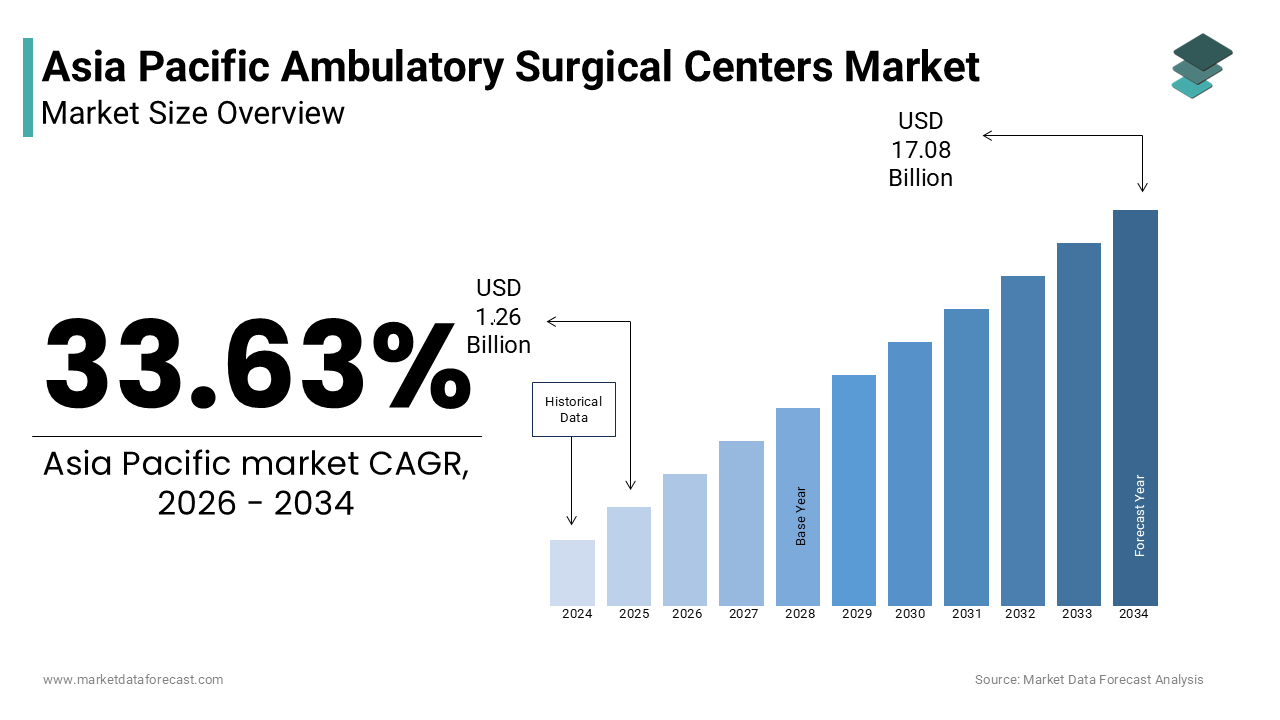
The Asia-pacific region is undergoing a significant transformation in healthcare delivery driven by the need for cost effective, efficient, and patient centric care models. According to the Economic and Social Commission for Asia and the Pacific, the proportion of people aged 60 years and older in the Asia Pacific region is projected to reach 25% by 2050, which is creating a substantial demand for age related surgical interventions. This demographic shift necessitates streamlined healthcare services that can handle high volumes of routine procedures efficiently. Furthermore, according to the Asian Development Bank, out of pocket health expenditure remains high in many developing member countries, prompting patients to seek affordable alternatives to traditional hospital care. Ambulatory surgical centers offer a viable solution by reducing overhead costs and minimizing the risk of hospital acquired infections. Governments in nations such as Singapore, Australia, and South Korea are actively promoting outpatient care through policy reforms and reimbursement adjustments. This strategic shift aims to alleviate the burden on tertiary hospitals and improve access to timely surgical care. The integration of advanced medical technologies and minimally invasive techniques further enhances the feasibility of performing complex procedures in an outpatient setting. Consequently, the market is characterized by rapid infrastructure development and increasing acceptance among both providers and patients seeking convenient and high quality surgical options.
MARKET DRIVERS
Rising Prevalence of Chronic Diseases and Age Related Conditions
The rising prevalence of chronic diseases and age related conditions is one of the major factors propelling the growth of the Asia-pacific ambulatory surgical centers market. Conditions such as cardiovascular diseases, diabetes, and musculoskeletal disorders often require surgical interventions that can be effectively managed in an outpatient setting. According to the World Health Organization, noncommunicable diseases are responsible for approximately 80% of all deaths in the Western Pacific Region, which includes many Asia Pacific countries. This substantial disease burden drives the demand for frequent and accessible surgical care. For instance, the rising incidence of cataracts and glaucoma in aging populations across China and India has led to a surge in ophthalmic procedures performed in ambulatory settings. According to the International Agency for the Prevention of Blindness, the number of people with cataracts in the Asia Pacific region is expected to increase significantly due to population growth and aging. Ambulatory surgical centers offer specialized services for these conditions with shorter wait times and lower costs compared to general hospitals. The ability to perform multiple minor procedures in a single visit enhances operational efficiency and patient convenience. Additionally, the growing awareness of early intervention for chronic conditions encourages patients to seek timely surgical solutions. Healthcare providers are increasingly recognizing the economic benefits of shifting routine surgeries to outpatient facilities, thereby reducing the strain on inpatient resources. This trend is further supported by the development of specialized clinics focusing on specific therapeutic areas such as orthopedics and gastroenterology. The convergence of demographic trends and clinical needs thus propels the growth of the ambulatory surgical centers market.
Cost Containment Pressures and Healthcare Efficiency Initiatives
Stringent cost containment pressures and government initiatives to improve healthcare efficiency are further boosting the Asia-pacific ambulatory surgical centers market expansion. Healthcare systems in the region face mounting financial challenges due to rising expenditures and limited resources. According to the World Bank, healthcare spending in East Asia and the Pacific has consistently grown as a share of gross domestic product, necessitating more sustainable care models. Ambulatory surgical centers offer a cost effective alternative by reducing overhead expenses associated with overnight stays and intensive care. In Australia, the government has implemented policies to shift suitable procedures from public hospitals to private day surgery facilities to reduce waiting lists and optimize resource utilization. According to the Australian Institute of Health and Welfare, day surgeries account for over 60% of all hospitalizations in the public hospital system, reflecting a strong preference for outpatient care. Similarly, in Singapore, the Ministry of Health encourages the use of ambulatory surgical centers for elective procedures through subsidized schemes and insurance coverage. These initiatives make outpatient surgery more affordable for patients while alleviating the financial burden on the public healthcare system. The streamlined workflows in ambulatory centers also lead to higher patient throughput and reduced administrative complexities. Private insurers are increasingly covering procedures performed in these facilities, recognizing the long term savings. The focus on value based healthcare further incentivizes providers to adopt efficient outpatient models. Consequently, the economic advantages of ambulatory surgical centers drive their widespread adoption across the region.
MARKET RESTRAINTS
Stringent Regulatory Frameworks and Licensing Requirements
The complex and stringent regulatory frameworks governing the establishment and operation of ambulatory surgical centers is significant restraint on market growth in the Asia Pacific region. Each country has distinct licensing requirements, accreditation standards, and operational guidelines that can be cumbersome and time consuming to navigate. According to the World Health Organization, regulatory heterogeneity among Asia Pacific countries creates barriers to the standardization of care and expansion of multi-national healthcare chains. In countries like India and Indonesia, obtaining the necessary approvals for building and operating surgical facilities involves multiple layers of bureaucracy, leading to delays and increased costs. For instance, the average time for regulatory approval can vary from 12 to 24 months depending on the jurisdiction. This uncertainty discourages investment and slows down the pace of new center openings. Furthermore, compliance with strict safety and quality standards requires significant capital investment in infrastructure and staff training, which may be prohibitive for smaller operators. In Japan, the rigorous certification process for medical facilities ensures high quality but also limits the speed at which new ambulatory centers can enter the market. The lack of harmonized regulations across borders hinders the ability of large healthcare providers to scale their operations efficiently. Companies must invest heavily in legal and compliance expertise to manage these complexities, which diverts resources from clinical services. Until regulatory processes are streamlined and standardized, the growth of the ambulatory surgical centers market will remain constrained by administrative hurdles.
Reimbursement Limitations and Coverage Disparities
Limited reimbursement coverage and disparities in insurance policies for outpatient surgical procedures is hampering the widespread adoption of ambulatory surgical centers in the Asia Pacific. While some countries have expanded coverage for day surgeries, many procedures remain partially covered or excluded from public health insurance schemes. According to the Asian Development Bank, out of pocket expenditure for healthcare remains above 40% of total health spending in several developing economies, limiting patient access to private ambulatory services. In Thailand, although the Universal Coverage Scheme includes certain outpatient procedures, the reimbursement rates are often lower than those for hospital based care, affecting the financial viability of ambulatory centers. According to the National Health Security Office of Thailand, providers may hesitate to expand services if reimbursement does not cover operational costs. In China, the basic medical insurance scheme has historically favored inpatient care, although recent reforms are gradually including outpatient surgeries. However, the transition is slow and coverage varies significantly across provinces. In Australia, private health insurance rebates for day surgery are subject to gap payments, which can deter patients from choosing ambulatory centers. The lack of consistent and adequate reimbursement creates financial uncertainty for both providers and patients. Without comprehensive coverage, patients may opt for hospital based care where costs are fully subsidized or perceived as safer. This reimbursement gap restricts the volume of procedures performed in ambulatory settings and impedes market expansion, particularly in price sensitive segments of the population.
MARKET OPPORTUNITIES
Expansion of Medical Tourism and Cross Border Healthcare
The rapid growth of medical tourism and cross border healthcare provides lucrative opportunities for the ambulatory surgical centers market in the Asia Pacific. The region has emerged as a global hub for affordable and high quality medical treatments, attracting patients from Europe, North America, and other parts of Asia. According to the Medical Tourism Association, countries like Thailand, Malaysia, and Singapore are renowned for their world class healthcare facilities and competitive pricing. Ambulatory surgical centers play a crucial role in this ecosystem by offering specialized elective procedures such as cosmetic surgery, dental implants, and laser eye surgery with minimal recovery time. According to the Thailand Board of Investment, the country has seen a significant return of international patients, generating billions in revenue. These patients prefer ambulatory settings for their convenience, privacy, and personalized care. In Malaysia, the government has actively promoted medical tourism through initiatives like the Malaysia Healthcare Travel Council, which accredits facilities meeting international standards. Ambulatory centers that obtain Joint Commission International accreditation gain a competitive edge in attracting international patients. The integration of travel packages with surgical services further enhances the appeal of these destinations. Additionally, the rise of digital platforms facilitates easy booking and consultation for overseas patients. As global demand for affordable healthcare continues to rise, ambulatory surgical centers in the Asia Pacific are well positioned to capture a significant share of the medical tourism market. Strategic marketing and partnerships with travel agencies can further boost patient inflow and revenue growth.
Technological Advancements in Minimally Invasive Surgery
Technological advancements in minimally invasive surgery and robotic assistance create significant opportunities for the expansion of ambulatory surgical centers in the Asia Pacific. Innovations such as laparoscopic, endoscopic, and robotic surgical systems enable complex procedures to be performed with smaller incisions, reduced pain, and faster recovery times. According to the International Federation of Robotics, Asia is currently the largest market for industrial and service robots, with surgical robot adoption increasing rapidly driven by the need for precision. These technologies make it feasible to perform procedures that previously required hospital admission in an outpatient setting. In South Korea, the integration of robotic surgery in ambulatory centers has improved patient outcomes and satisfaction, leading to higher procedure volumes. According to the Korean Society for Endoscopic Surgery, the use of minimally invasive techniques has reduced hospital stays significantly. The availability of advanced imaging and navigation systems further enhances the safety and efficacy of outpatient surgeries. Manufacturers are developing compact and user friendly devices tailored for ambulatory environments, reducing space and cost requirements. In Australia, the adoption of day surgery compatible technologies is supported by government incentives for innovation. The ability to offer state of the art treatments in a convenient setting attracts patients seeking high quality care without the inconvenience of hospitalization. As technology continues to evolve, ambulatory surgical centers can expand their service offerings to include more complex procedures, thereby increasing their market share and competitiveness.
MARKET CHALLENGES
Shortage of Skilled Healthcare Professionals
A critical shortage of skilled healthcare professionals, including surgeons, anesthesiologists, and specialized nurses is primarily challenging the growth of the ambulatory surgical centers market in the Asia Pacific. The operation of these facilities requires a multidisciplinary team with expertise in outpatient care and rapid turnover protocols. According to the World Health Organization, the South-East Asia and Western Pacific regions face a combined projected shortfall of over 12 million health workers by 2030. This shortage is particularly acute in rural and semi urban areas where ambulatory centers are expanding to improve access. In India, the doctor to patient ratio remains below the World Health Organization recommendation of 1 per 1,000 population, limiting the capacity of new facilities to operate efficiently. According to the Indian Medical Association, the migration of skilled professionals to developed countries exacerbates the local workforce crisis. Ambulatory surgical centers often struggle to compete with large hospitals in recruiting top talent due to perceived differences in career advancement and prestige. The lack of standardized training programs for outpatient surgical care further complicates staffing issues. In Indonesia, the distribution of healthcare workers is uneven, with most specialists concentrated in major cities. This imbalance hinders the establishment of ambulatory centers in underserved regions. The high turnover rate and burnout among existing staff also impact operational continuity. Without a robust pipeline of trained professionals, the quality of care and operational efficiency of ambulatory surgical centers may be compromised. Addressing this human resource gap requires significant investment in education and retention strategies.
Infrastructure Deficits in Emerging Markets
Significant infrastructure deficits in emerging markets within the Asia Pacific region present a notable challenge to the development of ambulatory surgical centers in this region. Reliable electricity, water supply, waste management, and internet connectivity are essential for the safe and efficient operation of surgical facilities. However, many rural and semi urban areas in countries like Vietnam, the Philippines, and Papua New Guinea lack these basic amenities. According to the United Nations Children’s Fund, approximately 20% of the population in the Asia Pacific region lacks access to safely managed drinking water services. This limitation increases the risk of infections and complications in surgical settings. Furthermore, inadequate transportation networks hinder patient access to ambulatory centers and the timely transport of medical supplies. According to the Asian Development Bank, the region requires over $1.7 trillion in annual infrastructure investment to maintain growth and tackle poverty. In remote areas, power fluctuations can disrupt sensitive medical equipment, leading to procedural delays and safety risks. The lack of robust cold chain logistics for storing pharmaceuticals and biological samples further constrains service offerings. Establishing ambulatory surgical centers in these regions requires substantial upfront investment in auxiliary infrastructure such as generators and water treatment plants. This increases the capital expenditure and operational costs, making it less attractive for private investors. Government support for infrastructure development is often insufficient or slow to materialize. Until these foundational issues are addressed, the expansion of ambulatory surgical centers in emerging markets will remain limited, restricting the overall growth potential of the sector in the Asia Pacific region.
REPORT COVERAGE
| REPORT METRIC | DETAILS |
| Market Size Available | 2025 to 2034 |
| Base Year | 2025 |
| Forecast Period | 2026 to 2034 |
| CAGR | 33.63% |
| Segments Covered | By Component, Specialty Type, Application and Region |
| Various Analyses Covered | Regional & Country Level Analysis, Segment-Level Analysis, DROC, PESTLE Analysis, Porter’s Five Forces Analysis, Competitive Landscape, Analyst Overview on Investment Opportunities |
| Countries Covered | India, China, Japan, South Korea, Australia, New Zealand, Thailand, Malaysia, Vietnam, the Philippines, Indonesia, Singapore, and the Rest of APAC. |
| Market Leaders Profiled | Affinity Surgery Centre, Vasan Eye Care, Centre for Sight, RG Stone, Japanese Red Cross Medical Center, University of Tokyo Hospitals, Ambulatory Endoscopy Centre (AEC), Aptus Surgery Centre, Novena Surgery, Asan Medical Center, Durango Outpatient Surgery Center, Valley Ambulatory Surgery Center |
SEGMENTAL ANALYSIS
By Specialty Insights
The single specialty segment dominated the market by accounting for 58.5% of the Asia-pacific market share in 2025. The dominance of single specialty segment in this regional market is primarily attributed to the operational efficiency and specialized expertise these centers offer in specific therapeutic areas such as ophthalmology and gastroenterology. By focusing on a narrow range of procedures, these centers can standardize workflows, optimize supply chains, and reduce overhead costs. According to the American Academy of Ophthalmology, cataract surgery, which is predominantly performed in single specialty settings, has become one of the most common and cost effective surgical interventions globally. In India, the high volume of cataract surgeries performed in dedicated eye hospitals demonstrates the economic viability of this model. According to the National Programme for Control of Blindness and Visual Impairment in India, over 7 million cataract surgeries are performed annually, with a significant portion occurring in specialized outpatient facilities. These centers benefit from economies of scale in purchasing specialized equipment and consumables, leading to lower procedural costs. The streamlined patient journey from admission to discharge minimizes wait times and maximizes throughput. In Australia, private single specialty centers report higher patient satisfaction scores due to reduced complexity and personalized care. The ability to negotiate better rates with insurers for high volume procedures further enhances financial performance. This focus on efficiency allows single specialty centers to offer competitive pricing while maintaining high quality standards, making them the preferred choice for both payers and patients in the region.
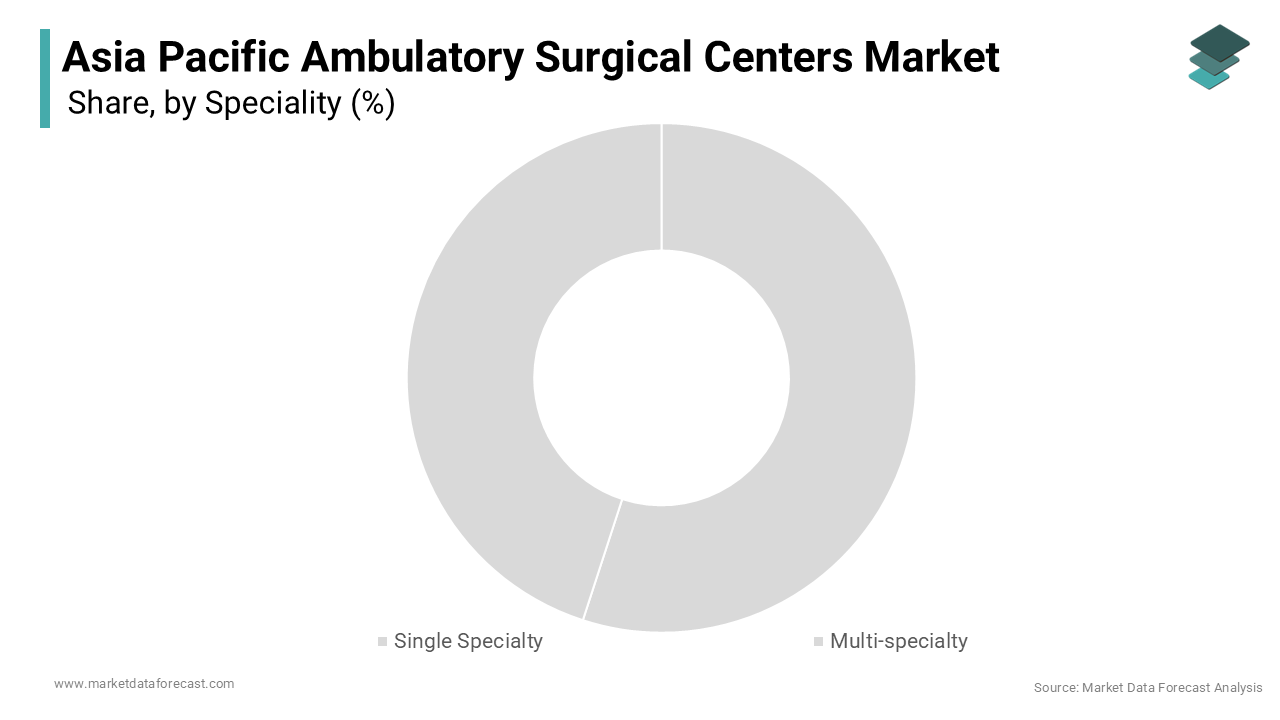
However, the multi-specialty segment is estimated to record a CAGR of 10.2% over the forecast period in the Asia-pacific market owing to the rising demand for comprehensive care and convenience. The increasing demand for comprehensive care and convenience is contributing to the rapid growth of multi-specialty ambulatory segment in this regional market. Patients prefer facilities that can address multiple health issues in a single visit, reducing the need for travel and coordination between different providers. According to the McKinsey Global Institute, healthcare consumers increasingly value "one-stop" care models that provide integrated services. In China, the rise of private healthcare groups operating multi-specialty chains has gained traction among the urban middle class. According to the Chinese Hospital Association, the number of private healthcare institutions in China has seen double digit growth, with many offering multi-specialty outpatient services. These centers offer a wide range of services including general surgery, orthopedics, and pain management under one roof. The convenience of accessing diverse specialties appeals to busy professionals and families seeking efficient healthcare solutions. In Singapore, integrated polyclinics and private multi-specialty centers are expanding to meet the needs of an aging population with multiple comorbidities. The Ministry of Health Singapore encourages the development of such facilities to decentralize care from acute hospitals. The ability to manage complex cases with input from various specialists in an outpatient setting enhances patient engagement and adherence. As healthcare consumers prioritize convenience and continuity of care, multi-specialty centers are well positioned to capture this growing market segment.
By Component Insights
The service segment led the market by capturing the highest share of 71.7% of the regional market in 2025. The dominance of service segment in this regional market is attributed to the labor intensive nature of surgical procedures and the recurring revenue generated from patient care. Surgical services encompass the fees for surgeons, anesthesiologists, nurses, and support staff who are essential for safe and effective patient care. According to the World Health Organization, personnel costs typically account for 60% to 80% of healthcare budgets in most countries. In India, the cost of human resources represents over 60% of the operational budget for ambulatory surgical centers according to the Federation of Indian Chambers of Commerce and Industry. The shortage of skilled healthcare workers necessitates competitive compensation packages, further driving up service costs. In Japan, the aging population requires frequent surgical interventions, relying heavily on the expertise of medical professionals. The Japanese Ministry of Health, Labour and Welfare reports that healthcare expenditures for the elderly are rising significantly, reflecting the high value of clinical services. The complexity of surgical procedures demands continuous professional development and training, adding to the service value. Patients are willing to pay a premium for high quality care provided by experienced specialists. The recurring nature of surgical services ensures a steady revenue stream for ambulatory centers. Unlike hardware or software, which are one time or periodic purchases, services generate consistent income with each patient encounter. This fundamental dependency on human expertise sustains the dominant share of the service component in the market.
However, the software segment is estimated to witness a CAGR of 13.3% over the forecast period in the Asia-pacific ambulatory surgical centers market owing to the digital transformation and the need for operational efficiency. The accelerating digital transformation in healthcare and the mandatory adoption of electronic health records (EHR) are further propelling the expansion of the software segment in this regional market. Governments and regulatory bodies in the Asia Pacific are increasingly mandating the use of digital systems to improve data accuracy and patient safety. According to the World Health Organization, digital health is a key priority for strengthening health systems in the South-East Asia and Western Pacific regions. In Singapore, the National Electronic Health Record system enables seamless sharing of patient data across healthcare providers. According to the Integrated Health Information Systems of Singapore, the vast majority of healthcare institutions are now digitally connected to the national health network. Ambulatory surgical centers are investing in specialized EHR software to comply with regulations and enhance clinical documentation. In China, the government’s Healthy China 2030 plan promotes the informatization of medical services, driving software adoption. The Chinese National Health Commission reports that the adoption of high level electronic medical records has become a standard for hospital assessments. The integration of EHR with billing and scheduling modules improves operational efficiency and reduces administrative burdens. Cloud based solutions offer scalability and remote access, appealing to smaller centers. The need for real time data analytics to monitor performance metrics further fuels software demand. As healthcare providers recognize the strategic value of data digitization, the investment in software solutions continues to surge.
By Application Insights
The ophthalmology segment dominated the market in 2025 with 34.7% of the regional market share. The dominance of ophthalmology segment in this regional market is driven by the high prevalence of eye diseases and the suitability of eye surgeries for outpatient settings. Cataract surgery is one of the most frequently performed outpatient procedures globally due to its safety and efficacy. According to the World Health Organization, cataracts remain the leading cause of blindness globally, with a particularly high burden in Southeast Asia. In India, the National Programme for Control of Blindness estimates that cataracts are responsible for approximately 62% of blindness in the country. The short duration of cataract surgery and minimal recovery time make it ideal for ambulatory settings. In China, the rising incidence of myopia among children and young adults has increased the demand for refractive surgeries such as LASIK. According to the Chinese Ophthalmological Society, myopia prevalence in certain urban youth populations has reached 80% to 90%. The availability of advanced technologies like femtosecond lasers in outpatient centers has improved outcomes and patient satisfaction. In Japan, the super aging society ensures a consistent demand for cataract and glaucoma treatments. The Japanese Ophthalmological Society reports that hundreds of thousands of ophthalmic procedures are performed annually in clinics. The standardized nature of these procedures allows for high throughput and efficient resource utilization. The widespread insurance coverage for cataract surgery in many countries further facilitates access. These factors collectively sustain the dominant position of ophthalmology in the ambulatory surgical centers market.
REGIONAL ANALYSIS
Ambulatory Surgical Centers Market Analysis
China accounted for 31.6% of the regional market share in 2025 and emerged as the most dominating country in this regional market. The Chinese market is characterized by rapid urbanization and government reforms promoting outpatient care. The driving factors include the vast population and the expansion of private healthcare networks. According to the National Health Commission of China, the government has explicitly supported the development of social medical institutions to supplement the public system. The number of private hospitals in China has surpassed the number of public hospitals, growing by approximately 10% annually according to the Chinese Hospital Association. The rising middle class is increasingly seeking convenient and high quality surgical options outside of crowded public hospitals. The implementation of tiered diagnosis and treatment policies directs minor surgeries to outpatient settings. In major cities like Beijing and Shanghai, specialized eye and dental clinics are proliferating. The inclusion of more outpatient procedures in medical insurance schemes has improved affordability. Domestic companies are investing in building chains of ambulatory centers to capture market share. The focus on efficiency and cost containment drives the adoption of this model. The large scale of the healthcare system and ongoing policy support position China as the dominant force in the regional market. The continuous improvement in regulatory frameworks further facilitates growth.
Japan occupied a promising share of the Asia-pacific ambulatory surgical centers market in 2025. The super aging society, well established outpatient culture, the high demand for cataract and orthopedic surgeries and the robust reimbursement system are driving the expansion of the Japanese market. According to the Ministry of Health, Labour and Welfare of Japan, people aged 65 and over account for more than 50% of the country's total medical expenditure. The national health insurance system covers a wide range of outpatient procedures, facilitating access. According to the Japanese Society for Cataract and Refractive Surgery, the vast majority of cataract surgeries in Japan are performed in clinics rather than large hospitals. The high density of private clinics in urban areas ensures convenient access for patients. Japan has a long history of small specialized clinics which aligns with the ambulatory surgical center model. The government promotes community based integrated care systems to support aging in place. This policy encourages outpatient interventions over hospital admissions. The advanced technological infrastructure in Japanese clinics supports high quality care. The stability of the healthcare system and the consistent demand from the elderly population sustain the market. Japan’s mature market serves as a benchmark for efficient outpatient care delivery in the region.
India is estimated to record a healthy CAGR in the Asia-pacific ambulatory surgical centers market during the forecast period owing to the large underserved population, the growth of private healthcare chains, the high burden of eye diseases and the affordability of outpatient care. According to the National Programme for Control of Blindness and Visual Impairment, millions of cataract surgeries are performed annually, with a majority occurring in outpatient or eye-specific facilities. The Ayushman Bharat scheme aims to provide health coverage to 500 million people, significantly increasing access to surgical services. According to the Federation of Indian Chambers of Commerce and Industry, the private healthcare sector in India is expected to continue its rapid expansion, particularly in tier two and tier three cities. Major hospital groups are establishing standalone day surgery centers to improve operational efficiency. The cost sensitivity of the Indian market favors the lower cost structure of ambulatory centers. The rising prevalence of lifestyle diseases and the growth of the middle class further drive demand.
COMPETITIVE LANDSCAPE
The competition in the Asia Pacific Ambulatory Surgical Centers Market is characterized by a mix of large integrated healthcare groups and specialized standalone clinics. Leading players leverage their brand reputation extensive networks and clinical expertise to maintain dominance. However smaller specialized centers are gaining traction by offering niche services and personalized care experiences. The market witnesses intense competition based on quality of care technological advancement and patient convenience. Strategic collaborations with insurance providers and corporate clients are common tactics to secure steady patient volumes. Price competitiveness remains a key factor particularly in price sensitive markets like India and China. Companies are increasingly focusing on digital health solutions to enhance patient engagement and operational efficiency. The entry of international healthcare chains into emerging markets further intensifies the competitive landscape. Regulatory requirements and accreditation standards serve as barriers to entry but also as differentiators for established players. Innovation in service delivery and continuous investment in infrastructure are essential for sustaining competitive advantage. This dynamic environment drives improvements in healthcare accessibility and quality across the region.
KEY MARKET PLAYERS
Some of the prominent companies operating in the Asia Pacific ambulatory surgical centers market include
- Affinity Surgery Centre
- Bumrungrad International Hospital
- IHH Healthcare Berhad
- Parkway Pantai Limited
- Vasan Eye Care
- Centre for Sight
- RG Stone
- Japanese Red Cross Medical Center
- University of Tokyo Hospitals
- Ambulatory Endoscopy Centre (AEC)
- Aptus Surgery Centre
- Novena Surgery
- Asan Medical Center
- Durango Outpatient Surgery Center
- Valley Ambulatory Surgery Center
Top Players in the Market
IHH Healthcare Berhad
IHH Healthcare Berhad stands as a leading integrated healthcare group with a significant footprint in the Asia Pacific ambulatory surgical centers market. The company operates a vast network of hospitals and specialty clinics across Malaysia Singapore and Turkey contributing to global standards in outpatient care. Recent actions include the expansion of its day surgery facilities in Kuala Lumpur and Singapore to cater to the growing demand for minimally invasive procedures. IHH focuses on enhancing patient experience through digital health initiatives and streamlined admission processes. The company invests heavily in training specialized medical staff to ensure high quality outcomes in ambulatory settings. By leveraging its regional presence and operational expertise IHH strengthens its position as a preferred provider for elective surgeries. Its strategic partnerships with insurance providers further facilitate access to affordable outpatient care. These efforts reinforce its commitment to delivering efficient and patient centric healthcare solutions across the region.
Parkway Pantai Limited
Parkway Pantai Limited is a prominent healthcare provider in the Asia Pacific region known for its extensive network of hospitals and ambulatory surgical centers. The company plays a crucial role in advancing outpatient surgical services in countries like Singapore India and China. Recent strategies involve upgrading existing facilities with state of the art operating theaters and recovery units designed for same day discharge. Parkway Pantai emphasizes clinical excellence by recruiting top specialists in ophthalmology orthopedics and gastroenterology. The company has also implemented advanced electronic health record systems to improve care coordination and efficiency. Its focus on medical tourism attracts international patients seeking high quality ambulatory care. By expanding its portfolio of specialized clinics Parkway Pantai enhances its capability to handle complex outpatient procedures. The integration of telemedicine services supports pre and post operative care ensuring comprehensive patient support. These initiatives solidify its reputation as a leader in the ambulatory surgical sector.
Bumrungrad International Hospital
Bumrungrad International Hospital is a renowned healthcare institution in Thailand with a strong presence in the ambulatory surgical centers market. The hospital is a global leader in medical tourism offering world class outpatient surgical services to international and local patients. Recent actions include the development of specialized centers for eye care and cosmetic surgery equipped with advanced technology. Bumrungrad focuses on providing personalized care through dedicated case managers and multilingual support staff. The hospital has invested in robotic surgery systems to enhance precision in minimally invasive procedures. Its accreditation by international bodies ensures adherence to global safety and quality standards. Bumrungrad continuously expands its network of partner clinics to extend its reach in the region. The adoption of digital platforms for appointment scheduling and remote consultations improves patient convenience. These efforts maintain its competitive edge and attract a diverse patient base seeking efficient and high quality ambulatory surgical care in the Asia Pacific region.
Top Strategies Used by the Key Market Participants
Key players in the Asia Pacific Ambulatory Surgical Centers Market primarily employ strategies such as strategic expansions and partnerships with local healthcare providers to enhance market penetration. Companies frequently invest in upgrading facilities with advanced medical technologies to improve procedural efficiency and patient outcomes. Focus on specialized services such as ophthalmology and orthopedics allows firms to differentiate their offerings. Additionally organizations prioritize digital transformation by implementing electronic health records and telemedicine solutions to streamline operations. Training and retaining skilled medical professionals remain critical to maintaining high standards of care. Regulatory compliance and accreditation from international bodies are pursued to build trust and attract medical tourists. Cost optimization through efficient supply chain management helps maintain competitive pricing. These multifaceted approaches enable companies to strengthen their competitive positions and address the evolving needs of patients and healthcare systems in the Asia Pacific region effectively.
MARKET SEGMENTATION
This research report on the Asia Pacific ambulatory surgical centers market has been segmented and sub-segmented into the following categories.
By Specialty
- Single Specialty
- Multi-specialty
By Component
- Service
- Software
- Hardware
By Application
- Ophthalmology
- Orthopedics
- Gastroenterology
- Pain Management/Spinal Injections
- Plastic Surgery
By Country
- India
- China
- Japan
- South Korea
- Australia
- New Zealand
- Thailand
- Malaysia
- Vietnam
- Philippines
- Indonesia
- Singapore
- Rest of APAC