- Product Description Description
- Table of Contents TOC
- List of Table & Figure LOT
- Get Free Sample PDF Sample PDF
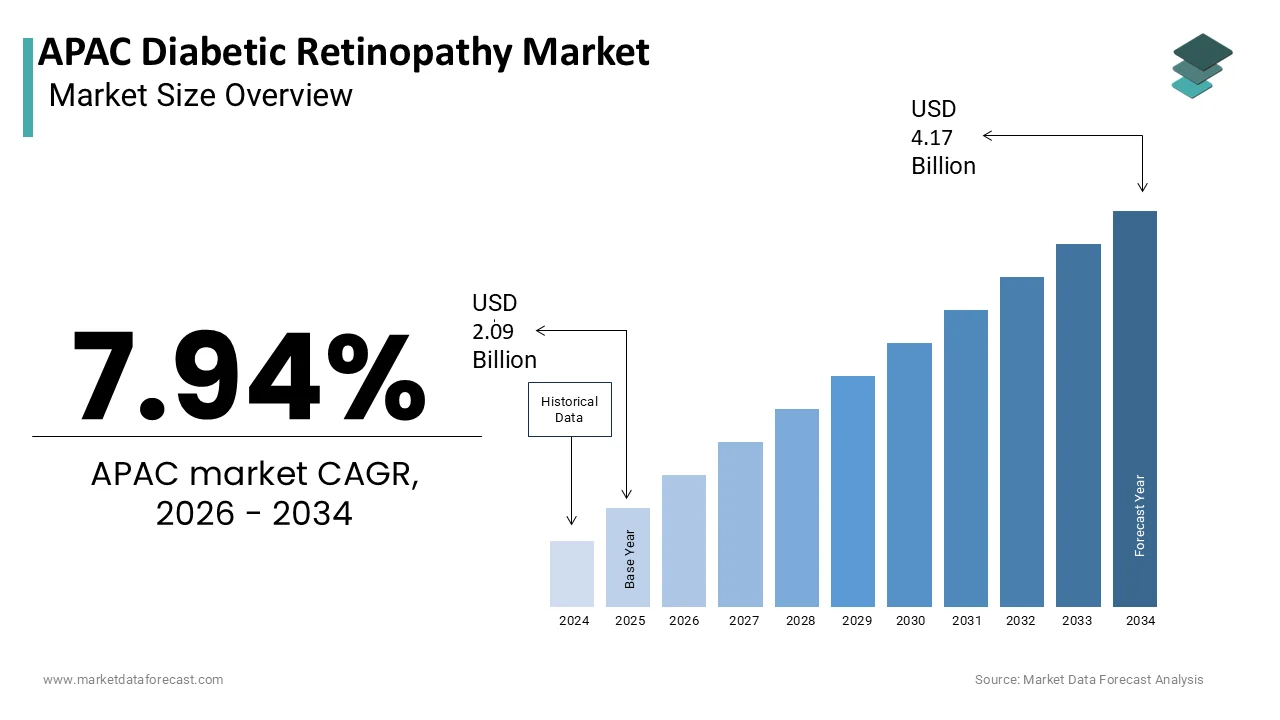
Market Size, 2025
$2.09 BnMarket Estimate, 2026
$2.26 BnMarket Forecast, 2034
$4.17 BnCAGR, 2026–2034
7.94%Executive Summary: Asia-Pacific Diabetic Retinopathy Market
- Market Scope: Comprehensive Asia-Pacific (APAC) diabetic retinopathy market analysis covering treatment types, clinical indications, end-user settings, and country-level leadership frameworks.
- Market Valuation: Valued at USD 2.09 billion in 2025, estimated at USD 2.26 billion in 2026, and projected to reach USD 4.17 billion by 2034, registering a strong CAGR of 7.94% (2026–2034).
- Primary Growth Drivers: Rapidly expanding diabetic patient population, increasing awareness and government initiatives regarding diabetic eye care, rising disposable incomes, and technological diagnostic innovations. Key market challenges include gaps in healthcare access for low-income populations and a shortage of skilled ophthalmic professionals.
Key Market Segment Metrics (2026–2034)
| Category | Leading Segment (Position) | Fastest-Growing Segment |
|---|---|---|
| By Treatment Type | Anti-VEGF Drugs (preferred primary pharmaceutical therapy for managing retinal vascular leakage) | Intraocular Steroid Injections & Laser Surgery (expanding with advanced combination therapies) |
| By Indication | Non-Proliferative Diabetic Retinopathy - NPDR (largest early-stage patient pool) | Proliferative Diabetic Retinopathy - PDR (surging due to advanced disease progression in aging cohorts) |
| By End-User | Hospitals (primary high-volume centers handling complex eye surgeries) | Ophthalmic Clinics & Ambulatory Surgical Centers (growing rapidly for outpatient injection procedures) |
| By Country / Region | Japan (largest regional market driven by high medical expenditures, advanced diagnostics, and Lucentis usage) | China (experiencing rapid growth fueled by massive diabetic populations and government research funding) |
Major Market Players & Market Structure
Market Structure: Highly competitive pharmaceutical and medical technology landscape featuring major global healthcare corporations competing on advanced anti-VEGF biologic formulations, clinical trials, and expanded regional distribution.
Key Companies: Bayer AG, Pfizer Inc., Hoffmann-La Roche Ltd., Regeneron Pharmaceuticals Inc., Novartis AG, Valeant Pharmaceuticals International Inc., Abbott Laboratories Inc., Alimera Sciences Inc., and Ampio Pharmaceuticals Inc.
APAC Diabetic Retinopathy Market Size
The Asia-Pacific Diabetic Retinopathy Market is projected to grow from USD 2.09 billion in 2025 to USD 2.26 billion in 2026 and reach USD 4.17 billion by 2034, registering a CAGR of 7.94% during the forecast period from 2026 to 2034.
Diabetic retinopathy is an eye disease caused by long-term high blood sugar that damages the tiny blood vessels in the retina. The retina is the light-sensitive tissue at the back of the eye that helps you see. As per International Diabetes Federation projections, the age-adjusted prevalence of diabetic retinopathy in South-East Asian countries is expanding significantly and is on track to reach 12.2% by 2030. Healthcare institutions, specialized eye care clinics, and regional public health authorities increasingly deploy artificial intelligence-assisted fundus screening and advanced intravitreal anti-VEGF therapies to mitigate the rising burden of ocular morbidity. Furthermore, governmental chronic disease management frameworks across nations such as China, India, and Japan continue to integrate regular retinal screening guidelines into primary healthcare infrastructure. Consequently, the sector operates as a critical clinical and commercial frontier for preserving patient ocular health and preventing widespread functional blindness across densely populated regional territories.
MARKET DRIVERS
Exponential Surge in Regional Diabetes Prevalence
The relentless epidemiological expansion of type 2 diabetes across developing and developed economies in the region is the main factor behind the APAC diabetic retinopathy market. This expansion is accelerating the adoption of specialized retinal screening and management protocols. According to the International Diabetes Federation, the total number of adults living with diabetes across the Western Pacific and South-East Asia regions combined exceeds 290 million, reflecting an escalating public health crisis. This staggering patient volume directly correlates with an escalating demand for routine fundus examinations and early-stage diabetic retinopathy diagnostic evaluations across both public and private health networks. Furthermore, As per the World Health Organization, prolonged diabetes exposure leads to nearly all individuals with type 1 diabetes and over 60% of individuals with type 2 diabetes developing some form of retinopathy. Consequently, healthcare providers and clinics experience continuous, high-volume patient inflows requiring ongoing therapeutic monitoring and timely clinical intervention.
Rapid Integration of Artificial Intelligence in Retinal Screening
The accelerated deployment of artificial intelligence-powered diagnostic software and automated fundus cameras transforms large-scale screening paradigms, which further boosts the APAC diabetic retinopathy market. This deployment overcomes traditional shortages of trained ophthalmologists across remote regional territories. According to studies, integrating autonomous artificial intelligence platforms into community settings elevates screening adherence and accelerates the detection of referable eye diseases. This technological adoption directly drives market expansion by enabling non-specialized healthcare workers to conduct rapid, highly accurate diagnostic assessments without requiring immediate physical consultation with a retinal specialist. Additionally, as per sources, teleophthalmology networks expand critical preventive access, lower carbon emissions, and increase clinical cost-effectiveness within remote districts. Therefore, digital health integration successfully removes geographical barriers, channeling thousands of newly diagnosed patients into the formal clinical treatment ecosystem.
MARKET RESTRAINTS
Prohibitive Treatment Costs and Limited Insurance Reimbursement
The severe financial burden associated with prolonged anti-VEGF biopharmaceutical injections and advanced laser surgeries creates a substantial restraint for the APAC diabetic retinopathy market. This high cost prevents widespread therapeutic adoption across low- and middle-income Asian countries. According to World Bank global indicators, out-of-pocket health expenditures routinely exceed 50% of total health spending in multiple developing economies across South and Southeast Asia. This economic constraint directly impedes market penetration by forcing a significant percentage of vulnerable diabetic patients to forgo essential, recurring intravitreal treatments due to personal financial insolvency. Furthermore, as per the World Health Organization World Report on Vision, populations in low- and middle-income regions face severe financial hardship due to a lack of essential health packages that integrate comprehensive eye care interventions. Consequently, market expansion is heavily throttled in regions where patients cannot sustain the high cumulative costs required for long-term chronic retinal disease management.
Acute Shortage of Qualified Ophthalmic Specialists
The profound scarcity of certified vitreoretinal surgeons and specialized ophthalmologists across regional healthcare systems severely restricts diagnostic throughput and timely therapeutic intervention capacity, which inhibits the expansion of the APAC diabetic retinopathy market. According to International Council of Ophthalmology workforce data, the global mean density of practicing ophthalmologists stands at approximately 31.7 specialists per million population, highlighting deep geographic imbalances across developing regions. The critical workforce deficit directly limits market growth by creating extensive patient waiting lists and delaying essential surgical procedures required for advanced proliferative diabetic retinopathy cases. Additionally, as per Lancet Global Health, rural populations across low- and middle-income countries encounter lower detection rates and more frequent treatment interruptions due to distance and severe healthcare service shortages. Therefore, millions of high-risk individuals experience critical diagnosis delays, directly reducing the volume of advanced therapeutic interventions administered within the regional market.
MARKET OPPORTUNITIES
Expansion of Decentralized Teleophthalmology Networks
The rapid proliferation of mobile health units and portable, smartphone-attachable retinal cameras provides monumental commercial opportunities for the APAC diabetic retinopathy market. This expansion allows businesses to increase their diagnostic reach into underserved rural and semi-urban communities. According to the International Telecommunication Union, internet penetration across the Asia-Pacific region has expanded significantly and reached 77% of the population. This technological maturation directly accelerates market potential by enabling decentralized community health workers to instantly transmit fundus images to centralized reading centers for automated grading. Furthermore, according to the World Health Organization, cloud-based medical platforms accelerate regional telehealth deployment by integrating virtual diagnostic pipelines and rural consultations within unified networks. Consequently, medical device manufacturers and software developers can capture high-growth market segments by supplying portable, cost-effective screening hardware to primary care networks.
Development and Distribution of Biosimilar Ophthalmic Therapeutics
The rising commercial demand for affordable biological treatments opens lucrative pathways for regional pharmaceutical manufacturers, which is likely to accelerate the APAC diabetic retinopathy market. This trend allows them to introduce cost-effective biosimilar anti-VEGF agents into the clinical care continuum. According to research, the introduction of anti-VEGF biosimilars is expanding patient adherence and treatment initiation by providing significant therapy cost reductions. This economic shift directly stimulates market growth by lowering the unit cost of sight-saving intraocular injections, making chronic therapy accessible to broader demographic tiers. Additionally, as per sources, biologic medications constitute approximately 35% of total medicinal spending across major regulated markets. Therefore, strategic investments in local biosimilar production enable pharmaceutical companies to unlock high-volume demand across price-sensitive regional populations.
MARKET CHALLENGES
Severe Patient Non-Compliance and Low Disease Awareness
The pervasive lack of patient education regarding asymptomatic early-stage retinal degeneration leads to dangerously low adherence rates for routine annual eye examinations, which slows down the growth of the APAC diabetic retinopathy market. According to the International Diabetes Federation, over 40% of all adults living with diabetes across the South-East Asia region are undiagnosed, leaving millions at high risk for serious complications. This psychological and educational barrier directly undermines clinical outcomes because patients typically seek professional ophthalmic care only after irreversible vision loss has already occurred. Furthermore, as per sources, diabetic retinopathy is frequently asymptomatic in its early stages, causing a substantial proportion of patients to delay or completely fail to complete recommended annual comprehensive eye exams. Consequently, healthcare providers face persistent difficulties in sustaining long-term therapeutic engagement, disrupting the continuous consumption of diagnostic services and treatment pharmaceuticals.
Inadequate Ophthalmic Infrastructure in Primary Healthcare Settings
The profound deficiency of dedicated eye examination equipment and sterile treatment suites within primary public health facilities creates severe operational challenges for mass ophthalmic screening initiatives, which hinders the APAC diabetic retinopathy market expansion. According to the World Bank, deep geographic imbalances and limited local resources continue to restrict access to comprehensive eye care and essential vision screenings in remote and rural areas. The infrastructural deficit directly impairs systemic disease management by forcing primary clinics to refer every suspected retinopathy case upward to overcrowded tertiary urban hospitals. Additionally, as per the Asian Development Bank, upgrading health infrastructure and scaling up specialized medical equipment management remain crucial needs to improve primary healthcare delivery and quality of care. Therefore, the lack of foundational facility readiness prevents regional healthcare systems from establishing synchronized, high-volume screening programs capable of matching the relentless escalation of the diabetic population.
REPORT COVERAGE
| REPORT METRIC | DETAILS |
| Market Size Available | 2025 to 2034 |
| Base Year | 2025 |
| Forecast Period | 2026 to 2034 |
| Segments Covered | By Treatment Type, Indication, End-User, and Region |
| Various Analyses Covered | Global, Regional, and Country-Level Analysis, Segment-Level Analysis, Drivers, Restraints, Opportunities, Challenges; PESTLE Analysis; Porter’s Five Forces Analysis, Competitive Landscape, Analyst Overview of Investment Opportunities |
| Countries Covered | India, China, Japan, South Korea |
| Market Leaders Profiled | Bayer AGPfizer Inc.F. Hoffmann-La Roche Ltd. |
SEGMENTAL ANALYSIS
By Treatment Type Insights
The anti-vascular endothelial growth factor drug segment dominated the APAC diabetic retinopathy market and accounted for a 44.1% share in 2025. This segment dominated because clinicians prioritize targeted molecular inhibition to halt abnormal ocular blood vessel proliferation. According to the World Health Organization, unmanaged hyperglycemia damages blood vessels over time, giving rise to multi-organ microvascular complications that include diabetic retinopathy and nephropathy. This market dominance directly correlates with the exceptional clinical efficacy of agents like ranibizumab and aflibercept in preserving high-contrast visual acuity across aging patient demographics. Furthermore, as per sources, regular multi-year anti-VEGF therapeutic regimens substantially lower the incidence of vision-impairing center-involved diabetic macular edema. Consequently, pharmaceutical developers and regional healthcare distributors direct intensive capital investments toward expanding local supply chains for these frontline biological therapeutics. To sustain this leadership, researchers continuously evaluate extended-release delivery devices that minimize the frequency of required intraocular procedures for chronic sufferers. Furthermore, government reimbursement frameworks in several progressive Asian economies increasingly cover biological therapies, cementing anti-VEGF medications as the undisputed cornerstone of modern retinal disease intervention protocols. Regulatory agencies across multiple jurisdictions also streamline approval pathways for novel biosimilar formulations, which directly enhances market accessibility and ensures that a broader patient population can benefit from consistent, long-term biological treatment regimens without encountering prohibitive financial barriers.
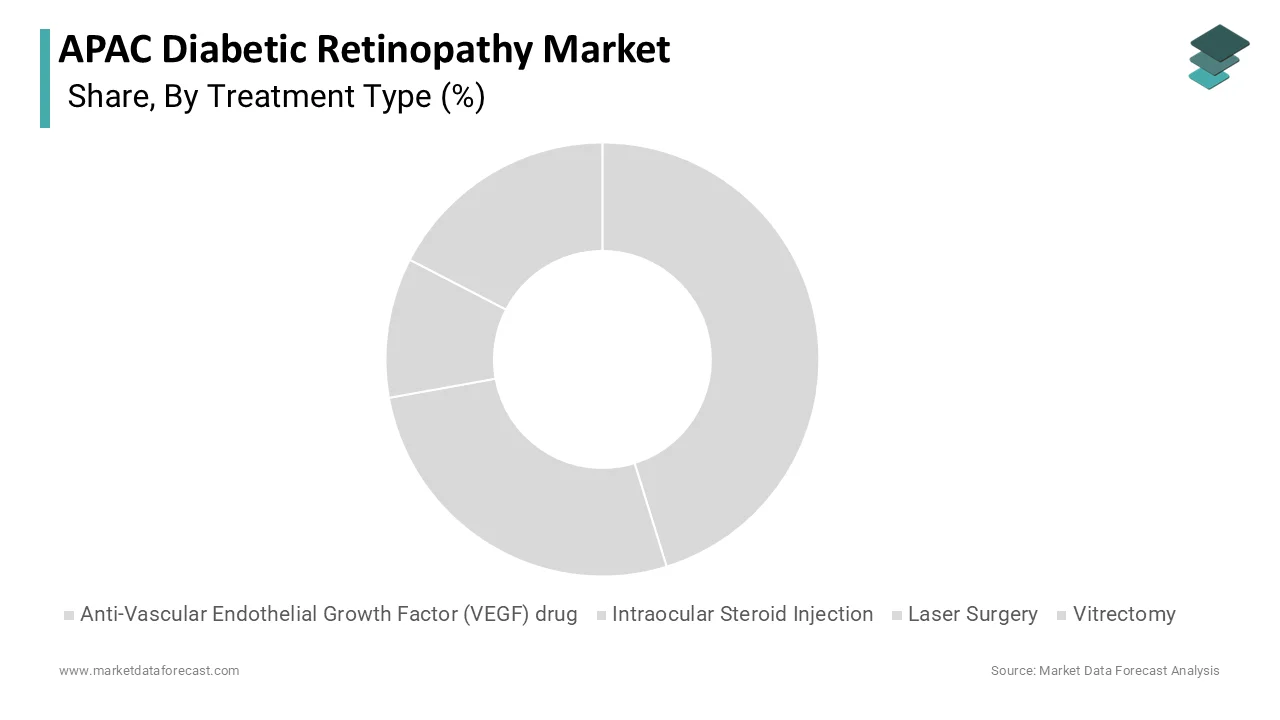
The intraocular steroid injections segment is estimated to register the fastest CAGR of 7.2% during the forecast period. According to the International Diabetes Federation, chronic microvascular changes from persistent diabetes drive long-term structural tissue alterations, driving up the global need for multidisciplinary preventative care networks. This rapid growth rate directly links to the clinical necessity of managing persistent macular edema in patients who exhibit inadequate therapeutic responses to standard anti-VEGF interventions. Additionally, as per studies, specialized long-acting drug delivery systems help mitigate the overall real-world care burden by significantly reducing required annual patient injection frequencies. Therefore, specialized retinal clinics are rapidly incorporating steroid delivery systems into their core treatment pathways to address complex, multi-factorial retinal pathologies. The ability of advanced corticosteroid implants to deliver continuous anti-inflammatory action over several months provides a vital therapeutic alternative for patients suffering from chronic, treatment-resistant retinal complications. As regional healthcare providers seek diverse modalities to customize patient care plans, the demand for specialized intraocular steroid formulations continues to experience unprecedented acceleration across major clinical networks. Clinical evaluations further demonstrate that sustained steroid delivery reduces the overall burden of frequent clinic visits, providing a highly convenient and economically viable solution for elderly or mobility-impaired patients residing in distant suburban territories.
By End-User Insights
The hospitals segment led the APAC diabetic retinopathy market and captured a 46.1% share in 2025. This leading position of the segment was attributed to the fact that comprehensive medical centers manage complex surgical interventions and severe proliferative retinopathy cases. According to Ithe nternational Hospital Federation, modern healthcare systems utilize integrated medical-nursing frameworks to manage complex patient loads and enhance operational efficiencies within clinical specialties. This market dominance directly correlates with the concentration of sophisticated diagnostic hardware, such as optical coherence tomography scanners and high-end surgical microscopes, within major metropolitan medical centers. Furthermore, according to the World Bank, community-level diagnostic capacity constraints and severe workforce shortages represent the primary bottlenecks to scaling up timely microvascular disease screenings in rural areas. Consequently, hospital administrators continuously allocate substantial capital budgets toward upgrading their specialized ophthalmology departments to handle surging patient volumes. Large institutional hospitals also benefit from established emergency care pathways and robust public health funding, allowing them to absorb high operational costs associated with advanced retinal surgical gear. This institutional resilience ensures that hospitals remain the primary hubs for comprehensive diabetic eye care management across both developed and emerging urban territories. Furthermore, academic medical centers within hospital networks conduct pioneering clinical research trials, attracting complex referral cases from across regional borders and solidifying their structural dominance in the sector.
The ophthalmic clinics segment is anticipated to witness the fastest CAGR of 8.3% from 2026 to 2034 due to the decentralization of specialized eye care services and rising patient preference for outpatient convenience. According to Asia-Pacific eye care guidelines, shifting routine disease surveillance and micro-injection workflows to specialized outpatient settings reduces overcrowding at tertiary institutions and improves overall resource utilization. This rapid growth rate directly links to the distinct advantage of minimized waiting times, specialized ambulatory surgical setups, and focused clinical attention that standalone clinics offer compared to congested general hospitals. Additionally, as per research, deploying non-mydriatic point-of-care screening devices directly into primary care networks minimizes structural patient-level obstacles such as long travel times and heavy travel costs. Therefore, specialized eye clinics are rapidly multiplying across suburban and regional districts to capture the growing demand for accessible, prompt chronic disease management. These specialized outpatient facilities streamline patient throughput by focusing exclusively on vision care, utilizing advanced laser technologies and efficient injection protocols that optimize clinical workflows. As healthcare policies shift toward outpatient efficiency, ophthalmic clinics continue to capture significant market share from traditional inpatient hospital settings while expanding consumer access through localized boutique care models.
COUNTRY LEVEL ANALYSIS
India Diabetic Retinopathy Market Analysis
India is a rapidly expanding region within the APAC diabetic retinopathy market. This expansion is fuelled by a massive diabetic patient base and accelerating healthcare infrastructure investments. According to the International Diabetes Federation, the adult diabetic population in India expanded drastically and reached an estimated 101 million individuals, magnifying the urgent national requirement for scaled clinical monitoring systems. This prominent regional position directly correlates with the aggressive expansion of corporate eye care chains and government-backed rural health missions aimed at deploying digital fundus imaging to underserved districts. Furthermore, as per the Ministry of Health and Family Welfare, India's national blindness control framework integrates strategic targeted funding to support non-governmental partnerships and expand public infrastructure capacity. Consequently, domestic pharmaceutical manufacturers and international medical device firms consistently target the Indian market to introduce cost-effective diagnostic and therapeutic alternatives. The country's growing middle-class demographic, paired with increasing health insurance penetration, encourages higher utilization of private ophthalmic clinics for regular retinal evaluations. Strategic investments in telemedicine networks across tier-two and tier-three cities further solidify India's position as a dynamic growth driver for the broader regional market. Local medical software developers also introduce customized artificial intelligence triage tools that drastically reduce diagnostic backlogs in public community health centers.
China Diabetic Retinopathy Market Analysis
China was the top performer in the APAC diabetic retinopathy market and accounted for a share of 32.5% in 2025. This prominence of the Chinese market was propelled by substantial government healthcare expenditures, widespread adoption of artificial intelligence diagnostics, and advanced tertiary hospital networks. According to the National Bureau of Statistics of China, strategic capital allocations and targeted health investments expand regional primary care facilities to manage complex physiological changes across regional communities. This established market status directly correlates with stringent national health guidelines mandating regular diabetic eye screenings across all major municipal endocrinology departments. Additionally, as per research, digital clinical applications improve patient compliance and optimize metabolic markers by establishing direct connectivity between patients and specialized practitioners. Therefore, Chinese healthcare providers operate within a heavily structured environment that rewards technological innovation and large-scale ophthalmic service delivery. Operating successfully in this market requires continuous integration of domestic artificial intelligence software with high-end imaging hardware to manage millions of screened patients. Government-led healthcare reforms and expanding medical insurance reimbursement catalogs ensure that advanced anti-VEGF therapies remain accessible to a vast population of urban and semi-urban diabetic patients. Furthermore, domestic biotechnology firms accelerate clinical trials for home-grown biological therapies, intensifying market competition and lowering overall treatment costs.
Japan Diabetic Retinopathy Market Analysis
Japan is a mature player in the APAC diabetic retinopathy market due to an aging demographic profile and universal healthcare coverage that ensures broad access to premium ophthalmic care. According to the Ministry of Health, Labour and Welfare of Japan, the proportion of elderly individuals aged 65 and older reached a record 29.1% of the national population, amplifying the long-term strain on structural medical services. This sophisticated market status directly correlates with the near-universal adoption of advanced intravitreal biological therapies and high-resolution optical coherence tomography diagnostics in standard clinical practice. Additionally, as per studies, advanced vitreoretinal interventions exhibit structural geographic disparities, with procedures heavily concentrated around specialized centers housing highly trained board-certified ophthalmologists. Therefore, Japanese medical institutions pioneer cutting-edge treatment protocols, including sustained-release drug delivery implants and automated robotic surgical assists. Although market expansion proceeds at a steady, moderate pace due to demographic saturation, the high unit cost of innovative therapeutics maintains robust market value. Local pharmaceutical leaders continue to collaborate with global research entities to introduce next-generation molecules tailored to the precise clinical needs of elderly diabetic patients. Specialized geriatric care frameworks also guarantee continuous monitoring compliance, significantly minimizing rates of severe visual impairment across the national population.
South Korea Diabetic Retinopathy Market Analysis
South Korea occupies a noteworthy position in the APAC diabetic retinopathy market. It exhibits a highly digitized and technologically integrated regional market structure, supported by advanced national broadband infrastructure, universal health insurance, and tech-savvy urban populations. According to Korea Disease Control and Prevention Agency data, nationwide public screening efforts emphasize early metabolic disease monitoring to optimize diagnostic timelines for microvascular complications. This advanced market position directly correlates with the rapid deployment of national teleophthalmology registries and AI-powered diagnostic software within primary and secondary care clinics. Furthermore, as per the Korean Ministry of Health and Welfare, primary medical chronic disease pilot projects expand infrastructure support to improve long-term diabetes management. Consequently, specialized eye care centers across Seoul and other metropolitan hubs seamlessly integrate advanced anti-VEGF therapeutics with digital electronic health records. The country's robust biotechnology sector actively invests in developing novel biosimilar ophthalmic drugs, enhancing market competitiveness and reducing overall treatment costs for chronic patients. This high level of technological integration ensures that South Korea remains a premier testing ground for innovative digital health solutions in ophthalmology. Strategic government initiatives further support medical software start-ups aiming to export cloud-connected diagnostic systems globally.
Australia Diabetic Retinopathy Market Analysis
Australia grew steadily in the APAC diabetic retinopathy market. It operates as a highly structured and quality-driven regional market, capturing significant value through well-funded public healthcare systems and comprehensive national eye health policies. According to the Australian Institute of Health and Welfare, total national expenditure on chronic conditions reached an estimated 98.5 billion dollars, demonstrating the massive systemic burden of managing long-term illnesses. As per the Royal Australian and New Zealand College of Ophthalmologists, collaborative care pathways seek to reduce waiting times and optimize periodic surveillance for asymptomatic high-risk individuals. Additionally, according to the Department of Health and Aged Care, specialized regional programs provide targeted subsidies and funding models to recruit and retain healthcare workers in remote communities. Therefore, Australian healthcare providers successfully maintain exceptional patient compliance and low rates of preventable blindness through coordinated multidisciplinary care teams. The market is characterized by high adoption rates of premium-priced biological drugs and advanced laser surgery platforms within both public hospitals and private ophthalmic practices. Strategic investments in remote indigenous health screening initiatives further drive consistent demand for portable diagnostic equipment across the vast Australian continent. National digital health platforms also streamline communication between optometrists and hospital-based retinal specialists.
COMPETITIVE LANDSCAPE
The competitive landscape of the Asia Pacific diabetic retinopathy market is characterized by intense rivalry among established multinational life science conglomerates and agile regional medical technology innovators striving for clinical precision and market penetration. Market participants continuously vie for industry leadership by introducing next-generation anti-VEGF molecules, sustained-release intraocular implants, and portable fundus imaging devices that redefine established standards of ophthalmic care. Strategic market positioning heavily relies on product efficacy, safety profiles, and the ability to offer cost-effective therapeutic alternatives that appeal to price-sensitive healthcare systems. Severe specialist shortages, complex regulatory approval pathways across multiple national jurisdictions, and variable public reimbursement frameworks compel companies to continuously optimize their commercial distribution networks and accelerate investments in decentralized digital health models. Furthermore, domestic biotechnology firms frequently challenge traditional multinational giants by introducing affordable biosimilar formulations and localized screening technologies tailored to resource-constrained environments. Consequently, sustained market leadership demands massive capital allocation toward precision clinical research, persistent digital adaptation, and proactive management of regional healthcare logistics to maintain a distinct competitive edge.
KEY MARKET PLAYERS
Some of the companies that are playing a dominating role in the APAC Diabetic Retinopathy Market include:
- Bayer AG
- Pfizer Inc.
- F. Hoffmann-La Roche Ltd.
- Regeneron Pharmaceuticals, Inc.
- Novartis AG
- Valeant Pharmaceuticals International, Inc.
- Abbott Laboratories, Inc.
- Alimera Sciences, Inc.
- Ampio Pharmaceuticals, Inc.
TOP LEADING PLAYERS IN THE MARKET
- Bayer provides critical pharmacological treatments and specialized biological therapies utilized extensively by ophthalmologists for managing diabetic retinopathy and associated macular edema throughout Asia. The enterprise contributes deeply to the market by driving widespread clinical adoption of targeted anti-VEGF therapies that prevent severe vision loss in high-risk patients. To reinforce its competitive posture, the organization prioritizes extensive educational outreach programs for regional primary care physicians to promote early diagnostic screenings. Additionally, the firm focuses on strengthening strategic commercial partnerships with local pharmaceutical distributors to optimize supply chain efficiency and product affordability. These dedicated operational advancements enable the business to remain a foundational therapeutic supplier for large-scale clinical practices across diverse developing countries.
- Roche delivers cutting-edge diagnostic imaging platforms, automated laboratory solutions, and innovative intraocular biological therapies designed to detect and treat advanced retinal diseases. The enterprise contributes significantly to the sector by combining precision diagnostic instrumentation with advanced therapeutic molecules to create comprehensive patient care pathways. To strengthen its market standing, the organization actively executes strategic acquisitions of specialized digital health innovators and expands its regional clinical research footprint. Moreover, the firm focuses on integrating artificial intelligence software with its established ophthalmic hardware to support early disease detection initiatives in remote medical centers. Through continuous product diversification, the company secures enduring partnerships with leading healthcare providers and specialty eye clinics throughout the region.
- Novartis delivers advanced therapeutic solutions and specialized ophthalmic pharmaceutical products that target retinal vascular complications across healthcare networks in the Asia Pacific region. The enterprise contributes substantially to the market by supplying effective anti-vascular endothelial growth factor treatments and expanding clinical access to chronic eye care management programs. To strengthen its commercial position, the corporation actively collaborates with regional research institutions and clinical trial networks to evaluate innovative delivery formulations. Furthermore, the organization continuously invests in expanding its distribution infrastructure across emerging economies to ensure stable product availability for patients suffering from diabetic eye disorders. Through these strategic medical initiatives, the company maintains a vital role in advancing regional visual health outcomes.
TOP STRATEGIES USED BY KEY MARKET PARTICIPANTS
Key market participants operating within the Asia Pacific diabetic retinopathy industry deploy sophisticated commercial and technological strategies designed to secure a competitive advantage amidst a rapidly expanding diabetic patient population and evolving clinical demands. Major pharmaceutical and medical device corporations heavily prioritize strategic joint ventures and distribution agreements with local healthcare providers to penetrate high-growth emerging economies effectively. Organizations routinely establish robust clinical research partnerships with regional medical universities and specialized eye hospitals to validate innovative anti-VEGF therapies and diagnostic imaging tools. Furthermore, leading entities execute aggressive digital health integration strategies, deploying artificial intelligence-powered screening software and teleophthalmology platforms directly into primary community clinics. Companies also focus intensely on healthcare provider education and patient awareness campaigns, ensuring that diabetic individuals recognize the critical importance of routine annual retinal examinations. Additionally, targeted pricing strategies, local manufacturing investments, and comprehensive regulatory compliance initiatives remain central tactical methods utilized to expand market reach and overcome severe infrastructure disparities across rural territories.
MARKET SEGMENTATION
This research report on the APAC diabetic retinopathy market has been segmented and sub-segmented into the following categories
By Treatment Type
- Anti-Vascular Endothelial Growth Factor (VEGF) drug
- Intraocular Steroid Injection
- Laser Surgery
- Vitrectomy
By Indication
- Non-Proliferative Diabetic Retinopathy (NPDR)
- Mild
- Moderate
- Severe
- Proliferative Diabetic Retinopathy (PDR)
By End-User
- Hospitals
- Ophthalmic Clinics
- Ambulatory Surgical Centers
By Country
- India
- China
- Japan
- South Korea
- Australia
- New Zealand
- Thailand
- Malaysia
- Vietnam
- Philippines
- Indonesia
- Singapore
- Rest of APAC