- Product Description Description
- Table of Contents TOC
- List of Table & Figure LOT
- Get Free Sample PDF Sample PDF
Market Size, 2025
$1.41 BnMarket Estimate, 2026
$1.56 BnMarket Forecast, 2034
$3.55 BnCAGR, 2026–2034
10.80%Executive Summary: Asia Pacific Drug Screening Market
- Market Scope: Comprehensive Asia-Pacific drug screening market analysis covering sample types, end-user settings, products and services, country-level landscapes, and regional regulatory trends.
- Market Valuation: Valued at USD 1.41 billion in 2025, estimated at USD 1.56 billion in 2026, and projected to reach USD 3.55 billion by 2034, registering a compound annual growth rate (CAGR) of 10.80% from 2026 to 2034.
- Primary Growth Drivers: Rising drug abuse awareness and government-led bans on substance abuse, increasing workplace and clinical safety regulations, rising population and healthcare infrastructure expansion, and growing incidence of drug allergies and therapeutic drug monitoring requirements. Key market restraints include privacy concerns, device accuracy issues, and the availability of masking agents designed to evade test results.
Key Market Segment Metrics (2026–2034)
| Category | Leading Segment (2025 Position) | Fastest-Growing Segment |
|---|---|---|
| By Sample Type | Urine & Blood Samples (held the dominant market share owing to standard clinical protocols and widespread regulatory acceptance) | Hair & Saliva Testing (growing rapidly driven by non-invasive procedures and long-term historical drug detection requirements) |
| By Products & Services | Rapid Test Devices & Immunoassay Analyzers (commanded major revenue shares due to quick turnaround times and point-of-care usability) | Chromatography & Breathalyzers (experiencing high growth backed by high-precision confirmation testing and law enforcement demands) |
| By End User | Hospitals & Workplaces (dominated as primary operational settings for emergency screening and institutional drug policies) | Criminal Justice & Law Enforcement (growing steadily alongside strict government anti-substance initiatives) |
| By Country / Region | China & India (account for the highest market revenues in the APAC region due to massive population bases and rising substance monitoring) | Southeast Asian Markets & Rest of APAC (recording high relative growth rates supported by expanding healthcare frameworks) |
Major Market Players & Market Structure
Market Structure: Highly competitive diagnostics and analytical instrumentation market dominated by global healthcare giants providing advanced point-of-care screening devices and laboratory chromatography solutions.
Key Companies: Thermo Fisher Scientific Inc., Express Diagnostics Int’l Inc., Abbott Laboratories, Siemens AG, Alere Inc., Quest Diagnostics Incorporated, Laboratory Corporation of America Holdings, Bio-Rad Laboratories Inc., Shimadzu Corporation, and Omega Laboratories.
 Download Free Sample Report
Asia Pacific Drug Screening Market Size
The size of the Asia Pacific drug screening market was worth USD 1.41 billion in 2025. The Asia Pacific market is anticipated to grow at a CAGR of 10.8% from 2026 to 2034, reaching USD 3.55 billion by 2034, up from USD 1.56 billion in 2026.
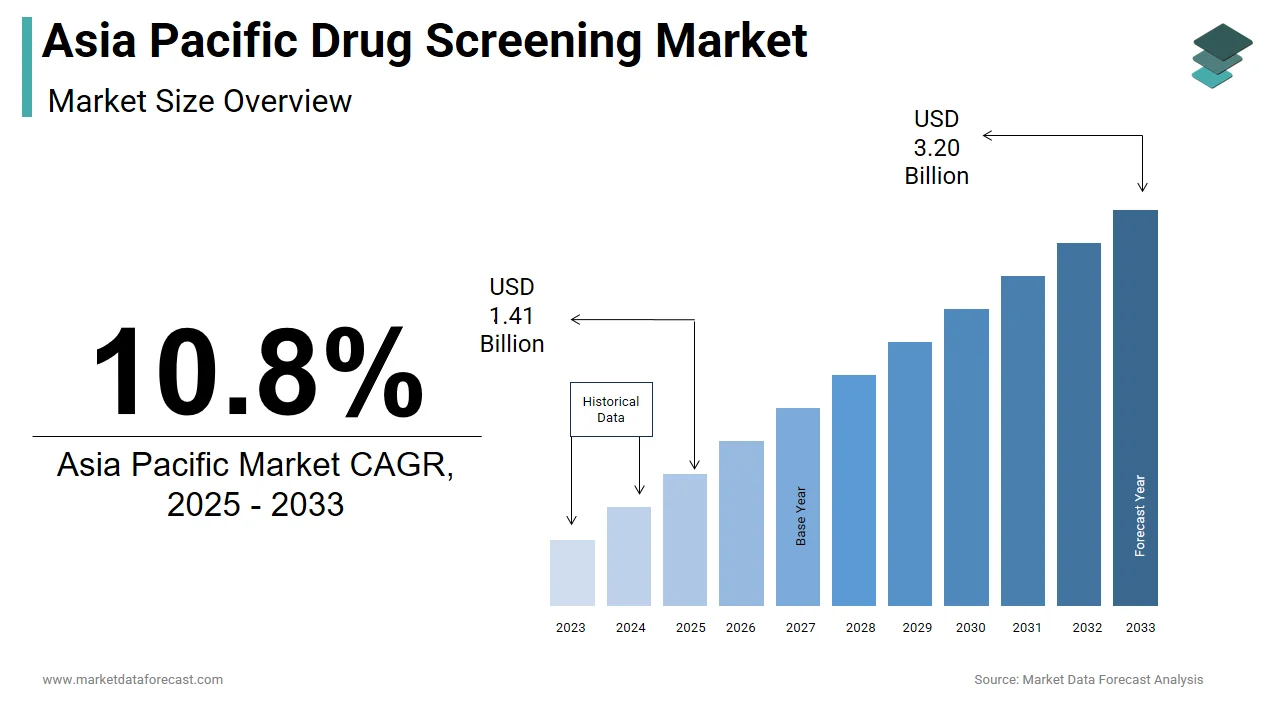
The Asia-Pacific drug screening market serves critical functions in workplace safety, law enforcement, clinical diagnostics, and sports integrity across the region. According to the United Nations Office on Drugs and Crime, approximately 275 million people globally used drugs at least once in the past year, with a significant concentration of users residing in Asia. According to the World Health Organization, substance use disorders contribute to over 500,000 deaths annually worldwide, necessitating robust screening mechanisms for early intervention and monitoring. These alarming public health metrics drive the adoption of rapid diagnostic tests and laboratory-based confirmation methods. Governments in countries like China and Japan enforce strict zero-tolerance policies, mandating regular testing for specific professions. The integration of advanced mass spectrometry and immunoassay technologies enhances detection accuracy and reduces false positives. This market thus plays a pivotal role in maintaining social order and protecting workforce productivity. The increasing prevalence of synthetic opioids and new psychoactive substances further complicates detection efforts, requiring continuous innovation in screening protocols. Consequently, the demand for sensitive and specific drug screening solutions continues to rise across the Asia Pacific region.
MARKET DRIVERS
Stringent Workplace Safety Regulations and Corporate Policies
The implementation of rigorous workplace safety regulations and corporate drug-free policies is a key factor driving the expansion of the drug screening market in Asia Pacific. Employers across various industries recognize that substance abuse compromises employee performance and increases the risk of industrial accidents. According to the International Labour Organization, workplace accidents related to substance abuse cost economies in the Asia Pacific region approximately 4% of their gross domestic product annually. This substantial economic burden motivates corporations to adopt comprehensive pre-employment and random drug testing programs. According to the Australian Department of Employment and Workplace Relations, over 60% of large mining and construction companies in Australia mandate regular drug screening for all onsite personnel. Such mandates create a consistent demand for reliable and rapid screening kits. In India, the Ministry of Railways has implemented mandatory drug testing for safety-critical staff following several high-profile incidents. These regulatory frameworks ensure that drug screening becomes an integral part of human resource management. Companies seek technologies that offer quick turnaround times to minimize operational disruptions. The legal liability associated with hiring individuals with substance abuse histories further incentivizes thorough background checks. This regulatory and corporate environment sustains steady growth in the commercial segment of the drug screening market.
Rising Prevalence of Substance Abuse and Government Initiatives
The escalating prevalence of substance abuse and subsequent government initiatives to combat addiction significantly propel the demand for drug screening solutions in the Asia Pacific region. Public health authorities are increasingly viewing drug addiction as a critical health crisis rather than solely a criminal issue. According to the United Nations Office on Drugs and Crime, East and Southeast Asia account for nearly 30% of global opiate seizures, highlighting the scale of the problem. This high volume of illicit trade necessitates extensive screening at borders and within communities. According to the Chinese National Narcotics Control Commission, the number of registered drug users in China exceeded 1.8 million in recent years, prompting expanded testing capabilities in rehabilitation centers. Governments are investing in public health infrastructure to identify and treat addicts effectively. Japan’s Ministry of Health, Labour and Welfare has strengthened laws requiring urine testing for suspected drivers, leading to increased usage of roadside screening devices. These public health measures drive the adoption of both point-of-care tests and confirmatory laboratory services. The shift toward treating addiction as a medical condition encourages regular monitoring of patients in recovery programs. This dual approach of enforcement and treatment creates a broad base of demand for diverse screening technologies across the region.
MARKET RESTRAINTS
High Cost of Advanced Confirmatory Testing Methods
The substantial financial burden associated with advanced confirmatory testing methods is hampering the widespread adoption of comprehensive drug screening protocols in Asia Pacific. While initial immunoassay screens are affordable, confirmatory tests using gas chromatography mass spectrometry or liquid chromatography tandem mass spectrometry require expensive equipment and highly trained personnel. According to the World Bank, healthcare expenditure per capita in many developing Asian nations remains below 100 USD, limiting the budget available for sophisticated diagnostic procedures. This economic constraint forces many smaller laboratories and clinics to rely solely on less accurate preliminary tests. According to the Association of Clinical Biochemists in Asia, the maintenance and calibration of mass spectrometry instruments can cost upwards of 50,000 USD annually. These ongoing expenses deter smaller healthcare providers from offering comprehensive drug screening services. In rural areas of countries like Indonesia and Vietnam, the lack of funding for advanced diagnostic infrastructure further restricts access to accurate testing. Patients and employers often opt for cheaper alternatives despite the higher risk of false results. The high initial investment required to set up accredited laboratories also slows down market expansion in emerging economies. This financial barrier limits the overall quality and reliability of drug screening services available in the region.
Social Stigma and Privacy Concerns
The pervasive social stigma associated with drug use and growing concerns regarding data privacy are also hindering the drug screening market expansion in Asia Pacific. In many Asian cultures, drug addiction is viewed as a moral failing rather than a medical condition, leading to severe social ostracization. According to the Asian Forum for Human Rights and Development, fear of discrimination prevents many individuals from seeking help or consenting to voluntary screening programs. This reluctance undermines public health initiatives aimed at early detection and intervention. Employees often resist mandatory workplace testing due to fears of unjust termination and loss of reputation. According to the Personal Data Protection Commission in Singapore, guidelines emphasize the need for strict consent and data security in health-related testing, adding complexity to implementation. Organizations must navigate these legal and ethical requirements carefully to avoid litigation. The lack of trust in how test results are stored and shared discourages participation in community-based screening efforts. In some jurisdictions, ambiguous laws regarding the ownership of biological samples create additional legal hurdles. These sociocultural and legal barriers hinder the normalization of drug screening as a routine health practice. Consequently, market growth is constrained by low participation rates in voluntary screening programs.
MARKET OPPORTUNITIES
Integration of Point of Care Testing Devices
The increasing integration of portable and user-friendly point-of-care testing devices is a substantial opportunity for the expansion of the drug screening market in Asia Pacific. These devices offer rapid results without the need for complex laboratory infrastructure, making them ideal for remote locations and field operations. According to the World Health Organization, the decentralization of diagnostic services is advocated to improve accessibility in low-resource settings. Point-of-care tests can deliver results in under 15 minutes, enabling immediate decision-making in emergency and law enforcement scenarios. According to the Indian Ministry of Home Affairs, handheld breathalyzers and saliva testers have been deployed at highway checkpoints to reduce drunk driving incidents. This initiative demonstrates the potential for large-scale adoption of portable screening tools. Technological advancements have improved the sensitivity of these devices, allowing them to detect multiple substances simultaneously. The convenience and speed of point-of-care testing appeal to private employers who wish to minimize downtime during employee screening. Manufacturers are focusing on developing compact devices with digital connectivity for real-time data reporting. This trend aligns with the growing demand for efficient and scalable screening solutions. The ability to conduct tests onsite reduces logistical costs and sample handling errors. These advantages position point-of-care devices as a key growth area in the market.
Expansion of Telemedicine and Digital Health Platforms
The rapid expansion of telemedicine and digital health platforms creates a fertile ground for the integration of remote drug monitoring and screening services in Asia Pacific. Digital health solutions enable healthcare providers to manage patient recovery and compliance remotely, reducing the need for frequent clinic visits. According to the Asian Development Bank, digital health investments in the region grew by 45% in the last two years, driven by increased internet penetration. This digital transformation allows for the coordination of home-based collection kits with centralized laboratory analysis. Patients can receive testing kits at home and mail samples back for analysis, with results delivered securely via mobile apps. According to the National Health Commission of China, internet hospitals have been promoted that integrate remote monitoring for chronic conditions, including substance use disorders. This model improves patient engagement and adherence to treatment plans. Digital platforms also facilitate data analytics to identify trends and optimize screening protocols. Insurance companies are beginning to cover remote monitoring services as part of wellness programs. The convergence of telecommunications and healthcare opens new revenue streams for drug screening providers. This innovative approach enhances accessibility and convenience for users across vast geographic areas.
MARKET CHALLENGES
Regulatory Fragmentation Across Countries
The lack of harmonized regulatory frameworks for drug screening across different countries in Asia Pacific is a significant challenge to the regional market. Each nation has its own unique laws regarding permissible substances, testing procedures, and privacy rights, creating a complex compliance landscape for multinational providers. According to the Asia Pacific Economic Cooperation forum, discrepancies in legal limits for blood alcohol content and drug thresholds hinder cross-border transportation and logistics operations. Companies operating in multiple countries must adapt their testing protocols to meet varying local requirements, increasing operational complexity and costs. The absence of mutual recognition agreements for test results means that screenings conducted in one country may not be accepted in another. This fragmentation impedes the development of regional standards for workplace safety and law enforcement. Manufacturers face difficulties in obtaining certifications for their products in every individual market. The varying levels of regulatory enforcement also create uneven playing fields for service providers. Some countries have stringent accreditation requirements while others have minimal oversight. This inconsistency undermines confidence in the reliability of screening results across the region. Stakeholders struggle to implement uniform best practices due to these regulatory divergences.
Emergence of Novel Psychoactive Substances
The continuous emergence of novel psychoactive substances presents a persistent challenge to the effectiveness and relevance of existing drug screening technologies in Asia Pacific. Chemists frequently modify the molecular structure of illegal drugs to create new compounds that evade detection by standard tests. According to the United Nations Office on Drugs and Crime, over 1,000 new psychoactive substances have been identified globally in the past decade, with many originating from or passing through Asia. Traditional immunoassays are often unable to detect these new variants, leading to false negatives and compromised safety. Laboratories must constantly update their reference libraries and develop new antibodies to keep pace with these chemical innovations. This arms race between drug manufacturers and screening technology providers increases research and development costs. The delay in identifying and validating tests for new substances leaves a window of vulnerability for employers and law enforcement. In Thailand, authorities have struggled to keep up with the rapid proliferation of synthetic cannabinoids in local markets. The dynamic nature of the drug trade requires agile and adaptable screening solutions. Current regulatory approval processes for new tests are often too slow to address the immediate threat of emerging drugs. This lag threatens the credibility and utility of established screening protocols.
REPORT COVERAGE
| REPORT METRIC | DETAILS |
| Market Size Available | 2025 to 2034 |
| Base Year | 2025 |
| Forecast Period | 2026 to 2034 |
| Segments Covered | By Sample Type, End-user, Products And Services, and Country. |
| Various Analyses Covered | Global, Regional, and Country-Level Analysis, Segment-Level Analysis, Drivers, Restraints, Opportunities, Challenges; PESTLE Analysis; Porter’s Five Forces Analysis, Competitive Landscape, Analyst Overview of Investment Opportunities |
| Countries Covered | India, China, Japan, South Korea, Australia, New Zealand, Thailand, Malaysia, Vietnam, Philippines, Indonesia, Singapore and Rest of APAC. |
| Market Leaders Profiled | Thermo Fisher Scientific Inc., Express Diagnostics Int’l Inc., Abbott Laboratories, Siemens AG, Alere Inc., F. Hoffmann-La Roche, Quest Diagnostics Incorporated, Laboratory Corporation of America Holdings, Biorad Laboratories Inc., Abacm, Shimadzu and Omega Laboratories. |
SEGMENTAL ANALYSIS
By Sample Type Insights
The urine sample segment dominated the Asia Pacific drug screening market by capturing 54.6% of the regional market share in 2025 due to its non-invasive nature, cost-effectiveness, and established regulatory acceptance for detecting recent drug use. This method remains the gold standard for workplace testing and legal compliance across the region. The dominance of urine testing is primarily driven by its low cost and ability to process large volumes of samples efficiently, which is crucial for large-scale workplace and government programs. According to the World Health Organization, urine immunoassay tests cost approximately 70% less than hair or blood analysis, making them accessible for widespread screening initiatives in developing economies. This economic advantage allows employers in labor-intensive industries to conduct frequent random testing without prohibitive expenses. According to the International Labour Organization, over 80% of mandatory workplace drug testing programs in Asia Pacific utilize urine samples due to their affordability and ease of collection. These factors ensure that urine testing remains the default choice for high-volume screening requirements. Laboratories can automate urine processing using robotic systems, further reducing labor costs and turnaround time. The standardized protocols for urine collection minimize procedural errors and ensure consistent results. Governments prefer this method for public health surveys because it allows for broader population coverage within limited budgets. The availability of ready-to-use dipsticks and cups simplifies logistics for remote testing sites. This combination of low cost and operational efficiency solidifies the leading position of urine samples in the market.
On the other hand, the hair sample segment is projected to register the highest CAGR of 12.5% over the forecast period in the Asia-Pacific drug screening market owing to its ability to provide a longer detection window and resistance to adulteration. The rapid growth of hair testing is fueled by its unique ability to detect drug use over an extended period, offering insights into long term substance abuse patterns that urine or blood tests cannot provide. According to the Society of Hair Testing, hair analysis can detect drug metabolites for up to 90 days or longer, depending on hair length. This historical perspective is valuable for rehabilitation centers and child custody cases where understanding chronic usage is critical. According to the American Association of Clinical Chemistry, hair testing has a 95% accuracy rate in identifying chronic users compared to 60% for single urine tests. This superior diagnostic capability drives adoption in clinical and legal settings. Employers in safety-sensitive industries are increasingly using hair tests for pre-employment screening to identify candidates with a history of drug abuse. The difficulty of adulterating hair samples enhances their reliability and reduces the risk of false negatives. Advances in washing and extraction techniques have improved the sensitivity of hair tests for various substances, including opioids and amphetamines. These technical improvements make hair testing a viable option for comprehensive background checks. The growing awareness of these benefits among healthcare providers and legal professionals accelerates market expansion.
By End User Insights
The workplace segment occupied the leading share of 47.9% of the regional market in 2025 due to the stringent corporate safety policies and regulatory mandates in industrial sectors. The dominance of the workplace segment is primarily driven by the critical need to maintain industrial safety and productivity in high-risk sectors such as manufacturing, mining, and transportation. Substance abuse significantly increases the risk of accidents and reduces operational efficiency, prompting companies to implement rigorous testing protocols. According to the International Labour Organization, workplace accidents related to drug use cost the Asia Pacific economy approximately 4% of its gross domestic product annually. This substantial financial impact motivates employers to invest in comprehensive screening programs. According to the Australian Mines Safety Board, over 70% of mining companies in Australia conduct mandatory pre-employment and random drug testing for all onsite workers. These mandates create a consistent and high-volume demand for screening services. In China, the State Administration of Work Safety requires regular health checks, including drug screening for workers in hazardous environments. Such regulations ensure that drug testing becomes an integral part of occupational health and safety management. Companies also recognize that a drug-free workforce improves morale and reduces absenteeism. The competitive nature of industrial markets forces firms to adopt best practices in employee wellness. This focus on safety and efficiency sustains the leadership of the workplace segment in the drug screening market.
However, the law enforcement segment is experiencing the fastest growth and is expected to showcase a CAGR of 12.4% over the forecast period. The rapid growth of the law enforcement segment is fueled by intensified anti-narcotics operations and stricter border control measures implemented by governments across Asia Pacific to curb drug trafficking. According to the United Nations Office on Drugs and Crime, Southeast Asia remains a major hub for methamphetamine production, leading to increased seizures and arrests. This surge in enforcement activities requires extensive drug screening capabilities for suspects and detainees. According to the Royal Thai Police Force, the use of rapid drug testing kits at checkpoints and border crossings has resulted in a 30% increase in drug-related arrests last year. This operational expansion drives demand for portable and reliable screening devices. In the Philippines, the Philippine National Police conducts widespread community-based testing as part of its anti-drug campaign, requiring millions of test kits annually. These large-scale initiatives create substantial procurement opportunities for screening manufacturers. Governments are investing in mobile testing units to reach remote areas where drug trade is prevalent. The integration of digital reporting systems allows for real-time data sharing between agencies, enhancing coordination. These aggressive enforcement strategies ensure a steady and growing demand for law enforcement-oriented drug screening solutions.
COUNTRY LEVEL ANALYSIS
China Drug Screening Market Analysis
China dominated the market with the leading share of the Asia-Pacific drug screening market in 2025 is likely to experience robust market expansion over the next few years due to its massive population, strict anti-drug laws, and advanced manufacturing capabilities. The country serves as a major production hub for screening devices and reagents. According to the Chinese National Narcotics Control Commission, the government conducts over 5 million drug tests annually in communities and rehabilitation centers. This large-scale enforcement drives significant demand for both rapid and laboratory-based testing solutions. The Ministry of Public Security has integrated drug screening into routine traffic stops and border controls, increasing the usage of portable devices. The growing prevalence of synthetic drugs in urban areas has prompted investments in advanced mass spectrometry facilities for confirmatory testing. Local manufacturers are innovating to produce cost-effective and high-quality testing kits for domestic and export markets. The government’s zero tolerance policy ensures consistent funding for drug control programs. Technological advancements in artificial intelligence are being applied to analyze screening data for pattern recognition. These factors combine to maintain China’s dominant position in the regional market.
India Drug Screening Market Analysis
India is projected to witness significant market growth in the coming years owing to the increasing workplace testing mandates and rising awareness of substance abuse issues. The country has a large young population entering the workforce, driving demand for pre-employment screening. The Ministry of Railways and other public sector undertakings have implemented mandatory drug testing for safety-critical roles, creating a steady demand for testing kits. According to the Narcotics Control Bureau, a rise in opioid misuse in northern states has prompted state governments to expand testing infrastructure in hospitals and rehabilitation centers. Private corporations in the IT and manufacturing sectors are adopting drug-free workplace policies to enhance productivity and safety. The availability of affordable rapid test devices has facilitated wider adoption in smaller enterprises. Regulatory frameworks are evolving to standardize testing procedures and ensure result accuracy. Collaborations between international technology providers and local distributors are improving access to advanced screening solutions. The focus on public health and occupational safety continues to drive market expansion in India.
Japan Drug Screening Market Analysis
Japan is expected to maintain steady market development over the next few years due to strict regulatory compliance and a strong focus on workplace safety. The country has one of the lowest drug abuse rates globally, but maintains rigorous testing protocols to preserve this status. The Ministry of Health, Labour and Welfare mandates regular health checkups that include drug screening for certain industries. The National Police Agency uses advanced chromatography techniques for forensic analysis of seized substances, driving demand for high-end laboratory equipment. Japanese companies are leaders in developing miniaturized and automated screening devices for export. The aging workforce has increased focus on prescription drug monitoring, leading to growth in clinical screening services. Corporate social responsibility initiatives encourage companies to maintain drug-free environments. The integration of digital health records facilitates efficient tracking and management of test results. High standards for accuracy and reliability drive preference for premium screening products. These factors sustain steady growth in the Japanese market.
South Korea Drug Screening Market Analysis
South Korea is anticipated to record dynamic market growth over the next few years, supported by stringent anti-drug laws and expanding forensic testing capabilities. South Korea is a dynamic market for drug screening, influenced by strict laws against drug use and a technologically savvy population. The government has intensified efforts to combat drug smuggling and online drug trafficking, leading to increased testing at ports and borders. According to the Korean National Police Agency, a significant rise in drug-related arrests has been reported, prompting expansion of forensic testing capabilities. Workplace testing is becoming more common in large conglomerates and safety-sensitive industries. The healthcare sector is adopting advanced screening technologies for patient monitoring and pain management. Local biotechnology firms are developing innovative immunoassay kits with higher sensitivity. The integration of smart city technologies includes digital monitoring of public safety, which may incorporate drug screening data. Consumer awareness of health and wellness drives demand for personal testing kits. Government investments in research and development support the creation of next-generation screening solutions. These trends contribute to the robust growth of the market in South Korea.
Australia Drug Screening Market Analysis
Australia is poised for steady market expansion over the next few years owing to the stringent workplace safety regulations and high rates of recreational drug use. The country has a well-established framework for drug testing in mining, construction, and transportation sectors. Safe Work Australia guidelines encourage employers to implement drug and alcohol management plans, leading to widespread adoption of testing programs. The Australian Federal Police use advanced roadside testing devices to detect drivers under the influence of drugs, driving demand for portable solutions. The healthcare system utilizes comprehensive screening for patients in emergency departments and addiction treatment programs. High labor costs drive preference for automated and efficient testing systems. The prevalence of methamphetamine and cannabis use necessitates frequent and reliable testing. Government funding for public health initiatives supports the expansion of screening services in rural areas. Strong regulatory enforcement ensures consistent demand for compliant testing products. These factors maintain Australia’s prominent position in the regional market.
COMPETITIVE LANDSCAPE
The competition in the Asia Pacific drug screening market is characterized by a mix of global diagnostics giants and agile local manufacturers. Major international players compete on technological superiority and brand reliability while local firms offer cost-effective solutions tailored to specific regional needs. The landscape is shaped by stringent regulatory requirements that vary across countries, creating barriers to entry for new participants. Companies differentiate themselves through innovation in detecting novel psychoactive substances and improving the speed of point-of-care tests. Collaborative efforts with government agencies are crucial for securing large tenders and establishing long-term contracts. The market sees intense rivalry in the rapid test segment due to low switching costs and price sensitivity. However, the confirmatory testing segment remains dominated by a few key players with advanced mass spectrometry capabilities. Strategic alliances with local distributors help global brands navigate logistical challenges in remote areas. Continuous product innovation and regulatory compliance are essential for maintaining market presence. This dynamic environment drives improvements in accuracy and accessibility of drug screening solutions across the diverse Asia Pacific region.
KEY MARKET PLAYERS
The leading companies operating in the Asia Pacific drug screening market include:
- Thermo Fisher Scientific Inc.
- Express Diagnostics Int’l Inc.
- Abbott Laboratories
- Siemens AG
- Alere Inc.
- Hoffmann-La Roche
- Quest Diagnostics Incorporated
- Laboratory Corporation of America Holdings
- Bio-Rad Laboratories Inc.
- Abacm
- Shimadzu
- Omega Laboratories
TOP PLAYERS IN THE MARKET
- Thermo Fisher Scientific contributes significantly to the Asia Pacific drug screening market by providing comprehensive analytical instruments and reagents for forensic and clinical toxicology. The company offers advanced mass spectrometry systems that enable precise identification of novel psychoactive substances. Recently, Thermo Fisher expanded its laboratory automation solutions in China and India to handle increasing sample volumes from law enforcement agencies. This expansion strengthens their position by improving turnaround times for confirmatory testing. They also collaborate with regional governments to provide training on advanced detection techniques. These initiatives ensure that local laboratories maintain high standards of accuracy and compliance. Their robust supply chain network ensures consistent availability of critical consumables across remote areas. This reliability makes them a preferred partner for large-scale public health and safety programs in the region.
- Abcam plays a vital role in the Asia Pacific drug screening market through its extensive portfolio of high-quality antibodies and immunoassay kits. Their products are widely used in rapid test devices for detecting opioids, amphetamines, and cannabinoids. Abcam recently launched new monoclonal antibodies with enhanced specificity for synthetic drugs prevalent in Southeast Asia. This innovation addresses the growing challenge of detecting designer drugs that evade traditional screens. The company partners with local diagnostic manufacturers to integrate these antibodies into point-of-care tests. These collaborations help accelerate the deployment of accurate and affordable screening tools. Abcam also invests in research to develop assays for emerging substances of abuse. Their commitment to quality and innovation supports the reliability of initial screening results. This focus on product development strengthens their reputation among healthcare providers and regulatory bodies.
- Hoffmann-La Roche supports the Asia Pacific drug screening market with its automated immunoassay analyzers and clinical diagnostic solutions. The company focuses on providing high-throughput systems for hospitals and large reference laboratories. Roche recently introduced updated drug screening panels for its cobas analyzers that include markers for newer prescription medications. This update enhances the ability of clinical labs to monitor patient compliance and detect misuse. They have strengthened their distribution networks in Japan and Australia to ensure rapid service support. Roche also engages in educational programs for laboratory professionals on best practices for toxicology testing. These efforts improve the overall quality of diagnostic services in the region. Their integrated software solutions facilitate efficient data management and reporting. This holistic approach helps healthcare institutions meet stringent regulatory requirements while improving operational efficiency.
TOP STRATEGIES USED BY KEY MARKET PARTICIPANTS
Key players in the Asia Pacific drug screening market employ strategic partnerships with local distributors to enhance market penetration and navigate complex regulatory landscapes. Companies frequently collaborate with regional governments to support public health initiatives and law enforcement operations. This approach builds trust and ensures alignment with national drug control policies. Another prevalent strategy involves continuous investment in research and development to create assays for novel psychoactive substances. Firms focus on expanding their product portfolios to include both rapid point-of-care tests and high-precision laboratory instruments. Acquisitions of specialized biotechnology startups allow established companies to quickly gain expertise in new detection technologies. Furthermore, participants actively engage in training programs for laboratory staff and law enforcement officers to ensure proper use of their products. These combined strategies enable companies to maintain competitive advantage while addressing the evolving challenges of substance abuse in the region.
MARKET SEGMENTATION
This Asia Pacific drug screening market research report is segmented and sub-segmented into the following categories.
By Sample Type
- Hair
- Blood
- Urine
- Others
By End-user
- Hospitals
- Workplaces
- Criminal Justice
- Law Enforcement
By Products And Services
- Breathalyser
- Rapid Test Device
- Immunoassay Analyser
- Chromatography
- Others
By Country
- India
- China
- Japan
- South Korea
- Australia
- New Zealand
- Thailand
- Malaysia
- Vietnam
- Philippines
- Indonesia
- Singapore
- Rest Of APAC