- Product Description Description
- Table of Contents TOC
- List of Table & Figure LOT
- Get Free Sample PDF Sample PDF
Market Size, 2025
$8.58 BnMarket Estimate, 2026
$9.42 BnMarket Forecast, 2034
$19.9 BnCAGR, 2026–2034
9.8%Global Drug Screening Market Report Summary
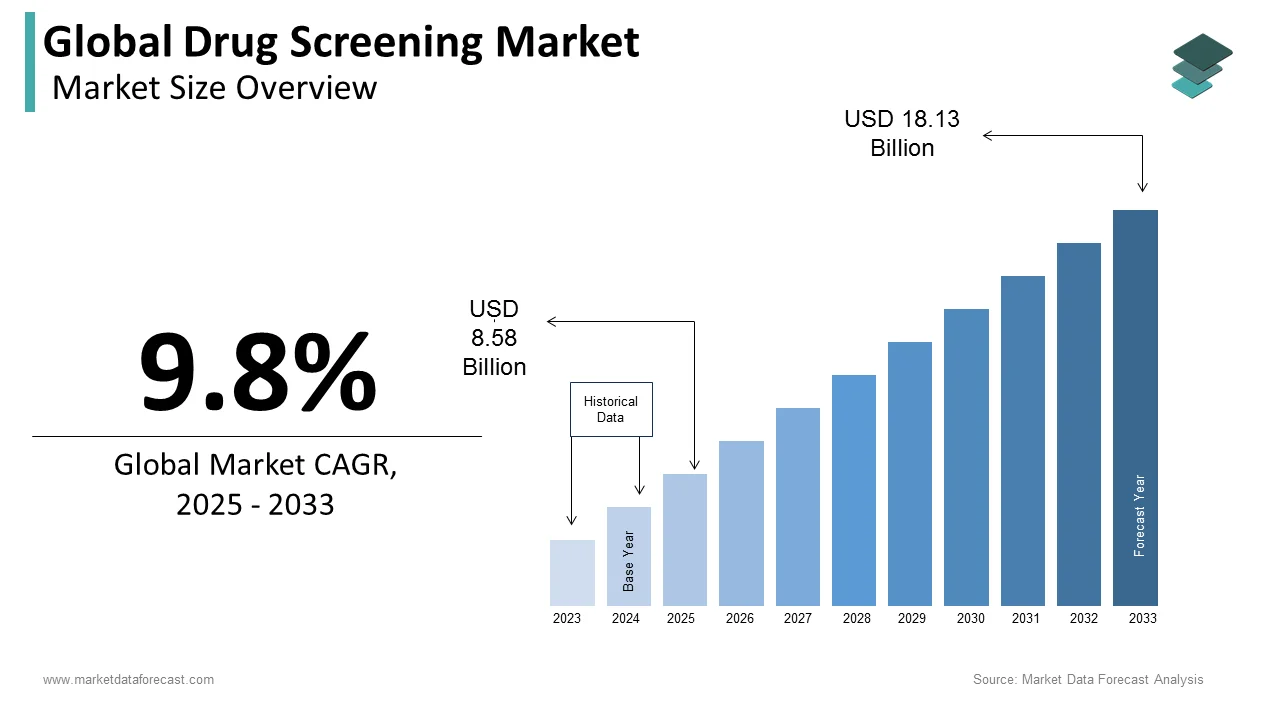
The global drug screening market was valued at USD 8.58 billion in 2025, is estimated to reach USD 9.42 billion in 2026, and is projected to reach USD 19.90 billion by 2034, growing at a CAGR of 9.8% from 2026 to 2034. Market growth is driven by increasing drug abuse cases, stringent workplace regulations, and rising adoption of drug testing in healthcare and law enforcement. The growing emphasis on maintaining safety in workplaces and public environments, along with advancements in rapid and accurate testing technologies, is further supporting market expansion. Additionally, increasing awareness regarding substance abuse and government initiatives for drug control are contributing to steady demand globally.
Key Market Trends
- Rising prevalence of drug and substance abuse worldwide.
- Increasing adoption of workplace drug testing programs.
- Growing demand for rapid and accurate screening technologies.
- Expansion of drug testing in healthcare and law enforcement sectors.
- Advancements in portable and point-of-care testing devices.
Segmental Insights
- Based on sample type, the urine sample segment dominated the global drug screening market by capturing 55.8% share in 2025, driven by its cost-effectiveness and widespread usage.
- Based on end user, the workplace segment led the market with 44.9% share in 2025, supported by strict regulatory requirements and safety concerns.
- Based on products and services, the immunoassay analyzer segment held the largest share of 40.9% in 2025, due to its efficiency in large-scale screening.
Regional Insights
The global drug screening market is witnessing strong growth across major regions due to regulatory frameworks and rising awareness.
- North America led the market with 40.7% share, supported by strict workplace regulations and high adoption of testing programs.
- Europe holds a significant share, driven by regulatory compliance and healthcare initiatives.
- Asia-Pacific is expected to register the fastest growth due to increasing awareness, rising drug abuse cases, and expanding healthcare infrastructure.
Competitive Landscape
The global drug screening market is highly competitive, with major diagnostics and laboratory service providers focusing on technological innovation and expanding testing capabilities. Companies are investing in advanced screening solutions, automation, and rapid testing devices to enhance accuracy and efficiency.
Prominent companies operating in the global drug screening market include Thermo Fisher Scientific Inc., Express Diagnostics Int’l Inc., Abbott Laboratories, Siemens AG, Alere Inc., Danaher Corporation, Quest Diagnostics Incorporated, Laboratory Corporation of America Holdings, Bio-Rad Laboratories Inc., Shimadzu, and Omega Laboratories.
Global Drug Screening Market Size
The size of the global drug screening market was worth USD 8.58 billion in 2025. The global market is anticipated to grow at a CAGR of 9.8% from 2026 to 2034 and be worth USD 19.90 billion by 2034 from USD 9.42 billion in 2026.
Drug screening encompasses a critical suite of analytical technologies and services designed to detect the presence of illicit substances, prescription medications, and alcohol in biological specimens such as urine, blood, saliva, and hair. This sector serves as the frontline defence for workplace safety, legal compliance, and public health initiatives by identifying substance use before it escalates into accidents or chronic health crises. The scope extends from rapid point-of-care tests used by law enforcement to sophisticated laboratory-based confirmatory analyses utilizing mass spectrometry. As per the World Health Organization, the global opioid epidemic continues to claim lives annually, underscoring the urgency for robust screening protocols. According to the Centers for Disease Control and Prevention, drug overdose deaths in the United States highlight the severe societal impact that drives stringent testing mandates. As per the International Labour Organization, substance abuse results in significant economic losses worldwide due to lost productivity and healthcare expenses. These grim realities compel governments and corporations to enforce zero-tolerance policies, thereby expanding the operational footprint of drug screening. The market is evolving beyond simple detection to include quantitative analysis that determines impairment levels, reflecting a shift towards more nuanced safety management in high-risk industries like transportation and heavy manufacturing.
MARKET DRIVERS
Stringent Government Mandates and Workplace Safety Regulations
The implementation of rigorous government regulations and workplace safety standards is driving the expansion of the drug screening market. Governments worldwide are enforcing mandatory testing protocols for safety-sensitive positions to mitigate the risk of accidents caused by impairment. As per the US Department of Transportation, federal regulations require drug and alcohol testing for commercial drivers, pilots, and railway operators, which is creating consistent demand for screening services. In Europe, the European Agency for Safety and Health at Work emphasizes that substance use contributes to workplace accidents, prompting member states to adopt stricter national guidelines. The introduction of the Drug Free Workplace Act in various jurisdictions compels federal contractors and large corporations to maintain drug-free environments under penalty of losing government contracts. Additionally, the legalization of cannabis in several regions has paradoxically increased testing volumes as employers seek to distinguish between off-duty use and on-duty impairment to maintain liability protection. As per the Occupational Safety and Health Administration, companies with comprehensive drug-free programs experience fewer injuries, reinforcing the economic and legal imperative for widespread adoption. This regulatory landscape ensures a steady stream of requisitions for both pre-employment and random testing across diverse industrial sectors.
Rising Prevalence of Substance Use Disorders and Opioid Crisis
The alarming surge in substance use disorders and the persistent opioid crisis globally is further propelling the drug screening market expansion. The escalating consumption of synthetic opioids like fentanyl and the misuse of prescription stimulants have created an urgent need for advanced detection capabilities that can identify novel psychoactive substances. As per the United Nations Office on Drugs and Crime, the number of people who use drugs worldwide has increased significantly over the past decade. This rise necessitates frequent and comprehensive screening in healthcare settings, rehabilitation centers, and criminal justice systems to monitor recovery and prevent relapse. Hospitals are increasingly integrating routine drug screening into emergency room protocols to guide treatment decisions for overdose patients, a practice that has expanded in recent years, according to the American College of Emergency Physicians. The emergence of new synthetic compounds that evade traditional immunoassays forces laboratories to continually update their panels, driving revenue through the sale of specialized reagents and confirmatory tests. Furthermore, the social stigma surrounding addiction is diminishing, which is leading to higher voluntary testing rates as individuals seek help. The sheer volume of users combined with the complexity of modern drug cocktails ensures that screening remains a critical component of public health strategies and clinical management.
MARKET RESTRAINTS
High Incidence of False Positive Results and Legal Liabilities
A significant restraint hindering the growth of the drug screening market is the persistent issue of false positive results, which generates substantial legal liabilities and erodes trust in testing outcomes. Immunoassay methods, while cost-effective and rapid, often suffer from cross-reactivity where legally prescribed medications or common food items trigger positive responses for illicit substances. As per the American Association for Clinical Chemistry, certain over-the-counter medicines can yield false positives for amphetamines in initial screenings. These erroneous results can lead to wrongful termination of employment, denial of parole, or unnecessary legal battles, costing organizations in litigation fees and settlements. The necessity for confirmatory testing using gas chromatography mass spectrometry adds time and expense to the process, delaying critical decision-making for employers and law enforcement. Legal challenges regarding the chain of custody and sample integrity further complicate the landscape, with courts increasingly scrutinizing the methodologies used by screening providers. The lack of universal standardization in cutoff levels across different jurisdictions creates confusion and inconsistency in result interpretation. Until assay specificity improves significantly and legal frameworks standardize acceptance criteria, the risk of false accusations will remain a formidable barrier to the seamless expansion of mandatory screening programs.
Privacy Concerns and Evolving Cannabis Legalization Laws
Growing privacy concerns and the complex legal landscape surrounding cannabis legalization are further hindering the drug screening market growth. As more regions decriminalize or legalize recreational and medical marijuana, employers face dilemmas regarding the rights of employees to use substances legally outside of work hours without facing professional repercussions. As per the National Conference of State Legislatures, many states in the US have enacted laws protecting off-duty cannabis use, restricting employers from taking adverse action based solely on a positive test for THC metabolites, which can remain detectable long after impairment has subsided. This legislative shift undermines the traditional zero-tolerance policies that have driven market volume for decades. Employees and civil liberty groups argue that mandatory testing constitutes an invasion of privacy, leading to pushback against random screening initiatives. The General Data Protection Regulation in Europe imposes strict controls on the processing of health-related data, requiring explicit consent and limiting the scope of employer-mandated tests. These legal complexities force organizations to reconsider their testing protocols, often reducing the frequency of screens or eliminating them for non-safety-sensitive roles. The uncertainty regarding liability and employee rights creates a hesitant environment that stifles market momentum in key demographics.
MARKET OPPORTUNITIES
Integration of Advanced Biosensors and Point of Care Technologies
The integration of advanced biosensors and miniaturized point-of-care devices offers a promising opportunity for the drug screening market to expand into real-time monitoring applications. Traditional laboratory-based testing involves significant turnaround times, whereas emerging wearable sensors and smartphone-connected devices can detect drug metabolites in sweat or saliva within minutes. As per the journal *Biosensors and Bioelectronics*, next-generation electrochemical biosensors are capable of achieving detection limits comparable to laboratory equipment while offering portability. This technological leap enables continuous monitoring for individuals in recovery programs or employees in high-risk environments, providing immediate alerts upon substance use. The global push towards decentralized healthcare supports the deployment of these devices in remote locations, border crossings, and roadside checkpoints by law enforcement. Manufacturers are developing disposable patches and mouth swabs that transmit data directly to cloud-based platforms for instant verification and record keeping. The ability to quantify impairment levels rather than just detecting past use addresses a critical gap in current safety protocols. As these technologies receive regulatory clearance and become cost-competitive, they will open vast new revenue streams in the consumer wellness and corporate safety sectors, fundamentally changing how substance use is managed.
Expansion of Non-Invasive Sampling Methods and Hair Analysis
The shift towards non-invasive sampling methods, particularly hair follicle analysis and oral fluid testing, presents a lucrative opportunity to the drug screening market. Urine collection is often viewed as intrusive and susceptible to adulteration, whereas hair and saliva samples offer longer detection windows and easier collection procedures. As per the Substance Abuse and Mental Health Services Administration, hair testing can provide extended detection periods compared to urine tests, making it invaluable for assessing chronic usage history. This extended window is increasingly demanded by child protective services and family courts to ensure long-term sobriety in custody cases. Oral fluid testing eliminates the need for restrooms and same gender observers, addressing privacy concerns and reducing collection costs according to industry logistics data. The adoption of these matrices is growing in the transportation and aviation sectors, where observation of urine collection is logistically challenging. Furthermore, advancements in extraction technologies have improved the reliability of hair analysis for detecting newer synthetic drugs that were previously difficult to isolate. By diversifying the types of biological specimens accepted for screening, the market can cater to a broader range of client needs and regulatory requirements, which is driving significant growth in specialized testing segments.
MARKET CHALLENGES
Proliferation of Novel Psychoactive Substances and Synthetic Drugs
The rapid proliferation of novel psychoactive substances and constantly evolving synthetic drugs is challenging the drug screening market expansion. Chemists frequently alter the molecular structure of illicit compounds to create analogs that bypass standard immunoassay detection thresholds while maintaining similar physiological effects. As per the European Monitoring Centre for Drugs and Drug Addiction, new psychoactive substances are identified in Europe each year, outpacing the development of specific antibodies for screening kits. This cat-and-mouse game forces laboratories to constantly update their reagent panels, incurring high research and development costs and creating periods of vulnerability where new drugs go undetected. The sheer diversity of these substances requires sophisticated confirmatory testing that many smaller laboratories cannot afford or perform quickly. The lag between the emergence of a new street drug and the availability of a commercial test kit can last for extended periods, during which time impaired individuals may pass standard screens. This limitation undermines the credibility of screening programs and exposes organizations to unforeseen risks. Keeping pace with the dynamic nature of the illicit drug market requires unprecedented collaboration between forensic scientists and manufacturers, yet the speed of innovation in drug synthesis continues to outstrip diagnostic capabilities.
Standardization Issues and Lack of Global Regulatory Harmonization
The absence of global regulatory harmonization and standardized cutoff levels for drug detection is further challenging the global drug screening market growth. Different countries and even states within the same country maintain varying lists of prohibited substances and distinct concentration thresholds for a positive result, complicating the implementation of uniform corporate policies. As per the International Organization for Standardization, the lack of a unified framework leads to inconsistent results where a sample tested in one jurisdiction may be deemed negative while the same sample tests positive in another. This discrepancy creates legal ambiguities for international transport companies and global workforces, increasing the risk of non-compliance and litigation. The validation requirements for new testing methods also vary widely, with some regions demanding extensive clinical trials while others accept manufacturer data, leading to fragmented market entry strategies. Laboratories must invest heavily in maintaining multiple accreditation standards to operate across borders, driving up operational costs. The confusion extends to the interpretation of results for legal proceedings, where defence attorneys frequently challenge the validity of tests based on jurisdictional inconsistencies. Until international bodies establish a cohesive set of guidelines and mutual recognition agreements, the fragmentation of regulatory standards will remain a persistent hurdle to the efficient scaling of drug screening services.
REPORT COVERAGE
| REPORT METRIC | DETAILS |
| Market Size Available | 2025 to 2034 |
| Base Year | 2025 |
| Forecast Period | 2026 to 2034 |
| Segments Covered | By Sample Type, Products & Services, End-User, and Region. |
| Various Analyses Covered | Global, Regional, and Country-Level Analysis, Segment-Level Analysis, Drivers, Restraints, Opportunities, Challenges; PESTLE Analysis; Porter’s Five Forces Analysis, Competitive Landscape, Analyst Overview of Investment Opportunities |
| Regions Covered | North America, Europe, APAC, Latin America, Middle East & Africa |
| Market Leaders Profiled | Thermo Fisher Scientific Inc., Express Diagnostics Int’l Inc., Abbott Laboratories, Siemens AG, Alere Inc., Quest Diagnostics Incorporated, Laboratory Corporation of America Holdings, Biorad Laboratories Inc., Shimadzu, and Omega Laboratories. |
SEGMENTAL ANALYSIS
By Sample Type Insights
The urine sample segment dominated the global drug screening market by holding 55.8% of the global market share in 2025. The dominance of the urine sample segment in the global market is majorly driven by its status as the most established, cost-effective, and legally defensible matrix for detecting a wide range of substances, which is making it the default choice for federal mandates and corporate policies worldwide. The unparalleled cost efficiency and deep entrenchment in regulatory frameworks globally are further contributing to the dominance of the urine sample segment in the global market. Collecting and analysing urine samples requires minimal specialized equipment compared to blood or hair, allowing for high-volume processing at a fraction of the cost. As per the Substance Abuse and Mental Health Services Administration, urine immunoassay screens are significantly less expensive compared to hair analysis. This economic advantage is critical for large-scale workplace programs that test millions of employees annually. Furthermore, urine testing has decades of legal precedent, with cutoff levels and procedures standardized by bodies like the Department of Transportation in the United States. As per the World Health Organization, mandatory drug testing programs in developing nations rely predominantly on urine due to its affordability and ease of implementation. The ability to detect recent use within a short window aligns perfectly with the requirements for identifying current impairment in safety-sensitive roles. Until alternative methods achieve similar cost parity and universal legal acceptance, urine will remain the cornerstone of the drug screening industry.
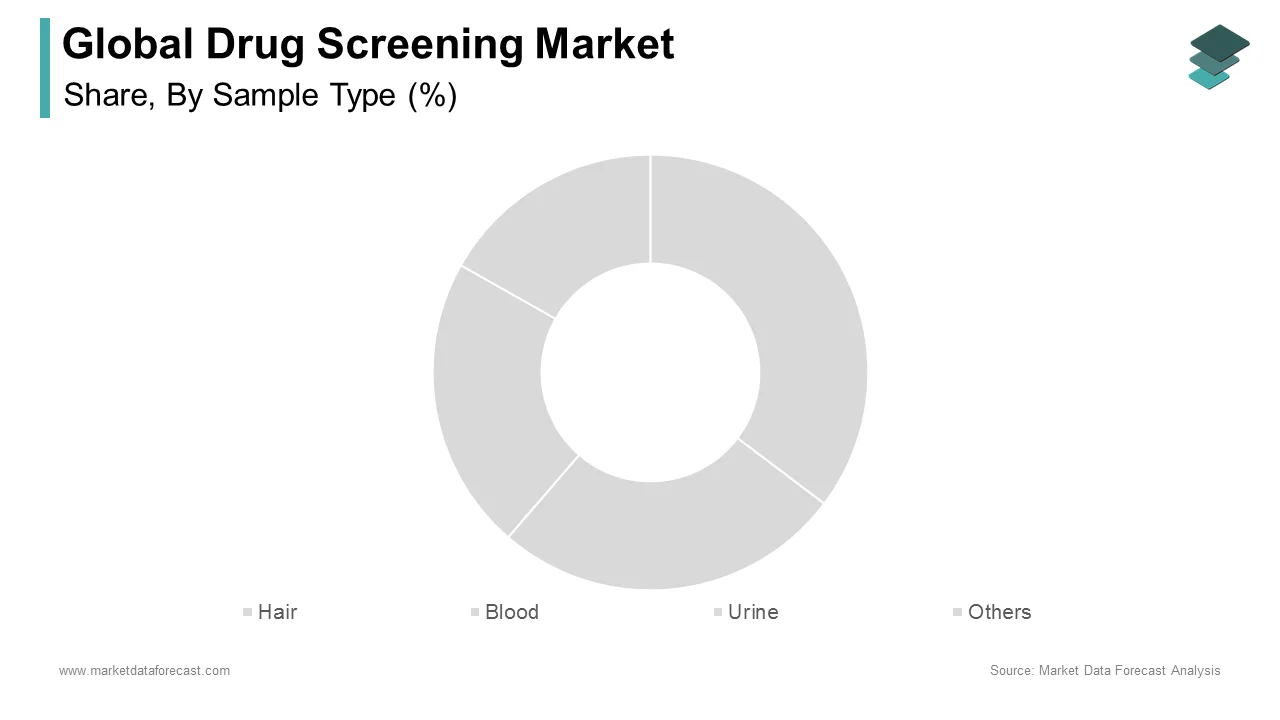
However, the hair sample segment is projected to register the highest CAGR of 12.2% over the forecast period in the global market, owing to the unique ability of hair analysis to provide a long-term historical record of drug use, addressing the critical limitation of short detection windows associated with urine and oral fluid tests. The unmatched capability of hair samples to detect drug use over an extended period is further aiding the expansion of the hair sample segment in the global market. Unlike urine, which only reveals recent intake, hair follicles incorporate drug metabolites into the keratin structure as they grow, which is creating a permanent timeline of substance exposure. As per the Society of Hair Testing, this extended window allows employers and courts to distinguish between one-time experimental use and habitual addiction, a distinction that is vital for hiring decisions and child custody cases. As per the American Association of Occupational Health Nurses, companies utilizing hair testing have identified more drug users compared to those relying solely on urine, as many individuals abstain briefly before a scheduled test to pass urine screens. This ability to bypass short-term abstinence strategies makes hair testing increasingly popular for pre-employment screening, where understanding long-term behavior patterns is crucial. The reliability of hair analysis in detecting chronic use has led to its adoption by federal agencies and transportation sectors seeking to enhance safety by filtering out candidates with sustained substance abuse issues. As awareness of these advantages grows, the shift towards historical profiling is driving double-digit growth in this segment.
By End User Insights
The workplace segment held the dominant position by holding 44.9% of the global market share in 2025. The leading position of the workplace segment in the global market is attributed to the mandatory nature of testing in safety-sensitive industries and the economic imperative for corporations to maintain productive and accident-free environments. The stringent federal and state regulations that mandate drug testing for employees in safety-sensitive positions across transportation, construction, and energy sectors are further boosting the dominance of the workplace segment in the global market. As per the United States Department of Transportation, testing is enforced for millions of workers, including commercial truck drivers, pilots, and railroad operators, creating a massive captive market for screening services. As per the Bureau of Labor Statistics, industries subject to these mandates report fewer workplace injuries compared to those without testing programs, reinforcing the regulatory logic. The European Agency for Safety and Health at Work similarly advocates for strict testing protocols, noting that substance impairment contributes significantly to industrial accidents in the region. Companies face severe penalties, including loss of operating licenses and fines, for failing to comply with these testing requirements. This regulatory pressure ensures a consistent and inelastic demand for drug screening services regardless of economic fluctuations. Furthermore, insurance providers often offer reduced premiums to companies that implement comprehensive drug-free workplace programs, adding a financial incentive to regulatory compliance. The sheer volume of employees covered by these mandates, combined with the requirement for both pre-employment and random testing, secures the workplace segment as the undisputed leader in market share.
However, the law enforcement segment is on the rise and is anticipated to grow at the fastest CAGR of 10.4% over the forecast period, owing to the intensifying global opioid crisis, the proliferation of novel psychoactive substances, and the increasing reliance on rapid roadside testing technologies by police forces. The urgent need to combat the escalating opioid epidemic and the resulting surge in drug-impaired driving incidents are further propelling the growth of the law enforcement segment in the global market. Police departments are increasingly deploying rapid oral fluid and breathalyzers to detect impairment at roadside checkpoints, moving away from time-consuming blood draws. As per the National Highway Traffic Safety Administration, drug-impaired driving fatalities have increased in recent years, prompting legislatures to fund advanced screening tools for officers. The emergence of potent synthetic opioids like fentanyl requires highly sensitive devices capable of detecting trace amounts in saliva within minutes to ensure officer safety and public security. As per the European Commission, significant grants have been allocated to member states to equip police forces with next-generation drug recognition experts and portable screening kits. This shift towards immediate on-scene testing allows for faster processing of suspects and reduces the backlog in forensic laboratories. The integration of these devices into routine traffic stops and criminal investigations is expanding the volume of tests conducted by law enforcement agencies exponentially. As the crisis deepens, the demand for reliable, field-deployable screening solutions will continue to drive robust growth in this segment.
By Products and Services Insights
The immunoassay analyzer segment led the market by commanding for 40.9% of the global market share in 2025. The immunoassay analyzer segment is serving as the backbone of high-volume laboratory screening operations. Its dominance is driven by the ability to process thousands of samples automatically with high precision, making it indispensable for large-scale workplace and clinical testing programs. The unparalleled capacity of the immunoassay analyzer to handle massive sample volumes with speed and consistency, which is a requirement for central laboratories serving major corporations and government agencies, is further aiding the dominance of this segment in the global market. These automated systems can process hundreds of samples per hour, significantly reducing turnaround times compared to manual methods. As per the Clinical Laboratory Management Association, modern immunoassay platforms are capable of delivering results for large batches of samples within a few hours, enabling labs to meet tight deadlines imposed by pre-employment screening protocols. The automation minimizes human error and ensures uniform application of reagents, leading to highly reproducible results that stand up to legal scrutiny. The economies of scale achieved by these instruments lower the cost per test, making them the most economical choice for high-volume screening. The integration of these analyzers with laboratory information systems allows for seamless data tracking and reporting, which is crucial for compliance auditing. As the volume of mandatory testing continues to rise globally, the reliance on these high-throughput workhorses remains absolute, which secures their position as the dominant product segment in the market.
On the other hand, the rapid test device segment is projected to experience the highest CAGR of 11.6% over the forecast period in the global market, owing to the shifting paradigm towards point-of-care testing, where immediate results are critical for decision-making in roadside, emergency, and onsite workplace scenarios. The critical need for immediate results in time-sensitive situations such as roadside traffic stops, emergency room admissions, and onsite workplace incidents is favouring the growth of the rapid test device segment in the global market. Traditional laboratory testing involves delays that are unacceptable when determining fitness for duty or assessing acute impairment. As per the International Association of Chiefs of Police, the adoption of saliva-based rapid tests has enabled officers to make arrest decisions quickly during traffic stops, improving enforcement efficiency. In healthcare settings, emergency physicians rely on these devices to identify overdoses and administer appropriate antidotes, a practice that has reduced mortality rates according to the American College of Emergency Physicians. The convenience of these devices, which require no specialized training or equipment, enables deployment in remote locations and resource-limited settings. The growing trend of onsite testing by employers who wish to remove suspected impaired workers immediately further boosts demand. As the technology improves to match laboratory sensitivity while maintaining speed, the utility of rapid test devices expands across all end-user segments, driving their rapid market growth.
REGIONAL ANALYSIS
North America Drug Screening Market Analysis
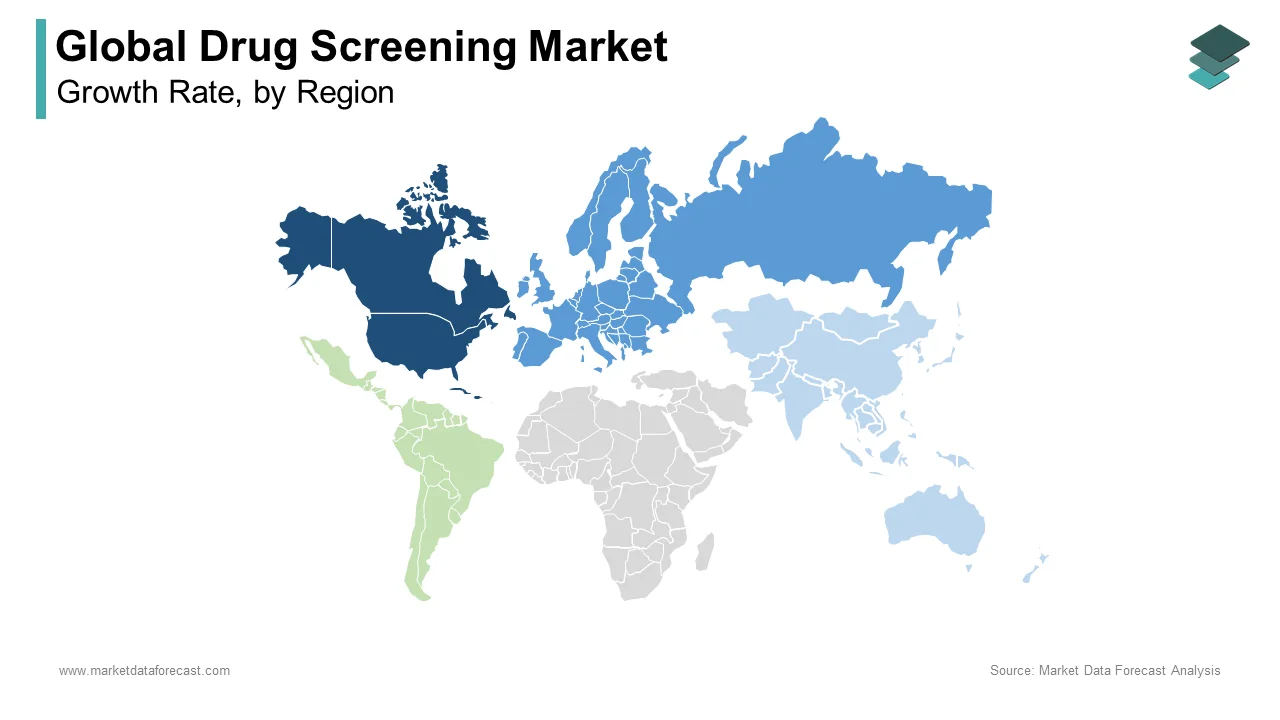
North America led the drug screening market globally in 2026 with 40.7% of the global market share. The United States anchors this leadership with the most rigorous and extensive regulatory framework for mandatory drug testing worldwide. The Department of Transportation mandates testing for millions of workers in safety-sensitive roles, creating a massive baseline demand. As per the Centers for Disease Control and Prevention, the ongoing opioid crisis has resulted in significant overdose deaths annually, prompting governments to expand testing requirements in healthcare and law enforcement. The prevalence of workplace drug-free programs, adopted by a majority of Fortune 500 companies, further solidifies market volume. Additionally, the legalization of cannabis in numerous states has increased testing complexity and volume as employers strive to navigate new laws while maintaining safety standards. The presence of major market players and advanced laboratory infrastructure ensures rapid adoption of new technologies like hair analysis and rapid oral fluid tests. High reimbursement rates and a litigious environment that favors comprehensive screening also contribute to the region’s sustained dominance.
Europe Drug Screening Market Analysis
Europe accounted for a promising share of the global drug screening market in 2025. The growing emphasis on workplace safety and harmonized regulatory standards across the European Union is driving the European market expansion. The region is witnessing a shift from voluntary to mandatory testing in industries such as transportation and aviation, driven by directives from the European Agency for Safety and Health at Work. Germany and France are primary contributors, hosting robust pharmaceutical and diagnostic sectors that support local manufacturing of screening kits. As per Eurostat, workplace accidents related to substance abuse impose high economic costs, prompting stricter national testing protocols. According to the European Monitoring Centre for Drugs and Drug Addiction, a rising trend in polydrug use that needs more comprehensive screening panels. The General Data Protection Regulation imposes strict privacy controls, slowing some adoption but also spurring the development of compliant and non-invasive testing methods. Increasing investment in road safety initiatives and the deployment of roadside drug testing devices by law enforcement agencies are key growth drivers. The region’s focus on public health and harm reduction strategies continues to expand the scope of drug screening beyond traditional employment settings.
Asia Pacific Drug Screening Market Analysis
Asia Pacific is anticipated to register the fastest CAGR in the global market over the forecast period. The rapid industrialization, increasing workplace safety awareness, and stringent government crackdowns on drug trafficking and abuse in countries like China, India, and Japan are driving the drug screening market growth in the Asia-Pacific. China has implemented zero-tolerance policies for drug use among public transport drivers and government employees, which is fuelling demand for testing services. As per the United Nations Office on Drugs and Crime, the region accounts for a growing proportion of global opiate and methamphetamine users, necessitating expanded screening in criminal justice and rehabilitation sectors. The manufacturing sector in Southeast Asia is increasingly adopting international safety standards, leading to voluntary drug-free workplace programs by multinational corporations. Japan’s aging workforce and strict stimulant abuse laws drive steady demand for high-precision screening technologies. The proliferation of local manufacturers offering cost-effective rapid test devices is making screening more accessible to small and medium enterprises. Government initiatives to combat synthetic drugs are further accelerating growth, positioning the Asia Pacific as a critical frontier for the industry.
Latin America Drug Screening Market Analysis
Latin America is estimated to showcase a healthy CAGR in the global drug screening market during the forecast period, owing to the efforts to combat drug trafficking and rising domestic consumption in Brazil, Mexico, and Colombia. The region faces unique challenges due to its role as a major production hub for illicit substances, leading to aggressive government policies aimed at curbing distribution and use. In Brazil, the Ministry of Health has expanded mandatory testing protocols for public sector employees and transportation workers to address safety concerns. As per the Inter American Drug Abuse Control Commission, the prevalence of cocaine and cannabis use has risen in urban areas, prompting increased screening in schools and workplaces. The oil and gas sector enforces strict drug-free policies to protect infrastructure and ensure worker safety. Economic constraints limit the adoption of high-end laboratory equipment, leading to a preference for cost-effective rapid test devices. However, increasing foreign investment and the influence of multinational corporations are introducing higher standards and advanced technologies. The gradual formalization of the labor market and stronger enforcement of safety regulations are expected to drive steady growth.
Middle East and Africa Drug Screening Market Analysis
The drug screening market in the Middle East and Africa region is expected to exhibit a steady CAGR in the global market during the forecast period, owing to the strict legal frameworks and infrastructure projects. Gulf Cooperation Council countries, particularly Saudi Arabia and the UAE, enforce zero-tolerance laws for drug use, with severe penalties necessitating rigorous screening for expatriate workers and residents. As per the United Nations, the region is experiencing increased trafficking of synthetic stimulants, prompting authorities to enhance border control and law enforcement testing capabilities. South Africa serves as a key hub for biomedical advances, with growing awareness of substance abuse issues driving demand in healthcare. Massive construction projects tied to economic diversification require safe workforces, leading to the adoption of pre-employment screening by major contractors. Limited local manufacturing means reliance on imports, but governments are investing in building forensic capacities. Strict adherence to religious and legal norms regarding substance use creates a cultural environment where drug screening is viewed as a necessary moral and safety imperative, fostering a niche but stable market.
COMPETITIVE LANDSCAPE
The competition in the drug screening market is intense and characterized by a mix of established life science conglomerates and agile specialized diagnostics firms vying for dominance. Major corporations leverage their vast distribution networks and broad product ranges to offer end-to-end solutions, while smaller competitors differentiate themselves through niche innovations in rapid testing and novel biomarker detection. The landscape is dynamic with frequent mergers and acquisitions as larger entities seek to absorb cutting-edge technologies that improve detection limits for synthetic opioids and designer drugs. Competitive pressure drives continuous investment in automation and digital integration to reduce turnaround times and minimize human error in high-volume laboratories. Companies are increasingly competing on the ability to provide comprehensive panels that detect a wider array of substances with fewer false positives. Regulatory compliance and the speed of adapting to new legal thresholds serve as critical battlegrounds for market share. The shift towards non-invasive sampling and point of care testing further intensifies rivalry as firms race to launch user-friendly devices that empower employers and law enforcement to make immediate decisions without relying on central labs.
KEY MARKET PLAYERS
Some of the companies that are playing a dominating role in the global drug screening market include
- Thermo Fisher Scientific Inc.
- Express Diagnostics Int’l Inc.
- Abbott Laboratories
- Siemens AG
- Alere Inc.
- Danaher Corporation
- Quest Diagnostics Incorporated
- Laboratory Corporation of America Holdings
- Bio-Rad Laboratories Inc.
- Shimadzu
- Omega Laboratories
TOP PLAYERS IN THE MARKET
- Thermo Fisher Scientific operates as a global leader in the drug screening sector by providing comprehensive solutions that span from rapid point-of-care tests to advanced laboratory confirmation systems. The company leverages its extensive portfolio of immunoassay reagents and mass spectrometry instruments to serve workplace, clinical, and forensic markets worldwide. Their recent strategic actions focus on expanding their menu of assays to detect emerging synthetic opioids and novel psychoactive substances that challenge traditional testing methods. Thermo Fisher actively invests in automating laboratory workflows to increase throughput and reduce turnaround times for high-volume clients. They have also strengthened their position through collaborations with regulatory bodies to ensure their platforms meet evolving compliance standards. By integrating artificial intelligence into their data analysis software, they help laboratories interpret complex results more accurately. These initiatives demonstrate their commitment to maintaining technological superiority and addressing the dynamic nature of the global substance abuse landscape.
- Abbott Laboratories maintains a significant presence in the drug screening market through its widely recognized rapid diagnostic devices and sophisticated laboratory analyzers. The company is particularly renowned for its point-of-care testing solutions that deliver immediate results for law enforcement and emergency medical services. Abbott recently intensified its efforts to develop non-invasive oral fluid testing kits that address privacy concerns while ensuring high accuracy in detecting recent drug use. They have launched new digital connectivity features that allow test results to be transmitted instantly to cloud-based databases for real-time monitoring and record keeping. Their strategy involves expanding manufacturing capacity to meet the surging global demand driven by the opioid crisis and stricter workplace safety regulations. Abbott also focuses on educational initiatives to train employers and healthcare providers on the proper interpretation of screening results. These continuous innovations in device sensitivity and user experience solidify their role as a critical partner in global drug detection efforts.
- Danaher Corporation contributes substantially to the drug screening market through its diverse portfolio of life science and diagnostic brands that offer specialized tools for substance detection. The company excels in providing high-precision chromatography systems and automated sample preparation equipment essential for confirmatory testing in forensic laboratories. Danaher has recently acquired several niche biotechnology firms specializing in antibody development to enhance the specificity of their immunoassay platforms against new synthetic drugs. They are actively deploying integrated solutions that combine hardware, software, and consumables to create seamless workflows for high-throughput screening facilities. Their focus on sustainability has led to the development of eco-friendly reagents and reduced waste protocols in their testing processes. Danaher also prioritizes global expansion by establishing local support centers in emerging markets to facilitate faster service delivery. These strategic moves enable them to address the growing complexity of drug screening requirements while maintaining operational efficiency for their diverse customer base.
TOP STRATEGIES USED BY KEY MARKET PARTICIPANTS
Key players in the drug screening market primarily utilize strategic acquisitions and partnerships to rapidly expand their product portfolios and incorporate novel technologies. Companies frequently acquire innovative startups specializing in unique antibody engineering or microfluidics to enhance the sensitivity and speed of their testing devices. Another major strategy involves heavy investment in research and development to create assays capable of detecting emerging synthetic drugs and novel psychoactive substances. Manufacturers are increasingly focusing on developing connected devices that integrate with cloud-based data platforms for real-time result tracking and regulatory compliance. Expanding into non-invasive sampling methods like oral fluid and hair analysis helps firms address privacy concerns and capture new market segments. Collaborations with government agencies and law enforcement bodies allow companies to align their products with evolving legal mandates and secure large-scale contracts. Additionally, firms are optimizing their supply chains to ensure consistent availability of reagents and kits globally while reducing costs to remain competitive in price-sensitive regions.
MARKET SEGMENTATION
This market research report on the global drug screening market has been segmented and sub-segmented based on the sample type, products & services, end-user, and region.
By Sample Type
- Hair
- Blood
- Urine
- Others
By End-user
- Hospitals
- Workplaces
- Criminal Justice
- Law Enforcement
By Products & Services
- Breathalyzer
- Rapid Test Device
- Immunoassay Analyser
- Chromatography
- Others
By Region
- North America
- Europe
- Asia Pacific
- Latin America
- The Middle East and Africa