- Product Description Description
- Table of Contents TOC
- List of Table & Figure LOT
- Get Free Sample PDF Sample PDF
Market Size, 2025
$22.11 BnMarket Estimate, 2026
$26.30 BnMarket Forecast, 2034
$105.25 BnCAGR, 2026–2034
18.93%Executive Summary: Asia Pacific ePharmacy Market
- Market Scope: Comprehensive regional ePharmacy market analysis covering product types, drug categories, country leadership frameworks, and telemedicine, drone delivery, and super-app ecosystem trends.
- Market Valuation: Valued at USD 22.11 billion (2025), estimated at USD 26.30 billion (2026), and projected to reach USD 105.25 billion by 2034, registering a robust CAGR of 18.93% (2026–2034).
- Primary Growth Drivers: Digital health infrastructure integration, chronic disease prevalence (310 million adults with diabetes or prediabetes), internet penetration exceeding 60%, and telemedicine reducing patient wait times by up to 70%.
Key Market Segment Metrics (2026–2034)
| Category | Leading Segment (Base Position) | Fastest-Growing Segment |
|---|---|---|
| By Product Type | Vitamins (held the largest share at 28.3% in 2025) | Weight Loss Products (projected to grow at a CAGR of 16.3%) |
| By Drug Type Segment | Prescription Drugs (dominated the drug type segment) | Over-the-Counter Drugs (anticipated to witness a CAGR of 14.8%) |
| By Digital Adoption & Integration | Japan's Electronic Prescription Adoption (reaching 78% in primary care clinics) and Australia's My Health Record system | Drone Delivery Pilots & AI-Driven Chronic Disease Management Ecosystems |
| By Region / Country | China (leads regional market with a 35.4% share in 2025), followed by India at 22.3% | Expanding digital health hubs across Southeast Asia and East Asia |
Major Market Players & Market Structure
Market Structure: Highly competitive regional digital pharmacy landscape where major platforms deploy automated pharmacies, same-day urban deliveries, AI chronic care tools, and last-mile logistics integrations.
Key Companies: Giant Eagle Inc., Express Scripts Holding Company, Rowlands Pharmacy, Optum Rx Inc., Banner Health, PlanetRX.com, Lloyds Pharmacy Ltd, Drugstore.com, Alibaba Health, JD Health, and API Holdings.
Asia Pacific ePharmacy Market Size
The ePharmacy market in Asia Pacific was valued at USD 22.11 billion in 2025. The Asia Pacific market is expected to be valued at USD 26.30 billion in 2026 and USD 105.25 billion by 2034, exhibiting a CAGR of 18.93% from 2026 to 2034.
The ePharmacy is digital platforms enabling the online purchase of pharmaceuticals, over-the-counter medications, and health supplements, supported by teleconsultation, home delivery, and digital payment integration. This sector has evolved rapidly due to increasing internet penetration, rising prevalence of chronic diseases, and shifting consumer preferences toward convenience and safety in healthcare access. As per the International Telecommunication Union, over 60% of the population across the Asia Pacific had internet access by 2023, creating fertile ground for digital health solutions. Regulatory modernization in countries like Australia and Singapore has further legitimized digital dispensing, positioning ePharmacies as integral components of regional healthcare ecosystems.
MARKET DRIVERS
Accelerated Digital Transformation in Healthcare Infrastructure
The integration of digital health ecosystems is accelerating the growth of the Asia Pacific ePharmacy market. Governments and private entities are investing heavily in telemedicine platforms, electronic medical records, and interoperable health information systems, which are creating seamless pathways for online medication procurement. This infrastructural convergence reduces friction in medication access, particularly for patients in remote areas.
Expanding Middle-Class Population with Chronic Disease Burden
The burgeoning middle class across Asia Pacific in Indonesia, Vietnam, and India, exhibits heightened healthcare spending and a growing incidence of chronic conditions, fueling demand for continuous medication access. Concurrently, the International Diabetes Federation reports that 310 million adults in the region were living with diabetes or prediabetes in 2023, necessitating regular pharmaceutical intake. This demographic increasingly favors ePharmacies for subscription-based refills, automated reminders, and doorstep delivery.
MARKET RESTRAINTS
Fragmented Regulatory Landscapes and Legal Ambiguities
The absence of harmonized ePharmacy regulations across Asia Pacific impedes operational scalability and investor confidence. While countries like Japan and South Korea enforce strict licensing and prescription validation protocols, others such as Cambodia and Laos lack comprehensive digital pharmacy legislation, creating compliance uncertainty. As per the Asia Pacific Economic Cooperation (APEC) Regulatory Harmonization Steering Committee, only six of the 21 APEC economies have established dedicated ePharmacy legal frameworks as of 2023. In India, the draft Digital Information Security in Healthcare Act remains pending, delaying full integration of e-prescriptions with pharmacy platforms.
Persistent Reliance on Informal and Traditional Medicine Distribution
In rural and semi-urban areas across the region, a significant portion of the population continues to depend on informal drug vendors, local healers, and unregulated medical shops, undermining ePharmacy penetration. In the Philippines, the Philippine Institute for Development Studies found that over 60% of households in underserved regions procure medications from sari-sari stores or unlicensed vendors due to proximity and trust.
MARKET OPPORTUNITIES
Strategic Integration with Telemedicine Platforms
The integration of ePharmacies with teleconsultation services presents a transformative opportunity for end-to-end digital healthcare delivery. In Singapore, the government-backed HealthHub platform has partnered with licensed ePharmacies to enable direct dispensing from virtual consultations, reducing patient wait times by up to 70% as reported by the Ministry of Health Singapore in 2023. Similarly, Indonesia’s Halodoc, which offers teleconsultations to over 25 million users annually, reported that 68% of consultations result in immediate ePharmacy orders, demonstrating high conversion potential.
Expansion into Underserved Rural and Remote Regions
The ePharmacies hold significant potential to bridge medication access gaps in geographically isolated areas where physical pharmacies are scarce is additionally to enhance the growth of Asia Pacific ePharmacy market. Drones and mobile health units, when paired with ePharmacy logistics, are emerging as viable solutions. In the Philippines, the Department of Health piloted a drone delivery program in Palawan in 2023, reducing medicine delivery time from three days to under four hours.
MARKET CHALLENGES
Ensuring Medication Authenticity and Supply Chain Integrity
The proliferation of counterfeit drugs within online channels poses a challenge to consumer trust and patient safety in the Asia Pacific ePharmacy market. As per the World Health Organization, an estimated 10.5% of medical products in low- and middle-income countries in the region, including Vietnam and Indonesia, are substandard or falsified. Online platforms, particularly unregulated ones, are vulnerable to illicit sellers exploiting weak verification mechanisms. In 2022, China’s National Medical Products Administration seized over 12,000 counterfeit drug packages sold via unauthorized e-commerce sites. Additionally, temperature-sensitive medications often lack cold-chain integrity during last-mile delivery, compromising efficacy.
Cybersecurity Vulnerabilities in Patient Data Management
E-pharmacies are becoming prime targets for cyberattacks, which is raising concerns over data privacy and system resilience, challenging the growth of Asia Pacific epharmacy market. In 2023, the Singapore Health Services reported a 45% year-on-year increase in cyber intrusions targeting digital health platforms, including ePharmacies linked to hospital networks. Similarly, India’s Computer Emergency Response Team noted 1.8 million cybersecurity incidents in the healthcare sector in 2022, many involving unauthorized access to patient prescription databases.
REPORT COVERAGE
| REPORT METRIC | DETAILS |
| Market Size Available | 2025 to 2034 |
| Base Year | 2025 |
| Forecast Period | 2026 to 2034 |
| Segments Covered | By Product Type, Drug Type, and Country. |
| Various Analyses Covered | Global, Regional and Country-Level Analysis, Segment-Level Analysis, Drivers, Restraints, Opportunities, Challenges; PESTLE Analysis; Porter’s Five Forces Analysis, Competitive Landscape, Analyst Overview of Investment Opportunities |
| Countries Covered | India, China, Japan, South Korea, Australia, New Zealand, Thailand, Malaysia, Vietnam, Philippines, Indonesia, Singapore, Rest of APAC |
| Market Leaders Profiled | Giant Eagle, Inc., Express Scripts Holding Company., Rowlands Pharmacy, Optum Rx, Inc., Banner Health, PlanetRX.com, Lloyds Pharmacy Ltd, and Drugstore.com., and Others. |
SEGMENTAL ANALYSIS
By Product Type Insights
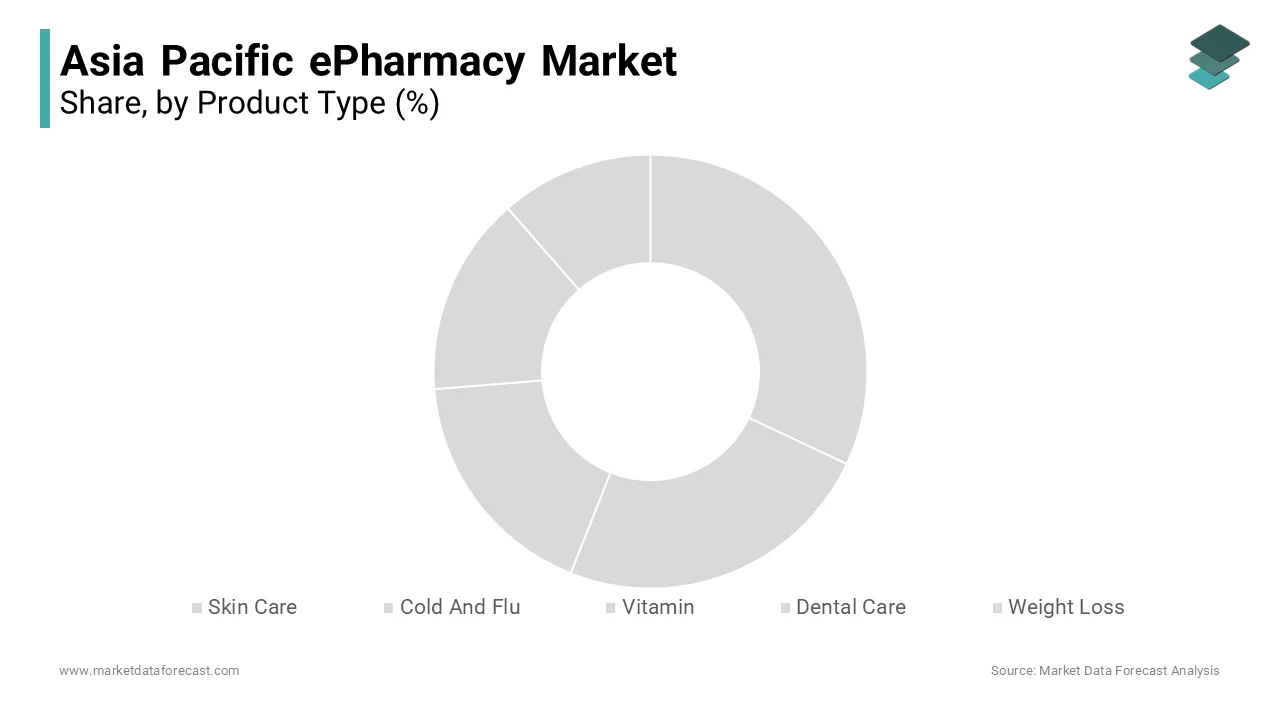
The vitamins segment accounted in holding 28.3% of the Asia Pacific ePharmacy market share in 2025, with a surge in preventive healthcare adoption, particularly among urban populations seeking immunity-boosting supplements and nutritional support. The region witnessed a 40% increase in vitamin sales through digital channels between 2020 and 2022, with countries like Australia and South Korea leading in per capita spending. As per the World Health Organization’s 2023 regional report on non-communicable disease risk factors, micronutrient deficiencies remain prevalent across Southeast Asia by affecting over 200 million individuals in iron, vitamin D, and B12.
The weight loss segment is swiftly emerging with an expected CAGR of 16.3% during the forecast period, with the rising obesity rates and increasing societal emphasis on body image, particularly among younger demographics in urban centers. In China, the National Health Commission reported that over 50% of adults were overweight or obese in 2023, up from 38% in 2010, prompting widespread interest in weight management solutions. Online platforms have capitalized on this trend by offering clinically backed weight-loss medications, such as GLP-1 receptor agonists, alongside digital coaching and progress tracking.
By Drug Type Insights
The Prescription Drugs segment was the largest and held a dominant share of the Asia Pacific ePharmacy market in 2025, with the increasing digitalization of chronic disease management, where patients require regular access to regulated medications for conditions such as diabetes, hypertension, and cardiovascular disorders. The integration of e-prescriptions with national digital health infrastructures has been instrumental in legitimizing online dispensing of prescription-only medicines. In Japan, the Ministry of Health, Labour and Welfare reported that over 78% of primary care clinics now issue electronic prescriptions, a threefold increase since 2020, by enabling seamless fulfillment through licensed ePharmacies.
The Over the Counter (OTC) drugs segment is likely to grow with an anticipated CAGR of 14.8% from 2025 to 2033, owing to the rising consumer self-care tendencies and growing confidence in self-diagnosis, supported by accessible online health information. Unlike prescription drugs, OTC products do not require clinical validation, enabling faster purchase cycles and higher transaction volumes on digital platforms. The increasing prevalence of minor, recurring ailments such as allergies, digestive issues, and headaches, which consumers prefer to manage without visiting a doctor. Platforms like 1mg in India report that OTC product categories such as antacids and pain relievers account for over 40% of monthly transactions. Additionally, aggressive digital marketing, discounts, and same-day delivery options have made online OTC shopping more attractive than traditional retail among millennials and Gen Z consumers who prioritize speed and convenience.
COUNTRY-LEVEL ANALYSIS
China ePharmacy Market Insights
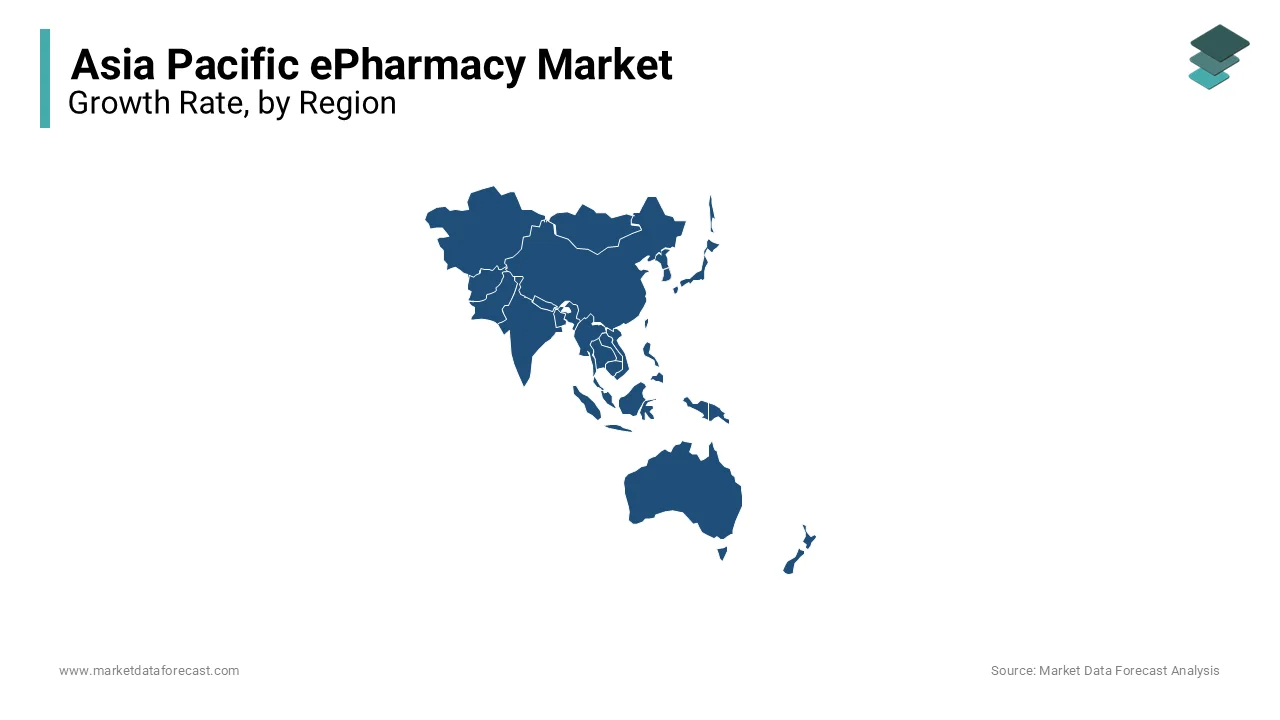
China was the largest contributor and held 35.4% of the Asia Pacific ePharmacy market share in 2025, with a highly advanced digital ecosystem, where tech giants like Alibaba Health and JD Health have integrated pharmacy services into broader super-app platforms. These platforms processed over 500 million prescription drug orders in 2023 alone, reflecting deep consumer penetration. As per the Chinese Center for Disease Control and Prevention, over 300 million people live with chronic diseases, creating sustained demand for remote medication access.
India ePharmacy Market Insights
India was positioned second in the Asia Pacific ePharmacy market by accounting for 22.3% of the market share in 2025. The country’s market is distinguished by rapid innovation and a surge in homegrown health-tech platforms such as PharmEasy, Netmeds, and 1mg, which collectively serve over 120 million active users. Growth is largely propelled by rising urbanization and the expansion of affordable smartphone internet, with over 750 million internet users as reported by the Telecom Regulatory Authority of India. The National Health Stack’s integration of e-prescriptions with Ayushman Bharat Health Accounts has further legitimized digital pharmacy transactions. Regulatory clarity under the Draft Digital Pharmacy Rules 2023 is expected to further stabilize the sector.
Japan ePharmacy Market Insights
Japan ePharmacy market growth is likely to grow with the high regulatory standards and a cautious but steady shift toward digitalization, driven by demographic necessity. The government’s My Medicine Book initiative, which digitizes patient medication histories, has been adopted by over 12 million citizens, which is facilitating ePharmacy integration.
Australia ePharmacy Market Insights
Australia ePharmacy market growth is likely to grow with technological advancement. The country’s ePharmacy sector is distinguished by strong institutional backing, including the integration of online pharmacies into the national My Health Record system, used by 83% of the population. This interoperability ensures that digital prescriptions are securely transmitted from general practitioners to licensed dispensers. The Therapeutic Goods Administration has also introduced a streamlined approval process for online pharmacy operators, enhancing legitimacy. Additionally, same-day delivery networks in major cities like Sydney and Melbourne have significantly improved service reliability.
South Korea ePharmacy Market Insights
South Korea epharmacy market growth is likely to grow with the tech-savvy population and government-led digital health transformation. The Ministry of Food and Drug Safety has authorized select platforms to dispense controlled substances under strict monitoring, expanding the scope of online offerings. Furthermore, the rise of AI-powered symptom checkers and chat-based consultations on platforms like KakaoHealth has streamlined access to both OTC and prescription products.
COMPETITIVE LANDSCAPE
The competitive landscape of the Asia Pacific ePharmacy market is characterized by rapid innovation, aggressive expansion, and increasing consolidation among key players. Domestic champions dominate national markets, often backed by strong technological infrastructure and deep consumer insights. In China, tech giants Alibaba Health and JD Health leverage vast e-commerce ecosystems to deliver seamless pharmacy experiences, while in India, companies like API Holdings and Tata 1mg focus on affordability and rural penetration. Emerging players in Southeast Asia, such as Halodoc in Indonesia and Doctor Anywhere in Singapore, are differentiating through integrated telehealth models. The market is witnessing intensified rivalry in logistics efficiency, product authenticity, and regulatory compliance.
KEY MARKET PLAYERS
Some of the companies that are playing a dominating role in the Asia Pacific ePharmacy market include
- Giant Eagle, Inc.
- Express Scripts Holding Company
- Rowlands Pharmacy
- Optum Rx, Inc.
- Banner Health
- com
- Lloyds Pharmacy Ltd
- com
TOP PLAYERS IN THE MARKET
- Alibaba Health has emerged as a pivotal force in China’s digital healthcare transformation, leveraging its integration within the Alibaba ecosystem to deliver end-to-end ePharmacy services. The company operates one of the region’s largest online pharmacy platforms, which offers prescription and over-the-counter medications alongside teleconsultations via its partnership with AliDoctor. In recent years, it has expanded its logistics network to ensure same-day and next-day delivery across 300+ cities, significantly improving service reliability. Alibaba Health also collaborated with the Zhejiang Provincial Health Commission to pilot an AI-driven chronic disease management system by enhancing medication adherence for diabetes and hypertension patients.
- JD Health has established itself as a leader in high-integrity ePharmacy services by emphasizing supply chain control and authentic drug delivery. Utilizing JD.com’s proprietary logistics infrastructure, the company ensures temperature-controlled transportation and direct sourcing from pharmaceutical manufacturers, minimizing counterfeit risks. It has deployed automated pharmacies in over 50 Chinese cities, enabling 24/7 prescription fulfillment. In 2023, JD Health launched an AI-powered chronic care platform that synchronizes with wearable devices to provide personalized medication reminders and dosage tracking for cardiovascular and diabetic patients. The company also strengthened its rural outreach by partnering with local clinics to extend delivery to remote areas, supported by drone trials in Yunnan Province.
- API Holdings, operating under the Medlife brand, has played a transformative role in India’s ePharmacy evolution by integrating pharmacy services with diagnostic testing and telemedicine. The company pioneered a subscription-based model for chronic medication delivery by ensuring consistent adherence for conditions like hypertension and diabetes. In 2022, it merged with PharmEasy, creating one of India’s most comprehensive digital health platforms, capable of serving over 25 million users annually. The combined entity has invested heavily in last-mile logistics, deploying a network of fulfillment centers across tier-2 and tier-3 cities. It also launched AI-driven customer support systems to expedite prescription verification and introduced cash-on-delivery options to enhance inclusivity.
TOP STRATEGIES USED BY KEY MARKET PARTICIPANTS
The leading players in the Asia Pacific ePharmacy market are deploying multi-pronged strategies to consolidate their presence and expand reach. Strategic mergers and acquisitions are prevalent, enabling vertical integration of services such as teleconsultation, diagnostics, and home delivery. Companies are heavily investing in AI and machine learning to personalize user experiences, optimize inventory, and predict patient refill behaviors. Geographic expansion into underserved rural and semi-urban regions is being pursued through localized logistics networks and partnerships with community health centers. Additionally, collaborations with insurance providers and national health systems are facilitating reimbursement for online purchases, increasing affordability and adoption.
MARKET SEGMENTATION
This research report on the Asia Pacific ePharmacy market has been segmented and sub-segmented based on product, type, drug type, and region.
By Product Type
- Skin Care
- Cold And Flu
- Vitamin
- Dental Care
- Weight Loss
- Others
By Drug Type
- Prescription Drugs
- Over The Counter (OTC)
By Country
- India
- China
- Japan
- South Korea
- Australia
- New Zealand
- Thailand
- Malaysia
- Vietnam
- Philippines
- Indonesia
- Singapore
- Rest Of APAC