- Product Description Description
- Table of Contents TOC
- List of Table & Figure LOT
- Get Free Sample PDF Sample PDF
Market Size, 2025
$1,043.00 MnMarket Estimate, 2026
$1,118.10 MnMarket Forecast, 2034
$1,950.00 MnCAGR, 2026–2034
7.20%Executive Summary: Asia Pacific HPLC Market
- Market Scope: Comprehensive regional analysis of the Asia Pacific High-Performance Liquid Chromatography (HPLC) market covering product segments, instrument types, consumable categories, application verticals, and country leadership frameworks.
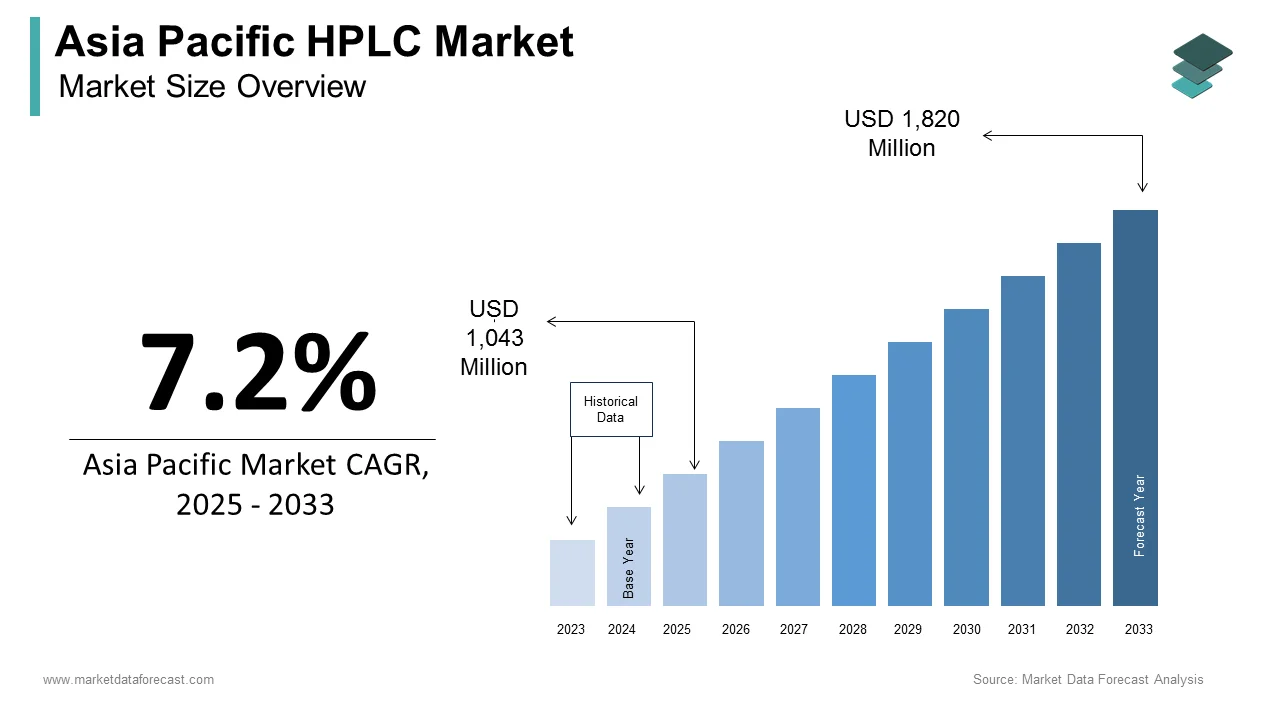
- Market Valuation: Valued at USD 1,043 million (2025), estimated at USD 1,118.1 million (2026), and projected to reach USD 1,950 million by 2034, registering a strong CAGR of 7.20% (2026–2034).
- Primary Growth Drivers: High sensitivity and precision in drug approvals, growing pharmaceutical R&D spending, rise in clinical research for cancer treatments, extensive sales of biosimilars/generics in Japan, and biotechnology expansion in China and India.
Key Market Segment Metrics (2026–2034)
| Category | Leading Segment (Base Position) | Fastest-Growing Segment |
|---|---|---|
| By Product | Instruments & Systems (anchoring core analytical setups in pharmaceutical laboratories) | Consumables (driven by routine replacement of columns and filters in high-throughput testing) |
| By Instrument Sub-Segment | HPLC Systems & Pumps | Advanced Detectors (UV, Fluorescence, and Mass Spectrometry modules) |
| By Application | Clinical Research & Drug Development (backed by extensive pharma/biotech R&D investments) | Diagnostics & Oncology Biomarker Screening |
| By Country / Region | China and Japan (leading regional hubs backed by government R&D funding and advanced biotech sectors) | India (accelerating rapidly via expanding pharma, generic manufacturing, and contract research sectors) |
Major Market Players & Market Structure
Market Structure: Highly competitive Asia-Pacific analytical instrumentation landscape where global technology leaders compete on separation efficiency, automation integration, and localized technical support.
Key Companies: Waters Corporation, Agilent Technologies, Shimadzu Corporation, Thermo Fisher Scientific Inc., GE Healthcare, PerkinElmer Inc., Bio-Rad Laboratories Inc., Gilson Inc., Phenomenex Inc., and JASCO Inc.
 Download Free Sample Report
Asia Pacific HPLC Market Size
The size of the high-performance liquid chromatography market in Asia Pacific was valued at USD 1,043 million in 2025. The Asia Pacific market is expected to be valued at USD 1,118.10 million in 2026 and USD 1,950 million by 2034, exhibiting a CAGR of 7.20% from 2026 to 2034.
HPLC stands for High-Performance Liquid Chromatography (originally called high-pressure liquid chromatography). It is a powerful laboratory technique used to separate, identify, and quantify each component in a liquid mixture. This technology is indispensable for quality control in pharmaceuticals, food safety testing, and environmental monitoring across diverse economies. According to the World Health Organisation, non-communicable diseases (NCDs) have become the dominant cause of mortality and morbidity across the Asia-Pacific region, accounting for up to 85% of deaths in several countries, which underscores the growing importance of primary prevention, early detection, and analytical frameworks. This health trend directly fuels the procurement of advanced chromatography systems for research and regulatory compliance. According to sources, food safety incidents and growing pressures on agrifood systems across Asia and the Pacific have driven regional dialogues and prompted the need for stronger partnerships, innovations, and structural policies to improve food safety and regulatory oversight. These regulations mandate the use of sensitive analytical tools like HPLC to detect contaminants and ensure consumer safety. The definition includes various configurations such as ultra-high-performance liquid chromatography and preparative systems. Applications span from small molecule analysis to biomolecule characterisation in biopharmaceuticals. Manufacturers focus on enhancing resolution, speed, and sensitivity to meet evolving industry standards. The market serves academic institutions, contract research organisations, and industrial laboratories seeking reliable data integrity. Continuous innovation in column technology and detector sensitivity drives adoption rates.
MARKET DRIVERS
Expansion of the Pharmaceutical and Biotechnology Sector
The rapid growth of the pharmaceutical and biotechnology industries is among the key factors behind the expansion of the Asia Pacific HPLC market. This creates sustained demand for rigorous quality control and drug discovery tools. Governments in countries like China, India, and South Korea are investing heavily in domestic drug manufacturing to reduce import dependency. According to reports, pharmaceutical production and clinical development pipelines across the Asia-Pacific region have expanded notably in recent years, cementing the region's position as a critical node in the global biomedical supply chain. This expansion requires extensive analytical testing at every stage of development, from raw material inspection to final product release. As per reports, statutory and administrative adaptations by the Chinese National Medical Products Administration have focused on shifting registration dossiers and streamlining optimisation measures to accelerate structural drug development and medical device commercialisation. Biotechnology firms utilise HPLC for protein purification and characterisation, further broadening the application scope. Regulatory harmonisation with global standards like ICH guidelines mandates the use of validated HPLC methods. Contract research organisations in the region are scaling up operations to serve global clients, increasing equipment procurement. The shift toward biologics and biosimilars requires specialised high-resolution systems. This driver ensures consistent market growth as the region becomes a global hub for pharmaceutical manufacturing and research.
Stringent Food Safety and Environmental Regulations
Increasingly strict food safety and environmental protection regulations contribute to the growth of the Asia Pacific HPLC market. This mandates advanced testing capabilities for contaminant detection. Consumers are becoming more aware of food adulteration and pesticide residues, prompting governments to enforce tighter controls. According to studies, food testing frameworks and regulatory compliance metrics in Southeast Asian economies highlight a critical structural demand for enhanced monitoring technologies and standardised quality control infrastructures. This gap drives laboratories to adopt sensitive HPLC systems capable of detecting trace levels of toxins. As per reports, the acceleration of industrial discharges into major Asian river basins has driven an increased demand for rigorous environmental analytical workflows to manage local water safety and quality standards. Regulatory bodies require accredited laboratories to use standardised methods like HPLC for accurate pollutant quantification. Food exporters must comply with international limits on additives and residues to access global markets. This compliance pressure forces local producers to upgrade their testing facilities. Government agencies are establishing more public testing labs equipped with modern chromatography instruments. The agricultural sector uses HPLC to monitor pesticide usage and ensure crop safety. This driver expands the market beyond pharmaceuticals into food and environmental sectors. It creates a steady demand for robust and reliable analytical instruments across various industrial verticals.
MARKET RESTRAINTS
High Initial Capital Investment and Maintenance Costs
The substantial cost of acquiring and maintaining advanced HPLC systems restricts the Asia Pacific market. This limits accessibility for small and medium enterprises. High-performance instruments require significant upfront capital, which many smaller laboratories in developing nations cannot afford. According to sources, importing scientific instrumentation into low-income countries involves dealing with structural barriers including customs tariffs, freight complexities, and logistical bottlenecks. This financial burden discourages investment in state-of-the-art technology among budget-constrained entities. As per reports, ongoing service and preventative maintenance contracts for specialised analytical laboratory equipment can typically cost between 10 and 15 per cent of the initial instrument purchase price annually. These recurring expenses strain operational budgets, particularly for academic and public sector laboratories with fixed funding. Smaller contract testing labs may opt for older or refurbished equipment, compromising data quality and throughput. The need for specialised consumables and columns further increases ongoing operational costs. Limited financing options for scientific equipment exacerbate the barrier to entry. This restraint slows the adoption of newer technologies like ultra-high-performance systems in price-sensitive segments. Manufacturers face pressure to offer flexible payment plans or leasing options to mitigate this issue. The high-cost structure limits market penetration in rural and less developed areas.
Shortage of Skilled Technical Personnel
The lack of trained professionals capable of operating and interpreting HPLC data impedes the Asia Pacific market. This reduces operational efficiency and data reliability. Advanced chromatography requires specialised knowledge in method development, troubleshooting, and data analysis. As per sources, technical sectors and advanced laboratory disciplines across the Asia-Pacific region face significant capacity challenges due to localised talent shortages and uneven professional development infrastructure. This talent gap leads to underutilization of sophisticated instruments and increased error rates in testing. As per research, access to systematic, formal training on advanced analytical instrumentation and methodologies remains highly uneven for laboratory technicians across emerging developing markets. This lack of expertise results in frequent instrument downtime and inconsistent results. Laboratories struggle to retain qualified staff due to competitive job markets and migration to developed countries. Training programs are often expensive and time-consuming, delaying project timelines. Misinterpretation of data can lead to regulatory noncompliance and product recalls. This restraint hinders the effective adoption of new features and software updates. Vendors must invest heavily in customer education and support services to bridge the skills gap. The shortage limits the ability of laboratories to maximise the potential of their investments. It also slows the transition from manual to automated workflows.
MARKET OPPORTUNITIES
Growth in Contract Research and Testing Services
The expansion of contract research organisations and third-party testing laboratories unlocks potential for the Asia Pacific HPLC market. This outsources analytical needs. Pharmaceutical and food companies are increasingly relying on external partners for cost-effective and specialised testing services. According to reports, the contract research and business process outsourcing sectors within the Asia-Pacific region are showing sustained market expansion driven by strategic outsourcing from global pharmaceutical and clinical networks. This growth drives bulk procurement of HPLC systems by service providers aiming to expand capacity. As per sources, expanding public and private laboratory networks across key Asian economies like India and China are increasingly aligning with ISO and national accreditation standards to handle domestic testing volume. These facilities require multiple instruments to handle high sample volumes and diverse client requirements. Outsourcing allows manufacturers to avoid capital expenditure while ensuring compliance with global standards. Contract labs invest in high-throughput systems to improve turnaround times and competitiveness. The trend toward multi-analyte testing increases the demand for versatile HPLC configurations. Partnerships between global instrument manufacturers and local service providers facilitate technology transfer. This opportunity extends to niche areas like forensic analysis and clinical diagnostics. Service providers often upgrade to the latest models to attract premium clients. The centralised nature of these labs enables efficient utilisation of resources. It creates a stable revenue stream for vendors through service contracts and consumable sales.
Adoption of Green Chromatography Practices
The shift toward environmentally sustainable laboratory practices is a key growth area for the Asia Pacific HPLC market. This expansion is primarily driven by the development of green chromatography solutions. Laboratories are seeking ways to reduce solvent waste and energy consumption to meet corporate sustainability goals. According to research, green analytical chemistry frameworks emphasise modifying mobile phases, implementing solvent-free techniques, or prioritising bio-based alternatives to systematically reduce hazardous waste generation during liquid separation. This efficiency drives demand for instruments optimised for low flow rates and alternative solvents. According to sources, environmental recognition parameters and standard compliance procedures increasingly encourage analytical facilities to integrate sustainable monitoring techniques to mitigate laboratory-derived chemical hazards. Manufacturers are introducing systems with reduced dead volumes and energy-saving modes. Ultra-high-performance liquid chromatography uses less solvent and generates less waste than traditional methods. This alignment with environmental regulations appeals to government-funded laboratories and multinational corporations. Educational institutions are incorporating green chemistry principles into curricula, influencing future purchasing decisions. Vendors can differentiate by offering recycling systems and bio-based column materials. This opportunity fosters innovation in instrument design and method development. It enhances brand reputation among environmentally conscious customers. The trend supports long-term sustainability of laboratory operations.
MARKET CHALLENGES
Complexity of Method Validation and Regulatory Compliance
The intricate requirements for method validation and regulatory compliance are a major hurdle for the Asia-Pacific HPLC market. These hurdles increase the time and cost associated with instrument deployment. Different countries in the region have varying regulatory standards, complicating the approval process for analytical methods. According to studies, achieving full multi-jurisdictional compliance and complete protocol validation for new analytical methods represents a highly time-intensive procedure subject to rigid documentation standards. This delay slows down product launches and research projects requiring certified data. As per reports, analytical laboratories frequently experience initial audit validation delays or failures driven primarily by documentation inconsistencies, incomplete record-keeping, or non-compliant validation protocols. These failures result in corrective actions and retesting, increasing operational costs. Laboratories must maintain detailed records of instrument performance and calibration history. Changing regulations require continuous updates to standard operating procedures. Small laboratories lack dedicated regulatory affairs teams, making compliance difficult. The complexity discourages some users from adopting advanced features that require additional validation. Vendors must provide extensive documentation and support to assist customers. This challenge creates a barrier for new entrants who lack regulatory expertise. It also increases the risk of non-compliance penalties for users. Navigating the diverse regulatory landscape remains a persistent hurdle.
Supply Chain Disruptions for Consumables and Parts
Volatility in the supply chain for critical consumables and spare parts challenges the Asia Pacific HPLC market. This causes operational delays and increased costs. HPLC systems require regular replacement of columns, filters, and seals to maintain performance. According to sources, global disruptions and shifting logistics performance dynamics have structurally increased cargo transit timelines and delivery delays across major shipping corridors and regional ports. This instability affects the timely availability of essential supplies for laboratories. As per research, supply constraints regarding specific microelectronic components and precision hardware parts create downstream lead time extensions for maintaining and repairing specialised instrumentation. These delays result in prolonged downtime and loss of productivity for testing facilities. Dependence on imported consumables exposes users to currency fluctuations and tariff changes. Local manufacturing of high-quality columns is limited in many Asian countries. Stockpiling strategies increase inventory costs and storage requirements. Unexpected supply interruptions can halt critical research and quality control activities. Laboratories struggle to find alternative suppliers with compatible products. This challenge undermines confidence in system reliability and vendor support. Manufacturers are attempting to diversify sourcing, but progress is slow. Ensuring consistent supply remains a critical operational risk.
REPORT COVERAGE
| REPORT METRIC | DETAILS |
| Market Size Available | 2025 to 2034 |
| Base Year | 2025 |
| Forecast Period | 2026 to 2034 |
| Segments Covered | By Product, Instruments, Consumables, Application, and Country. |
| Various Analyses Covered | Global, Regional, and Country-Level Analysis, Segment-Level Analysis, Drivers, Restraints, Opportunities, Challenges; PESTLE Analysis; Porter’s Five Forces Analysis, Competitive Landscape, Analyst Overview of Investment Opportunities |
| Countries Covered | India, China, Japan, South Korea, Australia, New Zealand, Thailand, Malaysia, Vietnam, Philippines, Indonesia, Singapore, Rest Of APAC. |
| Market Leaders Profiled | Waters Corporation, Agilent Technologies, Shimadzu Corporation, Thermo Fisher Scientific Inc., GE Healthcare, PerkinElmer Inc., Bio-Rad Laboratories Inc., Gilson Inc., Phenomenex Inc., JASCO Inc., and Others. |
SEGMENTAL ANALYSIS
By Product Insights
In 2025, the instruments segment held the majority share in the Asia Pacific HPLC market because of its fundamental role as the primary hardware required for analytical separation and detection. Laboratories cannot perform chromatographic analysis without these core systems, making them the initial and largest capital expenditure. According to sources, procurement of core analytical instrumentation constitutes a substantial portion of specialised capital expenditure allocations for testing laboratories in developing Asian countries. This substantial allocation reflects the ongoing modernisation of research infrastructure across the region. As per reports, administrative updates and drug manufacturing facility approvals by the Chinese National Medical Products Administration drive regional demand for high-performance liquid chromatography (HPLC) configurations to verify quality control compliance. This industrial expansion drives consistent demand for high-performance and ultra-high-performance liquid chromatography systems. Academic institutions also contribute significantly through government-funded research grants aimed at upgrading analytical capabilities. The longevity of instruments ensures a stable replacement cycle every five to seven years. Manufacturers focus on enhancing sensitivity and throughput to meet rigorous regulatory standards. The dominance of this segment is sustained by the continuous entry of new laboratories and the expansion of existing facilities. Technological advancements in detector technology and automation further stimulate upgrade cycles. Instruments serve as the gateway for subsequent consumable sales, establishing long-term customer relationships.
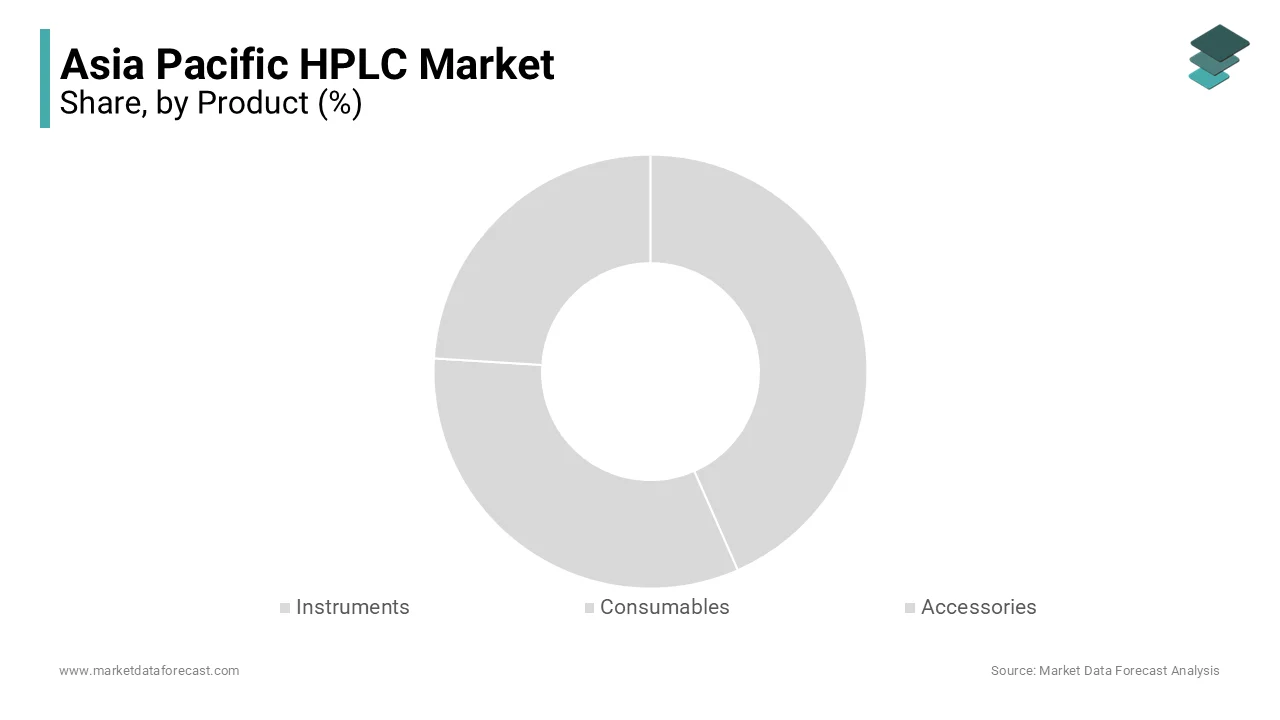
The consumables segment is the fastest-growing in the Asia Pacific HPLC market due to the recurring nature of their usage and increasing sample throughput. Unlike instruments, columns, filters, and solvents require regular replacement, creating a steady and predictable revenue stream. According to studies, increasing testing volumes and regulatory compliance activities across Southeast Asian laboratories drive a continuous annual rise in the consumption of foundational chemical components and general laboratory reagents. This growth correlates with the expanding workload in food safety and environmental monitoring sectors. As per research, the expansion of regional therapeutic pipelines and biopharmaceutical manufacturing footprints across Asia has increased the application of specialised liquid chromatography stationary phases to support biomolecule separation. The shift toward high-throughput screening accelerates the depletion of disposable components. Laboratories prefer genuine manufacturer consumables to ensure data integrity and warranty compliance. The rise of contract research organisations further boosts demand due to their high-volume operations. Innovations in column chemistry extend product life but increase unit value. Subscription models for consumables are gaining traction among large institutional buyers. This segment grows faster than instruments because it is directly tied to daily operational activity rather than capital investment cycles. The recurring revenue model offers stability for vendors amidst fluctuating instrument sales.
By Consumables Insights
The columns segment was the largest in 2025 and occupied a commanding share of the Asia Pacific HPLC market. This prominence was credited to the fact that columns are the critical component responsible for the actual separation of analytes. Every HPLC analysis requires a specific column type tailored to the chemical properties of the sample, making them indispensable. According to sources, analytical column replacements represent a recurring and significant operational expense within the total consumable budgets of pharmaceutical quality control facilities. This high proportion reflects the wear and tear columns undergo during high-pressure operations. As per reports, the growing diversity and complexity of active pharmaceutical ingredients manufactured in major regional centres like India and China require a varied selection of stationary phase chemistry to handle separation workflows. Researchers frequently switch columns to optimise resolution and speed for new compounds. The complexity of biologics analysis requires advanced column technologies with smaller particle sizes. Brand loyalty is strong as laboratories validate specific columns for regulatory compliance. Counterfeit products pose a risk, but genuine manufacturers maintain dominance through performance guarantees. The leading position is supported by the continuous introduction of new chemistries for challenging separations. Columns are sensitive to contamination and pressure limits, ensuring regular replacement needs. This segment remains dominant due to its central role in achieving accurate analytical results.
The filters segment is rapidly expanding in the Asia Pacific HPLC market, owing to the increasing emphasis on instrument protection and sample cleanliness. Particulate matter in samples can damage expensive pumps and columns, making filtration a mandatory step in sample preparation. According to research, integrating automated sample preparation instrumentation into high-throughput operations scales up the continuous requirement for standardised filtration components. This automation drives volume growth as each sample requires individual filtration before injection. As per studies, stringent guidelines governing biological matrix processing and vaccine production emphasise strict sterile filtration validation protocols to maintain product safety. The rise in biosimilar development requires stringent removal of aggregates and contaminants. Disposable syringe filters offer convenience and reduce cross-contamination risks compared to reusable methods. Environmental testing labs use filters to remove debris from water and soil extracts. The low unit cost encourages bulk purchasing and routine replacement. Innovations in membrane materials improve flow rates and chemical compatibility. This segment grows rapidly as laboratories prioritise instrument longevity and data reliability. The shift toward single-use plastics in regulated environments further supports filter adoption. It is an essential yet often overlooked component that ensures system integrity.
COUNTRY-LEVEL ANALYSIS
China HPLC Market Analysis
China led the Asia Pacific HPLC market and captured a significant share in 2025. This leading position was attributed to its massive pharmaceutical manufacturing base and aggressive government investment in scientific infrastructure. The country serves as the largest consumer of analytical instruments in the region. According to reports, industrial output dynamics and regulatory quality expectations within China's pharmaceutical manufacturing ecosystem drive steady institutional demand for high-performance quality control instrumentation. This industrial scale drives demand for both basic and advanced HPLC systems. According to sources, China's total national research and development (R&D) expenditure reached 3.3 trillion yuan, supporting extensive scientific instrumentation modernisation and laboratory facility advancements across academic and industrial networks. Local manufacturers are emerging, but international brands retain preference for high-end applications. Regulatory reforms by the National Medical Products Administration have raised quality standards, forcing companies to upgrade legacy systems. The presence of numerous contract research organisations further amplifies demand. Supply chain localisation efforts are reducing costs for domestic buyers. The market benefits from a large pool of skilled chemists and technicians. Government initiatives promoting innovation in biopharmaceuticals create opportunities for specialised HPLC applications. China remains the primary growth engine for the regional market.

Japan HPLC Market Analysis
Japan is a mature player within the Asia Pacific HPLC market. The country is known for high precision requirements and strong domestic manufacturing capabilities. The country is home to major global instrument manufacturers who drive innovation in detector sensitivity and automation. According to research, Japan's mature pharmaceutical framework maintains significant R&D allocations for novel therapeutic discovery, resulting in a sustained operational focus on precise high-throughput separation techniques. This focus on innovation sustains demand for high-end ultra-high-performance systems. As per studies, competitive government research grants and education ministry allocations support public university laboratories in refreshing their foundational analytical infrastructure. Japanese laboratories prioritise reliability and after-sales service, fostering long-term relationships with vendors. The ageing population drives demand for clinical diagnostics and food safety testing, expanding application areas beyond pharmaceuticals. Strict regulatory standards ensure consistent replacement of consumables to maintain data integrity. The market sees steady growth rather than rapid expansion due to saturation. However, replacement cycles and technological upgrades provide consistent revenue. Japan serves as a hub for technical training and product development for the broader region. High labour costs encourage automation in laboratory workflows.
India HPLC Market Analysis
India is a rapidly growing country within the Asia Pacific HPLC market due to its status as a global hub for generic pharmaceutical manufacturing and contract research. The country has a vast number of small and medium enterprises adopting analytical technologies to meet export standards. According to the Department of Pharmaceuticals, India produces over 60% of global vaccine demand, necessitating rigorous quality control infrastructure including HPLC systems. This production volume creates sustained demand for robust and cost-effective instruments. As per sources, public funding allocations intended to strengthen biomedical research support clinical and central laboratory networks in expanding their specialised testing capabilities. The government initiative Make in India encourages local assembly of instruments, reducing costs. Price sensitivity remains high, favouring mid-range systems with good service support. The expansion of food safety testing labs under the Food Safety and Standards Authority of India drives non-pharmaceutical demand. Skilled workforce availability supports efficient instrument utilisation. The market is fragmented with many small players but consolidating as standards rise. India offers significant volume growth potential for vendors offering value-oriented solutions. Regulatory harmonisation with global norms continues to drive upgrades.
South Korea HPLC Market Analysis
South Korea is expanding steadily in the Asia Pacific HPLC market. South Korea is expanding steadily in the Asia-Pacific HPLC market. The country holds a significant and technologically sophisticated position in the regional market, fueled by its strong biotechnology and electronics sectors. In addition, the country is a leader in biosimilar development, which requires advanced chromatography for protein characterisation. According to reports, capital deployment in South Korea's biological drug development space expands the need for complex macromolecular separation platforms. This sector prioritises precision and data integrity over cost. As per sources, South Korean national research initiatives in advanced materials and technical fabrication utilise precise physical characterisation tools to guarantee strict manufacturing quality standards. Korean laboratories are early adopters of automation and digital integration features. The presence of major semiconductor manufacturers drives demand for ultra-pure chemical analysis using specialised HPLC methods. Government support for startups in the life sciences sector fosters innovation. The market values compact and efficient instruments due to space constraints in urban laboratories. Strong intellectual property protection encourages investment in proprietary analytical methods. South Korea serves as a test bed for new technologies before broader Asian rollout. High educational standards ensure a skilled user base capable of leveraging advanced features.
Australia HPLC Market Analysis
Australia is also a key player in the Asia Pacific HPLC market with strict regulatory standards and strong research output. The country serves as a gateway for international vendors entering the Oceanic region. According to research, public and private capital commitments to formal experimental development support well-funded research facilities and laboratory networks across the Australian continent. This funding ensures consistent procurement of premium analytical instruments. As per studies, mandatory compliance checks and extensive quality assessment standards applied to imported health goods reinforce the demand for certified chemical verification services. The mining and environmental sectors also contribute through water and soil analysis requirements. Australian laboratories prioritise sustainability and green chemistry practices, influencing purchasing decisions toward eco-friendly systems. The market is smaller in volume compared to Asia but higher in value per unit. Strong trade agreements facilitate easy access to global technologies. Professional associations provide extensive training and certification programs. The market sees steady replacement demand and occasional upgrades for specialised applications. Australia remains a key hub for regulatory expertise and high-quality analytical services in the region.
COMPETITIVE LANDSCAPE
The Asia Pacific HPLC Market features a highly competitive landscape dominated by established global manufacturers and emerging local players. Competition centers on instrument reliability, sensitivity, and after sales support rather than price alone. Major players strive to differentiate through advanced software integration and specialized application solutions. The barrier to entry is high due to the need for precise engineering and regulatory compliance. Local manufacturers compete on affordability and customized service offerings for small and medium enterprises. Innovation in ultra high performance technologies and green chromatography drives product differentiation. Strategic partnerships with distributors and contract research organizations facilitate market penetration. Digital transformation enables remote monitoring and predictive maintenance enhancing customer value. Companies invest heavily in training programs to address the skilled labor shortage in the region. Supply chain resilience is critical for maintaining consistent availability of instruments and consumables. Regulatory harmonization across countries shapes product design and marketing strategies. The market rewards brands that balance technological sophistication with practical usability and strong local support.
KEY MARKET PLAYERS
The leading companies operating in the Asia Pacific HPLC market include:
- Waters Corporation
- Agilent Technologies
- Shimadzu Corporation
- Thermo Fisher Scientific Inc.
- GE Healthcare
- PerkinElmer Inc.
- Bio-Rad Laboratories Inc.
- Gilson Inc.
- Phenomenex Inc.
- JASCO Inc.
TOP PLAYERS IN THE MARKET
- Shimadzu Corporation maintains a strong presence in the Asia Pacific HPLC Market by leveraging its Japanese heritage and deep regional understanding. The company focuses on providing reliable and cost effective instruments tailored to the diverse needs of pharmaceutical and academic laboratories. Shimadzu recently expanded its manufacturing facilities in India to localize production and reduce delivery times for customers. This strategic move enhances accessibility and supports the growing demand for mid range HPLC systems. The organization emphasizes robust after sales service networks across Southeast Asia ensuring minimal downtime for users. Their product portfolio includes advanced ultra high performance systems designed for complex biomolecule analysis. Shimadzu actively collaborates with local universities to promote training and skill development programs. Recent innovations focus on energy efficiency and reduced solvent consumption aligning with green chemistry trends. The brand is trusted for its durability and precision in routine quality control applications. These efforts strengthen customer loyalty and drive consistent revenue growth in competitive markets. Shimadzu continues to invest in digital solutions for remote monitoring and data management. This commitment to innovation and support solidifies its position as a key player in the region.
- Agilent Technologies Inc. contributes significantly to the Asia Pacific HPLC Market through its comprehensive portfolio of high performance analytical solutions. The company targets premium segments including biopharmaceuticals and contract research organizations requiring superior sensitivity and throughput. Agilent recently launched new AI driven software tools that simplify method development and troubleshooting for complex samples. This technological advancement reduces operational complexity and improves laboratory efficiency for users. The organization has strengthened its distribution partnerships in China and South Korea to expand market reach. Agilent emphasizes total lab automation integrating HPLC with sample preparation and data analysis workflows. Their commitment to regulatory compliance helps clients meet stringent global standards efficiently. Recent initiatives include sustainability programs promoting instrument recycling and solvent reduction. Agilent provides extensive technical training and certification programs for laboratory personnel. These services enhance user competency and maximize instrument utilization rates. The brand is recognized for its innovation in detector technology and column chemistry. Agilent continues to drive market growth by addressing the evolving needs of modern analytical laboratories.
- Waters Corporation strengthens its position in the Asia Pacific HPLC Market by focusing on specialized applications in proteomics and metabolomics. The company offers advanced ultra performance liquid chromatography systems that deliver exceptional resolution and speed. Waters recently established new customer experience centers in Singapore and Australia to demonstrate latest technologies. These facilities allow potential buyers to evaluate performance before making purchasing decisions. The organization collaborates closely with regulatory bodies to ensure its methods meet international compliance requirements. Waters emphasizes data integrity features in its software platforms addressing growing security concerns. Recent product launches include compact systems designed for space constrained laboratories in urban areas. The company provides tailored solutions for food safety and environmental testing sectors. Waters invests heavily in research and development to maintain technological leadership. Their strong brand reputation attracts high end institutional and industrial clients. Strategic alliances with local distributors enhance service coverage in remote regions. Waters continues to innovate by integrating cloud based data management capabilities. This approach supports collaborative research and remote access for global teams.
TOP STRATEGIES USED BY THE KEY MARKET PARTICIPANTS
Key market participants employ several strategies to strengthen their positions. First, they prioritize localization of manufacturing and assembly to reduce costs and lead times. Second, they expand service networks to ensure rapid response and minimal downtime. Third, they integrate artificial intelligence and automation to simplify complex analytical workflows. Fourth, they focus on sustainability by developing eco-friendly instruments and consumables. Fifth, they collaborate with academic institutions to foster talent and drive innovation.
MARKET SEGMENTATION
This research report on the Asia Pacific high-performance liquid chromatography market has been segmented and sub-segmented based on product, instruments, consumables, application, and region.
By Product
- Instruments
- Consumables
- Accessories
By Instruments
- Systems
- Detectors
By Consumables
- Columns
- Filters
By Application
- Clinical Research
- Diagnostics
- Forensics
By Country
- India
- China
- Japan
- South Korea
- Australia
- New Zealand
- Thailand
- Malaysia
- Vietnam
- Philippines
- Indonesia
- Singapore
- Rest Of APAC