- Product Description Description
- Table of Contents TOC
- List of Table & Figure LOT
- Get Free Sample PDF Sample PDF
Market Size, 2025
$0.29 BnMarket Estimate, 2026
$0.31 BnMarket Forecast, 2034
$0.61 BnCAGR, 2026–2034
8.62%Executive Summary: Asia Pacific Nebulizer Market
- Market Scope: Comprehensive market analysis of the Asia Pacific (APAC) nebulizer ecosystem, evaluating product types, device modalities, healthcare and home-care end-user settings, and country-level growth dynamics.
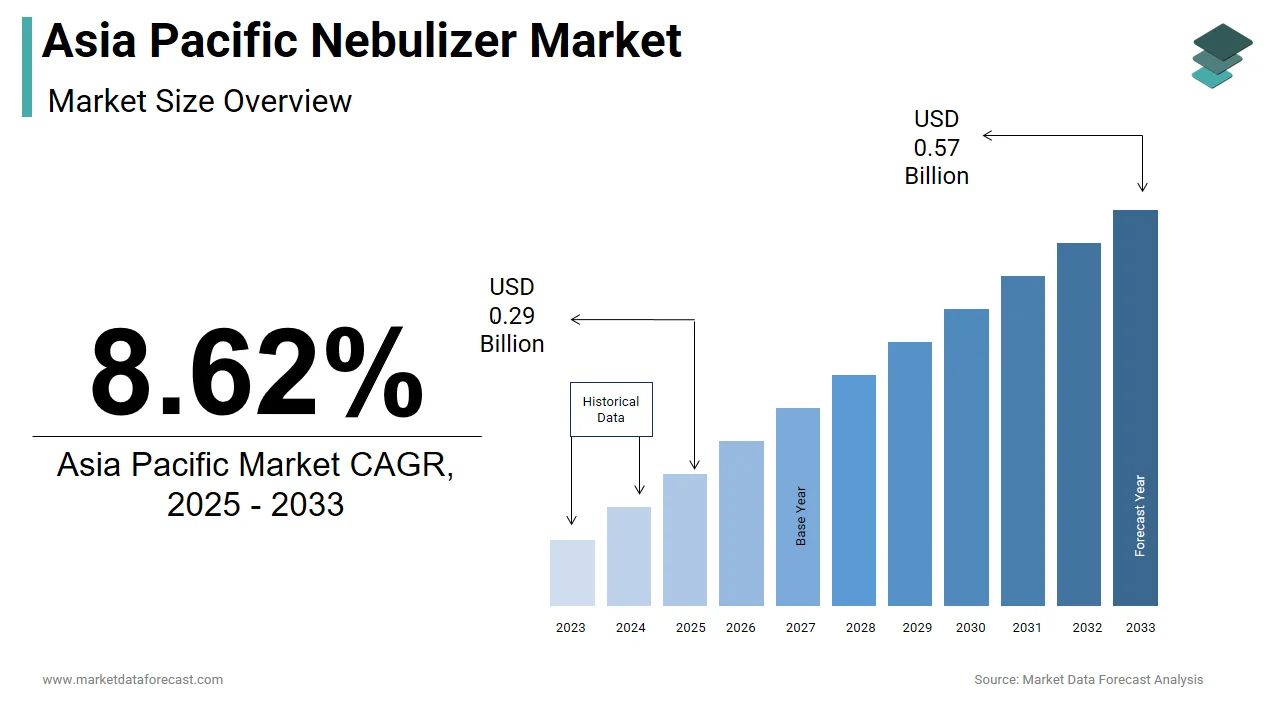
- Market Valuation: Valued at USD 0.29 billion (2025), estimated at USD 0.31 billion (2026), and projected to reach USD 0.61 billion by 2034, registering a robust CAGR of 8.62% (2026–2034).
- Primary Growth Drivers: Increasing aging population, rising incidence of chronic respiratory diseases (such as asthma and COPD), environmental pollution and smoking habits, improving healthcare infrastructure, and high adoption of portable/rechargeable nebulizer devices.
Key Market Segment Metrics (2026–2034)
| Category | Leading Segment (2025 Position) | Fastest-Growing Segment (2026–2034) |
|---|---|---|
| By Product | Jet Nebulizers (dominate clinical adoption due to cost-effectiveness and widespread use in hospital environments) | Mesh Nebulizers (growing rapidly through advanced silent operation, high efficiency, and patient convenience) |
| By Modality | Table-Top Nebulizers (hold significant volume across clinical care units and traditional hospital settings) | Portable Nebulizers (experiencing high expansion driven by patient mobility trends and home-care management) |
| By End-User | Hospitals & Clinics (command the largest market share backed by institutional respiratory treatments) | Home Care Settings (surging as patients prefer self-administration and chronic ambulatory management) |
| By Country / Region | China (projects the largest market share in the APAC region, driven by advanced tech integration and broad application scope) | India (predicted to be a highly lucrative market due to growing asthma incidences, technological innovations, and favorable reimbursements) |
Major Market Players & Market Structure
Market Structure: A competitive medical device landscape featuring established global respiratory care manufacturers and regional medical technology providers expanding across Asian markets.
Key Companies: Briggs Healthcare, Besco Medical, Ca-Mi, DeVilbiss Healthcare, Feellife Health, Flyp, Invacare, Omron, Philips Respironics, and Pari Medical.
 Download Free Sample Report
Asia Pacific Nebulizer Market Size
The size of the Asia Pacific nebulizer market was worth USD 0.29 billion in 2025. The Asia Pacific market is anticipated to grow at a CAGR of 8.62% from 2026 to 2034 and be worth USD 0.61 billion by 2034, up from USD 0.31 billion in 2026.
A nebulizer is a medical device that turns liquid medicine into a fine mist that you breathe directly into your lungs through a face mask or a mouthpiece. It is commonly used to treat lung and breathing conditions like asthma, chronic obstructive pulmonary disease (COPD), cystic fibrosis, and severe chest infections. In addition, as per studies, the regional usage of inhalation devices expands over time to support a substantial population affected by chronic respiratory illnesses across Asia. According to sources, regional clinical equipment frameworks scale upward to meet patient management requirements for acute and home care respiratory treatments. Furthermore, according to the Global Burden of Disease Study, chronic obstructive pulmonary disease affects hundreds of millions of individuals globally, with East Asia and the Pacific accounting for approximately 73.6 million prevalence cases and 1.6 million annual mortality events. As per research, the Asia Pacific sector is experiencing increased adoption of home and clinical inhalation systems, positioning it among the most dynamic geographic areas globally for respiratory therapy deployment. Consequently, regional healthcare authorities increasingly prioritize home care respiratory devices and mesh nebulizers to manage high patient volumes effectively.
MARKET DRIVERS
Escalating Prevalence of Respiratory Pathologies
The surging burden of chronic airway diseases across densely populated urban centers is a primary driver of continuous device acquisition in the Asia Pacific nebulizer market. According to World Health Organization Global Health Observatory records, chronic obstructive pulmonary disease affected 392 million people worldwide, while particulate air pollution in regional megacities continuously drives up emergency respiratory admissions. This heavy epidemiological burden means that clinical institutions and community health centers must maintain high inventories of aerosol therapy units to treat acute bronchospasm effectively. Furthermore, as per sources, the Asia-Pacific region accounted for nearly 69.4 million living patients suffering from persistent airflow limitations. These clinical realities create a continuous institutional demand for reliable jet and mesh nebulizers, ensuring that practitioners can deliver fine aerosol particles efficiently to older demographics with low inspiratory force.
Proliferation of Portable Home Healthcare Models
Developing economies are experiencing a systemic transition toward decentralized residential care, which further propels the Asia Pacific nebulizer market. This shift fundamentally transforms how patients manage long-term pulmonary conditions. As per studies, the increasing adoption of portable healthcare equipment supports a shift toward patient-managed systems over fixed clinical configurations. This technological shift allows individuals with asthma or chronic bronchitis to administer their prescribed bronchodilator therapies independently in domestic settings without requiring frequent clinical visits. Moreover, according to research, modern patient groups increasingly seek light, quiet, and cordless models to manage respiratory delivery needs on the move. Consequently, home care settings represent an increasingly vital revenue channel for equipment manufacturers expanding their consumer footprint throughout the region.
MARKET RESTRAINTS
Stringent Regulatory Compliance and Approval Delays
Navigating complex bureaucratic approval frameworks established by national medical device authorities creates significant friction for international suppliers seeking commercial entry and ultimately hampers the growth of the Asia Pacific nebulizer market. According to studies, public regulatory frameworks maintain safety and compliance standards for therapeutic inhalation and clinical delivery hardware before market distribution. These strict validation procedures, while essential for patient protection, lengthen commercialization timelines and increase administrative overhead for manufacturers attempting to launch next-generation mesh pumps. Furthermore, as per sources, differences in cross-border standardization frameworks frequently require localized testing protocols to secure authorization in distinct jurisdictions. Consequently, smaller medical device innovators face substantial financial hurdles when trying to distribute advanced respiratory assets across multiple Asian jurisdictions simultaneously.
High Device Acquisition Costs and Reimbursement Limits
Prohibitive out-of-pocket expenses associated with advanced portable nebulization technology restrict widespread adoption among low-income populations across developing regional territories, which hinders the expansion of the Asia Pacific nebulizer market. According to research, government funding strategies for clinical resources must balance infrastructure allocations with patient accessibility to curb personal healthcare expenditures. Because advanced vibrating mesh nebulizers carry a higher retail price than traditional compressor units, budget-constrained households often rely on cheaper, less efficient alternatives. Additionally, as per studies, institutional framework designs and public safety nets play a critical role in determining patient access to long-term care management resources. This economic disparity forces many patients to delay necessary therapy upgrades, limiting market penetration outside affluent metropolitan areas.
MARKET OPPORTUNITIES
Expansion of E-Commerce and Digital Retail Channels
The rapid digitization of retail supply chains and digital health platforms across developing economies in the region open massive commercial avenues for medical device manufacturers in the Asia Pacific nebulizers market. According to sources, the expansion of e-commerce channels facilitates direct patient acquisition of personal care equipment and respiratory therapy options. This shift allows direct-to-consumer brands to reach remote populations that lack access to specialized brick-and-mortar medical supply stores. Furthermore, as per studies, the integration of cellular connectivity and mobile device infrastructure supports remote patient consultations and subsequent home-based delivery of required medical appliances. As a result, manufacturers who optimize their e-commerce fulfillment networks can capture high-growth market share across both urban and semi-urban demographics efficiently.
Strategic Local Manufacturing and Joint Ventures
Establishing domestic production facilities and localized R&D hubs represents a transformative corporate strategy for reducing import dependencies and meeting regional price points. Moreover, as per research, healthcare corporations continue to invest capital in establishing advanced manufacturing networks within major Asian production hubs, including Malaysia, China, and India. This localised operational approach bypasses steep import tariffs and protects supply chains from global shipping disruptions, ensuring steady inventory replenishment. Additionally, according to sources, joint development initiatives between multinational enterprises and regional entities support the adaptation of clinical hardware to local epidemiological requirements. Thus, this localised production capacity strengthens price competitiveness and deepens commercial penetration across emerging public health tenders.
MARKET CHALLENGES
Persistent Risk of Nosocomial and Cross-Infection
Operational challenges involving improper device sanitation and bacterial contamination are impeding the growth of the Asia Pacific nebulizer market. These issues present severe clinical hazards within high-pressure hospital wards and home environments. In addition, according to sources, contaminated parts of delivery devices can harbor opportunistic microorganisms if strict hygiene and disinfection measures are omitted between treatments. When respiratory therapy equipment is shared among multiple patients without rigorous sterilisation protocols, the risk of nosocomial transmission escalates dramatically. Furthermore, according to research, adequate caregiver and user education on cleaning steps is essential to avoid microbial contamination risks during home-based therapeutic operations. These persistent hygiene concerns necessitate continuous clinician education programs and the development of single-use disposable medication cups to ensure safe clinical deployment.
Inadequate Patient Awareness and Diagnostic Gaps
A widespread lack of public awareness regarding early symptom recognition and proper respiratory disease management creates significant under-diagnosis across rural communities, which limits the expansion of the Asia Pacific nebulizer market. Moreover, as per studies, individuals with chronic respiratory symptoms often experience late diagnosis due to overlapping perceptions of age-related changes or localised atmospheric conditions. This diagnostic deficit delays timely clinical intervention, resulting in patients seeking professional care only after their pulmonary function has severely deteriorated. Furthermore, according to sources, rural or remote local health clinics face systemic resource challenges in maintaining accessible diagnostic instrumentation for respiratory assessments. Hence, this lack of early screening restricts the addressable consumer base for therapeutic nebulizers, hindering optimal market expansion outside major urban medical centers.
REPORT COVERAGE
| REPORT METRIC | DETAILS |
| Market Size Available | 2025 to 2034 |
| Base Year | 2025 |
| Forecast Period | 2026 to 2034 |
| Segments Covered | By Product, Modality, End-User, and Country. |
| Various Analyses Covered | Global, Regional, and Country-Level Analysis, Segment-Level Analysis, Drivers, Restraints, Opportunities, Challenges; PESTLE Analysis; Porter’s Five Forces Analysis, Competitive Landscape, Analyst Overview of Investment Opportunities |
| Countries Covered | India, China, Japan, South Korea, Australia, New Zealand, Thailand, Malaysia, Vietnam, Philippines, Indonesia, Singapore and Rest of APAC. |
| Market Leaders Profiled | Briggs Healthcare, Besco Medical, Ca-Mi, De Vilbiss Healthcare, Feellife Health, Flyp, Invacare, Omron, PARI Pharma GmbH, Philips Respironics, Konklijke Philips, and Pari Medical. |
SEGMENTAL ANALYSIS
By Product Insights
In 2025, the Jet nebulizers segment captured the largest share within the Asia Pacific nebulizer market. This supremacy of the segment was supported by the fact that healthcare institutions prefer rugged, cost-effective equipment capable of enduring continuous daily operations without requiring complex electronic servicing. These compressor-driven units offer reliable clinical performance, broad compatibility with diverse liquid formulations, and high affordability for budget-conscious medical facilities. According to research, jet nebulizer systems are widely utilized across global healthcare networks, anchored by their long-standing reliability in general hospital wards and outpatient clinics. Furthermore, as per sources, traditional compressor systems remain highly prevalent in acute emergency medical interventions, contributing to continuous procurement processes by medical institutions.
Mesh Nebulizers
The mesh nebulizers segment is predicted to witness the highest CAGR of 8.6% from 2026 to 2034. Growth in this segment is propelled by superior drug delivery efficiency and patient-centric portability. Moreover, as per studies, vibrating mesh technology has established itself as an expanding segment within the consumer healthcare space, driven by preference for silent operations and battery-powered portability. This rapid expansion occurs because mesh systems generate precise aerosol sizes that penetrate deep into the lower pulmonary tracts quickly, minimizing medication residue. Additionally, as per research, advancements in portable vibrating mesh nebulizers support growing self-administration trends in home healthcare, though premium pricing and ongoing maintenance costs remain factors alongside standard compressor devices.
By Modality Insights
The table-top systems segment led the Asia-Pacific nebulizer market and captured a significant share in 2025. Its leading position was attributed to stationary compressor devices that deliver unmatched continuous power output and high-volume aerosolization for severe chronic respiratory conditions. According to sources, tabletop nebulizers maintain continuous widespread popularity across clinical institutions and residential home environments due to their reliable operation, cost-effectiveness, and capacity to handle prolonged treatment schedules. This dominance stems from the technical requirement for steady, line-powered pneumatic pressure when managing intensive inpatient treatments where battery limitations are unacceptable. Furthermore, as per research, high patient volumes suffering from chronic obstructive pulmonary disease (COPD) support a continuous demand for stationary inhalation therapy equipment within primary healthcare facilities.
The portable units segment is estimated to register the fastest CAGR of 7.8% during the forecast period. This swift expansion of the segment is propelled by the rising preference for active patient mobility and decentralized home care models. As per studies, lightweight, handheld respiratory devices are seeing expanding adoption among consumers seeking convenient, quiet, and discreet on-the-go respiratory management solutions while traveling or working. This accelerated growth rate is heavily driven by technological breakthroughs in micro-pump mechanics and compact lithium-ion battery integration that eliminate tethered power cords. Additionally, according to sources, modern smart medication adherence products integrated with digital health tracking capabilities are designed to encourage higher patient compliance across respiratory healthcare distribution networks.
By End-User Insights
The hospitals segment was the largest in 2025 and occupied a commanding share of the Asia Pacific nebulizer market. This prominence of the segment was credited to the high concentration of specialized pulmonologists, respiratory therapists, and advanced centralized oxygen infrastructure within major medical centers. Acute care complexes manage the vast majority of severe respiratory emergencies, surgical interventions, and complex pulmonary therapies requiring constant medical supervision. According to the National Institutes of Health (NIH), clinical institutions administer a high percentage of respiratory medications via nebulization, as medical personnel utilize nebulizers as a standard of care during acute exacerbations. Furthermore, as per findings by the Centers for Disease Control and Prevention (CDC), hospital settings focus heavily on device selection interfaces, such as implementing filtered mouthpieces or specific nebulizer configurations to mitigate the risk of transmitting respiratory pathogens during treatment.
The home care settings segment is anticipated to witness the fastest CAGR of 9.2 % between 2026 and 2034. This quick surge is driven by systemic healthcare decentralization and rising patient preference for residential disease management. As per studies by the National Institutes of Health (NIH), home-based nebulization therapy is heavily utilized by elderly patients with chronic obstructive pulmonary disease (COPD) because nebulizers require minimal cognitive abilities, manual dexterity, or inhalation coordination compared to handheld inhalers. This swift growth velocity is heavily supported by e-commerce expansion and telehealth consultations that enable patients to purchase and operate prescribed respiratory hardware independently. Moreover, according to the Journal of the Association of Physicians of India (JAPI), home maintenance nebulization serves as a long-term therapeutic strategy for patients with advanced obstructive airway diseases, physical limitations, or suboptimal inspiratory flows to manage symptoms outside the clinical environment.
COUNTRY LEVEL ANALYSIS
India Nebulizer Market Analysis
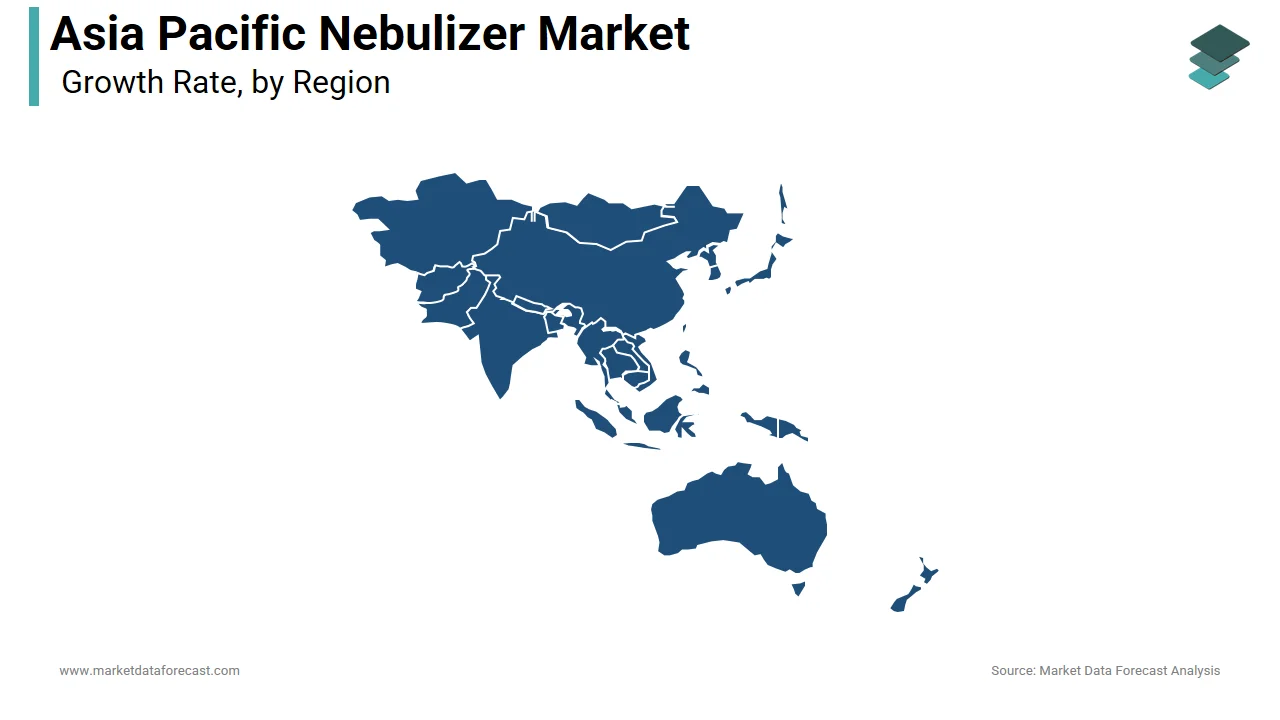
India is the fastest-growing country in the Asia Pacific nebulizer market. The country functions as a high-volume consumer base driven by dense urban populations, escalating environmental pollution, and a surging burden of chronic respiratory ailments. According to the World Health Organization (WHO), infrastructural expansion in regional health services helps to improve the accessibility and distribution of basic medical devices across developing healthcare networks. This strong market development is propelled by widespread public health initiatives focused on improving early diagnosis for asthma and chronic obstructive pulmonary disease among aging demographics. Furthermore, domestic manufacturing investments and affordable retail pricing strategies enable local suppliers to capture massive volume tenders through public hospital networks and online pharmacy platforms.
China Nebulizer Market Analysis
China dominated the Asia Pacific nebulizer market and accounted for a substantial share in 2025. This dominance of the Chinese market was primarily propelled by the nation's extensive domestic medical device manufacturing infrastructure and a vast population affected by respiratory disorders. As per the National Institutes of Health (NIH), industrial manufacturing ecosystems utilize extensive production networks and assembly configurations to provide clinical inhalation equipment for both domestic medical facilities and global distribution channels. This market remains dominant due to government-backed healthcare reforms aimed at upgrading regional hospital equipment and expanding medical insurance coverage for essential respiratory therapies. Additionally, rising smoking rates and severe particulate air pollution in major industrial hubs continuously drive high clinical demand for both hospital-grade tabletop units and advanced residential mesh nebulizers.
Japan Nebulizer Market Analysis
Japan is positioned second within the Asia-Pacific nebulizer market. Its strong position is supported by a super-aging demographic profile and stringent national standards for healthcare quality. According to the National Institutes of Health (NIH), chronic obstructive pulmonary disease (COPD) represents a significant source of health burdens and clinical vulnerabilities among the ageing Japanese population, requiring dedicated long-term care management. This mature market status is also underpinned by high patient compliance, universal health insurance coverage, and immediate clinical adoption of cutting-edge, ultra-quiet mesh nebulizer models. Furthermore, collaborative research between local medical universities and device manufacturers ensures a continuous pipeline of technologically sophisticated respiratory management tools entering domestic clinical practice.
South Korea Nebulizer Market Analysis
South Korea is expanding moderately in the Asia Pacific nebulizer market due to high per capita healthcare expenditures and widespread digital infrastructure. According to the National Institutes of Health (NIH), digital health systems in South Korea utilize mobile application frameworks and smartphone-based tools to support patients in tracking their health diaries, managing respiratory treatments, and improving long-term medication adherence. Proactive government investments in digital health and smart systems drive this robust market performance by enabling seamless remote monitoring for chronic lung patients. Additionally, strong competitive pressures among local electronics conglomerates have accelerated the commercial rollout of highly efficient, user-friendly vibrating mesh nebulizers across both retail and clinical channels.
Australia and New Zealand Nebulizer Market Analysis
Australia and New Zealand are predicted to grow notably in the Asia Pacific nebulizer market owing to well-established primary care systems, high public health awareness, and strong regulatory frameworks governing medical device safety. According to Services Australia, the Australian government provides specific financial support mechanisms, such as the Essential Medical Equipment Payment, to help cover the energy costs for chronic patients who must operate a prescribed nebuliser daily at home. This market status is strengthened by active public health campaigns managed by respiratory foundations that promote early diagnosis and proactive self-management of asthma. Furthermore, specialised telehealth networks servicing remote rural communities ensure consistent distribution and maintenance support for advanced portable respiratory equipment across distant territories.
Thailand and Malaysia Nebulizer Market Analysis
Thailand and Malaysia are developing players in the Asia Pacific nebulizer market. This position is propelled by expanding private hospital networks, thriving medical tourism hubs, and government-led healthcare modernisation programs. According to the Regulatory Affairs Professionals Society (RAPS), the public health bodies of Malaysia and Thailand have established collaborative regulatory reliance programs to streamline the approval of medical devices, thereby improving patient access to critical healthcare technologies. This expanding commercial footprint is supported by strategic foreign investments in local medical device distribution hubs, reducing supply chain friction. Additionally, rising urbanisation and lifestyle shifts are contributing to higher incidences of allergic rhinitis and asthma, creating a steady, long-term consumer demand for affordable tabletop and portable nebulizers.
COMPETITIVE LANDSCAPE
The competitive environment of the regional respiratory device industry is characterized by intense rivalry among established multinational medical technology corporations that leverage advanced engineering capabilities and extensive distribution networks to secure high-value institutional contracts. These market leaders constantly compete by emphasizing aerosol delivery efficiency, superior particle sizing precision, and comprehensive post-marketing customer support to maintain preferred status within hospital formularies. Regional competition is further accelerated by the rapid market entry of domestic device manufacturers offering cost-effective compressor alternatives, forcing global brands to refine their pricing structures and emphasize premium technological differentiation. At the same time, participants must navigate intricate regulatory approval frameworks established by national medical device authorities, which introduce varying compliance timelines across different Asian countries and reward companies with robust regulatory affairs expertise. Macroeconomic shifts and fluctuating healthcare expenditures across developing economies demand flexible financial planning and localized production investments to sustain long-term operational profitability. Consequently, enduring success within this dynamic ecosystem relies on continuous product innovation, robust supply chain resilience, and strong collaborative ties with regional healthcare stakeholders.
KEY MARKET PLAYERS
The leading companies operating in the Asia Pacific nebulizer market include:
- Briggs Healthcare
- Besco Medical
- Ca-Mi
- DeVilbiss Healthcare
- Feellife Health
- Flyp
- Invacare
- Omron
- PARI Pharma GmbH
- Philips Respironics
- Koninklijke Philips
- Pari Medical
TOP PLAYERS IN THE MARKET
- Omron Healthcare contributes extensively to the regional respiratory care sector by supplying advanced compressor and mesh nebulizers designed for home and clinical environments. Their market involvement focuses on expanding accessibility to medical-grade treatment devices across developing Asian communities. To reinforce its competitive standing, the enterprise invests heavily in digital health integration and portable device engineering, enabling patients to monitor and manage chronic airway conditions seamlessly while driving broader consumer adoption across retail networks.
- Koninklijke Philips maintains a powerful regional footprint by delivering innovative hospital-grade respiratory solutions and smart portable medical hardware. The corporation engages deeply with healthcare institutions to support clinical management programs tailored to high-volume pulmonary disease requirements. To strengthen its commercial footing, the firm prioritizes strategic portfolio expansion and digital connectivity features within its therapeutic equipment, ensuring superior user compliance and sustained preference among specialized medical professionals operating across major metropolitan hospital centers.
- PARI Pharma GmbH plays a vital role through the development of specialized aerosol delivery systems and customized inhalation devices targeting severe chronic respiratory illnesses. Their active market involvement centers on forming clinical research partnerships with academic medical centers to optimize particle sizing and drug deposition efficiency. To secure a stronger regional footprint, the enterprise leverages precision engineering initiatives and enhances its specialized distribution agreements to facilitate reliable access across both institutional and home care sectors throughout developing countries.
TOP STRATEGIES USED BY KEY MARKET PARTICIPANTS
Key market participants operating within the regional respiratory device landscape deploy aggressive localization strategies by establishing dedicated manufacturing facilities and regional distribution hubs to minimize import friction and logistics expenses. Leading device manufacturers heavily prioritize the rapid commercialization of lightweight portable mesh nebulizers and connected home healthcare hardware to capture expanding consumer demand across urban demographics. Major corporations also invest extensively in strategic digital health partnerships and mobile application integrations to improve patient adherence tracking and treatment outcomes. Furthermore, key industry players continuously form collaborative alliances with local medical research institutions to execute targeted clinical evaluations, ensuring their aerosol delivery systems align seamlessly with regional epidemiological profiles. Established suppliers additionally utilize targeted educational initiatives directed at healthcare professionals and retail pharmacists to build strong clinical trust and accelerate product adoption across emerging healthcare tenders.
Asia Pacific Nebulizer Market News
- In April 2024, DynaTouch, a kiosk solutions provider, acquired KioWare, a kiosk management software company. This acquisition is anticipated to allow DynaTouch to offer more comprehensive kiosk solutions and strengthen the Asia Pacific Nebulizer Market presence.
- In June 2024, Omron Healthcare expanded its regional distribution network in Southeast Asia to enhance the retail availability of portable mesh nebulizers and strengthen the Asia Pacific Nebulizer Market presence.
- In September 2024, Koninklijke Philips established a strategic partnership with a major regional hospital group to integrate smart respiratory monitoring tools and strengthen the Asia Pacific Nebulizer Market presence.
- In February 2025, PARI Pharma GmbH launched a collaborative clinical research initiative with medical universities in East Asia to optimize aerosol delivery protocols and strengthen the Asia Pacific Nebulizer Market presence.
- In November 2025, Omron Healthcare celebrated a major manufacturing milestone of surpassing cumulative sales targets to expand residential device penetration and strengthen its presence in the Asia Pacific Nebulizer Market.
MARKET SEGMENTATION
This Asia Pacific nebulizer market research report is segmented and sub-segmented into the following categories.
By Product
- Jet Nebulizer
- Mesh Nebulizer
- Ultrasonic Nebulizer
By Modality
- Portable
- Table-top
By End-User
- Hospitals
- Clinics
- Home care settings
By Country
- India
- China
- Japan
- South Korea
- Australia
- New Zealand
- Thailand
- Malaysia
- Vietnam
- Philippines
- Indonesia
- Singapore
- Rest Of APAC