- Product Description Description
- Table of Contents TOC
- List of Table & Figure LOT
- Get Free Sample PDF Sample PDF
Market Size, 2025
$7.64 BnMarket Estimate, 2026
$8.03 BnMarket Forecast, 2034
$11.90 BnCAGR, 2026–2034
5.04%Executive Summary: Asia-Pacific Soft Drink Concentrates Market
- Market Scope: Regional analysis of the Asia-Pacific soft drink concentrates sector, detailing flavor insights, end-user channels, application types, and country-level profiles.
- Market Valuation: Valued at USD 7.64 billion in 2025, reaching USD 8.03 billion in 2026, and projected to expand to USD 11.90 billion by 2034, growing at a CAGR of 5.04% from 2026 to 2034.
- Primary Growth Drivers: Rising preference for processed foods and beverages, increasing demand for nutritional and flavored foodstuff, aggressive price promotions, and frequent new product launches by multinationals.
Key Market Segment Metrics
| Category | Leading Segment (Base Position) | Fastest-Growing / High-Growth Segment |
|---|---|---|
| By Flavor | Carbonated (dominated by Cola concentrates due to entrenched brand loyalty and widespread distribution channels) | Non-Carbonated & Non-Cola (anticipated at a high CAGR, fueled by rising health-consciousness and fruit-flavored preferences) |
| By End User | Mass Merchandise & Food Service (captured the major commercial and retail distribution share across APAC) | Fountain Machine (fastest-growing sector driven by operational efficiency and expanding food-service outlets) |
| By Country | China & India (market leaders holding the largest shares due to massive populations and high consumption volumes) | Southeast Asia & Rest of APAC (fast-growing hubs driven by expanding urban demographics and retail penetration) |
Major Market Players & Industry Landscape
Market Structure: A highly competitive regional market characterized by major international food and beverage corporations leveraging localized distribution networks and diverse product portfolios.
Key Companies: The Coca-Cola Company, PepsiCo Inc, Dr Pepper Snapple Group, Monster Beverage Corp, and Nestlé SA.
 Download Free Sample Report
Asia-Pacific Soft Drink Concentrates Market Size
The soft drink concentrates market size in Asia-Pacific was valued at USD 7.64 billion in 2025. The Asia-Pacific market is estimated to grow at a CAGR of 5.04% from 2026 to 2034 and be worth USD 11.90 billion by 2034, up from USD 8.03 billion in 2026.
The soft drink concentrates are the specialized liquid and powder formulations used as primary ingredients for manufacturing carbonated and non-carbonated beverages across the region. These concentrates contain essential flavorings, sweeteners, acids, and preservatives that define the sensory profile of final products, while enabling efficient logistics and consistent quality control for bottlers. The demographic pressure influences product development strategies significantly. Regulatory frameworks governing food additives and labelling further shape production standards within this sector. The integration of natural ingredients and sustainable sourcing practices aligns with evolving consumer expectations.
MARKET DRIVERS
Rapid Urbanization and Expansion of Modern Retail Channels
The rapid urbanization and expansion of modern retail channels are increasing accessibility and visibility of beverage products to a growing middle-class population, which is a major contributor to accelerating the growth of the Asia Pacific soft drink concentrates market. As more individuals migrate to urban centers, their lifestyle changes lead to higher consumption of convenient and ready-to-drink beverages, which drives demand for efficient production methods using concentrates. The retail expansion allows manufacturers to scale production efficiently, while maintaining quality across diverse geographic locations. The convenience of concentrates reduces storage and transportation costs for retailers, enabling them to offer a wider variety of flavors.
Growing Demand for Affordable and Customizable Beverage Options
The growing demand for affordable and customizable beverage options encourages both commercial entities and consumers to adopt cost-effective preparation methods. This factor is additionally promoting the growth of the Asia Pacific soft drinks concentrates market. Food service establishments such as cafes, restaurants, and street vendors utilize concentrates to minimize waste and offer diverse flavor profiles without high inventory costs. The adoption of post-mix systems in quick service restaurants across China and India improved operational efficiency by allowing staff to customize sweetness and carbonation levels. This flexibility appeals to consumers seeking personalized drink experiences at lower prices. Manufacturers respond by developing versatile concentrate packs that cater to regional taste preferences such as tropical fruits or herbal infusions. The logistical advantages of transporting concentrates also lower the carbon footprint, aligning with sustainability goals.
MARKET RESTRAINTS
Stringent Regulatory Standards on Sugar and Additives
The stringent regulatory standards on sugar and additives are restricting the growth of the Asia Pacific soft drink concentrates market. Governments across the region are implementing stricter guidelines to combat rising obesity and diabetes rates, which directly impacts the composition of soft drink concentrates. These bureaucratic hurdles discourage small and medium enterprises from entering the market due to high compliance burdens. Additionally, varying national standards across the region create inconsistencies that complicate distribution strategies for multinational companies. The constant evolution of safety assessments requires continuous monitoring and adaptation of supply chains. Such regulatory pressure hampers rapid market responsiveness and increases operational risks for concentrate producers who must balance compliance with consumer demand for familiar tastes.
Volatility in Raw Material Prices and Supply Chain Disruptions
Volatility in raw material prices and supply chain disruptions are creating financial uncertainty and affecting production stability for manufacturers, which is also degrading the growth of the Asia Pacific soft drink concentrates market. Key ingredients, such as sugar, fruit extracts, and natural flavors, are subject to fluctuating global commodity prices influenced by weather conditions, geopolitical tensions, and trade policies. The supply chain bottlenecks at major ports in China and Vietnam delayed the import of essential packaging materials and ingredients by an average of three weeks in 2024, leading to production slowdowns and inventory shortages for beverage manufacturers. These disruptions force companies to hold higher safety stocks, tying up capital and increasing storage costs. Price instability makes long-term contracting difficult and erodes profit margins unless costs are passed on to consumers. The reliance on imported ingredients exposes the market to external shocks beyond local control. These economic and logistical challenges constrain market growth and complicate strategic planning for industry participants, who face unpredictable input costs.
MARKET OPPORTUNITIES
Expansion of Functional and Health Oriented Beverage Segments
The expansion of functional and health-oriented beverage segments is enabling the creation of value-added drinks that offer specific health benefits, which is substantially to elevate the growth of the Asia Pacific soft drink concentrates market. Consumers are increasingly seeking beverages that support immunity, digestion, and mental well-being, driving demand for concentrates infused with vitamins, minerals, probiotics, and adaptogens. The advances in microencapsulation technology allow for the stable integration of sensitive bioactive compounds into liquid concentrates without compromising flavor or shelf life. This technological capability enables manufacturers to develop innovative products that cater to niche health needs such as energy enhancement or stress relief. Partnerships with nutritionists and health brands can facilitate the launch of scientifically backed beverage lines. The premium pricing potential of functional drinks offers higher margins for concentrate suppliers.
Adoption of Sustainable and Eco-Friendly Packaging Solutions
The adoption of sustainable and eco-friendly packaging solutions that align with corporate sustainability goals and consumer environmental concerns, while also leveraging the growth of the Asia Pacific soft drink concentrates market. Concentrates inherently reduce packaging waste compared to ready-to-drink beverages due to their smaller volume and lighter weight, which lowers transportation emissions. Manufacturers can leverage this advantage by marketing concentrates as a green alternative to traditional bottled drinks. Innovations in refillable containers and bulk dispensing systems further enhance sustainability credentials. Collaborations with recycling firms ensure proper end-of-life management for packaging materials. This focus on environmental responsibility not only meets regulatory requirements but also enhances brand loyalty among eco-conscious consumers.
MARKET CHALLENGES
Intense Competition from Private Label and Local Artisanal Brands
The intense competition from private label and local artisanal brands is a key challenge for the growth of the Asia Pacific soft drink concentrates market. Retailers and food service operators increasingly develop their own private label concentrates to offer cost-effective options to price-sensitive consumers, while retaining higher margins. The perception gap between branded and generic concentrates has narrowed significantly due to improvements in manufacturing standards and quality control by local suppliers who offer fresher and regionally specific flavors. This trend forces branded manufacturers to invest heavily in marketing and innovation to justify premium pricing. The ease of switching suppliers in the B2B segment further intensifies price competition. Small artisanal producers also enter the market with unique localized flavors, attracting niche customers who prefer authentic tastes. Established players must continuously demonstrate superior value through consistent service and brand equity to retain market share.
Changing Consumer Preferences Towards Reduced Sugar Intake
Changing consumer preferences towards reduced sugar intake is also limiting the growth of the Asia Pacific soft drink concentrates market. Public health campaigns and government sugar taxes have led to a significant decline in the consumption of high-sugar beverages, prompting manufacturers to replace sucrose with alternative sweeteners. Many consumers in developed Asian countries find artificial sweeteners and even natural alternatives like stevia to have undesirable aftertastes, leading to lower satisfaction and repeat purchase rates for reformulated products. Developing concentrates that mimic the mouthfeel and sweetness profile of sugar without using it remains a technical hurdle. High investment in research and development is required to achieve acceptable sensory attributes. Furthermore, frequent changes in sweetener regulations add complexity to product stability. Manufacturers face the dual challenge of meeting health mandates while maintaining consumer appeal.
REPORT COVERAGE
| REPORT METRIC | DETAILS |
| Market Size Available | 2025 to 2034 |
| Base Year | 2025 |
| Forecast Period | 2026 to 2034 |
| CAGR | 5.04% |
| Segments Covered | By Application, End Use, and Region |
| Various Analyses Covered | Global, Regional, & Country-Level Analysis; Segment-Level Analysis; DROC; PESTLE Analysis; Porter’s Five Forces Analysis; Competitive Landscape; Analyst Overview of Investment Opportunities |
| Regions Covered | China, India, Japan, South Korea, Taiwan, Australia, and Southeast Asia |
| Market Leaders Profiled | Kraft Foods, Dr. Pepper Snapple Group, Royal Cosun, David Berryman Limited, Big Red Inc, The Coca-Cola Company, PepsiCo, Inc, Monster Beverage Corp, Cott Corporation, Dohler Group, Royal Crown Cola Company, Inc, And Nestle SA |
SEGMENTAL ANALYSIS
By Application Insights
The carbonated segment was the largest by capturing 60.1% of the Asia Pacific Soft Drink Concentrates Market share in 2025 due to the enduring popularity of sparkling beverages and the extensive infrastructure supporting their production and distribution. Carbonated soft drinks remain a staple in Asian diets, particularly in countries with strong soda consumption cultures. The stability of carbonation requires precise formulation of acidulants and flavorings in concentrates, which drives manufacturers to invest in high-quality ingredients that maintain effervescence and taste integrity over time. The widespread availability of fountain machines in food service outlets further sustains this dominance as these systems rely heavily on concentrated syrups for efficient operation. Established brands continue to innovate within this segment by introducing zero sugar variants and unique flavor combinations to retain consumer interest. The logistical efficiency of transporting concentrates for carbonation rather than finished goods also supports large-scale manufacturing operations.
The non-carbonated segment is projected to grow at the fastest CAGR of 7.2% from 2026 to 2034, with shifting consumer preferences towards healthier and natural beverage options. The rising demand for fruit juices ready to drink teas and functional waters, which are perceived as better alternatives to sugary sodas. The development of cold press and single-strength concentrate technologies has improved the sensory quality of non-carbonated drinks, making them more appealing to health-conscious demographics, who prioritize freshness and minimal processing. The versatility of non-carbonated concentrates allows for easy integration into smoothies, sports drinks, and infused waters catering to diverse lifestyle needs. Manufacturers are expanding their portfolios to include exotic fruit blends and herbal infusions that align with wellness trends. The flexibility of these concentrates in both retail and food service channels further accelerates adoption.
By End Use Insights
The food service segment was the largest, occupying 42.3% of the Asia Pacific Soft Drink Concentrates Market share in 2025 due to the high volume of beverage consumption in restaurants, cafes, hotels, and quick service establishments. These venues rely extensively on post-mix systems that utilize concentrates to offer a wide variety of drinks without the need for storing bulky pre-bottled products. The convenience of rapid preparation during peak hours enhances customer satisfaction and turnover rates. Additionally, the ability to customize sweetness and flavor intensity appeals to diverse consumer preferences. Major beverage suppliers partner closely with food service chains to provide tailored solutions and equipment maintenance support. This strong B2B relationship ensures consistent demand and loyalty. The expansion of the hospitality sector following post-pandemic recovery further boosts consumption.
The fountain machine segment is likely to grow at the fastest CAGR of 8.1% during the forecast period with the proliferation of self-service kiosks and automated beverage stations in public spaces and retail environments. Modern fountain machines are becoming increasingly sophisticated, offering touch screen interfaces and customizable mixing options that attract tech-savvy consumers. These machines require precise and consistent concentrates to ensure optimal performance and taste quality, driving demand for specialized formulations. Manufacturers are developing low-viscosity concentrates that flow smoothly through automated systems, reducing maintenance issues. The expansion of cinema complexes and entertainment venues further contributes to this growth. The operational efficiency and space-saving benefits of fountain machines make them an attractive option for venue owners.
REGION ANALYSIS
China Soft Drink Concentrates Market Analysis
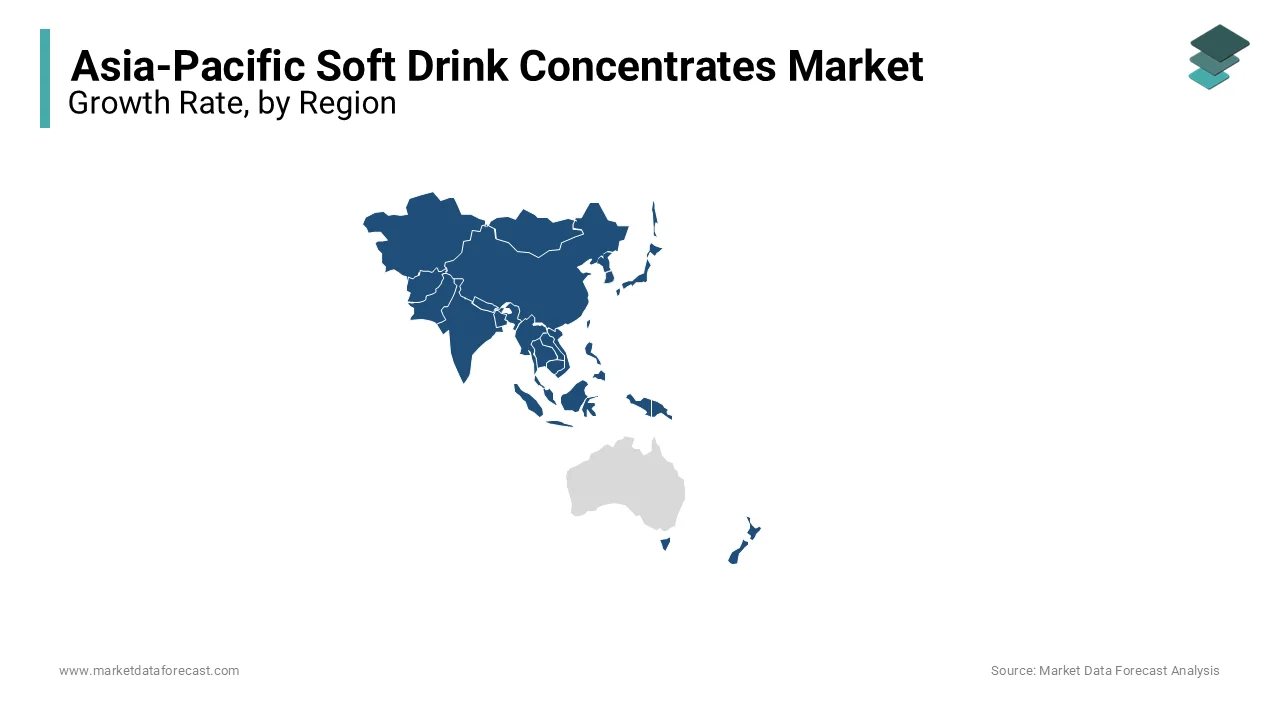
China was the largest contributor in the Asia Pacific Soft Drink Concentrates Market, accounting for a 32.6% share in 2025, with a massive consumer base and a robust manufacturing infrastructure for beverages. The country is home to several major beverage producers and bottlers who drive significant demand for high-quality concentrates. The presence of advanced food technology research institutes fosters innovation in flavor development and preservation techniques. Strict adherence to food safety laws influences product formulation, requiring manufacturers to maintain high standards. Consumer preference for premium and organic options drives the adoption of specialized concentrates.
India Soft Drink Concentrates Market Analysis
India soft drink concentrates market was positioned second by accounting for a 29.1% share in 2025, owing to a young population, increasing urbanization, and a growing middle class with higher disposable income. The prevalence of small eateries and street food vendors creates substantial demand for affordable concentrate solutions. Household expenditure on non-alcoholic beverages rose in rural areas, reflecting improved access to branded drinks made from concentrates. Government initiatives such as production-linked incentives encourage local manufacturing of beverage ingredients. The hot climate in many regions sustains year-round demand for refreshing drinks. Consumers are increasingly aware of international brands, leading to higher acceptance of global flavors. Local manufacturers leverage regional produce such as mango and lime to create distinctive products. Export opportunities for Indian style concentrates also contribute to market vitality.
Japan Soft Drink Concentrates Market Analysis
Japan soft drink concentrates market growth is expected to have prominent opportunities inthe coming years, with high consumer expectations for quality and innovation. The country has a strong culture of convenience store consumption and vending machine usage, which drives demand for specialized concentrate formats. The emphasis on precision and consistency leads to a preference for high-grade concentrates from reputable suppliers. Regulatory support for health claims encourages the use of natural ingredients and functional additives.
South Korea Soft Drink Concentrates Market Analysis
South Korea soft drink concentrates market growth is fueled by its vibrant cafe culture and high adoption of digital trends in food service. The country is a leader in beverage innovation, with consumers frequently seeking new and unique flavor experiences. The influence of social media trends accelerates the launch of novel flavors and limited-edition concentrates. Local manufacturers collaborate with global brands to introduce exclusive products. The focus on aesthetic presentation and packaging enhances the appeal of concentrate-based beverages. Government support for food tech startups fosters innovation in production methods.
Australia Soft Drink Concentrates Market Analysis
Australia soft drink concentrates market growth is likely to grow with the high regulatory standards and a strong focus on health and sustainability. The strict labeling requirements and public health campaigns have prompted manufacturers to reformulate products with cleaner ingredients and transparent sourcing. The presence of major international beverage companies ensures a steady supply of high-quality concentrates. The hospitality sector in major cities like Sydney and Melbourne relies heavily on post-mix systems for efficiency. Consumer preference for organic and locally sourced ingredients drives the adoption of premium concentrate options. The robust retail infrastructure facilitates widespread distribution.
COMPETITIVE OVERVIEW & STRATEGIES
The Asia Pacific Soft Drink Concentrates Market features a moderately consolidated competitive landscape characterized by the presence of global beverage giants and specialized regional manufacturers. Regional players compete by offering niche products such as organic artisanal or locally sourced concentrates that appeal to specific consumer preferences and sustainability goals. Key participants focus on product innovation and sustainability initiatives to differentiate their offerings and build brand loyalty. Strategic partnerships with food service providers and retailers enable companies to secure long-term contracts and expand their reach. The entry of private label concentrates from major supermarket chains adds pressure on pricing and margins for branded manufacturers. Companies are increasingly adopting digital tools for supply chain optimization and customer engagement.
KEY MARKET PLAYERS
A few major players in the Asia Pacific soft drink concentrates market include
- Kraft Foods
- Dr. Pepper Snapple Group
- Royal Cosun
- David Berryman Limited
- Big Red Inc
- The Coca-Cola Company
- PepsiCo, Inc
- Monster Beverage Corp
- Cott Corporation
- Dohler Group
- Royal Crown Cola Company, Inc
- Nestle SA
Leading Players in the Market
- The Coca-Cola Company maintains a dominant presence in the Asia Pacific Soft Drink Concentrates Market through its extensive portfolio of iconic brands and robust distribution networks. The company focuses on innovation by introducing low-sugar and natural flavor variants to align with regional health trends. Recent initiatives include expanding sustainable sourcing programs for fruit ingredients, which enhances brand reputation and ensures supply chain stability. Coca-Cola also invests heavily in digital fountain technologies that allow for personalized beverage experiences in food service outlets. Their strategic partnerships with local bottlers ensure efficient production and widespread availability of concentrates across diverse markets. By prioritizing environmental sustainability and consumer health, the company strengthens its market position while meeting evolving regulatory standards.
- PepsiCo Inc. contributes significantly to the Asia Pacific Soft Drink Concentrates Market by leveraging its strong brand equity and diverse product range, including Pepsi Gatorade and Tropicana. The company has strengthened its position by reformulating concentrates to reduce artificial additives and incorporate more natural sweeteners in response to consumer demand for cleaner labels. PepsiCo recently launched new zero-sugar concentrate lines that maintain full flavor profiles, thereby attracting health-conscious consumers without compromising taste. The firm actively collaborates with food service providers to optimize post-mix systems for efficiency and waste reduction. Their commitment to sustainable packaging and water stewardship resonates well with Asian values and regulatory expectations. PepsiCo also utilizes advanced data analytics to predict regional flavor preferences, enabling targeted product development.
- Keurig Dr Pepper Inc. plays a pivotal role in the Asia Pacific Soft Drink Concentrates Market by offering a wide array of premium and niche beverage concentrates under brands like Dr Pepper and 7UP. The company focuses on expanding its footprint in the food service sector by providing customized concentrate solutions for cafes and restaurants.
MARKET SEGMENTATION
This research report on the Asia-Pacific soft drink concentrates market is segmented into the categories below.
By Flavor
- Carbonated Soft Drink Concentrates
- Cola
- Non-Cola
- Non-Carbonated Soft Drink Concentrates
- Orange
- Apple
- Mixed Fruit
- Grapes
- Pineapple
- Grapefruit
- Mango
- Others
By End User
- Mass Merchandise
- Food Service
- Fountain Machine
- Others
By Application
- Carbonated
- Non-Carbonated
By Country
- India
- China
- Japan
- South Korea
- Australia
- New Zealand
- Thailand
- Malaysia
- Vietnam
- Philippines
- Indonesia
- Singapore
- Rest of APAC