- Product Description Description
- Table of Contents TOC
- List of Table & Figure LOT
- Get Free Sample PDF Sample PDF
Market Size, 2025
$75.26 MnMarket Estimate, 2026
$92.19 MnMarket Forecast, 2034
$467.49 MnCAGR, 2026–2034
22.50%Executive Summary: Asia Pacific Aptamers Market
- Market Scope: Comprehensive regional market analysis covering aptamer types (peptide and nucleic acid variants), applications (therapeutics, diagnostics, R&D), end-users, and country-level breakdowns across the Asia-Pacific region.
- Market Valuation: Valued at USD 75.26 million (2025), estimated at USD 92.19 million (2026), and projected to reach USD 467.49 million by 2034, registering a high CAGR of 22.50% (2026–2034).
- Primary Growth Drivers: Significant advantages of aptamers over traditional antibodies (lower production costs, high efficiency, lack of batch-to-batch variance), rising prevalence of life-threatening diseases (cancer, cardiovascular disorders), and expanding R&D investments in biotechnology.
Key Market Segment Metrics (2026–2034)
| Category | Leading Segment (2025 Position) | Fastest-Growing / Key Segment Trends |
|---|---|---|
| By Type | Nucleic Acid Aptamers (DNA/RNA-based variants widely adopted for robust binding affinity) | XNA-Based & Modified Aptamers (gaining traction due to enhanced nuclease resistance and therapeutic stability) |
| By Application & End User | Research & Development & Diagnostics (major revenue contributors utilizing aptamer assays and screening tools) | Therapeutics Development (surging alongside biopharmaceutical investments and targeted drug delivery systems) |
| By Region / Country | China (dominating the regional market share backed by heavy government funding and healthcare tech advancements) | India (projected to record promising shares driven by improving healthcare infrastructure and supportive R&D policies) |
Major Market Players & Market Structure
Market Structure: Specialized and rapidly evolving market characterized by private-academic partnerships, chemical modification innovations to boost half-life, and collaborative next-generation diagnostic product development.
Key Companies: AM Biotechnologies, Aptagen, Aptamer Sciences Inc., Aptamer Solutions Ltd., Aptus Biotech S.L., Base Pair Biotechnologies Inc., NeoVentures Biotechnology Inc., SomaLogic Inc., TriLink BioTechnologies Inc., and Vivonics, Inc.
Asia Pacific Aptamers Market Size
The Asia Pacific aptamers market size was valued at USD 75.26 million in 2025 and is anticipated to reach USD 92.19 million in 2026 from USD 467.49 million by 2034, growing at a CAGR of 22.50% during the forecast period from 2026 to 2034.
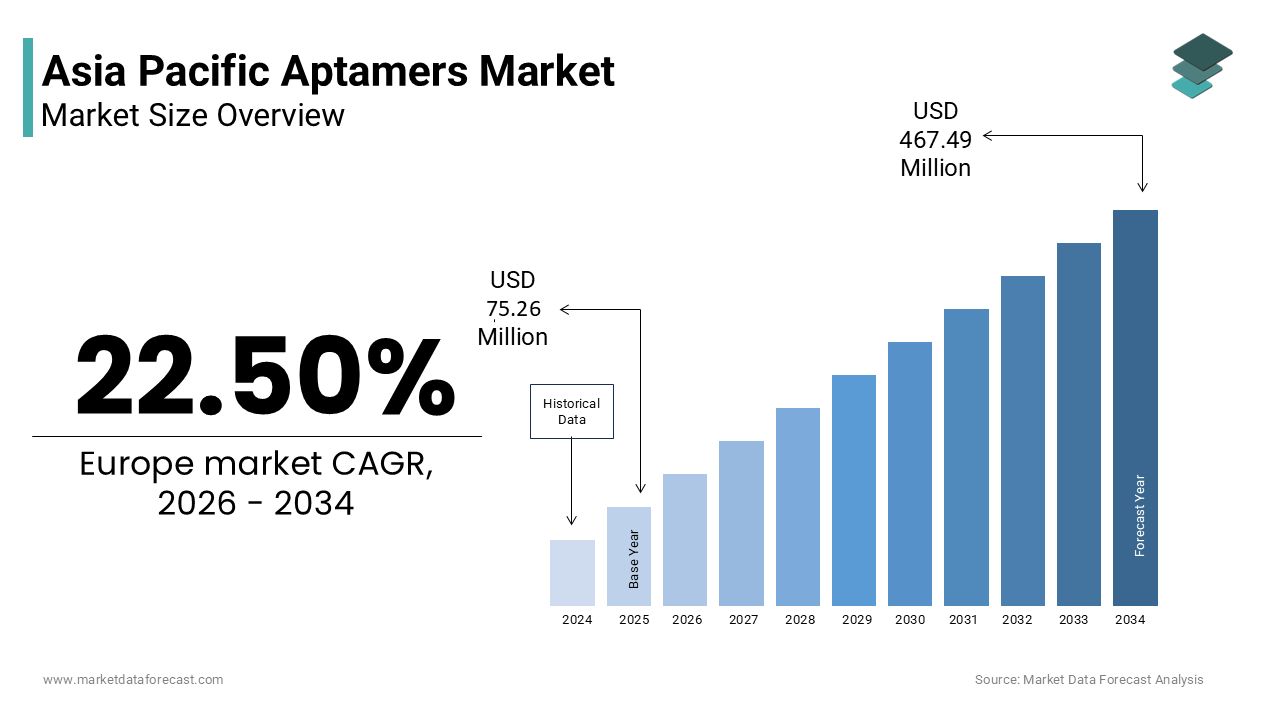
Aptamers are a critical frontier in molecular diagnostics and targeted therapeutics across the region. Aptamers are short, single-stranded oligonucleotides or peptides that bind to specific targets with high affinity. According to the World Health Organization, noncommunicable diseases account for 74% of all deaths globally, which drives demand for precise diagnostic tools. As per the International Diabetes Federation, 206 million adults aged 20 to 79 years live with diabetes in the Western Pacific Region alone. These health burdens necessitate advanced detection mechanisms, where aptamers offer superior specificity compared to traditional antibodies. Governments across China, Japan, and South Korea are investing heavily in biotechnology infrastructure to support such innovations. The rising prevalence of chronic conditions creates an urgent need for cost-effective and scalable diagnostic solutions. Aptamers provide stability at room temperature and ease of synthesis, which aligns with healthcare accessibility goals in developing nations within the region. This technological advantage positions aptamers as essential components in next-generation point-of-care testing devices. The integration of aptamer-based sensors into portable diagnostic platforms enhances early disease detection capabilities. Such advancements directly contribute to improved patient outcomes and reduced healthcare costs across diverse economic landscapes in Asia-Pacific.
MARKET DRIVERS
Rising Prevalence of Chronic Diseases Driving Diagnostic Demand
The escalating burden of chronic illnesses across Asia-Pacific fuels the growth of the Asia-Pacific aptamers market. According to the World Health Organization, cardiovascular diseases cause approximately 17.9 million deaths annually worldwide, with a significant proportion occurring in low- and middle-income countries. This statistic underscores the urgent need for reliable and affordable diagnostic tools that can detect biomarkers at early stages. Aptamers offer high specificity and sensitivity in identifying disease-associated molecules, which makes them ideal for screening large populations. According to the International Agency for Research on Cancer, Asia accounts for nearly 50% of global cancer cases and deaths. This substantial disease burden creates a robust demand for precision medicine approaches, where aptamers play a pivotal role in targeted therapy development. Healthcare systems in countries like India and Indonesia are expanding their diagnostic infrastructure to manage these growing health challenges. Aptamers provide a cost-effective alternative to monoclonal antibodies, which are expensive to produce and require cold-chain storage. The ability of aptamers to function in complex biological matrices enhances their utility in clinical settings. As governments prioritize preventive healthcare strategies, the integration of aptamer-based assays into routine screening programs becomes increasingly viable. This shift towards early detection and personalized treatment protocols significantly boosts market growth potential across the region.
Government Initiatives Supporting Biotechnology Infrastructure Development
Strategic government investments in biotechnology sectors across Asia-Pacific further boost the Asia-Pacific aptamers market expansion. The Chinese Ministry of Science and Technology allocated over 30 billion yuan for key research and development projects in biomedicine during its latest five-year plan. This substantial funding supports the establishment of state-of-the-art laboratories and innovation hubs focused on nucleic acid therapeutics. Similarly, the Japanese Agency for Medical Research and Development invests heavily in regenerative medicine and advanced diagnostic tools, including aptamer-based platforms. These initiatives facilitate collaboration between academic institutions and private enterprises, accelerating the translation of research into commercial products. The South Korean government launched the Bio Vision 2030 strategy, aiming to position the country as a global leader in biohealth industries. This comprehensive roadmap includes incentives for startups developing novel diagnostic technologies, such as aptamer sensors. Regulatory bodies in these nations are streamlining approval processes for innovative medical devices, which reduces time-to-market for aptamer-based solutions. Public-private partnerships further enhance resource sharing and knowledge transfer within the ecosystem. Such coordinated efforts ensure sustained momentum in aptamer research and development activities. The resulting infrastructure improvements enable scalable production and widespread deployment of aptamer technologies across healthcare facilities. This supportive policy landscape significantly strengthens the competitive position of the Asia-Pacific region in the global aptamers market.
MARKET RESTRAINTS
High Production Costs Limiting Commercial Scalability
The elevated manufacturing expenses associated with aptamer production are a significant barrier to widespread commercial adoption in Asia-Pacific. The synthesis of high-purity aptamers requires specialized equipment and skilled personnel, which increases operational costs for manufacturers. As per the Journal of Chromatography A, the purification process for oligonucleotides can account for up to 60% of total production costs due to complex separation techniques. This financial burden limits the ability of smaller enterprises to compete in the market and restricts price competitiveness against established antibody-based diagnostics. As per the International Society for Advancement of Cytometry, standardizing aptamer production protocols remains challenging due to variability in sequence optimization and binding affinity. Such inconsistencies lead to higher failure rates during quality control checks, further escalating costs. Healthcare providers in emerging economies often prioritize cost-effective solutions, making expensive aptamer-based tests less attractive despite their superior performance. The lack of economies of scale exacerbates this issue, as production volumes remain relatively low compared to traditional diagnostic reagents. Manufacturers struggle to achieve profitability without substantial upfront investment in automation and process optimization. This economic constraint hinders the expansion of aptamer applications in routine clinical settings where cost sensitivity is paramount. Until production efficiencies improve, the high cost structure will continue to impede market penetration across price-sensitive segments in the region.
Regulatory Hurdles Delaying Product Approval Processes
Stringent regulatory requirements for novel diagnostic technologies are further hindering the Asia-Pacific aptamers market expansion. The National Medical Products Administration in China mandates extensive clinical validation data for new in vitro diagnostic devices, which can extend approval timelines by 18 to 24 months. The Pharmaceutical and Medical Devices Agency in Japan requires rigorous safety and efficacy assessments that often involve multiple phases of clinical trials. These prolonged evaluation periods increase development costs and discourage investment in early-stage aptamer technologies. According to the World Health Organization, harmonizing regulatory standards across different jurisdictions remains a significant challenge for global health innovation. Inconsistent requirements between countries force manufacturers to navigate complex compliance landscapes, which slow down regional expansion efforts. The Asian Harmonization Working Party works towards aligning regulatory frameworks, but progress has been gradual due to varying national priorities. Startups and small enterprises particularly struggle with the resource-intensive nature of regulatory submissions, lacking dedicated compliance teams. This regulatory uncertainty creates hesitation among investors who prefer markets with clearer approval pathways. The delay in product launches prevents timely access to advanced diagnostic tools for patients who could benefit from them. Until regulatory processes become more streamlined and predictable, the pace of market growth will remain constrained by administrative bottlenecks across the region.
MARKET OPPORTUNITIES
Integration with Point of Care Testing Devices Presents Growth Potential
The convergence of aptamer technology with portable diagnostic devices offers substantial opportunities for market expansion in Asia-Pacific. The global point of care diagnostics market is projected to grow significantly, driven by demand for rapid testing solutions in remote areas. Aptamers possess inherent stability at ambient temperatures, which eliminates the need for cold-chain logistics required by many antibody-based tests. This characteristic makes them ideal for integration into handheld devices used in rural clinics and field settings. The Bill and Melinda Gates Foundation supports initiatives developing low-cost diagnostic tools for infectious diseases prevalent in developing regions. Aptamer-based biosensors can detect pathogens such as malaria and the dengue virus with high accuracy using minimal sample volumes. According to the World Bank, over 400 million people in East Asia and the Pacific lack access to essential health services, highlighting the need for decentralized testing solutions. Portable aptamer devices enable healthcare workers to perform real-time diagnostics without relying on centralized laboratories. This capability enhances disease surveillance and outbreak response efficiency, particularly in resource-limited settings. Manufacturers are increasingly focusing on miniaturizing aptamer assays for smartphone-connected platforms, which broadens accessibility. Such innovations align with global health priorities emphasizing equitable access to quality diagnostics. The scalability of these solutions presents lucrative opportunities for companies targeting underserved populations across the region.
Expansion into Therapeutic Applications beyond Diagnostics
The transition of aptamers from diagnostic tools to therapeutic agents opens new avenues for market growth in Asia-Pacific. According to the Nature Reviews Drug Discovery journal, aptamers offer advantages over small-molecule drugs, including high specificity and low immunogenicity. Several pharmaceutical companies in Japan and South Korea are investing in aptamer-based therapies for oncology and inflammatory diseases. According to the Clinical Trials Registry, a growing number of studies evaluate aptamer conjugates for targeted drug delivery in Asian patient populations. These therapeutic applications leverage the ability of aptamers to bind precisely to disease-related proteins, minimizing off-target effects. The increasing incidence of cancer in the region creates demand for personalized treatment options, where aptamers show promise. According to the Asian Pacific Society of Respiratory Medicine, rising cases of lung cancer drive research into targeted therapies. Aptamers can be engineered to deliver cytotoxic agents directly to tumor cells, enhancing treatment efficacy while reducing systemic toxicity. This precision approach aligns with the trend towards personalized medicine gaining traction in advanced healthcare systems. Regulatory agencies are beginning to establish frameworks for evaluating nucleic acid therapeutics, which facilitates clinical development. The successful commercialization of aptamer drugs would represent a significant milestone, expanding the market beyond diagnostics. This diversification strengthens the overall value proposition of aptamer technology in the healthcare sector.
MARKET CHALLENGES
Limited Awareness Among Healthcare Professionals Hinders Adoption
Insufficient knowledge about aptamer technology among clinicians and laboratory technicians impedes its widespread adoption in Asia-Pacific healthcare settings. According to the Asian Journal of Laboratory Medicine, many diagnostic professionals remain unfamiliar with the advantages of aptamers over conventional antibodies. This knowledge gap results in reluctance to incorporate aptamer-based assays into routine testing protocols despite their proven benefits. Medical education curricula in many countries do not adequately cover emerging diagnostic technologies, leaving practitioners uninformed. According to the World Federation for Medical Education, continuous professional development programs are needed to keep healthcare workers updated on technological advancements. Without proper training, clinicians may doubt the reliability of aptamer tests, leading to underutilization. Hospitals and diagnostic centers hesitate to invest in new technologies when staff lack confidence in their operation and interpretation. The absence of standardized guidelines for aptamer usage further complicates implementation efforts. Professional societies have yet to widely endorse aptamer-based methods in clinical practice recommendations. This lack of institutional support perpetuates skepticism and slows acceptance among end-users. Educational initiatives targeting healthcare providers are essential to bridge this awareness deficit. Until comprehensive training programs become commonplace, the full potential of aptamer technology will remain unrealized in clinical practice across the region.
Competition from Established Antibody Based Technologies
The dominance of monoclonal antibodies in diagnostic and therapeutic applications presents a formidable challenge to aptamer market growth in Asia-Pacific. According to the Journal of Immunological Methods, antibodies hold over an 80% share in the biomarker detection market due to decades of established use. This entrenched position creates significant barriers for aptamers seeking to gain market traction despite their technical advantages. Healthcare providers are accustomed to antibody-based protocols and have existing infrastructure optimized for their use. Switching to aptamer technologies requires retraining staff and validating new procedures, which involves additional time and cost. According to the International Union of Immunological Societies, antibody production platforms are highly mature, with well-defined quality control standards. In contrast, aptamer manufacturing lacks a similar level of standardization, causing concerns about reproducibility among potential adopters. Pharmaceutical companies have invested billions in antibody discovery pipelines, creating strong economic incentives to continue using familiar technologies. The inertia favoring established methods makes it difficult for newer alternatives to displace them, even when superior performance is demonstrated. Aptamer developers must overcome deeply rooted preferences through compelling evidence of cost-effectiveness and clinical utility. Until they achieve parity in terms of regulatory acceptance and user familiarity, antibodies will continue to dominate the landscape. This competitive pressure necessitates strategic differentiation and targeted marketing efforts to carve out niche applications where aptamers offer distinct advantages.
REPORT COVERAGE
| REPORT METRIC | DETAILS |
| Market Size Available | 2025 to 2034 |
| Base Year | 2025 |
| Forecast Period | 2026 to 2034 |
| CAGR | 22.50% |
| Segments Covered | By Type, Application, End-User and Region. |
| Various Analyses Covered | Global, Regional & Country Level Analysis, Segment-Level Analysis, DROC, PESTLE Analysis, Porter’s Five Forces Analysis, Competitive Landscape, Analyst Overview of Investment Opportunities |
| Regions Covered | India, China, Japan, South Korea, Australia, New Zealand, Thailand, Malaysia, Vietnam, the Philippines, Indonesia, Singapore, and the Rest of APAC. |
| Market Leaders Profiled | AM Biotechnologies, Aptagen, Aptamer Sciences Inc., Aptamer Solutions Ltd., Aptus Biotech S.L., Base Pair Biotechnologies Inc., NeoVentures Biotechnology Inc., SomaLogic Inc, TriLink BioTechnologies Inc., and Vivonics, Inc. |
SEGMENTAL ANALYSIS
By Type Insights
The nucleic acid aptamers segment captured the largest share of the regional market in 2025 due to their superior chemical stability and ease of synthesis compared to peptide variants. The inherent structural diversity of DNA and RNA allows for precise targeting of a wide range of biomolecules, which is critical for diagnostic accuracy. According to the National Center for Biotechnology Information, nucleic acid aptamers can be synthesized in vitro using the SELEX process, which eliminates the need for animal immunization. This advantage significantly reduces production time and ethical concerns associated with antibody generation. According to the Journal of Molecular Recognition, DNA-based aptamers exhibit higher thermal stability than RNA counterparts, making them suitable for diverse environmental conditions in developing regions. This robustness ensures consistent performance in point-of-care devices used across varied climates in Asia-Pacific. Furthermore, the cost-effectiveness of oligonucleotide synthesis has improved dramatically, with automation technologies becoming more accessible. Manufacturers in China and South Korea are leveraging these advancements to scale up production capacities. The ability to modify nucleic acid structures with various functional groups enhances their binding affinity and specificity. These technical advantages make nucleic acid aptamers the preferred choice for both research and commercial applications. The established supply chain for raw materials further supports their market leadership position. As demand for reliable diagnostic tools grows, the dominance of nucleic acid aptamers is expected to strengthen due to their proven track record and versatility in molecular recognition tasks.
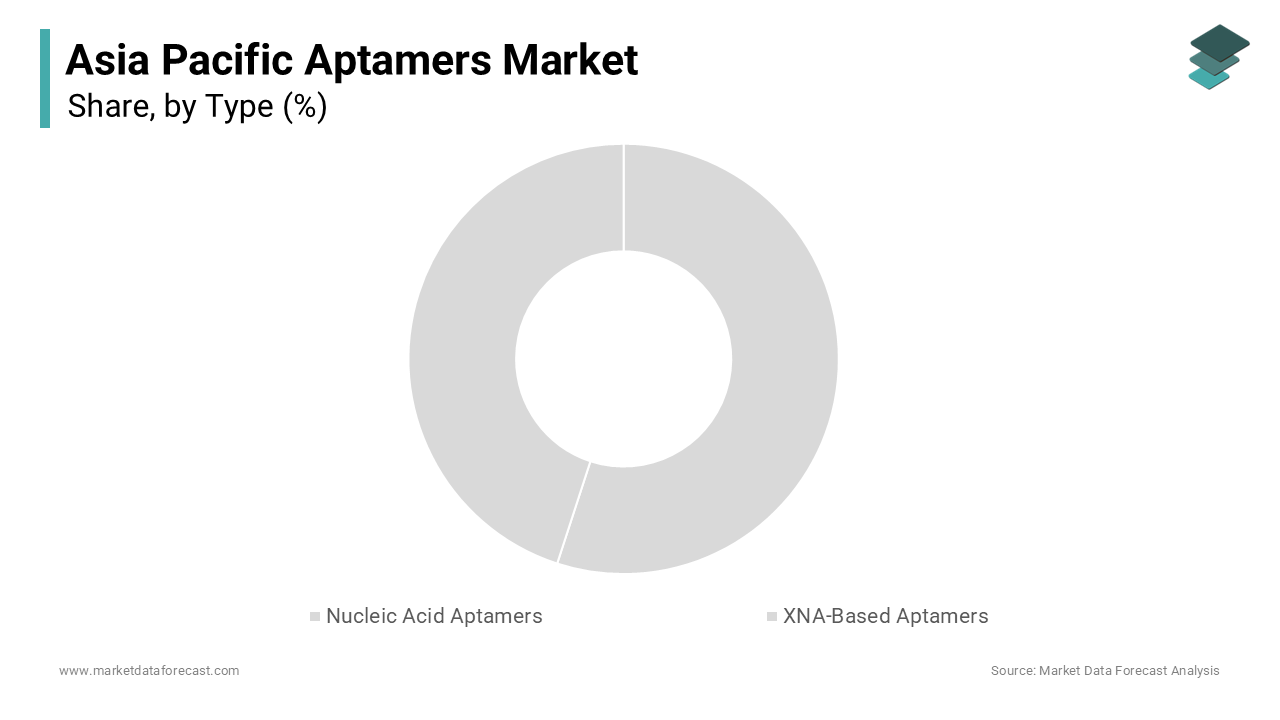
On the other side, the XNA-based aptamers segment is estimated to record a promising CAGR in the regional market over the forecast period due to their enhanced resistance to enzymatic degradation. Xenobiotic nucleic acids incorporate modified sugar backbones that prevent nuclease activity, which extends their half-life in biological fluids. According to the Nature Chemical Biology journal, XNA aptamers can persist in serum for hours, compared to minutes for unmodified RNA. This extended stability is crucial for therapeutic applications where prolonged target engagement is required. Pharmaceutical companies in Japan and Australia are investing heavily in XNA technology for drug development. The increased durability allows for less frequent dosing, improving patient compliance and treatment outcomes. Additionally, XNA aptamers offer unique binding properties not achievable with natural nucleic acids. This expanded chemical space enables targeting of previously undruggable proteins involved in complex diseases. The growing prevalence of chronic conditions in the region creates demand for innovative therapeutic modalities. Regulatory agencies are beginning to recognize the potential of XNA-based drugs, accelerating their clinical evaluation. The novelty of this technology attracts significant venture capital funding, fostering rapid innovation. Startups specializing in synthetic biology are emerging in hubs like Singapore and Bangalore. These developments contribute to the high compound annual growth rate observed in this segment. As research progresses, the clinical utility of XNA aptamers will likely expand further, driving sustained growth.
By Application Insights
The diagnostics segment accounted for the largest share of the Asia-Pacific aptamers market in 2025 due to the urgent need for accurate disease detection. The high burden of infectious and chronic diseases in the region necessitates reliable screening tools. According to the World Health Organization, tuberculosis remains a top killer in Asia, with 1.5 million new cases reported annually in the Western Pacific Region alone. Aptamer-based assays offer high sensitivity for detecting Mycobacterium tuberculosis antigens in sputum samples. This capability enables early diagnosis and timely treatment initiation, reducing transmission rates. Additionally, the rise in lifestyle-related diseases drives demand for biomarker monitoring. As per the International Diabetes Federation, China has the largest number of diabetic patients globally, exceeding 140 million individuals. Regular monitoring of glucose and other metabolic markers is essential for managing this condition. Aptamer sensors provide real-time data with minimal sample requirements, enhancing patient convenience. The integration of aptamers into lateral flow assays allows for point-of-care testing in remote areas. This decentralization improves access to diagnostic services for underserved populations. Healthcare providers prefer aptamer tests due to their stability and ease of use. The established infrastructure for diagnostic testing supports widespread adoption. Government initiatives promoting preventive healthcare further boost demand for diagnostic aptamers. The combination of clinical utility and operational efficiency solidifies diagnostics as the dominant application segment.
However, the therapeutics development segment is the fastest-growing application segment for aptamers in Asia-Pacific owing to the advancements in targeted drug delivery. The increasing incidence of cancer and rare diseases creates demand for novel treatment modalities. According to the Global Cancer Observatory, cancer cases in Asia will rise by 50% by 2040. This surge necessitates innovative therapies with improved efficacy and safety profiles. Aptamers serve as ideal targeting ligands for delivering drugs specifically to diseased cells. According to the Journal of Controlled Release, aptamer drug conjugates reduce off-target effects significantly. This precision enhances the therapeutic index, allowing for higher doses without increased toxicity. Pharmaceutical companies are investing in pipeline development for aptamer-based biologics. Clinical trials for age-related macular degeneration and oncology indications show promising results. The success of these studies validates the clinical potential of aptamer therapeutics. Regulatory pathways for nucleic acid drugs are becoming clearer, facilitating approval processes. Investors are attracted to the high return potential of successful aptamer drugs. Venture capital funding for biotech startups focusing on therapeutics is increasing. Collaborations between academic researchers and industry players accelerate translation from bench to bedside. The shift towards personalized medicine favors aptamer technologies due to their customizable nature. These factors contribute to the high compound annual growth rate observed in this segment.
COUNTRY ANALYSIS
China Aptamers Market Analysis
China held the largest share in the Asia-Pacific aptamers market in 2025. The dominance of China in this regional market is majorly driven by its massive healthcare infrastructure and strong government support for biotechnology. As per the National Health Commission, China has over 1 million medical institutions providing services to its vast population. This extensive network creates substantial demand for diagnostic tools, including aptamer-based assays. The Chinese Academy of Sciences leads numerous projects focused on nucleic acid therapeutics and diagnostics. State-owned enterprises invest heavily in building production facilities for oligonucleotides. The Belt and Road Initiative facilitates the export of medical technologies to neighboring countries. China produces a significant portion of the global supply of raw materials for aptamer synthesis. Local manufacturers benefit from economies of scale, reducing costs for domestic users. The rising prevalence of chronic diseases such as diabetes and hypertension drives routine screening programs. Hospitals in tier-one cities adopt advanced diagnostic platforms incorporating aptamer sensors. Regulatory reforms streamline approval processes for innovative medical devices, encouraging innovation. The presence of major pharmaceutical companies fosters collaboration with aptamer developers. Intellectual property protection improvements attract foreign investment in the sector. The combination of market size, policy support, and manufacturing capability positions China as the regional leader. Continued urbanization and healthcare spending growth will sustain this dominance in the coming years.
Japan Aptamers Market Analysis
Japan maintains a strong position in the Asia-Pacific aptamers market owing to the advanced technological capabilities and an aging population. As per the Ministry of Health, Labour and Welfare, over 28% of Japan's population is aged 65 or older. This demographic structure drives demand for sophisticated diagnostic and therapeutic solutions. Japanese researchers pioneered several key techniques in aptamer selection and modification. Universities such as Tokyo University and Kyoto University produce high-quality research in nucleic acid chemistry. Pharmaceutical giants like Takeda and Astellas integrate aptamers into their drug discovery pipelines. The country has a robust regulatory framework ensuring high standards for medical products. The Pharmaceuticals and Medical Devices Agency provides clear guidance for nucleic acid-based therapies. Japan exports high-value aptamer products to other Asian markets. The focus on precision medicine aligns with national health strategies. Public-private partnerships accelerate the commercialization of academic discoveries. The availability of skilled scientists and engineers supports innovation. Healthcare providers prioritize quality and reliability, favoring Japanese-made aptamer kits. The mature market offers opportunities for niche applications in rare diseases. Technological leadership and demographic needs ensure Japan's continued relevance in the regional landscape.
India Aptamers Market Analysis
India is emerging as a significant player in the Asia-Pacific aptamers market, driven by its generic pharmaceutical industry and growing diagnostic sector. As per the Indian Brand Equity Foundation, the Indian pharmaceutical market is valued at over 50 billion USD. Generic manufacturers seek cost-effective alternatives to antibodies for drug development. Aptamers offer a viable option due to lower production costs. The Department of Biotechnology supports startups through incubation centers and grants. Institutes like the Indian Institute of Science conduct cutting-edge research in biosensors. The high burden of infectious diseases such as tuberculosis and malaria drives demand for affordable diagnostics. Aptamer-based rapid tests are suitable for resource-limited settings in rural areas. The government aims to achieve universal health coverage, increasing access to testing. Local companies are developing indigenous aptamer products to reduce import dependence. The skilled workforce in chemistry and biology supports manufacturing activities. Export opportunities to Africa and Southeast Asia expand market reach. Regulatory harmonization efforts facilitate entry into international markets. The combination of cost advantages, disease burden, and policy support fuels growth. India is poised to become a major hub for aptamer production and consumption in the region.
South Korea Aptamers Market Analysis
South Korea exhibits robust growth in the Asia-Pacific aptamers market, supported by strong government initiatives in biohealth. The Ministry of Trade, Industry and Energy identifies biohealth as a key growth engine for the economy. The Bio Vision 2030 plan aims to make Korea a global leader in biopharmaceuticals. Companies like Samsung Biologics and Celltrion invest in advanced manufacturing technologies. Research institutes such as KAIST develop novel aptamer sequences for various applications. The country has a high density of hospitals equipped with modern diagnostic tools. The National Health Insurance Service covers a wide range of tests, encouraging utilization. South Korean researchers publish extensively in high-impact journals on nucleic acid technologies. Collaborations with US and European firms enhance technical capabilities. The startup ecosystem is vibrant, with many firms focusing on diagnostic innovations. Government grants support clinical trials for aptamer-based therapies. The emphasis on export-oriented growth drives quality improvements. Intellectual property rights are well-protected, attracting foreign partners. The integration of IT and biotechnology creates smart healthcare solutions. These factors contribute to South Korea's dynamic position in the regional aptamers market.
Australia Aptamers Market Analysis
Australia plays a specialized role in the Asia-Pacific aptamers market, focusing on high-value research and regulatory standards. According to the National Health and Medical Research Council, extensive projects are funded in molecular diagnostics. Australian universities lead in discovering aptamers for neurological and oncological applications. According to the Therapeutic Goods Administration, stringent quality requirements are maintained for medical products. This rigor ensures that Australian-made aptamers meet global standards. The country serves as a gateway for international companies entering the Asia-Pacific region. Clinical trials conducted in Australia provide data for regulatory submissions elsewhere. The aging population increases demand for chronic disease management tools. Aptamer-based sensors for monitoring biomarkers gain traction in private healthcare settings. Research collaborations with Asian neighbors facilitate knowledge exchange. The strong intellectual property framework protects innovations. Biotech clusters in Sydney and Melbourne foster innovation. Venture capital availability supports early-stage companies. The focus on quality rather than volume distinguishes the Australian market. Its contributions to scientific literature enhance regional capabilities. Australia remains a key partner for high-end aptamer developments.
COMPETITIVE LANDSCAPE
The competition landscape in the Asia Pacific aptamers market features a dynamic mix of global reagent suppliers and emerging regional biotechnology firms vying for leadership in niche application areas. Established international companies leverage extensive product portfolios and brand recognition to maintain dominance in premium research segments while local players compete through cost advantages and customized service offerings tailored to domestic needs. Differentiation strategies focus on proprietary selection platforms chemical modification capabilities and regulatory compliance support rather than price alone. Collaboration between academia and industry accelerates innovation cycles creating intellectual property barriers that protect early movers from immediate imitation. Regional variations in healthcare infrastructure and disease prevalence encourage specialization where competitors develop expertise in specific therapeutic or diagnostic domains relevant to local populations. Consolidation activities remain limited as the market is still fragmented with numerous small enterprises serving specialized customer bases. Future competitive intensity will likely increase as therapeutic applications mature attracting larger pharmaceutical entrants seeking vertical integration opportunities. Success increasingly depends on demonstrating clinical utility beyond research tools requiring substantial investment in validation studies and regulatory approvals across multiple jurisdictions simultaneously.
KEY MARKET PLAYERS
Companies playing a notable role in the APAC aptamers market include
- AM Biotechnologies
- Aptagen
- Aptamer Sciences Inc.
- Aptamer Solutions Ltd.
- Aptus Biotech S.L.
- Base Pair Biotechnologies Inc.
- NeoVentures Biotechnology Inc.
- SomaLogic Inc.
- TriLink BioTechnologies Inc.
- Vivonics, Inc.
Top Players in the Asia Pacific Aptamers Market
Aptamer Group Limited
Aptamer Group Limited contributes significantly to the Asia Pacific aptamers market through its proprietary REAPER platform which enables rapid selection of high affinity binders. The company collaborates with Japanese pharmaceutical firms to develop novel diagnostic reagents for oncology applications. Recent actions include establishing a distribution partnership in Singapore to enhance regional accessibility of their YmerTM product line. This strategic move strengthens their presence in Southeast Asia by providing local researchers with direct access to advanced aptamer technologies. Their focus on customized solutions addresses specific regional disease burdens effectively. The company also participates in academic conferences across China to promote technology adoption among emerging biotech startups and research institutions seeking innovative molecular recognition tools for therapeutic development projects.
Eurofins Genomics
Eurofins Genomics supports the Asia Pacific aptamers market by offering comprehensive oligonucleotide synthesis services tailored for aptamer research and development. The company expanded its production facility in Shanghai to meet growing demand for modified nucleic acids used in therapeutic applications. Recent initiatives involve launching specialized purification packages for XNA based aptamers catering to advanced research needs in South Korea and Australia. This expansion enhances supply chain reliability for regional customers requiring high quality materials. Eurofins also provides technical support teams stationed in Tokyo to assist local scientists with complex synthesis requests. Their commitment to quality assurance ensures consistent performance of aptamer reagents across diverse experimental conditions throughout the region.
Integrated DNA Technologies
Integrated DNA Technologies plays a vital role in the Asia Pacific aptamers market by supplying high purity oligonucleotides essential for SELEX processes and diagnostic assay development. The company opened a new customer service center in Mumbai to better serve researchers across India and neighboring countries. Recent efforts include introducing cost effective bulk ordering options for academic institutions conducting large scale aptamer screening projects. This initiative reduces financial barriers for early stage research in developing economies. Integrated DNA Technologies also collaborates with Australian universities to optimize synthesis protocols for challenging sequences. Their robust logistics network ensures timely delivery of temperature sensitive reagents maintaining integrity throughout the distribution process across the vast Asia Pacific geography.
Major Strategies Used by Key Market Participants
Key players in the Asia Pacific aptamers market employ strategic partnerships with local distributors to navigate complex regulatory landscapes and establish reliable supply chains across diverse national jurisdictions. Companies frequently collaborate with academic institutions to validate aptamer performance in region specific disease contexts thereby generating clinically relevant data that supports commercial adoption. Manufacturing capacity expansions in China and India enable cost competitive pricing while reducing dependency on imported reagents subject to currency fluctuations and shipping delays. Technical education programs targeting laboratory personnel build user confidence and drive long term loyalty among research communities unfamiliar with nucleic acid based alternatives to antibodies. Product portfolio diversification into therapeutic grade materials addresses evolving demands from pharmaceutical developers seeking compliant raw materials for clinical trials. Digital marketing campaigns highlight successful case studies from regional customers demonstrating practical utility in local healthcare settings. These multifaceted approaches collectively strengthen market positioning by addressing unique regional challenges while capitalizing on emerging opportunities in diagnostics and therapeutics development sectors throughout Asia Pacific.
MARKET SEGMENTATION
This research report segmented and sub-segmented the Asia Pacific Aptamers Market into the following categories
By Type
- Nucleic Acid Aptamers
- XNA-Based Aptamers
By Application
- Therapeutics Development
- Diagnostics
- Research and Development
By End User
- Pharmaceutical Companies
- Bio-Pharmaceutical companies
- Academic and Research Centres
By Country
- India
- China
- Japan
- South Korea
- Australia
- New Zealand
- Thailand
- Malaysia
- Vietnam
- Philippines
- Indonesia
- Singapore
- Rest of APAC