- Product Description Description
- Table of Contents TOC
- List of Table & Figure LOT
- Get Free Sample PDF Sample PDF
Market Size, 2025
$1 BnMarket Estimate, 2026
$1.14 BnMarket Forecast, 2034
$3.36 BnCAGR, 2026–2034
14.4%Asia-Pacific Biofertilizers Market Size, Share, & Growth Analysis (2025–2034)
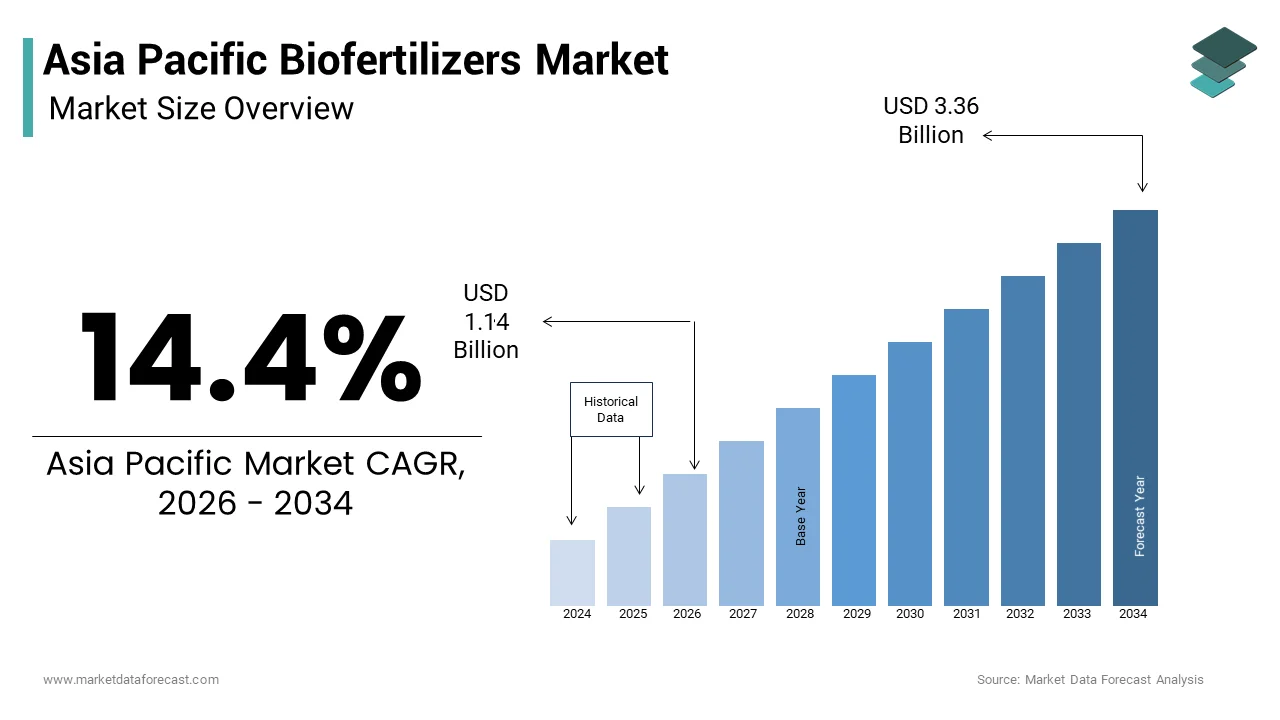
The Asia-Pacific biofertilizers market was valued at USD 1.00 billion in 2025, estimated at USD 1.14 billion in 2026, and is projected to reach USD 3.36 billion by 2034, registering a robust CAGR of 14.4% from 2026 to 2034. This comprehensive industry report covers types, crop categories, microorganisms, application modes, formulations, and country-level frameworks across the region.
- Market Valuation: USD 1.00B (2025) to USD 3.36B by 2034 (14.4% CAGR).
- Primary Growth Drivers: Escalating soil degradation and nutrient depletion crises, government subsidies, organic farming policy mandates, and increasing demand for regenerative agricultural inputs.
- Key Market Restraints: Short shelf life of live microbes, cold chain infrastructure deficits, inconsistent field efficacy, and lack of regional standardization.
Asia-Pacific Biofertilizers Market Segment Metrics (2026–2034)
| Category | Leading Segment Focus | Segment Overview & Key Details |
|---|---|---|
| By Type | Nitrogen-Fixing Biofertilizers (44.8% share in 2025) | Phosphate-solubilizing and potash-mobilizing variants lead growth at a fastest CAGR of 14.8%. |
| By Crop Type | Cereals and Grains (49.1% share in 2025) | Fruits and vegetables segment expected to grow at the fastest CAGR of 16.2% due to premium quality requirements. |
| By Microorganism | Rhizobium (Dominant Share) | Phosphate-solubilizing bacteria segment growing at a 15.4% CAGR due to broad crop applicability. |
| By Form | Dispersible Granules and Pellets | Pure and mixed liquid fermentations represent the fastest-growing form at a 13.9% CAGR. |
| By Country / Region | India (38.3% share in 2025) followed by China (26.6%) | Supported by massive agricultural bases, government biofertilizer promotion schemes, and national soil health missions. |
Major Market Players & Market Structure
Market Structure: Highly fragmented competitive landscape featuring regional domestic manufacturers alongside multinational life science corporations, competing through strategic government partnerships, local manufacturing optimization, and multifunctional bio-consortia innovation.
Key Companies: Novozymes A/S, Lallemand Inc., Rizobacter Argentina S.A., Camson Bio Technologies Limited, Gujarat State Fertilizers and Chemicals Ltd, Symborg S.L., Nutramax Laboratories Inc., Mapleton Agri Biotech Private Ltd, and AgriLife.
Asia-Pacific Biofertilizers Market Size
The Asia-Pacific biofertilizers market size was valued at USD 1 billion in 2025 and is anticipated to reach USD 1.14 billion in 2026 to reach USD 3.36 billion by 2034, growing at a CAGR of 14.4% during the forecast period from 2026 to 2034.
Current Intro Definition of the Asia Pacific Biofertilizers Market
The biofertilizers are living microbial inoculants applied to seeds, soil, or plant surfaces to colonize the rhizosphere and enhance nutrient availability through biological nitrogen fixation, phosphate solubilization, and growth hormone production. According to the Food and Agriculture Organization of the United Nations, approximately 33% of global soils are moderately to highly degraded, creating an urgent ecological imperative for regenerative agricultural inputs across Asian farming systems. As per the World Bank, agriculture accounts for over 25% of gross domestic product in several Southeast Asian nations, making soil fertility management critical for regional economic stability. Furthermore, the sustainable land management practices could increase crop yields by up to 20% while reducing input costs for smallholder farmers who manage over 80% of farmland in the region. These biostimulants serve as essential tools for mitigating soil acidification caused by decades of excessive urea application, particularly in intensive rice and wheat cultivation zones where long term productivity is currently threatened by declining organic carbon levels and micronutrient deficiencies.
MARKET DRIVERS
Escalating Soil Degradation and Nutrient Depletion Crisis
The severe deterioration of arable land quality resulting from prolonged chemical fertilizer dependency across major Asian agricultural belts is driving the growth of the Asia Pacific biofertilizers market. As per the Indian Council of Agricultural Research, cultivated land suffer from multiple nutrient deficiencies including zinc and boron, which chemical fertilizers alone cannot rectify without causing further imbalance. Biofertilizers containing phosphate solubilizing bacteria can mobilize fixed soil phosphorus, with field trials demonstrating a 15 to 25% reduction in diammonium phosphate requirements while maintaining yield parity. Additionally, the Ministry of Agriculture and Farmers Welfare in India has documented that integrated nutrient management incorporating bioinoculants improves water use efficiency in drought prone regions.
Government Subsidies and Organic Farming Policy Mandates
The regulatory frameworks and fiscal incentives into mainstream Asian agriculture is additionally leveraging the growth of the Asia Pacific biofertilizers market. According to the study, certified organic farming area expanded to 4.7 million hectares by 2023, directly mandating biofertilizer usage as synthetic inputs are prohibited under certification standards. Vietnam’s Sustainable Agriculture Transformation Program targets replacing chemical nitrogen with biological alternatives by 2030, backed by preferential credit lines offering interest rates below commercial benchmarks. These policy instruments transform biofertilizers from niche products into economically viable inputs, with the Asian Productivity Organization estimating that government supported programs have reduced effective farmer costs across participating countries, thereby stimulating volume demand independent of commodity price fluctuations.
MARKET RESTRAINTS
Short Shelf Life and Cold Chain Infrastructure Deficits
The biological instability of live microbial formulations combined with inadequate temperature controlled logistics across rural Asia is inhibiting the growth of the Asia Pacific biofertilizers market. According to the study, cold chain coverage in Southeast Asian agricultural supply chains remains below 30%, causing viability losses exceeding 60% for liquid biofertilizer consignments during transit in tropical climates. The lack of standardized refrigerated warehousing means distributors must maintain inventory turnover cycles shorter than 45 days, severely restricting geographic reach beyond peri urban centers. Furthermore, the International Centre of Insect Physiology and Ecology notes that power outages affect some of rural agribusiness facilities in South Asia, disrupting storage conditions even when equipment exists. This infrastructural gap forces manufacturers to invest heavily in spore forming strains or carrier-based formulations that offer extended stability but often demonstrate slower field efficacy compared to fresh liquid cultures by creating a performance tradeoff that dampens farmer confidence and repeat purchase behavior in remote cultivation zones.
Inconsistent Field Efficacy and Standardization Gaps
The variable performance outcomes stemming from insufficient quality control mechanisms and environmental sensitivity of microbial inoculants is additionally limiting the growth of the Asia Pacific biofertilizers market. According to the study, only 38% of commercially available Rhizobium products met minimum viable cell count specifications of 10 to the power of 8 colony forming units per gram in 2022 surveillance sampling. The variability arises because biofertilizer effectiveness depends on precise soil pH, moisture, and native microbiome compatibility, yet most products lack region specific strain matching protocols. Unlike chemical fertilizers with predictable nutrient release, biological responses can range from negligible to transformative based on edaphic factors that farmers cannot easily diagnose. The absence of harmonized regional testing standards means products certified in one country may perform poorly in adjacent territories with different soil chemistries. This uncertainty perpetuates awareness among risk averse smallholders who cannot afford crop failures, constraining adoption to demonstration plots rather than achieving widespread commercial scale necessary for cost reductions through economies of scale.
MARKET OPPORTUNITIES
Integration with Precision Agriculture Technologies
Emerging digital farming platforms for enhancing biofertilizer efficacy through data driven application optimization is major factor to promote the growth of the Asia pacific biofertilizers market in coming years. According to the study, precision agriculture adoption in Asia Pacific grew by 28% annually between 2021 and 2024, creating infrastructure for site specific microbial inoculation based on real time soil sensor data. Companies leveraging satellite imagery and soil mapping can now recommend customized biofertilizer blends matched to localized microbial deficits, improving success rates from historical averages of 40% to over 70% in pilot programs, as per the research. Variable rate application technologies enable farmers to target biofertilizer placement precisely where root zones will benefit most, reducing waste by 25%, according to the study. Digital platforms also facilitate post application monitoring through mobile based feedback loops, allowing manufacturers to refine strain selections based on geotagged performance data from thousands of farms simultaneously. This technological convergence transforms biofertilizers from generic commodities into intelligent solutions, unlocking premium pricing potential and building farmer trust through measurable outcomes. The integration addresses the historical efficacy variability problem by ensuring biological inputs are deployed only under conditions where they can demonstrably succeed, thereby expanding addressable market segments previously considered too risky for biological interventions.
Circular Economy Models Using Agricultural Waste Streams
The valorization of abundant regional biomass residues offers dual opportunities for cost reduction and sustainability differentiation in biofertilizer production, which is also to fuel the growth of the Asia Pacific biofertilizers market. The utilizing cassava starch wastewater as growth medium reduces biofertilizer production costs by 35% compared to conventional synthetic media while simultaneously treating industrial effluent, according to the study. Indonesia’s Ministry of Industry reports that palm oil mill effluent based biofertilizer facilities achieve some lower operating expenses than imported alternatives, creating competitive advantages for domestic manufacturers. These circular models align with national waste management priorities, attracting additional government support and carbon credit revenues under emerging voluntary markets. The integrating biofertilizer production with waste valorization could create 150000 green jobs across the region by 2030, while diverting 15 million tons of biomass from open burning, according to the study. This approach transforms environmental liabilities into productive assets, enabling price points accessible to resource constrained smallholders while strengthening supply chain resilience against imported raw material volatility.
MARKET CHALLENGES
Farmer Knowledge Gaps and Behavioral Resistance
The widespread adoption is impeded by deeply entrenched perceptions favoring immediate chemical fertilizer responses over gradual biological benefits that is a major challenge for the growth of the Asia Pacific biofertilizers market. Extension services remain critically understaffed, with the Food and Agriculture Organization reporting farmers in many South Asian districts, insufficient for delivering the intensive training needed to manage biological inputs correctly. Misapplication rates exceed 50% in regions where farmers treat biofertilizers identically to chemicals, applying them during high temperature periods or mixing with incompatible pesticides that destroy viable cells. The demonstration plot successes frequently fail to translate to neighboring farms due to knowledge transfer breakdowns rather than product deficiencies. Overcoming this challenge requires sustained behavioral change communication investments estimated at 15 to 20% of product value, significantly eroding margins in price sensitive markets. Without addressing cognitive barriers alongside technical ones, superior biological products will remain confined to educated elite farmers rather than achieving the scale necessary for systemic agricultural transformation across the region’s predominantly traditional farming communities.
Regulatory Fragmentation and Registration Bottlenecks
The development faces structural impediments from disjointed approval processes that delay product launches and increase compliance costs across diverse jurisdictions, which is also to inhibit the growth of the Asia pacific biofertilizers market. According to the study, biofertilizer registration timelines vary from 6 months in Thailand to over 36 months in the Philippines, with no mutual recognition agreements facilitating cross border trade. Each country maintains distinct efficacy testing protocols requiring separate field trials costing between 50000 and 150000 US dollars per product per jurisdiction, making regional expansion prohibitively expensive for small and medium enterprises. The lack of harmonized standards means manufacturers must reformulate products to meet varying specifications, fragmenting production runs and preventing economies of scale. Regulatory uncertainty also discourages research investment, with venture capital flowing preferentially to markets with clearer pathways. Streamlining these processes through regional coordination remains politically complex despite clear economic rationale, perpetuating inefficiencies that constrain innovation diffusion and limit farmer access to improved biological solutions.
REPORT COVERAGE
| REPORT METRIC | DETAILS |
| Market Size Available | 2025 to 2034 |
| Base Year | 2025 |
| Forecast Period | 2026 to 2034 |
| CAGR | 14.4% |
| Segments Covered | By Type, Crop Type, Microorganism, Mode of Application, By Form, and Country |
| Various Analyses Covered | Global, Regional & Country Level Analysis, Segment-Level Analysis, DROC, PESTLE Analysis, Porter’s Five Forces Analysis, Competitive Landscape, Analyst Overview on Investment Opportunities |
| Regions Covered | India, China, Japan, Australia, Canada, Vietnam, etc |
| Market Leaders Profiled | Lallemand Inc., Camson Bio Technologies Limited (India), Rizobacter Argentina S.A., Novozymes A/S, Camson Bio Technologies Limited (India) and Nutramax Laboratories Inc., Symborg S.L., Mapleton Agri Biotech Private Ltd, and AgriLife. |
SEGMENTAL ANALYSIS
By Type Insights
The nitrogen fixing biofertilizers segment was the largest by accounting for 44.8% of the Asia Pacific biofertilizers market share in 2025 due to the region’s intensive cereal cultivation systems that demand substantial nitrogen inputs for yield maintenance. According to the study, rice and wheat production in Asia consumes approximately 65 million metric tons of synthetic nitrogen annually, creating massive substitution potential for biological alternatives that can supply 30 to 50 kilograms of nitrogen per hectare through atmospheric fixation. Government procurement programs heavily favor nitrogen fixers because they directly address national fertilizer import dependencies, with biological nitrogen fixation reduced synthetic urea consumption in 2023 alone. Additionally, the nitrogen fixing biofertilizers improve soil organic carbon sequestration rates by 0.3 to 0.5 tons per hectare annually, aligning with climate mitigation commitments under nationally determined contributions, as per the study. This dual benefit of input cost reduction and carbon credit eligibility makes nitrogen fixers the preferred entry point for farmers transitioning toward sustainable intensification, securing their market position, despite emerging competition from phosphate solubilizing variants.
The phosphate solubilizing and potash mobilizing biofertilizers segment is expected to witness a fastest CAGR of 14.8% throughout the forecast period with the widespread phosphorus fixation problems in tropical acidic soils where 70 to 90% of applied chemical phosphorus becomes unavailable to plants within weeks of application. According to the Thailand’s Department of Agriculture, phosphate solubilizing bacteria applications increased available soil phosphorus by 35 to 50 milligrams per kilogram in cassava fields, translating to 30% fertilizer savings without yield penalty. Unlike nitrogen fixers limited to legumes, phosphate and potash mobilizers work across all crop types including cereals, vegetables, and plantation crops, dramatically expanding their addressable market base. This universal applicability combined with rising awareness of hidden phosphorus hunger drives adoption rates exceeding traditional nitrogen fixing segments. The principal driver accelerating phosphate solubilizing biofertilizer adoption is the recognition of legacy phosphorus accumulation in intensively farmed Asian soils coupled with declining rock phosphate reserves.
By Crop Insights
The cereals and grains segment was the largest by accounting for 49.1% of the Asia Pacific biofertilizers market share in 2025 owing to the sheer scale of rice wheat maize cultivation spanning over 300 million hectares across the region. According to the study, rice production alone accounts for 90% of global output in Asia, with biofertilizer integration now embedded in national food security strategies covering 180 million hectares of paddy fields. The Azospirillum inoculation in maize increased yields by 12 to 18% across 9 million hectares, while reducing nitrogen fertilizer requirements by 25%, directly supporting livestock feed security objectives. The sheer volume of cereal production creates economies of scale in biofertilizer manufacturing and distribution that other crop categories cannot match, with unit costs falling below 5 US dollars per hectare for bulk formulations. Furthermore, cereal biofertilizer programs receive preferential policy support because grain self-sufficiency is considered strategically vital, ensuring sustained budget allocations even during fiscal constraints.
The fruits and vegetables segment is expected to grow at a fastest CAGR of 16.2% during the forecast period with the premium requirements and intensive cultivation practices demanding high-quality produce. As per the Vietnam’s Ministry of Industry and Trade, dragon fruit farms using Trichoderma based biofertilizers achieved GlobalGAP certification, enabling direct supermarket contracts paying above wholesale prices. The high revenue per hectare in horticulture allows farmers to absorb biofertilizer costs that would be prohibitive in field crops, while quality premiums create positive return on investment calculations. Consumer health consciousness and retailer sustainability commitments further accelerate adoption as biological inputs become competitive differentiators rather than cost centers.
By Microorganism Insights
The rhizobium segment held a dominant share of the Asia Pacific biofertilizers market in 2025 due to its exclusive symbiotic relationship with leguminous crops that form the backbone of Asian cropping systems and soil fertility restoration programs. The microorganism’s well understood biology and century long research history create farmer familiarity absent in newer microbial categories, reducing adoption barriers significantly. Additionally, Rhizobium products benefit from established quality control standards and regulatory frameworks that streamline approval processes compared to novel organisms. This combination of ecological relevance, economic impact, technical maturity, and institutional support sustains Rhizobium dominance despite emerging competition from multifunctional microbial consortia. India’s National Food Security Mission for Pulses mandates Rhizobium seed treatment for all subsidized seed distributions covering 15 million hectares, guaranteeing baseline demand independent of market fluctuations. According to the Bangladesh’s Pulses Research Centre, mungbean intercropping with Rhizobium inoculation increased system productivity without additional land, supporting intensification goals in land constrained environments. These programmatic linkages embed Rhizobium within broader development agendas beyond simple agronomy, ensuring sustained funding streams and extension attention. The alignment of microbial technology with national nutrition security and trade balance objectives creates political constituencies that defend Rhizobium programs during budget negotiations, distinguishing it from commercially driven microbial categories vulnerable to market cycles.
The phosphate solubilizing bacteria segment is likely to grow at an anticipated CAGR of 15.4% from 2026 to 2034 with the widespread phosphorus inefficiency in tropical agriculture. The phosphate solubilizing bacteria adoption in corn reduced fertilizer costs by 32% while improving root architecture and drought tolerance, addressing climate adaptation priorities, according to the study. Unlike host specific Rhizobium, these bacteria function across diverse crop species and soil types, dramatically expanding addressable markets beyond legume rotations. Growing scientific validation through meta analyses published in regional journals builds credibility among extension services previously skeptical of variable field results. This combination of broad applicability, economic relevance, and strengthening evidence base drives adoption velocities exceeding specialized nitrogen fixers. Soil health regeneration initiatives and regenerative agriculture movements for phosphate solubilizing bacteria adoption beyond simple nutrient substitution economics.
By Form Insights
The dispersible granules and pellets segment was the largest by capturing a significant share of the Asia Pacific biofertilizers market in 2025 due to superior shelf stability and compatibility with existing mechanized application infrastructure. According to the study, pelletized Azospirillum products achieved 92% field establishment success versus 54% for liquids in rainfed maize systems where irrigation timing cannot be controlled. The physical form also enables blending with chemical fertilizers in integrated nutrient management packages, facilitating gradual transition strategies preferred by risk averse farmers. Manufacturing scalability favors solid formulations as fermentation broth can be processed continuously rather than requiring sterile bottling lines, reducing capital intensity for new entrants. This alignment with logistical realities, equipment compatibility, and manufacturing economics secures granular dominance despite liquid formulations offering higher initial cell densities.
The pure and mixed liquid fermentations segment is likely to register a fastest CAGR of 13.9% during the forecast period with the precision agriculture integration and superior immediate efficacy in controlled environments. According to the study, liquid biofertilizer compatibility with fertigation systems enabled 45% higher microbial colonization rates in drip irrigated vegetables compared to soil applied granules, justifying premium pricing for high value crops. Japan’s National Agriculture and Food Research Organization documented that liquid Azotobacter formulations applied through center pivot irrigation achieved uniform distribution, which is impossible with granular broadcasting. Protected cultivation expansion and controlled environment agriculture proliferation serve as primary accelerators for liquid biofertilizer adoption across Asia Pacific.
COUNTRY LEVEL ANALYSIS
India Biofertilizers Market Analysis
India was the top performer of the Asia Pacific biofertilizers market by holding 38.3% of share in 2025 due to its massive agricultural base and comprehensive government promotion programs. According to the study, domestic biofertilizer production capacity reached 150000 metric tons in 2023, supported by 450 registered manufacturing units operating under the Fertilizer Control Order. Despite this, India’s scale advantages in manufacturing and policy commitment to reducing fertilizer import dependence ensure continued market leadership. The integration of biofertilizers with crop insurance schemes and minimum support price procurement creates institutional anchors that stabilize demand through price cycles, distinguishing India from markets driven primarily by commercial considerations.
China Biofertilizers Market Analysis
China biofertilizers market was ranked second by capturing 26.6% of share in 2025 with the state directed technology adoption and emphasis on environmental remediation alongside agricultural productivity. Unlike India’s subsidy driven model, China emphasizes performance based procurement where manufacturers receive payments contingent on verified soil health improvements measured through standardized monitoring protocols. This outcome orientation drives innovation in multifunctional consortia rather than single organism products. However, registration timelines averaging 28 months create barriers for foreign entrants, among domestic firms with established regulatory relationships and local production facilities aligned with national self sufficiency objectives.
Japan Biofertilizers Market Analysis
Japan biofertilizers market growth is growing steadily with the innovation and quality standards that influence regional benchmarking. The National Agriculture and Food Research Organization maintains the world’s most comprehensive database of plant growth promoting rhizobacteria with over 12000 characterized strains available for commercial licensing. Prefectural governments in Hokkaido and Nagano provide technical assistance for customized microbial blend development matching local soil microbiomes, achieving higher efficacy than generic products. Japan’s stringent Pharmaceutical Affairs Law classification of certain biofertilizers as quasi drugs ensures exceptional quality consistency but limits product diversity compared to less regulated markets. Export oriented fruit producers increasingly adopt Japanese biofertilizer protocols to access premium international markets, creating technology transfer channels to neighboring countries. While absolute volume remains modest due to limited arable land, Japan’s role as innovation laboratory and standard setter amplifies its influence beyond market share metrics, shaping regional expectations for product performance and safety.
South Korea Biofertilizers Market Analysis
South Korea biofertilizers market growth is driven by the smart farm integration and urban agriculture applications. The proprietary microbial consortia optimized for hydroponic systems, achieving 30% higher nutrient use efficiency than conventional inoculants in vertical farms, as per the study. Seoul Metropolitan Government mandates biofertilizer use in urban community gardens covering 450 hectares as part of green city initiatives by creating demonstration effects for residential adoption. The government’s K Farm initiative provides export financing for biofertilizer technology packages bundled with smart farm equipment by creating international revenue streams that supplement domestic sales.
Australia Biofertilizers Market Analysis
Australia bioferitlizers market growth is likely to grow with the large scale broadacre applications and strong linkage to carbon farming initiatives. According to the study, biofertilizer treated area in grain production reached 12 million hectares in 2023, representing 45% of total cropped land. CSIRO’s National Soil Biodiversity Program documented that biological inoculants increased water infiltration rates by 28% in duplex soils, addressing drought resilience priorities in rainfed systems. Unlike Asian countries dominated by smallholders, Australian adoption occurs through corporate farming operations and aggregator service providers managing thousands of hectares, enabling bulk procurement and professional application services. Export grain marketers increasingly require soil health documentation for sustainability credentials in European and Japanese markets, creating commercial incentives beyond agronomic benefits.
New Zealand Biofertilizers Market Analysis
New Zealand biofertilizers market growth is likely to driven by the biofertilizer adoption in dairy pastures with strict regulations limiting synthetic nitrogen application. New Zealand’s biofertilizer sector specializes in temperate pasture legumes rather than tropical crops, occupying unique ecological niches with limited regional competition. Export dairy and meat products command premiums for environmental stewardship verified through farm level monitoring, justifying biofertilizer investments as brand differentiation strategies. The country’s experience balancing intensive livestock production with water quality protection offers transferable lessons for similar systems in Ireland and southern Chile, extending influence beyond direct market participation through knowledge export and consultancy services.
COMPETITIVE LANDSCAPE
Competition in the Asia Pacific biofertilizers market remains intensely fragmented with numerous regional manufacturers competing alongside multinational corporations possessing superior research capabilities and brand recognition. Domestic players leverage deep local market knowledge and established rural distribution networks to maintain relevance, despite technological disadvantages compared to global firms offering advanced formulations. Price competition dominates commoditized segments like basic Rhizobium products, where differentiation is minimal and farmer purchasing decisions hinge primarily on cost considerations rather than performance attributes. Innovation based competition emerges in premium segments targeting export-oriented horticulture and protected cultivation where quality consistency and documented efficacy justify higher price points. Government procurement programs create artificial competitive dynamics favoring companies aligned with policy priorities over pure commercial merit. Consolidation pressures increase as smaller producers struggle to meet tightening quality standards and invest in shelf life improvement technologies necessary for geographic expansion beyond immediate hinterlands.
KEY MARKET PLAYERS
The value chain includes producers in the Biofertilizers market, and they are
- Lallemand Inc.
- Camson Bio Technologies Limited (India)
- Rizobacter Argentina S.A.
- Novozymes A/S
- Camson Bio Technologies Limited (India)
- Nutramax Laboratories Inc.
- Gujarat State Fertilizers and Chemicals Ltd
- Symborg S.L.
- Mapleton Agri Biotech Private Ltd
- AgriLife.
Top Players In The Market
- Novozymes South Asia Pvt Ltd significantly contributes to regional soil health through advanced microbial solutions tailored for tropical agriculture. The company focuses on high performance biological inoculants that enhance nutrient uptake efficiency in rice and wheat systems across India and Southeast Asia. Recently, Novozymes expanded its fermentation capacity in Bangalore to meet rising demand for phosphate solubilizing bacteria formulations. They also partnered with local agricultural universities to validate strain efficacy under diverse edaphic conditions. These initiatives strengthen their technical credibility and supply reliability without relying solely on imported products. Their commitment to localized research ensures products address specific regional soil challenges effectively while supporting sustainable intensification goals for millions of smallholder farmers throughout the Asia Pacific region.
- Rizobacter Argentina SA extends its global biological expertise into Asia Pacific through strategic technology transfers and joint ventures with regional distributors. The company specializes in industrial scale Rhizobium production technologies adapted for legume intensive cropping systems in South and Southeast Asia. Recently, Rizobacter launched next generation seed treatment formulations compatible with mechanized planting equipment used in Australian broadacre farming. They also established technical demonstration centers in Thailand and Vietnam to showcase integrated nutrient management protocols. These actions build farmer confidence through visible field results while establishing local presence.
- Gujarat State Fertilizers and Chemicals Ltd leverages extensive distribution networks to make biofertilizers accessible to millions of Indian farmers at affordable price points. The company integrates biological products with conventional fertilizer offerings to facilitate gradual transition toward sustainable nutrient management. Recently, they upgraded manufacturing facilities to produce liquid Azospirillum formulations meeting revised national quality standards. Gujarat State Fertilizers also collaborated with state agricultural departments to include biofertilizers in subsidized input kits distributed during kharif seasons. These measures ensure widespread adoption among resource constrained smallholders while maintaining product affordability. Their public sector mandate enables reach into remote areas where commercial players hesitate to operate, fulfilling critical food security objectives across the Asia Pacific region.
Major Strategies Used by Key Market Participants
Key participants in the Asia Pacific biofertilizers market prioritize strategic partnerships with government agencies and research institutions to secure policy support and validate product efficacy under local conditions. Companies increasingly invest in localized manufacturing facilities to overcome cold chain limitations and reduce logistics costs associated with importing live microbial products from distant production bases. Product portfolio diversification toward multifunctional microbial consortia addresses multiple soil constraints simultaneously rather than single nutrient deficiencies, creating stronger value propositions for farmers facing complex degradation issues. Digital integration strategies link biofertilizer applications with precision agriculture platforms to demonstrate measurable outcomes and build trust through data transparency. Capacity building initiatives targeting extension workers and lead farmers create knowledge ecosystems that sustain adoption beyond initial promotional campaigns. Regulatory engagement efforts focus on harmonizing standards across jurisdictions to reduce compliance burdens and facilitate cross border trade expansion within the diverse Asia Pacific regulatory landscape.
MARKET SEGMENTATION
This research report on the Asia Pacific biofertilizers market is segmented and sub-segmented into the following categories.
By Type
- Nitrogen Fixing
- Phosphate Solubilizing and Potash Mobilizing
By Crop Type
- Cereals & Grains
- Pulses & Oilseeds and Fruits & Vegetables
By Microorganism
- Azotobacter
- Azospirillium
- Rhizobium
- Phosphate Solubilizing Bacteria and Cyanobacteria
By Mode of Application
- Seed Treatment
- Soil Treatment
By Form
- Pure & Mixed Liquid Fermentations
- Dispersible Granules and Pellets
By Country
- India
- China
- Japan
- South Korea
- Australia
- New Zealand
- Thailand
- Malaysia
- Vietnam
- Philippines
- Indonesia
- Singapore
- Rest of APAC