- Product Description Description
- Table of Contents TOC
- List of Table & Figure LOT
- Get Free Sample PDF Sample PDF
Market Size, 2025
$3.03 BnMarket Estimate, 2026
$3.4 BnMarket Forecast, 2034
$8.46 BnCAGR, 2026–2034
12.09%Global Biofertilizers Market Report Summary
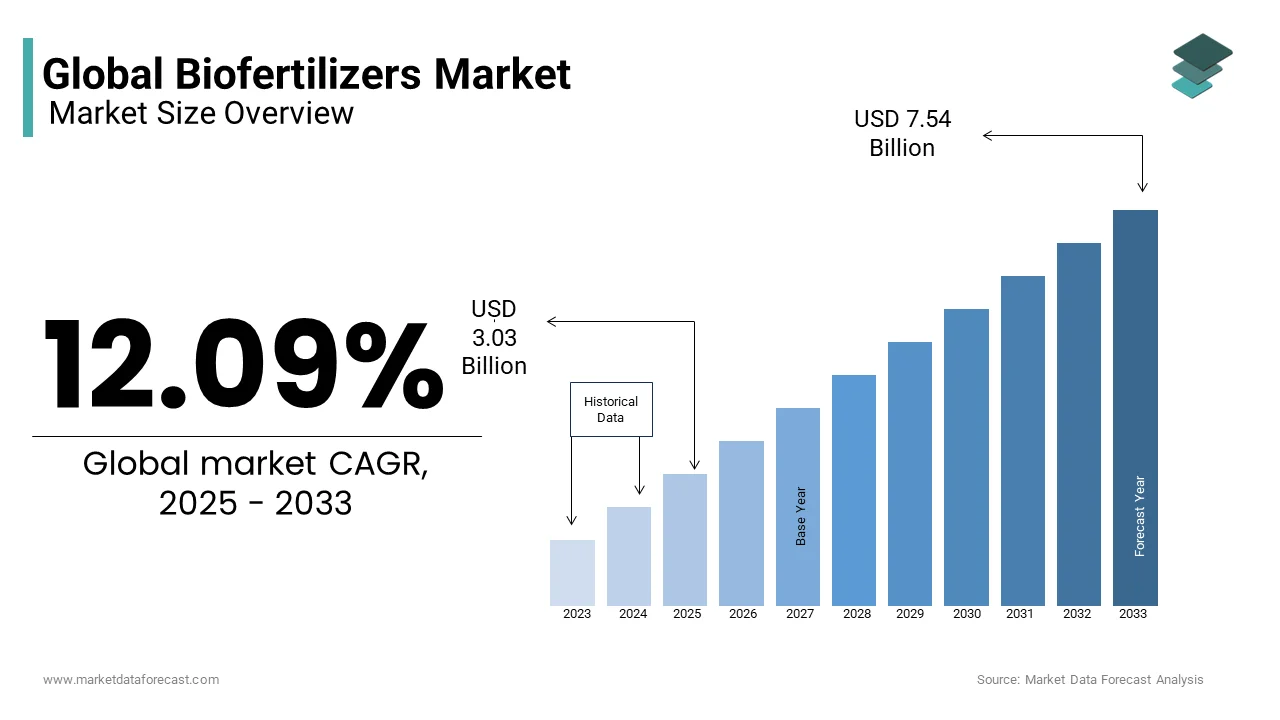
The global biofertilizers market was valued at USD 3.03 billion in 2025, is estimated to reach USD 3.40 billion in 2026, and is projected to expand to USD 8.46 billion by 2034, registering a robust CAGR of 12.09% during the forecast period from 2026 to 2034. Market growth is primarily driven by the global transition toward sustainable agriculture, stringent regulations on chemical fertilizer usage, and rising awareness of soil health and microbial nutrient management. Increasing adoption of organic farming, regenerative agriculture practices, and precision farming technologies is further accelerating demand for biofertilizers across both developed and emerging economies.
Key Market Trends
- Rising substitution of chemical fertilizers with biological inputs due to environmental regulations and fertilizer reduction targets.
- Strong growth in nitrogen-fixing biofertilizer is supported by its effectiveness in improving nitrogen availability and reducing input costs.
- Increasing integration of biofertilizers with precision agriculture tools such as AI-based advisory platforms, variable-rate application systems, and seed treatment technologies.
- Expansion of public–private partnerships and government-backed soil health initiatives, particularly in Asia-Pacific, Africa, and Latin America.
- Growing innovation in strain stabilization, climate-resilient formulations, and seed-coating technologies to improve shelf life and field performance.
Segmental Insights
- By type, the nitrogen-fixing segment dominated the global biofertilizers market by accounting for 54.8% of total value in 2024, driven by widespread adoption in cereals, grains, and legumes to enhance nitrogen uptake and yield efficiency.
- By microorganism, the rhizobium segment led the market with a 37.4% share in 2024, owing to its extensive use in leguminous and cereal crop systems and proven symbiotic nitrogen-fixing capabilities.
- By crop, cereals and grains represented the largest end-use segment, holding 46.6% of the market share in 2024, supported by large-scale cultivation and increasing emphasis on sustainable yield improvement.
- By application, seed treatment emerged as the leading method, commanding 42.7% of the market share in 2024, as it enables efficient microbial delivery, early root colonization, and improved nutrient absorption.
Regional Insights
- Asia Pacific led the global biofertilizers market with a dominant 45.2% share in 2024, driven by extensive agricultural activity, government soil health programs, and rapid adoption in countries such as India and China.
- Europe holds a significant share, supported by strong regulatory frameworks, sustainability mandates, and fertilizer reduction policies under environmental strategies.
- Latin America represents a notable market, with Brazil acting as the regional hub for large-scale biofertilizer adoption and microbial innovation.
- North America is characterized by high technological integration, strong R&D investment, and growing use of biofertilizers in precision farming systems.
- Africa remains a nascent but high-potential market, supported by food security initiatives, donor-funded programs, and increasing awareness of soil fertility management.
Competitive Landscape
The global biofertilizers market features a mix of multinational agribusiness companies and specialized biological input providers. Key players are focusing on product innovation, microbial strain optimization, strategic partnerships, and geographic expansion. Investments in digital agriculture integration, farmer education, and scalable production models are central to strengthening market presence and long-term competitiveness. Prominent companies operating in the global biofertilizers market include UPL, Novozymes, Syngenta, CHR Hansen Holding A/S, Lallemand Inc., Rizobacter Argentina, IPL Biologicals Limited, Kiwa Bio-tech Product Group Corporation, T. Stanes and Company Ltd, BioWorks Inc., Bioceres S.A., Koppert Biological Systems Inc., and Gujarat State Fertilizers & Chemicals Ltd.
Global Biofertilizers Market Size
The global biofertilizers market size was valued at USD 3.03 billion in 2025 and is anticipated to reach USD 3.40 billion in 2026, from USD 8.46 billion by 2034, growing at a CAGR of 12.09% during the forecast period 2026 to 2034.
Biofertilizers are made of living organisms like bacteria, mycorrhizal fungi, rhizobium, and pseudomonas to offer essential nutrients that promote growth in plants and trees.
Biofertilizers are microbial inoculants composed of living microorganisms that, when applied to seeds, plants, or soil, enhance nutrient availability through natural biological processes. Unlike synthetic fertilizers, biofertilizers leverage beneficial bacteria, fungi, and algae, such as Rhizobium, Azotobacter, and mycorrhizal fungi, to fix atmospheric nitrogen, solubilize phosphorus, and stimulate plant growth. As per the Food and Agriculture Organization (FAO), a notable share of global nitrogen fertilizer use in agriculture results in environmental leakage, contributing to eutrophication and greenhouse gas emissions. The growing imperative to reduce chemical runoff has elevated biofertilizers as sustainable alternatives. According to the International Fertilizer Association, agricultural soils in more than 120 countries exhibit micronutrient deficiencies, intensifying the need for biological solutions that improve soil health without degrading ecosystems.
MARKET DRIVERS
Sustainable Farming Mandates and Fertilizer Reduction Policies Driving the Biofertilizers Market
The escalating global demand for sustainable agricultural intensification amid tightening environmental regulations is a pivotal driver of the Biofertilizers Market. The European Union’s Farm to Fork Strategy mandates a 20% reduction in fertilizer use by 2030, directly incentivizing biofertilizer adoption. This regulatory shift, combined with rising farmer awareness about soil microbiome health, fosters a fertile environment for biofertilizer deployment across smallholder and commercial farms alike.
Expansion of Organic Farming Systems Driving Growth of the Biofertilizers Market
The expanding global footprint of organic farming, which inherently relies on biological inputs, is another significant driver. As per the Research Institute of Organic Agriculture (FiBL), the global organic agricultural land reached 79.6 million hectares in 2022, a 1.7 million-hectare increase from the previous year. This growth is most pronounced in Australia, Argentina, and Spain, where organic certification mandates prohibit synthetic fertilizers. Biofertilizers serve as essential components in these systems, particularly in nitrogen-deficient soils. For instance, legume cultivation under organic regimes in India saw about 20-50% yield improvement when inoculated with Rhizobium, according to the Indian Council of Agricultural Research. The rising consumer demand for pesticide-free and sustainably grown food further amplifies the necessity for biofertilizers, embedding them into the core of next-generation agronomic practices.
MARKET RESTRAINTS
Environmental Sensitivity and Inconsistent Field Performance Restraining the Biofertilizers Market
The variability in field performance due to environmental sensitivity is one major restraint impeding the Biofertilizers Market. Biofertilizers depend on living organisms whose efficacy is influenced by soil pH, temperature, moisture, and competing microbial flora. This unpredictability undermines farmer confidence, particularly in regions with erratic rainfall patterns. Unlike chemical fertilizers, which offer immediate and measurable nutrient release, biofertilizers require optimal ecological conditions to establish colonization.
Weak Supply Chain and Storage Infrastructure Restraining the Biofertilizers Market
The underdeveloped supply chain and storage infrastructure, particularly in tropical and developing regions, is another critical restraint. Biofertilizers contain live cultures that degrade rapidly under high temperatures and poor handling. According to the World Bank, most of the rural distribution networks in Sub-Saharan Africa lack cold-chain logistics, leading to a loss in microbial viability before reaching end users. This compromises product reliability and discourages repeat adoption. Furthermore, limited technical training for extension workers hampers proper application guidance, exacerbating inefficiencies. Without robust cold storage and last-mile delivery systems, scalability remains a persistent bottleneck.
MARKET OPPORTUNITIES
Integration of Biofertilizers with Precision Agriculture Technologies: Creating New Market Opportunities
The integration of biofertilizers with precision agriculture technologies is a transformative opportunity. Advances in drone-based inoculant delivery, soil microbiome mapping, and AI-driven application scheduling enable targeted deployment, enhancing efficacy. According to the Consultative Group on International Agricultural Research (CGIAR), pilot projects in Kenya using GPS-guided microbial seeding improved maize yields compared to blanket application. Companies like Pivot Bio have developed gene-optimized nitrogen-fixing microbes compatible with variable-rate application systems. Furthermore, digital farming platforms such as Bayer’s Xarvio are incorporating bio-input modules, allowing real-time monitoring of microbial activity.
Collaborative Public–Private Initiatives Accelerating Biofertilizer Adoption
Public-private partnerships aimed at scaling biofertilizer production and adoption in food-insecure regions are another emerging opportunity. These initiatives combine subsidized distribution with farmer training, significantly improving adoption rates. Similarly, Brazil’s Embrapa has developed heat-tolerant microbial formulations that maintain viability in the Cerrado region’s high temperatures, expanding usability in challenging climates. With support from the World Bank and FAO, such collaborative models are setting precedents for scalable, context-specific biofertilizer deployment in low-input agricultural systems.
MARKET CHALLENGES
Lack of Standardized Regulatory Frameworks Challenging the Biofertilizers Market
The absence of standardized regulatory frameworks governing quality, labeling, and efficacy claims is a primary challenge facing the Biofertilizers Market. In many countries, biofertilizers are classified under broad agricultural input categories, lacking specific registration protocols. Also, only a limited number of countries have dedicated regulatory guidelines for microbial inoculants, leaving markets vulnerable to substandard products. This undermines trust and deters investment. Harmonizing international standards, as advocated by the Codex Alimentarius, remains slow, complicating cross-border trade and innovation.
Limited Intellectual Property Protection and Strain Stability Challenges in the Biofertilizers Market
The limited intellectual property (IP) protection for microbial strains, discouraging private-sector R&D investment, is another pressing challenge. Unlike chemical compounds, naturally occurring microbes are often excluded from patentability under the Nagoya Protocol and national biodiversity laws. Also, fewer biofertilizer-related patents filed between 2015 and 2022 were granted in developing nations, where germplasm originates. This creates inequity and disincentivizes innovation. Additionally, strain degradation during mass production reduces commercial viability. Without robust IP frameworks and strain stabilization technologies, long-term market maturity remains uncertain.
REPORT COVERAGE
| REPORT METRIC | DETAILS |
| Market Size Available | 2025 to 2034 |
| Base Year | 2025 |
| Forecast Period | 2026 to 2034 |
| CAGR | 12.09% |
| Segments Covered | By Type, Crop Type, Microorganism, Application, Form, and Region |
| Various Analyses Covered | Global, Regional, and Country-Level Analysis; Segment-Level Analysis; DROC, PESTLE Analysis; Porter’s Five Forces Analysis; Competitive Landscape; Analyst Overview of Investment Opportunities |
| Regions Covered | North America, Europe, APAC, Latin America, the Middle East, and Africa |
| Market Leaders Profiled | UPL, Novozymes, Syngenta, CHR Hansen Holding A/S, Vegalab SA, Lallemand Inc., Rizobacter Argentina, IPL Biologicals Limited, Kiwa Bio-tech Product Group Corporation, T. Stanes and Company Ltd, National Fertilizers Limited, BioWorks Inc., American Vanguard Corp, Symborg, Novozymes, Bioceres S.A., Agrilife, Gujarat State Fertilizers & Chemicals Ltd, Koppert Biological Systems Inc., and Nutramax Laboratories, Inc |
SEGMENTAL ANALYSIS
By Type Insight
The nitrogen-fixing segment dominated the global biofertilizers market by accounting for 54.8% of the total value in 2024. This preeminence is primarily driven by the critical role of nitrogen in plant physiology and the high cost and environmental toll of synthetic nitrogen fertilizers. Biological nitrogen fixation, particularly by symbiotic bacteria such as Rhizobium and free-living Azotobacter, provides a natural alternative that reduces dependency on urea. According to the International Fertilizer Association, global urea consumption exceeded 190 million metric tons in 2022, with nearly 50% lost to volatilization or leaching.
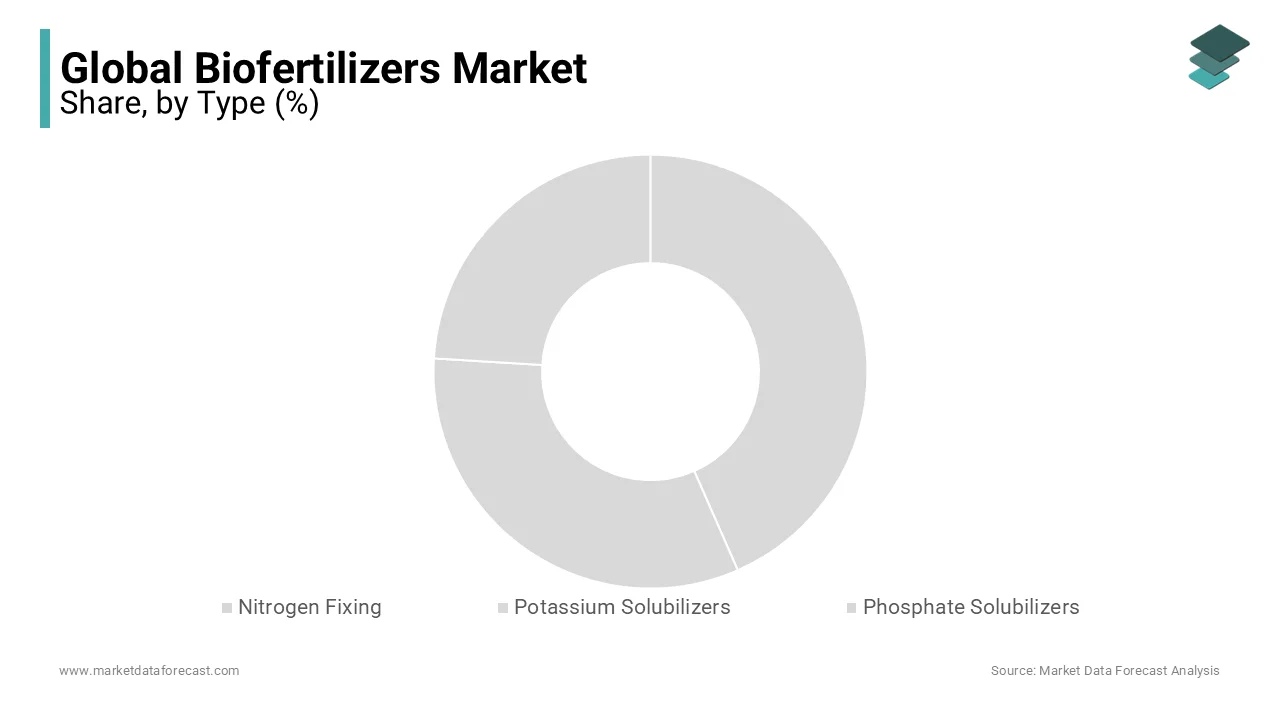
The Phosphate Solubilizing biofertilizers segment is projected to register the highest CAGR of 14.6% between 2025 and 2033. This rapid growth is fueled by widespread phosphorus deficiency in arable soils and the low solubility of native phosphate reserves. As per the Global Phosphorus Research Initiative, over 52% of cultivated soils worldwide are deficient in available phosphorus, yet only 20–30% of applied phosphate fertilizers are absorbed by plants. Biofertilizers containing Pseudomonas and Bacillus species effectively convert insoluble rock phosphate into plant-accessible forms, improving nutrient use efficiency.
By Microorganism Insights
The rhizobium segment led the microorganism segment by capturing an estimated 37.4% of the global biofertilizers market in 2024. This dominance is anchored in its symbiotic relationship with leguminous crops such as soybeans, pulses, and groundnuts, where it forms root nodules to fix atmospheric nitrogen. With global legume cultivation spanning over 90 million hectares, as reported by the FAO, the demand for Rhizobium inoculants remains robust. The cost-effectiveness and proven field efficacy of Rhizobium have cemented its position as the cornerstone of biological nitrogen management in both smallholder and commercial farming systems.
The Azospirillum segment is expanding at the fastest pace, with a projected CAGR of 13.8% through 2033. Its accelerated adoption is attributed to its non-symbiotic nitrogen fixation capability in cereals such as maize, rice, and sugarcane—crops that constitute over 70% of global caloric intake. Unlike Rhizobium, Azospirillum colonizes the rhizosphere of non-leguminous plants, enhancing root development and nitrogen assimilation. According to the International Rice Research Institute (IRRI), Azospirillum inoculation in rice systems has increased grain yields by 10–15% in South and Southeast Asia. Its compatibility with integrated nutrient management programs further amplifies its scalability across diverse agroecologies.
By Crop Insights
The Cereals & Grains segment constituted the largest end-use by representing 46.6% of the biofertilizers market in 2024. This dominance is due to the vast cultivation footprint of staple cereals, rice, wheat, and maize, covering over 700 million hectares globally. With rising pressure to enhance productivity without expanding chemical inputs, biofertilizers are increasingly integrated into cereal systems. In India, the world’s second-largest rice producer, the System of Rice Intensification (SRI) incorporates Azotobacter and Phosphate Solubilizing Bacteria (PSB), reducing urea use while maintaining yields. The Green Revolution’s legacy of soil degradation has further prompted a shift toward microbial inputs to restore soil fertility in intensively farmed cereal belts.
The Fruits & Vegetables segment is anticipated to grow at the highest CAGR of 15.2% from 2026 to 2034. This surge is driven by the high economic value of horticultural crops and their susceptibility to soil-borne diseases and nutrient imbalances. Biofertilizers enhance nutrient uptake, improve shelf life, and reduce abiotic stress in high-value crops. The European Union’s pesticide reduction targets under the Farm to Fork Strategy further incentivize biological inputs in high-input horticulture.
By Application Insights
The seed Treatment segment emerged as the prominent application method by commanding 42.7% of the market share in 2024. This method ensures early colonization of plant roots by beneficial microbes, offering a protective and growth-promoting effect from germination. Its precision and low dosage requirements make it cost-effective and logistically feasible for both smallholders and large-scale operations. In the United States, over 90% of soybean seeds are commercially treated, with bio-based coatings increasingly replacing chemical fungicides. The integration of Rhizobium and Azospirillum into seed priming protocols has demonstrated improved seedling vigor and stress resilience, particularly in drought-prone regions.
The Foliar Treatment segment is witnessing the fastest growth and is projected at a CAGR of 13.5% through 2033. Unlike traditional soil or seed applications, foliar spraying allows direct delivery of microbial consortia or metabolites to plant surfaces, enabling rapid response to nutrient deficiencies and biotic stress. Recent advancements in microbial fermentation have yielded stable, sprayable formulations of Bacillus and Pseudomonas species that colonize leaf surfaces and induce systemic resistance. The compatibility of foliar biofertilizers with drone-based precision agriculture systems in Australia and Brazil further accelerates adoption, particularly in large-scale orchards and row crops.
REGIONAL ANALYSIS
Asia Pacific Market Analysis
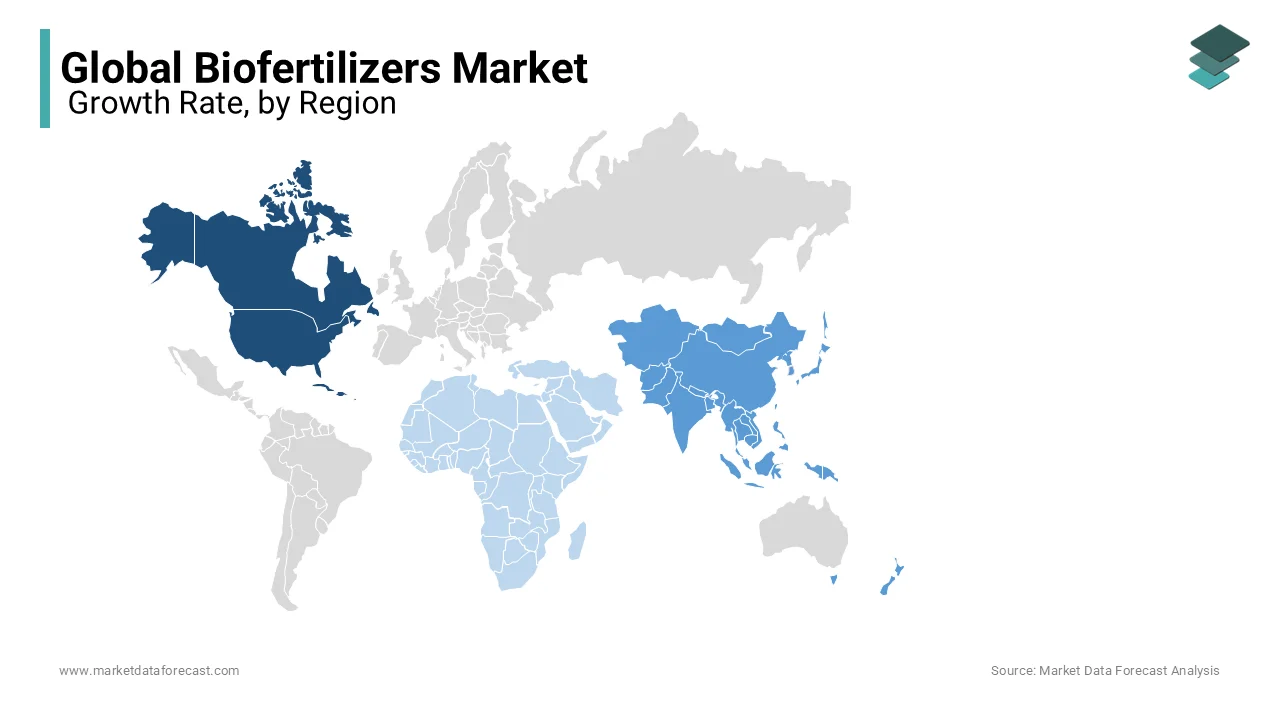
Asia Pacific led the global biofertilizers market with a 45.2% share in 2024. The region’s dominance is underpinned by its vast agricultural base, high population density, and government-led sustainability initiatives. India alone produces over 50,000 metric tons of biofertilizers annually, supported by the National Mission on Sustainable Agriculture and state-level subsidy programs. China has mandated the reduction of chemical fertilizer use by 15% since 2015, promoting microbial inputs in its “Zero-Growth” policy. As per the Asian Development Bank, millions of farmers in Southeast Asia have adopted biofertilizers in rice and vegetable cultivation, driven by rising soil degradation and input cost pressures.
Europe Market Analysis
Europe holds a significant market share, with strong regulatory and policy tailwinds shaping its trajectory. The European Union’s Green Deal and Farm to Fork Strategy have set binding targets to reduce synthetic fertilizer use by 2030, catalyzing demand for biological alternatives. France and Germany are at the forefront, with a large number of hectares under biofertilizer-treated crops. The Netherlands has integrated microbial inoculants into its high-tech greenhouse systems, achieving higher nutrient efficiency in tomato production, according to Wageningen University. Stringent environmental regulations and consumer preference for organic produce further solidify Europe’s position as a mature and innovation-driven market.
Latin America Market Analysis
Latin America accounts for a notable share of the global market, with Brazil serving as the regional epicenter of biofertilizer adoption. The country’s expansive soybean, sugarcane, and maize sectors have embraced microbial inoculants as a core component of low-carbon agriculture. Argentina and Colombia are following suit, with national programs promoting bioinputs in soy and coffee cultivation. Biofertilizer usage in the region grew annually between 2018 and 2023, driven by climate-smart agriculture policies.
North America Market Analysis
North America is characterized by high technological integration and research-led innovation. The United States Department of Agriculture reports that a portion of U.S. soybean acreage utilizes microbial inoculants, primarily Bradyrhizobium. Companies like Indigo Ag and Pivot Bio have commercialized gene-optimized microbes that fix nitrogen in non-leguminous crops, marking a paradigm shift. Canada’s Organic Products Regulations mandate biological inputs in certified organic farms, covering over 1.5 million hectares. The presence of advanced distribution networks and digital farming platforms accelerates adoption, positioning North America as a hub for next-generation biofertilizer development.
Africa Market Analysis
Africa represents a nascent but rapidly evolving market, holding a small portion of the global share but exhibiting high growth potential. Ethiopia, Kenya, and Nigeria are pioneering biofertilizer deployment through public-private partnerships. In Nigeria, soybean yields increased with Bradyrhizobium inoculation. Challenges remain in cold-chain logistics and farmer education, but donor-funded initiatives and regional harmonization efforts under the African Union’s Comprehensive Africa Agriculture Development Programme (CAADP) are laying the groundwork for scalable adoption.
COMPETITIVE LANDSCAPE
The competition in the biofertilizers market is intensifying as global demand for sustainable agriculture accelerates. Established agrochemical giants are repositioning themselves as integrated biological solutions providers, leveraging their distribution networks and R&D capabilities. At the same time, specialized biotech firms are emerging with niche microbial formulations tailored to specific crops and climates. The Asia Pacific region has become a battleground for innovation, with companies investing heavily in localized strain development and farmer engagement. Competitive differentiation hinges on product efficacy, shelf stability, and ease of integration into existing farming practices. Strategic collaborations with governments and NGOs are also shaping competitive dynamics, as regulatory support and subsidy programs influence adoption rates. With limited standardization and varying regional regulations, companies that demonstrate consistent field performance and build trust among farmers are gaining a decisive edge.
KEY MARKET PLAYERS
are some of the major key players involved in the biofertilizer market.
- UPL
- Novozymes
- Syngenta
- CHR Hansen Holding A/S
- Vegalab SA
- Lallemand Inc.
- Rizobacter Argentina
- IPL Biologicals Limited
- Kiwa Bio-tech Product Group Corporation
- T. Stanes and Company Ltd
- National Fertilizers Limited
- BioWorks Inc.
- American Vanguard Corp
- Symborg, Novozymes
- Bioceres S.A.
- Agrilife
- Gujarat State Fertilizers & Chemicals Ltd
- Koppert Biological Systems Inc,
- Nutramax Laboratories, Inc.
Top Players In The Market
- Novozymes A/S has established itself as a pioneer in microbial technology, delivering innovative biofertilizer solutions tailored for the diverse agroecological zones of the Asia Pacific. The company’s portfolio includes Aspergillus and Bacillus-based formulations that enhance nutrient uptake and stress resilience in crops such as rice and sugarcane. In India and Southeast Asia, Novozymes collaborates with local agribusinesses to co-develop region-specific microbial blends. The company also expanded its fermentation capacity in Singapore to meet rising regional demand, reinforcing its leadership in sustainable agricultural biotechnology across the Asia Pacific.
- BASF SE plays a transformative role in the Asia Pacific biofertilizers landscape through its advanced biologicals division, offering products such as Votivo and RhizoVital, which protect roots and improve nitrogen and phosphorus availability. The company has intensified its focus on integrated nutrient management systems in high-input farming regions like China and Vietnam. It also launched a farmer outreach program in Punjab, India, training over 10,000 growers in bio-input application techniques. These initiatives underscore BASF’s commitment to combining chemical and biological solutions for sustainable intensification in the region.
- Koppert Biological Systems has emerged as a key enabler of biological farming in the Asia Pacific by expanding its biofertilizer and biocontrol portfolio beyond traditional European markets. The company specializes in symbiotic microbes and mycorrhizal fungi, targeting high-value horticulture and organic farms in countries such as Australia, Japan, and South Korea. It also forged alliances with local cooperatives in the Philippines to distribute bio-inoculants for coconut and banana cultivation. Through farmer education campaigns and digital advisory tools, Koppert is accelerating adoption among smallholders, positioning itself as a trusted partner in the region’s transition toward regenerative agriculture.
Top Strategies Used By The Key Market Participants
Key players in the biofertilizers market deploy a range of strategic initiatives to consolidate their presence and drive innovation. Major strategies include strategic partnerships with agricultural research institutions to develop climate-resilient microbial strains, ensuring compatibility with local soil and crop conditions. Companies are increasingly investing in localized production facilities to reduce costs and improve supply chain efficiency, particularly in emerging markets. Product innovation remains central, with firms leveraging genetic optimization and fermentation advancements to enhance microbial viability and shelf life. Mergers and acquisitions are utilized to expand technological portfolios and geographic reach. Additionally, digital integration—such as AI-driven microbial dosing and blockchain-based traceability—is being adopted to build farmer trust and streamline distribution. Educational outreach programs and public-private collaborations further strengthen market penetration, especially among smallholder farmers.
RECENT MARKET NEWS
- In January 2024, Novozymes launched a microbial seed treatment solution in Vietnam targeting rice farmers, integrating nitrogen-fixing bacteria with digital soil analytics to optimize application timing and dosage, enhancing crop productivity in flooded paddies.
- In September 2024, BASF partnered with the Indian Council of Agricultural Research to conduct field trials of its biofertilizer formulations across five states, aiming to validate performance under diverse agroclimatic conditions and support national sustainable agriculture goals.
- In March 2024, Koppert Biological Systems inaugurated a microbial production and training center in Karnataka, India, designed to develop region-specific bio-inoculants and educate thousands of farmers on biological input integration in vegetable and fruit cultivation.
- In June 2024, UPL Limited introduced a biofertilizer brand under its Stargate biologicals platform in Australia, combining phosphate-solubilizing bacteria with precision application technology to serve large-scale horticultural and grain operations.
- In February 2024, Syngenta launched a digital advisory app in Indonesia that recommends biofertilizer use based on real-time soil data, enabling smallholder rice farmers to access tailored microbial input recommendations via mobile devices.
MARKET SEGMENTATION
This market research report on the global biofertilizers market is segmented and sub-segmented based on the Type, Crop Type, Form type, Microorganism, Application mode, and Region.
By Type
- Nitrogen Fixing
- Potassium Solubilizers
- Phosphate Solubilizers
- Others
By Crop Type
- Oilseeds & Pulses
- Cereals & Grains
- Fruits & Vegetables
- Others
By Form
- Liquid
- Carrier-based
By Microorganism
- Rhizobium
- Azospirillum
- Bacillus
- Azotobacter
- VAM
- Pseudomonas
- Others
By Application Mode
- Seed Treatment
- Soil Treatment
- Foliar Treatment
- Others
By Region
- North America
- Europe
- Asia Pacific
- Latin America
- The Middle East and Africa