- Product Description Description
- Table of Contents TOC
- List of Table & Figure LOT
- Get Free Sample PDF Sample PDF
Market Size, 2025
$22.73 BnMarket Estimate, 2026
$24.13 BnMarket Forecast, 2034
$38.89 BnCAGR, 2026–2034
6.15%Global Agricultural Biologicals Market Size, Growth, Trends & Forecast (2026–2034)
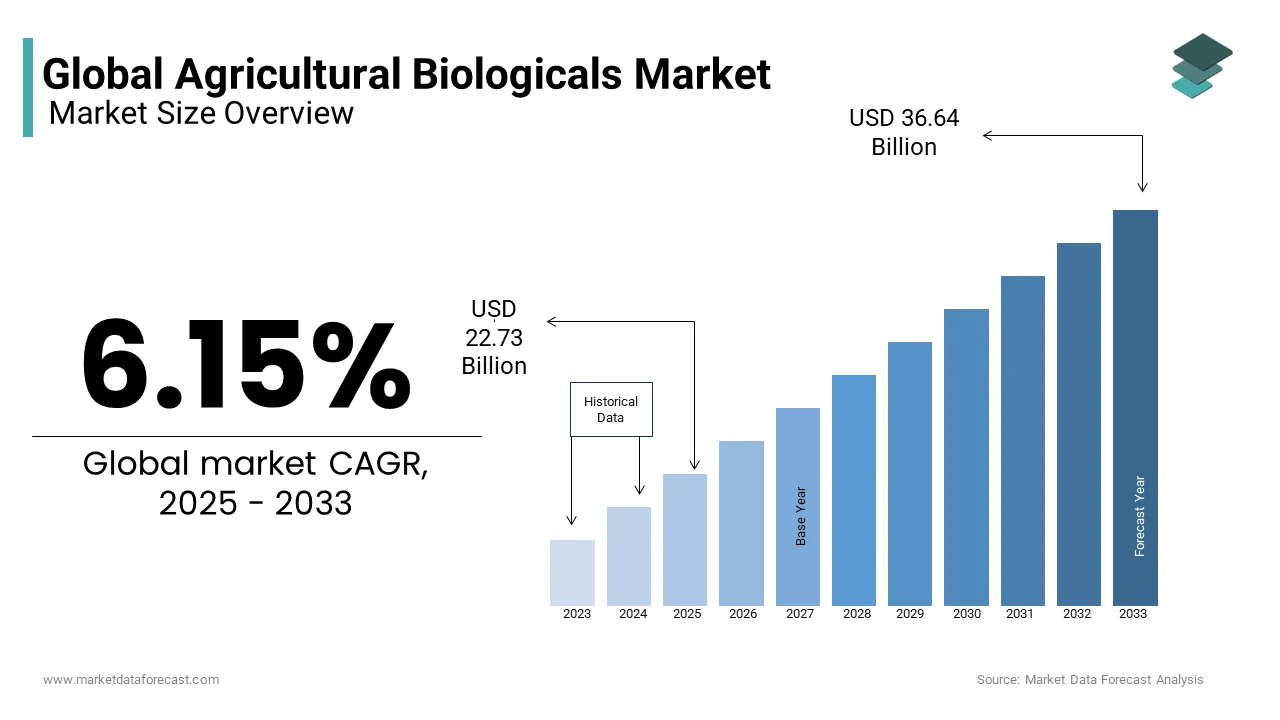
The global agricultural biologicals market size was valued at USD 22.73 billion in 2025, is anticipated to reach USD 24.13 billion in 2026, and is projected to scale up to USD 38.89 billion by the end of 2034, registering a compound annual growth rate (CAGR) of 6.15% during the forecast period from 2026 to 2034. Driven by stringent regulatory restrictions on synthetic agrochemicals, escalating consumer preference for residue-free produce, and rapid integration with digital precision farming technologies, the market continues to experience steady commercial expansion worldwide.
Key Executive Metrics (At-a-Glance)
- 2025 Base Valuation: USD 22.73 Billion
- 2026 Current Valuation: USD 24.13 Billion
- 2034 Forecast Valuation: USD 38.89 Billion
- Compound Annual Growth Rate (CAGR): 6.15% (2026–2034)
- Covered Regional Markets: North America, Europe, APAC, Latin America, Middle East & Africa
Core Market Drivers
- Regulatory Mandates: Government restrictions, residue limits, and active ingredient phase-outs (such as the EU's Farm to Fork strategy) driving the adoption of biological crop protection.
- Consumer Preferences: Clean-label food trends and retail maximum residue limit (MRL) supply-chain audits fueling commercial demand for residue-free agricultural harvests.
Primary Market Restraints & Challenges
- Field Efficacy Variability: Inconsistent biological performance stemming from environmental sensitivity, temperature dependencies, and microbial survival constraints.
- Logistical Bottlenecks: Complex cold-chain storage requirements and relatively short active shelf-lives restricting supply chain distribution in tropical and subtropical regions.
Global Agricultural Biologicals Market Segmentation Breakdown
| Segment Category | Largest Segment | Fastest-Growing Segment |
|---|---|---|
| By Type | Biopesticides (57.1% share in 2025) | Biostimulants (11.9% CAGR) |
| By Application | Cereals and Grains (37.4% share in 2025) | Fruits and Vegetables (15.6% CAGR) |
| By Source | Microbial Source (56.2% share in 2025) | Biorationals Source (9.3% CAGR) |
| By Mode of Application | Foliar Spray (64.4% share in 2025) | Seed Treatment (13.9% CAGR) |
| By Region | North America | Europe / Asia-Pacific |
Major Industry Players Profiled
Key enterprises shaping the global agricultural biologicals market include BASF, Bayer Crop Science, Syngenta, Novozymes A/S, Isagro, Arysta Lifescience Limited, Valent BioScience Corporation, Marrone Bio Innovations Inc., Certis U.S.A., and Koppert B.V.
Global Agricultural Biologicals Market Size
The size of the global agricultural biologicals market size was valued at USD 22.73 billion in 2025, and it is anticipated to reach USD 24.13 billion in 2026 from USD 38.89 billion by 2034, growing at a CAGR of 6.15% from 2026 to 2034.
Agricultural biologicals cover a diverse category of crop protection and soil enhancement products derived from naturally occurring materials such as microorganisms, plant extracts, beneficial insects, and organic compounds. These solutions function as sustainable alternatives to conventional synthetic chemicals by improving soil microbiome activity, enhancing nutrient uptake, and fortifying crop resilience against environmental stressors. The global agricultural sector currently faces unprecedented ecological pressures that necessitate biological interventions. The Food and Agriculture Organization (FAO) reports that 33% of the world's soils are moderately to highly degraded due to specific threats including erosion, salinization, compaction, acidification, and chemical pollution. The United Nations Environment Programme indicates that synthetic fertilizer runoff contributes to over 400 coastal dead zones worldwide, severely disrupting marine ecosystems and local food security. Furthermore, The World Health Organization (WHO) has historically estimated that 3 million cases of severe acute pesticide poisoning occur annually; however, more recent studies indicate this number may now be as high as 385 million unintentional poisonings per year, disproportionately affecting agricultural workers in developing regions. In response, farming operations increasingly integrate microbial inoculants, biostimulants, and biofungicides to restore ecological equilibrium while maintaining yield stability. The transition toward biological crop management reflects a fundamental shift in agronomic philosophy, emphasizing extended period soil vitality over immediate chemical dependency. As climate variability intensifies, biological formulations demonstrate measurable capacity to buffer crops against drought stress and pathogen proliferation, establishing them as indispensable components of modern precision agriculture frameworks. Regulatory bodies across multiple continents now mandate residue reduction protocols that inherently favor biological substitution, accelerating adoption timelines across commercial farming networks.
MARKET DRIVERS
Stringent Regulatory Restrictions on Synthetic Agrochemicals Drive Market Expansion
Governmental mandates regarding synthetic chemical usage fundamentally accelerate the adoption of biological alternatives across commercial farming operations, which contributes to the expansion of the agricultural biologicals market. Regulatory frameworks increasingly impose rigorous residue limits and phase out active ingredients linked to ecological degradation and human health deterioration. The European Union completely prohibited the outdoor field application of major neonicotinoid compounds across all member states, compelling growers to look toward compliant biological substitutes and integrated pest management systems. Under the EU's 'Farm to Fork' strategy, the European Commission continuously reviews active substances, placing strict renewal restrictions on conventional chemical pesticides to heavily incentivize the use of biological alternatives. Agricultural producers must comply with maximum residue thresholds that frequently drop below 0.01 parts per million for export destined crops, making biological formulations operationally essential. According to data from the United States Environmental Protection Agency (EPA), biopesticides now represent a substantial share of newly registered pesticide active ingredients, reflecting a structural shift toward biological options. Growers operating within export oriented supply chains experience mandatory certification requirements that explicitly penalize synthetic chemical residues, directly stimulating procurement of microbial inoculants and plant derived biostimulants. This regulatory environment transforms biological adoption from an optional agronomic choice into a compliance necessity, ensuring sustained demand expansion across large scale farming enterprises and specialty crop cultivators worldwide.
Escalating Consumer Preference for Residue Free Produce Fuels Commercial Demand
Shifting consumer purchasing patterns toward clean label food products generates substantial downstream pressure on agricultural supply chains to eliminate synthetic chemical residues, which further accelerates the growth of the agricultural biologicals market. Retail procurement standards increasingly mandate third party verification programs that explicitly track input materials from field to distribution center, favoring biological crop protection protocols. Surveys by the International Food Information Council (IFIC) show that while price remains the top purchasing driver, clean labels and food safety, including concerns over chemical residues, increasingly influence modern consumer buying habits. Major supermarket networks across North America and Europe have implemented strict, private 'Maximum Residue Limit' (MRL) protocols, forcing contract farmers to adopt biological pest controls to clear strict corporate supply-chain audits. Leading global food brands aligned with global sustainability initiatives are increasingly asking primary agricultural suppliers for verified sustainable practices, accelerating the commercial demand for biological inputs. This commercial preference directly translates into premium pricing structures for biologically managed harvests, providing measurable financial incentives for growers. Agricultural operators respond to these procurement mandates by integrating targeted biofungicides and beneficial microorganism applications that preserve market access while maintaining yield parameters. The resulting commercial alignment between consumer expectations and agricultural production methodologies establishes a persistent demand trajectory for biological solutions across global supply networks.
MARKET RESTRAINTS
Inconsistent Field Efficacy and Environmental Sensitivity Restrict Widespread Adoption
Biological crop protection products exhibit pronounced variability in performance metrics, which hampers the expansion of the agricultural biologicals market. This inconsistency stems from their inherent dependence on specific environmental conditions and microbial survival requirements. Unlike synthetic agrochemicals that deliver predictable results across diverse climatic zones, biological formulations require precise temperature ranges, optimal soil moisture levels, and compatible microbial ecosystems to function effectively. Research from agricultural institutions shows that the field survival of microbial inoculants is highly sensitive to environmental stressors, requiring specific soil temperature windows to establish functional populations. Agronomic field trials demonstrate that low ambient humidity can notably lower the efficacy of live biofungicides by hindering spore germination and increasing droplet evaporation before target contact. Soil science experts emphasize that first-generation agricultural biologicals often experience performance variability across different growing seasons due to native soil microbiome competition and variable weather patterns. Growers operating within marginal climatic regions experience unpredictable yield responses that discourage large scale biological investment. Agricultural extension programs note that inconsistent year-over-year field performance remains a primary hurdle, occasionally leading growers to pause biological applications in favor of highly predictable conventional regimes. This operational uncertainty fundamentally constrains market penetration among risk averse farming enterprises that prioritize yield stability over environmental sustainability objectives.
Complex Storage Requirements and Short Shelf Life Impede Supply Chain Distribution
Biological agricultural products demand stringent temperature control and specialized packaging infrastructure to maintain microbial viability throughout extended distribution networks, a lack of which hinders the growth of the agricultural biologicals market. The inherent fragility of living microorganisms and enzyme based formulations necessitates cold chain logistics that significantly increase transportation costs and limit geographic market reach. The International Institute of Refrigeration highlights that cold-chain breaks during transit pose a severe risk to biological products, as temporary exposure to ambient heat can rapidly degrade live bacterial counts. Also, the Global Cold Chain Alliance emphasize that gaps in regional refrigerated warehousing force ambient storage conditions, accelerating product expiration before delivery to the farm. Commercial formulations containing beneficial vegetative bacteria frequently have an active shelf life limited to roughly 12 to 18 months, whereas certain liquid enzyme-based biostimulants face faster chemical degradation post-manufacturing. Logistics studies verify that sustained exposure to storage temperatures above 22 degrees Celsius significantly impacts microbial viability, decreasing overall colony-forming units (CFUs) per milliliter before field application. Agricultural retailers operating within tropical and subtropical regions encounter severe inventory management constraints that restrict biological product availability. These logistical barriers fundamentally limit commercial scalability and discourage multinational agrochemical distributors from integrating biological portfolios into mainstream supply networks.
MARKET OPPORTUNITIES
Integration with Precision Agriculture Technologies Creates Optimized Application Frameworks
The convergence of digital farming infrastructure with biological product deployment generates unprecedented efficiency gains and targeted application accuracy across modern agricultural operations, which is likely to boost the expansion of the agricultural biologicals market. Sensor driven field mapping systems, drone based monitoring platforms, and variable rate application machinery enable farmers to administer microbial inoculants and biostimulants with spatial precision that maximizes biological activity while minimizing input waste. esearch supported by precision agriculture institutions shows that utilizing geospatial data analytics allows for highly targeted, variable-rate placement of biological products, maximizing crop response while reducing overall input volumes. According to the Food and Agriculture Organization (FAO), adopting automated precision application technologies helps minimize product overlap during field spraying, lowering per-hectare input costs and reducing environmental waste. Machine learning algorithms now predict optimal application windows by analyzing soil moisture gradients, temperature fluctuations, and microbial population densities in real time, ensuring biological formulations encounter ideal establishment conditions. Agronomic data reveals that integrating digital guidance systems with targeted biological crop management provides a more uniform field application, improving overall yield consistency compared to traditional broadcast method. This technological alignment transforms biological products from supplementary inputs into core components of data driven agronomic strategies, unlocking substantial commercial expansion pathways for manufacturers capable of developing digitally compatible formulation architectures.
Expansion into Regenerative Agriculture Certification Programs Establishes New Commercial Pathways
The rapid institutionalization of regenerative farming standards across global supply chains creates substantial procurement demand for biological soil amendments and microbial crop protection products, which propels the growth of the agricultural biologicals market. Certification frameworks increasingly mandate measurable improvements in soil organic carbon accumulation, microbial diversity enhancement, and chemical input reduction, creating explicit market incentives for biological product integration. The Soil Health Institute highlights that growing corporate sustainability commitments are driving interest in soil health, prompting consumer brands to incentivize farmers to adopt biological management systems. Frameworks from the Sustainable Agriculture Initiative Platform (SAI Platform) show that multinational food brands are shifting toward outcome-based soil health verification metrics, which naturally accelerates the adoption of supportive biological inputs. Agricultural certification programs increasingly offer premium pricing structures for crops grown under verified regenerative protocols, providing a direct financial incentive for growers who document soil restoration progress. Data shared by organic farming networks like IFOAM confirms that integrating biological amendments with reduced tillage methodologies enhances long-term soil carbon sequestration and restores microbial biodiversity. These certification driven procurement mechanisms establish predictable demand channels while providing financial validation for biological product investments, enabling manufacturers to scale production volumes and develop specialized formulation portfolios tailored to regenerative compliance requirements.
MARKET CHALLENGES
Regulatory Fragmentation and Lengthy Approval Timelines Delay Commercial Market Entry
Divergent approval frameworks across national jurisdictions create substantial compliance burdens for biological manufacturers, which limits the expansion of the agricultural biologicals market. As a result, these burdens significantly prolong product registration timelines and increase development expenditures. Each regulatory authority maintains distinct efficacy validation requirements, environmental impact assessment protocols, and toxicological evaluation standards that necessitate multiple redundant testing phases before commercial distribution authorization. While regulatory approval for biologicals is generally faster than the highly demanding timelines for conventional synthetics, fragmented international registration data requirements still delay commercial market entry across different geographies. Stringent data requirements in jurisdictions like the European Union often compel biological developers to submit extensive supplementary studies to prove environmental safety, substantially driving up regulatory compliance costs. Because global regulatory bodies lack unified standards for microbial strain classifications, manufacturers are frequently forced to duplicate testing and efficacy documentation to achieve registration in multiple countries. The lack of harmonized global regulations forces agricultural biotechnology firms to divert significant portions of their capital toward multi-jurisdictional compliance activities rather than pure product development. This administrative complexity fundamentally restricts market agility, discourages emerging manufacturers from pursuing commercial registration, and limits the rapid deployment of innovative biological solutions that address urgent agronomic challenges across diverse farming regions.
Limited Technical Expertise Among Agricultural Extension Networks Impedes Product Utilization
The specialized application requirements and microbiological complexity of biological agricultural products necessitate advanced technical knowledge that remains insufficiently disseminated across traditional farmer advisory networks and impedes the growth of the agricultural biologicals market. Extension personnel frequently lack comprehensive training in microbial ecology, formulation compatibility, and biological activation protocols, resulting in suboptimal product deployment and diminished field performance outcomes. Global agricultural assessments highlight that local public extension networks are traditionally trained in conventional chemistry, leaving a significant knowledge gap in providing expert, hands-on implementation guidance for biologicals. Development agencies note that without ongoing field training regarding specific application timing, proper soil preconditioning, and climate-controlled storage, smallholders face high rates of project abandonment. Agricultural demonstration plots frequently fail to showcase optimal biological efficacy because extension personnel apply products using conventional spray calibration methods that compromise microbial viability. This knowledge deficit fundamentally restricts market penetration among price sensitive farming demographics, reduces return on investment for biological product investments, and perpetuates reliance on familiar synthetic chemical protocols despite established regulatory and commercial pressures favouring sustainable alternatives.
REPORT COVERAGE
| REPORT METRIC | DETAILS |
| Market Size Available | 2025 to 2034 |
| Base Year | 2025 |
| Forecast Period | 2026 to 2034 |
| CAGR | 6.15% |
| Segments Covered | By Type, Application, Sources, Mode of Application, and Region |
| Various Analyses Covered | Global, Regional, and Country Level Analysis, Segment-Level Analysis; DROC, PESTLE Analysis; Porter’s Five Forces Analysis; Competitive Landscape; Analyst Overview of Investment Opportunities |
| Regions Covered | North America, Europe, APAC, Latin America, Middle East & Africa |
| Market Leaders Profiled | BASF, Bayer Crop Science, Syngenta, Novozymes A/S, Isagro, Arysta Lifescience Limited, Arysta LifeScience Corporation, Valent BioScience Corporation, Marrone Bio Innovations Inc., Certis U.S.A., and Koppert B.V. |
SEGMENTAL ANALYSIS
By Type Insights
The biopesticides segment dominated the Agricultural Biologicals Market and accounted for a 57.1% share in 2025. This segment's dominance was driven by its versatile application across multiple crop categories and its alignment with stringent regulatory frameworks that restrict synthetic pesticide usage. According to studies, biopesticides demonstrate superior compatibility with integrated pest management protocols, enabling farmers to maintain yield quality while reducing chemical residue levels. The United States Environmental Protection Agency (EPA) shows that biopesticides represent a highly significant and growing share of newly registered active ingredients, reflecting a clear policy shift favoring safer alternatives. Furthermore, Under the European Union's strict regulatory reviews, the European Commission is progressively restricting or non-renewing conventional chemical pesticide approvals, driving immediate substitution demand for biopesticides. Agricultural producers operating within export oriented supply chains experience mandatory certification requirements that explicitly penalize synthetic chemical residues, making biopesticide adoption operationally essential for market access. The segment benefits from continuous innovation in microbial strain development, with Bacillus thuringiensis based formulations demonstrating consistent efficacy against lepidopteran pests across diverse climatic conditions. Ecotoxicological studies confirm that because biopesticides generally target specific pests, their application drastically reduces non-target organism mortality compared to broad-spectrum chemical treatments. This ecological advantage translates into premium pricing structures for biologically managed harvests, providing measurable financial incentives for growers to prioritize biopesticide procurement.
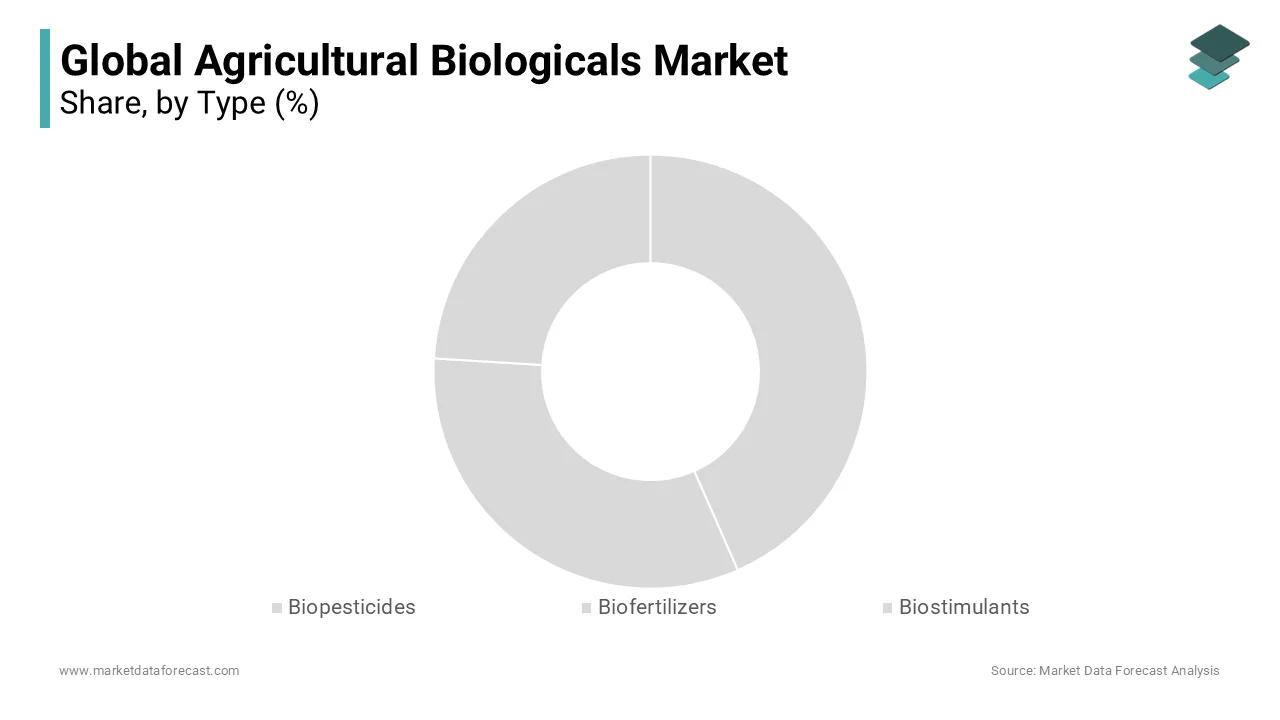
However, the biostimulants segment is likely to experience the fastest CAGR of 11.9% from 2026 and 2034. This accelerated growth of the segment is fuelled by increasing farmer recognition of biostimulant capacity to enhance crop resilience against climate induced stressors while improving nutrient use efficiency. Agronomic research demonstrates that targeted biostimulant applications significantly enhance phosphorus uptake efficiency in cereal crops, improving nutrient use and justifying the grower's adoption costs. Plant and soil science data confirms that seaweed extract-based biostimulants naturally trigger root biomass development, providing critical crop resilience as water scarcity intensifies in major agricultural regions. According to the Food and Agriculture Organization (FAO), the adoption of biostimulants is steadily growing in developing economies, increasingly supported by international development programs aimed at enhancing smallholder soil health. The segment benefits from technological convergence with precision agriculture platforms, enabling variable rate application that optimizes biostimulant placement based on real time soil moisture and nutrient mapping data. Commercial farming data indicates that integrating digital precision guidance systems with targeted biostimulant applications ensures uniform delivery, optimizing crop health and resulting in higher yield consistency. This technological alignment transforms biostimulants from supplementary inputs into core components of data driven agronomic strategies, unlocking substantial commercial expansion pathways for manufacturers capable of developing digitally compatible formulation architectures.
By Application Insights
The cereals and grains application segment led the Agricultural Biologicals Market and captured a 37.4% share in 2025. This segment led the market due to the vast global acreage dedicated to staple crops like wheat, rice, maize, and barley. According to the UN Food and Agriculture Organization (FAO), global cereal production hovered around 2.85 billion metric tons for the 2024 season, maintaining massive baseline demand for crop protection and nutrition alternatives. Agronomic research supported by public agencies confirms that biofertilizer applications in wheat help optimize nitrogen uptake, reducing overall input costs and mitigating chemical runoff into local ecosystems. Global rice research networks demonstrate that using microbial inoculants in wet paddies helps solubilize locked-up soil phosphorus, enabling farmers to meet grain yield targets with fewer synthetic inputs. The segment benefits from strong institutional support through national agricultural extension programs that provide technical training on biological product integration within conventional cereal farming systems. Regional case studies indicate that farming communities provided with dedicated technical advisory services for biological inputs exhibit substantially faster adoption rates than areas lacking specialized training. This knowledge transfer infrastructure accelerates market penetration among price sensitive farming demographics, reducing return on investment uncertainty for biological product investments. The cereals and grains segment also benefits from established supply chain partnerships between biological manufacturers and grain trading corporations that prioritize residue free procurement specifications, creating predictable demand channels that support production scaling and formulation innovation.
On the other hand, the fruits and vegetables application segment is on the rise and is expected to be the fastest growing segment in the market by witnessing a CAGR of 15.6% during the forecast period due to heightened consumer demand for residue free produce and retailer procurement standards that explicitly restrict synthetic pesticide usage on fresh produce categories. Consumer data from the International Food Information Council indicates that clean label transparency and ingredient tracking are highly prioritized by fresh produce buyers, driving commercial pressure away from traditional residue-heavy treatments. Major retail grocery chains across North America and Europe enforce private compliance protocols that limit traditional chemical residues, pushing fresh fruit and vegetable growers toward biological management systems. Leading grocery brands aligned with sustainability networks are increasingly auditing their fresh produce supply chains for integrated pest management practices, elevating market demand for biological inputs. This commercial preference directly translates into premium pricing structures for biologically managed harvests, providing measurable financial incentives for growers specializing in high value fruit and vegetable crops. Agricultural operators respond to these procurement mandates by integrating targeted biofungicides and beneficial microorganism applications that preserve market access while maintaining yield parameters. The fruits and vegetables segment also benefits from shorter crop cycles that enable rapid demonstration of biological product efficacy, accelerating farmer adoption through visible performance validation within single growing seasons. Supply chain trials indicate that integrating biological crop protection protocols into post-harvest washes can markedly reduce spoilage and extend shelf life across perishable fruit and vegetable distribution networks.
By Source Insights
The microbial source segment held the majority share of 56.2% of the Agricultural Biologicals Market in 2025. This supremacy of the segment was credited to the versatile functionality of microbial formulations that address multiple agronomic challenges including pest suppression, nutrient mobilization, and stress tolerance enhancement through single application protocols. According to peer-reviewed agronomy studies published by frameworks like the Food and Agriculture Organization (FAO), biological nitrogen fixation using Azotobacter and Rhizobium bacterial inoculants can supplement or replace 20% to 40% of chemical nitrogen requirements in legume crops depending heavily on local soil conditions. The United States Department of Agriculture agricultural research service documents that fungal based biocontrol agents such as Trichoderma harzianum suppress soil borne pathogen populations compared to untreated controls, providing reliable crop protection across diverse soil types. Sources indicate that industrial adoption of advanced encapsulation technologies (such as alginate bead and spray-drying methods) has significantly improved the storage viability and shelf-life of living microbial products, resolving historical commercial transit constraints. The segment benefits from continuous strain discovery programs that identify novel microbial candidates with enhanced efficacy profiles, supported by genomic sequencing platforms that accelerate development timelines. Agritech research shows that integrating microbial inoculants with precision farming application tech—such as in-furrow injection and specialized seed coatings—significantly increases the establishment rate of beneficial organisms compared to traditional surface broadcasting. This technological convergence transforms microbial products from supplementary amendments into core components of data driven agronomic strategies, unlocking substantial commercial expansion pathways for manufacturers capable of developing digitally compatible formulation architectures that align with modern farming infrastructure.
On the contrary, the biorationals source segment is expected to exhibit a noteworthy CAGR of 9.3% between 2026 and 2034 owing to increasing farmer recognition of biorational capacity to the deliver targeted pest suppression with minimal non target organism impact while maintaining compatibility with integrated pest management protocols. Industry environmental assessments confirm that biorational pesticides (such as botanical extracts and insect growth regulators) demonstrate high target specificity, drastically reducing non-target mortality for beneficial pollinators and predatory insects compared to broad-spectrum synthetic chemical alternatives. The US Environmental Protection Agency (EPA) actively expedites the regulatory review of biopesticides and biorationals, resulting in substantially shorter registration timelines and lower data submission costs for manufacturers compared to standard synthetic chemical crop actives. Industrial agricultural trials demonstrate that plant-derived semiochemical formulations and synthetic sex pheromones provide highly effective pest population suppression by disrupting reproductive mating cycles without depositing persistent chemical residues on crops. The segment benefits from technological convergence with formulation science advancements that enhance active ingredient stability and field persistence, addressing historical limitations that constrained commercial adoption. Precision agriculture studies show that coupling biorational treatments with digital, predictive pest-modeling software optimizes spray application timing, shifting farms away from arbitrary calendar schedules to data-driven pest thresholds. This operational precision transforms biorationals from niche alternatives into mainstream components of modern crop management strategies, unlocking substantial commercial expansion pathways for manufacturers capable of developing regionally adapted formulation portfolios that address specific pest pressure profiles across diverse agricultural landscapes.
By Mode of Application Insights
The foliar spray application mode segment was the largest by occupying a 64.4% share of the Agricultural Biologicals Market in 2025. This prominence of the segment was supported by the operational efficiency of foliar delivery systems that enable rapid nutrient absorption and targeted pest suppression through direct plant surface contact. Plant physiology studies confirm that foliar-applied biological formulations allow for rapid nutrient absorption directly through the leaves, enabling growers to address acute nutrient deficiencies during critical crop growth stages. Research from the USDA Agricultural Research Service underscores that foliar applications of microbial biocontrol agents provide targeted protection against canopy-borne pathogens, establishing a protective biological barrier on leaf surfaces. Agronomic logistics data shows that drone-based foliar spraying significantly reduces application times and fuel consumption compared to traditional heavy machinery, especially when navigating complex or sloped terrain. The segment benefits from compatibility with existing farm equipment infrastructure, minimizing capital investment requirements for biological product adoption among resource constrained farming operations. Integrating variable-rate foliar spray systems with real-time crop health data optimizes input placement, ensuring biological products are applied heavily only where crops show stress. This technological alignment transforms foliar spray from a conventional application method into a precision delivery platform for biological inputs, unlocking substantial commercial expansion pathways for manufacturers capable of developing formulation architectures optimized for aerial application dynamics and droplet size specifications.
However, the seed treatment application mode segment is predicted to witness the highest CAGR of 13.9% over the forecast period. This rapid market surge is propelled by increasing farmer recognition of seed treatment's capacity to establish early-season crop protection and nutritional support through targeted biological delivery at the time of planting. Global seed science research demonstrates that biological seed coatings help preserve early seedling vigor and enhance germination rates under drought or suboptimal soil moisture conditions. Technical documents from agricultural research services verify that seed-applied biofungicides significantly suppress early damping-off pathogens, securing early stand establishment and lowering re-planting expenses for high-value crops. Agronomic trials confirm that applying plant growth-promoting rhizobacteria (PGPR) as a seed treatment aggressively stimulates early root architecture, improving the plant’s nutrient foraging capabilities and long-term drought resilience. The segment benefits from integration with commercial seed treatment infrastructure that enables large scale biological product application with minimal labor requirements, facilitating adoption among mechanized farming operations. Data from precision planting trials indicates that combining biological seed treatments with advanced digital mapping helps achieve uniform seedling emergence and plant stands, minimizing wasted seed inputs. This operational precision transforms seed treatment from a conventional crop protection method into a foundational platform for biological input delivery, unlocking substantial commercial expansion pathways for manufacturers capable of developing formulation architectures optimized for seed coating compatibility and long term viability during storage and planting operations.
REGION ANALYSIS
North America Market Analysis
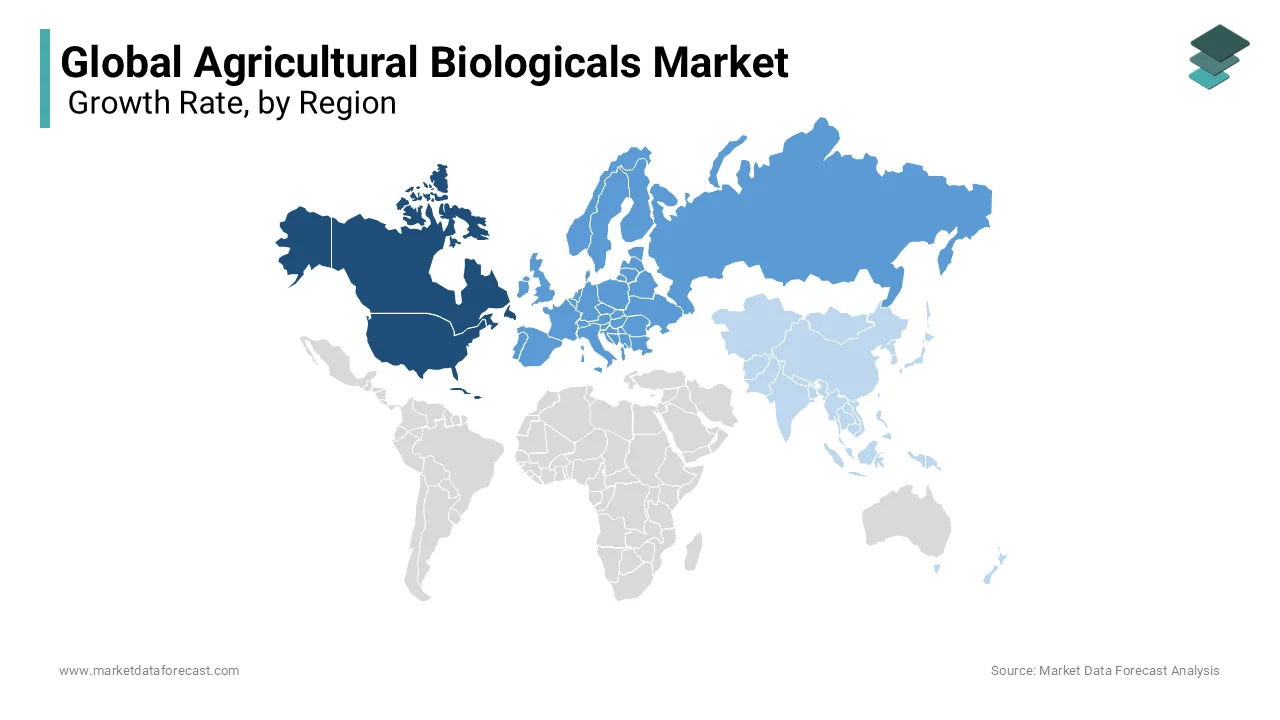
North America outperformed other region in the global Agricultural Biologicals Market and captured a 31.8% share in 2025. This regional dominance was driven by well established regulatory frameworks that incentivize biological product adoption, advanced agricultural infrastructure that supports precision application technologies, and strong consumer demand for residue free food products that drive supply chain procurement standards. USDA crop management surveys indicate that while conventional chemistry remains the baseline, biological inputs are seeing steadily increasing adoption across major row crops like corn and soybeans to support integrated pest and nutrient management. EPA registration data confirms a rising trend in the approval of biological active ingredients over the last several years, supported by dedicated regulatory pathways that evaluate biopesticides faster than conventional synthetics. Government-backed sustainable agriculture funding programs in Canada help offset the upfront costs of adopting ecological inputs, lowering financial barriers for small and medium-scale growers. The region benefits from robust research and development ecosystems that connect university agricultural extension services with private sector innovation, enabling rapid translation of laboratory discoveries into commercial field applications. Collaborative research initiatives between public land-grant universities and private agricultural manufacturing firms continue to advance formulation chemistry, helping accelerate the commercialization of stable biological products. This innovation infrastructure transforms North America into a global testing ground for next generation biological technologies, creating competitive advantages for regional manufacturers seeking international market expansion through proven performance validation under diverse agronomic conditions.
Europe Market Analysis
Europe was the next prominent market for Agricultural Biologicals and accounted for a 29.3% share in 2025. This position was supported by stringent environmental regulations under the European Green Deal and Farm to Fork Strategy that mandate progressive reduction in synthetic pesticide usage while promoting biological substitution pathways. Despite strong policy support for green initiatives, agricultural technology firms in Europe continue to face lengthy, complex approval processes when bringing new biological innovations to market. Market groups continue to advocate for greater harmonization across EU member states to reduce the duplication of safety data and lower the compliance costs required for pan-European market access. The region benefits from strong consumer preference for organic and low residue food products that drive retailer procurement standards favoring biological crop management protocols. Strict maximum residue limits (MRLs) enforced by major European grocery chains act as a primary commercial driver, establishing a highly predictable and expanding market for biological crop solutions. This commercial alignment between regulatory frameworks and market preferences transforms Europe into a global benchmark for biological product adoption, establishing performance standards and application protocols that influence international market development trajectories across emerging agricultural economies seeking sustainable intensification pathways.
Asia Pacific Market Analysis
Asia Pacific exhibits the most rapid growth trajectory within the global Agricultural Biologicals Market due to increasing government policy support for sustainable agriculture practices across major producing nations including China, India, and Japan, combined with rising consumer awareness regarding food safety and environmental stewardship. Reports from the Food and Agriculture Organization (FAO) highlight that governments across the Asia-Pacific region are increasingly expanding national subsidy programs to support eco-friendly inputs and lower upfront costs for smallholders. According to the Chinese Ministry of Agriculture and Rural Affairs, national action plans targeting chemical input reduction have driven massive commercial growth and adoption of biological alternatives while keeping food security objectives intact. The Indian Council of Agricultural Research (ICAR) actively coordinates extensive rural extension programs to train resource-constrained farming communities on biological application protocols, accelerating technology transfer nationwide. The region benefits from expanding manufacturing capacity for biological inputs that reduces import dependency and lowers product costs through localized production economies. Research indicates that domestic production facilities across the Asia-Pacific region are expanding rapidly, increasing local supply chain resilience and shortening shipping times for live biological formulations. This infrastructure development transforms Asia Pacific into both a major consumption market and emerging production hub for agricultural biologicals, creating competitive dynamics that influence global pricing structures and innovation priorities as regional manufacturers scale capabilities to serve international export markets.
Latin America Market Analysis
Latin America is also a rapidly expanding player in the Agricultural Biologicals market owing to export oriented agricultural production systems. This market position shows increasing adoption of biological crop protection protocols among large scale commercial farming operations seeking to meet international residue standards for European and North American export markets. Data tracked by inter-American agricultural agencies confirms that biological product usage has scaled up aggressively across major Latin American export crops like soybeans and coffee, driven heavily by international trade residue limits. The Brazilian Ministry of Agriculture (MAPA) reports a historic surge in biological input registrations, supported by progressive regulatory pathways specifically optimized to deploy sustainable innovation across tropical ecosystems. Cross-border knowledge networks across Latin America are successfully standardizing educational frameworks, allowing for faster and more effective technical adoption across diverse farming communities. The region benefits from favorable climatic conditions that support year round biological product efficacy, reducing seasonal application constraints that limit adoption in temperate zones. Agronomic field trials show that when microbial inoculants are specifically formulated to withstand harsh tropical conditions, they deliver a highly predictable return on investment for large-scale commercial growers. This operational reliability transforms Latin America into a strategic testing ground for next generation biological technologies adapted to tropical production systems, creating innovation pathways that influence global product development priorities as manufacturers seek solutions for climate resilient agriculture under intensifying environmental variability.
Middle East and Africa Market Analysis
The Middle East and Africa region is predicted to grow notably in the agricultural biologicals market during the forecast period due to food security imperatives and water scarcity challenges. This market position reflects increasing government investment in sustainable agriculture technologies across Gulf Cooperation Council nations and Sub Saharan African economies seeking to enhance domestic food production capacity while conserving limited water resources. Agricultural development programs led by the African Union are increasingly funneling climate-adaptation capital toward biological input adoption to safeguard smallholder farming communities. The United Arab Emirates Ministry of Climate Change and Environment reports rapid growth in the use of organic and biological soil amendments, prioritizing inputs that optimize water-use efficiency in arid environments. Arid-zone agricultural demonstration programs are actively training local growers on specialized biological application protocols, effectively reducing adoption barriers in water-scarce regions. The region benefits from targeted research initiatives focused on biological product performance under high temperature and low moisture conditions that limit conventional input efficacy. Research by the International Center for Agricultural Research in the Dry Areas (ICARDA) proves that utilizing microbial strains tailored specifically for extreme heat and drought significantly improves seedling establishment and crop survival. This adaptation focus transforms the Middle East and Africa into a strategic innovation hub for climate resilient biological technologies, creating development pathways that influence global product portfolios as manufacturers seek solutions for sustainable agriculture under intensifying climate variability.
COMPETITIVE LANDSCAPE
The Agricultural Biologicals Market exhibits moderate fragmentation with multiple global and regional players competing across product categories and geographic segments. Established agrochemical corporations leverage existing distribution networks and farmer relationships to accelerate biological product adoption while emerging specialized biological firms focus on innovative technologies and niche application expertise. Competitive dynamics reflect both collaboration and rivalry as manufacturers pursue strategic partnerships to expand technology access while simultaneously developing proprietary formulations to differentiate market offerings. Price competition remains secondary to performance validation and technical support capabilities as farmers prioritize reliable efficacy and agronomic guidance over minimal cost differentials when selecting biological inputs. Innovation cycles accelerate as manufacturers invest in genomic screening platforms, advanced fermentation processes, and formulation science to enhance product stability and field performance under diverse environmental conditions. Regulatory expertise represents a significant competitive advantage as manufacturers navigate complex approval pathways across multiple jurisdictions, with companies demonstrating proactive regulatory engagement achieving faster market entry for innovative biological solutions. Customer relationship management increasingly emphasizes technical support and farmer education as manufacturers recognize that successful biological adoption requires comprehensive agronomic guidance beyond simple product distribution. Supply chain capabilities including cold chain logistics and quality control systems represent critical differentiators as manufacturers address historical limitations related to biological product viability during storage and transportation. Market consolidation trends emerge as larger players acquire specialized biological innovators to expand technology portfolios while maintaining entrepreneurial agility through decentralized business unit structures that preserve innovation culture within acquired organizations.
KEY MARKET PLAYERS
These are playing a dominant role in the global agricultural biological market.
- BASF
- Bayer Crop Science
- Syngenta
- Novozymes A/S
- Isagro
- Arysta Lifescience Limited
- Arysta LifeScience Corporation
- Valent BioScience Corporation
- Marrone Bio Innovations Inc.
- Certis U.S.A.
- Koppert B.V.
Top Players In The Market
- Bayer AG maintains a prominent position within the global Agricultural Biologicals Market through its comprehensive portfolio of microbial and biochemical solutions designed for integrated crop management systems. The company leverages extensive research capabilities across multiple innovation centers to develop next generation biological formulations that address specific pest pressure profiles and soil health challenges across diverse agro ecological zones. Bayer's strategic acquisitions of biological technology specialists have expanded its formulation expertise and accelerated time to market for innovative products that combine biological efficacy with commercial scalability. The company actively collaborates with agricultural extension networks to provide farmer training on biological product integration within conventional farming protocols, reducing adoption barriers among resource constrained operations. Bayer's commitment to sustainability metrics aligns biological product development with corporate environmental targets, creating internal incentives for biological innovation that complement external market demand drivers. Recent investments in digital agriculture platforms enable precision application of biological inputs through variable rate technologies that optimize efficacy while minimizing input costs, enhancing return on investment predictability for farming customers.
- BASF SE demonstrates significant influence within the Agricultural Biologicals Market through its dedicated biological solutions business unit that integrates nature based technologies into comprehensive crop protection portfolios. The company leverages advanced fermentation capabilities and strain selection expertise to develop microbial products with enhanced field performance and extended shelf life characteristics that address historical limitations constraining biological adoption. BASF's global manufacturing infrastructure enables cost effective production of biological inputs at commercial scale, supporting competitive pricing strategies that facilitate market penetration among price sensitive farming demographics. The company actively pursues strategic partnerships with regional biological specialists to expand geographic reach and product diversity while maintaining quality control standards across distributed production networks. BASF's commitment to regulatory science accelerates product registration timelines through proactive engagement with approval authorities across multiple jurisdictions, creating competitive advantages in time sensitive market entry scenarios. Recent investments in formulation science have improved biological product stability under challenging storage and transportation conditions, expanding commercial viability across tropical and subtropical agricultural regions where temperature fluctuations historically compromised product performance.
- Syngenta AG contributes substantially to the Agricultural Biologicals Market through its integrated biologicals business that combines microbial solutions, botanical extracts, and semiochemical technologies within unified crop management platforms. The company leverages extensive field trial networks across diverse agro ecological zones to validate biological product performance under real world farming conditions, generating performance data that builds farmer confidence in biological adoption decisions. Syngenta's strategic acquisitions of biological technology innovators have expanded its intellectual property portfolio and accelerated development pipelines for next generation biological formulations with novel modes of action. The company actively collaborates with seed treatment specialists to develop integrated biological seed coating solutions that establish early season crop protection and nutritional support through targeted delivery at planting. Syngenta's commitment to farmer education programs provides technical training on biological product application protocols and integration within conventional farming systems, reducing knowledge barriers that constrain adoption among traditional farming demographics. Recent investments in precision application technologies enable variable rate delivery of biological inputs through digital farming platforms that optimize efficacy while minimizing input costs, enhancing return on investment predictability for farming customers seeking sustainable intensification pathways.
Top Strategies Used By Key Market Participants
Key participants in the Agricultural Biologicals Market employ multiple strategic approaches to strengthen competitive positioning and drive sustainable growth. Product innovation through research and development investments represents a primary strategy, with manufacturers focusing on novel microbial strain discovery, advanced formulation technologies, and enhanced application methods that improve field performance and commercial viability. Strategic acquisitions enable rapid portfolio expansion and technology access, allowing established players to integrate specialized biological capabilities while accelerating time to market for innovative solutions. Geographic expansion into emerging agricultural economies represents another critical strategy, with manufacturers establishing regional production facilities and distribution networks to serve growing demand in Asia Pacific, Latin America, and Africa. Collaborative partnerships with agricultural technology providers facilitate integration of biological inputs within digital farming platforms, enabling precision application protocols that optimize efficacy and return on investment. Regulatory engagement strategies help manufacturers navigate complex approval pathways across multiple jurisdictions, reducing time to market and compliance costs for new biological product introductions. Farmer education and demonstration programs build market acceptance by providing technical training and performance validation that reduce adoption barriers among traditional farming demographics. Supply chain optimization initiatives improve biological product stability and distribution efficiency, addressing historical limitations related to shelf life and temperature sensitivity that constrained commercial scalability.
MARKET SEGMENTATIONS
This research report on the global agricultural biological market has been segmented and sub-segmented based on type, application, source, mode of application, and region.
By Type
- Biopesticides
- Bioinsecticides
- Bio nematicides
- Bio Herbicides
- Biofertilizers
- Biostimulants
By Application
- Cereals & Grains
- Oilseeds & Pulses
- Fruits & Vegetables
- Others
By Source
- Microbial
- Microbial
- Biorationals
- Others
By Mode of Application
- Soil Treatment
- Seed Treatment
- Foliar Spray
By Region
- North America
- Europe
- Asia-Pacific
- Latin America
- Middle East and Africa