- Product Description Description
- Table of Contents TOC
- List of Table & Figure LOT
- Get Free Sample PDF Sample PDF
Market Size, 2025
$0.70 BnMarket Estimate, 2026
$0.76 BnMarket Forecast, 2034
$1.40 BnCAGR, 2026–2034
7.97%Executive Summary: Asia Pacific Caramel Ingredients Market
- Market Scope: Comprehensive regional analysis of the Asia Pacific caramel ingredients sector, covering caramel colors, flavors, syrups, fillings, and inclusions derived from the controlled heating of carbohydrates across multiple food and beverage verticals.
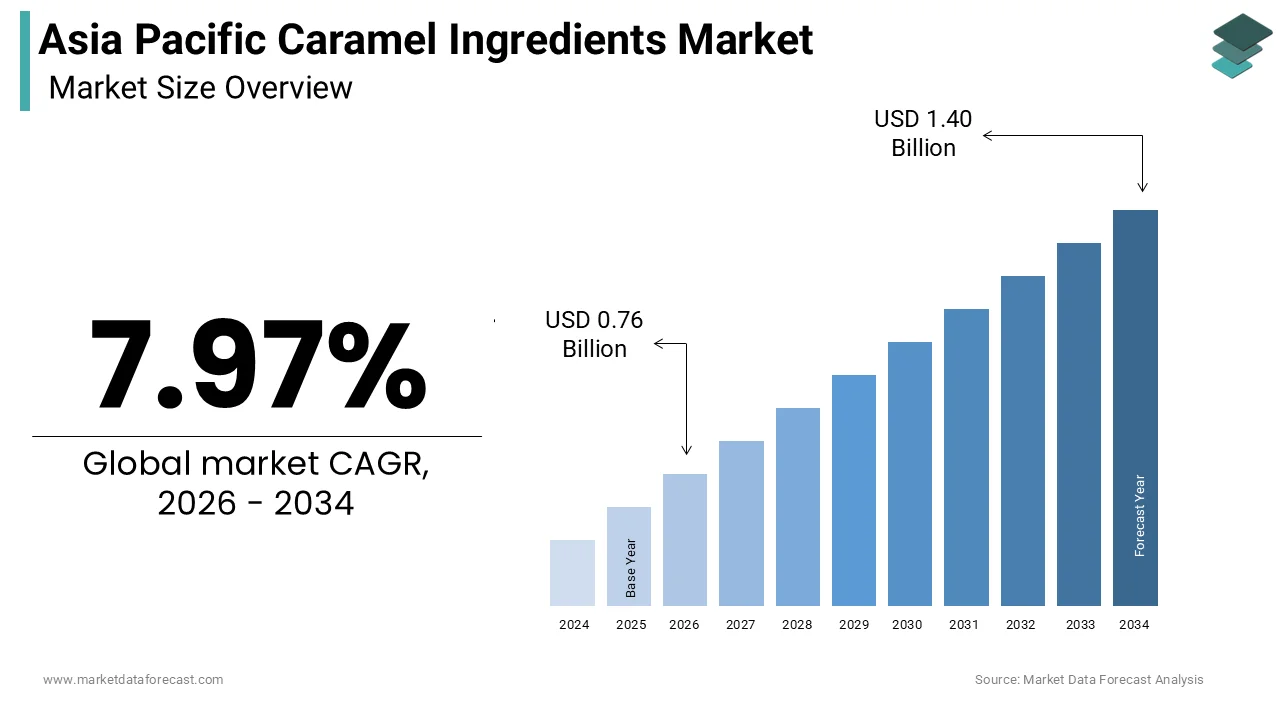
- Market Valuation: Valued at USD 0.70 billion in 2025, reaching USD 0.76 billion in 2026, and projected to scale up to USD 1.40 billion by 2034, registering a strong CAGR of 7.97% across the forecast period.
- Primary Growth Drivers: Surging demand for processed foods and carbonated/non-carbonated beverages, rapid expansion of the confectionery and bakery sector, increasing disposable incomes, and the rising popularity of Western-style indulgent treats and coffee culture.
Key Market Segment Metrics
| Category | Leading Segment (Base Position) | Fastest-Growing / High-Growth Segment |
|---|---|---|
| By Type | Coloring Segment (held a significant market share in 2026, driven by extensive use in soy sauce, vinegar, and staple food/beverage coloring) | Flavoring Segment (swiftly emerging at a fast CAGR, propelled by consumer preferences for complex flavor profiles and advanced encapsulation technologies) |
| By Form | Liquid Caramel (accounted for 44.5% market share in 2026, favored for instant dissolution, processing ease, and mass manufacturing compatibility) | Powder / Granular Caramel (projected to expand steadily, fueled by increasing demand for instant dry-mix baking and confectionery preparations) |
| By Application & Region | Beverages (largest segment at 46.2% share in 2026) & China (largest country contributor at 33.8% share) | Ice Creams & Desserts (fastest CAGR at 7.2%) & Japan / South Korea (high-growth hubs driven by premium café culture and innovation) |
Major Market Players & Industry Landscape
Market Structure: Competitive landscape featuring global specialty ingredient corporations and regional manufacturers balancing advanced technological capabilities, regulatory compliance, and localized taste customization.
Key Companies: Kerry Group, Cargill Incorporated, Sensient Technologies Corporation, Puratos Group, Sethness Caramel Color (Sethness Roquette), DDW The Colour House, Nigay, Metarom, Martin Braun KG, Göteborgsfood Budapest ZRT, Bakels Worldwide, and Ingredion Incorporated.
Asia Pacific Caramel Ingredients Market Size
The Asia Pacific Caramel Ingredients Market size was calculated to be USD 0.70 billion in 2025 and is anticipated to be worth USD 1.40 billion by 2034, from USD 0.76 billion in 2026, growing at a CAGR of 7.97% during the forecast period.
The caramel ingredients are products, including caramel colors, flavors, and syrups derived from the controlled heating of carbohydrates. These ingredients are pivotal in enhancing the sensory attributes of food and beverage products, providing distinct color, flavor, and stability. The region’s expanding confectionery and bakery sectors serve as primary consumption hubs, driven by rising disposable incomes and shifting consumer preferences toward indulgent treats. According to the Food and Agriculture Organization of the United Nations, sugar production in Asia has increased by 17% over the last decade, providing a robust raw material base for caramel manufacturing. The rapid urbanization in countries like China and India has led to a surge in the consumption of processed foods, where caramel is extensively used as a coloring agent in sauces, beverages, and baked goods. Additionally, the growing popularity of Western-style desserts and ready-to-drink beverages has integrated caramel into mainstream dietary habits. Regulatory bodies across the region are increasingly focusing on food safety standards, influencing the formulation of caramel ingredients to ensure compliance with strict additive regulations.
MARKET DRIVERS
Surging Demand for Processed Foods and Beverages
The surging demand for processed foods and beverages is fuelling the growth of the Asia Pacific caramel ingredients market. Rapid industrialization and changing lifestyles have led consumers to rely more on convenience foods, which frequently utilize caramel for flavor enhancement and visual appeal. Caramel color is widely used in cola drinks, soy sauce, and beer, which are staple items in many Asian diets. The expansion of quick service restaurants and coffee chains has further amplified the use of caramel syrups and toppings in beverages and desserts. As per data from the International Coffee Organization, coffee consumption in Asia has risen annually, driving the demand for flavored syrups including caramel. Manufacturers are increasingly incorporating caramel ingredients to differentiate their products in a crowded marketplace. The versatility of caramel allows it to be used in a wide array of applications, from bakery fillings to marinades, ensuring consistent demand.
Growth of the Confectionery and Bakery Sector
The robust growth of the confectionery and bakery sector is significantly propelling the growth of the Asia Pacific caramel ingredients market. Consumers in the region are displaying a strong preference for sweet treats, leading to an expansion in the production of chocolates, candies, cakes, and pastries. Caramel is a key ingredient in many popular confections, providing a rich flavor profile and desirable texture. In the bakery segment, caramel is used in fillings, glazes, and decorations, enhancing the aesthetic and taste of products. As per data from the China Bakery Association, the demand for Western-style baked goods has increased by 12% in urban areas, creating new opportunities for caramel suppliers. The trend toward premiumization in the bakery sector encourages the use of high-quality caramel ingredients to create artisanal products. Additionally, the rise of local bakeries and patisseries across Southeast Asia contributes to the diversified demand for caramel variants. This sustained interest in sweet and baked goods ensures a steady flow of revenue for caramel ingredient manufacturers operating in the Asia Pacific region.
MARKET RESTRAINTS
Stringent Regulatory Standards for Food Additives
The stringent regulatory standards for food additives are hampering the growth of the Asia Pacific caramel ingredients market. Governments in the region are increasingly scrutinizing the safety and composition of food colors and flavors, leading to stricter approval processes. Certain types of caramel colors containing 4-methylimidazole face restrictions due to potential health concerns. Compliance with these regulations requires manufacturers to invest in advanced production technologies and rigorous testing protocols, increasing operational costs. The permissible limits for specific contaminants in caramel colors have been tightened over the past few years. This regulatory uncertainty can delay product launches and limit the availability of certain caramel variants in the market. Small and medium-sized enterprises may struggle to meet these stringent requirements, leading to market consolidation. Additionally, varying regulations across different countries in the Asia Pacific region create complexities for multinational companies seeking to standardize their product offerings.
Health Consciousness and Sugar Reduction Trends
The growing health consciousness and sugar reduction trends are also declining the growth of the Asia Pacific caramel ingredients market. Consumers are becoming more aware of the adverse effects of excessive sugar consumption, which is leading to a shift toward healthier dietary choices. According to the World Health Organization, obesity and diabetes rates are rising in the Asia Pacific region, prompting governments to implement sugar taxes and public awareness campaigns. This shift in consumer behavior reduces the demand for high sugar content products, such as traditional caramel syrups and confections. Caramel ingredients, which are inherently linked to sugar processing, face scrutiny from health-conscious consumers who seek natural and clean-label options. Manufacturers are pressured to reformulate their products to reduce sugar content while maintaining flavor and color, which can be technically challenging and costly. The perception of caramel as an unhealthy ingredient may limit its usage in new product developments, particularly in the health and wellness segment.
MARKET OPPORTUNITIES
Expansion of Plant-Based and Vegan Product Lines
The expansion of plant-based and vegan product lines is creating new opportunities for the growth of the Asia Pacific caramel ingredients market. The rising popularity of veganism and flexitarian diets in the region has led to an increase in the development of dairy-free and plant-based desserts and beverages. The environmental and ethical considerations are adding fuel to the growth of the market. Caramel ingredients can be formulated using plant-based sugars and natural flavors to cater to this emerging segment. Manufacturers can leverage this trend by introducing vegan-certified caramel syrups and colors that appeal to health-conscious and ethically minded consumers. Collaborations with plant-based brands can help caramel suppliers tap into this niche market and diversify their product portfolios. The ability to provide clean label and allergen-free caramel options enhances brand value and competitiveness.
Innovation in Clean Label and Natural Caramel Variants
Innovation in clean label and natural caramel variants is attributed to presenting new opportunities for the growth of the Asia Pacific caramel ingredients market. Consumers are increasingly demanding transparency in food labeling and preferring ingredients that are perceived as natural and minimally processed. The claim of no artificial colors or flavors is one of the top trends in food and beverage launches in Asia. Manufacturers can respond to this demand by developing caramel ingredients derived from organic sugars and natural sources without synthetic additives. Advanced processing techniques allow for the creation of high-quality caramel colors and flavors that meet clean label standards. The demand for natural flavorings is growing at a faster rate than synthetic alternatives in the region. By offering clean label caramel solutions, companies can differentiate themselves in a competitive market and command premium pricing. Partnerships with organic certification bodies can further validate product claims and build consumer trust.
MARKET CHALLENGES
Volatility in Raw Material Prices
The volatility in raw material prices is one of the major challenges for the growth of the Asia Pacific caramel ingredients market. The primary raw materials for caramel production, such as sugar and corn syrup, are subject to fluctuating global commodity prices influenced by weather conditions, trade policies, and supply chain disruptions. Sugar prices have experienced significant volatility in recent years due to climate change impacts on crop yields in major producing countries. These price fluctuations directly affect the production costs of caramel ingredients, squeezing profit margins for manufacturers. Agricultural commodity prices are prone to sudden spikes, making it difficult for companies to maintain stable pricing strategies. Small and medium-sized enterprises are particularly vulnerable to these fluctuations, as they lack the financial buffers to absorb cost increases. Additionally, reliance on imported raw materials in some Asian countries exposes manufacturers to currency exchange risks. The inability to pass on cost increases to consumers due to competitive pressure further exacerbates the challenge. Managing raw material procurement and hedging against price volatility become important operational priorities for sustaining profitability in this market.
Supply Chain Disruptions and Logistical Challenges
Supply chain disruptions and logistical challenges are also limiting the growth of the Asia Pacific caramel ingredients market. The region’s vast geographic diversity and varying infrastructure levels complicate the efficient distribution of raw materials and finished products. The logistical inefficiencies and infrastructure gaps in certain developing countries lead to delays and increased transportation costs. Recent global events have amplified the fragility of supply chains, with port congestion and shipping container shortages affecting the timely delivery of goods. Some Asia Pacific countries rank lower in terms of customs efficiency and infrastructure quality, hindering smooth trade flows. These disruptions can result in inventory shortages and production delays, impacting customer satisfaction and market reputation. Additionally, the perishable nature of some caramel ingredients requires careful handling and temperature-controlled storage, which may not be readily available in all regions. The complexity of navigating multiple regulatory environments and customs procedures across different countries adds to the logistical burden. Companies must invest in robust supply chain management systems and local sourcing strategies to mitigate these risks and ensure consistent product availability.
REPORT COVERAGE
| REPORT METRIC | DETAILS |
| Market Size Available | 2026 to 2034 |
| Base Year | 2026 |
| Forecast Period | 2026 to 2034 |
| CAGR | 7.97% |
| Segments Covered | By Form, Application, Type, And Region |
| Various Analyses Covered | Global, Regional & Country Level Analysis; Segment-Level Analysis; DROC, PESTLE Analysis; Porter’s Five Forces Analysis; Competitive Landscape; Analyst Overview of Investment Opportunities |
| Regions Covered | India, China, Japan, South Korea, Australia, New Zealand, Thailand, Malaysia, Vietnam, Philippines, Indonesia, Singapore, And the Rest Of Asia-Pacific |
| Market Leaders Profiled | Kerry Group, Cargill, Incorporated, Sensient Technologies Corporation, Puratos Group, Sethness Caramel Color, DDW The Colour House, Nigay, Metarom, Martin Braun KG, Göteborgsfood Budapest ZRT, And Bakels Worldwide |
SEGMENTAL ANALYSIS
By Type Insights
The coloring segment held a significant share of the Asia Pacific caramel ingredients market in 2026 due to the extensive use of caramel color in a wide range of food and beverage products. Caramel color is one of the oldest and most widely used food colorings, valued for its stability, cost-effectiveness, and natural origin. The caramel color is approved for use in numerous food categories, including soy sauce, vinegar, and baked goods, which are staples in Asian diets. The demand for consistent and appealing product appearance drives manufacturers to rely on caramel color to standardize the visual quality of their offerings. In countries like China and Japan, soy sauce production is a massive industry that consumes significant volumes of caramel color to achieve the desired dark hue. The annual production of soy sauce in Asia exceeds millions of tons, providing a steady and large-scale demand base. Additionally, the regulatory acceptance of caramel color as a natural additive in many Asian countries supports its widespread adoption over synthetic alternatives.
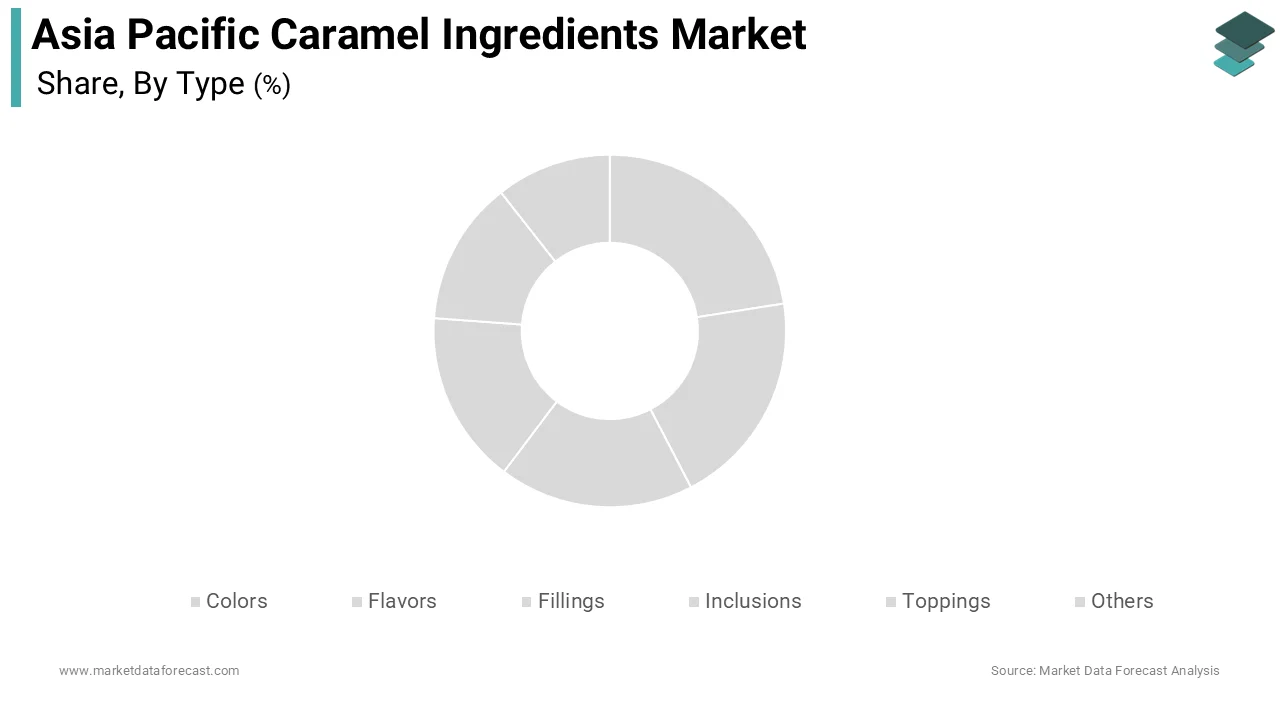
The flavoring segment is swiftly emerging at the fastest CAGR of 6.8% during the forecast period, with the consumer preference for complex and rich flavor profiles in processed foods and beverages. Caramel flavoring is increasingly used to enhance the taste of snacks, dairy products, and savory items, moving beyond its traditional role as a coloring agent. The development of advanced flavor encapsulation technologies has improved the stability and intensity of caramel flavors, allowing them to withstand high-temperature processing and long shelf lives. As per industry reports from flavor houses in Singapore and Thailand, there is a growing demand for natural caramel flavors derived from real sugar cooking processes rather than synthetic compounds. The rise of health-conscious consumers, who seek clean-label products, has also boosted the appeal of natural caramel flavorings. This shift in consumer preference toward authentic and high-quality taste experiences drives the rapid expansion of the flavoring segment.
By Form Insights
The liquid form segment accounted for 44.5% of the Asia Pacific caramel ingredients market share in 2026 due to its ease of handling and seamless integration into industrial food processing lines. Liquid caramel is widely preferred in the beverage and sauce manufacturing sectors because it dissolves instantly without requiring additional heating or mixing energy, which enhances operational efficiency. The uniformity of liquid formulations ensures consistent color and taste profiles across large batches, which is important for brand consistency in mass-produced items. As per data from major food processing equipment manufacturers in China and India, automated filling systems are designed primarily for liquid inputs by making this form the most compatible with modern infrastructure. Additionally, liquid caramel reduces dust hazards in manufacturing facilities, improving workplace safety and compliance with occupational health standards. The ability to customize viscosity and concentration levels allows manufacturers to tailor products for specific applications such as thin beverages or thick sauces.
The powder or granular segment is projected to expand at a CAGR of 6.5% during the forecast period owing to the increasing demand for dry mix applications in the bakery and confectionery sectors, where stability and shelf life are paramount. Powdered caramel ingredients offer superior storage advantages as they do not require refrigeration and have a lower risk of microbial contamination compared to liquid forms. According to the study, the consumption of instant baking mixes and dry dessert preparations has risen by 12% in urban Asian markets, fueled by the convenience sought by home bakers and small-scale producers. The granular form allows for precise measurement and blending with other dry ingredients such as flour and sugar, ensuring uniform distribution in the final product. The trend toward artisanal and homemade baked goods has boosted the sales of specialty powdered caramel flavors and colors. Furthermore, advancements in spray drying technology have improved the solubility and flavor retention of powdered caramel, making it a viable alternative to liquid forms in various applications. These functional benefits and changing consumer habits drive the accelerated adoption of powder and granular caramel ingredients.
By Application Insights
The beverages segment was the largest, accounting for 46.2% of the Asia Pacific caramel ingredients market share in 2026 with the immense popularity of carbonated soft drinks, beers, and ready-to-drink teas. Caramel color is an essential ingredient in cola-type beverages, providing the characteristic dark brown hue that consumers associate with these products. The widespread availability and affordability of bottled beverages have made them a staple in daily consumption patterns across the region. Additionally, the craft beer movement in countries like Japan, South Korea, and Australia has increased the use of caramel malt and coloring agents to achieve specific beer styles and flavors. As per data from the Brewing Association of Asia, the number of microbreweries has doubled in the last five years, creating a niche but growing demand for high-quality caramel ingredients. The expansion of coffee chains and the rising consumption of flavored milk and dairy-based drinks further contribute to the dominance of the beverage segment. Manufacturers continuously innovate with new caramel variants to meet the diverse taste preferences of Asian consumers by ensuring sustained demand in this application area.
The ice cream and desserts segment is likely to grow at the fastest CAGR of 7.2% during the forecast period, with the rising disposable incomes and the increasing influence of Western dietary habits, which have popularized indulgent treats, such as caramel sundaes, cheesecakes, and frozen yogurts. Ice cream consumption in Asia has grown by 8% annually, with premium and artisanal brands leading the surge. Caramel is used extensively as a swirl, topping, and base flavor in these products, enhancing their sensory appeal. The proliferation of international dessert chains and local boutique parlors in urban centers has created a vibrant market for innovative caramel-infused desserts. The demand for unique and exotic flavors has prompted manufacturers to introduce specialized caramel ingredients, such as salted caramel and burnt sugar variants. Social media trends also play a significant role, with visually appealing caramel desserts driving consumer interest and trial.
REGIONAL ANALYSIS
China Caramel Ingredients Market Analysis
China was the largest contributor to the Asia Pacific caramel ingredients market by holding 33.8% of the share in 2026 owing to its massive food and beverage industry and large population. The country is a leading producer and consumer of soy sauce, beer, and carbonated soft drinks, all of which are major applications for caramel ingredients. The food processing sector contributes significantly to the national economy, with continuous growth in output value. The rising middle class and urbanization have led to increased consumption of packaged foods and Western-style desserts, further boosting demand. The candies and chocolates have expanded rapidly, with caramel being a key ingredient in many popular products. Government initiatives to improve food safety standards have encouraged the use of high-quality and compliant caramel ingredients. The presence of major domestic and international manufacturers ensures a competitive and innovative landscape.
India Caramel Ingredients Market Analysis
India caramel ingredients market held the second position with a 21.2% share in 2026 with a growing confectionery and bakery sector. The country has a strong cultural affinity for sweets, and the modernization of traditional mithai into packaged formats has increased the use of standardized ingredients like caramel. The Indian food processing industry is one of the largest in the world, with substantial government support for expansion. The rising disposable income and changing lifestyles have led to increased consumption of ice cream, cakes, and beverages. The young demographic profile of the population drives demand for trendy and indulgent food items. Local manufacturers are increasingly adopting international quality standards to compete in the world.
Japan Caramel Ingredients Market Analysis
Japan caramel ingredients market is likely to exhibit the fastest CAGR in the coming years with its high quality standards and innovation. The country has a well-established confectionery and beverage industry that values premium and natural ingredients. Japan imports significant quantities of raw materials for food processing, including high-grade sugars for caramel production. The popularity of artisanal chocolates, cakes, and specialty coffees drives the demand for specialized caramel flavors and colors. The export of Japanese food products often features caramel as a key component, influencing domestic production quality. Consumers in Japan are highly discerning and prefer clean-label and organic options, prompting manufacturers to innovate with natural caramel variants. The aging population also influences product development, with a focus on moderate sweetness and high-quality textures.
South Korea Caramel Ingredients Market Analysis
South Korea caramel ingredients market growth is driven by its vibrant cafe culture and love for desserts. The country has seen a surge in the number of bakeries and coffee shops, which extensively use caramel syrups and toppings. The imports of food ingredients have increased, reflecting the growing demand for diverse and high-quality products. The influence of Korean pop culture and social media has popularized visually appealing and Instagram-worthy desserts, many of which feature caramel. Consumers are willing to pay a premium for unique and artisanal products, driving innovation in caramel flavors and forms. The government’s support for the food industry through research and development grants further encourages technological advancements.
Australia Caramel Ingredients Market Analysis
Australia caramel ingredients market growth is likely to be driven by the strong dairy and brewing industries. The country is a major producer of high-quality milk and cheese, which are often paired with caramel in desserts and snacks. The food and grocery retail sector is robust, with a high penetration of premium and organic products. The craft beer industry in Australia has exploded in recent years, driving demand for caramel malts and colors for various beer styles. The number of independent breweries has increased significantly, creating a niche but loyal customer base for specialized ingredients. Consumers in Australia are increasingly health-conscious and prefer natural and sustainably sourced ingredients, influencing product formulation. The strict food safety regulations ensure high quality standards for all food additives.
COMPETITION OVERVIEW
The competition in the Asia Pacific caramel ingredients market is characterized by a mix of global specialty chemical leaders and regional manufacturers vying for dominance through quality and service excellence. Multinational corporations leverage their advanced technological capabilities and brand recognition to offer premium products with consistent performance. These companies often compete on innovation and regulatory compliance, providing clean-label and organic options that appeal to health-conscious consumers. Local manufacturers counter with cost-effective solutions and deep understanding of regional taste preferences and cultural nuances. Regulatory harmonization efforts across different countries create both opportunities and challenges for entry. Competitive dynamics are further influenced by the rising demand for sustainable and ethically sourced ingredients, prompting firms to adopt transparent supply chains. Strategic alliances with local distributors and food processors are common as companies seek to enhance their reach and responsiveness in this fragmented, yet rapidly growing sector.
KEY MARKET PLAYERS
A few major key players in the Asia Pacific caramel ingredients market include
- Kerry Group
- Cargill
- Incorporated
- Sensient Technologies Corporation
- Puratos Group
- Sethness Caramel Color
- DDW The Colour House
- Nigay
- Metarom
- Martin Braun KG
- Göteborgsfood Budapest ZRT
- Bakels Worldwide
Top Strategies Used by Key Market Participants
Key players in the Asia Pacific caramel ingredients market primarily employ product innovation and regional customization to maintain competitive advantage. Companies invest heavily in research and development to create clean label and organic caramel variants that align with health trends. This includes developing natural coloring solutions free from synthetic additives to meet stringent regulatory standards. Strategic partnerships with local distributors and food manufacturers facilitate deeper market penetration and tailored service offerings. Manufacturers also focus on expanding production capacities in key countries to reduce logistics costs and improve supply chain efficiency. Educational initiatives and technical support programs are widely used to help clients optimize caramel applications in their products. Additionally, companies pursue sustainability goals by sourcing raw materials responsibly and reducing environmental impact.
Leading Players in the Asia Pacific Caramel Ingredients Market
- DDW The Color House maintains a strong presence in the Asia Pacific caramel ingredients market through its specialized focus on high-quality caramel colors and flavors. The company leverages its global expertise to provide customized solutions for beverage and food manufacturers in the region. DDW recently expanded its technical support capabilities in China and India to assist local clients with product development and regulatory compliance. They have introduced new clean-label caramel variants that meet the growing demand for natural ingredients among health-conscious consumers. By investing in state-of-the-art manufacturing facilities, DDW ensures consistent product quality and supply reliability. Their strategic partnerships with regional distributors enhance market reach and customer service.
- Sethness Roquette contributes significantly to the Asia Pacific caramel ingredients market by combining advanced caramelization technology with sustainable sourcing practices. The company offers a wide range of liquid and powder caramel products tailored to specific application needs in beverages and confectionery. Sethness Roquette recently launched a series of organic-certified caramel colors to cater to the premium segment in Australia and Japan. They have strengthened their supply chain resilience by establishing local storage hubs in Southeast Asia to ensure timely delivery. The company actively engages in research and development to create innovative flavor profiles that align with regional taste preferences. Their focus on sustainability and transparency appeals to modern brands seeking ethical ingredient partners.
- Ingredion Incorporated plays a pivotal role in the Asia Pacific caramel ingredients market through its comprehensive portfolio of texturants and sweeteners integrated with caramel solutions. The company utilizes its extensive network and scientific expertise to deliver holistic formulation support to food and beverage producers. Ingredion recently introduced new heat-stable caramel flavors designed for baked goods and processed snacks in emerging countries like Vietnam and Indonesia. They have enhanced their digital platforms to provide customers with real-time data on ingredient performance and application tips. The company collaborates with local universities to drive innovation in natural color stabilization techniques. By focusing on functional benefits and ease of use, Ingredion helps manufacturers optimize their production processes.
MARKET SEGMENTATION
This research report on the Asia Pacific caramel ingredients market has been segmented and sub-segmented based on form, application, type, and region.
By Type
- Colors
- Flavors
- Fillings
- Inclusions
- Toppings
- Others
By Application
- Beverages
- Non-Alcoholic
- Alcoholic
- Confectionary Products
- Ice Creams & Desserts
- Other Food Applications
By Form
- Liquid Caramel
- Solid Caramel
- Powder/granular Caramel
By Region
- India
- China
- Japan
- South Korea
- Australia
- New Zealand
- Thailand
- Malaysia
- Vietnam
- Philippines
- Indonesia
- Singapore
- Rest Of Asia-Pacific