- Product Description Description
- Table of Contents TOC
- List of Table & Figure LOT
- Get Free Sample PDF Sample PDF
Market Size, 2025
$84.99 MnMarket Estimate, 2026
$89.23 MnMarket Forecast, 2034
$131.73 MnCAGR, 2026–2034
4.99%Executive Summary: Asia Pacific Coffee Roaster Market
- Market Scope: Comprehensive market analysis of the Asia-Pacific coffee roaster industry covering energy sources (gas-powered, electric-powered), volume capacities (medium-scale, small-scale and home use), product types (drum roasters, hot air roasters), and country-level landscapes across India, China, Japan, South Korea, Australia, New Zealand, Thailand, Malaysia, Vietnam, Philippines, Indonesia, Singapore, and the Rest of APAC.
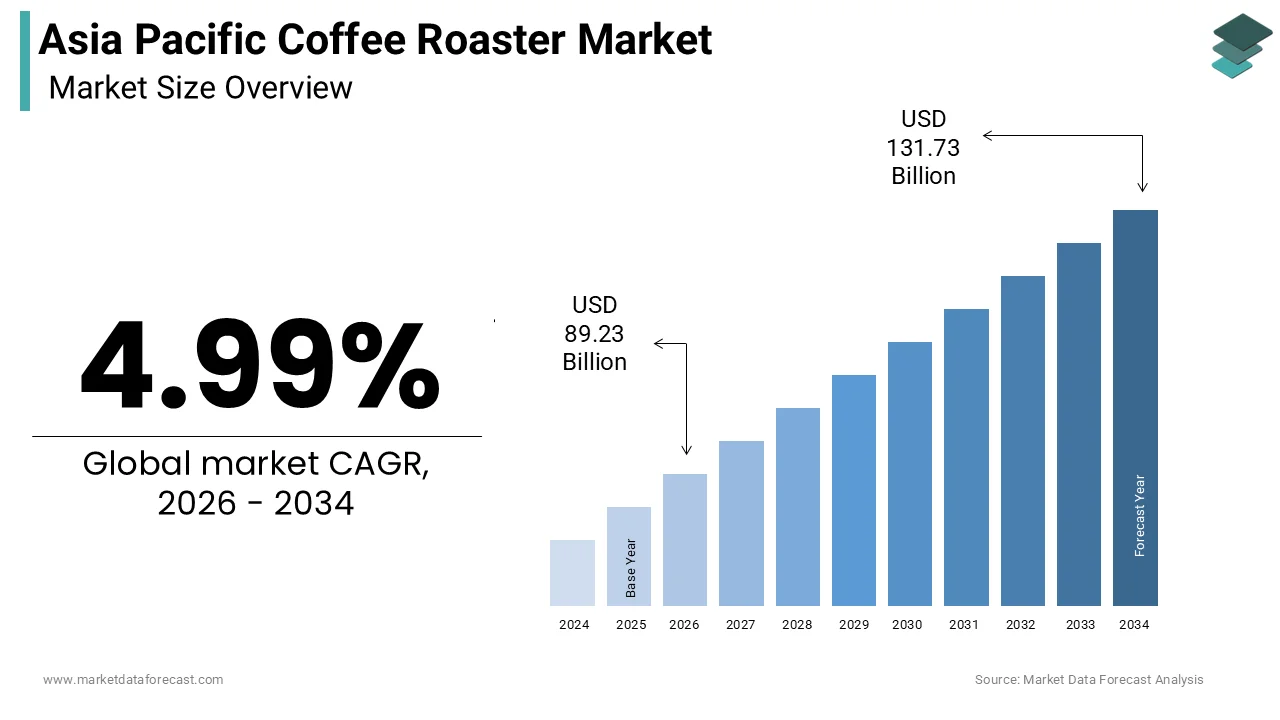
- Market Valuation: Valued at USD 84.99 million in 2025, estimated at USD 89.23 million in 2026, and projected to reach USD 131.73 million by 2034, registering a steady CAGR of 4.99% (2026–2034).
- Primary Growth Drivers: Surging popularity of specialty coffee culture shifting consumer preferences toward fresh, artisan roasts; and the aggressive expansion of commercial cafe chains and quick-service restaurants requiring robust roasting infrastructure.
Key Market Segment Metrics (2026–2034)
| Category | Leading Segment / Position | Growth Dynamics |
|---|---|---|
| By Type of Energy Source | Gas-Powered Roasters (held the largest share in 2025 due to rapid response times and lower operational costs in well-supplied areas) | Electric-powered roasters are projected to see the fastest growth driven by strict urban environmental regulations and clean energy shifts. |
| By Volume Capacity | Medium-Scale Roasters (led in 2025, offering a balanced mix of production volume and flexibility for independent cafes) | Small-scale and home use segments are expanding rapidly, fueled by growing hobbyist culture and the desire for personalized experiences. |
| By Product Type | Drum Roasters (accounted for the largest market share in 2025, valued for reliability and consistent full-bodied flavor profiles) | Hot air roasters are estimated to register the fastest CAGR, driven by efficiency, cleanliness, and preference for bright, acidic notes. |
| By Country | China (dominated the regional market in 2025, propelled by massive population, rapid urbanization, and exploding coffee consumption) | Japan, South Korea, and Australia maintain high-value, trend-setting footprints focusing on artisanal quality, smart tech, and sustainability. |
Major Market Players & Market Structure
Market Structure: Highly dynamic competitive landscape featuring established global equipment manufacturers and specialized technology providers competing on precision controls, energy efficiency, and regulatory compliance.
Key Companies: Giesen, Toper, Genio, Probat, Nesco, Sonofresco, Ambex, Behmor, Discaf, and Hottop.
Asia Pacific Coffee Roaster Market Size
The size of the Asia Pacific coffee roaster market was calculated to be USD 84.99 million in 2025 and is anticipated to be worth USD 131.73 million by 2034, from USD 89.23 million in 2026, growing at a CAGR of 4.99% during the forecast period.
The Asia-Pacific coffee roaster market is witnessing a profound transformation in its coffee culture, shifting from traditional instant coffee consumption toward specialty and artisanal brews. Coffee consumption in Asia has grown steadily over the last decade, driven by urbanization and rising disposable incomes. This surge in demand necessitates advanced roasting infrastructure to ensure consistent quality and flavor profiles. As per the Food and Agriculture Organization, countries like Vietnam and Indonesia are among the top global producers of coffee, providing a robust local supply chain that supports domestic roasting industries. The proliferation of independent cafes and boutique roasteries in metropolitan areas such as Shanghai, Seoul, and Melbourne further accelerates the adoption of high precision roasting machinery. Regulatory standards regarding food safety and emissions are becoming stricter, prompting manufacturers to innovate with energy-efficient and environmentally compliant technologies. The integration of Internet of Things sensors allows for real-time monitoring of temperature and airflow, ensuring reproducibility in batch processing. These technological advancements, combined with a growing consumer base that values origin-specific flavors, establish a dynamic landscape for the coffee roaster market in the Asia Pacific region.
MARKET DRIVERS
Surging Popularity of Specialty Coffee Culture
The rapid ascent of specialty coffee culture across the Asia-Pacific region is majorly fuelling the growth of the Asia-Pacific coffee roaster market. Consumers are increasingly educated about coffee origins, processing methods, and flavor notes, leading to a preference for freshly roasted beans over mass-produced alternatives. For instance, the specialty coffee market remains a high-growth area with consistent investments in mid-capacity roasters, reflecting a deepening expertise within the industry. This trend drives independent roasters and large chains alike to invest in precise roasting machines that can highlight unique bean characteristics. As per Nielsen IQ, sales of premium whole bean coffee in urban centers of China and Japan have seen consistent year-over-year growth, indicating a shift away from instant varieties. Small batch roasting requires equipment with fine control over heat application and airflow to achieve specific roast profiles, which is fuelling the adoption of programmable and semi-automated roasters. The rise of third-wave coffee shops, which emphasize transparency and quality, further necessitates reliable and versatile roasting solutions. Manufacturers are responding by developing user-friendly interfaces and data logging features that allow roasters to replicate successful batches consistently. This cultural shift towards appreciating coffee as a craft rather than just a commodity ensures sustained investment in high-quality roasting infrastructure throughout the region.
Expansion of Commercial Cafe Chains and Quick Service Restaurants
The aggressive expansion of international and domestic cafe chains across the Asia Pacific region is further boosting the coffee roaster market growth in Asia-pacific. Major players are establishing centralized roasting facilities to maintain brand consistency and reduce costs associated with outsourcing. For instance, the HoReCa segment in the Asia Pacific region is projected to grow at a 7.60% CAGR through 2031, which is creating a substantial need for bulk roasting capabilities. Companies like Luckin Coffee in China and Trung Nguyen in Vietnam are scaling their operations, requiring industrial-scale roasters that can handle high volumes while maintaining quality standards. As per the Asian Development Bank, the growing middle class in emerging economies is driving foot traffic to cafes, encouraging brands to secure their supply chains through in-house roasting. This vertical integration strategy reduces dependency on third-party suppliers and allows for greater control over product freshness and flavor. Consequently, there is a rising demand for large-capacity drum roasters equipped with automation features to streamline production. Additionally, quick service restaurants are incorporating premium coffee offerings into their menus, further expanding the market for commercial roasting equipment. The need for efficiency and consistency in high-volume environments drives the adoption of technologically advanced roasters that minimize human error and maximize throughput, solidifying this segment as a key driver of market growth.
MARKET RESTRAINTS
High Initial Capital Investment and Operational Costs
The substantial financial burden associated with acquiring and operating advanced coffee roasting equipment is primarily impeding the regional market expansion. High-end commercial roasters, particularly those with automated controls and emission filtration systems, require considerable upfront capital, often exceeding tens of thousands of dollars. According to the World Bank, access to financing remains a critical challenge for small businesses in developing Asian economies, where interest rates can be high. As per the International Labour Organization, many aspiring roasters operate on thin margins, making it difficult to justify the expense of premium equipment without guaranteed high-volume sales. Beyond the initial purchase price, ongoing costs such as maintenance, spare parts, and energy consumption add to the operational burden. Gas-powered roasters, while common, face fluctuating fuel prices that impact profitability, while electric models may require expensive infrastructure upgrades to handle high power loads. Small boutique roasteries often struggle to compete with larger entities that benefit from economies of scale, limiting their ability to invest in state-of-the-art technology. This financial constraint restricts the widespread adoption of advanced roasting machinery, particularly in rural or less developed areas where capital is scarce. Until financing options become more accessible and equipment costs decrease, the high entry barrier will continue to restrain market penetration among smaller industry participants.
Stringent Environmental Regulations and Emission Controls
Increasingly strict environmental regulations regarding air quality and emissions are further hampering the coffee roaster market growth in the Asia-Pacific. Roasting processes generate smoke, particulate matter, and volatile organic compounds that are subject to stringent controls in many urban areas. According to the United Nations Environment Programme, several major cities in Asia have implemented tighter air quality standards, forcing roasters to install expensive afterburners and filtration systems. As per the Ministry of Ecology and Environment in China, new regulations require industrial facilities to reduce particulate emissions, necessitating significant upgrades to existing roasting infrastructure. Compliance with these standards increases the cost of equipment and operation, placing pressure on smaller roasters who may lack the resources to retrofit their facilities. In countries like India and Thailand, local municipal bodies are also beginning to enforce noise and odour control measures, further complicating operations for urban roasteries. Failure to comply can result in hefty fines or shutdowns, creating uncertainty for business owners. The need for specialized emission control technology adds complexity to the roasting process and increases maintenance requirements. These regulatory hurdles slow down the adoption of new roasting equipment and discourage expansion in densely populated areas. Manufacturers must continuously innovate to meet these standards, but the associated costs remain a persistent challenge for the industry.
MARKET OPPORTUNITIES
Integration of Smart Technology and Automation
The incorporation of smart technology and automation into coffee roasting equipment is poised for significant adoption across the region over the next few years, which is a promising opportunity for the Asia-Pacific coffee roaster market. Modern roasters equipped with Internet of Things connectivity, artificial intelligence, and cloud-based software allow for precise control and remote monitoring of the roasting process. For instance, the industrial Internet of Things market is predicted to grow at a 9.6% CAGR through 2035, driven by the need for efficiency and consistency. Smart roasters can automatically adjust temperature and airflow based on real-time data, ensuring uniform roast profiles and reducing waste. As per the Journal of Food Engineering, automated systems can improve energy efficiency compared to manual operations, appealing to cost-conscious operators. These technologies also enable roasters to store and share roast profiles digitally, facilitating collaboration and quality control across multiple locations. For large chains, this means centralized management of roasting parameters, ensuring brand consistency regardless of location. Additionally, user-friendly interfaces lower the skill barrier for entry, allowing less experienced staff to produce high-quality results. The ability to analyze data trends helps roasters optimize their processes and predict maintenance needs. By embracing smart technology, manufacturers can offer value-added solutions that enhance productivity and product quality, capturing a growing segment of tech-savvy consumers and businesses in the region.
Growth of Home Roasting and Micro Roasteries
The emerging trend of home roasting and micro roasteries is likely to see robust expansion as consumers seek more personalized experiences in the coming years, which is another prominent opportunity for the Asia-Pacific coffee roaster market. Enthusiasts and hobbyists are increasingly interested in roasting their own beans to explore diverse flavor profiles and ensure freshness. According to Euromonitor International, the home appliance market in the Asia Pacific is expanding, with a notable increase in sales of specialized kitchen gadgets, including small-scale roasters. As per the Specialty Coffee Association, the interest in home roasting is a global trend that is gaining significant traction in urban Asia. Compact electric roasters that are safe and easy to use are in high demand among consumers who value customization and sustainability. Micro roasteries, which serve local communities with small batch fresh coffee, also require affordable and space-efficient equipment. This segment allows manufacturers to diversify their product lines beyond industrial machines, tapping into the consumer direct market. Social media platforms amplify this trend by sharing roasting techniques and results, creating a community of engaged users. Manufacturers can leverage this by offering educational resources and accessories alongside their products. The low entry cost and high engagement level of this segment provide a stable revenue stream and brand loyalty. Catering to this growing demographic enables companies to expand their reach and foster a deeper connection with coffee enthusiasts.
MARKET CHALLENGES
Volatility in Green Coffee Bean Supply and Prices
The inherent volatility in the supply and pricing of green coffee beans is expected to remain a significant concern for roasters in the Asia-Pacific region, which is a significant challenge for the Asia-Pacific coffee roaster market. Coffee is an agricultural commodity susceptible to weather conditions, pests, and geopolitical factors, leading to unpredictable harvests and price fluctuations. According to the International Coffee Organization, the I-CIP averaged 306.6 US cents/lb in the 2024/25 period, marking a 52.0% increase from the previous year and reflecting significant market instability. As per the World Meteorological Organization, extreme weather patterns such as El Niño are becoming more frequent, threatening crop yields in Vietnam and Indonesia. These disruptions force roasters to adjust their sourcing strategies frequently, which can lead to inconsistent bean quality and require adjustments in roasting parameters. Equipment must be versatile enough to handle different bean densities and moisture levels, adding complexity to operations. Small roasters with limited storage capacity are particularly vulnerable to price spikes, forcing them to pass costs onto consumers or absorb losses. The uncertainty makes long-term investment in specialized equipment risky, as changes in bean availability may render certain profiles obsolete. Furthermore, supply chain disruptions can delay deliveries of green beans, leading to idle roasting equipment and lost revenue. Managing this volatility requires robust risk management strategies and flexible roasting technologies, but the unpredictability remains a persistent hurdle for the industry.
Shortage of Skilled Roasters and Technical Expertise
The lack of skilled professionals capable of operating and maintaining advanced coffee roasting equipment is a challenge that many industry players will continue to face over the next few years. Roasting is both a science and an art, requiring a deep understanding of thermodynamics, bean chemistry, and sensory evaluation. According to the International Labour Organization, there is a growing skills gap in the food and beverage sector, with many employers struggling to find qualified staff. As per the Specialty Coffee Association, professional certification programs are expanding to address the needs of the workforce in emerging markets. The complexity of modern automated roasters requires technical proficiency in software and hardware maintenance, which is often lacking in traditional labor pools. High turnover rates in the hospitality industry exacerbate this issue, leading to inconsistent product quality and increased training costs for businesses. Without skilled operators, even the most advanced equipment cannot perform optimally, resulting in wasted beans and inefficient energy use. Educational institutions and industry bodies are working to address this gap, but progress is slow. The reliance on a small pool of experts limits the scalability of roasting operations, particularly for expanding chains. Until a broader base of trained professionals is developed, the industry will face constraints in maximizing the potential of new technologies and maintaining consistent quality standards.
REPORT COVERAGE
| REPORT METRIC | DETAILS |
| Market Size Available | 2025 to 2034 |
| Base Year | 2025 |
| Forecast Period | 2026 to 2034 |
| CAGR | 4.99% |
| Segments Covered | By Type of Energy Source, Volume Capacity, Product Type, and Region |
| Various Analyses Covered | Global, Regional & Country Level Analysis; Segment-Level Analysis; DROC, PESTLE Analysis; Porter’s Five Forces Analysis; Competitive Landscape; Analyst Overview of Investment Opportunities |
| Regions Covered | India, China, Japan, South Korea, Australia, New Zealand, Thailand, Malaysia, Vietnam, Philippines, Indonesia, Singapore, and the Rest of APAC |
| Market Leaders Profiled | Giesen, Toper, Genio, Probat, Nesco, Sonofresco, Ambex, Behmor, Discaf, and Hottop. |
SEGMENTAL ANALYSIS
By Type Of Energy Source Insights
The gas-powered roasters segment held the largest share of the regional market in 2025 and is expected to maintain its regional dominance during the forecast period due to its performance characteristics, rapid response times, and lower operational costs in regions with accessible natural gas or liquefied petroleum gas infrastructure. Traditional drum roasters, which dominate the commercial sector, rely heavily on gas burners to achieve the high temperatures required for consistent Maillard reactions and caramelization. According to the International Energy Agency, natural gas consumption in the Asia Pacific industrial sector has grown steadily, providing a reliable and cost-effective energy source for food processing applications. As per the Specialty Coffee Association, professional roasters prefer gas equipment because it allows for precise manual control over flame intensity, which is critical for developing complex flavor profiles in specialty beans. The initial capital expenditure for gas roasters is often lower than that of their electric counterparts with similar capacity, making them attractive to small and medium-sized enterprises. Furthermore, in many Asian countries, subsidized fuel prices for commercial use further enhance the economic viability of gas-powered operations. The robustness of gas burners ensures consistent performance even during peak production hours, reducing the risk of batch inconsistency. This reliability, combined with the established familiarity of technicians with gas mechanics, sustains the dominance of this segment. Despite environmental concerns, the immediate cost benefits and performance characteristics keep gas as the preferred choice for the majority of commercial roasting facilities across the region.
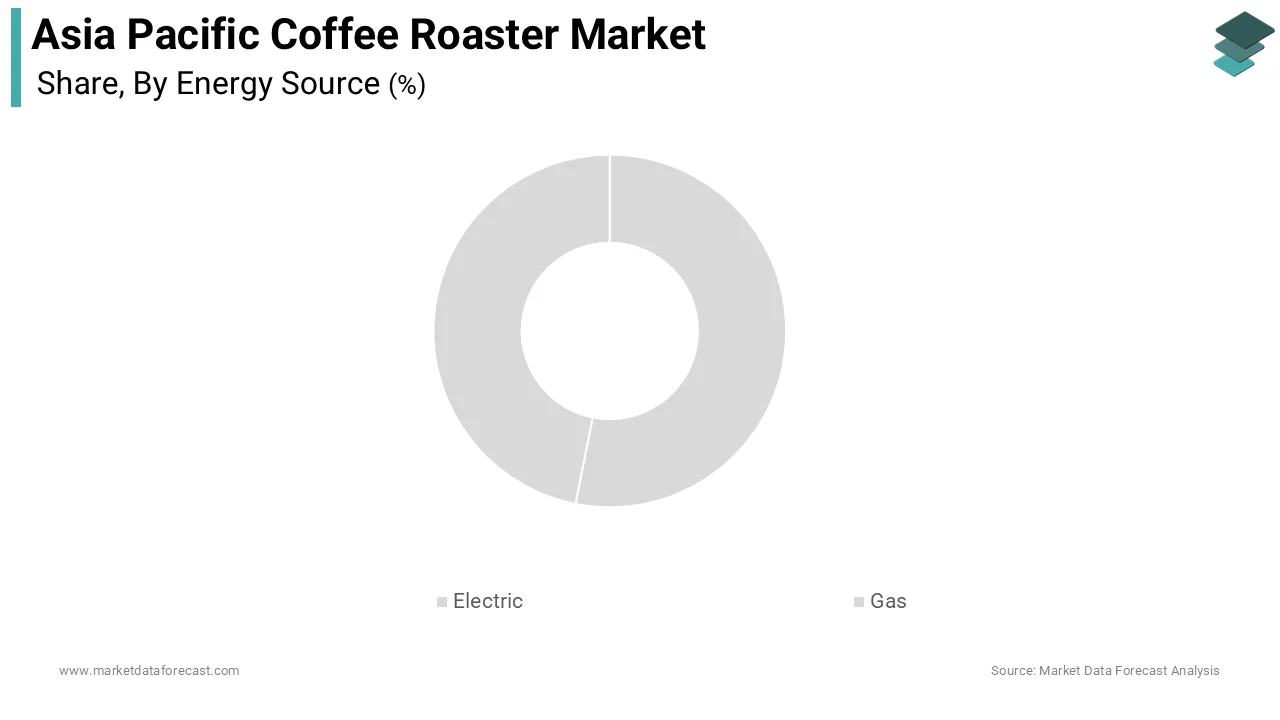
On the other side, the electric-powered roasters segment is likely to see the fastest growth during the forecast period owing to the stringent environmental regulations, urbanization, and advancements in heating technology. Governments in countries like China, Japan, and South Korea are implementing strict air quality standards that discourage the use of open flame combustion in urban areas, prompting a shift toward clean energy solutions. According to the United Nations Environment Programme, several major Asian cities have introduced incentives for businesses to adopt electric appliances to reduce local particulate matter and carbon emissions. As per the Institute of Electrical and Electronics Engineers, modern electric roasters utilize advanced heating elements and digital controls that offer unprecedented precision in temperature management, appealing to tech-savvy roasters who value data-driven consistency. The rise of indoor micro roasteries in shopping malls and high-rise buildings, where gas installation is prohibited or expensive, further accelerates adoption. Electric models are quieter and produce no exhaust fumes, simplifying ventilation requirements and reducing installation costs. Additionally, the integration of renewable energy sources in national grids makes electric roasting increasingly sustainable. The convenience of plug-and-play operation and lower maintenance needs compared to gas burners also attract new entrants to the industry. These factors combine to propel electric roasters as the fastest-growing segment, reflecting a broader transition toward sustainable and compliant urban business practices.
By Volume Capacity Insights
The medium-scale roasters segment had the leading share of the Asia-Pacific coffee roaster market in 2025 and is expected to remain the preferred choice for the growing regional market during the forecast period due to the burgeoning sector of independent cafes, boutique roasteries, and small regional brands. This segment typically handles batches ranging from 5 to 15 kilograms, offering a balance between production volume and operational flexibility that suits the needs of growing businesses. According to the Asian Development Bank, the number of small and medium enterprises in the food and beverage sector has increased significantly, driving demand for equipment that is neither too small for commercial viability nor too large for limited spaces. As per the Specialty Coffee Association, many new coffee entrepreneurs start with medium-capacity machines to test market demand before scaling up, making this the entry point for most professional operations. These roasters allow for frequent profile adjustments and small batch experimentation, which is essential for maintaining quality in the specialty coffee segment. The cost of ownership is manageable for startups, and the footprint fits well in urban retail spaces. Furthermore, medium-scale roasters often serve as the primary supply source for local cafes that do not roast in-house, creating a steady B2B demand. The versatility of these machines to handle various bean types and roast levels makes them indispensable for businesses aiming to differentiate themselves through unique offerings. This central role in the supply chain solidifies the dominance of medium-scale roasters in the regional market.
However, the small-scale and home use segment is projected to continue its rapid growth trend during the forecast period, owing to the rising hobbyist culture and the desire for fresh, personalized coffee experiences at home. Consumers are increasingly interested in the entire coffee journey, from bean selection to roasting, driven by social media trends and educational content. According to Euromonitor International, sales of small kitchen appliances inthe Asia Pacific have surged, with niche categories like home coffee roasters seeing double-digit growth rates. As per the Specialty Coffee Association, the premiumization of home consumption habits has led to higher spending on specialized equipment, as enthusiasts seek to replicate cafe-quality beverages. Compact electric roasters that are safe, easy to use, and aesthetically pleasing are gaining popularity among urban dwellers with limited space. The ability to roast small quantities ensures maximum freshness, which is a key value proposition for discerning consumers. Additionally, the lower price point of home roasters lowers the barrier to entry, attracting a wide demographic of curious beginners. Manufacturers are responding with smart devices that connect to apps for guided roasting, enhancing the user experience. This democratization of roasting technology transforms coffee from a mere commodity into an interactive hobby, driving rapid expansion in this segment as more households embrace the craft.
By Product Type Insights
The drum roasters segment accounted for the largest share of the Asia-Pacific market in 2025 and is likely to maintain its dominant market position for the foreseeable future due to its reliability, ability to produce consistent, full-bodied flavors, and its widespread acceptance in traditional commercial settings. The rotating drum ensures even heat distribution and agitation, preventing scorching while allowing for deep development of sugars and acids within the bean. According to the Specialty Coffee Association, drum roasting remains the standard for most professional cupping protocols and competitions, influencing industry preferences toward this method. As per the Journal of Agricultural and Food Chemistry, the conductive heat transfer in drum roasters facilitates complex chemical reactions that are difficult to replicate with other methods, resulting in the rich profiles preferred by many Asian consumers. The durability and longevity of drum machines make them a sound long-term investment for businesses. Established brands and training programs predominantly focus on drum technology, creating a large pool of skilled operators familiar with its nuances. The availability of spare parts and service support for drum roasters is extensive across the region, reducing downtime risks. Furthermore, the aesthetic appeal of traditional drum roasters adds to the ambiance of many cafes, serving as a visual centerpiece. This combination of sensory superiority, operational reliability, and industry standardization ensures that drum roasters remain the backbone of the commercial roasting landscape in the Asia Pacific.
On the other hand, the hot air roasters segment is estimated to register the fastest CAGR in the regional market during the forecast period, due to their efficiency, cleanliness, and ability to highlight bright, acidic flavor notes. These machines use heated air to both roast and agitate the beans, resulting in a faster roasting process and easier chaff removal. According to the International Coffee Organization, there is a growing interest in lighter roast profiles that preserve the inherent fruity and floral characteristics of specialty beans, which hot air roasters excel at producing. As per the Food Engineering Review, fluid bed technology offers better control over airflow and temperature uniformity, reducing the risk of uneven roasts and improving batch consistency. The compact design of many hot air roasters makes them suitable for small spaces and mobile setups, appealing to modern urban entrepreneurs. Additionally, the absence of a drum reduces mechanical wear and tear, lowering maintenance costs. The cleaner operation, with less smoke and odor compared to some drum models, aligns with strict urban environmental regulations. Educational workshops and online communities are increasingly promoting hot air roasting as a viable and distinct method, broadening its acceptance. The speed of operation allows for higher throughput in small footprints, making it an attractive option for high-volume micro roasteries. These advantages drive the rapid adoption of hot air roasters among innovative players in the region.
REGIONAL ANALYSIS
China Coffee Roaster Market Analysis
China dominated the coffee roaster market in the Asia-Pacific in 2025 with the highest share of the regional market and is expected to further solidify its status as the regional leader through continued expansion and technological adoption in the next few years due to its massive population, rapid urbanization, and exploding coffee consumption culture. The country has seen a surge in both international chains and domestic brands, all competing for market share through quality and innovation. According to the Global Times, coffee consumption in China has grown at an average annual rate of more than 15% since 2010, far exceeding the global average. As per the National Bureau of Statistics of China, the rising middle class is increasingly adopting Western lifestyle habits, including daily coffee drinking. This demand fuels the need for both large-scale industrial roasters for chain supply and smaller units for boutique cafes. Government support for agricultural modernization also impacts the upstream supply chain, encouraging local processing. The competitive landscape drives continuous investment in advanced roasting technology to ensure consistency and efficiency. E-commerce platforms facilitate the distribution of home roasters to a vast consumer base. The sheer scale of the market attracts global equipment manufacturers to establish local presence and partnerships. China’s dynamic environment, characterized by rapid trend adoption and digital integration, makes it the central hub for coffee roaster innovation and sales in the region.
Japan Coffee Roaster Market Analysis
Japan is likely to experience stable, high-value growth as it continues to focus on artisanal quality in the coming years. Japan represents a mature and sophisticated segment of the Asia Pacific coffee roaster market, characterized by a deep appreciation for quality and precision. The country has a long-standing coffee culture with a high density of independent kissaten and specialty cafes. According to Ken Research, the Japanese green coffee market is valued at approximately USD 1.5 billion, sustaining a robust roasting industry. As per the Ministry of Economy, Trade and Industry, Japanese consumers prioritize meticulous craftsmanship and consistency, driving demand for high-end, precision-engineered roasters. The market favors equipment that offers fine control over roast profiles, often preferring traditional drum roasters with modern digital enhancements. Environmental consciousness is also high, leading to increased adoption of energy-efficient and low-emission models. The aging population contributes to a stable demand for home roasting equipment as retirees pursue hobbies. Japanese manufacturers are known for their durability and attention to detail, influencing global standards. The market is less volatile than emerging economies, with steady replacement and upgrade cycles. Japan’s emphasis on excellence and tradition ensures a consistent demand for premium roasting solutions, maintaining its status as a key value market in the region.
South Korea Coffee Roaster Market Analysis
South Korea is anticipated to remain a primary innovation hub and a trend-setting market in the next few years. South Korea is a vibrant and trend-driven market for coffee roasters in the Asia Pacific region, known for its high cafe density and innovative coffee culture. The country has one of the highest numbers of cafes per capita in the world, fostering intense competition and a constant search for differentiation. According to the Korea Customs Service, coffee bean imports spiked 13% year on year in 2024, reflecting the expansion of the industry. As per the Korean Food Service Industry Association, consumers are highly educated about coffee origins and processing, driving demand for transparent and high-quality roasting practices. Many cafes integrate roasting into their brand experience, utilizing visible medium-scale roasters. The tech-savvy population embraces smart roasting technologies and app-connected devices. Home roasting is also gaining popularity among young professionals. The fast-paced nature of the market encourages rapid adoption of new technologies and styles. Government regulations on food safety and emissions influence equipment choices, favoring compliant and efficient models. South Korea’s dynamic consumer base and competitive landscape make it a testing ground for new roasting innovations, driving growth in both commercial and residential segments.
Australia Coffee Roaster Market Analysis
Australia will likely maintain its influence as a global leader in specialty coffee standards over the next few years. Australia holds a prominent position in the Asia Pacific coffee roaster market, recognized globally for its influential specialty coffee scene and high standards. The country is a leader in third-wave coffee culture, with a strong emphasis on direct trade and artisanal roasting. According to AgriFutures Australia, Australians consume more than six billion cups of coffee annually, supporting a sophisticated and competitive industry. As per the Australian Bureau of Statistics, household expenditure on coffee and tea remains robust, indicating sustained consumer interest. The market favors high-quality, durable equipment that can handle diverse bean profiles. Environmental sustainability is a key concern, driving the adoption of energy-efficient and electric roasters. The strong export orientation of Australian roasters means they require reliable and scalable equipment to meet international demand. Training and education are highly valued, with many operators seeking equipment that supports learning and precision. The mature market sees regular upgrades to newer technologies to maintain a competitive edge. Australia’s reputation for quality influences regional trends, making it a key opinion leader in the Asia Pacific coffee community. The commitment to excellence ensures steady demand for premium roasting solutions.
New Zealand Coffee Roaster Market Analysis
New Zealand is expected to continue its focus on sustainable and ethical roasting practices over the next few years. New Zealand represents a niche but high-quality segment of the Asia Pacific coffee roaster market, characterized by a strong local roasting culture and sustainability focus. The country has a high per capita consumption of specialty coffee, supporting a network of independent roasters. According to the OEC, New Zealand’s coffee imports reached approximately USD 102 million in 2024, reflecting a well-developed consumption and manufacturing landscape. As per the Specialty Coffee Association of New Zealand, there is a strong emphasis on ethical sourcing and environmental responsibility. This drives demand for roasters that are energy efficient and produce minimal waste. The small market size means that versatility and reliability are key purchasing criteria. Home roasting is also popular among enthusiasts who value freshness and sustainability. The close-knit community fosters knowledge sharing and collaboration, influencing equipment preferences. New Zealand’s focus on quality and ethics ensures a steady demand for reputable and sustainable roasting technologies, maintaining its distinct position in the regional market.
COMPETITION OVERVIEW
The competition in the Asia Pacific coffee roaster market is intense and characterized by a mix of established global brands and emerging local manufacturers. International companies leverage their reputation for quality and reliability to capture the premium segment, while local players compete on price and customization for small and medium enterprises. The market sees frequent innovation as manufacturers introduce smart technologies and energy-efficient designs to attract tech-savvy consumers. Price competition is moderate in the high-end segment but fierce in the entry-level category, where many new entrants operate. Brand loyalty is strong among professional roasters who value consistency and after-sales support. Regulatory compliance regarding emissions and safety standards creates barriers to entry for smaller firms without adequate resources. Distribution networks play a crucial role in reaching remote areas and providing timely service. The rise of specialty coffee culture drives demand for specialized equipment, encouraging niche players to focus on specific segments. Collaborations with coffee associations and training institutes help companies build credibility and influence industry standards. This dynamic landscape requires continuous adaptation and investment to sustain growth and market relevance.
KEY MARKET PLAYERS
A few major players of the Asia Pacific coffee roaster market include
- Giesen
- Toper
- Genio
- Probat
- Nesco
- Sonofresco
- Ambex
- Behmor
- Discaf
- Hottop
Top Strategies Used by Key Market Participants
Key players in the Asia Pacific coffee roaster market primarily focus on product innovation and technological integration to meet evolving consumer demands. Companies invest heavily in research and development to create energy-efficient and automated roasting systems that offer precise control and consistency. Strategic partnerships with local distributors and service providers help manufacturers expand their reach and improve customer support in diverse markets. Participation in regional trade shows and coffee festivals enhances brand visibility and allows direct engagement with potential clients. Manufacturers also emphasize sustainability by developing machines that reduce emissions and energy consumption to comply with environmental regulations. Offering comprehensive training and educational resources builds loyalty and ensures proper equipment usage. Customization options allow buyers to tailor machines to specific needs and spaces. These strategies enable companies to differentiate their products and maintain competitive advantages in a rapidly growing and dynamic industry.
Leading Players in the Asia Pacific Coffee Roaster Market
- Probat von Gimborn GmbH maintains a strong presence in the Asia Pacific market through its reputation for high-quality and durable drum roasters. The company serves both large industrial clients and boutique specialty roasters with customized solutions. Recently, Probat has expanded its service network in China and Southeast Asia to provide faster technical support and maintenance. They have introduced digital interfaces that allow users to monitor and control roasting profiles remotely. By partnering with local distributors, Probat ensures better market penetration and customer engagement. Their focus on sustainability includes developing energy-efficient models that reduce carbon footprints. This commitment to innovation and customer service strengthens their position as a preferred supplier for premium coffee roasting equipment in the region.
- Giesen Roasting Machines B.V. is a key player known for its versatile sample and production roasters that cater to the growing specialty coffee sector. The company has seen increased demand in Asia due to the rise of independent cafes and micro roasteries. Giesen recently launched new models with enhanced automation features and user-friendly software. They have strengthened their market position by participating in major regional coffee exhibitions and offering comprehensive training programs. The company focuses on building long-term relationships with roasters by providing reliable after-sales support. Their emphasis on precision and consistency appeals to quality-conscious buyers. By adapting to local preferences and regulatory requirements, Giesen continues to expand its footprint and influence in the dynamic Asia Pacific coffee roaster market.
- Loring Smart Roast Inc. has gained significant traction in the Asia Pacific market with its innovative hot air roasting technology. The company offers energy-efficient and clean operating machines that align with strict environmental regulations in urban areas. Loring recently established partnerships with major coffee chains and distributors in Japan and South Korea to increase brand visibility. They have introduced smart connectivity features that enable data-driven roasting and remote diagnostics. The compact design of their roasters suits space-constrained environments common in Asian cities. By highlighting the cost savings and environmental benefits of their technology, Loring attracts eco-conscious businesses. Their proactive approach to education and demonstration helps overcome resistance to new roasting methods, solidifying their role as a disruptor and leader in the region.
MARKET SEGMENTATION
This research report on the Asia Pacific coffee roaster market has been segmented and sub-segmented based on type of energy source, volume capacity, product type, and region.
By Energy Source
- Electric
- Gas
By Volume Capacity
- Large
- Medium
- Small Scale
- Home Use
By Product Type
- Drum
- Hot Air
- Stove Top
- Others
By Application
- Factory
- Coffee Shop
- Household
By Region
- India
- China
- Japan
- South Korea
- Australia
- New Zealand
- Thailand
- Malaysia
- Vietnam
- Philippines
- Indonesia
- Singapore
- Rest of APAC