- Product Description Description
- Table of Contents TOC
- List of Table & Figure LOT
- Get Free Sample PDF Sample PDF
Market Size, 2025
$1.41 BnMarket Estimate, 2026
$1.55 BnMarket Forecast, 2034
$3.23 BnCAGR, 2026–2034
9.63%Asia Pacific Collagen and Gelatin Market Size, Growth, Trends & Forecast (2026–2034)
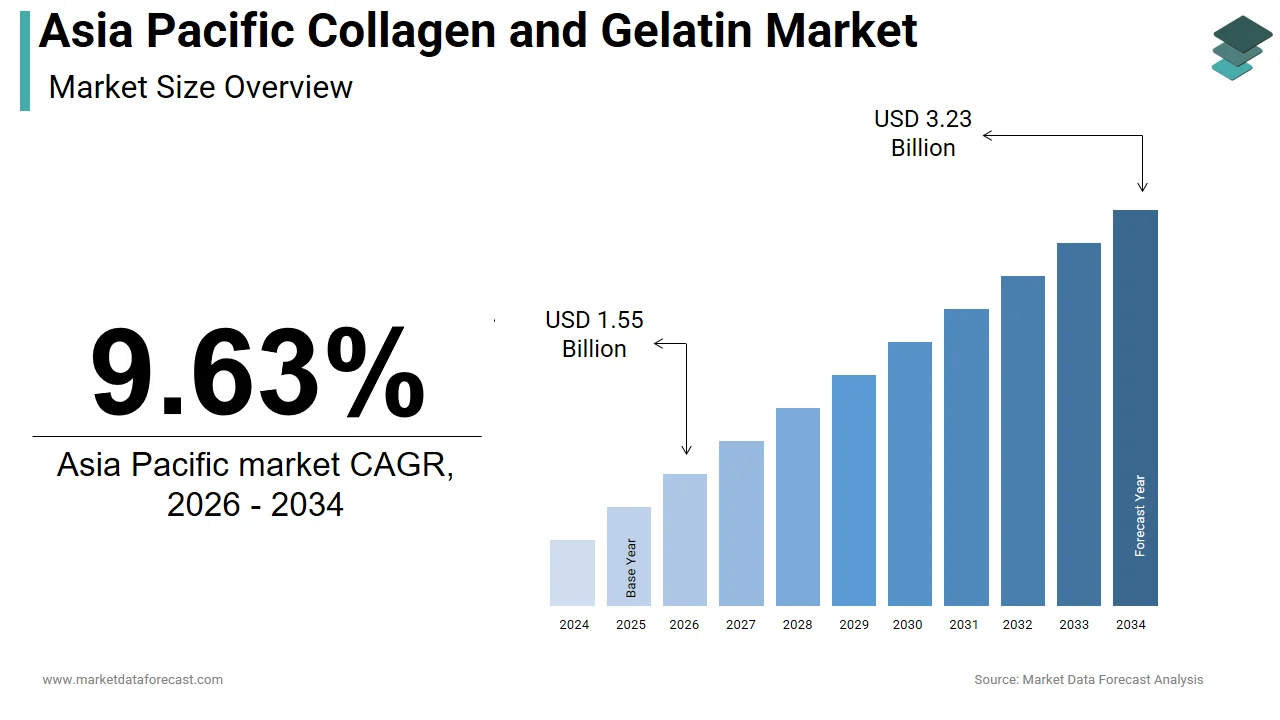
The Asia Pacific collagen and gelatin market was valued at USD 1.41 billion in 2025, is estimated to reach USD 1.55 billion in 2026, and is projected to scale up to USD 3.23 billion by 2034, registering a compound annual growth rate (CAGR) of 9.63% during the forecast period from 2026 to 2034. Driven by rapid population aging, surging consumer prioritization of preventive nutraceuticals, expanding anti-aging cosmetic industries, and abundant regional agricultural supply chains, the market continues to experience dynamic growth.
Key Executive Metrics (At-a-Glance)
- 2025 Base Valuation: USD 1.41 Billion
- 2026 Current Valuation: USD 1.55 Billion
- 2034 Forecast Valuation: USD 3.23 Billion
- Compound Annual Growth Rate (CAGR): 9.63% (2026–2034)
- Dominant Source: Porcine (holding the major market share due to high type I collagen yields, cost-effectiveness, and massive pork production across China and Southeast Asia)
- Fastest-Growing Source: Marine (expanding rapidly at a 9.2% CAGR driven by superior bioavailability, sustainability trends, and halal/pescatarian compliance)
- Dominant Product Type: Gelatin (holding a 55.5% market share supported by widespread applications in confectionery, dairy stabilizers, and pharmaceutical hard capsules)
- Fastest-Growing Product Type: Collagen (projected to exhibit an 8.8% CAGR fueled by the booming "beauty from within" nutraceutical and anti-aging skincare trends)
- Dominant Application Segment: Wound Care (holding significant share driven by high prevalence of chronic wounds, diabetic foot ulcers, and burns)
- Fastest-Growing Application Segment: Orthopedic Applications (projected to witness the highest CAGR of 8.5% driven by rising osteoarthritis and sports injuries)
- Dominant Region: China (holding a 35.1% market share backed by massive domestic red meat production, agricultural infrastructure, and a booming nutricosmetics sector)
Core Market Drivers
- Surging Demand for Nutraceuticals and Dietary Supplements: Increasing health consciousness and aging demographics propelling the need for functional foods and joint health supplements.
- Expansion of the Cosmetic and Personal Care Industry: Record-setting retail revenues for anti-aging skincare formulations, powered by K-beauty, J-beauty, and rising disposable incomes.
- Cultural Preference for Natural and Traditional Ingredients: High consumer alignment with ingredients perceived to improve skin elasticity, joint health, and gut integrity.
Primary Market Restraints & Challenges
- Religious and Cultural Restrictions: Dietary restrictions regarding bovine and porcine sources (e.g., Halal certification demands in Indonesia/Malaysia and beef avoidance in India) complicating uniform product distribution.
- Supply Chain Volatility and High Production Costs: Energy price fluctuations, perishable raw material logistics, disease outbreaks in livestock, and strict wastewater environmental regulations impacting profit margins.
Asia Pacific Collagen and Gelatin Market Segmentation Breakdown
| Segment Category | Leading Sub-Segment (2025 Base) | Fastest-Growing Sub-Segment (2026–2034) |
|---|---|---|
| By Source | Porcine (dominant volume and revenue leader backed by extensive pig farming across China and Southeast Asia) | Marine (fastest-growing segment expanding at a 9.2% CAGR supported by aquaculture waste valorization and superior bioavailability) |
| By Type | Gelatin (holding a 55.5% share driven by confectionery, dairy gelling agents, and pharmaceutical capsule manufacturing) | Collagen (fastest-growing segment expanding at an 8.8% CAGR driven by hydrolyzed peptides for nutricosmetics and joint health) |
| By Application | Wound Care (leading medical segment utilized for hemostasis, diabetic ulcers, and burn management) | Orthopedic Applications (fastest-growing segment expanding at an 8.5% CAGR driven by cartilage repair and bone grafting scaffolds) |
| By Country | China (holding a dominant 35.1% share supported by massive livestock production and a rapidly expanding nutricosmetics market) | South Korea & India (fastest-growing regional markets driven by K-beauty export expansions and rising clinical supplement adoption) |
Major Industry Players Profiled
Key enterprises shaping the Asia Pacific collagen and gelatin market include LifeSciences Holding Corporation, Collagen Solutions plc, Vornia Biomaterials, Ltd., Collagen Matrix, Inc., GELITA AG, Nitta Gelatin, Inc., PB Gelatin, Royal DSM, Integra SYMATESE, and NuCollagen, LLC.
 Download Free Sample Report
Asia Pacific Collagen and Gelatin Market Size
The Asia Pacific collagen and gelatin market was valued at USD 1.41 billion in 2025. This market is expected to grow at a CAGR of 9.63% from 2026 to 2034 and be worth USD 3.23 billion by 2034 from USD 1.55 billion in 2026.
Collagen serves as the most abundant protein in mammals, providing structural support to tissues, while gelatin is produced through the partial hydrolysis of collagen, offering unique gelling and stabilizing properties. This market is integral to diverse industries, including food and beverages, pharmaceuticals, cosmetics, and biomedical applications across the region. According to the Food and Agriculture Organization (FAO) and regional agricultural frameworks, the Asia-Pacific region produces approximately 45% of global pork, which helps anchor a regional supply of porcine-derived raw materials, while bovine-derived gelatin and collagen markets continue to rely on international import supply chains from major cattle-producing sectors in South and North America. Rapid population aging and chronic conditions are accelerating across East Asia, according to WHO data. This demographic shift has significantly propelled the Asia-Pacific collagen market, as consumers in Japan and China increasingly prioritize preventive nutraceuticals and joint health supplements containing bioactive peptides. The region is characterized by a cultural preference for natural ingredients and traditional remedies, which aligns with the perceived health benefits of collagen for skin elasticity, joint health, and gut integrity. Furthermore, the rapid expansion of the cosmetic industry in Southeast Asia, driven by rising disposable incomes, has fueled the adoption of collagen-based anti-aging products. This convergence of agricultural abundance, demographic shifts, and evolving consumer preferences establishes the Asia Pacific region as a critical hub for the production and consumption of collagen and gelatin.
MARKET DRIVERS
Surging Demand For Nutraceuticals And Dietary Supplements
The escalating demand for nutraceuticals and dietary supplements propels the growth of the Asia Pacific collagen and gelatin market. This growth is driven by increasing health consciousness and preventive healthcare trends. Consumers are increasingly seeking functional foods and supplements that offer specific health benefits such as improved skin hydration, reduced joint pain, and enhanced bone density. According to the Asian Federation of Osteoporosis Societies (AFOS) and the Asia-Pacific Consolidated Osteoporosis Audit, the incidence of fragility fractures and age-related bone density loss is rising sharply across major populations like India and China, driving an expansive market shift toward preventive joint and bone health supplementation. A study demonstrates that the "beauty from within" market is a top positioning framework inside the Asia-Pacific consumer health sector, with collagen formulas serving as a core driver for regional health supplement retail expansions. Furthermore, the popularity of marine collagen derived from fish scales has surged due to its superior bioavailability and acceptance among consumers who avoid bovine or porcine sources for religious or dietary reasons. As per clinical studies published in regional medical journals, regular intake of hydrolyzed collagen peptides has been shown to significantly improve skin elasticity and reduce wrinkles, appealing to the beauty from within trend. This scientific validation, combined with aggressive marketing by major supplement brands, drives consistent consumer adoption and repeat purchases, solidifying the position of collagen as a staple in the wellness routines of millions across the region.
Expansion Of The Cosmetic And Personal Care Industry
The rapid expansion of the cosmetic and personal care industry in the region significantly fuels the expansion of the Asia Pacific collagen and gelatin market. This is because there are key ingredients in anti-aging and skincare formulations. The region is home to some of the largest beauty markets globally, with consumers prioritizing products that promise youthful appearance and skin rejuvenation. According to retail trackers highlighted by the China Beauty Expo (CBE), China’s internal cosmetics and personal care sector generates annual retail revenues exceeding 465 billion Yuan (approx. $64 billion USD), with anti-aging skincare products representing the largest functional category. Collagen is widely incorporated into creams, serums, masks, and injectables due to its ability to retain moisture and improve skin texture. Furthermore, the rise of K beauty and J beauty trends has influenced consumer preferences across Southeast Asia, promoting the use of advanced biomaterials like hydrolyzed collagen and gelatin films. Sources indicate that South Korean anti-aging and skin elasticity formulations continue to expand their export footprint, serving as a primary driver of K-Beauty's record-setting international trade valuations. Additionally, the growing male grooming segment in countries like Japan and Australia contributes to market growth as men increasingly adopt skincare routines featuring collagen ingredients. The continuous innovation in delivery systems, such as nano encapsulation, enhances the efficacy of topical collagen applications, making them more attractive to discerning consumers. This sustained interest in aesthetic enhancement ensures a steady and growing demand for high-quality collagen and gelatin in the personal care sector.
MARKET RESTRAINTS
Religious And Cultural Restrictions on Animal-Derived Sources
Religious and cultural restrictions on animal-derived sources are a significant restraint on the Asia Pacific collagen and gelatin market. This hinders the widespread adoption of conventional bovine and porcine collagen and gelatin in certain parts of APAC. A substantial portion of the population in countries like Indonesia, Malaysia, and Pakistan follows Islamic dietary laws, which prohibit the consumption of porcine products and require bovine products to be Halal certified. Research shows that the Asia-Pacific region contains over 60% of the world's total Muslim population, cementing a massive regional consumer demographic for whom certified Halal compliance is an absolute requirement for ingestible and topical collagen products. A study indicates that while Halal certification is available, many small and medium-sized manufacturers lack the resources to obtain and maintain these certifications, limiting their market access. Similarly, in India, a significant Hindu population avoids beef products, restricting the use of bovine collagen. Sources indicate that clear Halal labeling is an essential purchasing determinant for a significant segment of the population, forcing global collagen manufacturers to secure strict religious compliance certifications before entering the market. This fragmentation forces manufacturers to maintain separate production lines or source alternative materials such as fish or plant-based substitutes, which may have different functional properties or higher costs. The complexity of navigating diverse religious requirements across multiple countries increases operational burdens and limits the uniform distribution of standard collagen and gelatin products, thereby restraining overall market growth.
High Production Costs And Supply Chain Volatility
High production costs and supply chain volatility are significant constraints to the profitability and stability of the Asia Pacific collagen and gelatin market. The extraction and purification of high-quality collagen and gelatin require energy-intensive processes and strict quality control measures to ensure safety and efficacy. According to the World Bank, fluctuations in energy prices and raw material costs have impacted manufacturing expenses significantly in recent years, affecting profit margins for producers. Data from the Asian Development Bank highlights that logistical disruptions and trade barriers between countries in the region can lead to delays in the supply of raw hides and skins, which are perishable and require careful handling. Furthermore, the dependence on livestock farming makes the industry vulnerable to disease outbreaks such as foot and mouth disease or African swine fever, which can drastically reduce the availability of raw materials. As per industry reports from major producers in Thailand and Vietnam, the cost of complying with environmental regulations regarding waste disposal from processing plants has increased substantially, adding to the financial burden. These economic pressures force manufacturers to raise prices, which can dampen consumer demand, particularly in price-sensitive markets. The inability to consistently manage costs and ensure a stable supply of raw materials hinders the ability of companies to scale operations and meet growing demand effectively.
MARKET OPPORTUNITIES
Development Of Marine Collagen From Sustainable Sources
The development of marine collagen from sustainable sources offers a strong opening for the Asia Pacific collagen and gelatin market. This addresses both religious concerns and environmental sustainability goals. With the region possessing extensive coastlines and a robust fishing industry, there is an abundant supply of fish skins and scales, which are often discarded as waste. According to datasets published by the Food and Agriculture Organization (FAO), the Asia-Pacific region commands over 91% of global aquaculture production, resulting in millions of tons of harvest by-products that provide a vast, sustainable supply chain for marine collagen valorization. Research institutions in Japan and South Korea indicate that marine collagen has superior bioavailability and a lower risk of disease transmission compared to mammalian sources, making it highly attractive to health-conscious consumers. Furthermore, the production of marine collagen aligns with circular economy principles by utilizing waste materials, thereby reducing environmental impact and appealing to eco-friendly brands. As per research, the demand for pescatarian and Halal-compliant collagen products is growing rapidly in Indonesia and Malaysia, offering a lucrative niche for manufacturers. Innovations in enzymatic extraction technologies have improved the yield and quality of marine collagen, making it commercially viable. Companies can diversify their product portfolios and capture new customer segments by leveraging abundant marine resources. In doing so, they also support sustainable industrial practices.
Innovation In Biomedical And Tissue Engineering Applications
Innovation in biomedical and tissue engineering offers substantial opportunities for the Asia Pacific collagen and gelatin market. This growth is driven by the region's advancing healthcare capabilities and regenerative medicine research. Collagen and gelatin are biocompatible biodegradable, and possess low immunogenicity, making them ideal materials for wound dressings, drug delivery systems, and tissue scaffolds. Standard medical market indicators show that the rapid expansion of specialized reconstructive surgery and advanced wound-care infrastructure across Asia is generating significant demand for clinical-grade biomaterials. The National Medical Products Administration in China shows a rise in approvals for medical devices incorporating collagen for hemostasis and skin regeneration. Furthermore, the aging population in Japan has spurred research into using collagen scaffolds for cartilage repair and bone regeneration to address degenerative conditions. To capture higher medical margins, clinical research institutes are collaborating with biopharmaceutical developers to transition away from traditional animal-extracted collagen toward precision-fermented recombinant variations tailored for regenerative medicine. The integration of 3D printing technologies with collagen bioinks allows for the creation of customized tissue constructs, opening new frontiers in personalized medicine. These technological advancements not only expand the application scope of collagen beyond traditional uses but also create high-value market segments with significant growth potential in the medical sector.
MARKET CHALLENGES
Regulatory Heterogeneity and Safety Standards
Navigating the fragmented regulatory landscape and varying safety standards across the region is a significant barrier for manufacturers of products within the Asia Pacific collagen and gelatin market. Each country maintains distinct requirements for ingredient approval, labeling, and quality control, which complicates market entry and compliance. According to the ASEAN Secretariat, while efforts toward harmonization are underway, differences in national regulations persist, particularly regarding maximum residue limits and sourcing criteria. In China, the National Medical Products Administration has stringent guidelines for health food ingredients requiring extensive clinical data for approval, which can delay product launches by several years. Under the regulatory boundary definitions of the Therapeutic Goods Administration (TGA), ingestible collagen products are classified either as complementary medicines subject to strict manufacturing audits or as functional foods, depending directly on the intended dosage form and therapeutic claims. Research indicates that navigating fractured regional safety standards and multi-market technical dossiers introduces significant capital compliance overheads for multinational ingredient manufacturers expanding across the Asia-Pacific territory. Furthermore, frequent updates to food safety laws and cosmetic regulations require continuous monitoring and adaptation of product formulations. To streamline international trade pipelines, statutory bodies like Malaysia's JAKIM and Indonesia's BPJPH manage extensive mutual recognition agreements with verified international Islamic boards, requiring foreign collagen refiners to utilize specifically accredited local certification bodies. This regulatory uncertainty increases the time to market and financial burden for companies, limiting their ability to introduce innovative products quickly and efficiently across multiple jurisdictions.
Risk Of Contamination And Quality Consistency
The risk of contamination and maintaining quality consistency in collagen and gelatin production is a major challenge for the Asia Pacific market. This is due to the biological nature of the raw materials and complex processing requirements. Raw hides, skins, and fish by-products are susceptible to bacterial contamination and the presence of heavy metals if not sourced and handled properly. According to the World Health Organization, foodborne illnesses remain a public health concern in many developing countries in the Asia Pacific, highlighting the importance of strict hygiene protocols. Data from quality control audits reveal that variations in pH, temperature, and enzyme activity during hydrolysis can affect the molecular weight and purity of the final collagen product, leading to inconsistent performance. Furthermore, incidents of adulteration with inferior proteins or chemicals have been reported in some markets, eroding consumer trust. Ensuring traceability from farm to fork requires robust supply chain management and investment in advanced testing technologies such as mass spectrometry. The high cost of implementing these quality assurance measures strains smaller manufacturers who may struggle to compete with larger players. Maintaining uncompromising quality standards is essential but challenging in a region with diverse levels of industrial infrastructure and regulatory enforcement.
REPORT COVERAGE
| REPORT METRIC | DETAILS |
| Market Size Available | 2025 to 2034 |
| Base Year | 2025 |
| Forecast Period | 2026 to 2034 |
| Segments Covered | By Source, Type, Application, and Country. |
| Various Analyses Covered | Global, Regional and Country-Level Analysis, Segment-Level Analysis, Drivers, Restraints, Opportunities, Challenges; PESTLE Analysis; Porter’s Five Forces Analysis, Competitive Landscape, Analyst Overview of Investment Opportunities |
| Countries Covered | India, China, Japan, South Korea, Australia, New Zealand, Thailand, Malaysia, Vietnam, Philippines, Indonesia, Singapore, Rest of APAC |
| Market Leaders Profiled | LifeSciences Holding Corporation (U.S.), Collagen Solutions plc (U.K.), Vornia Biomaterials, Ltd. (Ireland), Collagen Matrix, Inc. (U.S.), GELITA AG (Germany), Nitta Gelatin, Inc. (Japan), and PB Gelatin (Belgium), Royal DSM (Netherlands), Integra SYMATESE (France), and NuCollagen, LLC. (U.S.). |
SEGMENTAL ANALYSIS
By Source Insights
The porcine segment led the Asia Pacific collagen and gelatin market and accounted for a substantial share in 2025. The dominance of this segment is driven by the high yield of type I collagen from pig skins and the cost-effectiveness of production compared to bovine or marine sources. Such market share is due to the massive scale of pig farming in China and Southeast Asia and the superior gelling properties of porcine gelatin, which make it the industry standard for food and pharmaceutical applications. According to the United States Department of Agriculture Foreign Agricultural Service, China is the world’s largest producer and consumer of pork, with over 500 million pigs slaughtered annually, providing an abundant and consistent supply of raw materials for gelatin extraction. The official China Gelatin Association monitors the structural market allocation of domestic gelatin production, which serves as a major manufacturing component for regional confectionery lines, dairy stabilizers, and pharmaceutical hard capsule shells. Furthermore, porcine collagen is widely used in the cosmetic industry for its ability to improve skin hydration and elasticity without the religious restrictions associated with bovine sources in non-Muslim majority countries like China and Vietnam.
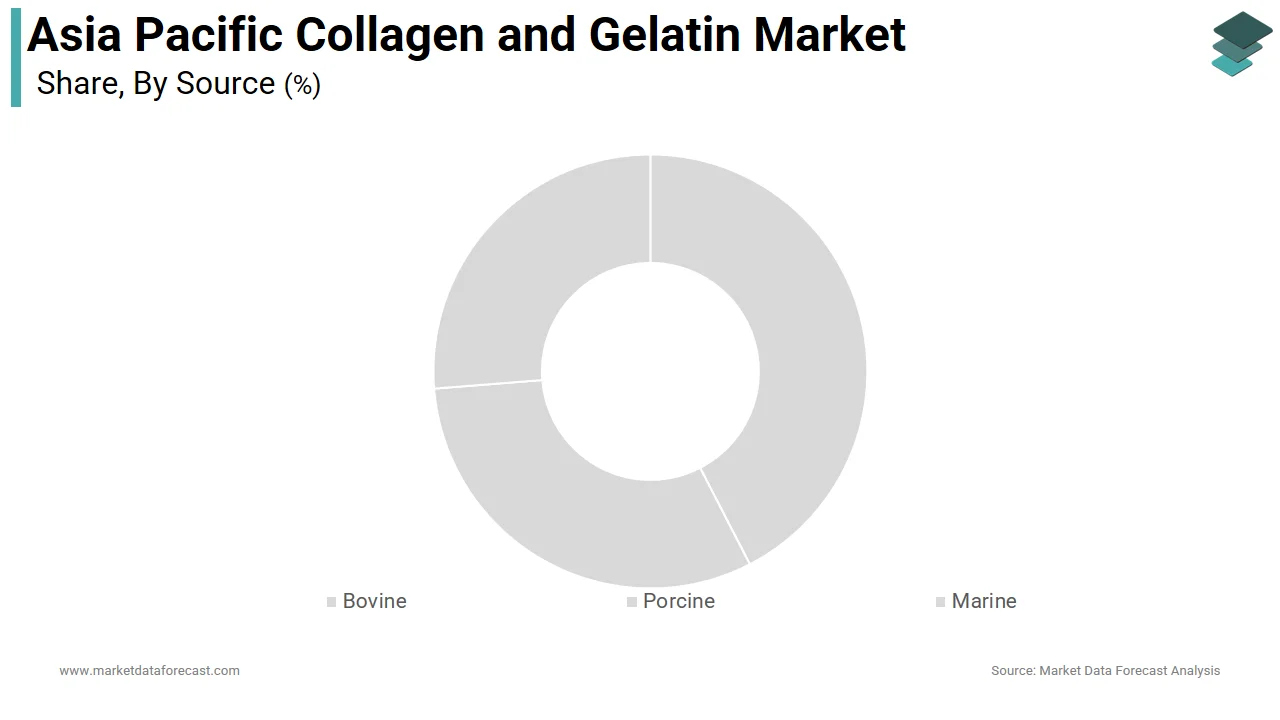
On the other hand, the marine source segment is on the rise and is expected to be the fastest-growing segment in the market by witnessing a CAGR of 9.2% during the forecast period. This rapid expansion of the segment is fueled by increasing consumer preference for fish-derived collagen due to its superior bioavailability, lower risk of disease transmission, and acceptance among Halal and Pescatarian populations. According to global fisheries data compiled by the Food and Agriculture Organization (FAO), the Asia-Pacific territory commands more than 91% of global aquaculture volume, creating an unparalleled sustainable supply chain of fish processing by-products optimized for premium collagen extraction. Regional biomedical research laboratories confirm that marine-derived collagen peptides possess a significantly lower average molecular weight compared to mammalian variants, optimizing human intestinal absorption pathways to appeal to wellness consumers in Japan and South Korea. Furthermore, the rise in zoonotic diseases has shifted consumer trust away from mammalian sources towards marine alternatives perceived as safer and cleaner. Sources reveal that consumer preferences across Indonesia and Malaysia are rapidly shifting toward certified Halal marine collagen supplements, opening up highly lucrative investment avenues for ingredient refiners. Innovations in enzymatic extraction technologies have also improved the yield and quality of marine collagen, making it commercially viable. These factors, combined with sustainability trends, drive the accelerated growth of the marine segment.
By Type Insights
The gelatin segment was the largest in the Asia Pacific collagen and gelatin market and occupied a 55.5% share in 2025. This supremacy of the segment was supported by the essential role of gelatin in producing confectionery products such as gummies, marshmallows, and jelly desserts, which are highly popular across the region. The segment’s prominence is also due to its widespread use in the food and beverage industry as a gelling, stabilizing, and thickening agent. Studies reveal that the Asia-Pacific region is experiencing robust growth in functional and premium confectionery lines, heavily fueled by rising urban disposable incomes and a strong consumer preference for gelatin-based gummy supplements. Furthermore, the pharmaceutical sector relies heavily on high-purity gelatin to manufacture hard and soft capsule shells, which remain a primary delivery system for sensitive or liquid oral medications. Also, the Capsule Manufacturers Association of India (CMAI) demonstrates that domestic factories produce hundreds of billions of empty gelatin capsule shells annually, securing India's status as a premier global hub for both domestic pharmaceutical packaging and international exports. The established manufacturing infrastructure and lower cost compared to specialized collagen peptides ensure that gelatin remains the primary product type. As per sources, the demand for food-grade gelatin continues to outpace other forms, solidifying its position as the leading product segment in the market.
However, the collagen segment is expected to exhibit a noteworthy CAGR of 8.8% from 2026 to 2034, owing to the booming nutraceutical and cosmetic industries. Unlike traditional gelatin, collagen peptides are hydrolyzed into smaller molecules that are easily absorbed by the body, making them highly effective for skin health, joint support, and bone density improvement. Research shows that the "beauty from within" trend has transformed the Asia-Pacific supplement landscape, positioning collagen peptides as a premier ingredient for regional functional food and supplement brand expansions. Registry databases managed by China's State Administration for Market Regulation (SAMR) document a major multi-year expansion in authorized oral health and nutricosmetic formulations, reflecting an intense consumer push for anti-aging and skin elasticity solutions. Furthermore, the cosmetic industry is increasingly incorporating collagen peptides into serums and creams for their proven efficacy in reducing wrinkles and improving skin elasticity. Sources indicate that advanced anti-aging and elasticity-focused cosmetics represent a primary growth asset, driving South Korean skincare exports to historic record-breaking global valuations. The versatility of collagen peptides in both ingestible and topical applications, combined with strong scientific backing, drives their rapid adoption and distinguishes them as the highest growth product category.
By Application Insights
The wound care segment led the Asia Pacific collagen and gelatin market and captured a significant share in 2025. This leading position of the segment was attributed to the high prevalence of chronic wounds, diabetic ulcers, and burns in the region. Collagen-based dressings are widely used because they promote hemostasis, attract fibroblasts, and provide a scaffold for new tissue growth, accelerating the healing process. The International Diabetes Federation (IDF) reveals that Asian nations, split across the Western Pacific and South-East Asia reporting zones, encompass the largest global share of adult diabetes cases, creating an immense clinical patient pool highly susceptible to severe diabetic foot ulcers. Data from the World Health Organization indicates that burn injuries are also significant in densely populated countries with limited fire safety infrastructure, driving demand for advanced wound care solutions. Collagen dressings are preferred over traditional gauze because they reduce pain and scarring while maintaining a moist wound environment. Sources indicate that healthcare networks across China and India are steadily expanding their deployment of advanced biomaterials, replacing traditional gauze therapies with active collagen sheets and sponges to optimize wound healing times in surgical and critical burn care settings. The effectiveness of collagen in managing complex wounds ensures its dominant position in the medical application segment despite the higher cost compared to standard dressings.
But the orthopedic applications segment is predicted to witness the highest CAGR of 8.5% between 2026 and 2034. This quick surge of the segment is propelled by the rising incidence of osteoarthritis, sports injuries, and an aging population requiring joint repair solutions. Collagen is increasingly used in scaffolds for cartilage regeneration, tendon repair, and bone grafts due to its biocompatibility and ability to integrate with host tissue. The Institute for Health Metrics and Evaluation (IHME) Global Burden of Disease Study identifies musculoskeletal disorders as a leading driver of long-term disability, establishing a clear public health mandate for regenerative biological therapies and advanced cartilage matrices. Clinical guidelines developed by entities like the Japanese Orthopaedic Association (JOA) detail advanced arthroscopic interventions for ligament and cartilage repair, reflecting an evolving surgical landscape that increasingly incorporates bio-inductive collagen implants to facilitate soft-tissue healing. Furthermore, the growing participation in sports and fitness activities among younger demographics in countries like Australia and South Korea has led to a higher incidence of ligament and tendon injuries, driving demand for collagen patches and screws. As per clinical trials published in regional journals, collagen scaffolds demonstrate superior outcomes in terms of pain reduction and functional recovery compared to synthetic alternatives. This clinical efficacy, combined with technological advancements in 3D printed collagen structures, fuels the rapid growth of the orthopedic segment.
COUNTRY LEVEL ANALYSIS
China Collagen and Gelatin Market Analysis
China outperformed other countries in the Asia Pacific collagen and gelatin market and accounted for a 35.1% share in 2025. This supremacy of the segment was driven by its massive livestock industry and growing healthcare sector. The market in China is known for high domestic production of porcine and bovine gelatin, coupled with increasing imports of high-quality marine collagen. According to data from the National Bureau of Statistics of China, the country's total red meat and poultry production reached 96.63 million tons annually, anchoring a massive internal supply of domestic livestock and porcine-derived raw materials for industrial applications. The rising middle class and aging population have spurred demand for collagen supplements and anti-aging cosmetics. Research shows that the regional nutricosmetics and consumer functional food market is expanding rapidly, with specialized collagen formulas acting as a major growth segment. Furthermore, government initiatives to modernize the pharmaceutical industry have boosted the adoption of collagen-based medical devices. As per sources, China's industry is actively transforming traditional farming structures into vertically integrated, technology-driven industrial complexes to maximize the raw yield, traceability, and high purity compliance of biomedical raw materials. This combination of resource abundance and rising consumer demand solidifies China’s position as the dominant market player.
Japan Collagen and Gelatin Market Analysis
Japan followed closely behind in the Asia Pacific collagen and gelatin market and captured a 20.8% share in 2025. This growth of the Japanese market was propelled by its advanced biomedical industry and high consumer awareness of health and beauty benefits. Japanese consumers exhibit a strong preference for high-quality marine collagen. This preference stems from the nation's vast fishing industry and long-standing cultural acceptance of fish-based products. The Ministry of Agriculture, Forestry, and Fisheries (MAFF) tracks Japan's massive marine aquaculture and commercial fish landings, which concurrently generate a robust secondary ecosystem of fish skin and scale by-products utilized heavily by private domestic refiners for marine collagen processing. Japan's strict regulatory classification of regenerative medical products ensures that collagen-based bio-materials undergo intensive safety protocols before adoption in complex clinical reconstructions. Furthermore, the beauty from within trend is deeply entrenched with collagen drinks and supplements being staple items in drugstores. As per sources, Japanese companies are leaders in developing low molecular weight collagen peptides with enhanced bioavailability. The stringent quality standards and focus on innovation maintain Japan’s reputation as a premium market for high-value collagen and gelatin products.
India Collagen and Gelatin Market Analysis
India holds a prominent position in the Asia Pacific collagen and gelatin market due to the export of bovine gelatin and increasing domestic consumption of collagen supplements for joint health. The country’s market has a large bovine hide processing industry and a growing pharmaceutical sector. According to census records from the Ministry of Fisheries, Animal Husbandry and Dairying, India possesses roughly 20% of the global bovine population, creating an expansive domestic resource base for secondary processing industries, including gelatin and bone-derived collagen manufacturers. The Central Drugs Standard Control Organization (CDSCO) reflects an expanding baseline of domestic manufacturers specializing in indigenous bovine and marine-derived collagen dry sheets, scaffolds, and micro-particles for advanced wound care management. Furthermore, the increasing prevalence of arthritis and lifestyle diseases has boosted demand for oral collagen supplements. Driven by growing healthcare infrastructure, Indian medical-grade collagen refiners are increasingly aligning their cleanroom and extraction workflows with international regulatory frameworks to expand their export profiles into European and North American markets. The availability of raw materials and skilled labor supports steady growth, although regulatory hurdles and quality consistency remain challenges. This resource advantage positions India as a key supplier in the regional market.
South Korea Collagen and Gelatin Market Analysis
South Korea is another key player in the Asia Pacific collagen and gelatin market, owing to its global leadership in the cosmetics and biomedical industries. The market in South Korea is known for intense innovation in collagen peptide formulations for skincare and regenerative medicine. The Korea Customs Service and industry associations show that South Korean cosmetic exports hit record valuations exceeding $11.4 billion, heavily supported by international consumer demand for anti-aging and elasticity-focused skincare regimes. Data from the Ministry of Food and Drug Safety shows rigorous approval processes for functional cosmetics, ensuring high efficacy and safety standards. Furthermore, the country is a hub for research into marine collagen extraction technologies, leveraging its coastal resources. To optimize skin barrier permeability, South Korean cosmetic laboratories lead research in the structural synthesis of ultra-low molecular weight marine collagen tri-peptides, yielding consumer formulations designed for superior topical bioavailability. The strong cultural emphasis on appearance and health drives domestic consumption while export-oriented strategies expand market reach. This focus on high-value-added products maintains South Korea’s competitive edge in the premium segment.
Australia Collagen and Gelatin Market Analysis
Australia holds a specialized position in the Asia Pacific collagen and gelatin market due to high-quality bovine and marine production for export. The market status in Australia is defined by strict regulatory standards and sustainable sourcing practices that appeal to premium international buyers. While agricultural indicators from the Australian Bureau of Statistics (ABS) highlight a massive, premium livestock sector, the majority of Australian bovine hides are exported raw or semi-processed to international manufacturing hubs for industrial gelatin and collagen extraction. Under the regulatory guidelines of the Therapeutic Goods Administration (TGA), any medical device incorporating animal-derived collagen is classified under high-risk tiers, requiring stringent biological safety reviews regarding virus and prion inactivation before inclusion on the Australian Register of Therapeutic Goods (ARTG). Furthermore, Australian brands are renowned for their clean and natural image, driving demand in neighboring Asian countries. Australian trade ledgers indicate that the nation serves as a critical upstream partner for Asia-Pacific manufacturing hubs, exporting high-grade, traceable raw bovine and marine by-products to processing centers in China and Southeast Asia for refined collagen extraction. The focus on quality and sustainability rather than volume distinguishes Australia in the regional market.
COMPETITIVE LANDSCAPE
The competition in the Asia Pacific Collagen and Gelatin Market is characterized by the presence of established global manufacturers alongside numerous local producers who strive to capture market share through pricing and regional expertise. Large multinational companies leverage their advanced research capabilities and brand reputation to dominate the premium segments such as pharmaceutical-grade gelatin and specialized collagen peptides. Meanwhile, local players focus on cost-effective production of standard gelatin for food and industrial applications, benefiting from proximity to raw material sources like livestock and fish by-products. This dynamic creates a fragmented landscape where quality consistency and regulatory compliance are key differentiators. Strategic alliances with raw material suppliers and investment in sustainable processing technologies are increasingly common as firms seek to mitigate supply chain risks. The rising demand for marine collagen due to religious and dietary preferences has intensified competition among manufacturers to innovate and secure fish waste supplies. This intense rivalry drives continuous improvement in product quality and service delivery, benefiting end users across diverse industries in the region.
KEY MARKET PLAYERS
The major players in the UK Asia Pacific collagen and gelatin market include
- LifeSciences Holding Corporation
- Collagen Solutions plc
- Vornia Biomaterials, Ltd.
- Collagen Matrix, Inc.
- Rousselot SAS
- GELITA AG
- Nitta Gelatin, Inc.
- PB Gelatin
- Gelnex Solutions
- Royal DSM
- Integra SYMATESE
- NuCollagen, LLC.
TOP PLAYERS IN THE MARKET
- Nitta Gelatin Inc. is a leading manufacturer in the Asia Pacific collagen and gelatin market with a strong focus on high-quality porcine and bovine products. The company supplies gelatin for food, pharmaceutical, and industrial applications across Japan and Southeast Asia. Recent actions include the expansion of its production facilities in Thailand to increase capacity and meet rising regional demand. Nitta has also invested in research and development to create specialized collagen peptides for nutraceuticals and cosmetics. These initiatives demonstrate a commitment to product innovation and supply chain reliability while strengthening its position as a trusted partner for major food and healthcare brands in the region through consistent quality and technical support.
- Rousselot SAS contributes significantly to the Asia Pacific collagen and gelatin market by providing premium gelatin and collagen peptides derived from porcine and bovine sources. The company serves diverse industries, including nutrition, health, and technical applications, with a focus on sustainability and traceability. Recently, Rousselot has strengthened its market position by launching new hydrolyzed collagen products tailored for the Asian beauty from within trend. They have also enhanced their distribution network in China and India to improve accessibility for local manufacturers. These strategic moves ensure that Rousselot remains competitive by offering customized solutions that meet the specific regulatory and consumer preferences of the Asia Pacific region while maintaining high ethical and quality standards.
- Gelnex Solutions India Pvt Ltd is a key player in the Asia Pacific collagen and gelatin market, known for its extensive range of bovine gelatin and collagen products. The company leverages India’s large livestock industry to produce cost-effective and high-quality ingredients for the pharmaceutical and food sectors. Recent actions include the implementation of advanced extraction technologies to improve the yield and purity of collagen peptides. Gelnex has also obtained various international certifications to facilitate exports to neighboring countries. These efforts enhance its reputation for reliability and compliance while expanding its reach in the regional market. By focusing on operational efficiency and product quality, Gelnex strengthens its position as a major supplier of affordable and reliable collagen and gelatin solutions.
TOP STRATEGIES USED BY KEY MARKET PARTICIPANTS
Key players in the Asia Pacific Collagen and Gelatin Market primarily focus on product diversification and strategic partnerships to maintain their competitive edge. Companies invest heavily in research and development to create specialized collagen peptides for nutraceuticals and cosmetics, which offer higher margins than traditional gelatin. Collaborations with local distributors and manufacturers facilitate market entry and ensure compliance with diverse regulatory standards across the region. Additionally, firms emphasize sustainable sourcing and traceability to appeal to environmentally conscious consumers and meet international quality benchmarks. Expanding production capacities in key hubs like Thailand and India helps reduce costs and improve supply chain resilience. These strategies enable companies to address evolving consumer preferences while ensuring consistent growth and leadership in the dynamic Asia Pacific market.
MARKET SEGMENTATION
This research report is segmented and sub-segmented into the following categories:
By Source
- Bovine
- Porcine
- Marine
- Others
By Type
- Collagen
- Gelatin
By Application
- Orthopaedic Applications
- Wound Care
- Cardiovascular Applications
- Others
By Country
- India
- China
- Japan
- South Korea
- Australia
- New Zealand
- Thailand
- Malaysia
- Vietnam
- Philippines
- Indonesia
- Singapore
- Rest of Asia Pacific