- Product Description Description
- Table of Contents TOC
- List of Table & Figure LOT
- Get Free Sample PDF Sample PDF
Market Size, 2025
$222.69 MnMarket Estimate, 2026
$230.64 MnMarket Forecast, 2034
$305.36 MnCAGR, 2026–2034
3.57%Executive Summary: Asia Pacific Compound Feed Market
- Market Scope: Comprehensive regional Asia Pacific compound feed market analysis covering product categories, livestock application sectors, geographic leadership frameworks, key growth drivers, market trends, and strategic industry developments.
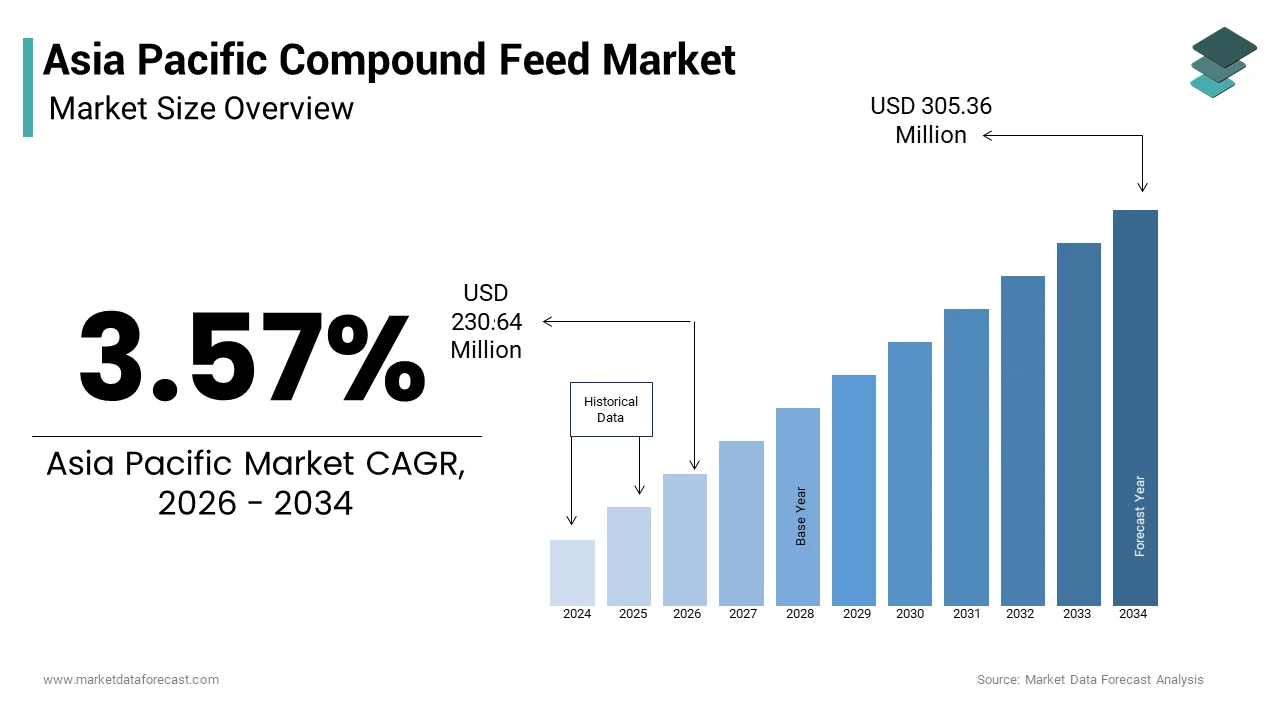
- Market Valuation: Valued at USD 222.69 million (2025), estimated at USD 230.64 million (2026), and projected to reach USD 305.36 million by 2034, registering a robust CAGR of 3.57% (2026–2034).
- Primary Growth Drivers: Rising demand for high-quality animal protein, stringent antibiotic regulations in livestock farming, and precision nutrition technology adoption. Notable trends include organic and sustainable farming practices, functional feed additives like probiotics and phytogenics, and advanced feed efficiency integration.
Key Market Segment Metrics (2026–2034)
| Category | Leading Segment (2025 Position) | Fastest-Growing Segment |
|---|---|---|
| By Product & Application | Amino acids segment (25.1% market share in 2025) and Poultry segment (leading livestock application) | Pharma and nutraceuticals segment (projected to witness the fastest CAGR of 11.2%) |
| By Region / Country | China (maintained the largest regional share at 29.7% in 2025) | India (expected to witness steady growth supported by government sustainability initiatives) |
Major Market Players & Market Structure
Market Structure: Highly competitive animal nutrition and agricultural biotechnology landscape featuring major enterprises competing through functional feed innovations, supply chain vertical integration, advanced bioprocessing technologies, and collaborative clinical trials.
Key Companies: Evonik Industries AG, Adisseo France SAS, BASF SE, Cargill Europe BVBA, Lonza AG, Novozymes A/S, Chr. Hansen A/S, Asinus Atlanticus SA, Dolphin IBA, Donna Tina Co., Iberian Donkey, Sardinian Equine Dairy Cooperative, Eurolactis Italia Srl, Alpine Equine Nutrition Enterprises, Golden Donkeys Farm, Hellenic Asinus Farms, Stephenson Group Ltd, The Donkey Dairy Pty Ltd, White Sea, and Baltic Co. Ltd.
Asia Pacific Compound Feed Market Size
The Asia Pacific compound feed market was valued at USD 222.69 million in 2025 and is anticipated to reach USD 230.64 million in 2026 and USD 305.36 million by 2034, growing at a CAGR of 3.57% during the forecast period from 2026 to 2034.
Compound feed is a mixture of grains, proteins, vitamins, minerals, and additives that enhance animal health, growth efficiency, and productivity. As livestock farming continues to intensify across the region, compound feed has become an essential component in modern agriculture to ensure a consistent nutrient supply and optimize farm yields.
According to the Food and Agriculture Organization (FAO), the Asia Pacific region accounts for over 40% of global livestock production, driven by rising demand for meat, dairy, and seafood. Countries such as China, India, Thailand, and Vietnam have witnessed rapid expansion in commercial animal husbandry practices, increasing reliance on compound feed to meet hygiene and productivity standards. In addition, regulatory bodies like the Department of Animal Husbandry and Dairying in India and the National Institute of Animal Health in Japan have introduced guidelines promoting safe and scientific feeding practices.
As per the Asian Development Bank (ADB), improving rural incomes and urbanization have significantly boosted protein consumption, further stimulating feed demand. The region's growing emphasis on food safety and sustainable farming practices is also shaping the evolution of the compound feed market.
MARKET DRIVERS
Rising Demand for Animal Protein Across Urban Populations
The surging demand for animal-based protein among rapidly expanding urban populations is one of the most influential drivers of the Asia Pacific compound feed market. As per the United Nations Economic and Social Commission for Asia and the Pacific (UNESCAP), the urban population in the region is projected to reach nearly 3.5 billion by 2030, up from approximately 2.7 billion in 2020. This demographic shift has led to a significant increase in the consumption of meat, eggs, milk, and fish, which in turn fuels the need for high-quality compound feed to support intensive livestock farming.
China remains the largest consumer of poultry and pork globally, with per capita meat consumption increasing. Similarly, in India, where dairy remains a dietary staple, the country’s milk output reached over 220 million metric tons in 2023, as per the National Dairy Development Board (NDDB). To sustain this growth, farmers are increasingly adopting compound feed to improve feed conversion ratios and ensure disease resistance in livestock. Moreover, shifting dietary habits in Southeast Asia, particularly in Indonesia and the Philippines, reflect greater inclusion of protein-rich foods in daily meals. This growing demand for animal protein directly translates into expanded opportunities for compound feed manufacturers across the Asia Pacific.
Expansion of Commercial Livestock Farming and Intensive Poultry Production
The rapid expansion of commercial livestock farming and intensive poultry operations is also driving the growth of the Asia Pacific compound feed market. According to the Food and Agriculture Organization (FAO), industrial-scale poultry farms now account for a majority of total poultry production in East and Southeast Asia, compared to less than 40% two decades ago. This shift has been primarily driven by the need to meet rising protein demands while optimizing land and labor resources.
In Thailand, one of the world’s leading poultry exporters, the government has actively supported the development of integrated poultry complexes equipped with automated feeding systems and biosecurity measures. Similarly, in Vietnam, where pig farming plays a vital role in the agricultural sector, the African Swine Fever outbreak between 2019 and 2021 prompted a transition from backyard to commercial farming models.
Furthermore, multinational agribusiness firms such as Charoen Pokphand Foods (CPF) in Thailand and PT Japfa Comfeed in Indonesia have invested heavily in vertically integrated feed and livestock operations. These developments show the deepening interdependence between commercial livestock operations and compound feed demand across the Asia Pacific region.
MARKET RESTRAINTS
Volatility in Raw Material Prices and Supply Chain Disruptions
The volatility in raw material prices, particularly for corn, soybean meal, and other essential feed ingredients, is a major restraint affecting the Asia Pacific compound feed market. This price instability directly impacts feed manufacturers, especially in countries like China, India, and the Philippines, where imported feedstock constitutes a significant portion of production costs.
Besides, transportation bottlenecks and port delays, especially following pandemic-related restrictions, have further exacerbated input shortages. Like, nearly 50% of surveyed feed manufacturers in Southeast Asia cited raw material availability and pricing as their top operational challenge in 2023.
Stringent Regulatory Standards and Quality Control Requirements
The imposition of stringent regulatory standards and quality control requirements by national and regional authorities is another significant constraint facing the Asia Pacific compound feed market. Governments across the region have increasingly focused on ensuring feed safety to protect both livestock and human health, leading to tighter compliance protocols for manufacturers.
According to the ASEAN Feed Safety Framework, harmonization efforts have been made to align feed regulations across member states; however, disparities still exist in permissible ingredient levels, labeling norms, and contamination thresholds. For example, in India, the Feed Registration Committee under the Department of Animal Husbandry and Dairying revised feed safety standards in 2023, mandating stricter limits on mycotoxins, heavy metals, and antibiotic residues. Compliance with these evolving regulations increases production costs and delays product launches. Similarly, in Australia, the Australian Pesticides and Veterinary Medicines Authority (APVMA) enforces rigorous testing procedures for feed additives, requiring extensive documentation before approval.
These regulatory complexities not only slow down innovation but also create entry barriers for smaller manufacturers.
MARKET OPPORTUNITY
Growth in Organic and Functional Feed Ingredients
The rising demand for organic and functional feed ingredients that enhance animal health and productivity is one of the most promising opportunities in the Asia Pacific compound feed market. Consumers across the region are increasingly prioritizing food safety, sustainability, and ethical farming practices, prompting livestock producers to adopt cleaner feed formulations.
Also, feed manufacturers are incorporating natural additives such as probiotics, prebiotics, phytogenics, and essential oils to replace synthetic antibiotics and growth promoters. As per the National Institute of Animal Science in South Korea, feed containing probiotic supplements improved gut health and immunity in poultry, encouraging broader adoption.
Moreover, governments are incentivizing the use of organic feed through policy initiatives. In Japan, the Ministry of Agriculture, Forestry and Fisheries (MAFF) has expanded its certification system for organic livestock, encouraging farmers to transition to chemical-free feed. Likewise, in India, the National Programme for Organic Production (NPOP) has facilitated the growth of certified organic feed mills, contributing to a year-on-year increase.
Increasing Adoption of Precision Feeding Technologies
The growing adoption of precision feeding technologies presents a transformative opportunity for the Asia Pacific compound feed market. Precision feeding involves the use of data-driven approaches to optimize feed formulation based on individual animal needs, enhancing efficiency, reducing waste, and improving overall livestock performance.
According to the International Livestock Research Institute (ILRI), precision feeding systems have been shown to reduce feed costs while improving weight gain and milk yield in ruminants. In China, where large-scale dairy and pig farming operations dominate, companies like Alibaba Cloud and Huawei have partnered with agri-tech startups to develop smart feeding platforms that integrate AI and IoT-enabled sensors for real-time monitoring of animal health and nutrient intake.
In Thailand, the Charoen Pokphand Group (CP Foods) has implemented automated feeding systems in its poultry and swine farms, leveraging big data analytics to customize feed blends for different growth stages. These innovations have resulted in an improvement in feed conversion ratios and a reduction in feed wastage, boosting profitability for farmers. Moreover, academic institutions such as the University of Melbourne and the National University of Singapore are researching predictive modeling for livestock nutrition, further advancing the science behind precision feeding.
MARKET CHALLENGES
Environmental Concerns and Pressure to Reduce Carbon Footprint
The increasing scrutiny surrounding its environmental impact, particularly in terms of greenhouse gas emissions, land use, and water consumption, is one of the primary challenges confronting the Asia Pacific compound feed market. As per the Food and Agriculture Organization (FAO), livestock production, including feed cultivation,n which accounts for nearly 11 to 14.5% of global anthropogenic GHG emissions and is placing pressure on feed manufacturers to adopt more sustainable practices.
Governments and regulatory bodies across the region are responding with stricter environmental policies. Similarly, in Australia, the Department of Climate Change, Energy, the Environment, and Water has mandated carbon reporting for large agribusinesses, pushing feed producers to evaluate their supply chain footprints. Moreover, consumers are increasingly demanding transparency regarding the sustainability of animal feed sourcing. As a result, feed manufacturers must invest in alternative ingredients, such as insect protein and algae-based feed, which remain relatively expensive and underdeveloped at scale.
Balancing economic viability with environmental responsibility poses a complex challenge.
Disease Outbreaks and Biosecurity Threats Impacting Livestock Health
Disease outbreaks and biosecurity threats pose a significant challenge to the Asia Pacific compound feed market, as they directly affect livestock productivity and feed demand. Highly contagious diseases such as African Swine Fever (ASF), Avian Influenza, and Foot-and-Mouth Disease (FMD) have repeatedly disrupted animal farming cycles, leading to mass culling and temporary declines in feed consumption.
According to the World Organisation for Animal Health (WOAH), ASF alone caused the loss of over 100 million pigs in Asia between 2018 and 2023, severely impacting China’s pork industry—the world’s largest. In response, feed manufacturers had to adjust formulations to include biosecurity-enhancing additives such as organic acids and antimicrobial peptides. However, many feed mills lacked the infrastructure to ensure pathogen-free processing, leading to further transmission risks.
Apart from these, governments have imposed movement restrictions and enhanced quarantine measures, disrupting supply chains and increasing feed delivery times. Smallholder farmers, who constitute a significant portion of livestock producers in the region, often lack access to premium feed products that offer disease resilience.
REPORT COVERAGE
| REPORT METRIC | DETAILS |
| Market Size Available | 2025 to 2034 |
| Base Year | 2025 |
| Forecast Period | 2026 to 2034 |
| CAGR | 3.57% |
| Segments Covered | By Ingredients, Supplements, And Region. |
| Various Analyses Covered | Global, Country-Level Analysis, Segment-Level Analysis, DROC, PESTLE Analysis, Porter’s Five Forces Analysis, Competitive Landscape, Analyst Overview of Investment Opportunities |
| Regions Covered | India, China, Japan, South Korea, Australia, New Zealand, Thailand, Malaysia, Vietnam, Philippines, Indonesia, Singapore, and the Rest of APAC |
| Market Leaders Profiled | Cargill Inc., Charoen Pokphand Foods, Archer Daniels Midland Company, Land o’ Lakes, Inc., Nutreco, ALLTECH, Inc., New Hope Group Co., Ltd, Wen’s Group, For FarmerB.V...V, Agribusiness Holding Miratorg, Kyodo Shiryo Company, Sodrugestvo GroS.A.S.A, DeKalb Feed Inc., De Heus B.V., Ballance Agri-Nutrients Ltd, J.D. Heiskell & Co., Kent Feeds, Weston Milling Animal Nutrition, EWOS GROUP. |
SEGMENTAL ANALYSIS
By Ingredients Insights
The cereals segment dominated the Asia Pacific compound feed market by accounting for 35.6% of total ingredient consumption in 2025. Their widespread availability and cost-effectiveness, particularly in large agricultural economies like China and India, are one of the key drivers behind the dominance of the other cereals segment. According to the Food and Agriculture Organization (FAO), China produced over 277 million metric tons of corn in 2023, making it the largest producer in the region and a critical supplier to the domestic feed industry. Similarly, India’s cereal output reached over 150 million metric tons, with a significant portion being utilized in poultry and swine feed formulations. In addition, the expansion of commercial poultry farming has further boosted demand for cereal-based feed. Moreover, government policies promoting self-sufficiency in grain production have ensured a steady supply of raw materials for the feed industry. These factors strengthen cereals as the cornerstone of the Asia Pacific compound feed market.
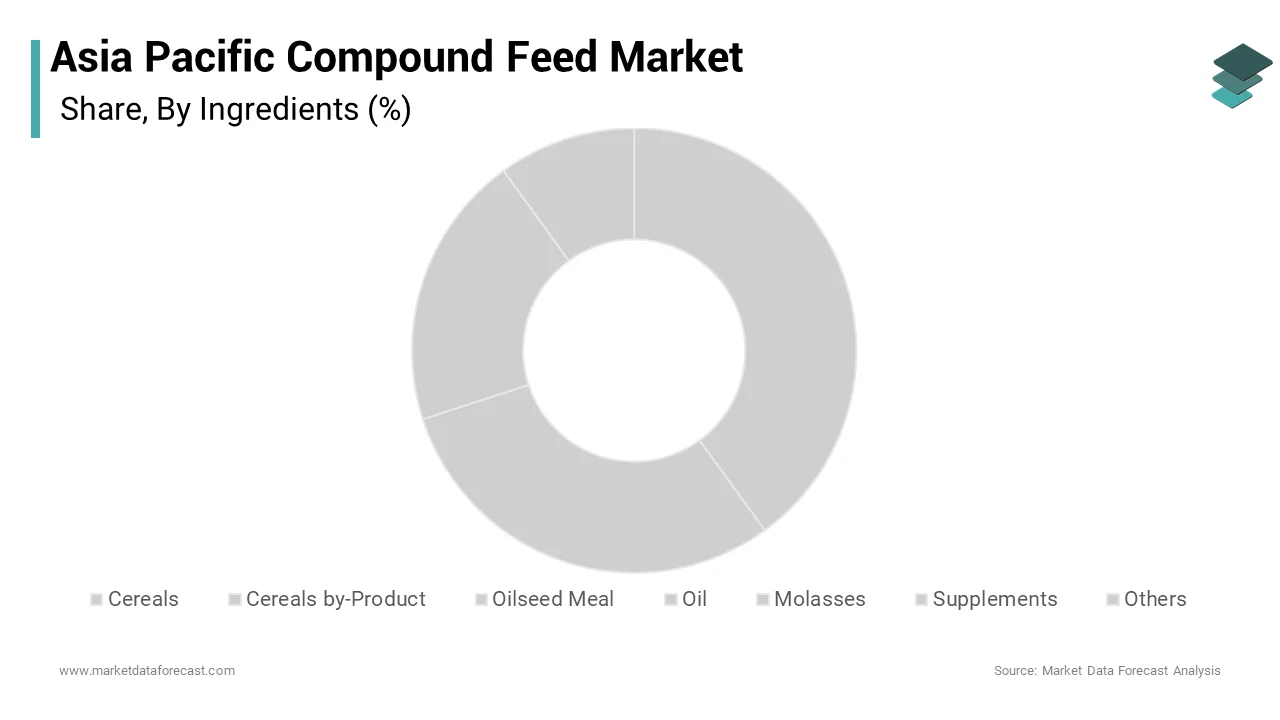
The supplements segment is projected to grow at the fastest rate in the Asia Pacific compound feed market and is likely to record a CAGR of 8.4% between 2025 and 2033. This growth of the supplements segment is primarily driven by the increasing emphasis on improving animal health, productivity, and immunity through fortified feed formulations. The declining reliance on antibiotic growth promoters (AGPs) and the shift toward alternative feed additives such as probiotics, prebiotics, and enzymes also contribute to the growth of the supplements segment. Moreover, rising awareness among farmers about the benefits of micronutrient supplementation has led to greater inclusion of vitamins and amino acids in feed rations. Furthermore, governments are actively promoting feed fortification programs.
By Supplements Insights
The vitamins segment constituted the segment within the Asia Pacific compound feed supplements market by holding an estimated 27.2% share in 2024. The increasing integration of vitamin premixes in commercial poultry and swine operations is one of the primary reasons for the dominant position of the vitamins segment. Their widespread use in livestock nutrition is credited to their essential role in metabolic functions, immune support, reproduction, and overall animal well-being. The growing focus on improving fertility and milk yield in dairy cattle, especially in countries like India and Pakistan, is another key growth driver for the vitamins segment. As per the National Dairy Development Board (NDDB), dairy feed containing vitamins A, D, and E contributed to an improvement in lactation performance, prompting widespread adoption among cooperative dairy farms. Moreover, the shift toward precision feeding systems has enabled farmers to tailor vitamin supplementation based on animal age, breed, and physiological stage. These factors show vitamins as the most significant category within the Asia Pacific feed supplements landscape.
The probiotics and prebiotics segment is emerging as the fastest-growing category in the Asia Pacific compound feed supplements market and is projected to expand at a CAGR of 10.2% from 2023 to 2030. This rapid growth of the probiotics and prebiotics segment is attributed to the rising preference for natural gut health enhancers as alternatives to antibiotics in livestock production. The global push to reduce antibiotic overuse in animal feed due to concerns about antimicrobial resistance is also a key factor driving this trend in the probiotics and prebiotics segment. According to the World Health Organization (WHO), several Asian countries, including Japan and South Korea, implemented strict regulations limiting antibiotic growth promoters (AGPs) in livestock diets, encouraging the adoption of microbial feed additives. Feed containing probiotic strains such as Lactobacillus and Bifidobacterium improved digestion and reduced pathogenic infections in poultry. Furthermore, advancements in biotechnology have expanded the range of available probiotic strains tailored for different livestock species.
COUNTRY-LEVEL ANALYSIS
China Compound Feed Market Analysis
China maintained the largest share in the Asia Pacific home improvement sector and accounted for 29.7% of regional sales in 2024. The country's dominance is underpinned by rapid urbanization, extensive residential construction, and increasing disposable incomes among the middle class. Also, the government’s "Dual Circulation" strategy promotes domestic consumption, including home-related goods and services. E-commerce platforms such as Alibaba and JD.com have also played a pivotal role in expanding access to home improvement products, particularly in second- and third-tier cities.
India Compound Feed Market Analysis
India is rapidly expanding in the Asia Pacific home improvement market. The country's home improvement sector is experiencing robust growth fueled by government-backed affordable housing schemes, rising homeownership, and increasing consumer interest in DIY renovations. A major catalyst for expansion is the Pradhan Mantri Awas Yojana (PMAY), a flagship initiative aimed at providing housing. In addition, organized retail chains such as Godrej Interio, Asian Paints, and Berger Paints have significantly transformed the distribution landscape. Online marketplaces like Amazon India and Flipkart have also witnessed a surge in demand for home décor and renovation products. These developments show India’s rising prominence in the regional home improvement sector.
Japan Compound Feed Market Analysis
Japan commands a significant share of the Asia Pacific home improvement sector. Unlike the rapidly expanding markets of China and India, Japan’s home improvement industry is characterized by maturity and technological sophistication, driven by the need for retrofitting aging housing stock and integrating smart home systems. Also, Japan leads in smart home adoption, with companies like Panasonic, Toshiba, and Sony offering integrated home automation solutions. This dual focus on aging infrastructure and advanced technology continues to sustain Japan’s presence as a key player in the regional home improvement market.
Australia & New Zealand Compound Feed Market Analysis
Australia and New Zealand together hold a notable place in the Asia Pacific home improvement market and are distinguished by high per capita spending, a strong preference for aesthetic enhancements, and a well-established retail ecosystem. A primary growth driver in this region is the popularity of DIY culture, particularly in Australia. Also, favorable lending conditions and historically low mortgage rates in early 2023 encouraged homeowners to invest in property upgrades.
South Korea Compound Feed Market Analysis
South Korea contributes a decent share to the Asia Pacific home improvement market, leveraging its technological prowess and urban renewal initiatives to sustain steady growth in the sector. A major driver of the South Korean home improvement landscape is the government-backed "New Deal" initiative. These efforts focus on upgrading aging apartment complexes, improving energy efficiency, and incorporating smart home technologies. Moreover, the integration of smart home ecosystems into residential spaces is accelerating demand for connected lighting, automated HVAC systems, and AI-enabled appliances.
COMPETITIVE LANDSCAPE
- The Asia Pacific compound feed market is highly competitive, characterized by the presence of both multinational corporations and well-established regional players vying for dominance in a rapidly expanding sector. The market structure is fragmented, with large integrated agribusinesses coexisting alongside numerous medium and small-scale feed manufacturers, each targeting different segments of the livestock industry. Competition is driven by product differentiation, pricing strategies, supply chain efficiency, and brand reputation, particularly in densely populated countries such as China, India, and Indonesia, where demand for animal protein continues to rise sharply.
- Key players are continuously innovating to meet evolving consumer expectations around feed safety, sustainability, and nutritional enhancement. There is an increasing focus on developing antibiotic-free, organic, and functional feed additives that support animal immunity and productivity without compromising food safety standards. Additionally, advancements in digital agriculture and precision feeding are reshaping how feed is formulated and distributed, giving technologically advanced firms a distinct advantage.
- At the same time, regulatory pressures and environmental concerns are influencing the way feed is produced and sourced. Companies are adapting by incorporating alternative protein sources, improving energy efficiency, and complying with stricter feed safety regulations. As competition intensifies, strategic collaborations, localized production, and investment in research and development will be critical for maintaining a strong market position across the diverse and dynamic Asia Pacific region.
KEY MARKET PLAYERS
These are the market players involved in the APAC compound feed market include areCargill Inc.
- Charoen Pokphand Foods
- Cargill, Incorporated
- Archer Daniels Midland Company
- Land o’ Lakes, Inc.
- Nutreco
- ALLTECH, Inc.
- New Hope Group C,o. Ltd
- Wen’s Group
- For Farmers B.V.
- Agribusiness Holding Miratorg
- Kyodo Shiryo Company
- Sodrugestvo GGroup S.A.A DeKalb Feeds, Inc
- De Heus B.V.
- Ballance Agri-Nutrients Ltd
- J.D. Heiskell & Co
- Kent Feeds
- Weston Milling Animal Nutrition
- EWOS GROUP
Top Players in the Market
- Cargill is a leading global player with a strong footprint in the Asia Pacific compound feed market. The company operates extensive feed mills across China, India, Southeast Asia, and Australia, offering customized feed solutions for poultry, swine, dairy, and aquaculture. Cargill's commitment to sustainable sourcing, animal nutrition research, and integrated supply chain management has positioned it as a trusted partner for livestock producers in the region. Its investments in digital farming tools and biosecurity protocols further enhance its competitive edge.
- As one of Thailand’s largest agro-industrial conglomerates, CPF plays a pivotal role in shaping the compound feed landscape across Southeast Asia. The company integrates feed production with livestock farming and food processing, ensuring quality control and efficiency throughout the value chain. CPF focuses on innovation in feed formulation, disease prevention, and environmental sustainability, catering to both domestic and export markets. Its regional expansion strategy and emphasis on food safety have strengthened its leadership position in the Asia Pacific.
- A major Chinese feed manufacturer, New Hope Liuhe, has been instrumental in driving the growth of modern compound feed systems in Asia. With a vast network of feed mills and livestock operations, the company supplies high-quality feed products tailored to local farming conditions. New Hope emphasizes technological advancement, feed safety, and rural development, making it a key contributor to the region’s agricultural transformation. Its strategic partnerships and international expansion efforts continue to reinforce its influence in the global feed industry.
Top Strategies Used By Key Market Participants
- One of the primary strategies employed by key players in the Asia Pacific compound feed market is product innovation focused on functional and fortified feed formulation. Companies are investing heavily in R&D to develop feeds that improve animal health, enhance productivity, and reduce reliance on antibiotics, aligning with evolving consumer preferences and regulatory trends.
- Another crucial approach is vertical integration and backward linkages, where leading firms integrate feed production with livestock farming and processing units. This not only ensures consistent raw material supply but also enhances traceability, quality control, and cost efficiency across the value chain.
- Lastly, companies are increasingly adopting digital transformation and precision feeding technologies to optimize feed utilization, monitor livestock performance, and offer data-driven recommendations to farmers. These strategies collectively help market leaders strengthen their foothold, differentiate offerings, and respond effectively to the dynamic demands of the Asia Pacific livestock industry.
RECENT MARKET NEWS
- In March 2023, Cargill launched a new line of antibiotic-free poultry feed in Vietnam, designed to meet growing consumer demand for clean-label meat products while supporting farmers in transitioning away from antimicrobial use.
- In July 2023, Charoen Pokphand Foods (CPF) expanded its feed production capacity in the Philippines by commissioning a state-of-the-art facility aimed at strengthening its regional supply chain and enhancing feed quality consistency.
- In December 2023, New Hope Liuhe formed a strategic alliance with a Singapore-based agritech startup to incorporate AI-driven analytics into feed formulation processes, enabling more precise nutrient management for livestock producers across Asia.
- In February 2024, DSM-Firmenich introduced a new range of natural feed additives in India, focusing on gut health and immunity enhancement, positioning itself as a leader in sustainable animal nutrition solutions.
- In May 2024, Wilmar International acquired a controlling stake in a Malaysian feed ingredients supplier, reinforcing its upstream capabilities and securing a stable supply of essential components for its feed manufacturing operations.
MARKET SEGMENTATION
This research report on the Asia-Pacific compound feed market is segmented and sub-segmented into the following categories.
By Ingredients
- Cereals
- Cereals by-Product
- Oilseed Meal
- Oil
- Molasses
- Supplements
- Others
By Supplements
- Vitamins
- Antibiotics
- Antioxidants
- Amino Acids
- Feed Enzymes
- Feed Acidifiers
- Others
By Animal
- Ruminant
- Swine
- Poultry
- Aquaculture
- Others
By Country
- India
- China
- Japan
- South Korea
- Australia
- New Zealand
- Thailand
- Malaysia
- Vietnam
- Philippines
- Indonesia
- Singapore
- Rest of APAC